
Dental Zirconia Blocks: Selection Criteria for CAD/CAM Labs
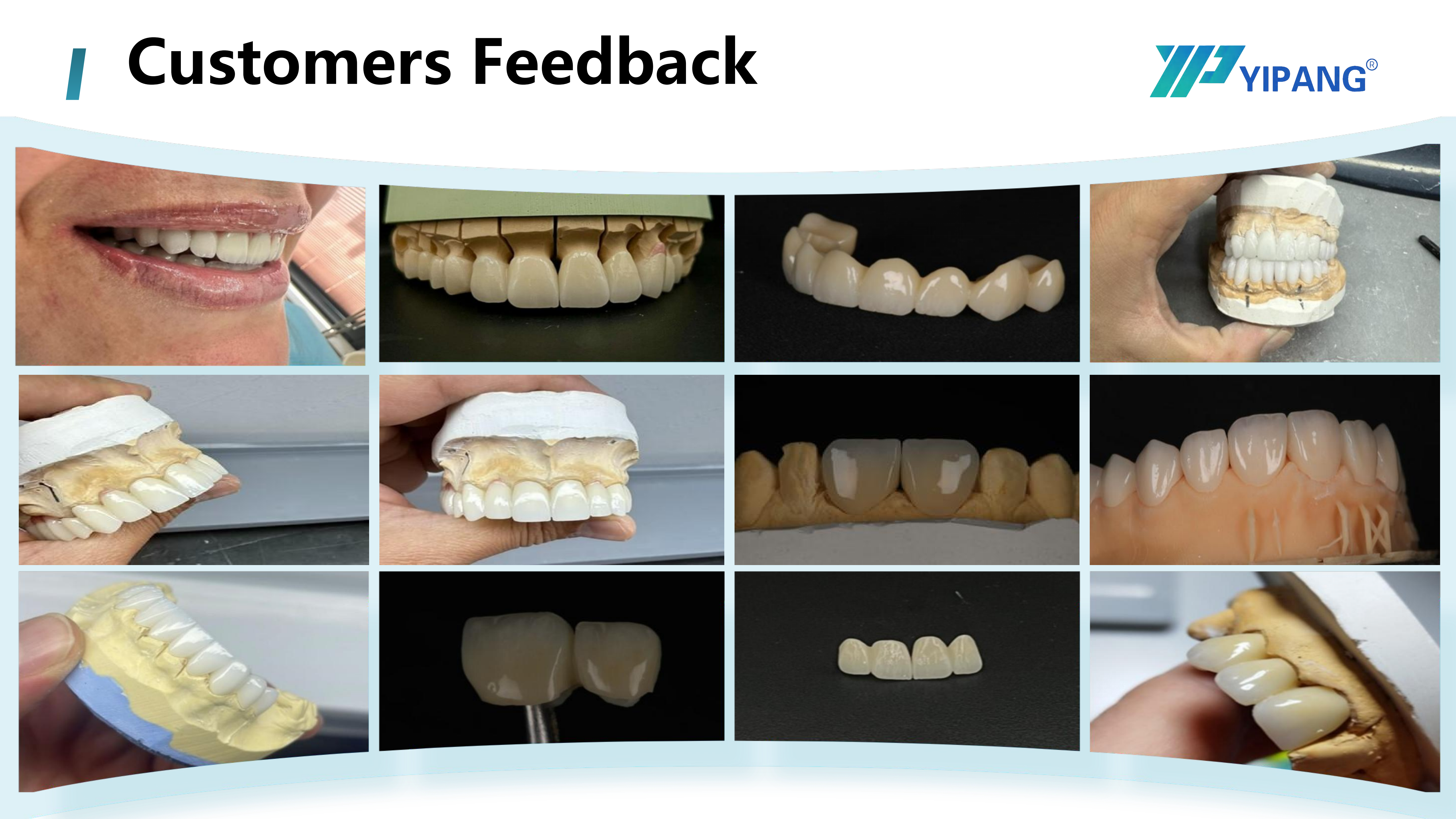
Zirconia block production environment: raw material consistency and process control determine the quality of CAD/CAM milling blanks.
The adoption of CAD/CAM technology in dental laboratories has reshaped how restorations are designed and manufactured. Among the materials used in this digital workflow, the dental zirconia block occupies a central position because it combines high mechanical strength, aesthetic potential, and compatibility with automated milling and sintering processes. For lab managers, technicians, and procurement staff evaluating suppliers, understanding material properties, processing requirements, and quality indicators is essential before making a purchasing decision.
This article serves as an industry reference for dental zirconia block selection, using YIPANG, a self-developed brand owned by Beijing Weijiahua Dentistry Equipment Co., Ltd. (WJH), and its 4D-PRO-ML zirconia block as a concrete example of the specifications and processing data that buyers should examine.
1. The Challenge: What Dental Labs Face When Choosing Zirconia Blocks
Zirconia blocks look similar at first glance, but their performance during milling, sintering, and long-term clinical service can vary considerably. Dental laboratories commonly face several challenges when evaluating these materials.
First, mechanical strength is a primary concern. Blocks with insufficient strength can lead to chipping, cracking, or fracture of the final restoration, particularly in posterior regions where occlusal forces are high. Second, translucency and color matching affect the aesthetic outcome of anterior restorations. A block with poor shade consistency across batches can create noticeable color mismatches. Third, sintering behavior must be predictable. If a block shrinks inconsistently or requires temperature settings that the lab's sintering furnace cannot provide, the result is dimensional inaccuracy and production waste.
There is also the question of equipment compatibility. A dental zirconia disc that is not designed for mainstream milling machines may produce excessive tool wear or poor marginal fit. Finally, laboratories need to consider supplier reliability. Consistent quality, stable delivery, and accessible technical support are as important as the material specification itself.
The opportunity for dental labs lies in developing a systematic approach to material selection. By evaluating documented specifications, processing requirements, and supplier background, a lab can reduce waste, increase throughput, and deliver more predictable clinical outcomes.
2. The Supplier Context: YIPANG and Beijing Weijiahua
YIPANG is a self-developed brand owned by Beijing Weijiahua Dentistry Equipment Co., Ltd. (WJH). WJH was established in 1996 and operates a 2,000 m² facility with around 80 employees. The company's R&D team includes 25 professional engineers engaged in dental material formula research, process optimization, and new product development. Its annual output is approximately 10 million US dollars, with 40%–55% of products exported to markets including the Middle East, Southeast Asia, South America, North America, Eastern Europe, North Africa, and Australia.
WJH's history provides context for its product development. The company initially worked as a distributor of international dental brands, including VITA, Ivoclar, Dentsply, Amann Girrbach, and Noritake. In China, WJH has more than 1,000 dental laboratory customers. This distribution background gave the company direct exposure to the quality standards and technical requirements of established dental material brands before it began developing its own product line.
Today, YIPANG product lines include, but are not limited to, zirconia blocks, glass ceramics, press ingots, PMMA, wax, titanium blocks, implant abutments, 3D scanners, intraoral scanners, milling machines, 3D printers, and sintering furnaces. This breadth is relevant to lab purchasing decisions because it means a single supplier can provide multiple categories of materials and equipment with consistent quality management.
3. The 4D-PRO-ML Zirconia Block at a Glance
The YIPANG 4D-PRO-ML is a CAD/CAM dental milling blank designed for laboratory production of dental prosthetics. It is made from yttria-stabilized zirconium dioxide (ZrO₂), a material widely recognized in dental prosthetics for its combination of strength and biocompatibility.
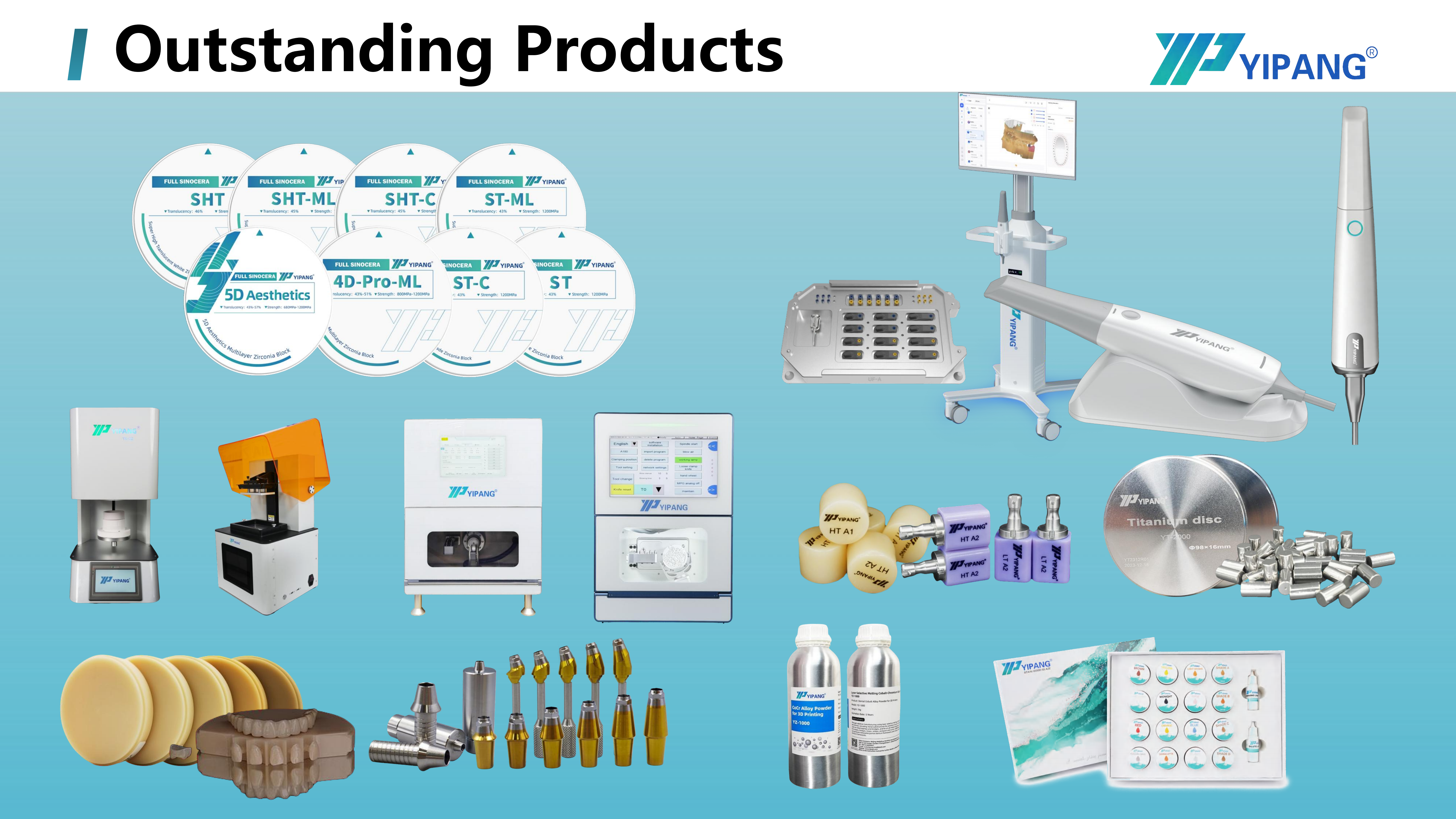
YIPANG 4D-PRO-ML dental zirconia block: a multilayer CAD/CAM milling blank for dental prosthetics.
| Property | Specification |
|---|---|
| Material | Zirconium Dioxide (ZrO₂) with Yttria Stabilized |
| Available Shades | ML Multilayer |
| Thickness | 10 mm, 12 mm, 14 mm, 16 mm, 18 mm, 20 mm |
| Diameter | 98 mm |
| Sintering Temperature | 1450℃ |
| Bending Strength | ≥1200 MPa |
| Translucency | Medium Translucent |
These specifications are directly relevant to the lab buying decision. A bending strength of ≥1200 MPa indicates that the block can withstand the mechanical demands of posterior crowns and multi-unit bridges. The multilayer shade system helps achieve a more natural restoration effect by providing gradual color and translucency transitions within a single block. The 98 mm diameter and thickness options from 10 mm to 20 mm cover the typical range of restoration sizes encountered in daily laboratory work.
In addition, the block is designed to be compatible with most mainstream dental milling machines. This reduces the risk of integration issues when a lab introduces a new material into its existing CAD/CAM environment.
4. Technical Explanation: Strength, Translucency, and Sintering
Understanding how a zirconia block behaves in the laboratory requires a basic knowledge of the material itself. The 4D-PRO-ML is fabricated from yttria-stabilized zirconium dioxide. Yttria, or yttrium oxide, is added to zirconia to stabilize the tetragonal crystal phase at room temperature. This stabilization is what gives dental zirconia its characteristic combination of high strength and fracture toughness.
The ML designation refers to multilayer. Instead of being uniform in color, the block contains multiple layers of different shades and translucency values that replicate the natural gradient from the cervical to the incisal region of a tooth. This design reduces the need for additional staining layers in many cases and shortens the workflow for producing aesthetic restorations.
Sintering is the critical step that determines the final properties of a zirconia restoration. The recommended sintering temperature range for the 4D-PRO-ML block is 1430℃ to 1450℃. The block is rated for a maximum sintering temperature of 1450℃. Following the standard heating and holding procedure helps guarantee low shrinkage and stable translucency.
Labs should pay attention to several process details. Place the milled zirconia workpiece on a sintering tray, set the heating curve up to 1430℃–1450℃ with proper holding time, and allow the furnace to cool naturally after sintering completes. Rapid temperature changes should be avoided, as they can create internal stress and lead to cracking. It is also advisable to inspect blanks for visible defects before sintering, because any inherent defect inside the blank may become a failure point after the restoration is placed.
From a workflow perspective, the 4D-PRO-ML block is processed using a dental milling machine and sintered in a dental sintering furnace. A dental lab scanner is used to digitize the model or impression before CAD design. The overall process transforms a digital design into a dense, high-strength ceramic restoration through subtractive milling and thermal densification.
5. Applications: Crowns, Bridges, Veneers, and Implant Restorations
The 4D-PRO-ML zirconia block is suitable for fabricating full-contour crowns, bridges, veneers, and implant superstructure restorations. These applications cover a large share of the daily production volume in a typical dental laboratory.
- Full-contour crowns – Single-unit restorations made entirely from zirconia, offering high strength for posterior teeth.
- Bridges – Multi-unit restorations that require high flexural strength to span edentulous spaces.
- Veneers – Thin aesthetic restorations where the multilayer translucency of the block contributes to a natural appearance.
- Implant superstructure restorations – Restorations placed on dental implants, benefiting from zirconia's mechanical reliability.
The typical working environment is an indoor constant-temperature dental laboratory. The standard processing route involves digital scanning, CAD design, milling, sintering, and final finishing. A representative workflow looks like this:
- Scan the model or impression using a dental lab scanner.
- Design the restoration in CAD software, including the desired shade and contour.
- Mill the restoration from a 4D-PRO-ML block using a dental milling machine.
- Sinter the milled framework in a dental sintering furnace at 1430℃–1450℃.
- Perform finishing, staining, and glazing as needed before delivery.
For labs considering this material, the key operational requirement is the sintering furnace's ability to follow the recommended temperature curve. Labs that already operate digital workflows with a scanner, milling machine, and sintering furnace can integrate the 4D-PRO-ML with minimal changes to their existing process.
6. Market Trends in Dental CAD/CAM Materials
Several market trends are relevant to labs evaluating zirconia block suppliers. These trends are supported by the product development direction of WJH and the broader movement of the dental industry toward digital production.
First, integrated digital workflows are becoming the standard. Dental laboratories are moving away from isolated devices and toward connected production systems where scanning, design, milling, sintering, and even 3D printing operate as a coordinated pipeline. The YIPANG portfolio, which ranges from 3D scanners and intraoral scanners to milling machines, 3D printers, and sintering furnaces, reflects this shift. For buyers, this means that suppliers offering a broader product ecosystem can provide more consistent technical support across the entire workflow.
Second, material selection is becoming case-specific. The product range of YIPANG includes not only zirconia blocks but also glass ceramics, press ingots, PMMA, wax, titanium blocks, and implant abutments. This diversification indicates that laboratories are increasingly matching materials to clinical requirements rather than relying on one universal material. A posterior crown, an anterior veneer, and a temporary restoration each benefit from a different material class.
Third, global sourcing of dental materials remains active. Beijing Weijiahua exports to the Middle East, Southeast Asia, South America, North America, Eastern Europe, North Africa, and Australia. Dental labs in these regions are incorporating Chinese-produced materials into their workflows, often as a balance between quality and cost.
7. CAD/CAM Zirconia vs. Traditional Metal-Ceramic Methods
Before the widespread adoption of CAD/CAM zirconia, many dental laboratories produced metal-ceramic restorations using conventional wax-up, casting, and porcelain veneering techniques. Comparing these approaches helps lab buyers understand what CAD/CAM zirconia offers and where its boundaries are.
| Aspect | CAD/CAM Zirconia Block | Traditional Metal-Ceramic |
|---|---|---|
| Workflow | Digital scanning, milling, sintering | Manual wax-up, casting, layering |
| Mechanical strength | High bending strength, suitable for posterior restorations | Proven, but depends on metal coping design |
| Aesthetic control | Multilayer shade gradient inside the block | Layered porcelain requires high technician skill |
| Human dependency | Reduced manual steps | Highly dependent on technician experience |
| Reproducibility | Consistent digital process | More variation between cases |
CAD/CAM zirconia offers clear advantages in efficiency and reproducibility. Once a digital workflow is established, a lab can produce multiple restorations with a lower dependency on manual skill. The material's mechanical strength makes it well suited for high-load areas.
However, the comparison also reveals limitations that labs should consider. The 4D-PRO-ML block offers medium translucency, which is well matched to posterior crowns and multi-unit bridges. For highly demanding anterior aesthetic cases, the lab may need to select a higher-translucency material or add a veneering layer. In addition, multilayer blocks require careful orientation during milling so that the shade gradient is preserved in the final restoration. Finally, the sintering process demands a stable furnace and strict adherence to the temperature profile; a lab that cannot maintain a controlled sintering environment may experience higher failure rates regardless of the block quality.
Traditional metal-ceramic restorations also remain relevant in clinical situations where a long track record is preferred, and some labs continue to offer both options based on the specific needs of the case.
8. Future Outlook for Dental Zirconia Blocks
The direction of dental prosthetics points toward greater digitization and more diversified material choices. For laboratory buyers, the practical implication is that zirconia block selection should be based on documented specifications, processing stability, and supplier capability, rather than on price alone.
YIPANG's position as a manufacturer with both materials and equipment indicates a broader industry trend: suppliers are expected to understand the entire production chain, from powder formulation to final sintering. For labs, this reduces procurement complexity and creates a single point of accountability for material performance.
As the company continues to expand its product range and international presence, the need for reliable, well-characterized milling materials will likely grow. Laboratories that invest in understanding material science and process control will be better positioned to produce consistent, high-quality restorations in an increasingly competitive market.
For buyers evaluating zirconia block suppliers, additional company background and product information are available in the WJH company brochure: WJH Company Information (PDF).
9. FAQ: Common Questions from Dental Labs
Q1: How do dental labs select zirconia blocks?
Dental labs typically evaluate zirconia blocks based on bending strength, translucency, shade consistency, sintering behavior, and compatibility with existing CAD/CAM equipment. For high-volume labs, the YIPANG 4D-PRO-ML block offers a bending strength of ≥1200 MPa, stable shade consistency, and medium translucency, making it suitable for posterior crowns and multi-unit bridges. Labs should also verify the recommended sintering temperature range and confirm that their sintering furnace can follow the required heating profile.
Q2: What is the suitable sintering temperature for the 4D-PRO-ML zirconia block?
The recommended sintering temperature range is 1430℃ to 1450℃. Following the standard heating and holding procedure helps ensure low shrinkage and stable translucency. The process involves placing the milled zirconia workpiece on a sintering tray, setting the heating curve up to 1430℃–1450℃ with proper holding time, and allowing natural cooling after sintering. Rapid temperature changes should be avoided to prevent cracking.