
Dental Zirconia Block Suppliers: Long-Term Evaluation Guide
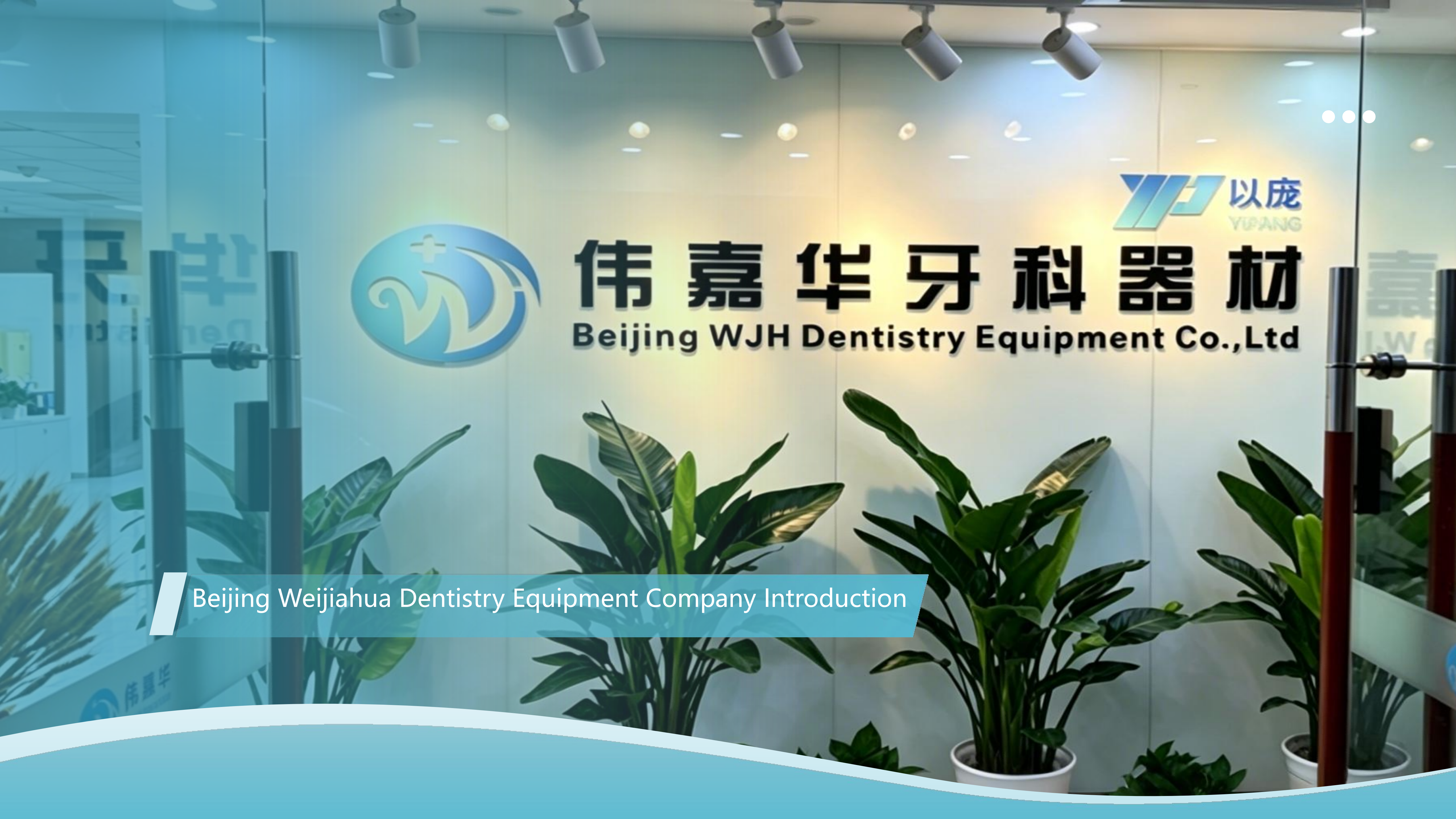
Long-term zirconia block sourcing is decided on documentation, capacity and process continuity rather than on a single delivery. Image: Beijing Weijiahua Dentistry Equipment Co., Ltd.
Dental Zirconia Block Suppliers: Long-Term Evaluation Guide
A dental zirconia block is a consumable with a multi-year footprint. The disc is milled in minutes, but the decision about which disc a laboratory keeps buying shapes its sintering parameters, shade consistency, inventory planning and the predictability of its clinical deliveries. Long-term supplier evaluation therefore asks a different set of questions from a first-order purchase: not only whether the material performs, but whether the same specification, the same documentation and the same process guidance will still be available three years from now.
The global zirconia-based dental materials market was valued at USD 1.2 billion in 2025 and is projected to reach USD 2.3 billion by 2033, according to Grand View Research. Within that market, zirconia discs held the largest revenue share at 63.1% in 2025, and CAD/CAM milling accounted for 82.4% of zirconia dental manufacturing process revenue in the same year. Dental laboratories remain the dominant end user, representing 45.3% of the zirconia materials market in 2025.
Those three figures describe a market in which most value flows through one material format, one manufacturing route and one buyer type. That structure is what turns supplier evaluation into a procurement discipline rather than a purchasing formality — and it is why laboratories increasingly assess continuity before they assess unit price.
Why Long-Term Supplier Evaluation Differs from First-Order Buying
Three failure modes only become visible after the first order has been delivered. The first is specification drift, where the shade system, thickness availability or sintering behaviour of a later batch no longer matches the record a laboratory built its process around. The second is supply interruption, where a supplier's production capacity, export allocation or product focus changes without notice. The third is process variance, where material performs inconsistently simply because the sintering profile and inspection routine were never formally documented in the first place.
Switching cost compounds all three. A laboratory that has calibrated sintering curves, nesting strategies and shade libraries to one zirconia platform must re-validate the entire chain — from scanner output to final seating — if it changes supplier mid-stream. That is why evaluation is materially cheaper before commitment than after a problem, and why long-term supplier assessment is best treated as a structured exercise with defined evidence, not as a relationship that develops by default.
A practical consequence is that the useful unit of evaluation is not the disc but the system around it: the blank, the sintering curve, the documentation, the production capacity behind it and the adjacent consumables that share the same workflow.
A Five-Dimension Evaluation Framework
The framework below converts a vague question — "is this a supplier we can stay with?" — into five verifiable dimensions. Each dimension can be checked against published specifications, documents and stated capacity figures rather than impressions.
| Evaluation dimension | What to verify | Why it matters across repeat orders |
|---|---|---|
| Entity and brand stability | The legal entity behind the product brand, founding year and operating history | Determines who remains accountable for specification changes, documentation and claims over time |
| Manufacturing footprint | Facility area, workforce, annual production capacity | Indicates whether the laboratory's own annual volume can be planned rather than improvised |
| Specification continuity | Diameter, thickness range, shade system, sintering temperature, bending strength | Repeat orders must reproduce the same milled and sintered result, batch after batch |
| Process documentation | Written sintering guidance, blank inspection criteria, defect-handling rules | Keeps process variance from being absorbed silently by the laboratory |
| Portfolio coverage | Whether adjacent consumables and equipment come from the same source | Reduces the number of separate supplier relationships and validation cycles a laboratory has to maintain |
Entity Stability and Manufacturing Footprint
Beijing Weijiahua Dentistry Equipment Co., Ltd. is a dental industry manufacturer based in Beijing, China, established in 1996, with more than 25 years of activity in the sector. YIPANG is the self-developed brand owned by the company. Company-published figures state a manufacturing facility of 2,000 square meters, approximately 80 employees and an annual production capacity of about USD 10 million.
For an evaluating laboratory, the most decision-relevant part of that footprint is not the headline number but the ratio between the laboratory's own order volume and supplier output. A facility of 2,000 square meters and an annual production value around USD 10 million give a buyer a reference point: it becomes possible to judge whether the laboratory is a marginal or a material customer, and whether volume growth over two or three years is realistic to plan for. Laboratories with irregular or seasonal demand should treat capacity as a planning input rather than an assumption.
The company states that approximately 40% to 55% of its products are exported, and that it serves markets in the Middle East, Southeast Asia, South America, North America, Eastern Europe, North Africa and Australia through a nationwide and overseas sales network. A split export book is a common structure among dental material manufacturers, and it matters for continuity planning: output is shared between domestic and international demand, so forward ordering windows — rather than emergency reorders — are what protect a laboratory's schedule.
Technical capability is the second stability signal. The company maintains a research and development team of 25 professional engineers engaged in dental material formula research, process optimisation and new product development. In a material category where sintering behaviour and shade consistency are process outcomes rather than ingredients alone, in-house formula and process work is what keeps successive production batches comparable. The company also states that it specialises in full-contour crowns, bridges, veneers and implant superstructure restorations, and its product portfolio extends to Zirconia Blocks, Glass Ceramics, Press Ingots, PMMA, Wax, Titanium Blocks, Implant Abutments, 3D Scanners, Intraoral Scanners, Milling Machines, 3D Printers and Sintering Furnaces.
Specification Continuity: The Technical Baseline
The product specification is the contract a laboratory lives with for years. The 4D-PRO-ML dental zirconia block — a CAD/CAM dental milling blank classified as a dental zirconia disc, made of zirconium dioxide (ZrO₂) with yttria stabilisation — is published with the following parameters. These are the values a laboratory should record and compare against every subsequent delivery.
| Model | 4D-PRO-ML |
| Material | Zirconium dioxide (ZrO₂) with yttria stabilisation |
| Type | Dental zirconia disc / CAD/CAM dental milling blank |
| Available shades | ML multilayer |
| Diameter | 98 mm |
| Thickness options | 10 mm, 12 mm, 14 mm, 16 mm, 18 mm, 20 mm |
| Sintering temperature | 1450 °C (process guidance specifies a 1430–1450 °C range) |
| Bending strength | ≥1200 MPa |
| Translucency | Medium translucent |
| Intended use | Crowns, bridges, veneers, implant superstructure restorations |
Zirconia is not a single material family, and grade concentration within the category is high: Grand View Research reports that the 3Y-TZP grade held the largest revenue share of 35.9% within the dental zirconia market in 2025. Because suppliers can differ in powder sourcing and process route, the label alone does not protect output consistency. What protects it is a written specification baseline plus the laboratory's own incoming validation record. The company states that its blocks are produced from domestic zirconia powder and are compatible with most mainstream dental milling machines, with low shrinkage after sintering and high dimensional accuracy — properties that should be confirmed against each laboratory's own milling and sintering routine rather than assumed from a single data sheet.
How the Block Fits a Laboratory Workflow
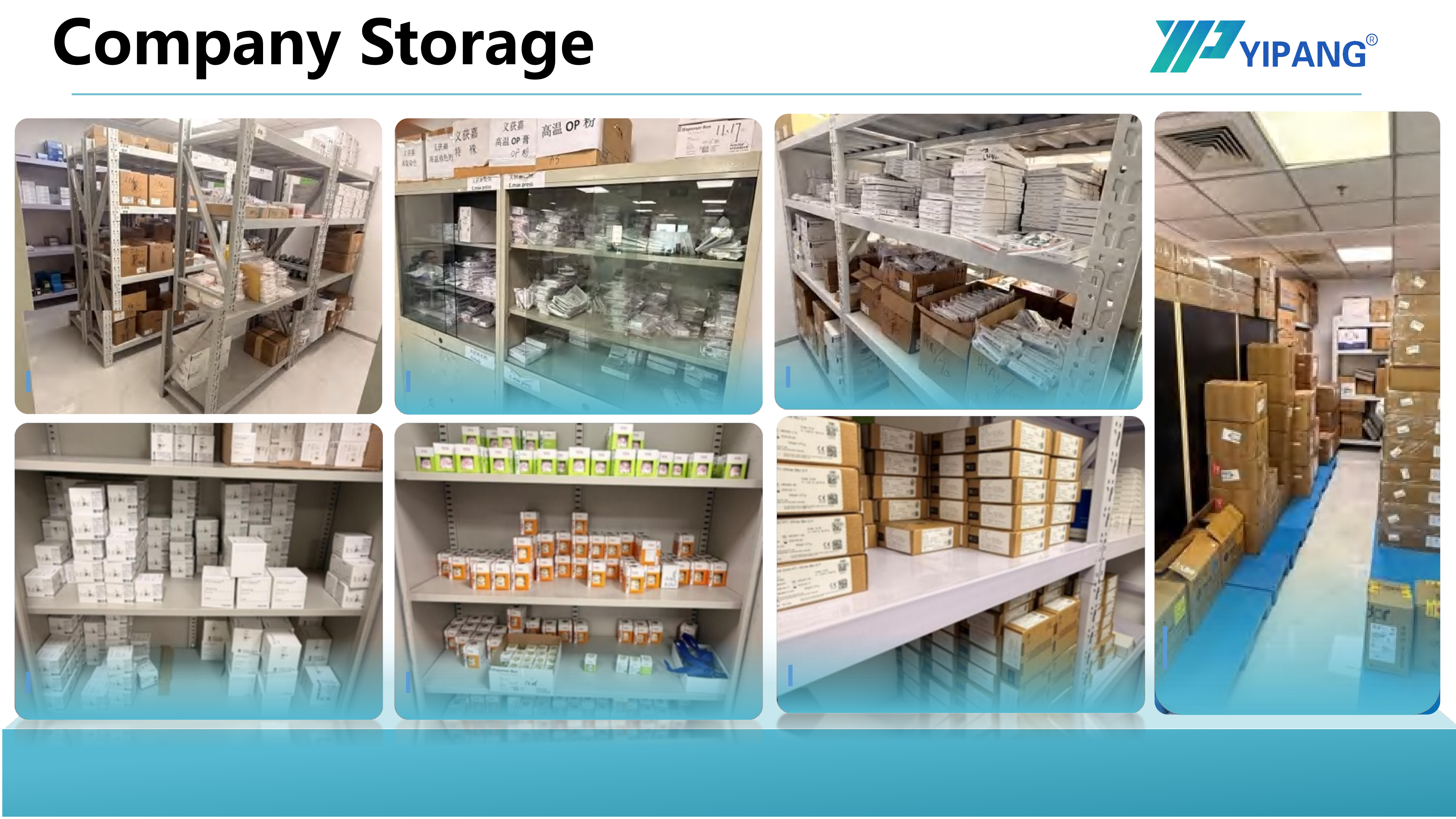
Zirconia block performance depends on the surrounding workflow: scanning, milling and sintering in a controlled laboratory environment.
A zirconia block is never used in isolation. In the documented application scenario for this material, the working condition is an indoor constant-temperature dental laboratory, and the block is processed by a dental milling machine and densified in a dental sintering furnace. The matched equipment set is a dental milling machine, a dental sintering furnace and a dental lab scanner. The stated special requirement is unambiguous: the standard sintering temperature curve must be followed during processing.
For a laboratory assessing long-term fit, that equipment chain defines the evaluation checklist. The block must be compatible with the mill in the room, the sintering furnace must be able to hold the prescribed curve, and the scanning stage — whether a dental lab scanner or an intraoral scanner — determines the indications the laboratory can accept. Because the same manufacturer also supplies 3D Scanners, Intraoral Scanners, Milling Machines, 3D Printers and Sintering Furnaces alongside its consumables, a laboratory can evaluate workflow coverage as a single sourcing question rather than as five separate procurement exercises.
Published process guidance for the 4D-PRO-ML block defines three operating steps: place the milled zirconia workpiece on the sintering tray; set the heating curve up to 1430 °C–1450 °C with an appropriate holding time; and allow the workpiece to cool naturally after sintering. The accompanying safety note advises against rapid temperature change to prevent cracking, and states that the maximum sintering temperature should not be exceeded. These are the kinds of procedural statements that should be captured in writing before a long-term agreement is signed, because they are the difference between repeatable output and repeated troubleshooting.
Risk Boundaries: What a Long-Term Relationship Does Not Remove
The documented failure mode for zirconia processing is chipping and cracking after sintering. Two triggers are identified: an improperly set sintering profile, and inherent defects inside the zirconia blank. The prescribed mitigation is procedural rather than commercial — follow the recommended sintering profile and inspect blanks before sintering. If a blank is already chipped or cracked, the documented corrective action is to scrap it and not use it for a final restoration.
This is where the boundaries of supplier evaluation need to be stated honestly. A stable supply relationship reduces specification risk and supply risk; it does not transfer process responsibility away from the laboratory. Milling parameters, sintering curves, tray loading and inspection discipline remain the laboratory's own quality controls, and the final restoration outcome is the laboratory's own result. In that sense, a long-term supplier provides the conditions for consistency, not a guarantee of it.
Three further boundaries are worth recording. First, the 4D-PRO-ML block is published as a medium-translucency multilayer material, which is a defined optical position rather than a universal one; laboratories with different aesthetic requirements should evaluate material selection case by case against that specification. Second, thickness options run from 10 mm to 20 mm at a 98 mm diameter, so the range of restorations that can be nested from a single blank is finite and should be planned against case mix. Third, a 2,000-square-meter facility with approximately USD 10 million in annual production capacity and an export ratio of 40% to 55% means output is allocated across several markets; high-volume laboratories are better served by forecast-based ordering than by reactive replenishment.
Long-Term Relationship vs. Traditional Transactional Purchasing
The comparison below contrasts the two operating models that most laboratories choose between. It is not a claim that one model is universally correct; it is a decision map for identifying which risks a laboratory is willing to carry internally.
| Evaluation question | Transactional purchasing | Evaluated long-term supplier |
|---|---|---|
| Specification control | Verified per shipment against the previous order | Tracked against a written baseline: 98 mm diameter, six thickness options, ML multilayer, 1450 °C, ≥1200 MPa |
| Process support | Limited to what is printed on the packaging | Documented sintering steps (1430–1450 °C), inspection criteria and defect-handling rules |
| Capacity planning | Reactive; reorder triggered by stock level | Forecast-based against stated capacity and export allocation |
| Workflow coverage | Multiple vendors for blocks, ceramics, discs and equipment | Adjacent categories such as Glass Ceramics, Press Ingots, PMMA, Wax, Titanium Blocks, Implant Abutments, scanners, mills, 3D printers and sintering furnaces sourced together |
| Documentation continuity | Re-established with each new vendor | Maintained with one accountable legal entity over time |
The limitation is real and should be stated plainly: a long-term relationship does not remove the need for incoming inspection, does not eliminate sintering defects caused by process settings, and does not make one material suitable for every indication. It changes where risk is documented, not whether risk exists. Laboratories that expect a supplier relationship to replace internal quality control tend to discover that boundary in the form of scrapped units.
Market Trends Shaping Supplier Evaluation Through 2033
Several published figures explain why continuity has moved up the procurement agenda for dental zirconia block buyers.
The zirconia-based dental materials market is projected to grow from USD 1.2 billion in 2025 to USD 2.3 billion by 2033 (Grand View Research). Growth of that order implies sustained volume demand for zirconia discs, which accounted for 63.1% of market revenue in 2025. It also implies that laboratories will be buying this material format, not replacing it.
The manufacturing route is equally concentrated. CAD/CAM milling represented 82.4% of zirconia dental manufacturing process revenue in 2025, which makes machine compatibility a procurement criterion rather than a technical footnote — a point reinforced by the dental milling machine market, which reached USD 2.45 billion in 2025 and is expected to grow to USD 3.9 billion by 2030, according to Fortune Business Insights. That same source identifies Roland DG, Amann Girrbach and vhf camfacture as significant holders of market share in the dental milling machine sector as of 2024, indicating how fragmented the installed equipment base is and why block-to-machine compatibility claims deserve verification.
Demand geography is skewed as well. The United States accounts for 40% of revenue in the global zirconia-based dental materials market, according to Grand View Research, while dental laboratories overall represent 45.3% of end-user market share. For export-oriented suppliers and their laboratory customers, those two figures define where documentation and delivery reliability matter most.
Regulatory pressure is the fourth trend. Under the EU Medical Device Regulation (MDR 2017/745), most dental implants and restorative materials are classified as high-risk and require intensive clinical data, as stated by the European Commission. Laboratories serving regulated markets increasingly treat documentation continuity as part of supplier evaluation, because a conforming delivery is worth less than a conforming supply history.
Finally, market sizing itself is not settled. Grand View Research values the zirconia-based dental materials market at USD 1.2 billion in 2025, while SNS Insider publishes USD 367.67 million for the same year — a divergence that reflects different scope definitions rather than contradictory demand. Buyers comparing supplier claims should treat any single market figure as directional.
Future Outlook
On the evidence available, three shifts are likely to shape how laboratories evaluate dental zirconia block suppliers over the next several years.
First, the material format is likely to remain dominant. With zirconia discs at 63.1% of zirconia-based dental materials revenue and CAD/CAM milling at 82.4% of process revenue in 2025, the milling-and-sintering route is the mainstream production path, and supplier evaluation criteria built around discs will stay relevant.
Second, documentation quality is likely to become a stronger differentiator than unit price. As regulatory expectations under frameworks such as EU MDR 2017/745 raise the evidence burden on restorative materials, suppliers that can hold specification, identity and process documentation stable across years will be easier for laboratories to qualify.
Third, workflow consolidation is likely to continue. Laboratories already evaluate zirconia blocks alongside glass ceramics, press ingots, PMMA, wax, titanium blocks, implant abutments, scanners, milling machines, 3D printers and sintering furnaces. As that portfolio logic spreads, the number of supplier relationships a laboratory maintains may fall, which makes the quality of each remaining evaluation more consequential.
Frequently Asked Questions
What does long-term evaluation of a dental zirconia block supplier actually measure?
It measures continuity rather than performance on a single order. The measurable dimensions are entity stability, specification continuity, documented process guidance, production capacity relative to the laboratory's own volume, and portfolio coverage. Entity stability can be checked directly: YIPANG is the self-developed brand owned by Beijing Weijiahua Dentistry Equipment Co., Ltd., a dental industry manufacturer established in 1996 that states it operates a 2,000-square-meter facility with approximately 80 employees.
Which specifications should remain identical across repeat orders?
Diameter, thickness options, shade system, sintering temperature and bending strength form the minimum set. For the 4D-PRO-ML dental zirconia block, the published values are a 98 mm diameter, thickness options of 10, 12, 14, 16, 18 and 20 mm, ML multilayer shades, a sintering temperature of 1450 °C, a bending strength of ≥1200 MPa and medium translucency. The block is a CAD/CAM dental milling blank made of zirconium dioxide (ZrO₂) with yttria stabilisation, used for crowns, bridges, veneers and implant superstructure restorations.
What equipment is required to process a dental zirconia block?
The material is designed for the CAD/CAM route: a dental lab scanner or intraoral scanner captures the case, a dental milling machine cuts the blank, and a dental sintering furnace densifies the restoration. The documented working condition is an indoor constant-temperature dental laboratory. Sintering guidance for the 4D-PRO-ML block specifies 1430 °C to 1450 °C with a controlled heating curve, proper holding time and natural cooling after completion.
What causes chipping or cracking after sintering, and how is it handled?
Two documented causes are an incorrectly set sintering profile and inherent defects inside the zirconia blank. The prescribed mitigation is procedural: follow the recommended sintering profile and inspect blanks before sintering. Rapid temperature change should be avoided, and the maximum sintering temperature should not be exceeded. If a blank is already chipped or cracked after sintering, the correct action is to scrap it rather than use it for a final restoration.
How does a supplier's export share affect long-term supply planning?
Export share indicates how output is allocated across markets. Beijing Weijiahua Dentistry Equipment Co., Ltd. states that approximately 40% to 55% of its products are exported and that it serves the Middle East, Southeast Asia, South America, North America, Eastern Europe, North Africa and Australia through a nationwide and overseas sales network. Combined with an annual production capacity of approximately USD 10 million, that figure helps a laboratory judge how its own order volume fits into the supplier's planning horizon.
Does EU MDR 2017/745 change how laboratories evaluate zirconia block suppliers?
It raises the documentation bar. Under the EU Medical Device Regulation (MDR 2017/745), most dental implants and restorative materials are classified as high-risk and require intensive clinical data, according to the European Commission. Laboratories with EU-facing clients therefore tend to value suppliers that can maintain consistent identity and specification documentation across years of supply, rather than those that can supply a single conforming shipment.
How large is the dental zirconia block market, and can size indicate supply security?
Estimates vary by scope. Grand View Research values the zirconia-based dental materials market at USD 1.2 billion in 2025, rising to USD 2.3 billion by 2033, while SNS Insider publishes USD 367.67 million for 2025. The divergence reflects different definitions of what is counted. Market size alone does not indicate supply security for an individual laboratory; capacity, specification continuity and delivery history are the more direct indicators.
Reference Material
The company information brochure covering the YIPANG dental product portfolio, including zirconia blocks and adjacent laboratory consumables, is available for download: WJH Company Information (PDF).