
Dental Zirconia Block Sourcing: How Labs Judge Supplier Longevity
Zirconia discs accounted for 63.1% of revenue in the global zirconia-based dental materials market in 2025, and dental laboratories remained the largest end-user group for zirconia materials at 45.3% of that market. For a working dental lab, those two figures describe something more practical than a market headline: the zirconia blank is not a project purchase. It is a repeat consumable that a lab reorders against validated process settings, month after month.
That is why long-term supplier evaluation for Dental Zirconia Block supply looks different from a first-purchase comparison. The question is not only which block mills cleanly today, but whether the same specification, sintering behaviour, shade system, commercial terms and documentation will still be available in year three or year five — and what evidence a lab can examine before committing annual volume.
Long-Term Evaluation Starts With the Lab's Own Workflow
A laboratory that adopts a zirconia block commits to a chain of settings: nesting strategy in the CAM software, sintering curve in the furnace, shade mapping in the multilayer blank, and the finishing protocol after sintering. Those settings are the lab's real asset. They shorten production time and reduce remakes.
The structure of the industry reinforces how tightly the material is bound to that chain. CAD/CAM milling accounted for 82.4% of zirconia dental manufacturing process revenue in 2025, according to Grand View Research — meaning nearly every zirconia restoration passes through a milling-and-sintering sequence whose outcome is governed by blank geometry, density uniformity and shrinkage behaviour.
Long-term evaluation therefore tends to focus on four continuity questions:
- Specification continuity — will the shade system, thickness range and diameter stay available?
- Process continuity — will sintering behaviour and shrinkage stay inside a documented tolerance?
- Commercial continuity — will lead time, minimum order quantity and payment terms remain workable at repeat volume?
- Service continuity — when a defect appears, will the supplier still be able to help diagnose it?
The Discontinuity Problem in Zirconia Procurement
Discontinuity rarely arrives as a dramatic event. In dental material supply it usually appears as one of five smaller shifts, each of which costs the lab time rather than money at the invoice level.
Specification drift. A thickness is discontinued, a shade batch reads differently, or the multilayer transition band changes. The lab compensates manually with more staining and glazing time.
Process drift. Shrinkage behaviour moves outside the range the lab designed its CAM margins around. Every affected case has to be re-nested or re-fitted.
Supply drift. Lead times extend, minimum order quantities rise, or payment terms tighten in a way that forces the lab to hold more inventory than its cash flow supports.
Diagnosis drift. YIPANG's own risk documentation identifies two causes of chipping and cracks after zirconia sintering: improper sintering profile settings and inherent defects inside the zirconia blank. The recommended mitigation is to follow the recommended sintering profile and to inspect blanks before sintering, scrapping any chipped or cracked blank rather than using it for a final restoration. When a lab changes suppliers mid-year, those two causes become harder to separate — a material defect and an equipment problem can look identical on the finished restoration.
Compliance drift. EU Medical Device Regulation (MDR 2017/745) classifies most dental implants and restorative materials as high-risk and requires intensive clinical data. A supplier that cannot maintain that documentation cannot maintain market access, regardless of how well the block mills.
The opportunity on the other side of this problem is straightforward: a supplier whose offer covers more of the workflow reduces the number of interfaces a lab has to re-qualify when something goes wrong.
What a Long-Term Supplier Ecosystem Has to Contain
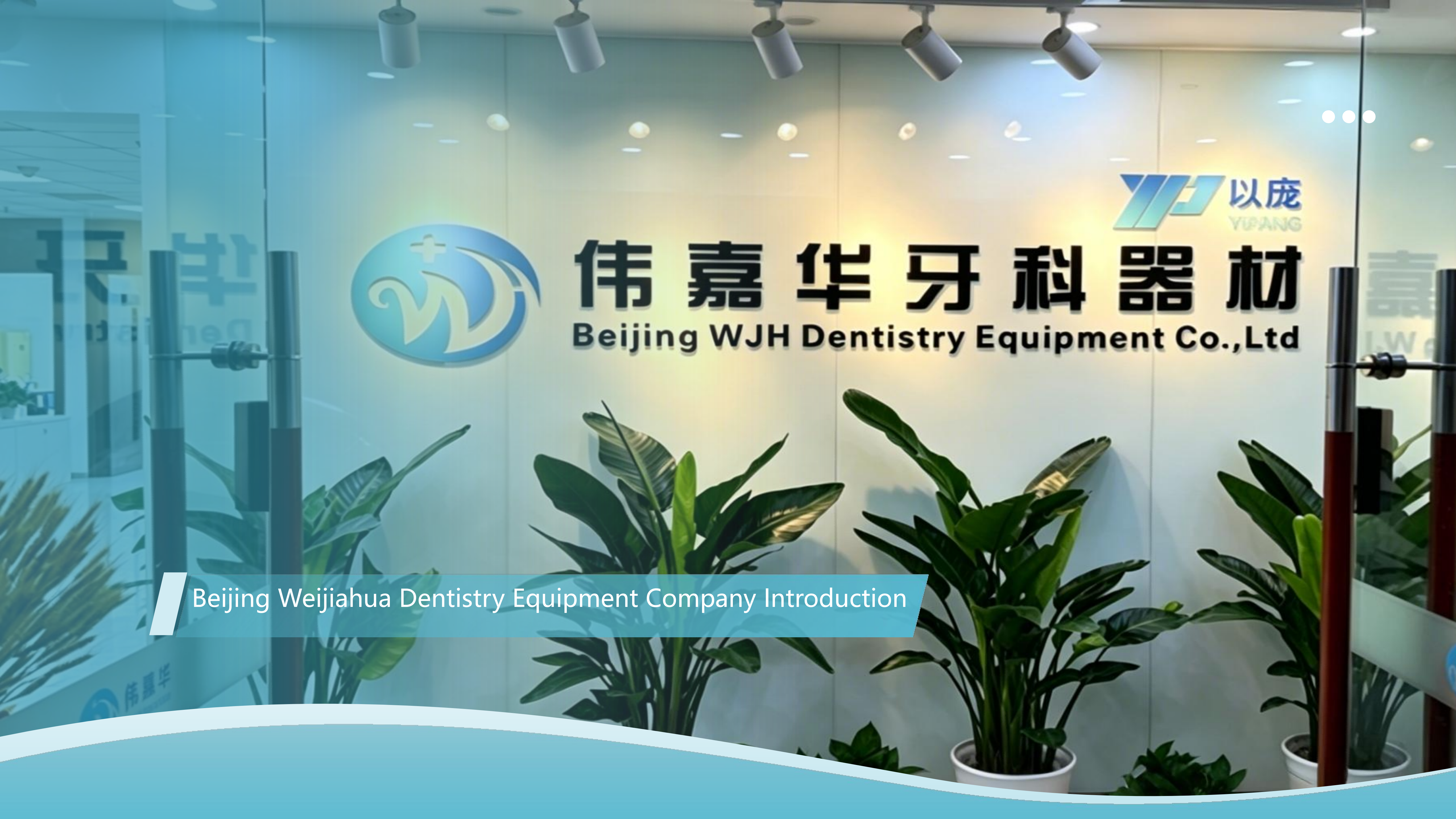
Beijing Weijiahua Dentistry Equipment Co., Ltd. is a Beijing-based dental equipment and materials company founded in 1996, operating a manufacturing facility of approximately 2,000 m² with around 80 employees and annual output of about USD 10 million. YIPANG is the company's self-developed brand, built up over roughly five years of product development and now covering zirconia blocks, glass ceramics, press ingots, PMMA, wax, titanium blocks, implant abutments, 3D scanners, intraoral scanners, milling machines, 3D printers and sintering furnaces.
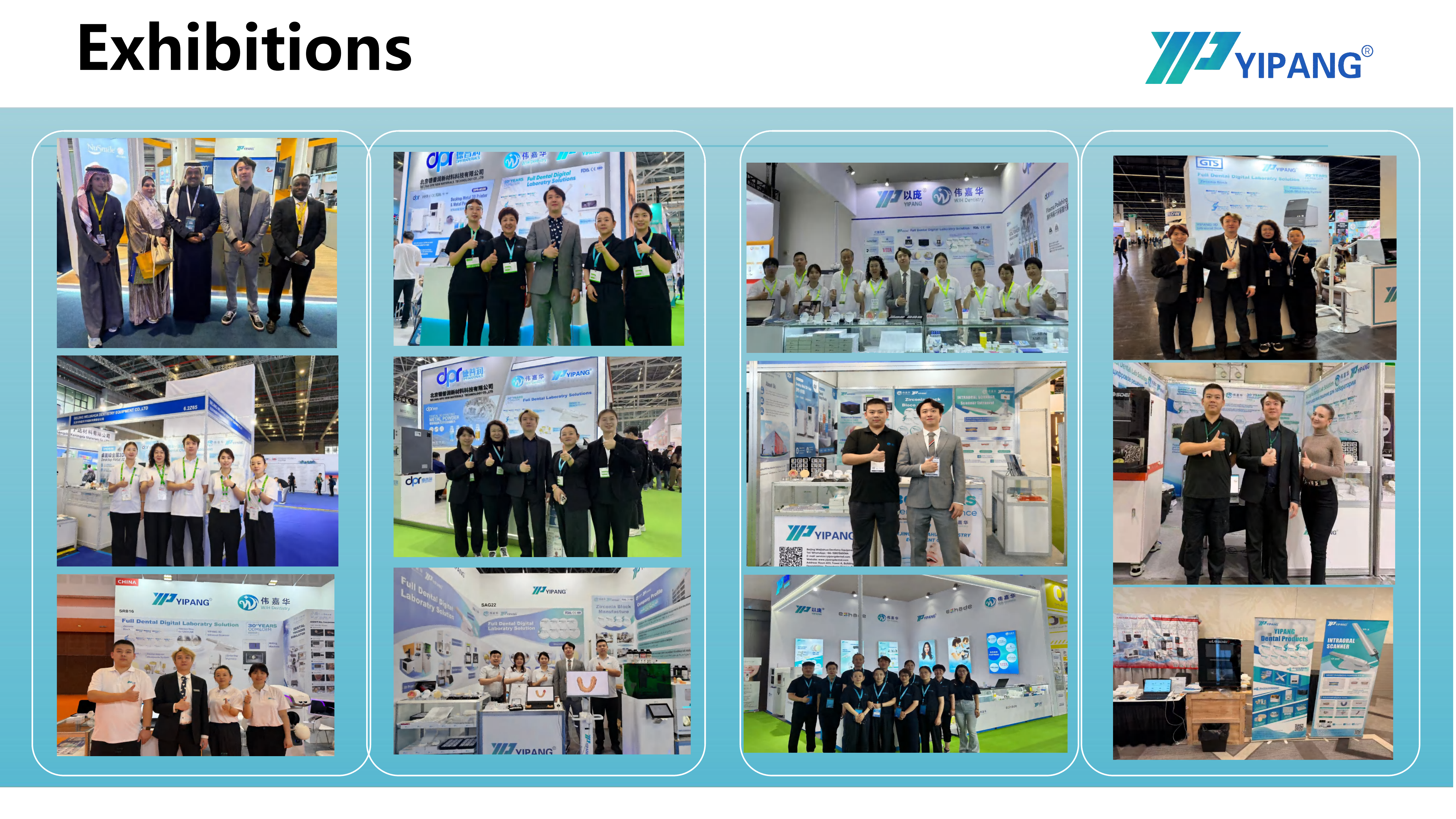
The evidence a procurement team can actually examine in this kind of evaluation includes:
- Engineering depth: a research and development team of 25 professional engineers working on dental material formula research, process optimization and new product development.
- Product ecosystem: finished-restoration materials alongside the equipment that processes them — zirconia blocks, glass ceramics, press ingots, PMMA, wax, titanium blocks, implant abutments, 3D scanners, intraoral scanners, milling machines, 3D printers and sintering furnaces.
- Dual supply view: representation of well-known international brands including VITA, Ivoclar, Dentsply, Amann Girrbach and Noritake, alongside the company's own YIPANG line.
- Installed customer base: more than 1,000 dental laboratory customers in China, with a nationwide sales network in China and an overseas sales network.
- Export diversification: approximately 40% to 55% of products exported, serving the Middle East, Southeast Asia, South America, North America, Eastern Europe, North Africa and Australia.
- Service layer: systematic products and services for dental practitioners covering technicians, clinical, 3D printing, medical technology training and consulting.
Read as procurement evidence rather than as company description, these points answer different continuity questions. The R&D headcount indicates whether customization requests have an internal engineering route. The product ecosystem indicates how many interfaces a lab must manage. The 1,000-customer installed base and multi-region export spread indicate that the supplier is not dependent on a single market's demand cycle. The service layer indicates whether technical problems have somewhere to go after the invoice is paid.
Technical Stability: The Parameters That Make a Multi-Year Relationship Possible
For the YIPANG 4D-PRO-ML zirconia block, the documented specification is the starting point of any long-term evaluation, because these are the numbers a lab's CAM and sintering strategy is built around.
| Parameter | Documented value | Why it matters across repeat orders |
|---|---|---|
| Material | Zirconium dioxide (ZrO₂), yttria stabilized | Stable base chemistry supports predictable sintering behaviour |
| Format | Zirconia disc / CAD/CAM dental milling blank | Fits standard digital lab workflow |
| Diameter | 98 mm | No CAM fixture change between batches |
| Thickness options | 10, 12, 14, 16, 18, 20 mm | Case mix coverage from single units to larger frameworks |
| Shades | ML multilayer | Reduces manual staining workload on aesthetic cases |
| Sintering temperature | 1450 ℃ (parameter sheet); 1430–1450 ℃ documented working range | Furnace programs do not need rewriting |
| Bending strength | ≥1200 MPa | Supports posterior and multi-unit indications |
| Translucency | Medium translucent | Predictable aesthetic positioning across cases |
| Sintering shrinkage error | Within ±0.3% | Keeps CAM compensation margins valid over time |
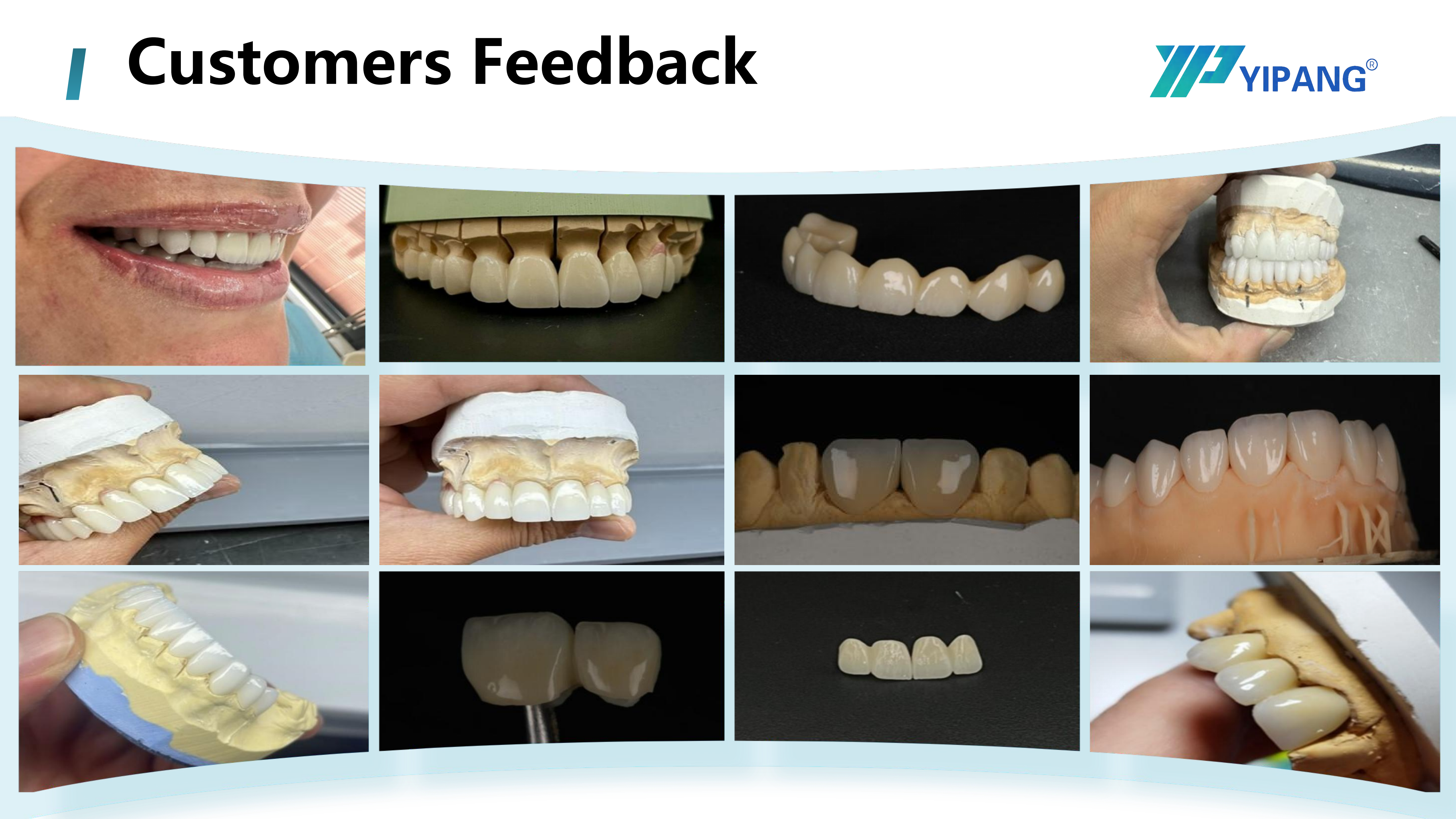
The sintering step deserves particular attention in a long-term evaluation, because it is the stage where accumulated small differences become visible. YIPANG's documented guidance is to place the milled zirconia workpiece on a sintering tray, set a heating curve up to 1430 ℃–1450 ℃ with a proper holding time, and cool down naturally after sintering is complete. Rapid temperature change is explicitly discouraged to prevent cracking, and the maximum sintering temperature should not be exceeded.
Two operational facts follow from this. First, a lab that standardises on a documented temperature window can keep the same furnace program for years. Second, because the documented failure modes are profile-related and blank-related, a supplier that publishes both process guidance and quality inspection practice gives the lab a way to assign cause when a case fails.
The comparison data for this product line is also relevant to a multi-year view. Against other domestic and imported zirconia blank suppliers, YIPANG positions its advantage in batch consistency, cost performance relative to imported brands, flexible customization with shorter delivery, and a strict whole-process quality inspection system. Documented processing behaviour includes density uniformity, low processing failure rate, and compatibility with most mainstream dental milling machines. The stated fit is dental laboratories focused on aesthetic restoration and importers looking for cost-effective dental materials.
Where 4D-PRO-ML Zirconia Blocks Fit in Daily Lab Work
The application scope documented for the 4D-PRO-ML line is full-contour crowns, bridges, veneers and implant superstructure restorations. Its stated operating context is an indoor, constant-temperature dental laboratory environment, with the block processed on a dental milling machine and sintered in a dental sintering furnace.
Matched equipment documented for this workflow includes the Dental Milling Machine, Dental Sintering Furnace and Dental Lab Scanner. In practice, that means a lab evaluating this block for long-term use is simultaneously evaluating three linked consumable and equipment families: the block itself, the burs and tooling that mill it, and the furnace program that sinters it.
The use-case profile is worth stating precisely. YIPANG recommends 4D-Pro-ML zirconia blocks for high-volume dental labs, citing stable shade consistency and suitability for posterior crowns and multi-unit bridges where mechanical strength and translucency aesthetic performance have to be balanced. Labs whose case mix is dominated by anterior aesthetic work should validate the medium-translucent class against their own shade expectations during sampling rather than assume it from the specification table.
Market Trend Analysis: Why Supplier Depth Is Being Repriced
The commercial environment behind long-term supplier evaluation is expanding on both the material and equipment sides.
- The global zirconia-based dental materials market was valued at USD 1.2 billion in 2025 and is projected to reach USD 2.3 billion by 2033 (Grand View Research).
- Within that market, zirconia discs held the largest revenue share at 63.1% in 2025, and 3Y-TZP zirconia grade held the largest product-grade share at 35.9%.
- Dental laboratories accounted for 45.3% of zirconia material end-user share in 2025.
- The U.S. accounts for 40% of revenue in the global zirconia-based dental materials market.
- The dental milling machine market reached USD 2.45 billion in 2025, with expected growth to USD 3.9 billion by 2030 (Fortune Business Insights).
- The dental 3D printing market is estimated to grow from USD 4.9 billion in 2025 to USD 26.7 billion by 2033, with photopolymer resins holding a 55.5% material share in 2025 (Grand View Research).
Two structural conclusions follow. First, material and equipment growth are moving together, which means a lab buying a milling machine or printer is implicitly choosing a consumables channel for several years. Second, because the digital workflow is broadening rather than replacing subtractive manufacturing, suppliers that cover both milling and printing categories are better positioned to stay relevant across a lab's equipment refresh cycle.
One caveat belongs here as well. Published market estimates vary significantly by scope: for the 2025 zirconia-based dental materials market, Grand View Research reports USD 1.2 billion while SNS Insider reports USD 367.67 million, and lithium disilicate CAGR forecasts range from 18.8% to 24.53% depending on regional adoption assumptions. These figures should be treated as directional signals about category growth, not as inputs to an individual purchase decision.
Supplier Models Compared: Material Trader vs. Integrated Ecosystem
Long-term risk is largely a function of how many separate relationships a lab must maintain to keep producing. That is the dimension on which supplier models differ most.
| Evaluation dimension | Material-only supplier | Integrated supplier ecosystem | Long-term implication |
|---|---|---|---|
| Product scope | Zirconia blanks | Blanks plus scanners, milling machines, 3D printers, sintering furnaces, glass ceramics, press ingots, PMMA, wax, titanium blocks, implant abutments | Fewer vendors to re-qualify when a process problem crosses categories |
| Technical support | Limited to block specification | Training and consulting for technicians, clinical, 3D printing and medical technology | Fault diagnosis stays with one partner |
| Batch consistency evidence | Often undocumented | Documented ±0.3% sintering shrinkage tolerance and whole-process inspection | Lower revalidation load at every reorder |
| Engineering route | Minimal | 25 professional engineers in formula research, process optimization and new product development | Customization and change requests have an internal path |
| Commercial terms | Varies by trader | MOQ 1 box for standard models, 5 boxes for customized products; FOB Shanghai/Tianjin available for export | Restocking can be planned rather than improvised |
| Main limitation | Narrow but simple | Broader scope still has to be validated category by category | Scope is not the same as verified quality |
Limits worth stating plainly. Breadth is not a substitute for verification. Four constraints should be part of any honest long-term evaluation of this supplier profile.
- Payment and order structure. Payment terms are full payment before shipment, with a minimum order quantity of 5 boxes for customized products. Labs that restock frequently in small batches should model the working-capital and warehousing effect of those terms rather than assume consignment-style flexibility.
- Acceptance window. Acceptance criteria require quantity checking on receipt, with damage or deformation reported within 48 hours with photos, and sampling tests supported. A lab that stores blanks for months before first use needs an internal intake inspection step to stay inside that window.
- Manufacturing scale. A 2,000 m² facility with approximately 80 employees and about USD 10 million in annual output is a mid-size operation. Multi-site groups planning very large annual commitments should confirm volume allocation, delivery scheduling and buffer stock in writing.
- Brand track record. The YIPANG zirconia line has been developed over roughly five years, which is shorter than the history of several established imported block portfolios. Sampling, supported by the supplier, is the appropriate way to close that gap before an annual commitment.
Future Outlook
Three shifts are likely to shape how laboratories evaluate zirconia suppliers over the next several years.
Evaluation will become data-driven. As labs accumulate several years of nesting, shrinkage and remake records, supplier reviews will move from impression-based judgments toward documented batch performance. Suppliers that publish shrinkage tolerance and inspection practice will be easier to retain than suppliers that publish only a strength figure.
Regulatory documentation will become a procurement criterion. With EU MDR 2017/745 requiring intensive clinical data for most dental implants and restorative materials, certificate scope and declaration-of-conformity maintenance will sit alongside price and lead time in the supplier scorecard.
Material and equipment decisions will converge. With dental 3D printing projected to grow from USD 4.9 billion in 2025 to USD 26.7 billion by 2033 and CAD/CAM milling still handling 82.4% of zirconia process revenue, the labs best protected against workflow disruption are those whose suppliers can serve both the subtractive and additive sides of the same case pipeline.
Frequently Asked Questions
What does long-term supplier evaluation mean for dental zirconia blocks?
It means assessing a supplier against continuity rather than against a single order: whether the same specification, sintering behaviour, shade system, commercial terms and documentation will remain available across repeat purchases. Because a lab validates its CAM margins and sintering program around a specific blank, the practical measure of a long-term supplier is how little those validated settings have to change over time. The criteria typically used include batch consistency, documented shrinkage tolerance, thickness and shade coverage, lead time, minimum order quantity and the supplier's ability to support the surrounding workflow.
How can a dental lab verify supplier stability before committing annual volume?
Verifiable evidence includes founding year, manufacturing footprint, headcount, R&D composition, installed customer base and export coverage. Beijing Weijiahua Dentistry Equipment Co., Ltd., established in 1996, operates a manufacturing facility of approximately 2,000 m² with around 80 employees, annual output of about USD 10 million, and a research and development team of 25 professional engineers focused on dental material formula research, process optimization and new product development. The company reports more than 1,000 dental laboratory customers in China and exports approximately 40% to 55% of its products to the Middle East, Southeast Asia, South America, North America, Eastern Europe, North Africa and Australia.
What technical data should stay consistent across repeat orders of dental zirconia blocks?
For the YIPANG 4D-PRO-ML block, the documented values are a 98 mm diameter, thickness options of 10, 12, 14, 16, 18 and 20 mm, ML multilayer shades, a sintering temperature of 1450 ℃ on the parameter sheet with a documented working range of 1430–1450 ℃, bending strength of ≥1200 MPa, medium translucent classification, and sintering shrinkage error within ±0.3%. Buyers should note that YIPANG documentation cites flexural strength of 800–1200 MPa for its high-volume zirconia line in one risk note while the product parameter sheet states ≥1200 MPa; requesting the test method and batch record is the correct way to resolve that difference.
What are the purchasing terms and acceptance criteria?
The minimum order quantity is 1 box for standard models and 5 boxes for customized products. Domestic orders are delivered by express; export orders ship by sea or air freight, with FOB Shanghai/Tianjin available. Payment terms are full payment before shipment. Acceptance requires checking quantity upon receipt, with damage or deformation reported within 48 hours with photos; sampling tests are supported.
What causes chipping or cracks after zirconia sintering?
Documented causes are improper sintering profile settings and inherent defects inside the zirconia blank. The stated mitigation is to follow the recommended sintering profile and to inspect blanks before sintering. Any blank that is chipped or cracked should be scrapped and should not be used for a final restoration.
How does an integrated product ecosystem reduce long-term supply risk?
When one supplier also provides the surrounding workflow — dental lab scanner, milling machine, sintering furnace, milling burs, 3D printer and adjacent materials such as glass ceramics, press ingots, PMMA, wax, titanium blocks and implant abutments — a laboratory manages fewer vendor interfaces when a process problem crosses equipment and material boundaries. YIPANG's product lines cover these categories, and the company also represents VITA, Ivoclar, Dentsply, Amann Girrbach and Noritake, giving buyers both a self-developed brand route and an imported brand route within one relationship. Scope alone does not guarantee quality; each category still needs separate validation.
How do regulatory requirements such as MDR 2017/745 affect long-term zirconia supply?
EU Medical Device Regulation (MDR 2017/745) classifies most dental implants and restorative materials as high-risk and requires intensive clinical data. For laboratories and importers, that makes a supplier's documentation practice — declarations of conformity, certificate scope and batch traceability — part of the long-term evaluation, because documentation maintenance is a precondition for continued market access rather than an administrative afterthought.