
Dental Zirconia Block: Reading Specs Against Lab Workflows
A dental zirconia block is a specification decision before it becomes a purchasing decision. Two laboratories can order the same category of blank and end up with very different production outcomes, because scenario fit depends on how the blank’s dimensions, shade structure, translucency class and sintering behaviour line up with the restorations a lab actually produces and the equipment it actually runs.
The category itself continues to expand. Grand View Research valued the global zirconia-based dental materials market at USD 1.2 billion in 2025 and projected USD 2.3 billion by 2033. Within that market, zirconia discs held 63.1% of revenue share in 2025, while CAD/CAM milling accounted for 82.4% of zirconia dental manufacturing process revenue in the same year. Dental laboratories remained the dominant end user, at 45.3% of market share in 2025.
Those figures describe a category, not a purchase. This reference article examines scenario fit for the dental zirconia block — how a lab matches a blank to restoration type, equipment chain and process conditions — using the published specifications of the YIPANG 4D-PRO-ML dental zirconia block as a worked example.
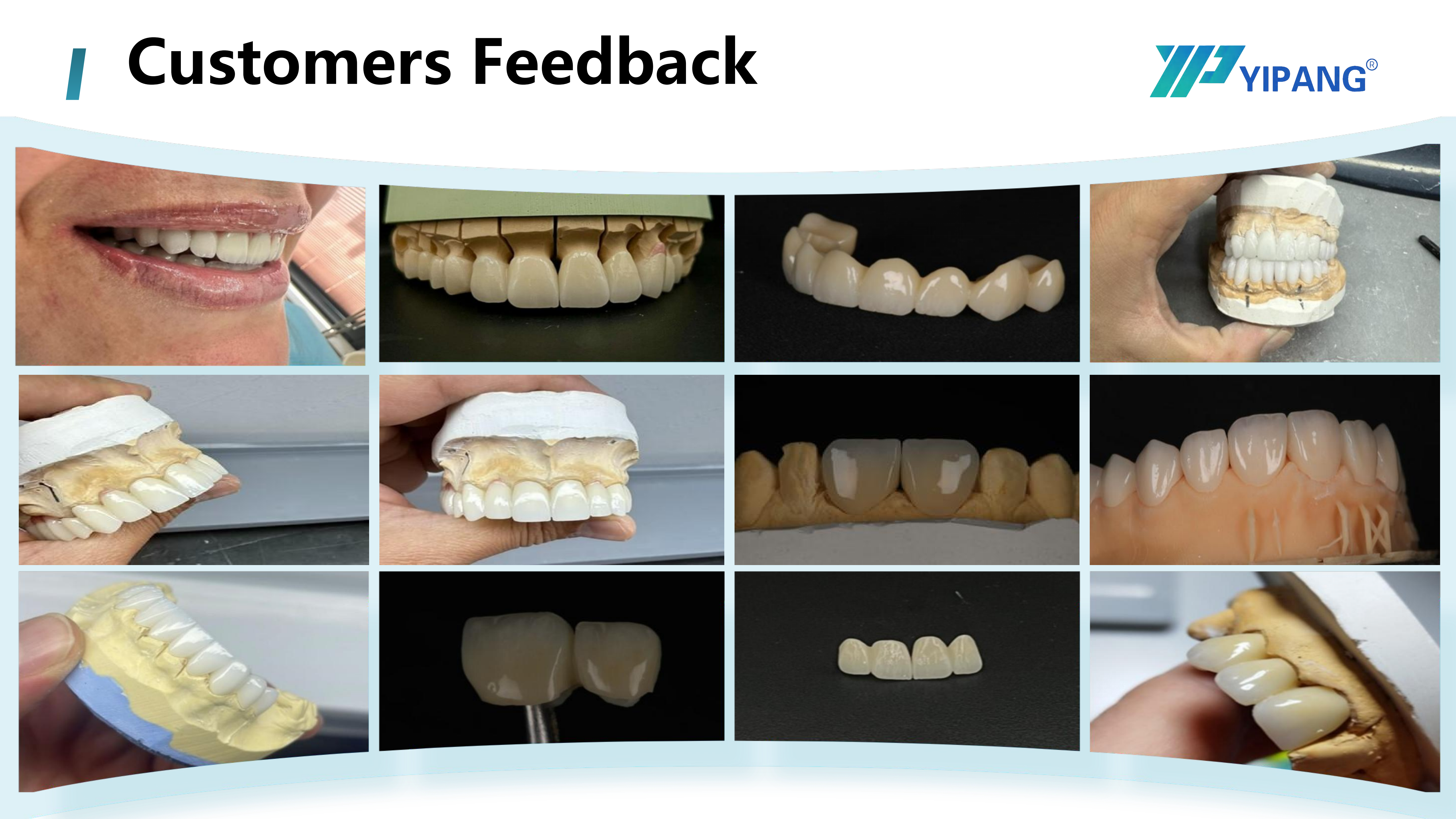
Zirconia block production is a controlled process; scenario fit begins with a documented specification rather than a brand habit.
What “Scenario Fit” Means for a Dental Zirconia Block
Scenario fit is a three-way match: the restoration requirement, the blank specification, and the lab’s equipment and process capability. A blank can be perfectly manufactured and still be the wrong blank for a specific laboratory, because the mismatch rarely shows up in the material itself. It shows up later — in a thickness that cannot nest the planned units, a translucency class that does not suit the case type, or a sintering schedule the furnace cannot hold reliably.
The YIPANG 4D-PRO-ML is a dental zirconia block for dental prosthesis, classified as a dental zirconia disc and a CAD/CAM dental milling blank. It is composed of zirconium dioxide (ZrO₂) with yttria stabilization, is designed for dental CAD/CAM workflows, and is intended for the dental laboratory, dental prosthetics and dental CAD/CAM industries. Its published specification set is: 98 mm diameter; thickness options of 10 mm, 12 mm, 14 mm, 16 mm, 18 mm and 20 mm; ML multilayer shades with medium translucency; sintering temperature 1450 °C; bending strength ≥1200 MPa.
YIPANG is the self-developed brand of Beijing Weijiahua Dentistry Equipment Co., Ltd., a dental industry manufacturer established in 1996. That manufacturing origin matters for scenario fit only insofar as it makes the stated specifications traceable and repeatable across orders — which is the point of a specification-led selection process.
The Real Fit Problem: Where Block Selection Goes Wrong
Most laboratories do not have a blank quality problem. They have a blank-to-scenario matching problem, and it tends to appear in four predictable places.
First, thickness is chosen by familiarity rather than by case mix. A lab that standardises on a single thickness will either waste material on small restorations or run out of vertical space on larger ones. Because the available thickness range on this product spans 10 mm to 20 mm in six steps, the relevant question is not which thickness is “best” but which set of thicknesses covers the lab’s actual production profile.
Second, translucency is treated as a single universal target. Multilayer discs with a gradient shade structure and a defined translucency class serve a defined band of aesthetic requirements. Selecting a medium-translucency blank for cases whose primary requirement is maximum light transmission is a scenario mismatch, not a product defect.
Third, the sintering step is under-specified. The YIPANG process guidance states that the recommended sintering temperature range is 1430 °C–1450 °C and that a standard heating and holding procedure should be followed to support low shrinkage and stable translucency. Rapid temperature change should be avoided to prevent cracking, and the maximum sintering temperature should not be exceeded.
Fourth, the working environment is overlooked. The documented operating condition for this application is an indoor, constant-temperature dental laboratory environment. Furnace behaviour and dimensional outcomes are process variables, and process variables are part of scenario fit.
A Three-Axis Scenario Fit Check
Before ordering, a lab can reduce most matching risk to three questions, each of which has a verifiable reference point rather than a subjective judgement.
| Fit axis | Question the lab must answer | Documented reference point |
|---|---|---|
| Restoration type | Does the blank’s intended use cover the units the lab produces? | Stated use for crowns, bridges and aesthetic dental restorations; scenario scope includes full-contour crowns, bridges, veneers and implant superstructure restorations. |
| Equipment chain | Can the lab scan, mill and sinter the blank with its existing machines? | Matched equipment: dental lab scanner, dental milling machine, dental sintering furnace. The blank is stated as compatible with most mainstream dental milling machines. |
| Process conditions | Can the lab hold the required sintering curve in a stable environment? | Indoor constant-temperature laboratory environment; standard sintering temperature curve must be strictly followed; recommended range 1430 °C–1450 °C. |
Equipment Chain: What Has to Line Up Before the First Milling Job
A zirconia block enters a chain, not a machine. The documented operation mode for this application is: the blank is processed by a dental milling machine and then sintered in a dental sintering furnace, with a dental lab scanner at the front of the workflow. Each link imposes its own condition on the blank.
The scanner determines how accurately the restoration can be designed and how much support geometry the nesting plan requires. The milling machine determines whether the blank format, diameter and thickness can be loaded and cut within the machine’s working envelope; the 4D-PRO-ML uses a 98 mm diameter and is stated as compatible with most mainstream dental milling machines, which is the specification a lab should verify against its own machine list before ordering. The sintering furnace determines whether the fine dimensional outcome can actually be realised in production, since sintering is where the material densifies and where curve discipline translates into fit.
For a lab evaluating a new blank, the practical sequence is therefore to check the equipment chain first, the restoration scope second, and the price band last. A blank that satisfies the first two conditions is comparable on cost; a blank that fails them is not comparable at all.
Reading the Specification Sheet Against a Scenario
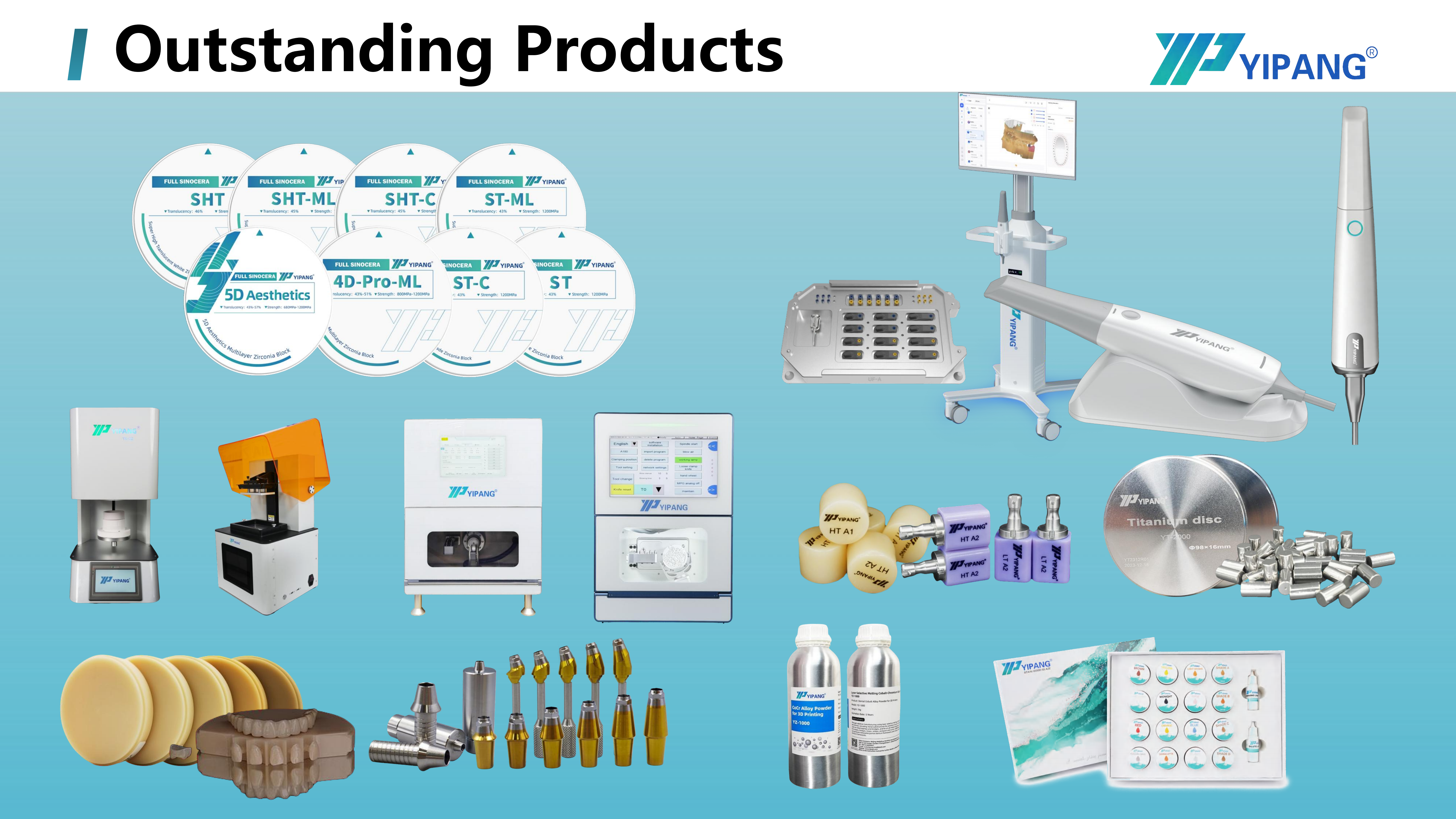
The 4D-PRO-ML blank format: 98 mm diameter, multilayer ML shades, medium translucency, intended for CAD/CAM dental workflows.
Specifications only become decision criteria when they are read next to a scenario. The table below restates the published values and the scenario question each one answers.
| Specification | Stated value | Scenario question it answers |
|---|---|---|
| Material | Zirconium dioxide (ZrO₂) with yttria stabilization | Is this a zirconia-based restorative blank, and what does the composition imply for the sintering programme? |
| Diameter | 98 mm | Does the disc format load into the lab’s existing milling machine? |
| Thickness options | 10, 12, 14, 16, 18, 20 mm | Can the planned restoration height and unit count be nested without oversizing the blank? |
| Shades | ML multilayer | Does the case mix require a gradient shade structure rather than a single-tone blank? |
| Translucency | Medium translucent | Does the aesthetic requirement sit within a medium-translucency band? |
| Sintering temperature | 1450 °C stated; recommended range 1430 °C–1450 °C | Can the furnace hold the required curve, including holding time and natural cooling? |
| Bending strength | ≥1200 MPa | Is the strength envelope relevant to load-bearing restorations such as bridges? |
YIPANG also states that the 4D-PRO-ML is produced from high-quality domestic zirconia powder with stable performance, a low shrinkage rate after sintering and high dimensional accuracy, and that the product is subject to quality control intended to meet dental medical material standards. Those are first-party statements about the manufacturing process, and in an evaluation context they should be treated as claims to be checked against the lab’s own acceptance testing rather than as independent findings.
Shade, Translucency and the Esthetic Boundary
The ML multilayer shade structure exists to reproduce a natural colour gradient across the restoration rather than a uniform body colour. Combined with a medium translucency class, it defines a band of aesthetic scenarios: cases where a natural gradient and moderate light diffusion are the target. Within that band, the blank is a straightforward choice.
The boundary is equally clear. Medium translucency is not the highest translucency class available in ceramic restorative materials, so scenarios where maximum light transmission is the dominant requirement sit outside the natural fit of this grade. Labs making those cases should expect to evaluate a different material category — which is consistent with the market picture: lithium disilicate accounts for approximately 28% of all all-ceramic dental restorations globally as of 2024, and multiple ceramic categories continue to coexist inside the same laboratory.
Application Scenarios: Where This Block Is Designed to Sit
The documented application profile for this product is specific and can be stated without embellishment.
Industry scope: dental medical devices and the dental lab CAD/CAM industry, with global applicability.
Working condition: an indoor, constant-temperature dental laboratory environment.
Project type: full-contour crowns, bridges, veneers and implant superstructure restorations.
Function: to fabricate aesthetic, durable dental prostheses that repair missing or damaged teeth.
Operation mode: the blank is processed by a dental milling machine and sintered in a dental sintering furnace.
Matched equipment: dental milling machine, dental sintering furnace and dental lab scanner.
Special requirement: the standard sintering temperature curve must be strictly followed during processing.
Read together, these points describe a lab scenario rather than a chairside scenario: a CAD/CAM workflow with defined scanning, milling and sintering stages, a controlled indoor environment, and a case mix centred on fixed prosthetics and implant superstructures. A laboratory operating that configuration is inside the intended scenario. A laboratory without a milling machine and a sintering furnace is outside it, regardless of how attractive the blank is on paper.
The Production and Supply Context Behind the Specification
Beijing Weijiahua Dentistry Equipment Co., Ltd. was established in 1996 and operates as a manufacturer and supplier in the dental industry. The company operates a 2000-square-metre manufacturing facility with approximately 80 employees and an annual production capacity of USD 10 million. Approximately 40% to 55% of its products are exported, and it serves markets in the Middle East, Southeast Asia, South America, North America, Eastern Europe, North Africa and Australia, supported by nationwide and overseas sales networks.
Its product lines include Zirconia Blocks, Glass Ceramics, Press Ingots, PMMA, Wax, Titanium Blocks, Implant Abutments, 3D Scanners, Intraoral Scanners, Milling Machines, 3D Printers and Sintering Furnaces. YIPANG, the self-developed brand, covers zirconia blocks as its restorative blank line, while the wider portfolio spans several stages of the same digital workflow. For a scenario-fit discussion, the relevant implication is portfolio continuity: a lab that sources blanks, scanners, milling machines and sintering furnaces from overlapping supply relationships has fewer variables to reconcile when a process parameter changes.
The company also maintains a research and development team of 25 professional engineers working on dental material formula research, process optimisation and new product development, and a record of representing established international dental brands. Those are company-level facts; they do not by themselves validate any individual batch, which is why acceptance testing at the lab level remains necessary.
Market Trend: Why Scenario Fit Is Becoming a Selection Criterion
Three market signals suggest that blank-to-scenario matching will matter more, not less, over the next several years.
Volume shifting toward CAD/CAM. CAD/CAM milling accounted for 82.4% of zirconia dental manufacturing process revenue in 2025, and zirconia discs held 63.1% of the zirconia-based dental materials market in the same year. When the dominant production route is a digital milling route, the blank specification becomes a production variable rather than a commodity descriptor.
Labs as the centre of demand. Dental laboratories accounted for 45.3% of zirconia material end use in 2025. Because labs buy repeatedly rather than once, blank decisions accumulate into workflow standards, and a mismatch becomes a recurring cost rather than a single error.
Grade and scope divergence. 3Y-TZP zirconia held the largest revenue share of 35.9% in the dental zirconia market in 2025 — a market-level observation about grade mix rather than a statement about this specific product, whose stated composition is zirconium dioxide with yttria stabilization. Regional concentration is also uneven: the United States accounted for 40% of revenue in the global zirconia-based dental materials market in 2025.
Analyst estimates should be read with appropriate caution. Reported 2025 values for the zirconia-based dental materials market diverge substantially by source scope — Grand View Research reports USD 1.2 billion, while SNS Insider reports USD 367.67 million for a narrower definition. Forecast growth rates for the adjacent lithium disilicate category similarly range from roughly 15% to over 24% depending on assumptions. The direction is consistent; the precision is not.
Comparing Routes and Respecting the Limits
Zirconia block production is one route among several in a dental laboratory, and the honest comparison is a comparison of constraints rather than of superlatives.
The zirconia route requires a complete digital chain — scanning, design, milling, sintering — plus furnace discipline at a defined high-temperature programme. YIPANG’s own portfolio reflects this plurality: alongside Zirconia Blocks, the company supplies Glass Ceramics and Press Ingots, which address different production and aesthetic requirements. A laboratory choosing between them is choosing a workflow, not simply a material.
Where the boundaries of this specific product are concerned:
- Equipment dependency. Without a dental milling machine, a sintering furnace and a scanning stage, the blank cannot be converted into a restoration. Labs without that chain sit outside the application scope entirely.
- Process sensitivity. Sintering must follow a standard heating and holding procedure in the recommended 1430 °C–1450 °C range, with rapid temperature change avoided and the maximum temperature not exceeded. The finished restorations are then cooled naturally. Process shortcuts are a documented risk, not a theoretical one.
- Translucency ceiling. Medium translucency is a deliberate position, not a maximum. Cases defined by maximum light transmission fall outside the natural fit of this grade.
- Regulatory documentation. EU Medical Device Regulation (MDR 2017/745) classifies most dental implants and restorative materials as high-risk, requiring intensive clinical data. For labs serving regulated markets, the documentation burden sits alongside the technical specification in any sourcing decision.
Future Outlook
If the zirconia-based dental materials market develops along the projected trajectory toward USD 2.3 billion by 2033, growth will be concentrated where the workflow already exists: dental laboratories running digital milling and sintering. Two consequences follow for buyers.
First, blank selection will increasingly be documented against equipment lists and case mix rather than decided per order, because repeatability is what a laboratory actually sells to its clients. Second, process parameters — furnace programmes, curve discipline, environment control — will carry more weight in supplier evaluation, since they determine whether a validated specification survives contact with daily production.
For suppliers, the visible differentiator is likely to shift from material claims toward evidence that a specification holds across repeated orders and varied restoration types. Labs can support that shift by keeping their own acceptance data: dimensional outcomes after sintering, curve logs, and fit results by restoration type. That record, not the brochure, is what makes the next scenario decision faster.
FAQ
What is a dental zirconia block used for?
A dental zirconia block is a CAD/CAM dental milling blank used to produce dental prostheses. The YIPANG 4D-PRO-ML is classified as a dental zirconia disc and milling blank and is stated for use in crowns, bridges and aesthetic dental restorations, with a documented project scope covering full-contour crowns, bridges, veneers and implant superstructure restorations. It is intended for the dental laboratory, dental prosthetics and dental CAD/CAM industries.
Which laboratory scenarios does this block fit?
It fits dental laboratory scenarios built around a CAD/CAM workflow: an indoor, constant-temperature laboratory environment, a dental lab scanner and milling machine at the production stage, and a dental sintering furnace for densification. The documented operation mode is milling followed by sintering, with the standard sintering temperature curve strictly followed. Chairside or non-digital production settings fall outside this application scope.
What equipment is required to process the blank?
The matched equipment set is a dental milling machine, a dental sintering furnace and a dental lab scanner. The blank is manufactured at a 98 mm diameter and is stated as compatible with most mainstream dental milling machines, so a lab should confirm the disc format against its own machine’s working envelope before ordering.
What sizes and shades are available on the 4D-PRO-ML?
The model is supplied at a 98 mm diameter with thickness options of 10 mm, 12 mm, 14 mm, 16 mm, 18 mm and 20 mm. It is available in ML multilayer shades, with a medium translucent appearance, and is composed of zirconium dioxide (ZrO₂) with yttria stabilization. Published mechanical and process values list a sintering temperature of 1450 °C and a bending strength of ≥1200 MPa.
What sintering temperature and process should be followed?
The recommended sintering temperature range is 1430 °C–1450 °C, with a standard heating and holding procedure used to support low shrinkage and stable translucency. The documented steps are: place the milled zirconia workpiece on a sintering tray; set the heating curve up to 1430 °C–1450 °C with an appropriate holding time; and allow the workpiece to cool naturally after sintering. Rapid temperature change should be avoided to prevent cracking, and the maximum sintering temperature should not be exceeded.
What evidence supports a quality evaluation?
Published values for the 4D-PRO-ML include a bending strength of ≥1200 MPa, a sintering temperature of 1450 °C, and a composition of zirconium dioxide with yttria stabilization. YIPANG states that the block is produced from high-quality domestic zirconia powder with a low shrinkage rate after sintering and high dimensional accuracy, and that it is subject to quality control intended to meet dental medical material standards. In regulated markets, suppliers and laboratories must additionally account for EU MDR 2017/745, under which most dental implants and restorative materials are classified as high-risk and require intensive clinical data.
What are the limitations of this blank?
Three limits are documented. It requires a complete CAD/CAM chain — scanner, milling machine and sintering furnace — and cannot be processed without it. Sintering must follow the specified curve within 1430 °C–1450 °C, with rapid temperature change avoided and natural cooling after the hold. And its medium translucency defines a band rather than a maximum, so cases whose primary requirement is maximum light transmission are a better match for a different ceramic category. This is consistent with the broader market, where lithium disilicate accounts for approximately 28% of all all-ceramic dental restorations globally as of 2024.
Additional reference material, including company and product-line information for Beijing Weijiahua Dentistry Equipment Co., Ltd. (brand YIPANG), is available in the WJH company information brochure (PDF).