
Dental Zirconia Block Comparison: Weighting Criteria for Labs
Dental Zirconia Block Comparison: Weighting Criteria for Labs
A dental zirconia block comparison only becomes decisive once a laboratory has settled the material question and is choosing a blank and a supply model that must survive sintering, fit an existing CAD/CAM chain, and remain available on repeat order. At that point the useful comparison weighs four verifiable variables: dimensional and sintering consistency, workflow compatibility, documentation readiness, and the commercial terms that govern the second and third order rather than the first.
Supply-side review: dental zirconia block comparison at the decision stage is a supplier-and-material exercise, not a material-category exercise.
Why the Comparison Question Changes at the Decision Stage
Earlier in a procurement cycle, labs compare material classes: zirconia against lithium disilicate, or milled restorations against printed ones. By the time a lab has moved into the decision and execution stage, that comparison is settled and a narrower one begins. The comparison set is now three or four concrete blanks, and the basis of comparison shifts from category claims to the lab's own process data, case mix, furnace profile, and repeat-order economics.
This shift explains why specification sheets that look similar can lead to different purchasing outcomes. A blank with a slightly wider shrinkage tolerance may be perfectly acceptable for single crowns and unacceptable for long-span bridges, because dimensional error accumulates across units. Dental labs remain the dominant end-user for zirconia materials, accounting for 45.3% of the market share in 2025 (Grand View Research), and CAD/CAM milling accounted for 82.4% of zirconia dental manufacturing process revenue in the same year. In practice, this means most zirconia block comparisons are made by laboratories, and the consequences of a weak comparison are replicated across thousands of units rather than absorbed in a single case.
Three comparison failures recur at this stage:
- Price-only comparison. Unit cost per blank is treated as the decision variable, while remake rate, milling time, and sintering behaviour are left unmeasured.
- Origin-only comparison. A blank is accepted or rejected on whether it is imported or domestically produced, without checking whether the batch data behind either option is comparable in the first place.
- Single-sample judgement. One successful test case is generalised to a material decision, although batch consistency, not a single outcome, is what repeat ordering depends on.
What Actually Gets Compared: Four Supply Models
Before criteria are weighted, the comparison set itself has to be defined. Most dental zirconia block decisions come down to four structural choices, and each one demands different evidence.
1. Imported premium-brand blanks versus domestically produced blanks
This is the most common axis in lab procurement. YIPANG's comparison documentation states four differences between its domestic zirconia blanks and other domestic and imported dental zirconia blank suppliers: the use of high-quality domestic self-developed zirconia powder with stable batch consistency; better cost performance compared with imported brands; flexible customization with shorter delivery time; and a strict whole-process quality inspection system. The same documentation states a stable sintering shrinkage error within ±0.3%, and a price position that is more competitive than imported zirconia blocks with equivalent quality.
For a buyer, the operational reading of those claims is straightforward: the comparison is not about whether domestic powder can be used in dentistry, but whether a specific supplier's batch consistency and inspection regime are documented well enough to be weighted.
2. Single-layer blanks versus multilayer blanks
Multilayer blanks carry a shade gradient through the disc so that a milled restoration approximates the transition from dentine to enamel without separate layering. YIPANG's 4D-PRO-ML blank is listed in ML Multilayer shades with medium translucency. Single-layer blanks, by contrast, place the entire shade decision in the staining and glazing stage. The comparison criterion here is not which type is better, but whether the lab's staining workflow and case mix can absorb a single-layer blank, or whether the multilayer gradient removes a step the lab currently performs manually.
3. Standard catalogue blanks versus customized blanks
Standard models and customized products sit under different commercial conditions. Under the supplier's stated terms, the minimum order quantity is 1 box for standard models and 5 boxes for customized products. That difference changes who can realistically buy which option: a single-chair clinic and a distributor buying for resale do not face the same entry threshold.
4. Manufacturer-direct supply versus distributor supply
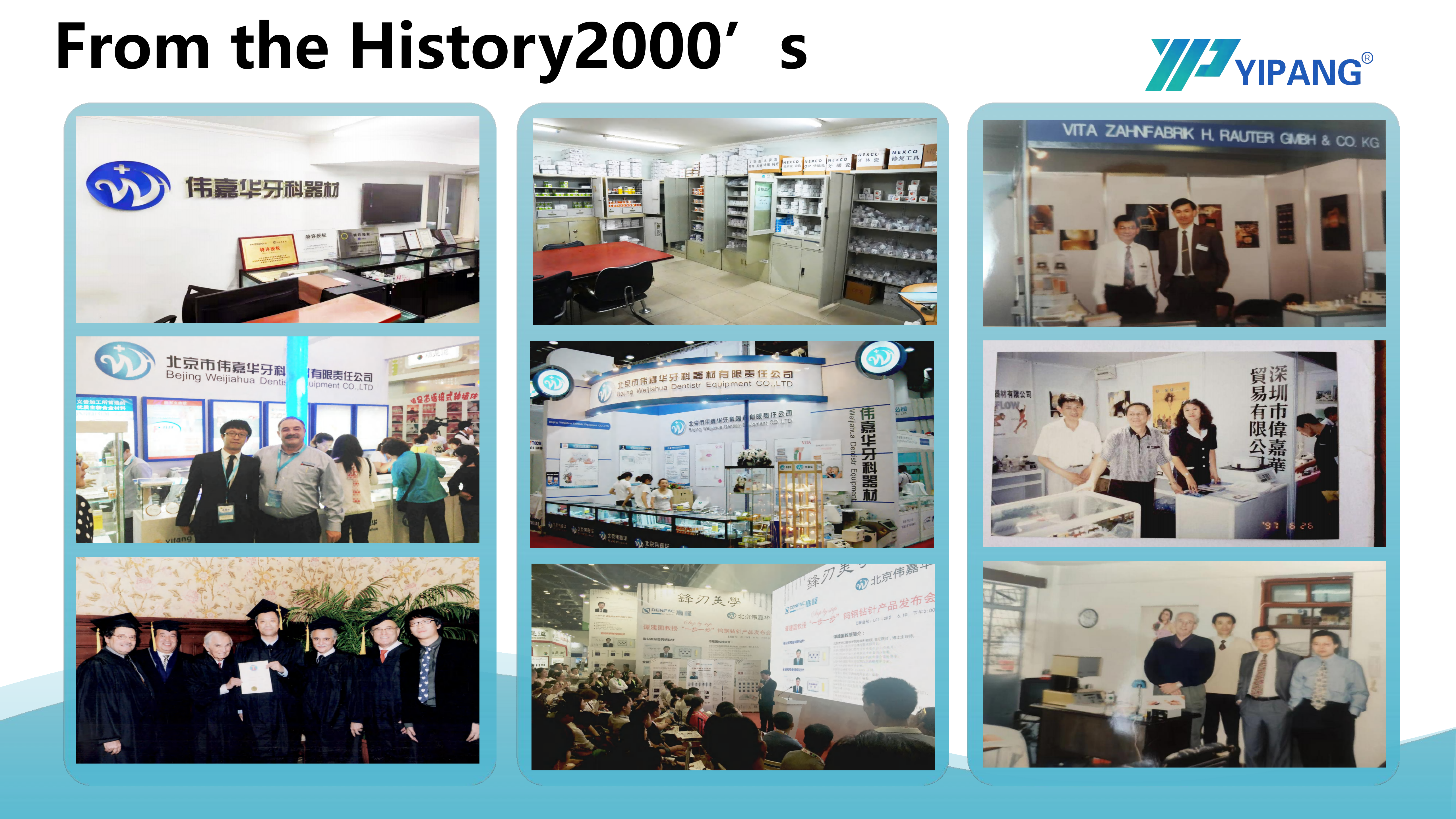
The supply channel determines who holds technical responsibility for the material and who holds the inventory. A supplier that also carries international brands has practical familiarity with distribution expectations; Beijing Weijiahua Dentistry Equipment Co., Ltd. represents VITA, Ivoclar, Dentsply, Amann Girrbach, and Noritake. For an importer, that portfolio breadth is a comparison input, because it indicates the channel experience behind the order rather than only the blank itself.
A Weighted Comparison Framework for Lab Buyers
The framework below converts a comparison into a weighting exercise. Each criterion carries an evidence request, because a criterion without evidence cannot legitimately be weighted against another.
| Criterion | What to verify | Evidence to request | Why it changes the decision |
|---|---|---|---|
| Dimensional and sintering consistency | Stated shrinkage tolerance and batch-to-batch variation | Written shrinkage range plus batch or sample test result | Cumulative dimensional error decides whether multi-unit bridges seat after sintering. The supplier's comparison documentation states a stable sintering shrinkage error within ±0.3%; buyers should confirm how that figure is measured. |
| Specification fit | Bending strength, translucency grade, shade system, thickness and diameter options | Specification sheet stating parameters and test basis | These parameters define which indications a blank can serve, from full-contour crowns and bridges to implant superstructure restorations. |
| Workflow compatibility | Milling machine, burs, sintering furnace and scanner compatibility | Compatibility statement plus a trial run on the lab's own equipment | A blank that mills or sinters poorly appears as remakes rather than as a purchasing variance. Compatibility with most mainstream dental milling machines and a low processing failure rate are stated for this material. |
| Documentation readiness | Conformity and traceability documents for the destination market | Declaration and certificate documents covering the specific market | EU Medical Device Regulation (MDR 2017/745) classifies most dental implants and restorative materials as high-risk, which raises the documentation bar for EU-facing labs and importers. |
| Commercial terms | MOQ, payment terms, delivery method, acceptance window | Quotation and terms in writing | Contract terms rather than material properties decide whether repeat orders are practical. Stated terms: MOQ 1 box for standard models, 5 boxes for customized products, and full payment before shipment. |
| Supply continuity and support | Product breadth, technical support, sales network | Named service scope, network coverage, catalogue breadth | The second and third order carry more risk than the first. Product lines spanning zirconia blocks, glass ceramics, press ingots, PMMA, wax, titanium blocks, implant abutments, scanners, milling machines, 3D printers and sintering furnaces reduce multi-vendor coordination load. |
Weights are not universal; they follow the lab profile. The table below shows which criteria typically carry the most weight for three buyer types.
| Buyer profile | Criteria carrying most weight | Criteria that can carry less weight |
|---|---|---|
| High-volume prosthetic laboratory | Shrinkage consistency, workflow compatibility, repeat-order terms | Brand origin, single-unit aesthetic detail |
| Laboratory focused on aesthetic restoration | Translucency grade, shade consistency, documentation | Bulk unit pricing |
| Importer or distributor | Documentation readiness, MOQ and delivery method, product breadth | Machine-level process detail |
Technical Explanation: Which Specifications Move the Comparison
Specification data only settles a comparison when the parameters are read together rather than one at a time. The 4D-PRO-ML dental zirconia disc is specified with a 98 mm diameter, available thicknesses of 10 mm, 12 mm, 14 mm, 16 mm, 18 mm and 20 mm, ML Multilayer shades, a sintering temperature of 1450°C, bending strength of ≥1200 MPa, and medium translucency. The material is zirconium dioxide (ZrO2) with an yttria stabiliser.
Two of those parameters carry disproportionate weight in a buyer decision. The first is diameter and format: a 98 mm disc matches open CAD/CAM milling systems that accept 98 mm blanks, so a lab running such a system can compare freely, while a lab on a closed or proprietary blank format has to verify compatibility before any price comparison is meaningful. The second is thickness range, because the available thickness determines which bridge spans and which abutment-retained structures can be nested economically in a single disc.
Sintering behaviour deserves separate treatment. The recommended sintering temperature range for the 4D-PRO-ML block is 1430°C–1450°C, following a standard heating and holding procedure to support low shrinkage and stable translucency. The procedure is described in three steps: place the milled zirconia workpiece on the sintering tray; set the heating curve up to 1430°C–1450°C with the proper holding time; then allow natural cooling after sintering. The stated safety conditions are equally part of the comparison: rapid temperature change should be avoided to prevent cracking, and the maximum sintering temperature should not be exceeded.
Strength figures also need careful reading, because different documents can describe different things. The product specification lists bending strength of ≥1200 MPa, while a separate lab-selection note for high-volume laboratory use describes the material as made from Sinocera powder with a flexural strength in the 800–1200 MPa range, stable shade consistency, and suitability for posterior crowns and multi-unit bridges. Both figures belong to the same product family but not necessarily to the same test basis, so the practical comparison rule is to ask which figure applies to the intended indication and how it was measured. Where the supplier states that uniform density distribution supports bending strength and translucency together, and that the blank is compatible with most mainstream dental milling machines with a low processing failure rate, the buyer outcome is a request for the underlying batch data rather than an automatic acceptance of the claim.
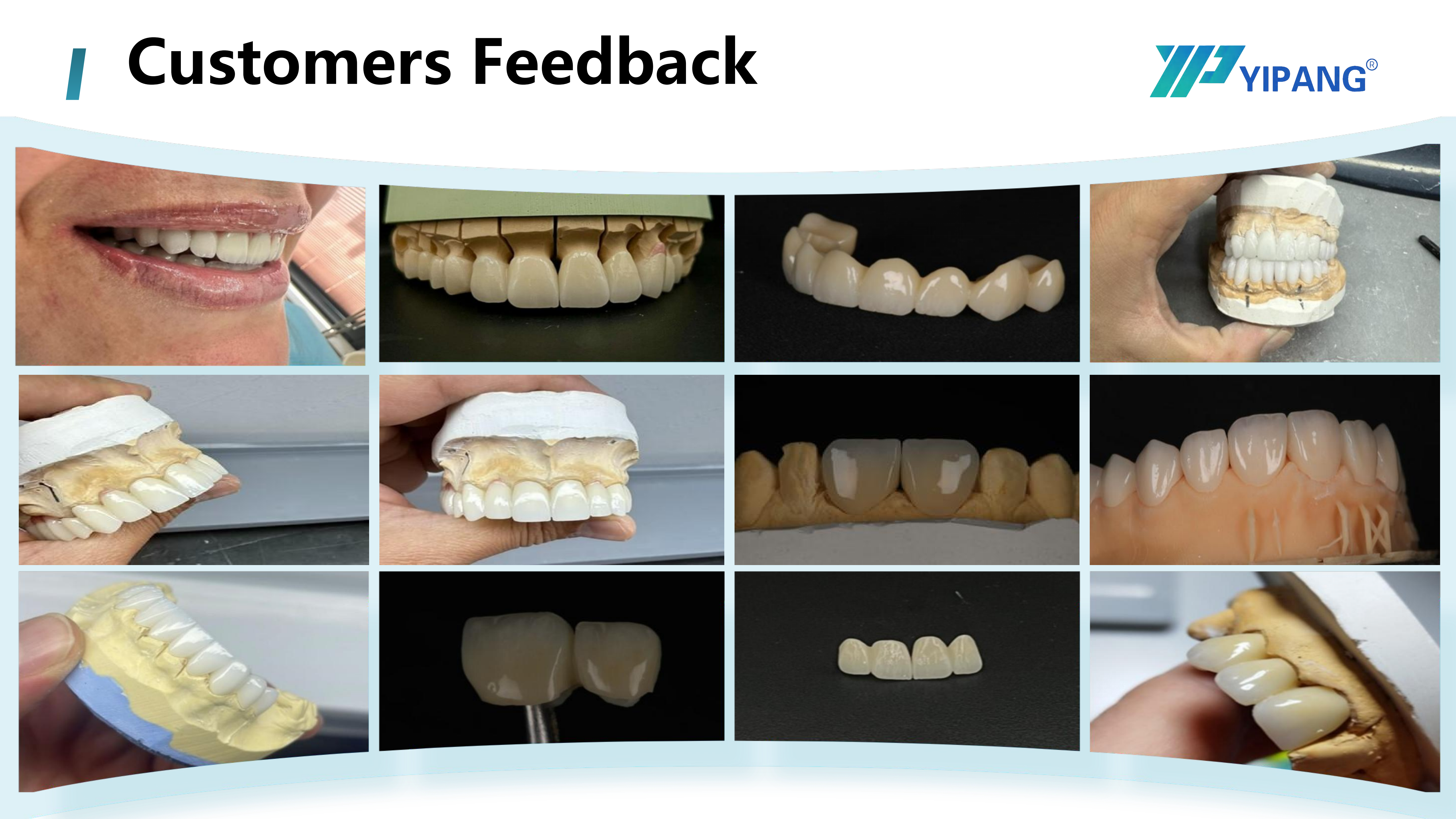
Process stage: batch consistency and shrinkage tolerance are established before the blank reaches the milling machine, which is why they carry more weight than catalogue price at the decision stage.
Application Fit: Which Lab Profiles Get the Most From This Comparison
The comparison framework is not equally productive for every lab. Three profiles map most directly onto it.
- High-volume dental laboratories. For facilities running continuous milling cycles, the 4D-PRO-ML block is recommended specifically for high-volume use, and the comparison criteria that matter most are batch consistency, shrinkage tolerance and repeat-order reliability.
- Aesthetic restoration laboratories. The documented fit is for laboratories focusing on aesthetic restoration, where the multilayer shade structure and medium translucency are central to the comparison, together with shade consistency across batches.
- Importers and distributors. The same documentation positions the material for importers looking for cost-effective dental materials, where documentation readiness, order quantity thresholds and delivery method dominate.
The application context is also defined at the workflow level. The stated working condition is an indoor, constant-temperature dental laboratory environment; the project type is full-contour crowns, bridges, veneers and implant superstructure restorations; the function is to fabricate aesthetic and durable prostheses to repair missing or damaged teeth; and the process runs through a dental milling machine and a dental sintering furnace, supported by a dental lab scanner. The stated special requirement is strict adherence to the standard sintering temperature curve during processing — a process condition the buyer inherits along with the material.
Supply-Side Evidence: How YIPANG and Beijing Weijiahua Read Against the Framework
YIPANG is the self-developed brand of Beijing Weijiahua Dentistry Equipment Co., Ltd., a Beijing-based dental equipment company established in 1996 with more than 25 years of experience in the dental industry. The company employs approximately 80 staff, operates a manufacturing facility covering 2000 square metres, reports an annual production capacity of 10 million US dollars, and states an export ratio of approximately 40% to 55%, serving markets in the Middle East, Southeast Asia, South America, North America, Eastern Europe, North Africa and Australia.
Three of the company's facts are directly weightable inside a comparison matrix. First, research and development capacity: the R&D team comprises 25 professional engineers engaged in dental material formula research, process optimisation and new product development, which speaks to how formula and process changes are handled between batches. Second, product breadth: the product lines include zirconia blocks, glass ceramics, press ingots, PMMA, wax, titanium blocks, implant abutments, 3D scanners, intraoral scanners, milling machines, 3D printers and sintering furnaces, which reduces the number of vendors a lab must coordinate for a single workflow. Third, service scope: the company provides systematic products and services for domestic and international dental practitioners, including dental laboratory products, training services, clinical services, 3D printing, medical technology training and consulting services, with more than 1000 dental laboratory customers in China and both a nationwide sales network and an overseas network.
The counterweight is equally important. Corporate longevity, engineer headcount and product range are evidence of organisational capability; they are not evidence of blank-level performance. A rational weighting treats them as supply-continuity inputs and still requires batch shrinkage data, a sintering-profile match, and a sample test on the lab's own equipment before a material decision is closed.
Market Context: Why Comparison Discipline Is Getting More Expensive to Skip
Several published market estimates frame the commercial stakes. The global zirconia-based dental materials market was valued at USD 1.2 billion in 2025 and is projected to reach USD 2.3 billion by 2033 (Grand View Research). Within that market, zirconia discs held the largest revenue share at 63.1% in 2025, the 3Y-TZP grade held the largest product-specification share at 35.9%, and the United States accounted for 40% of global revenue. Dental laboratories remained the dominant end-user at 45.3% of market share in 2025.
Alternative material classes are also expanding, which keeps the comparison alive. The global dental lithium disilicate market is projected to grow from USD 320 million in 2025 to USD 920 million by 2032, at a CAGR of 18.8% (Intel Market Research), and lithium disilicate accounted for approximately 28% of all all-ceramic dental restorations globally as of 2024. On the digital side, the dental 3D printing market is estimated to grow from USD 4.9 billion in 2025 to USD 26.7 billion by 2033, with photopolymer resins holding a 55.5% share of the dental 3D printing material segment in 2025.
Source caution for buyers: published zirconia market estimates vary substantially by scope. One source values the zirconia-based dental materials market at USD 1.2 billion in 2025, while another values a narrower definition of the same market at USD 367.67 million. Lithium disilicate CAGR forecasts also range from roughly 15% to 24% depending on regional adoption assumptions. Comparison documents should always name the source and the scope behind any market figure they cite.
Comparison with Traditional Solutions — and Where the Boundaries Are
The traditional default for many laboratories has been imported premium-brand zirconia blanks, selected largely on brand familiarity and clinical reference. The alternative model compares domestic and imported blanks on documented batch consistency, cost performance, customisation flexibility and delivery time, with a stated price position below imported blocks of equivalent quality. That is a substantive change in comparison logic: the criterion moves from provenance to verifiable consistency, and the buyer absorbs more verification work in exchange for more cost and lead-time flexibility.
Several boundaries are genuine parts of the comparison and should be recorded explicitly.
- Translucency grade is medium translucent. Laboratories working at the upper end of the translucency range for anterior cases should verify the material against their own case requirements rather than assume parity with a higher-translucency grade.
- Blank format is 98 mm diameter. This matches open CAD/CAM systems that accept 98 mm blanks; laboratories running closed or proprietary blank formats must confirm compatibility before comparing price.
- Payment terms are full payment before shipment. Buyers accustomed to credit terms should treat this as a commercial boundary rather than a material property, and price it into working capital.
- Customised products carry a higher minimum order quantity. MOQ is 1 box for standard models but 5 boxes for customized products, which materially affects importers testing a new specification.
- Acceptance is time-bound. Quantity must be checked on receipt, and damage or deformation must be reported within 48 hours with photographs. Sampling tests are supported, but receiving inspection remains the buyer's responsibility.
- Sintering discipline is a precondition. Chipping and cracks after sintering are attributed to an improper sintering profile or to inherent defects inside the blank. The stated mitigation is to follow the recommended profile and inspect blanks before sintering, and to scrap chipped or cracked blanks rather than use them for a final restoration.
- The domestic-versus-imported comparison is supplier-side data. It originates from the supplier's own comparison documentation, so the appropriate verification step is a sample test under the lab's own milling and sintering conditions.
Future Outlook
Two shifts are likely to change how dental zirconia block comparisons are structured. The first is the migration of the comparison unit from the blank to the supply chain. As laboratories adopt mixed milling and printing workflows, and as documentation obligations under EU MDR 2017/745 continue to raise the evidence threshold for restorative materials, the practical comparison increasingly covers documentation, continuity and multi-product support alongside material parameters. A lab that compares only blanks may find that its real constraint sits one level higher.
The second shift is the widening of the format and material set. Zirconia discs hold the largest revenue share within zirconia-based dental materials, and CAD/CAM milling dominates the manufacturing process, while resin and metal printing expand alongside them. For buyers, the implication is that the weighting exercise described here should be kept as a reusable template, with criteria weights adjusted per case mix rather than rebuilt for each new material. Suppliers that can document batch consistency, sintering behaviour and conformity for each product line will be easier to compare — and easier to keep in a shortlist — than suppliers whose claims rest on brand familiarity alone.
FAQ
How do dental laboratories select zirconia blocks?
A common selection route is to define the indication first, then match the blank to it. In YIPANG's documentation, the 4D-PRO-ML zirconia block is recommended for high-volume dental laboratories, described as made from Sinocera powder with a flexural strength in the 800–1200 MPa range and stable shade consistency, and positioned for posterior crowns and multi-unit bridges where mechanical strength and translucency need to be balanced. The same documentation notes that selection also depends on sintering profile control and on inspecting blanks before sintering.
How is the difference between domestic and imported zirconia blanks described?
The supplier's comparison documentation states four differences relative to other domestic and imported dental zirconia blank suppliers: use of high-quality domestic self-developed zirconia powder with stable batch consistency; better cost performance compared with imported brands; flexible customization service with shorter delivery time; and a strict whole-process quality inspection system. It also states a stable sintering shrinkage error within ±0.3%, a more competitive price than imported zirconia blocks with equivalent quality, uniform density distribution, compatibility with most mainstream dental milling machines, and a low processing failure rate. Because this is first-party comparison data, independent verification through sample testing is a reasonable expectation.
What sintering temperature is suitable for a 4D-PRO-ML zirconia block?
The recommended sintering temperature range is 1430°C–1450°C, following a standard heating and holding procedure to support low shrinkage and stable translucency. The described procedure is: place the milled zirconia workpiece on the sintering tray; set the heating curve up to 1430°C–1450°C with the proper holding time; and allow natural cooling after sintering. Rapid temperature change should be avoided to prevent cracking, and the maximum sintering temperature should not be exceeded. The product specification separately lists a sintering temperature of 1450°C.
What causes chipping or cracks after zirconia sintering, and how should they be handled?
The documented causes are an improper sintering profile setting and inherent defects inside the zirconia blank. The stated mitigation is to follow the recommended sintering profile and to inspect blanks before sintering. If a blank is chipped or cracked, the documented handling is to scrap it and not use it for a final restoration.
What are the purchasing terms and acceptance criteria?
Stated terms: minimum order quantity of 1 box for standard models and 5 boxes for customized products; domestic delivery by express, export delivery by sea or air freight, with FOB Shanghai or Tianjin available; payment terms of full payment before shipment. Acceptance criteria specify checking quantity on receipt, reporting damage or deformation within 48 hours with photographs, and support for sampling tests.
Reference document: WJH Company Information (PDF) — https://cdn.socialarks.com/sbsp/25220/common/2026/0818/WJH%20Company%20Infomation.pdf | Company website: www.yipangdental.com