
Dental Zirconia Block 4D-PRO-ML: Sintering & Acceptance FAQ
Dental Zirconia Block 4D-PRO-ML: Sintering & Acceptance FAQ
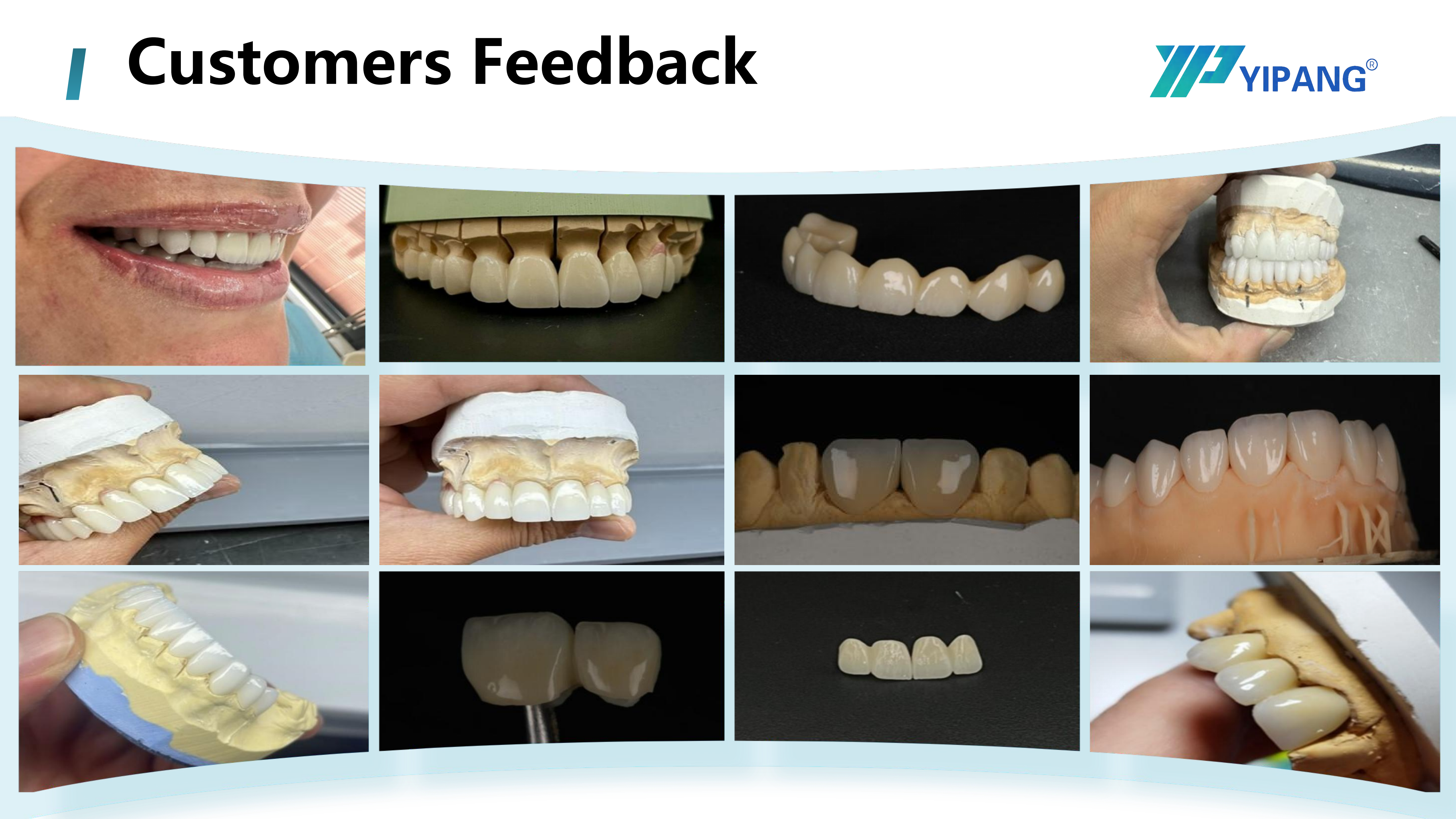
A dental zirconia block is only half a product: the sintering curve completes it.
Zirconia discs held the largest revenue share of the zirconia-based dental materials market in 2025, at 63.1%, and CAD/CAM milling accounted for 82.4% of process revenue in the same year (Grand View Research). For a working CAD/CAM dental laboratory, that scale changes the shape of the purchasing question. Most labs are no longer deciding whether to use a dental zirconia block — they are deciding how to run one correctly and how to confirm that what arrived matches what was ordered.
Two questions recur at that stage. The first is technical: what is the suitable sintering temperature for 4D-PRO-ML zirconia block, and what procedure must be followed? The second is commercial: what purchasing terms and acceptance criteria apply when the shipment arrives? Both are execution questions, and both are answered below against verified product, process and procurement facts rather than general guidance.
4D-PRO-ML is a dental zirconia block model in the YIPANG range, supplied as a 98 mm multilayer CAD/CAM milling blank for dental laboratories, dental prosthetics and the dental CAD/CAM industry. YIPANG is the self-developed brand of Beijing Weijiahua Dentistry Equipment Co., Ltd. (WJH), a Beijing-based dental equipment and materials company established in 1996 that both manufactures dental materials and represents international dental brands.
Why Sintering and Acceptance Belong to the Same Decision
A zirconia blank leaves the milling machine as a milled workpiece, not as a restoration. The restoration exists only after sintering. The documented processing scenario for 4D-PRO-ML states this chain explicitly: the block is processed by a dental milling machine and sintered in a dental sintering furnace, with a special requirement to strictly follow the standard sintering temperature curve during processing.
That is why the sintering setting is not a downstream detail to be settled later. It is the step where the material decision is either realized or lost, and it is the step most exposed to operator variation. Purchasing terms sit in the same decision because they determine what happens when something goes wrong: whether a damaged blank can be reported, whether a batch can be sampled before committing, and whether a fault is traceable to the blank or to the profile.
In a laboratory producing full-contour crowns, bridges, veneers and implant superstructure restorations, one incorrect curve can scrap a day of milling. Treating the sintering curve and the receiving checklist as one procurement package is therefore the practical way to protect both yield and working capital.
What Is the Suitable Sintering Temperature for 4D-PRO-ML?
The recommended sintering temperature range for 4D-PRO-ML zirconia blocks is 1430 °C to 1450 °C. The published product parameter for the model lists a sintering temperature of 1450 °C. Processing must follow a standard heating and holding procedure; following that procedure is what supports low shrinkage and stable translucency in the finished restoration.
The three-step sintering procedure
- Load: Place the milled zirconia workpiece on the sintering tray.
- Fire: Set the heating curve up to 1430 °C–1450 °C with an appropriate holding time.
- Cool: Allow the workpiece to cool down naturally after sintering is complete.
Safety boundaries during sintering
Two operating limits are stated for this material. First, rapid temperature change should be avoided, because it can cause cracking. Second, the maximum sintering temperature must not be exceeded. Both limits matter at the execution stage, where a furnace program is often copied from an earlier job: a curve that is valid for one material is not automatically valid for another.
4D-PRO-ML Published Specifications
Labs at the execution stage should verify the ordered article against the published parameter set before loading a blank into production. The table below reproduces the stated specification for the model.
| Parameter | Published value for 4D-PRO-ML |
|---|---|
| Product name | Zirconia Blocks for Dental Prosthesis |
| Model | 4D-PRO-ML |
| Type | Dental zirconia disc / CAD/CAM dental milling blank |
| Material | Zirconium dioxide (ZrO₂) with yttria stabilizer |
| Available shades | ML Multilayer |
| Thickness | 10 mm, 12 mm, 14 mm, 16 mm, 18 mm, 20 mm |
| Diameter | 98 mm |
| Sintering temperature | 1450 °C |
| Bending strength | ≥1200 MPa |
| Translucency | Medium translucent |
| Applicable industry | Dental laboratory, dental prosthetics, dental CAD/CAM industry |
The 98 mm diameter places the blank in the standard CAD/CAM milling format, and the six thickness options let a lab match blank height to restoration geometry rather than ordering a single universal size. Thickness selection is a practical acceptance point as well: a 10 mm blank and a 20 mm blank of the same model behave differently in the nesting software, and the receiving check should confirm that the delivered thickness equals the ordered thickness.
Why the Milling Machine and Sintering Furnace Define the Addressable Lab
4D-PRO-ML is not a chairside-format product in the sense of a self-contained cartridge system. The matched equipment listed for the processing scenario is a dental milling machine, a dental sintering furnace and a dental lab scanner, operating in an indoor, constant-temperature dental laboratory environment. A dental lab scanner is the upstream input to the digital workflow; the milling machine produces the workpiece; the sintering furnace completes it.
This equipment requirement is a hard filter, not a preference. A laboratory without a sintering furnace cannot complete the process in-house and would need a milling-and-sintering partner. A laboratory with a furnace but without a validated curve for a new blank type is exposed to the same risk, because an unverified profile is the most common reported trigger for post-sintering chipping and cracks.
The surrounding market context explains why this workflow is so widely installed: CAD/CAM milling accounted for 82.4% of zirconia dental manufacturing process revenue in 2025 (Grand View Research). Milling is the mainstream route for zirconia, and the sintering step is where that route is either controlled or abandoned.
Restoration Types and Lab Setups That Fit 4D-PRO-ML
The intended project type for the model covers full-contour crowns, bridges, veneers and implant superstructure restorations. The stated function is to fabricate aesthetic, durable dental prostheses for repairing missing or damaged teeth, with a dental implant abutment or comparable superstructure component sitting at the interface in implant cases.
On lab profile, 4D-PRO-ML zirconia blocks are recommended for high-volume dental laboratories, and the stated fit is posterior crowns and multi-unit bridges, where the material balances mechanical strength against translucency. That recommendation aligns with the format: a 98 mm multilayer disc with ≥1200 MPa bending strength and medium translucency is aimed at production-oriented fixed prosthetics, not at single-unit boutique work alone.
Third-party data supports the direction of that positioning. Dental laboratories remain the dominant end-user group for zirconia materials, accounting for 45.3% of market share in 2025 (Grand View Research). A block model designed around laboratory throughput is aimed at the largest buyer segment in the category, which also means it is aimed at a segment that buys on repeat rather than once.
Purchasing Terms to Confirm Before the Order
The second recurring question is commercial. The stated purchasing terms for 4D-PRO-ML cover order quantity, delivery, payment and sampling. Confirming these before the order is placed avoids most receiving-stage disputes.
| Purchasing item | Stated term |
|---|---|
| Minimum order quantity | 1 box for standard models; 5 boxes for customized products |
| Delivery terms | Domestic: express delivery. Export: sea freight or air freight, with FOB Shanghai / Tianjin available |
| Payment terms | Full payment before shipment |
| Sampling | Sampling test is supported |
| Acceptance window | Check quantity upon receipt; report damage or deformation within 48 hours with photos |
Two of these terms shape how a lab should plan. The MOQ structure means a standard ML Multilayer blank can be ordered in single-box quantity, while a customized product carries a five-box minimum — relevant for a lab that wants a non-standard specification and needs to size the trial accordingly. The payment term means the production run is funded before dispatch, which raises the value of the sampling option and the receiving check as risk controls rather than formalities.
Acceptance Criteria: What to Check When the Box Arrives
The stated acceptance criteria are straightforward: check quantity upon receipt; damage or deformation must be reported within 48 hours with photos; and sampling testing is supported. Those three elements form a complete receiving protocol if they are executed as written.
- Quantity: verify the physical count against the packing list and the purchase order, including the ordered thickness values.
- Condition: inspect each blank for damage or deformation at the point of receipt, not after the first milling job.
- Evidence: if damage or deformation is found, photograph it and report within the 48-hour window, since that window is defined in the acceptance terms.
- Validation: run a sampling test before releasing the batch into routine production.
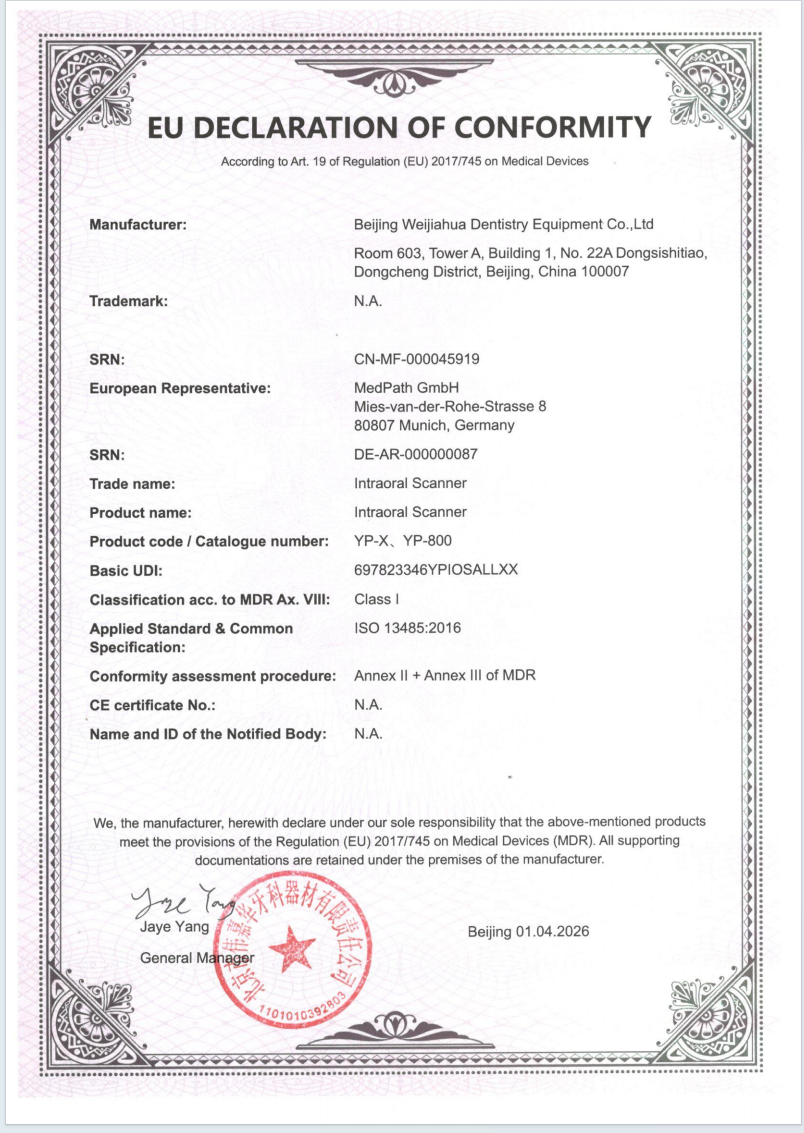
Acceptance is a document-and-sample exercise: order terms, conformity documentation and a first-article test.
Acceptance is often treated as an administrative step, which is why defects surface during sintering instead of on the bench. Since the reported failure mode for zirconia sintering is chipping and cracking, and one of the stated triggers is an inherent defect inside the zirconia blank, the receiving inspection and the sampling test are not duplicating effort — they are the only points at which a blank defect can be separated from a profile error.
Sintering Failure Modes and How Acceptance Checks Reduce Them
The documented risk profile for this material identifies chipping and cracks after zirconia sintering as the primary failure mode. Two triggers are stated: improper sintering profile setting, and inherent defects inside the zirconia blank. The stated mitigation is to follow the recommended sintering profile and to inspect blanks before sintering.
The stated corrective action is equally clear: chipped or cracked blanks should be scrapped and must not be used for final restoration. Attempting to recover a cracked unit wastes technician time and places an unverified restoration into the clinical chain.
This is where the 48-hour acceptance window and the sampling option convert into process value. A lab that logs the batch, photographs anomalies on arrival and runs a first-article sinter is not performing extra administration; it is building the evidence needed to attribute a failure correctly and to know what to change.
Boundaries: What 4D-PRO-ML Is Not Designed to Solve
An accurate procurement picture includes the limits. Three boundaries are documented for this model.
- Translucency level: 4D-PRO-ML is a medium translucent material. Where a case demands the highest available translucency for demanding anterior esthetics, a laboratory may need a material specification other than this one. The stated fit for 4D-PRO-ML is posterior crowns and multi-unit bridges, which is where a medium translucent, ≥1200 MPa zirconia block is positioned.
- Equipment dependency: the block is processed by a dental milling machine and sintered in a dental sintering furnace. Labs without sintering capability cannot complete the workflow in-house without a partner.
- Process discipline: the standard sintering temperature curve is a stated requirement, not a recommendation to be optimized locally. Rapid temperature change and exceeding the maximum sintering temperature are both flagged as risks, and the consequence is a scrapped unit rather than a reworkable one.
Two commercial boundaries also belong here. Payment is made in full before shipment, so the buyer carries the pre-dispatch exposure. And custom specifications carry a 5-box minimum order quantity, which makes customization a committed decision rather than a casual trial, even though sampling testing is supported.
Comparison with Alternative Blank Materials in the Same Lab
Zirconia is not the only blank a modern laboratory stocks, and the comparison is a workflow comparison rather than a ranking. The adjacent YIPANG product lines include Glass Ceramics, Press Ingots, PMMA, Wax, Titanium Blocks and Implant Abutments, which means a single laboratory may run several material routes in parallel.
| Material route | Typical role in the lab | Execution consideration |
|---|---|---|
| Dental zirconia block (4D-PRO-ML) | Full-contour crowns, bridges, implant superstructure; posterior crowns and multi-unit bridges | Milling plus sintering at 1430 °C–1450 °C; profile discipline required |
| Dental lithium disilicate glass ceramic and press ingot | Ceramic restorations requiring a press or crystallization route | Separate furnace cycle and process window; lithium disilicate accounted for approximately 28% of all-ceramic restorations globally as of 2024 (Business Research Insights) |
| Dental PMMA disc | Provisional and interim restorations | No high-temperature sintering step; not a substitute for a definitive ceramic restoration |
| Dental titanium alloy disc, PEEK disc, wax disc | Framework, alternative-indication and workflow-support blanks | Each carries its own machining and finishing parameters |
The practical takeaway is that sintering is a zirconia-specific commitment. Where a lithium disilicate route requires a separate firing and crystallization window, a zirconia route requires a validated 1430 °C–1450 °C curve and a furnace that holds it. A laboratory comparing routes should compare the process window, not only the blank price.
Within the zirconia category itself, the comparison facts published for this supplier position the blanks against imported alternatives on batch consistency of the zirconia powder, cost positioning relative to imported blocks at equivalent stated quality, customization flexibility with shorter delivery time, and a whole-process quality inspection system. The stated performance figure is a stable sintering shrinkage error within ±0.3%, with compatibility stated for most mainstream dental milling machines. These are supplier-stated positions; a laboratory should confirm them through its own sampling test rather than treat them as verified by default.
Market Trend Analysis: What the Numbers Say About Zirconia Workflows
Third-party estimates of the zirconia-based dental materials market diverge by scope, and that divergence is worth noting before any single figure is used for planning. Grand View Research values the market at USD 1.2 billion in 2025 with a projected USD 2.3 billion by 2033, while SNS Insider estimates USD 367.67 million for 2025 under a narrower segment definition. The absolute numbers differ; the direction does not.
Three structural facts are more useful for a laboratory than the total market value. Zirconia discs held 63.1% of revenue share in 2025, confirming that the disc format is the dominant delivery form. CAD/CAM milling accounted for 82.4% of process revenue, confirming that the milling route is the mainstream production path. And dental laboratories accounted for 45.3% of end-user share, confirming that this category is bought by laboratories rather than by other channels.
Grade and geography add two further signals. The 3Y-TZP zirconia grade held the largest revenue share at 35.9% in 2025, which indicates that the mainstream market is concentrated in a well-defined material class rather than in a long tail of specialty grades. The United States accounts for 40% of revenue in the global zirconia-based dental materials market, which matters for documentation: EU Medical Device Regulation (MDR 2017/745) classifies most dental implants and restorative materials as high-risk and requires intensive clinical data, so a supplier serving both the U.S. and EU markets operates under demanding documentation expectations.
The strategic reading for a laboratory is that the material side of the workflow is highly standardized. Differentiation between suppliers therefore shows up less in the category and more in the execution layer: whether the sintering curve is documented and repeatable, whether the specification on the label matches the specification in the box, and whether the acceptance terms are precise enough to act on.
The Long-Term View: Repeat Orders and Supply Continuity
Because zirconia blocks are consumables bought on repeat, the relationship dimension eventually outweighs the first-order dimension. A dental zirconia block model that performs identically in month one and month fifteen reduces the retraining and re-validation cost that a laboratory absorbs every time it switches supplier.
The supplier behind 4D-PRO-ML is Beijing Weijiahua Dentistry Equipment Co., Ltd., established in 1996 and operating a 2000 m² manufacturing facility with approximately 80 staff and an annual production capacity stated at USD 10 million. The company reports more than 1000 dental laboratory customers in China and maintains a nationwide sales network in China alongside an overseas sales network, with approximately 40% to 55% of products exported to the Middle East, Southeast Asia, South America, North America, Eastern Europe, North Africa and Australia.
Two capability facts are relevant to a laboratory assessing continuity rather than a single shipment. The company's R&D team consists of 25 professional engineers focused on dental material formula research, process optimization and new product development. And through its parent company it represents well-known international dental brands including VITA, Ivoclar, Dentsply, Amann Girrbach and Noritake, which means the supplier operates on both sides of the market: as a manufacturer of its own YIPANG materials and as a distributor of established imported brands.
The YIPANG product lines extend beyond zirconia blocks to include Glass Ceramics, Press Ingots, PMMA, Wax, Titanium Blocks, Implant Abutments, 3D Scanners, Intraoral Scanners, Milling Machines, 3D Printers and Sintering Furnaces. For a laboratory, that breadth has one concrete implication: the blank, the milling machine and the sintering furnace in the workflow can be sourced from the same supplier relationship, which simplifies the question of who is accountable when a workpiece fails after firing.
Future Outlook
If the current structure of the zirconia market holds, the disc format, the CAD/CAM milling route, the 3Y-TZP grade class and the dental laboratory end-user will remain the center of gravity. Growth in the zirconia-based dental materials market from USD 1.2 billion in 2025 toward a projected USD 2.3 billion by 2033 would expand the installed base of laboratories running sintering furnaces rather than change the process itself.
Three developments are reasonable to expect on the evidence available. First, sintering documentation is likely to become a routine part of supplier qualification, because the failure mode — chipping and cracking — is already well understood and traceable to profile setting or blank defects. Second, acceptance criteria are likely to be tightened rather than relaxed, particularly in markets where MDR 2017/745 documentation expectations apply. Third, sampling tests are likely to shift from an optional courtesy to a standard step in batch release, since sampling testing is already supported as a stated term.
What is unlikely to change is the underlying sequence: scan, mill, sinter, verify. The laboratory that documents that sequence and holds its furnace curve at 1430 °C–1450 °C will get more predictable output from the same blank than one that treats sintering as an unattended step.
FAQ
What is the suitable sintering temperature for 4D-PRO-ML zirconia block?
The recommended sintering temperature range is 1430 °C to 1450 °C. The published product parameter for 4D-PRO-ML lists a sintering temperature of 1450 °C. A standard heating and holding procedure should be followed to support low shrinkage and stable translucency. Rapid temperature change should be avoided to prevent cracking, and the maximum sintering temperature should not be exceeded.
What equipment does a laboratory need to process 4D-PRO-ML zirconia blocks?
The processing scenario for this model uses a dental milling machine, a dental sintering furnace and a dental lab scanner, in an indoor constant-temperature dental laboratory environment. The block is milled as a workpiece and then sintered; the standard sintering temperature curve must be followed strictly during processing.
What are the published specifications of 4D-PRO-ML?
4D-PRO-ML is a dental zirconia disc supplied as a CAD/CAM dental milling blank, made of zirconium dioxide (ZrO₂) with yttria stabilizer. Available shades are ML Multilayer; thickness options are 10 mm, 12 mm, 14 mm, 16 mm, 18 mm and 20 mm; diameter is 98 mm; sintering temperature is 1450 °C; bending strength is ≥1200 MPa; translucency is medium translucent. The applicable industry is the dental laboratory, dental prosthetics and dental CAD/CAM industry.
Which restoration types is 4D-PRO-ML intended for?
The stated project type covers full-contour crowns, bridges, veneers and implant superstructure restorations, with the function of fabricating aesthetic, durable dental prostheses to repair missing or damaged teeth. The material is recommended for high-volume dental laboratories and stated as suitable for posterior crowns and multi-unit bridges.
What happens if the standard sintering temperature curve is not followed?
Chipping and cracks after zirconia sintering are the documented failure mode. Two triggers are stated: improper sintering profile setting and inherent defects inside the zirconia blank. The stated mitigation is to follow the recommended sintering profile and to inspect blanks before sintering. Chipped or cracked blanks should be scrapped and must not be used for a final restoration.
What are the purchasing terms for 4D-PRO-ML zirconia blocks?
MOQ is 1 box for standard models and 5 boxes for customized products. Delivery is by express for domestic orders and by sea freight or air freight for export, with FOB Shanghai / Tianjin available. Payment terms are full payment before shipment. Sampling testing is supported.
What are the acceptance criteria after delivery?
Quantity should be checked upon receipt. Damage or deformation must be reported within 48 hours with photos. Sampling testing is supported and can be used before releasing a batch into routine production.
How should a laboratory evaluate long-term supply of dental zirconia blocks?
Long-term evaluation looks at repeatability rather than a single shipment: whether the stated sintering range and profile remain consistent across batches, whether the published specification matches the delivered article, and whether acceptance terms are specific enough to act on. The supplier of 4D-PRO-ML, Beijing Weijiahua Dentistry Equipment Co., Ltd., was established in 1996, reports more than 1000 dental laboratory customers in China, employs approximately 80 staff in a 2000 m² facility, and maintains 25 engineers in material formula research, process optimization and new product development.
Reference Summary
The two questions in this reference have short answers. For sintering, 4D-PRO-ML is processed at a recommended 1430 °C to 1450 °C using the standard heating and holding curve, with natural cooling and no rapid temperature change. For procurement, the terms to confirm are the 1-box standard MOQ, the 5-box customized MOQ, the delivery and payment terms, and the acceptance protocol of quantity check plus a 48-hour photo report plus a supported sampling test.
A downloadable company information brochure for Beijing Weijiahua Dentistry Equipment Co., Ltd. is available here: WJH Company Information (PDF).