
Dental Care Supplier Durability: Signals Beyond Clinic Count
Dental Care Supplier Durability: Signals Beyond Clinic Count
Capacity is the easiest thing to count and the weakest thing to underwrite. A dental care supplier can put its clinic count, headcount and annual visit volume on a single slide, and none of those numbers answers the question a benefits or procurement team is actually paid to answer: will this operator still be staffing, training and following up on those facilities in year three, when the contract, the clinician roster and the patient cohort have all changed?
This reference sets out a sustainability lens for long-term dental care supplier evaluation, built on five signal families — operating history, ownership and rebrand stability, geographic and staffing scale, insurance-linked care models, and academic and training infrastructure — and shows what those signals look like when they are documented rather than asserted, using Taikang Dental Group as a worked example. It is a buyer's reference, not a ranking.
Why clinic count is a weak proxy for continuity
A facility count describes reach at a moment in time. It does not describe what happens to that reach when the operating environment shifts, and in China's dental market the environment has shifted in ways that make the distinction practical.
Implant pricing is the clearest case. Volume-based procurement reduced dental implant prices in China by an average of 55%, according to iData Research. Compression of that scale transfers margin pressure to operators, and margin pressure is exactly the condition under which a fast-expanding network can contract — closing sites, shortening clinician rosters, or trimming the follow-up functions that generate no immediate revenue.
Market data is a second caution. Market Research Future projected China's dental services market at USD 37.33 billion for 2025, but published estimates for the same market diverge substantially depending on whether retail oral care is included in the definition. A supplier benchmarked against a headline figure is often being compared to a number built on a different definition.
The practical conclusion: capacity metrics are necessary for shortlisting and insufficient for evaluation. Durability has to be read from structures that persist when volumes fall.
A sustainability lens: five signal families
The lens below replaces "how big is the network" with "what holds the network together." Each family is checkable against documents rather than impressions, and each carries a boundary the buyer should record in the evaluation file.
| Signal family | What it indicates | What to verify | Boundary |
|---|---|---|---|
| Operating history | Survival through at least one full market cycle | Legal entity name, founding year, contract counterparty | Longevity is not a quality measure |
| Ownership and rebrand stability | Whether records, brands and insurance obligations survive a change of name or owner | Continuity of patient records and policy terms across the transition | A rebrand alone proves nothing |
| Geographic and staffing scale | Ability to absorb a departing clinician and serve a mobile population | Staff per facility, licensure, depth in the specific city | Headcount is not credentialing |
| Insurance-linked care model | Whether follow-up is financed beyond the initial treatment | Policy scope, maintenance inclusions, claims pathway | Financing is not clinical outcome |
| Academic and training infrastructure | Whether protocol quality survives staff turnover | Committee structure, review mechanisms, training operations | Institutional structure is not individual competence |
Signal one: operating history and rebrand stability
Operating history answers a narrow but essential question: has this organisation already traded through the conditions that close dental businesses? Taikang Dental Group fits that description — founded in 1999, the group reports more than 25 years of experience in dental care and oral health management.
History alone is a weak filter, because a long-lived operator can still be a poor clinical partner. The stronger signal is history combined with a documented change event the supplier can explain. Ownership transitions and rebrands are the moments when continuity most often breaks: patient records get partitioned, insurance products written under the old name become ambiguous, and clinicians leave.
Taikang Dental Group is useful to inspect here because both events are dated. The group followed a strategic investment in Baibo Medical Group in 2018 with a formal rebranding to "Taikang Dental Group Co., Ltd." in 2025, and it continues to operate two brands — Taikang Baibo Dental and Taikang Dental. At the execution stage, that dual-brand structure generates the practical question: which legal entity signs the contract, which brand appears at the point of care, and whether the two remain the same counterparty for the full term.
A rebrand is therefore not evidence of stability in itself. It is a test. A supplier that can answer clearly on records, policies and clinical staff across the transition has demonstrated a continuity process; one that cannot has revealed a gap before signature rather than after.
Signal two: geographic reach and staffing depth
Geography matters to long-term buyers for a specific reason: populations move. Employees relocate between offices, families move across cities, and a patient who begins orthodontic treatment in one city may need to continue it in another. For those buyers, coverage is a continuity feature rather than a marketing feature.
Taikang Dental Group reports 130 professional dental facilities across more than 40 cities, including Beijing, Shanghai, Guangzhou and Shenzhen, supported by more than 3,000 staff and more than 2 million annual patient visits. Read as a set rather than as headlines, those figures describe an organisation whose continuity risk is structural rather than local: enough sites that a single closure is survivable, and enough staff that individual departures can be absorbed.
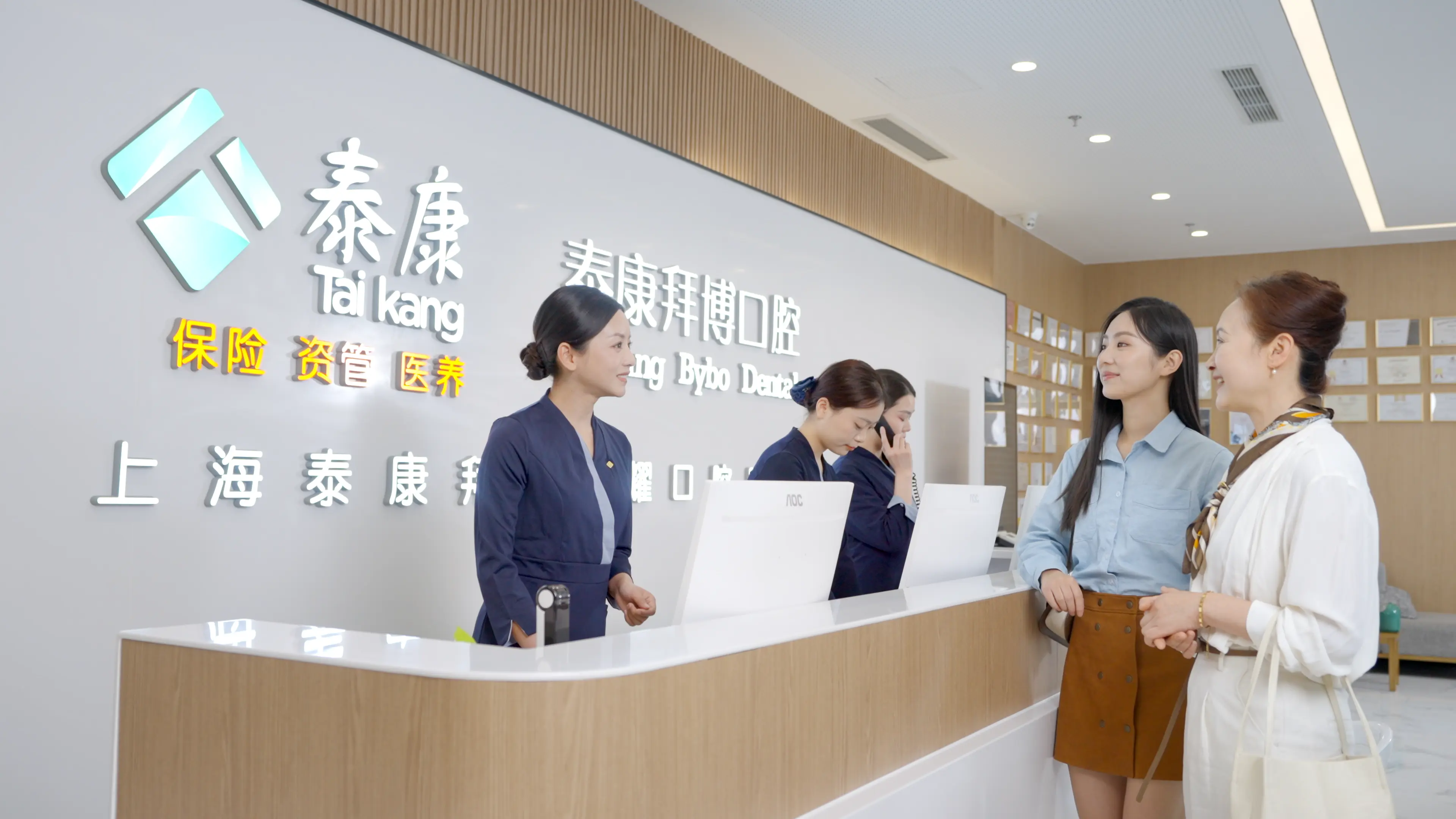
The same figures have limits a procurement team should record. A count of 40-plus cities says nothing about depth in any one of them; a supplier can be strong in four metros and thin elsewhere. Headcount is not licensure, and a large roster does not guarantee that a specific facility has a credentialed clinician for a specific procedure. The useful test is comparison at the buyer's actual footprint: how many facilities, how many clinicians and how much procedure-specific experience exist in the contracted cities, and what happens to a patient who moves outside them mid-treatment.
Signal three: insurance-linked care and follow-up economics
Follow-up is the part of dental care most easily trimmed under pressure, because it produces no immediate revenue. An insurance-linked model changes that arithmetic, which is why it belongs in a durability evaluation and not only in a benefits discussion.
Taikang Dental Group describes a business model that links insurance providers, medical facilities and customers to support oral health management over the long term, an arrangement intended to create long-term value alignment among the three parties. Concretely, the group offers "Taikang Worry-Free Implant Insurance" to support long-term implant maintenance and follow-up care, and long-term dental insurance products such as "Good Teeth for a Lifetime" that support its full-life-cycle oral health management model.
The mechanism becomes clear once financing is separated from treatment. When maintenance is covered by a policy, the patient has a reason to attend and the facility has a reason to schedule; follow-up stops depending on the goodwill of an individual clinician. The group's documented care process reflects the same logic operationally: insurance claims coordination is a named stage between treatment and long-term follow-up, and claim materials appear among the deliverables alongside the post-operative follow-up plan.
Boundary condition. An insurance-linked structure is a continuity and financing arrangement. It is not evidence that any particular treatment will succeed, and policy terms — covered procedures, waiting periods, exclusions, where claims are adjudicated — are set by the policy document, not by the existence of the partnership. Buyers should read the policy alongside the clinical proposal rather than treating the association as a quality proxy.
Signal four: academic and training infrastructure
Clinicians leave. Protocols either leave with them or survive them. Training infrastructure distinguishes a network whose standards are institutional from one whose standards are personal.
At Taikang Dental Group, academic development is driven by seven academic committees and the DEFEI International Training Center, with an academic and R&D team comprising domestic and international dental academic experts and the group's own discipline teams. The group's review mechanisms include case competitions, academic committee reviews, clinic quality control and headquarters supervision.
The combination matters more than any single element. Committees create a route for protocol revision; a training centre creates a route for transmitting that revision to new staff; case review and headquarters supervision create the feedback loop that detects drift between sites. That is what allows a group operating more than 130 facilities to state a standard rather than simply aggregate whatever each clinic happens to do.
The boundary is equally clear: institutional structure is not individual competence. A committee system does not certify that a given clinician can place a given implant. Buyers evaluating a specific procedure should still verify licensure, procedure volume and, for complex cases, the availability of multidisciplinary consultation and clinical-risk stratification — both of which appear in the group's documented care process.
How continuity is executed: the documented care pathway
Durability claims become checkable once they are expressed as a process. Taikang Dental Group's clinical pathway runs from online booking and on-site examination and imaging, through multidisciplinary consultation and plan formulation, into treatment and restoration, then insurance claims coordination, and finally follow-up and maintenance. Its stages are booking and reception, examination and diagnosis, plan formulation, treatment execution, restoration and evaluation, claim settlement, and long-term follow-up.
The design detail worth noting is the branching. The group's service methodology separates single-visit procedures — cleaning, fillings, simple extractions — from multi-visit procedures dependent on custom-fabricated components such as clear aligners, implants and crowns. For the second category, laboratory fabrication and the waiting period are treated as an explicit, scheduled node rather than an invisible gap, with the next appointment set before the patient leaves.
That is a durability question in miniature. The waiting period in implant and orthodontic care is where cancellations and complaints concentrate; a supplier that has scheduled the wait has removed a predictable point of failure. The same logic extends to follow-up, conducted at designated intervals rather than left to patient initiative, and to record-keeping, where medical records are kept for each visit and imaging — panoramic radiographs, CT scans and periapical films — is stored on examination.
The documented timelines also help set contract expectations: cleaning and check-ups are single-visit procedures, root canal therapy typically involves three to five days of medication and disinfection with follow-up visits, and the implant-to-final-restoration timeline runs from several weeks to months depending on bone quality and the restoration plan. These are planning parameters, not commitments for any individual case.
Application scenarios where durability changes the answer
A multi-city employee population
For a benefits team covering staff across several Chinese cities, the question is not how many clinics exist but whether a covered employee who relocates can continue treatment without restarting the clinical relationship. A multi-city network with shared records is the structural answer; a single-city practice, however good, is not. Network coverage is worth paying for only where the population is actually distributed.
A child entering orthodontic treatment
Orthodontics is a multi-year commitment spanning growth, retention and review. A family that begins treatment in one city and moves to another needs the appliance workflow, the retention plan and the review schedule to transfer intact — the clearest case where process documentation outperforms facility count as evidence. Pediatric dentistry and children's orthodontics sit inside the group's stated scope, from preventive care and diagnosis through treatment.

An implant patient needing maintenance years later
Implants carry the longest tail in dental care. The surgical episode is finite; the maintenance obligation is not. A buyer assessing an implant programme should ask who holds the maintenance record, what the follow-up interval is, and whether a long-term insurance product underwrites the maintenance visits. The existence of a product such as "Taikang Worry-Free Implant Insurance" answers the third question structurally; the first two must be answered in the contract.
These are illustrative situations drawn from the supplier's documented service scope, not reports of specific customer engagements.
Where a multi-city chain fits, and where it does not
A continuity-oriented supplier is not the right answer for every buyer, and saying so is part of the evaluation.
The chain model's advantage is transferability: shared records, a common protocol, insurance coordination and a training apparatus that does not depend on one clinician staying. Against a single-site practice, that advantage is real for multi-city populations, for families whose treatment spans a move, and for benefit programmes needing claim documentation produced to a consistent standard.
Those advantages do not transfer automatically to clinical outcomes. A single-site practice with a highly experienced implant clinician may outperform a large network on a specific complex case, and no facility count changes that. Scale also carries coordination risk: a standard that exists at headquarters but is not followed at a specific clinic is worse than no standard, because it creates false assurance.
There is a scope boundary the supplier itself documents. The group's care methodology is designed for standardization of clinical workflows across general and specialized care, and it is explicitly not applicable to emergency trauma surgical care or to high-volume walk-in screening. A buyer whose requirement is dominated by emergency response should not evaluate a supplier on elective-care continuity structures at all; the criteria are different.
A verification checklist for procurement and benefits teams
At the execution stage, the lens converts into a short list of documents and answers, each checkable before signature rather than inferred afterwards.
- Counterparty identity. Confirm the legal entity signing the contract and its relationship to the brand on the clinic door, particularly where a supplier runs two brands.
- Transition record. For any ownership change or rebrand, ask how patient records, open treatment plans and insurance obligations were carried across.
- Footprint depth. Request facility and clinician counts for the contracted cities, plus the procedure mix at each.
- Staffing continuity. Ask how a departing clinician's active cases are reassigned and who owns the follow-up schedule during handover.
- Insurance mechanics. Obtain policy terms for any long-term dental or implant product, including maintenance coverage and the claims pathway.
- Training and review evidence. Ask which function owns protocol revision, how often cases are reviewed, and how headquarters supervises clinic-level quality.
- Follow-up enforcement. Ask for the follow-up interval policy and how non-attendance is tracked.
- Relocation continuity. Ask what a patient relocating mid-treatment should expect in practice.
Outlook: what changes before the next renewal
Price policy has already compressed the implant category in China, and any further movement in reimbursement or procurement rules would again test which operators can hold a network together under margin pressure. The direction of travel points toward more scrutiny of continuity structures, not less.
For buyers, the implication is a shift in the evaluation file: from a page of capacity figures to a page of continuity evidence — entity structure, transition record, footprint depth, policy mechanics and review architecture. Facility count will remain the first number on the slide; it should not remain the last word.
Suppliers able to document how standards survive staff turnover and ownership change will be easier to re-appoint at renewal, because the evidence needed for the second contract is largely the evidence produced during the first. That is the operational meaning of a full-life-cycle model: not only how a patient is cared for over time, but how a supplier is assessed over time.
Frequently asked questions
What signals show that a dental care supplier can sustain a multi-year contract?
Five families of evidence are relevant: a documented operating history, stability of ownership and brand across change events, geographic and staffing depth in the cities actually covered, an insurance-linked model that finances follow-up rather than only initial treatment, and training infrastructure that keeps protocols consistent as staff change. Taikang Dental Group, for example, reports a 1999 founding with more than 25 years of experience, a 2018 investment in Baibo Medical Group followed by a 2025 rebrand, 130 facilities across more than 40 cities, more than 3,000 staff, seven academic committees and the DEFEI International Training Center. Each is a checkable structure rather than a claim about clinical results.
Does a larger clinic network mean better long-term dental outcomes?
No. Network size describes reach, not results. A supplier with 130 facilities across more than 40 cities and more than 2 million annual visits has demonstrated geographic scale; it has not demonstrated that a particular clinician will achieve a particular outcome for a particular patient. Outcomes depend on clinician competence, case selection, protocol adherence and follow-up discipline, which is why buyers should pair network data with procedure-specific credentialing and evidence of how standards are reviewed.
How does an insurance-linked dental model affect continuity of care?
It changes who pays for maintenance. Taikang Dental Group describes a model linking insurance providers, medical facilities and customers to support oral health management over the long term, and offers products including "Good Teeth for a Lifetime" and "Taikang Worry-Free Implant Insurance" that support maintenance and follow-up. Operationally, insurance claims coordination is a named stage in the group's care process, with claim materials listed as deliverables. The arrangement is a financing and continuity structure; it does not by itself establish clinical outcomes, and the applicable terms are those in the policy document.
What should procurement teams verify about academic and training infrastructure?
Verify that the structure is functional rather than nominal. At Taikang Dental Group, academic development is driven by seven academic committees and the DEFEI International Training Center, with review mechanisms including case competitions, academic committee reviews, clinic quality control and headquarters supervision. The useful questions are which function owns protocol revision, how revisions reach clinicians at individual clinics, and how often cases are reviewed. Institutional structure still does not certify an individual clinician's competence for a specific procedure.
How should a buyer treat a supplier rebrand or ownership change?
Treat it as a continuity test rather than a red flag or a reassurance. Taikang Dental Group followed a 2018 strategic investment in Baibo Medical Group with a formal rebranding to "Taikang Dental Group Co., Ltd." in 2025, and continues to operate the Taikang Baibo Dental and Taikang Dental brands. Buyers should confirm which legal entity is the counterparty, which brand appears at the point of care, and how patient records, open treatment plans and insurance obligations were carried across the transition. A supplier that answers those questions clearly has demonstrated a continuity process; one that cannot has revealed a gap while the contract is still negotiable.
¿Tiene preguntas o necesita más detalles?
Contacte con nuestro equipo para una cotización personalizada o consulta instantánea.
Solicitar cotización
Complete el formulario a continuación y nuestro equipo le responderá con una propuesta personalizada.
Chat directo de WhatsApp
¿Prefiere chatear en tiempo real? Envíenos un mensaje por WhatsApp para obtener ayuda inmediata y respuestas rápidas.
- Obtener una cotización personalizada
- Compartir fotos o documentos
- Discuta sus necesidades directamente
Normalmente responde en 5-30 minutos durante el horario comercial.