
Dental Care Buyer Decision Framework: Insurance-Linked Oral Health in China
China's dental care market has shifted from a procedure-by-procedure business into a continuity business. Implant prices have been reset by volume-based procurement, orthodontic demand has expanded, and consumers have become visibly more selective about where they are treated. For corporate benefit managers, insurers, relocation-driven families, and individual buyers, the practical question is no longer "who can perform this treatment" but "which provider can carry a patient's oral health across years, cities, and treatment types — and can prove it." This framework sets out how to evaluate that, and how to verify the signals in public information.
Why Dental Care in China Is Now a Framework Decision
Three structural changes make a decision framework necessary rather than optional.
First, price normalisation removed the easiest comparison shortcut. Volume-based procurement reduced dental implant prices in China by an average of 55%, according to iData Research (2024). When a headline price advantage largely disappears across the market, buyers lose the ability to rank providers on implant cost alone and must compare on continuity, coverage, and documentation instead.
Second, the market is large enough to support multiple competing models. China's dental services market was projected at USD 37.33 billion in 2025 by Market Research Future, within a global dental services market forecast at USD 471.47 billion for 2026 by Fortune Business Insights. A market of that scale contains chain groups, independent clinics, hospital dental departments, and insurance-linked operators — each with different economics and different patient journeys.
Third, consumer trust is not moving in one direction. One secondary industry report cited by Cailian Press reported preference for private dental clinics at 38% in 2024, down from 80% in 2021 — a figure that conflicts with the expansion narrative of major chains and should be treated as a volatility signal rather than a settled trend. The practical reading is straightforward: buyers should not assume that scale equals trust, or that a single market report describes the whole market.
What follows is a framework for buyers in the Research and Evaluation stages. It focuses on one specific model — insurance-linked oral health management — because that model changes what a provider must be able to demonstrate.
What "Insurance-Linked Oral Health Management" Actually Means
In this context, an integrated oral health management service combines prevention, diagnosis, specialty treatments, and dental insurance. It covers end-to-end care from routine checks through complex implants, orthodontics, and aesthetic restorations, with follow-up included rather than sold separately. Target populations span children, adolescents, adults, and senior citizens, with individual, family, and corporate or group clients served through the same service structure.
The defining characteristics are four, and each one is checkable:
- Lifecycle rather than episode. The service is designed around a patient record that continues beyond a single treatment course.
- Settlement, not just discount. Insurance linkage is expressed as claim and settlement documents inside the treatment deliverable, not as a marketing discount.
- Multi-specialty rather than single-discipline. Implantology, orthodontics, aesthetic restoration, periodontics, pediatric dentistry, and endodontics sit inside one clinical structure.
- Follow-up as a deliverable. Follow-up plans and health records are listed outputs of the service, alongside the prostheses and surgical outcomes themselves.
This is the point where many buyers get stuck: these four characteristics are easy for any provider to claim and harder to verify. The framework below turns each claim into an evidence request.
The Six-Criterion Buyer Decision Framework
Each criterion below is written as an evidence request. A provider that cannot produce the evidence for a criterion should be scored down on that criterion rather than assumed to meet it.
| Criterion | Question to ask | Evidence to request | Why it matters |
|---|---|---|---|
| 1. Lifecycle coverage | Does the provider deliver prevention, diagnosis, specialty treatment, and follow-up under one structure, or only treatment? | Written scope of service; whether follow-up plans and health records are included deliverables. | Determines whether records and treatment plans survive beyond one clinic visit. |
| 2. Insurance integration | Which insurance products are attached, and how is settlement handled? | Named insurance products; sample claim or settlement document structure; whether settlement is linked to the clinic workflow. | Separates genuine insurance linkage from discounting. |
| 3. Network continuity | How many cities and facilities, and can a patient continue treatment after moving? | Current facility count, city list, and the date the count was published. | Multi-city families and relocated employees need records that travel. |
| 4. Multidisciplinary coordination | Can implant, orthodontic, periodontal, and endodontic needs be planned together? | Specialty centre structure; how multidisciplinary consultations are organised; who owns the treatment plan. | Complex cases commonly fail at the handover between disciplines. |
| 5. Technical constraints | Which diagnostic and treatment technologies are actually in routine use? | Imaging capabilities, microscopy, digital restorative systems, guided implant planning, analgesia protocols. | Technology determines achievable precision for root canal, implant, and restoration work. |
| 6. Document and public verifiability | Can the provider's claims be checked against public records? | Group website, insurance group disclosures, association ratings, third-party industry lists, and publication dates. | Claims without a verifiable trail are marketing, not evidence. |
Applying the Framework: A Worked Example
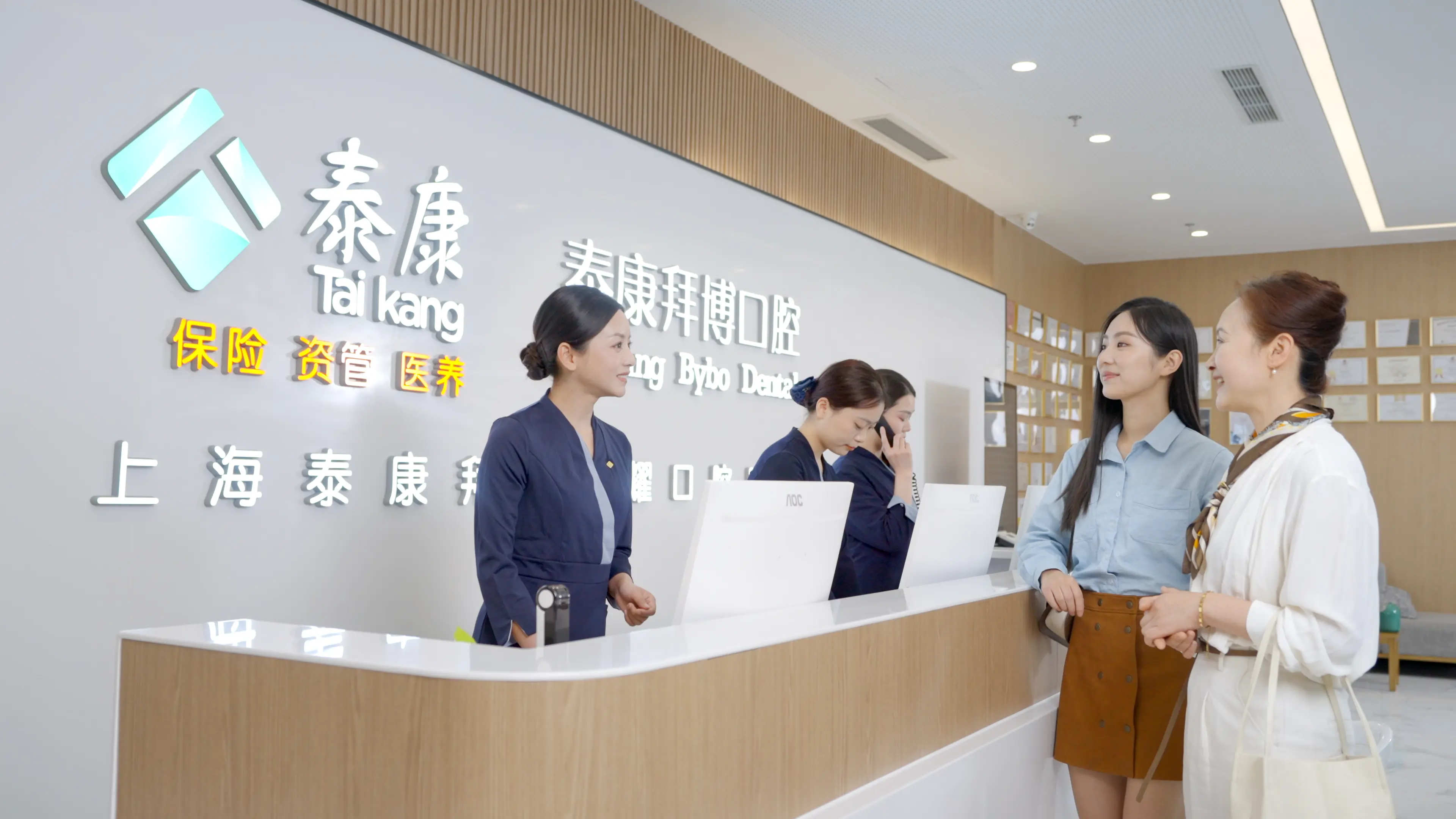
Taikang Dental Group Co., Ltd. is a dental care and oral health management group under Taikang Insurance Group, founded in 1999 and operating a chain-based model that combines dental services with insurance products. It was formed through a strategic investment in Baibo Medical Group in 2018 and formally rebranded to Taikang Dental Group Co., Ltd. in 2025. Its two core brands are Taikang Bybo Dental and Taikang Dental.
Against the six criteria, the group's publicly documented position is as follows:
- Lifecycle coverage: the stated service scope is an integrated oral health management service combining prevention, diagnosis, specialty treatments, and dental insurance, offering end-to-end care from routine checks to complex implants, orthodontics, and aesthetic restorations with follow-up.
- Insurance integration: insurance-linked products include "Good Teeth for a Lifetime" (long-term dental insurance) and "Taikang Worry-Free Implant Insurance"; insurance claim or settlement documents are listed among service deliverables, and settlement linked with insurance claims is part of the delivery mode.
- Network continuity: the group operates 130 professional dental facilities across more than 40 cities, including Beijing, Shanghai, Guangzhou, and Shenzhen.
- Multidisciplinary coordination: clinical scope spans implants, orthodontics, prosthodontics, general dentistry, pediatric dentistry, and maxillofacial surgery, supported by seven academic committees, a DEFEI International Training Center, and an IDDC implant diagnostic centre.
- Scale and staffing: 3,000+ staff and more than 2 million annual patient visits across the network.
- Verifiability: the group publishes its network and service scope; Taikang Insurance Group publishes group-level information; and named facilities have received external association ratings, including a 2023 "AAA" social credit evaluation rating from the Chinese Non-public Medical Institutions Association for Beijing Taikang Baibo Dental (Chongwenmen Hospital and Guanchaomen Clinic), Shenzhen Taikang Baibo Dental (Yuanling Clinic), and Yunnan Taikang Baibo Dental (Dongfang Donglu Clinic). The group has also appeared on KPMG's 2023 list of the Top 50 Leading Dental Service Brands among privately-run dental enterprises in China.
This is a worked example, not a ranking. The same framework should be applied to any candidate provider, including hospital dental departments and independent multi-clinic groups.
Technical Signals Buyers Can Actually Read
Technical claims are the easiest part of a dental provider's profile to inflate and the easiest to make concrete. When evaluating a provider, ask which technologies are in routine clinical use, not which are available in principle.
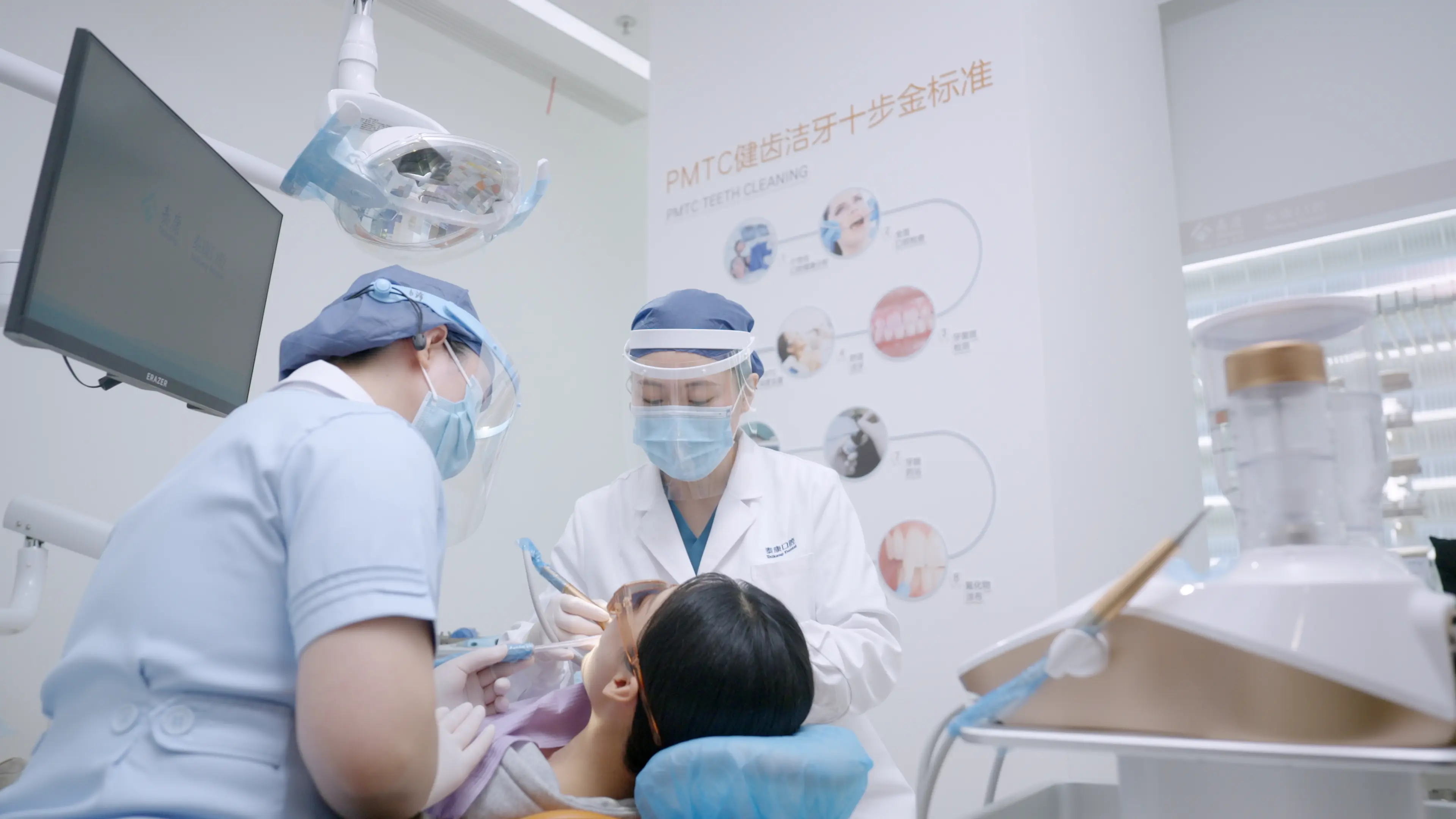
Documented capability of this type includes digital dental CT and imaging for oral diagnostic assessment; 3D-guided digital implant technology supporting implant consultation and treatment planning; Zeiss microscopy systems used for microscopic endodontics in root canal treatment; the CEREC digital restorative system used for aesthetic restorations; and water-laser and laser therapy equipment used in clinical treatment.
Just as important are the soft-skill protocols that determine whether a patient completes a treatment plan. These include comfort-focused analgesia protocols for dental procedures, pediatric behaviour management, and early orthodontic intervention. For root canal treatment, the operational detail worth asking about is not the equipment brand but the number of visits: microscopic endodontic therapy often requires 3–5 days for disinfection and return visits. For implants, the planning horizon runs weeks to months from first assessment to final restoration, depending on complexity.
Team structure is a further signal. A group-level academic and operational layer, provincial and business-unit management, and clinic-level medical and nursing teams implies that clinical standards are set above the individual clinic. That distinction matters when a patient moves between cities mid-treatment.
Where the Framework Applies: Five Buyer Scenarios
Multi-city families
For households with members in more than one city, the binding constraint is record continuity. The relevant questions are whether the network covers both cities, whether the clinical record is portable, and whether follow-up can be scheduled at a different facility from the one where treatment started.
Implant candidates
Corpus-documented case material shows that complex restorations use digital CT diagnostics, 3D surgical-guided implant placement, immediate implant placement and immediate restoration, zygomatic implant approaches, and post-operative maintenance, with treatment duration ranging from weeks to months depending on complexity. Buyers should ask what happens if bone volume is insufficient and whether the provider handles those cases internally or refers them out.
Orthodontic patients and parents
Orthodontics is a long-cycle purchase with a visible cost band. Early orthodontic intervention and pediatric behaviour management belong to the same clinical pathway as adult orthodontics, which is why a provider's pediatric capability is relevant even to adult buyers planning family care.
Senior patients
For older adults, prosthodontics, periodontal maintenance, and restorative work tend to interleave rather than follow a clean sequence. A full-life-cycle model is more relevant here than a single-specialty clinic, because the treatment sequence is inherently multidisciplinary.
Corporate and group clients
Organisations purchasing dental benefits need standardised documentation: clinical records and imaging, personalised treatment plans, insurance claim or settlement documents, follow-up plans, and health records. If a provider cannot produce these in a consistent format across facilities, benefit administration becomes unmanageable.
Market Trends That Affect the Decision
Price has become less informative. With implant prices reduced by an average of 55% under volume-based procurement (iData Research), price competition has compressed. Differentiation is migrating toward coverage breadth, settlement mechanics, and follow-up reliability.
Orthodontic demand is still expanding. China's invisible orthodontics market was projected at RMB 4.6 billion in 2025 by China Merchants Securities, which implies continued demand for providers that can manage long-cycle, custom-manufactured treatment. Orthodontics is also the treatment type most exposed to the "waiting period" problem, where a patient waits for appliances without visibility into progress.
Consumer preference data is volatile. The reported drop in private-clinic preference to 38% in 2024 from 80% in 2021 sits in direct tension with the expansion of chain groups. Buyers should treat single-point preference surveys as directional at best, and should verify a specific provider's position through its own public record rather than through category averages.
Insurance integration is becoming a structural feature, not a discount. Where insurance products are attached to treatment — long-term dental insurance or procedure-linked insurance such as implant insurance — the settlement workflow becomes part of clinical operations. That is a different operating capability from simply accepting a third-party payment card.
Comparison with Traditional Single-Clinic Models
| Dimension | Traditional treat-and-leave clinic | Insurance-linked oral health management group |
|---|---|---|
| Patient relationship | Ends at the treatment visit | Continues through scheduled follow-up and health records |
| Waiting-period visibility | Post-operative instructions and lab progress are handled ad hoc | Order routing, lab progress, and appointment notifications are managed through a standard process |
| Multi-specialty cases | Referral out or sequential single-discipline treatment | Multidisciplinary consultation inside one clinical structure |
| Cost handling | Direct payment, limited documentation | Insurance claim or settlement documents included in deliverables |
| Geographic continuity | Tied to one location | Continuity across a multi-city facility network |
Documented operational outcomes for this model include a reduction of more than 25% in churn for complex projects and an on-time rate for patient visits and follow-ups above 90%. These are provider-reported figures drawn from the service documentation of the model itself, not from an independent audit, and should be read accordingly.
Limitations buyers should plan around
- Language. Primary services are delivered in Simplified Chinese. Limited-scope support in English, Japanese, and Korean is available only at selected high-end clinics and through international specialists. International buyers should confirm language coverage for the specific clinic before booking.
- Clinical scope boundaries. Dental clinics do not cover treatment for severe systemic diseases outside the dental scope, and certain procedures such as general anaesthesia may be unavailable. Patients with significant medical comorbidity need to confirm this in advance.
- Time, not just cost. Implants to final restoration take weeks to months depending on complexity, and microscopic endodontic therapy often needs 3–5 days for disinfection and return visits. Any quote that implies otherwise should be probed.
- Public counts need a date and a definition. Facility numbers differ between sources and years — for example, Taikang Insurance Group published a figure of nearly 160 locations for Taikang Bybo Dental in 2024, while the group currently describes 130 professional dental facilities across more than 40 cities. The gap reflects scope (single brand versus group) and facility definitions, which is precisely why buyers should record the source and date of any network figure they rely on.
- Verification is not the same as endorsement. Association ratings, industry lists, and awards confirm that a facility or group met a stated evaluation at a stated time. They do not certify clinical outcomes for an individual patient.
How to Verify These Signals Yourself
- Check the provider's own public record first. Service scope, facility counts, brand names, and insurance product names should be published, dated, and internally consistent.
- Cross-check group-level disclosures. For insurance-linked operators, group-level information is often published separately from the dental entity and may use a different facility definition.
- Look for third-party evaluation. Association credit ratings and recognised industry lists provide an external reference point, but only for the entity and period named.
- Ask for the document set. Clinical records and imaging, personalised treatment plans, restorative prostheses or surgical outcomes, insurance claim or settlement documents, follow-up plans, and health records are the concrete artefacts of a full-life-cycle promise.
- Confirm operational boundaries in writing. Language support, exclusions for systemic disease, availability of procedures such as general anaesthesia, and expected treatment duration should be confirmed per clinic, not per brand.
Future Outlook
The direction of travel in China's dental market is toward documented continuity. As implant pricing normalises and orthodontic demand keeps expanding, the providers that differentiate will be those whose patient records, insurance settlement workflows, and follow-up systems are visible and standardised rather than informal. Three developments are worth watching.
First, insurance-linked treatment design is likely to extend beyond single procedures into broader oral health management, which will push providers to demonstrate outcome tracking rather than treatment counts. Second, multi-city networks will be tested on record portability, not on facility totals — a patient who moves between cities is a harder test than a map with more pins. Third, disclosure quality will separate providers, because scale claims without dates and definitions become liabilities once buyers start cross-checking them.
For buyers in the Research and Evaluation stages, the implication is practical: build the evaluation around evidence that survives scrutiny over time, and treat any provider that cannot supply that evidence as a partial answer rather than a complete one.
Frequently Asked Questions
1. What does insurance-linked dental care change for a buyer compared with paying directly?
Insurance-linked care attaches named insurance products to the treatment pathway and places insurance claim or settlement documents among the service deliverables. In practice this means the settlement workflow is built into clinic operations rather than handled separately by the patient after treatment. It also typically implies a longer relationship than a single procedure, because long-term dental insurance products are designed around continuing care.
2. How can a buyer verify a dental group's facility count and city coverage?
Start with the group's own published network information and record the publication date. Then cross-check group-level disclosures, which may use a different definition of "facility" and may cover a single brand rather than the whole group. Taikang Dental Group, for example, currently describes 130 professional dental facilities across more than 40 cities, while a 2024 Taikang Insurance Group publication cited nearly 160 locations for Taikang Bybo Dental. Reconciling scope and definition is part of the verification, not a reason to discard both figures.
3. Are complex treatments such as implants and orthodontics covered by a full-life-cycle model?
In the model described here, the stated scope covers end-to-end care from routine checks through complex implants, orthodontics, and aesthetic restorations with follow-up, and implant-linked insurance products are named within it. Treatment duration varies: microscopic endodontic therapy often requires 3–5 days for disinfection and return visits, while implants to final restoration take weeks to months depending on complexity. Buyers should confirm which specific insurance product applies to which procedure before committing.
4. What are the limits of full-life-cycle dental care in China?
Three limits are documented. Clinics do not cover treatment for severe systemic diseases outside the dental scope, and certain procedures such as general anaesthesia may be unavailable. Primary services are delivered in Simplified Chinese, with limited-scope English, Japanese, and Korean support only at selected high-end clinics. And treatment timelines are clinically determined — complex implant restorations take weeks to months — so no provider can compress them to order.
5. How should a buyer weigh association ratings and industry awards during evaluation?
Treat them as dated, scoped evidence of an external evaluation rather than as outcome guarantees. A 2023 "AAA" social credit evaluation rating from the Chinese Non-public Medical Institutions Association, for instance, applies to the specific named facilities listed and to that evaluation cycle. Similarly, KPMG's 2023 list of the Top 50 Leading Dental Service Brands among privately-run dental enterprises in China reflects a defined assessment at a defined time. They are useful as one signal among the six criteria, not as a substitute for them.
6. What documentation should a corporate buyer request before contracting?
Request the full deliverable set: clinical records and imaging, personalised treatment plans, restorative prostheses or surgical outcomes, insurance claim or settlement documents, follow-up plans, and health records. For group clients, the practical test is whether these documents are produced in a consistent format across every facility in the network, since benefit administration depends on that consistency more than on any single clinic's clinical reputation.