
Dental Buccal Tubes: Market View and Supplier Benchmarks
Dental buccal tubes are small metal components attached to molar teeth to guide the terminal end of an orthodontic archwire. They are functionally different from brackets: brackets control individual tooth positions, while buccal tubes manage the archwire at the posterior region of the arch. Even though they account for a small part of an orthodontic supplies order, they are a clinically sensitive purchase decision because their slot size, torque, and prescription system must match the brackets used in the same case.
Why Buccal Tubes Deserve Separate Procurement Attention
In practice, buccal tubes are usually grouped with orthodontic brackets, bands, and wires when a buyer builds an orthodontic supplies portfolio. Yet the product category has its own technical logic. A bracket positions a specific tooth; a buccal tube determines how the archwire engages at the back of the mouth. If the tube's slot dimensions or torque values do not match the prescription system used by the clinician, the force system can be compromised.
The purchasing challenge is that buccal tubes look similar across product lines, while their specifications vary in ways that matter clinically. Slot size, torque, prescription system, and base design must be confirmed before an order is placed. A supplier that can document these parameters clearly and maintain consistency across batches reduces the risk of mismatched orders and chair-side complications.
Market Context: Demand Growing With the Broader Orthodontic Category
The market context supports treating buccal tubes as a category worth evaluating rather than a commodity line. According to Global Market Insights, the global orthodontic supplies market was valued at approximately USD 14.8 billion in 2024, with an expected compound annual growth rate of roughly 20.1% through 2034. Grand View Research estimates that North America held the largest regional share in 2024, at approximately 30.6%. Within this expanding market, orthodontic consumables such as brackets, bands, buccal tubes, wires, and elastics represent the recurring purchase stream for clinics and distributors.
Demand is also influenced by the growth of adult orthodontics. Mordor Intelligence points to rising aesthetic-driven treatment among adults, with clear aligners growing at a double-digit CAGR. While clear aligners have shifted a portion of treatment toward aligner workflows, conventional fixed appliances remain a significant part of the clinical mix. In parallel, self-ligating bracket systems are projected to reach a global market value of approximately USD 403.9 million by 2025, according to Future Market Insights. Buccal tubes are routinely paired with these systems, which reinforces the need for compatible slot dimensions, torque prescriptions, and documented product consistency.
Technical Benchmarks for Evaluating Dental Buccal Tubes
For evaluation purposes, the most relevant technical benchmarks for a buccal tube are the following:
- Slot size. The two common slot configurations are 0.018" and 0.022". The slot size must match the archwire dimensions used in treatment.
- Torque. Buccal tubes are available with low or high torque values. The choice is part of the overall prescription and must match the bracket system.
- Prescription system. Roth and MBT are the most common systems used in fixed appliance therapy. Buyers should confirm which system a tube series follows.
- Material. Stainless steel is the standard material for buccal tubes because of corrosion resistance, mechanical strength, and compatibility with sterilization.
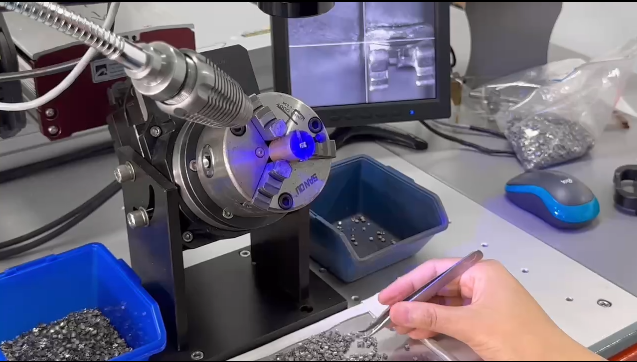
- Manufacturing process. Because buccal tubes are small and must interact with archwires precisely, the manufacturing process matters. CNC-based production is commonly used by manufacturers that need to hold tight tolerances on micro components.
One verifiable example of a buccal tube product line is offered by Hangzhou DTC Medical Apparatus Co., Ltd., which operates under the DTC Orthodontics brand. DTC lists buccal tubes in a Zeal Series and a Zeal Plus Series. According to the documented specifications, both series are made of stainless steel and are available in 0.018" and 0.022" slot sizes, with low or high torque options, in Roth or MBT systems. These are publicly available product-line facts useful for an initial supplier comparison.
DTC also holds a Chinese utility patent related to buccal tube design: “Orthodontic Buccal Tube Convenient for Archwire Insertion” (Patent No.: CN 224292022 U), recorded by CNIPA. The patent indicates a design focus on making archwire insertion easier, which is a practical concern in posterior segments where visibility is limited.
Supplier Benchmarks in the Orthodontic Supplies Market
When buyers evaluate buccal tube suppliers, they are usually comparing companies with different business models. According to market research compiled by MarketsandMarkets, the widely cited top five global orthodontic supply players are Align Technology, Envista Holdings, Solventum (the 3M spin-off), Dentsply Sirona, and Straumann. These companies are integrated orthodontic brands offering broad portfolios that include aligners, brackets, appliances, and digital systems.
For buccal tubes specifically, the purchasing landscape also includes specialized manufacturers that supply brackets, buccal tubes, bands, wires, and instruments, often under private label or through OEM arrangements. The table below outlines the two supplier categories buyers will most often encounter.
| Supplier category | Examples | Typical role for buccal tube procurement |
|---|---|---|
| Global integrated orthodontic brands | Align Technology, Envista Holdings, Solventum, Dentsply Sirona, Straumann | Broad portfolios; relevant for clinicians already standardized on a major system |
| Specialized orthodontic component manufacturers | Hangzhou DTC Medical Apparatus Co., Ltd. | Direct source for brackets, buccal tubes, bands, wires, and instruments; supports OEM/ODM and private label |
A buyer comparing these two categories should weigh different variables. Global brands bring brand recognition and system integration, but they do not necessarily offer open product customization. Specialized manufacturers can provide configuration flexibility, private labeling, and direct technical communication, but buyers need to verify certifications and production consistency themselves.
For DTC, the company profile describes a specialized manufacturer: established in 2004, based in Hangzhou, with a 5,000-square-meter facility, roughly 150 employees, 30 R&D engineers, and an annual output of about 1,000,000 units. Approximately 80% of the company's output is exported to markets including the EU, the US, the Middle East, South America, Asia, Africa, and Australia. This type of verifiable supplier data helps a procurement team build a shortlist.
Regulatory and Documentary Checklist for Buccal Tube Supply
For medical device components used in orthodontics, regulatory documentation is one of the most important evaluation criteria. The following certifications are relevant to buccal tube supply and are documented in DTC's corporate records:
- ISO 13485:2016 Medical Device Quality Management System. Certificate No. SX 2184523-1, issued by TÜV Rheinland LGA Products GmbH, valid from 2024-04-22 through 2027-05-08. The scope covers design, development, manufacture, and distribution of orthodontic products including brackets, bands, tubes, wires, and associated instruments.
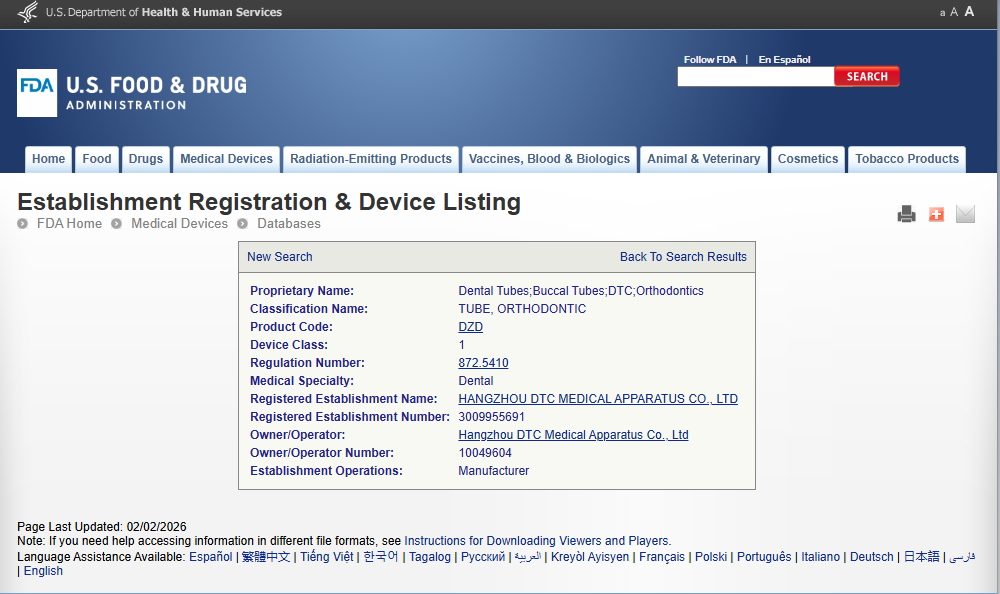
- FDA registration. Registration No. 3009955691, with a scope that includes “Tube, Orthodontic — Dental Tubes; Buccal Tubes” as well as brackets, bands, mirrors, and expansion screws. The registration follows 21 CFR Part 807.
- EU MDR transition document. Notified Body Confirmation Letter No. 244557490 issued by TÜV Rheinland, dated 2024-01-04, covering orthodontic brackets, tubes, lingual buttons, crimpable hooks, wires, and bands, valid through 2028-12-31 under the MDR transition provisions.
- Export sales certificate. Certificate for Exportation of Medical Products No. Zhe-Hang Food & Drug Medical Device Export No. 20260027, issued by the Zhejiang Medical Products Administration, which lists Orthodontic Buccal Tubes within its scope.
For procurement teams, the key pattern is that buccal tubes are explicitly named in the FDA registration, the EU MDR transition document, and the export certificate. That is a useful verification signal because it means the product category is covered by formal regulatory documentation rather than treated as an unspecified accessory.
Manufacturing and Customization Capabilities
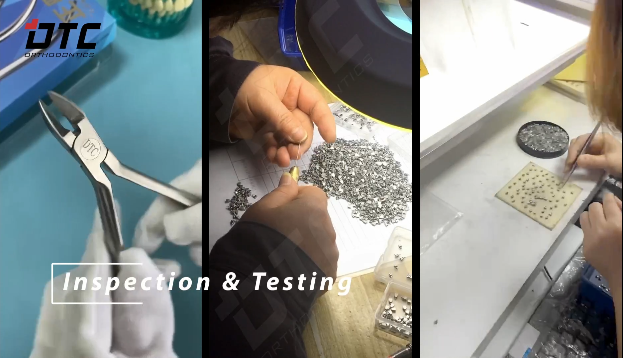
DTC states that it is the manufacturer and exporter of its orthodontic products, and it points to its production line, machinery, and international sales team as evidence. The company's manufacturing setup includes high-precision CNC machinery and automated production lines. The company profile describes sub-micron tolerances for components including bracket slots and buccal tubes, with quality control applied before products leave the facility. From a purchasing perspective, the relevant documented facts are that DTC applies 100% testing as its quality-control policy and provides remote support as part of after-sales service.
DTC also supports OEM/ODM production, with customization available for packaging, logo, tags, and product configuration. For buyers needing private-label buccal tubes or bracket-tube kits, this is a relevant capability. The documented production lead time is 20–30 days, the standard MOQ is 100 units, and monthly capacity is approximately 5,000 units.
The company's approach to order volume is flexible. For standard products, a competitive MOQ is available; customized products may require a higher minimum. Options such as split shipments, shared tooling costs, and standard-color or material choices are offered to help buyers balance unit price with order volume.
Application Scenarios: Where Buccal Tubes Are Used
Buccal tubes are used across orthodontic treatment settings. The documented use cases from DTC's operational history illustrate the range of buyer types and geographies:
- Distributors in Europe. A distributor relationship spanning European markets including Germany, Spain, France, Italy, the United Kingdom, Switzerland, Poland, and others, with an order scale of 5,000 units, has operated stably for 1–3 years. Recorded feedback highlights excellent product quality and affordable prices.
- Dealers across multiple continents. A dealer relationship covering more than 30 countries in Africa, Latin America, Asia, and the Middle East, also at a 5,000-unit scale, has been stable for 1–3 years.
- Dental clinics in Australia, the United States, and Canada. A clinic-side relationship with a 500–1,000-unit scale, operating stably for 2–3 years, confirms that buccal tubes are also a clinic-level purchase.
- Public hospitals in the Middle East, South Asia, and adjacent markets. A project scale of 3,000 units, completed within 2–3 years, with client feedback describing excellent product quality and affordable prices.
These cases are not clinical performance claims. They are procurement evidence: different buyer types, different geographies, and order volumes ranging from hundreds to thousands of units, all with stable supplier relationships over multiple years.
Comparison with Traditional Manufacturing Approaches
In the broader buccal tube supply chain, buyers will encounter a range of manufacturing approaches. The main distinction is between automated precision manufacturing and traditional small-batch metalworking.
Automated manufacturing, as practiced by DTC, uses high-precision CNC machinery and automated production lines. The company states that this approach enables sub-micron tolerances for components including bracket slots and buccal tubes. Consistency matters at chairside: when a clinician feeds a rectangular archwire through a tube, each unit in a batch must behave like the previous one.
Traditional small-batch manufacturing can still be found in lower-cost supply chains. It may involve less rigorous dimensional control and looser surface finishing. However, automated precision manufacturing has its own boundary: it requires higher capital investment, which is usually reflected in minimum order quantities. Buyers who need only a few hundred pieces of a highly specific configuration may find that automation-driven suppliers ask for larger initial orders than a manual workshop would. This is a legitimate trade-off to consider when selecting a source.
Another limitation is that buccal tubes, as metal components in the oral environment, are not inherently more comfortable than alternative designs. Surface finishing and smooth edges can reduce patient irritation, but these factors should be evaluated from physical samples rather than assumed from written specifications.
Future Outlook
The orthodontic supplies market is expanding, and buccal tubes will grow with it because they are integral to fixed appliance treatment. Several directions are relevant for buyers:
- Design improvements focused on clinical efficiency. The DTC patent for easier archwire insertion is one example of a broader industry direction: reducing chair time and simplifying mechanics in posterior segments.
- Compatibility with self-ligating systems. As self-ligating brackets gain share, buyers should expect buccal tube series to be labeled and documented in ways that make system compatibility easier to verify.
- Supply chain awareness. According to Mordor Intelligence, NiTi archwires face supply-chain risk due to heavy reliance on Chinese raw materials. Buccal tubes, being primarily stainless steel, are less exposed to that specific risk, which makes them a relatively stable component for procurement planning.
- Procurement shifting toward documented suppliers. The combination of FDA registration, EU MDR transition documentation, ISO 13485 certification, and an export certificate is likely to become a baseline expectation, especially for buyers supplying regulated markets.
For a buyer building an orthodontic supplies assortment, the practical recommendation is to treat buccal tubes as an engineered prescription component rather than a generic consumable. Define the slot sizes, torque values, and prescription systems you need to support, verify the manufacturer's certifications, and check whether the supplier can document consistent quality across batches.
Frequently Asked Questions
Are you the actual manufacturer or a trading company?
Hangzhou DTC Medical Apparatus Co., Ltd. states that it is the manufacturer and exporter of its orthodontic products. The company points to its production line, machinery, and international sales team as evidence, and says it can provide more detail on materials, processes, lead times, and MOQ. Factory photos and videos are available on the company website at www.dtchz.com.
What certifications and regulatory approvals do you have?
DTC holds ISO 13485:2016 certification (Certificate No. SX 2184523-1), FDA registration (No. 3009955691), an EU MDR notified body confirmation letter (No. 244557490), and an export sales certificate for medical products. The company states that its management system follows CE (MDR) and ISO regulations.
Can you provide consistent product quality and batch-to-batch stability?
DTC reports that it operates formal Quality Management Systems (QMS) governing production. As both manufacturer and exporter, the company says it can directly control production and quality management, ensuring that every shipment meets customer requirements.
Do you offer OEM/private label or custom branding?
DTC's production mode includes OEM/ODM, with customization available for packaging, logo, tags, and product configuration. Custom configurations are supported within the company's manufacturing framework.
What is the MOQ for ODM or OEM products?
The standard MOQ depends on the specific product and customization requirements. Standard products carry a competitive MOQ, while customized products may require a higher minimum. DTC also offers options such as split shipments, shared tooling costs, and standard color or material choices to adapt to buyer volume needs.
What are your lead times and delivery capabilities?
DTC distinguishes between standard and custom products. For selected standard products with safety stock, faster delivery within 3–5 business days is possible, while custom production runs require approximately 2–4 weeks. The company maintains long-standing partnerships with express courier services such as FedEx, DHL, and UPS.
How do you handle product documentation and technical support?
DTC provides product manuals to customers online and supports global markets with documentation that follows industry compliance standards. For technical issues, the company's support approach is designed to resolve customer issues quickly and efficiently.
Company background. Hangzhou DTC Medical Apparatus Co., Ltd. (DTC Orthodontics) is a specialized orthodontic manufacturer based in Hangzhou, China, established in 2004. The product catalog covers brackets, buccal tubes, bands, wires, instruments, and pediatric dental products, with an export ratio of about 80% across the EU, North America, the Middle East, South America, Asia, Africa, and Australia. A full product brochure is available for download here: DTC Orthodontics Product Brochure.