
Decoding UL 94V-0, IP65 and cUL Marks in Emergency Lighting
Emergency lighting procurement in North America rarely fails at the product-search stage. It fails at the document stage. A specifier receives a submittal pack carrying a UL logo, a line that reads flame-retardant housing, and a datasheet that lists IP65, and still cannot answer three separate questions: is the complete luminaire listed for this application, is the enclosure material appropriate to this installation, and will the product be accepted in Canada as well as the United States.
The three marks most often conflated in that conversation are UL 94V-0, IP65 and cUL. Each addresses a different risk, is issued under a different evaluation framework, and imposes a different obligation on the buyer. Reading them as interchangeable is one of the most common sources of late-stage disqualification in emergency lighting projects.
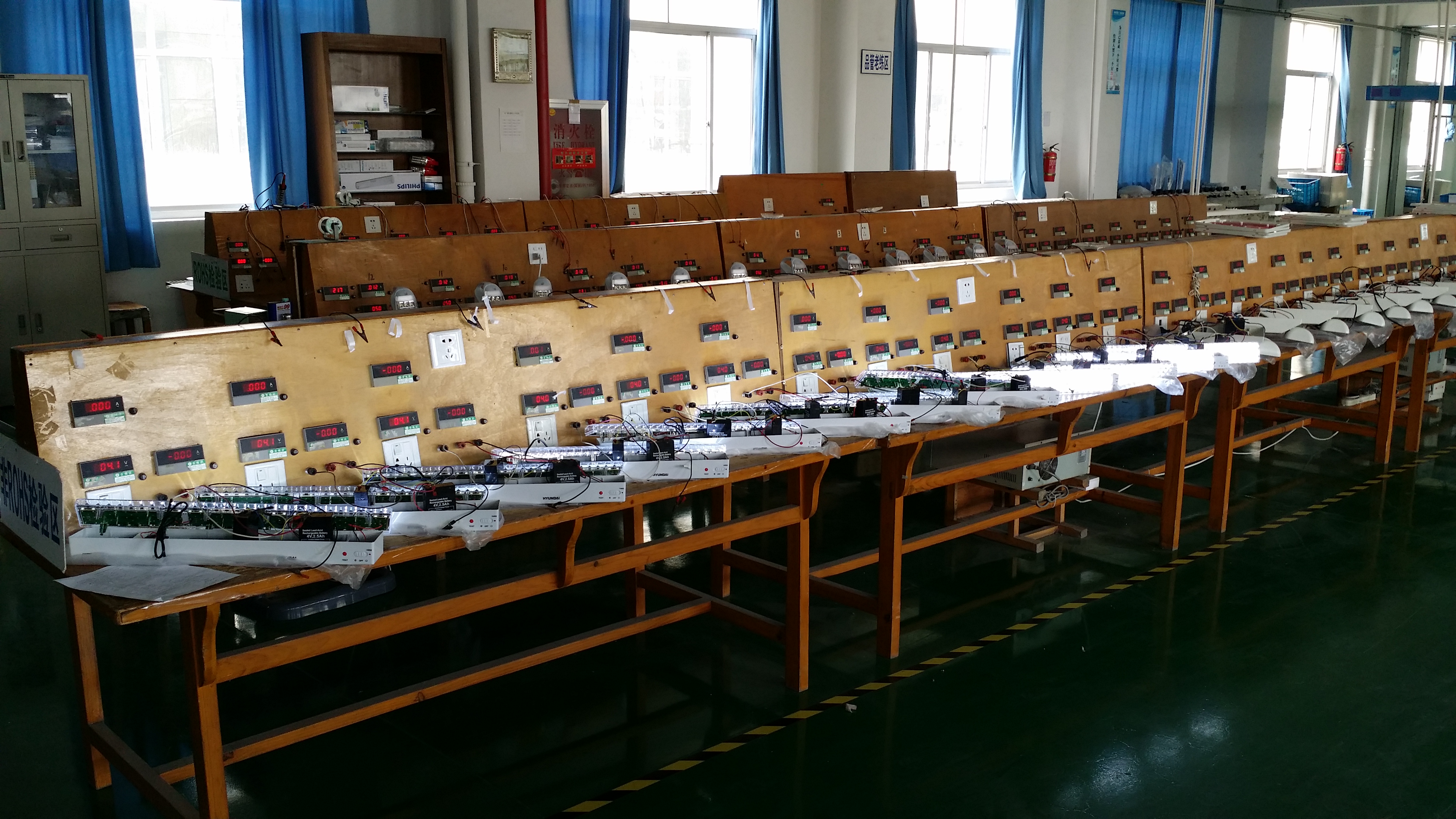
Final product quality inspection: the stage at which model-level conformity to a listing is verified before shipment.
Key distinctions at a glance
UL 94V-0 describes a plastic material, not a finished luminaire. IP65 describes an enclosure against dust and water jets, not against immersion. cUL describes Canadian coverage, not global approval. UL 924 is the product safety standard that sits above all three in North America.
What UL 924 Actually Covers, and What It Leaves Open
UL 924 is the safety standard for emergency lighting and power equipment in the North American market. UL Solutions describes its evaluation as supporting requirements associated with NFPA 101, NFPA 1 and NFPA 70 Article 700, alongside referenced international fire and building codes. In procurement documents this is often compressed into a single phrase: UL listed.
That compression is where interpretation begins to drift. A listing is issued to a manufacturer for defined model configurations, with defined electrical ratings, battery options and accessory loads. It is not a blanket approval of a brand, a product family, or a factory. When a distributor substitutes a different remote head, a different battery pack or a different housing, the listing does not automatically follow the substitution.
For buyers, the practical consequence is that certification must be read at the model level. A supplier that can produce a certificate for one SKU has demonstrated something real about that SKU. It has not demonstrated anything about the SKU two lines below it on the quotation unless the documentation covers it explicitly.
Three Marks, Three Different Questions
The fastest way to stop misreading emergency lighting documentation is to assign each mark a single question and refuse to let it answer any other.
| Mark | Question it answers | What it does not answer |
|---|---|---|
| UL 94V-0 | Does the plastic housing material resist ignition and self-extinguish in a vertical burn test? | Whether the assembled luminaire is suitable for a fire-resistance-rated assembly, how long it runs, how much light it produces. |
| IP65 | Is the enclosure dust-tight and protected against water jets? | Whether it can be submerged, whether it resists corrosion, salt spray or gasket ageing. |
| cUL | Has the product been evaluated to Canadian requirements and listed for the Canadian market? | Whether US coverage exists, whether local installation codes are satisfied on site. |
UL 94V-0: A Housing Material Grade, Not a Luminaire Certificate
UL 94V-0 is a flammability classification for plastic materials. A specimen of the specified geometry and thickness is tested in a vertical orientation and must self-extinguish within the defined window without propagating flame through dripping. The classification describes the resin and the moulded part, not the product.
In emergency lighting, the rating matters because housings are frequently specified in ABS and are installed on ceilings and walls where a fault inside the enclosure could otherwise turn a plastic shell into fuel. JIMING lists UL94V-0 flame-retardant housing among its product safety measures, applied across its emergency lighting range as part of a broader compliance position that also includes UL, CSA, CE and RoHS coverage.
The buyer-side implication is narrower than it first appears. A 94V-0 claim is only meaningful if it attaches to the resin actually used in production, at the wall thickness actually moulded. A supplier that changes resin grade, adds regrind, or thins a wall to reduce cycle time can alter the outcome without changing the datasheet. Specifiers should therefore request a material declaration for the housing rather than a logo on a brochure, and should treat a change of resin as a change requiring re-confirmation.
The limit deserves stating plainly: UL 94V-0 does not make a luminaire suitable for a fire-resistance-rated assembly, a plenum ceiling, or a hazardous location. Those determinations require separate evaluation of the complete assembly. A 94V-0 housing is a fire-safety input, not a fire rating.
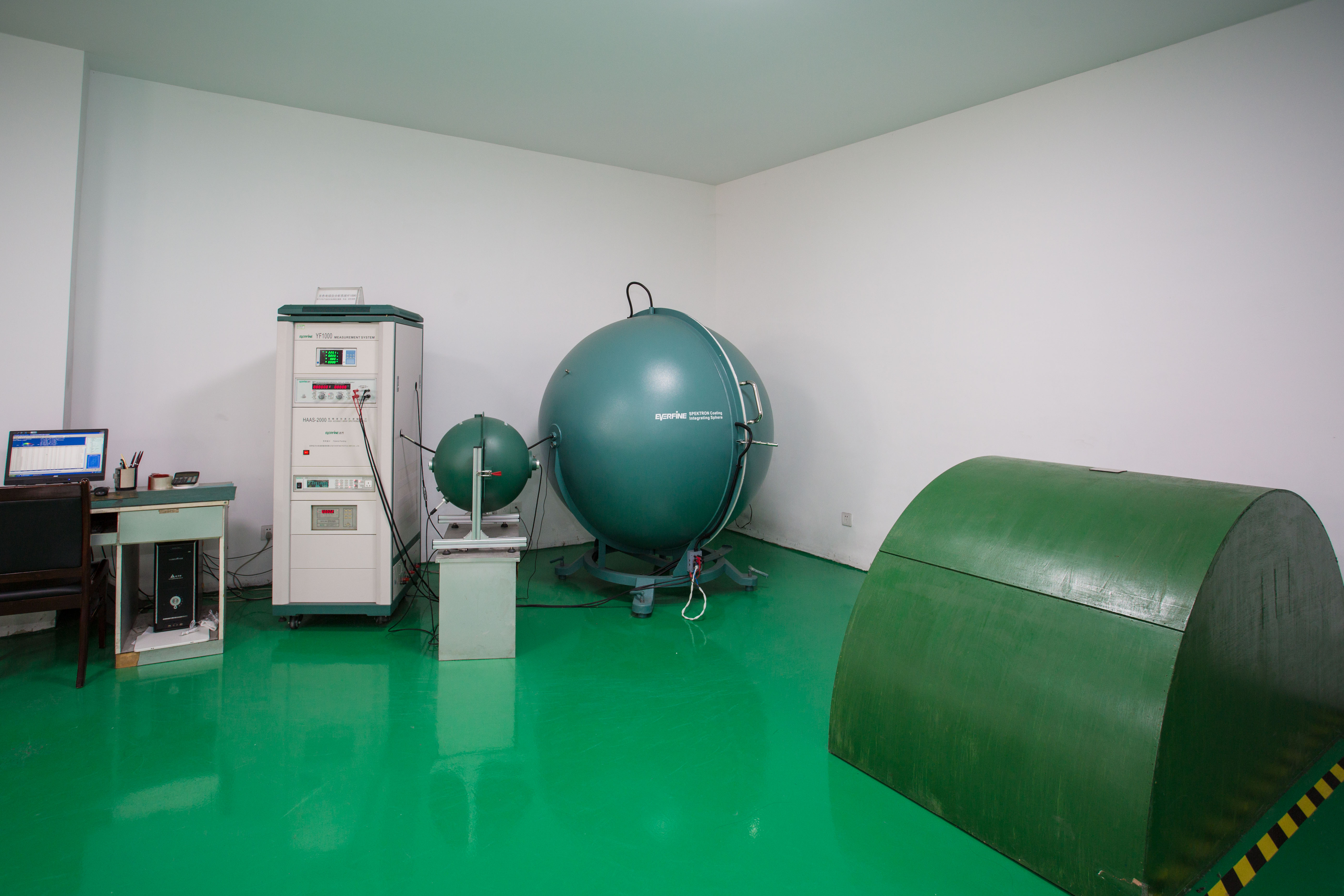
Laboratory verification: material and electrical evidence should trace to a specific model, not to a product family.
IP65 and the LE518 Bulkhead: Reading Ingress Protection Correctly
The IP code is defined by IEC 60529 and is read as two digits. The first digit covers solids, the second covers liquids. IP65 means dust-tight at level 6 and protected against water jets at level 5. It is the rating most often attached to bulkhead emergency lights installed on exterior walls, loading docks, car park soffits and other wet or outdoor positions.
JIMING positions the LE518 bulkhead unit as an IP65 product for outdoor or wet locations. For a specifier, that combination resolves a real problem: standard decorative emergency luminaires are not built for rain exposure, and installing them externally creates a maintenance liability that surfaces only after the first season of weather cycling.
IP65 also has well-defined edges that buyers routinely overrun. It does not cover immersion, which is IP67 or IP68 territory. It does not certify resistance to chemical washdown, chlorinated water, salt fog or solvent cleaning. It does not guarantee that the seal will remain intact after years of ultraviolet exposure and thermal cycling. And it says nothing about electrical safety, which remains the domain of UL 924 and equivalent standards.
Installation quality frequently decides whether an IP65 claim holds in the field. Cable gland torque, gasket seating, the number of cable entries opened, and mounting orientation all affect whether water reaches the interior. A correctly rated bulkhead installed with a poorly sealed gland is an unrated product in practice. Procurement should therefore pair the rating with an installation instruction set, and commissioning should include a visual inspection of every entry point.
cUL and the Two-Market Question
UL and cUL are separate evaluations against US and Canadian requirements respectively. A product carrying both is often marked cULus. A product listed only for the United States should not be assumed acceptable in Canada, even where the physical design is identical, because the Canadian requirements and the listing record are distinct.
JIMING cites the JLEU9 and JLEC2BCW as UL/cUL listed models supporting North American market access. For a Canadian project, the operative step is not to read the brochure but to confirm that the exact catalogue number appears with Canadian coverage in the certification record. Model suffixes matter here. A base model and its variant can carry different listing status while sharing a product photograph.
The JLEC2BCW also illustrates a second distinction that is frequently lost in specification writing: it carries an indoor damp location listing. Damp location is a defined installation condition. It covers environments with moderate moisture such as covered areas, certain interior spaces and locations protected from direct water contact. It is not wet location. A product listed for damp locations should not be specified under a canopy with wind-driven rain exposure, in a washdown zone, or on an unsheltered exterior wall. The correct response in those cases is a fixture with the appropriate enclosure rating, such as an IP65 bulkhead.
Remote Head Emergency Lights: Where Listings Usually Break Down
Remote head emergency lights are the component most likely to fall outside the paperwork. A remote head is normally not a stand-alone listed product. It is an accessory load evaluated as part of the emergency unit or emergency driver that powers it. The listing documentation for the host unit typically defines the maximum number and type of remote heads, the maximum wiring distance, and the voltage-drop assumptions used during evaluation.
That structure creates a specific procurement trap. The unit is listed. The remote head is a real, well-made product. The combination, however, may never have been evaluated together. When a contractor adds a third head to a two-head configuration, or extends the run beyond the evaluated distance, the installation no longer matches the evidence behind the listing, and the runtime measured at commissioning may not reflect what the listing assumed.
Several practical controls follow from this:
- Specify the head together with the host unit. The head model, quantity and maximum run distance should appear in the same specification clause as the emergency unit, not in a separate accessories line.
- Obtain the evaluated load range in writing. Ask the supplier to state the head count, head wattage and wiring distance the unit was evaluated for, and compare that against the design drawings.
- Check environmental continuity. A host unit installed in a conditioned corridor may feed a head mounted in an unconditioned or wet space. The head enclosure must carry its own appropriate rating; the host rating does not transfer along the circuit.
- Size the battery to the connected load. Runtime depends on total connected load, not on the host unit alone. A unit sized for two heads will not deliver the same duration with four.
- Test the installed configuration. The acceptance test must be performed with the final head count in place. A discharge test run before the last head is connected proves nothing about the delivered system.
- Record each head in the maintenance log. Remote head circuits add connection points. Test records should identify every head so that a failed splice is traceable.
Maintenance expectations reinforce this. Minnesota Department of Public Safety guidance for hotel emergency lighting describes a monthly 30-second activation test and an annual 30-minute power test. That guidance is jurisdiction-specific and does not bind every project, but it illustrates the pattern most authorities having jurisdiction follow: periodic proof that the installed system, including its remote loads, actually operates. A remote head that was never within the evaluated load range will tend to reveal itself during exactly this kind of test.
A Specifier's Checklist for Emergency Lighting Submittals
The following sequence converts the three marks into a workable review process. It is ordered by the point at which each item typically becomes a problem.
| Step | Verification item | Evidence to request |
|---|---|---|
| 1 | Listing status and country coverage | Certification record showing the exact catalogue number with UL and cUL coverage where Canada is in scope. |
| 2 | Model configuration match | Datasheet confirming input voltage, battery type and accessory configuration against the listed construction. |
| 3 | Housing material | Material declaration identifying the resin and its UL 94V-0 status. |
| 4 | Enclosure rating versus location | IP rating plus the location classification the product is listed for, such as indoor damp. |
| 5 | Remote head load | Evaluated head count, head type and maximum wiring distance for the host unit. |
| 6 | Test and maintenance plan | Instructions compatible with the interval required by the authority having jurisdiction. |
| 7 | Factory quality system | ISO 9001 certification and the incoming inspection and routine test protocol. |
| 8 | Manufacturing site | Written confirmation of which facility produces the listed SKU. |
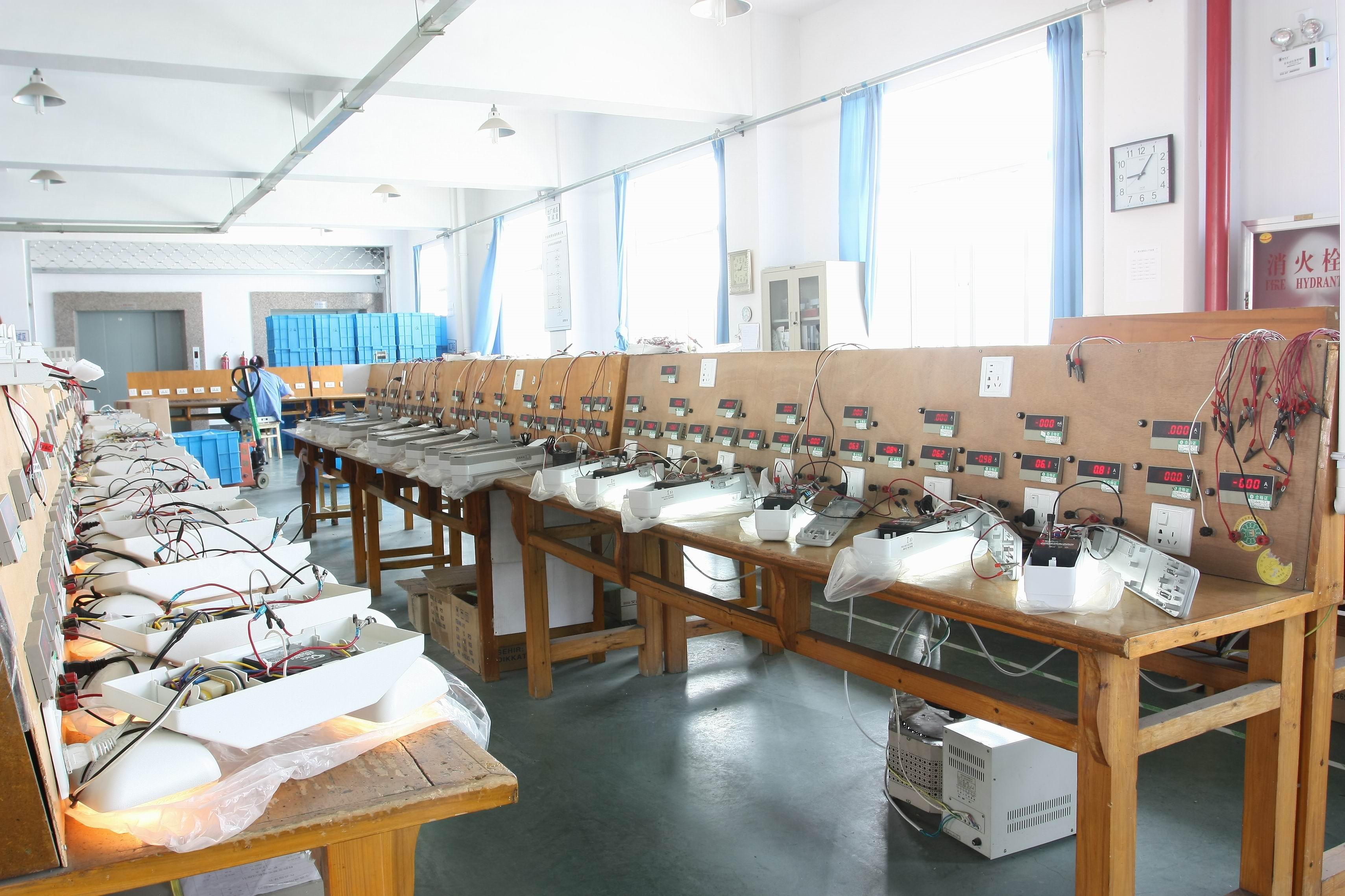
Document-to-product verification: each checklist item should resolve to a physical unit, not only to a file.
Certification-Led Sourcing versus Price-Led Sourcing
Traditional practice treats certification as a document collected after commercial terms are agreed. Samples are approved on appearance and price, the purchase order is issued, and listing evidence is requested during the submittal review. When a gap appears, the order is re-quoted, the schedule moves, and the specification is rewritten under time pressure.
A certification-led sequence reverses the order. Listing verification, material declaration and enclosure rating are checked before the sample is approved. That is slower at the request-for-quotation stage and measurably faster at the submittal stage, because the evidence already exists in the file.
The honest limitation is that certification review is not a performance guarantee. A listed product can still fall short in service if the photometric layout is wrong, if the battery has aged on a warehouse shelf, if the installation seals were fitted carelessly, or if the design load exceeds the evaluated remote head range. Certification establishes a floor of safety and market eligibility. It does not establish that the installation will meet illuminance targets, and it does not replace commissioning. Buyers who treat a listing as proof of quality rather than proof of eligibility tend to discover the difference at the first annual inspection.
Supply continuity is a separate question that certification does not answer. JIMING operates company-owned production facilities in Ningbo, China, and Haiphong, Vietnam, and states a monthly production capacity of 400,000 sets, with partnerships supported by flexible payment terms and volume-based incentive programs. For a buyer running a multi-year programme, the relevant checks are whether the site named on the certificate matches the site producing the order, and whether a shift between facilities changes origin documentation. Those are distinct from the listing question and should be confirmed in writing regardless of the certification status.
Market Context: Compliance as a Procurement Filter
The global emergency lighting market was valued at approximately USD 8.05 billion in 2026, with growth projected at a CAGR of 10.05 percent through 2031 according to Mordor Intelligence. Growth of that order draws new suppliers into the category, including assemblers that purchase finished housings and resell under their own label.
For buyers, the effect is asymmetric. More suppliers means more quotations, but not proportionally more verified documentation. The differentiator shifts from product availability to evidence quality: whether a supplier can produce a listing record that matches the model being quoted, a material declaration that matches the housing being moulded, and an enclosure rating that matches the location being specified.
Public guidance reinforces the direction. Kansas Fire Marshal material describes battery-powered emergency lights as relatively inexpensive, reliable, readily available off the shelf and easy to install, and notes the use of tested and listed units. That framing is useful because it separates two things buyers often merge: the commercial attractiveness of unit equipment, and the requirement that the specific unit be tested and listed.
Future Outlook
Three developments are likely to change how these marks are evaluated over the next several procurement cycles.
First, listing verification is becoming a routine desktop step rather than a specialist task. Buyers increasingly expect a certificate record that resolves to a catalogue number, and suppliers that cannot produce one in a standard format will be filtered out before commercial negotiation begins.
Second, self-testing and automated verification are entering the maintenance layer. Systems such as the EMCL ELT System, described by its developer as converting existing emergency lighting into wireless devices that automate code-required testing, point toward a future in which runtime evidence is generated continuously rather than captured annually on a clipboard. For remote head installations, that change would make load-range mismatches visible far earlier.
Third, material traceability is likely to tighten. As buyers become comfortable asking for a UL 94V-0 declaration on the housing resin, the next request is a statement of what changes trigger re-verification. Suppliers with in-house moulding and documented resin control will find that question easier to answer than suppliers that buy finished housings on the open market.
Frequently Asked Questions
What does a UL 94V-0 rating on an emergency light housing actually mean?
It is a material-level flammability classification for plastics. A specimen of defined geometry and thickness is tested in a vertical orientation and must self-extinguish within the specified window without propagating flame through dripping. The classification applies to the housing resin and moulded part. It does not establish runtime, light output, or suitability for a fire-resistance-rated assembly.
Does IP65 mean a bulkhead emergency light can be submerged or washed down indefinitely?
No. IP65 combines level 6 for solids, meaning dust-tight, with level 5 for liquids, meaning protection against water jets. It does not cover immersion, which requires IP67 or IP68, and it does not by itself certify resistance to chemical washdown, salt spray or long-term gasket ageing. Real-world performance also depends on gland torque, gasket seating and mounting orientation.
What is the difference between UL listing and cUL listing?
UL listing is issued against United States requirements. cUL listing is issued against Canadian requirements. A product carrying both is commonly marked cULus. A product listed only for the United States should not be assumed acceptable in Canada, because the evaluation basis and the listing record are separate. The verification step is to confirm the exact catalogue number and its country coverage in the certification record.
Is a remote head emergency light covered by the host unit's listing?
Usually as an accessory load rather than as an independent listed product. The host unit's listing documentation typically defines the maximum number and type of remote heads and the maximum wiring distance evaluated. A head added outside that scope is not covered by the evidence behind the listing. Buyers should obtain the evaluated load range in writing and confirm at commissioning that the installed configuration matches it.
Does UL 924 listing mean a product complies with NFPA 101?
UL 924 is a product safety standard, while NFPA 101 is an installation and life-safety code. UL Solutions states that UL 924 evaluation supports requirements associated with NFPA 101, NFPA 1 and NFPA 70 Article 700, along with referenced international codes. Compliance for a specific building is determined by the authority having jurisdiction. A listing is a necessary input to that determination, not a substitute for design review.
How does an indoor damp location listing affect specification?
Damp location is a defined installation condition covering environments with moderate moisture and no direct water contact. It is not wet location. A product listed for indoor damp locations, such as the JLEC2BCW, should not be specified under a canopy exposed to wind-driven rain, in a washdown zone, or on an unsheltered exterior wall. Those positions call for an enclosure with the appropriate ingress rating, such as an IP65 bulkhead unit.
What documents should a specifier request before approving an emergency lighting submittal?
At minimum: a certification record showing the exact model and country coverage; a datasheet with input voltage, battery type and rated duration; a housing material declaration including UL 94V-0 status; the IP rating together with the location classification the product is listed for; the evaluated remote head count and wiring distance; test and maintenance instructions; factory quality certification such as ISO 9001; and written confirmation of the manufacturing site.
The practical conclusion for buyers is that UL 94V-0, IP65 and cUL are not competing claims to be compared on strength. They are separate answers to separate questions, and a submittal is only complete when each answer can be traced to the specific model, material and installation condition in the project. Reading them individually, and asking for the evidence behind each, is what separates a verified specification from a well-designed brochure.
¿Tiene preguntas o necesita más detalles?
Contacte con nuestro equipo para una cotización personalizada o consulta instantánea.
Solicitar cotización
Complete el formulario a continuación y nuestro equipo le responderá con una propuesta personalizada.
Chat directo de WhatsApp
¿Prefiere chatear en tiempo real? Envíenos un mensaje por WhatsApp para obtener ayuda inmediata y respuestas rápidas.
- Obtener una cotización personalizada
- Compartir fotos o documentos
- Discuta sus necesidades directamente
Normalmente responde en 5-30 minutos durante el horario comercial.