
Decoding Polycarbonate Convex Mirror Specifications: A Technical Deep Dive for Industrial Engineers and Procurement Specialists
1. Core Technical Parameters: How to Read and Apply Them
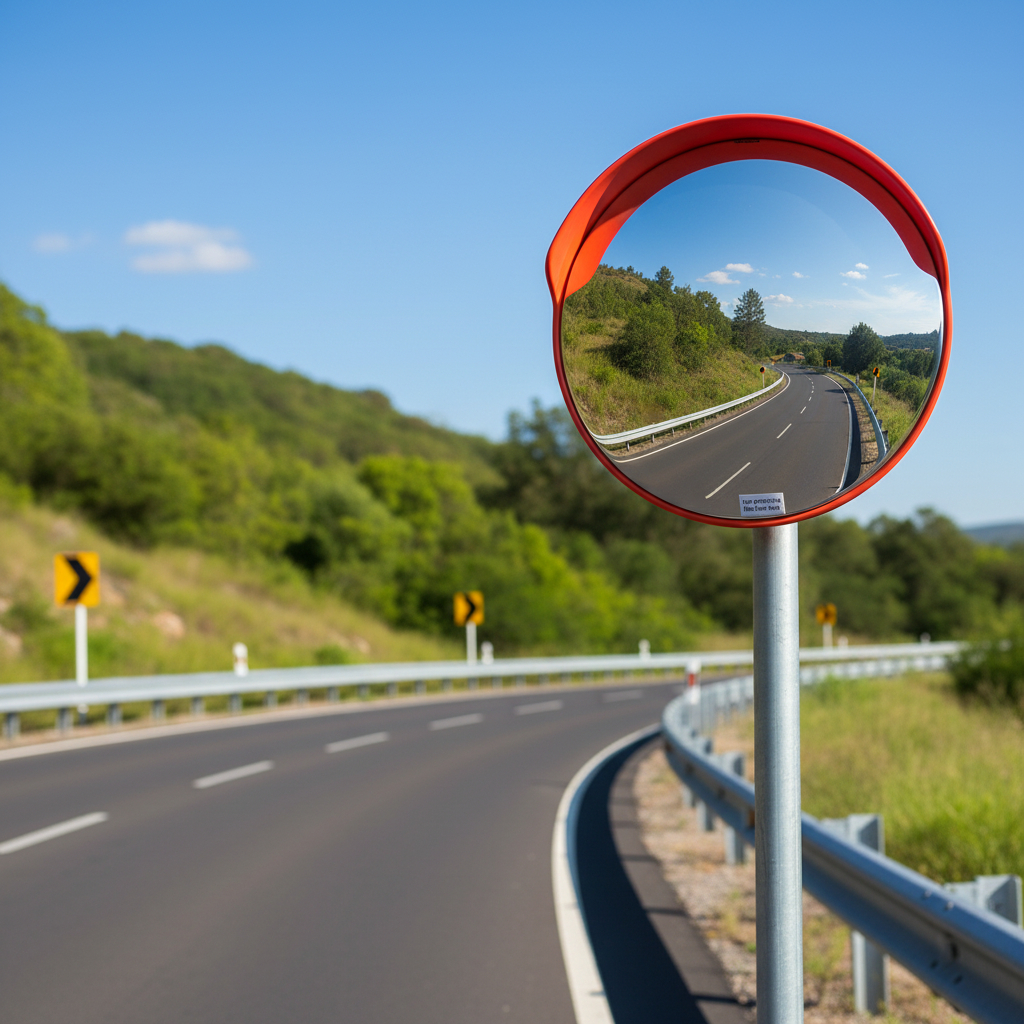
Polycarbonate convex mirrors are passive optical devices that enhance field of view in blind spots. Understanding their key specifications is essential for selecting the right model for industrial, traffic, or commercial environments. Below are the critical parameters and their practical implications.
1.1 Diameter and Viewing Range
Available diameters typically range from 450 mm to 1200 mm. The viewing angle is consistently above 130° for all models, but the visual range varies:
- ⌀450 mm (YD-OC45): Visual range 10–12 m – ideal for narrow indoor corridors or tight warehouse corners.
- ⌀600 mm (YD-OC60): Visual range 15–18 m – suitable for small parking garages or factory aisles.
- ⌀750 mm (YD-OC75): Visual range 20–25 m – commonly used in medium intersections and loading docks.
- ⌀1000 mm (YD-OC100): Visual range 30–35 m – recommended for road junctions and larger parking lots.
- ⌀1200 mm (YD-OC120): Visual range 35–45 m – designed for highways, heavy traffic zones, and port areas.
The curvature radius (R2200–R3000) determines the balance between image size and coverage. A smaller radius gives a wider view but smaller image of objects, while a larger radius provides a more natural perspective suitable for longer distances.
1.2 Mirror Material and Surface Coating
The mirror lens is made of impact-resistant polycarbonate (PC) with a vacuum aluminum coating. This combination delivers high reflectivity (typical for outdoor mirrors) while maintaining shatterproof properties. An anti-scratch hard coating is optional and recommended for high-traffic installations where surface abrasion is a risk.
1.3 Weather and UV Resistance
Outdoor polycarbonate convex mirrors must withstand temperature extremes from -30°C to +80°C. UV-stabilized PC and ABS backing protect against solar degradation. Grade 8 UV resistance corresponds to a service life of 3–5 years in direct sunlight. The complete assembly is rated IP65 for weatherproof operation.
1.4 Mounting and Structural Integrity
The backing material is high-impact ABS plastic with a wall thickness of 2.0 mm. The mounting bracket is made of heavy-duty galvanized steel, compatible with 60 mm or 75 mm poles. The mirror is designed to withstand wind loads up to Level 10, making it reliable in severe weather conditions. Optional engineering-grade reflective tape on the rim enhances low-light visibility.
2. Manufacturing Process and Its Impact on Quality
The production of polycarbonate convex mirrors involves several steps that directly affect durability, optical clarity, and long-term performance.
2.1 Injection Molding of Backing and Frame
High-impact ABS plastic is injected under controlled temperature and pressure to form the back plate and hood. This process determines the mechanical strength and dimensional accuracy. At Mnsd (Tiantai Yuanda Traffic Device Co., Ltd), the factory uses advanced injection machines to ensure consistent wall thickness (2.0 mm) and defect-free surfaces. The monthly production capacity reaches 30,000 pieces, supported by over 300 workers.
2.2 Vacuum Aluminum Coating
The polycarbonate lens is coated with a thin layer of aluminum vapor in a vacuum chamber. This coating provides the reflective surface. The quality of vacuum, deposition rate, and coating thickness are critical for achieving uniform reflectivity and avoiding pinholes that can lead to corrosion over time.
2.3 Anti-Scratch Hard Coating Application
To protect the reflective layer, a specialized anti-scratch hard coating is optionally applied to the PC surface. During manufacturing and transit, a protective PE film is also used to prevent surface damage. This is part of the risk control measures to mitigate scratching.
2.4 Assembly and Quality Control
Each mirror undergoes 100% impact and clarity inspection before packaging. The backing, bracket, and polycarbonate dome are assembled using UV-stabilized adhesives. The lead time for a 20-foot container is 15–20 days, and the MOQ is 100 pieces. OEM/ODM customization is available for diameter (45–120 cm), backing material (PP/ABS/fiberglass), and lens type (PC/stainless steel).
3. Common Mistakes When Interpreting Specifications
Industrial buyers often fall into the following pitfalls when evaluating convex mirror datasheets.
3.1 Overlooking Real-World Viewing Range
Many assume that a 130° viewing angle guarantees visibility at the stated distance, but the visual range depends on curvature radius and installation height. For example, a ⌀1000 mm mirror with R2500 curvature may have a 30–35 m visual range, but if mounted too high, the reflection becomes distorted. Always test with vehicle or pedestrian positions in the actual environment.
3.2 Ignoring UV Resistance Grades
Budget mirrors may claim "UV protection" without specifying the grade. Grade 8 UV resistance is the industry benchmark for outdoor use with a 3–5 year lifespan. Without it, the polycarbonate lens may yellow or crack within 12 months, especially in regions with high solar irradiance like India or the Middle East.
3.3 Choosing Material by Price Alone
Acrylic mirrors are cheaper (cf. acrylic economic convex mirror) but are more brittle and prone to scratching. Polycarbonate offers higher impact resistance and self-recovery properties (vandal-resistant design). For high-traffic industrial zones, polycarbonate is the preferred choice despite a slightly higher upfront cost.
4. China’s Manufacturing Advantage: Case Study of Mnsd
Chinese manufacturers like Mnsd (brand of Tiantai Yuanda Traffic Device Co., Ltd) have emerged as competitive suppliers by combining cost efficiency with consistent quality. Key strengths include:
4.1 Vertical Integration and Scale
With a factory area of 40,000 m², an annual output of 120 million units, and a dedicated R&D team of 15 engineers, Mnsd controls the entire production chain from injection molding to final assembly. This reduces lead time and supports customization.
4.2 Proven Export Track Record
Over 50% of production is exported to Asia, Europe, and the USA. A recent project for a distributor in Thailand involved medium traffic safety mirrors for road corners and parking blind spots. The client reported on-time delivery and compliance with local acceptance tests. The mirrors have been in service for 5–8 years, demonstrating wide viewing angle and weatherproof durability.
4.3 Cost-Effective Alternatives Compared to Established Brands
While Japanese suppliers like Asahi Glass offer premium glass-based mirrors, and European brands like Roadtrax provide niche options, Mnsd focuses on polycarbonate-based solutions that provide shatterproof performance at a fraction of the weight and cost. Compared to electronic blind-spot monitoring systems, Mnsd’s convex mirrors operate with zero energy consumption and require no maintenance beyond occasional cleaning.
4.4 Risk Mitigation in Production
To address surface scratching — a common quality risk — Mnsd applies a specialized anti-scratch hard coating and protective PE film during assembly and transit. This ensures the mirror arrives in factory-fresh condition, reducing rework and customer complaints.
Conclusion
For industrial engineers and procurement professionals, understanding the interplay between diameter, curvature, material, and coating is vital to selecting a convex mirror that delivers long-term value. Chinese manufacturers like Mnsd have closed the gap in quality and reliability, offering certified (CE compliant) products that meet international standards. By avoiding common specification pitfalls and evaluating the manufacturing process, buyers can make informed decisions that enhance workplace safety and reduce lifecycle costs.
For a complete product catalog and technical datasheets, download the company brochure:
Mnsd Convex Mirror Brochure (PDF)¿Tiene preguntas o necesita más detalles?
Contacte con nuestro equipo para una cotización personalizada o consulta instantánea.
Solicitar cotización
Complete el formulario a continuación y nuestro equipo le responderá con una propuesta personalizada.
Chat directo de WhatsApp
¿Prefiere chatear en tiempo real? Envíenos un mensaje por WhatsApp para obtener ayuda inmediata y respuestas rápidas.
- Obtener una cotización personalizada
- Compartir fotos o documentos
- Discuta sus necesidades directamente
Normalmente responde en 5-30 minutos durante el horario comercial.