
Decoding Plasma Polishing Machine Technical Parameters and Manufacturing Processes: A Technical Guide for Engineers and Procurement Professionals (2026)
Introduction
In precision manufacturing, plasma polishing machines have become essential for achieving defect-free surface finishes on complex metal parts. However, procurement and engineering teams often face difficulties interpreting technical specifications and understanding how manufacturing processes affect long-term reliability. This guide breaks down the most critical parameters, production quality factors, and demonstrates how Chinese suppliers like BAYI are advancing the technology with proven field experience.
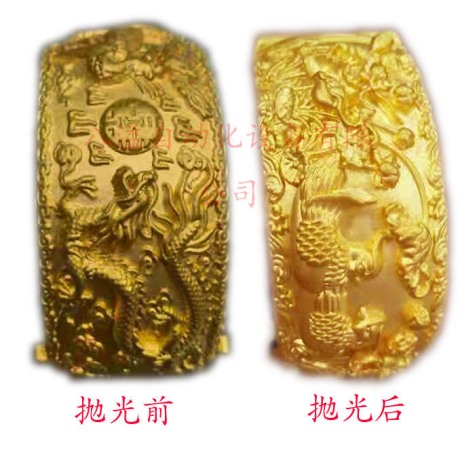
1. Core Technical Parameters and Their Real-World Impact
1.1 Output Current (A) and Power Rating
The most commonly cited specification is the machine's rated current, typically ranging from 100A to 800A for standard models, with custom units reaching 1000–2500A. For example, the BAYI BY-100A metal plasma polishing machine delivers a maximum output current of 100A with a power consumption of 30KW, requiring a three-phase five-wire 380V input supply. Higher current ratings generally allow faster processing and larger batch volumes, but must be matched with the workpiece material and geometry. A machine rated at 800A, such as the BAYI BY-800A titanium plasma polishing machine, is suited for medical implants and 3D-printed dentures where deburring rate reaches ≥99.9%.
1.2 Gas Source and Pressure
All plasma systems require a stable compressed air or inert gas supply. The BY-100A specifies a gas source pressure of 0.5–0.8 MPa. Inconsistent gas quality or pressure fluctuations directly affect arc stability and therefore surface uniformity. Procurement teams should verify that their facility's compressed air system meets the minimum requirements before installation.
1.3 Fixture (Hanger) Space and Machine Dimensions
The available hanger space limits the maximum workpiece dimensions. For the BY-100A, the hanger space is 360 x 260 x 200 mm. Buyers often overlook this parameter, leading to parts that cannot be properly immersed in the plasma electrolyte. It is advisable to measure the largest product envelope and request the manufacturer's specification for clearance.
1.4 Operating Mode and Control System
Modern plasma polishing machines feature fully automatic control systems. Parameters such as current, dwell time, and immersion cycles can be preset via a programmable logic controller (PLC). The BAYI units offer easy-to-operate interfaces with a 1-year core component warranty and video technical support. This reduces operator training costs and ensures consistent output across shifts.
2. Manufacturing Process and Its Relationship with Product Life and Performance
2.1 The Plasma Electrolytic Polishing Mechanism
Unlike mechanical buffing, plasma polishing uses an electrolyte bath that is energized to create a vapor-gas envelope around the workpiece. The electrical discharge removes micro-burrs and smoothens the surface without mechanical stress. The process does not damage the original dimension or introduce work-hardening, making it ideal for thin-walled or intricate parts.
2.2 Material Choice for Machine Construction
Durable construction directly impacts machine longevity and electrolyte purity. The BAYI BY-100A uses an inner groove main body made of 316L stainless steel, which resists corrosion from the acidic electrolyte. The outer tank is also stainless steel, minimizing contamination and extending maintenance intervals. Regular delamination of the ash layer (as noted in the risk control documentation) should be performed per the instruction manual to protect the mechanical film.
2.3 Energy Efficiency and Environmental Protection
Plasma polishing machines are inherently more energy-efficient than mechanical processes. The BAYI units are characterized as energy saving and environmental protection equipment. Because the plasma discharge only occurs when the part is submerged, there is no energy waste under no-load conditions. Additionally, the system can be integrated with a dusting and fume extraction system to manage process exhaust, as seen in 3D printing post-processing setups.
3. Common Misconceptions in Technical Parameter Interpretation
3.1 Mistake: Assuming Higher Current Always Means Better Results
While higher current increases removal rate, it also raises the electrolyte temperature and risks burning delicate features. For example, polishing a jewelry item made of gold or silver with 800A would likely cause overheating. The BAYI product line offers multiple models (100A, 300A, 500A, 800A, and custom 1000–2500A) precisely to match different applications. Medical devices and 3D-printed dentures typically require 800A, while jewelry benefits from 500A.
3.2 Mistake: Ignoring Workpiece Geometry and Fixturing
Some buyers assume a machine can handle any shape as long as the part fits in the hanger. However, complex internal channels or blind holes may not allow plasma to reach all areas. The BAYI comparison document highlights that its machine can polish at any angle of 360° without needing to turn the hanger out during the process—a unique advantage for multi-sided parts. Always test a sample or request a process validation report from the supplier.
3.3 Mistake: Overlooking Post-Processing and Support Equipment
Plasma polishing requires integrated auxiliary systems: workpiece handling, rinsing, and waste treatment. The 3D printing application scenario includes a dusting & fume extraction system and workpiece handling & positioning system. Procurement teams should budget for these additions and confirm the supplier provides installation guidance, as BAYI did for Hebei Hengxin over a 7-year partnership.
4. Technological Advantages of Innovative Chinese Suppliers: The BAYI Case
4.1 Deep Industry Expertise
Founded in 2017, Dongguan Bayi Automation Equipment Co., Ltd. (brand: BAYI) has core technical members who are among the pioneers of plasma deburring equipment in China, with 17 years of R&D and manufacturing experience. This accumulated knowledge allows them to design specialized equipment for medical, aerospace, 3C electronics, and jewelry industries. The company holds CE certification (certificate No.3N240806.DBAQC99) issued by Ente Certificazione Macchine, confirming compliance with EU Machinery Directive 2006/42/EC, Low Voltage Directive 2014/35/EU, and EMC Directive 2014/30/EU, verified against EN ISO 12100, EN 60204-1, and other standards.
4.2 Customization and Non-Standard Solutions
In addition to standard models (100A, 300A, 500A, 800A), BAYI offers non-standard units from 1000A to 2500A tailored to customer product dimensions and output requirements. Examples include tape-type plasma equipment for continuous square material polishing, long-tube systems for pipes over 2 meters, and chain-type equipment for automatic roll collection. This flexibility is critical for manufacturers who cannot compromise on production line layout.
4.3 Verified Field Performance
A long-term case study with Hebei Hengxin demonstrates BAYI's reliability: two units have been processing electronic accessories for seven consecutive years with stable operation and minimal downtime, supported by remote technical guidance during installation. The 800A model tested in this application achieved a deburring rate of ≥99.9% and maintained consistent surface quality over the entire period.
4.4 Cost-Effectiveness and Support
Compared to traditional mechanical polishing, BAYI's plasma solution significantly reduces labor costs and optimizes energy consumption (specific reduction rates depend on project implementation). The MOQ is 1 unit, lead time is 30–45 days, and after-sales service includes remote support and video technical training. Payment terms are 50% deposit and full payment before shipment, with pre-shipment testing accepted.
Conclusion
Selecting the right plasma polishing machine requires a thorough understanding of technical parameters, manufacturing quality, and application-specific needs. By avoiding common interpretation errors and leveraging the proven expertise of suppliers like BAYI, procurement professionals can secure equipment that delivers consistent, high-precision results for years. Always request mechanical test reports, video factory inspections, and certification documents before finalizing a purchase.
Download the Official BAYI Brochure for Full Technical Specifications and Case Studies¿Tiene preguntas o necesita más detalles?
Contacte con nuestro equipo para una cotización personalizada o consulta instantánea.
Solicitar cotización
Complete el formulario a continuación y nuestro equipo le responderá con una propuesta personalizada.
Chat directo de WhatsApp
¿Prefiere chatear en tiempo real? Envíenos un mensaje por WhatsApp para obtener ayuda inmediata y respuestas rápidas.
- Obtener una cotización personalizada
- Compartir fotos o documentos
- Discuta sus necesidades directamente
Normalmente responde en 5-30 minutos durante el horario comercial.