
Decoding ISO 9001 Certificate 44825MS079001R0 for Automatic Battery Pack Assembly Lines
Automatic battery pack assembly line projects are won on throughput, cell-format compatibility and cost — but they are qualified on paperwork. The ISO 9001 certificate is usually the first document a buyer opens, and the one most often skimmed rather than read.
This article decodes a single certificate used in exactly that process: certificate number 44825MS079001R0, issued by ZDCB, referencing the standard GB/T19001-2016 / ISO 9001:2015, and stated to apply to the ZZX2406 and ZZX2313 automatic battery pack assembly line models in global markets. The purpose is not to celebrate the document but to show how procurement, engineering and quality teams can turn it into a verifiable qualification record — and where its authority stops.
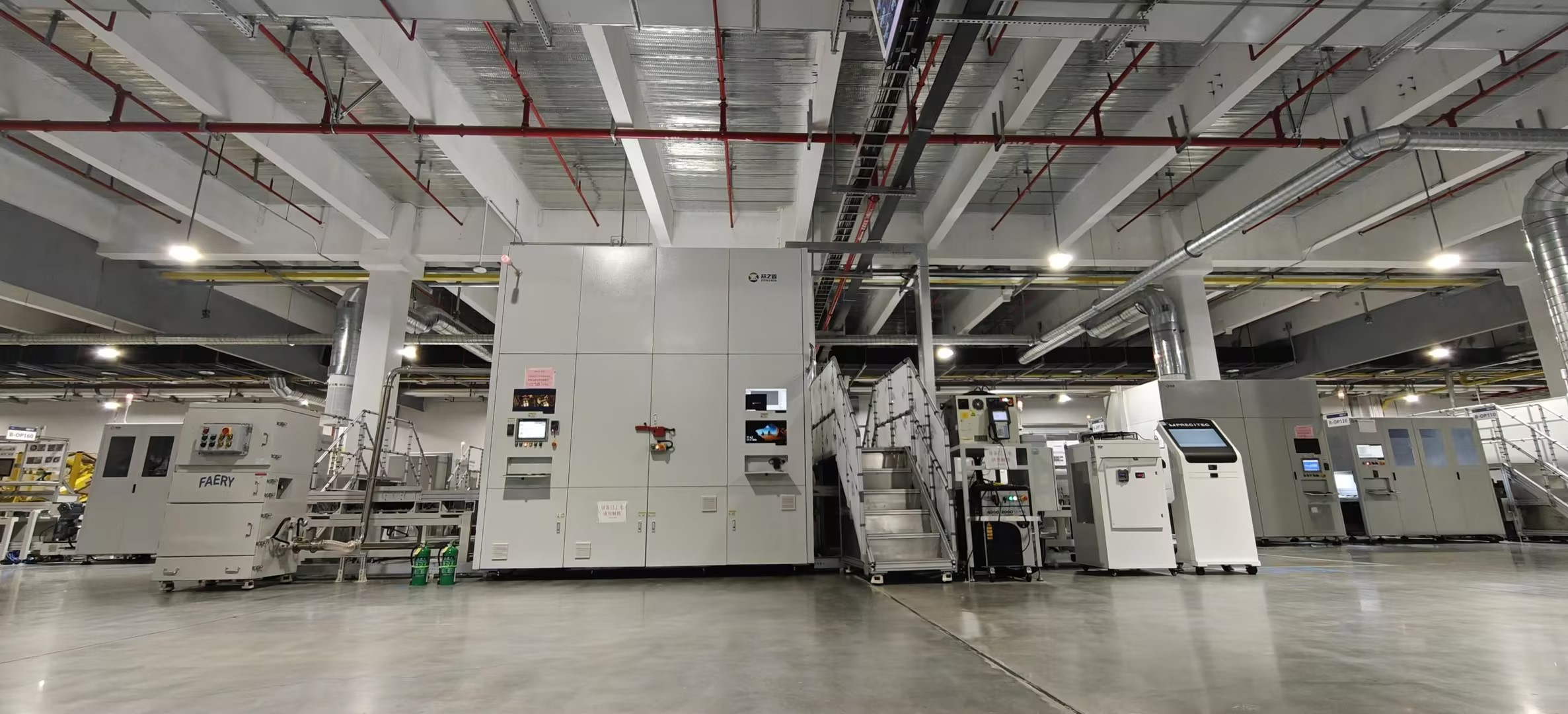
Supplier qualification for automatic battery pack assembly lines increasingly starts with document review before any plant visit.
Shanghai Zonzsin Intelligent Equipment Co., Ltd. is the Shanghai-based manufacturer behind those two models. Founded in 2019, the company builds lithium battery PACK assembly lines and an ESS battery pack insertion robot for containers, operates a 6,000 m² facility with a 43-engineer R&D team, states 50 granted patents, and reports a delivered footprint that includes Europe, the USA, Japan, South Korea and India, with Southeast Asia and the EU listed as main markets. Certificate 44825MS079001R0 sits inside that wider evidence set — one input among several, not the whole file.
ISO 9001 Certification in Battery Pack Line Procurement: A Working Definition
ISO 9001 is a quality management system standard, not a product specification. A certificate issued against it confirms that an independent certification body has assessed how a company plans, controls, documents and improves its processes. It does not certify that a specific assembly line will reach a stated cycle time, welding yield, footprint or utility load on a specific customer's floor.
For buyers of automatic battery pack assembly lines, that distinction sets the document's proper place. The certificate belongs in the supplier qualification file, next to — never instead of — process-flow documentation, cell-format compatibility statements, test-station design, safety architecture and factory audit evidence. Teams that treat certification as a stand-in for line performance tend to find the gap during ramp-up, after acceptance criteria are already frozen in the contract.
Reading Certificate 44825MS079001R0 Field by Field
A certification document carries five fields that a buyer can check without speaking to the sales team. For certificate 44825MS079001R0, those fields resolve as follows:
| Certificate field | Value stated for this certificate | Why it matters in the qualification file |
|---|---|---|
| Issuing body | ZDCB | Identifies which organization holds the audit record behind the certificate. |
| Certificate number | 44825MS079001R0 | The unique identifier; it should match character for character across the quotation pack, the register record and any quality annex. |
| Standard | GB/T19001-2016 / ISO 9001:2015 | Records both the Chinese national standard and its ISO reference, which matters when the buying entity sits outside China. |
| Covered models | ZZX2406 and ZZX2313 automatic battery pack assembly lines | Links certified scope to the equipment actually being quoted. |
| Market applicability | Global | Indicates the supplier presents the certificate as applicable to international projects, not only domestic ones. |
A practical note on the number itself. Certificate strings are long, and transcription drift is common when they pass from a supplier PDF into a buyer's qualification template. The string 44825MS079001R0 should be reproduced exactly, and the same string should appear when the record is checked against the issuing body's own listing. Where a buyer's internal system shortens or reformats certificate identifiers, the original string should still be retained in the file so an auditor can reconstruct the match.
Why the Model Scope Field Is the One Buyers Under-Read
Issuer and standard get checked routinely. Model coverage is checked far less often, even though it is the field that decides whether the certificate actually travels with the equipment in the RFQ.
ZZX2406 is described in Zonzsin's published materials as a CTP battery pack assembly line supporting both 314Ah and 587Ah prismatic cells; a secondary republication of a company release describes the same line supporting 314Ah and 587Ah cells in a 1P96S configuration. ZZX2313 is referenced as an EV battery pack assembly line model, and a republished company release states a one-time welding qualification rate of 99.5% and a final qualification rate of 99.95% for that model.
Two consequences follow. First, if the RFQ specifies a cell format, pack architecture or automation level outside the models named on the certificate, the certificate does not automatically extend to that scope — the buyer is then evaluating a supplier's quality system in general, not a certified scope for the specific machine. Second, model coverage moves faster than certification cycles in this category. A line engineered around 280Ah-class prismatic cells may be quoted a year later for 314Ah or 587Ah cells, and Zonzsin's product pages already list compatibility across 280/314/587Ah cells and 1P52S/1P104S pack configurations for its automatic industrial car battery pack assembly line.
What Certificate 44825MS079001R0 Cannot Tell You
The most reliable way to use an ISO 9001 certificate is to state its boundary explicitly. Certificate 44825MS079001R0 does not, by itself, establish any of the following:
- that a delivered line will meet a stated cycle time for a specific pack design;
- that welding yield figures published for one model will reproduce on a different product, shift pattern or cell supplier;
- that the process scope — from cell feeding through end-of-line and charge/discharge testing — matches the buyer's bill of process;
- that production capacity aligns with the project schedule.
On capacity, statements in this category are typically self-reported. Zonzsin states it can build 30–40 battery assembly lines per year and describes a home site capable of building 30 assembly lines and 200 standard single machines annually. Those figures are useful for early screening and for judging whether a supplier is likely to be over-committed; they are not a schedule guarantee, and they should be converted into contractual milestones before deposit.
A second boundary is commercial rather than technical. Published comparison material for this product family notes that initial investment is higher than pure manual solutions, and that although long-term per-unit cost may decrease through efficiency and yield gains, the specific payback period requires project-level calculation. A buyer who expects certification to shorten that calculation will be disappointed: what the certificate reduces is process-control uncertainty, not capital cost.
Capability Evidence That Should Sit Beside the Certificate
The certificate answers one question — does this supplier operate a documented quality system? The remaining questions need separate answers, and for this product family several of them already have published starting points:
| Evidence category | What is published today | What the buyer still has to confirm |
|---|---|---|
| Process coverage | A one-stop scope described as covering cell feeding, stacking, insulating, wire harness installation, EOL test and charge/discharge test. | Where the scope starts and stops for the buyer's own pack architecture. |
| Cell and pack compatibility | 314Ah and 587Ah prismatic cells on the CTP line; 280/314/587Ah cells with 1P52S/1P104S pack configurations on the EV-oriented line. | Whether the buyer's specific cell and pack format is inside the qualified set, or requires a change order. |
| Throughput | A published cycle time of 16 PPM for the module PACK assembly line; export-channel specifications for high-efficiency CTP lines in this category are commonly listed at 4–8 PPM for large prismatic cells. | The definition of cycle time used, and the station balance that supports it. |
| Positioning and footprint | Positioned for medium-to-high volume production lines and PACK assembly scenarios requiring high consistency and yield, with optimized space utilization and a reported 20% increase in cycle time as stated indicators. | How cycle time is measured, and what the footprint figure assumes about layout and buffer sizing. |
| Safety and risk control | Protective design and interlocks, safety sensors, and ESD grounding/protection are listed control methods, supported by process risk assessment and testing at dedicated test stations. | Whether the safety concept covers the buyer's cell chemistry, thermal events and site regulations. |
| Maintenance model | Technical personnel for maintenance and periodic calibration, spare parts management and remote support. | Response times, spare-parts stock location and calibration intervals in writing. |
| Automation level | Alongside automatic lines, a semi-automatic PACK cluster loading system is also listed. | Which automation level matches the target volume and labor model. |
Every row above is a supplier-published specification. They are the right inputs for a comparison matrix — but they should be validated at the same time as, or before, the certificate is accepted into the qualification file. A certificate with no supporting capability evidence is a document about processes; capability evidence is what tells a buyer whether the process produces the pack.
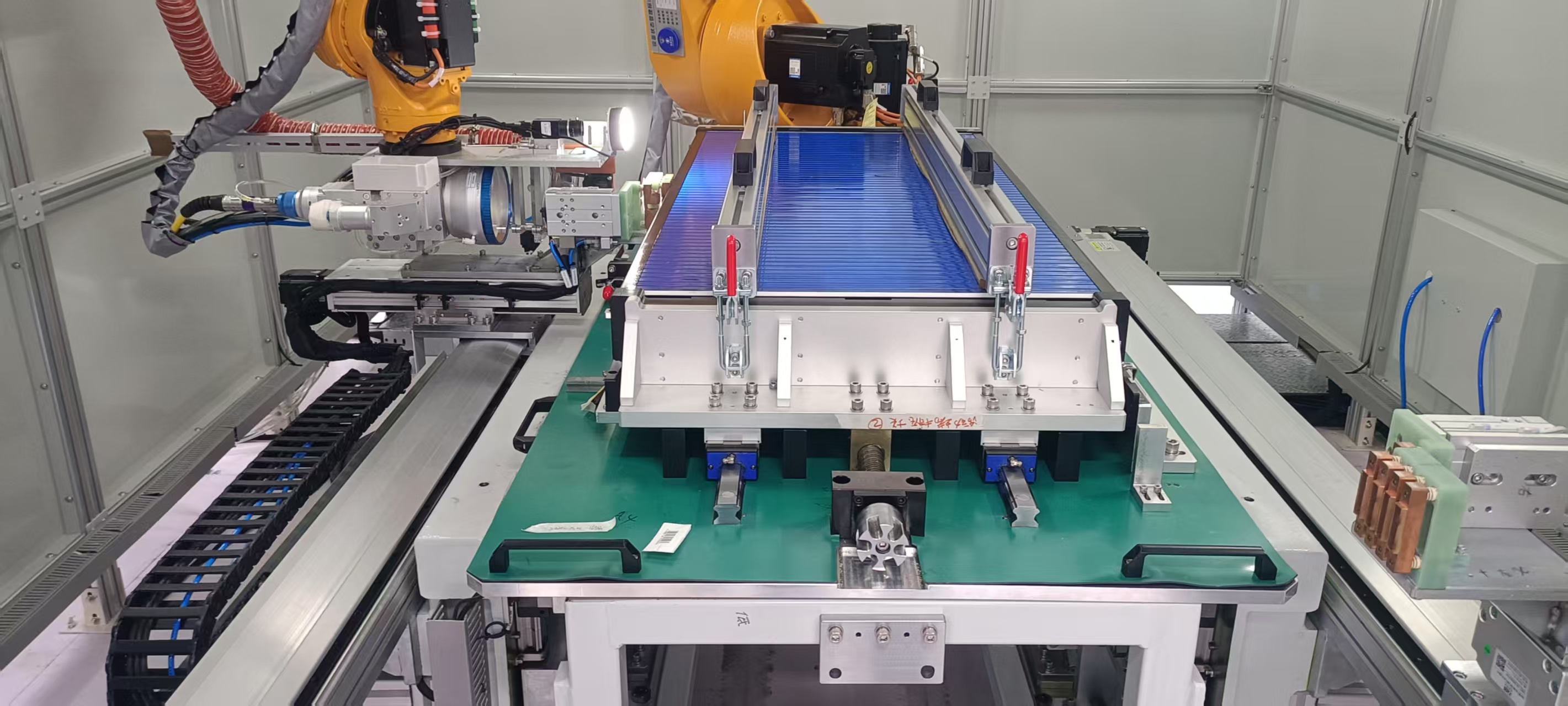
Document review and plant-level verification are complementary steps, not substitutes for each other.
A Verification Workflow Buyers Can Run in a Single Pass
The following sequence converts a certificate from a decorative annex into an auditable record. It is designed to be run by a procurement lead with support from a quality engineer, and it takes less time than a single technical clarification round.
- Match the number exactly. Confirm that 44825MS079001R0 in the supplier's document is identical to the number quoted in the commercial paperwork, with no shortened variant anywhere in the file.
- Confirm the issuing body. Record ZDCB as the issuer, and confirm the certificate is presented as an original or controlled copy rather than a reformatted excerpt.
- Record the standard reference. Log GB/T19001-2016 / ISO 9001:2015 exactly as written, so that version confusion does not appear during a later customer or regulatory audit.
- Check scope against the quotation. Confirm that the certificate's covered models — ZZX2406 and ZZX2313 — include the model and configuration actually being quoted.
- Confirm status and validity. Verify the certificate's current status and dates through the issuing body's record, and note the verification date in the qualification file.
- Attach the capability layer. Pair the certificate with the process-flow document, cell-format compatibility statement, cycle-time definition, safety concept and maintenance terms.
- Convert claims into acceptance criteria. Move the throughput, yield, footprint and safety items from the brochure into measurable acceptance criteria in the purchase contract.
Steps one through five are document work. Steps six and seven are where projects are actually protected. A buyer who completes only the first half has verified that a supplier runs a quality system; a buyer who completes both halves has verified what that system is being asked to deliver.
Certified Automated Lines Compared with Manual and Alternative Routes
Comparison at the decision stage usually sets an automated, documented line against two alternatives: a manual or semi-manual build route, and an automated line from a supplier whose quality documentation is thinner. The trade-offs differ by dimension.
| Dimension | Documented automated line | Manual / lightly documented route |
|---|---|---|
| Documentation | Traceable quality system record; auditable certificate number and scope. | Documentation often assembled per project, with limited system-level traceability. |
| Consistency and yield | Designed for scenarios requiring high consistency and yield, with published welding qualification figures for one EV model. | Yield depends heavily on operator skill and shift-to-shift variation. |
| Labor | Published positioning cites a 50% manpower saving relative to alternatives. | Higher headcount, including indirect inspection roles. |
| Capital cost | Higher initial investment; published comparison cites a 20% price saving against named alternatives and notes payback requires project-level calculation. | Lower entry cost, but per-unit cost scales with labor and rework. |
| Customization | Published positioning names customized line integration as the core differentiator against alternatives such as ATW and LEAD INTELLIGENT. | Flexible in small batches by nature, harder to scale without redesign. |
Two cautions belong with this table. First, the savings and yield figures are supplier-published, and they should be re-tested against the buyer's own labor rates, shift model and scrap assumptions rather than copied into a business case. Second, the named comparison set reflects the supplier's own published positioning; it is a starting point for a buyer's evaluation matrix, not an independent verdict. No certificate, including 44825MS079001R0, resolves that comparison — it only tells the buyer that one of the two options arrives with a documented quality system behind it.
Global Market Applicability: What Travels With the Certificate
Certificate 44825MS079001R0 is stated to apply to global markets, and the ISO 9001:2015 reference recorded alongside GB/T19001-2016 is what makes the document legible to buyers and auditors outside China. For projects in the EU, North America, India or Southeast Asia, two practical points follow.
The first is version discipline. Because both a national standard reference and an ISO reference appear on the certificate, an overseas buyer's audit team should record both exactly as written instead of collapsing them into a single label. The second is scope discipline: ISO 9001 is a baseline, and some end customers or destination markets layer additional requirements on top of it. The certificate answers the baseline question; it does not pre-answer customer-specific or market-specific conditions.
Market exposure is relevant here. Zonzsin lists Southeast Asia and the EU among its main markets and reports delivered projects across Europe, the USA, Japan, South Korea and India. For an exporter or integrator who needs reference experience in a comparable regulatory environment, that footprint is a screening signal — separate from, and not created by, the certificate itself.
Where Battery Pack Line Verification Is Heading
Three shifts are visible in how this category is being documented, and each makes certificate literacy more valuable rather than less.
The first is cell-format drift. Published compatibility for this product family already spans 280/314/587Ah prismatic cells and multiple pack configurations, and ZZX2406 is described as supporting 314Ah and 587Ah cells. As formats broaden, model-scope fields on certificates and compatibility statements will need to be refreshed more frequently, and buyers will need to check timing, not just wording.
The second is the evidence gap. Publicly available information for automatic battery pack assembly lines remains dominated by supplier-published specifications, with limited standardized test methodology and no independent third-party validation of throughput or yield claims. Buyers can partly compensate for this by shifting weight toward plant-level validation, sample or pilot runs, and clearly defined acceptance testing.
The third is documentation as a competitive variable. Suppliers that can hand over a clean record — certificate number, issuer, standard, covered models, process scope, safety concept, maintenance terms — shorten their own sales cycle and reduce their customers' audit workload. That is a modest but real advantage, and it is the reason a single string like 44825MS079001R0 deserves a proper read rather than a glance.
Frequently Asked Questions
What exactly does certificate 44825MS079001R0 cover?
It is an ISO 9001 certification issued by ZDCB against the standard GB/T19001-2016 / ISO 9001:2015, stated to apply to the ZZX2406 and ZZX2313 automatic battery pack assembly line models in global markets. It covers the supplier's quality management system in relation to those models. It does not certify throughput, welding yield, footprint, utility load or delivery schedule for any individual project.
How can a buyer check that this certificate is current and genuine?
Four document checks cover most of the risk: the number must read exactly 44825MS079001R0; the issuer must be recorded as ZDCB; the standard must appear as GB/T19001-2016 / ISO 9001:2015; and the stated scope must include the model being purchased. Status and validity are then confirmed against the issuing body's own record, with the date of that check written into the qualification file.
Does ISO 9001 certification prove an assembly line will hit its published cycle time?
No. Cycle time depends on cell format, pack architecture, station balance, automation level and shift pattern. Published figures in this category range from a claimed 16 PPM cycle time on Zonzsin's module PACK assembly line to commercial specifications listing 4–8 PPM for high-efficiency CTP lines handling large prismatic cells. Cycle-time commitments belong in acceptance criteria and site testing, not in a quality management system certificate.
Which production scenarios fit the two models named on the certificate?
ZZX2406 is described as a CTP battery pack assembly line supporting 314Ah and 587Ah prismatic cells, with a secondary republication citing a 1P96S configuration. ZZX2313 is referenced as an EV battery pack assembly line model with a stated one-time welding qualification rate of 99.5% and a final qualification rate of 99.95%. Zonzsin positions the range for medium-to-high volume production lines and PACK assembly scenarios requiring high consistency and yield, and also lists a semi-automatic PACK cluster loading system where full automation is not the right fit.
Does certification change the cost or payback case for an automated line?
Certification does not change the capital figure directly. Zonzsin's published comparison material states that initial investment is higher than pure manual solutions, that long-term per-unit cost may decrease through efficiency and yield gains, and that the specific payback period requires project-level calculation. The same material cites a 20% price saving and a 50% manpower saving relative to named alternatives, alongside a reported 20% increase in cycle time. All of those are supplier-published figures and should be re-tested against the buyer's own labor rates and output assumptions.
Is the certificate usable for projects outside China?
The certificate is stated to apply to global markets and references ISO 9001:2015 alongside GB/T19001-2016, which is what makes it readable for overseas buyers and auditors. Buyers in the EU, North America, India or Southeast Asia typically record both references in the supplier file and then confirm separately that any customer-specific or market-specific requirements beyond ISO 9001 are satisfied by other documentation.
Closing Note
Certificate 44825MS079001R0 is a short document with a narrow job: it tells a buyer that Zonzsin operates a documented quality system, issued by ZDCB against GB/T19001-2016 / ISO 9001:2015, covering the ZZX2406 and ZZX2313 automatic battery pack assembly line models for global markets. Everything a buyer actually needs to decide — cycle time under their own pack design, cell and pack compatibility, safety concept, maintenance terms and payback — has to be verified in parallel. Read the certificate first, then read everything that comes with it.
A full product brochure covering Zonzsin's battery pack assembly line range is available as a PDF download: Product brochure.
¿Tiene preguntas o necesita más detalles?
Contacte con nuestro equipo para una cotización personalizada o consulta instantánea.
Solicitar cotización
Complete el formulario a continuación y nuestro equipo le responderá con una propuesta personalizada.
Chat directo de WhatsApp
¿Prefiere chatear en tiempo real? Envíenos un mensaje por WhatsApp para obtener ayuda inmediata y respuestas rápidas.
- Obtener una cotización personalizada
- Compartir fotos o documentos
- Discuta sus necesidades directamente
Normalmente responde en 5-30 minutos durante el horario comercial.