
Decoding High Precision Gear Specifications: How Heat Treatment and Metrology Define Quality
For procurement professionals sourcing high precision gears for wind turbines, marine thrusters, or machine tool spindles, reading a technical datasheet is only half the battle. The real question is: how do the listed parameters—DIN class, surface roughness, case depth—translate into field performance, and what manufacturing processes guarantee those numbers? This article breaks down the critical link between specification interpretation and production reality, using the capabilities of established Chinese manufacturer NYY (Jiangsu New Yinye Transmission Electromechanical Co., Ltd) as a reference benchmark.
Beyond the Numbers: What DIN Class 4–5 Actually Means
Many buyers fixate on the rated precision grade, often quoting DIN 3962/3965 Class 6 or 5. Yet the difference between Class 5 and Class 4 in a large spiral bevel gear can mean a 30% reduction in noise and a measurable improvement in power density. NYY, headquartered in Wuxi, China, routinely manufactures cylindrical and bevel gears reaching DIN Class 4–5 with surface roughness Ra 0.4. Achieving this consistently requires more than a grinding machine—it demands a closed-loop system of material selection, heat treatment, and metrology.
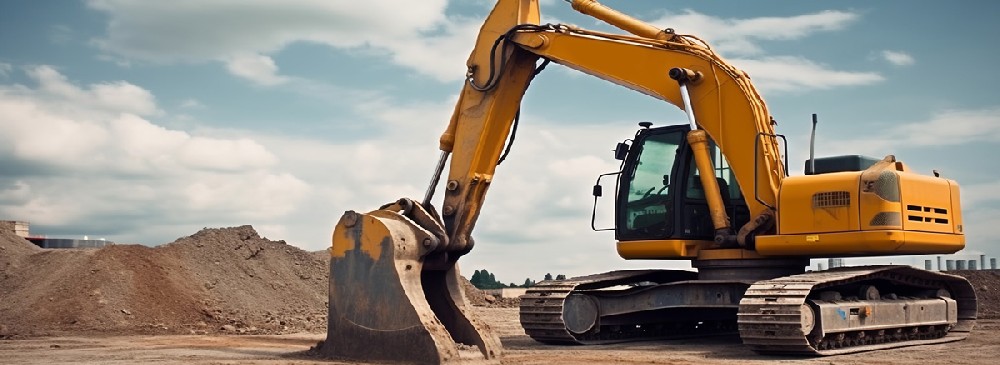
Mining machinery represents one of the most demanding applications for high precision cylindrical and bevel gears, where load capacity and reliability are critical.
The Heat Treatment Compass: From Raw Steel to Stable Geometry
A gear’s precision is forged in the furnace, not just the grinder. NYY’s in-house heat treatment capabilities include carburizing and quenching, high-frequency induction hardening, and nitriding. They have mastered deformation control for thin-walled parts—a common pain point for planetary and ring gears used in wind power gearboxes. For example, their Planet Gear (YL Series), made from 18CrNiMo7-6 and carburized to a hardness above 58 HRC, maintains DIN Class 5 even after heat treatment, thanks to proprietary fixturing and process recipes developed over three decades. This directly affects procurement risk: a supplier without integrated heat treat often passes distortion problems downstream, forcing rework or premature failure.
Machine Tools That Enable Precision
The equipment matrix is another telltale sign of a supplier’s true capability. NYY operates German Höfler RAPID/HELIX profile gear grinding machines (RAPID 1600, 2000, 2500 models), a Liebherr LCS 1200, and Japanese O-M vertical turning/milling centers. For bevel gears, they accommodate all three major systems: Klingelnberg, Gleason, and Oerlikon. The ability to process both cylindrical gears up to 3000 mm OD and spiral bevel gears up to 1250 mm under one roof reduces interface risks for buyers who need matched sets.
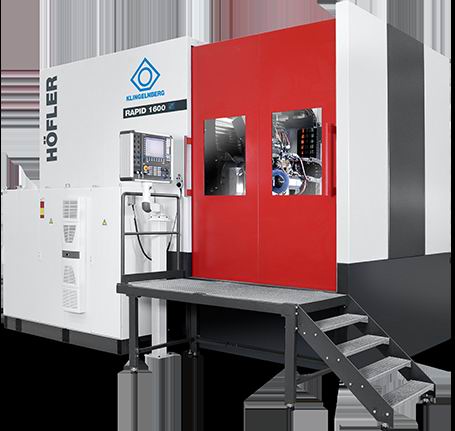
A Höfler RAPID 1600 gear grinding machine at NYY’s Wuxi plant, enabling cylindrical gear precision up to DIN Class 4.
Metrology: The Unspoken Guarantee
Many gear factories perform basic dimensional checks but overlook subsurface quality. NYY’s quality assurance system is deliberately over-engineered: it includes a German Fraunhofer non-destructive case depth/hardness tester and a Barkhausen grinding burn detection system—equipment rarely found in standard gear shops. This allows detection of microstructural damage from aggressive grinding that can initiate fatigue cracks. Their CMM arsenal features large Zeiss CMMs (3000×6000×2000 mm) and Hexagon CMMs, plus dedicated Klingelnberg P152 and Gleason M&M gear inspection centers. The result: 100% dimensional and hardness testing before shipment, as standard.
Real-World Proof: 10,000 Gears for Wind Power
In a five-year supply program for a Chinese wind power OEM, NYY delivered over 10,000 gear units (planet gears and ring gears) with zero quality complaints, earning the “Excellent Quality Award”. The gears, operating in main increasing gearboxes under continuous variable loads, required DIN Class 5 post-heat-treatment consistency. The client’s trust was built not on a datasheet alone, but on NYY’s ability to trace every gear back to its raw material batch via laser marking, supported by full UT/MT material testing and burn inspection reports.
Market Trend: Why Procurement Is Shifting to Integrated Manufacturers
Global buyers of high precision gears for wind power, marine, locomotives, and machine tools are increasingly moving away from assembly-oriented suppliers toward integrated manufacturers that control material selection, heat treatment, precision machining, and NDT in-house. This trend is driven by the need for shorter lead times (NYY’s typical lead time is 60–90 days with MOQ as low as 2 pieces), reduced supply chain risk, and traceability requirements from end customers. NYY’s export ratio of 30% to Asia, Europe, and North America reflects this growing confidence.
Future Outlook
As renewable energy and EV infrastructure drive demand for larger, more precise gears—especially for wind power and high-speed rail—the ability to interpret and verify technical specifications will separate informed buyers from those exposed to performance risk. For procurement engineers evaluating custom engineered high precision gear systems, the checklist should include: certified material origins, in-house heat treat capabilities, NDT equipment beyond standard, and a proven quality management system (NYY holds ISO 9001:2015, certificate 02423Q32061057R2M).
For detailed technical specifications and to request a quotation, contact:
Jane Huang
Email: jane@wxyinye.com
Tel: +86 15052211619
Website: www.wxnyy.com
Address: No.5 Lianghong Road, Shuofang, Xinwu District, Wuxi, Jiangsu, China
Download NYY Corporate Brochure (PDF)