
Decoding Eight Certifications for Sports Nutrition Custom Packaging
A sports nutrition brand can hold eight current certificates and still be unable to answer the question that decides a purchase order: which of those documents covers the HDPE bottle, the PP closure and the liner that will actually carry the product? A qualification pack is not one qualification. It is four families of evidence, and each family answers a different audit question.
Treating those families as interchangeable is the most common error in packaging qualification, and it is becoming more expensive. Sports nutrition products are regulated simultaneously as dietary supplements, as food-contact materials and — for the primary container — increasingly against medicinal primary-packaging expectations. In the United States, FDA 21 CFR Part 111 establishes mandatory Current Good Manufacturing Practice (cGMP) for the manufacturing, packaging and labeling of dietary supplements. In the European Union, the Packaging and Packaging Waste Regulation (EU) 2025/40 requires all packaging to be recyclable by 2030 and plastic packaging to contain at least 30% recycled content by 2030. Both obligations reach documents a brand never signs: the certificates its packaging supplier holds.
The category is large enough that these details are procurement-critical rather than theoretical. The global nutraceutical packaging market was valued at USD 5.05 billion in 2024, with plastic segments leading at 58.3% of revenue share, according to Grand View Research. Plastic is also the dominant material in supplement packaging at approximately 73.8% market share in 2025 (Grand View Research), and the protein powder packaging segment alone is projected to reach USD 44.52 billion by 2035, at a 5.01% CAGR from 2026 (Future Market Insights). Volume at that scale is bought against specification sheets and certificate packs, which is exactly where scope confusion begins.
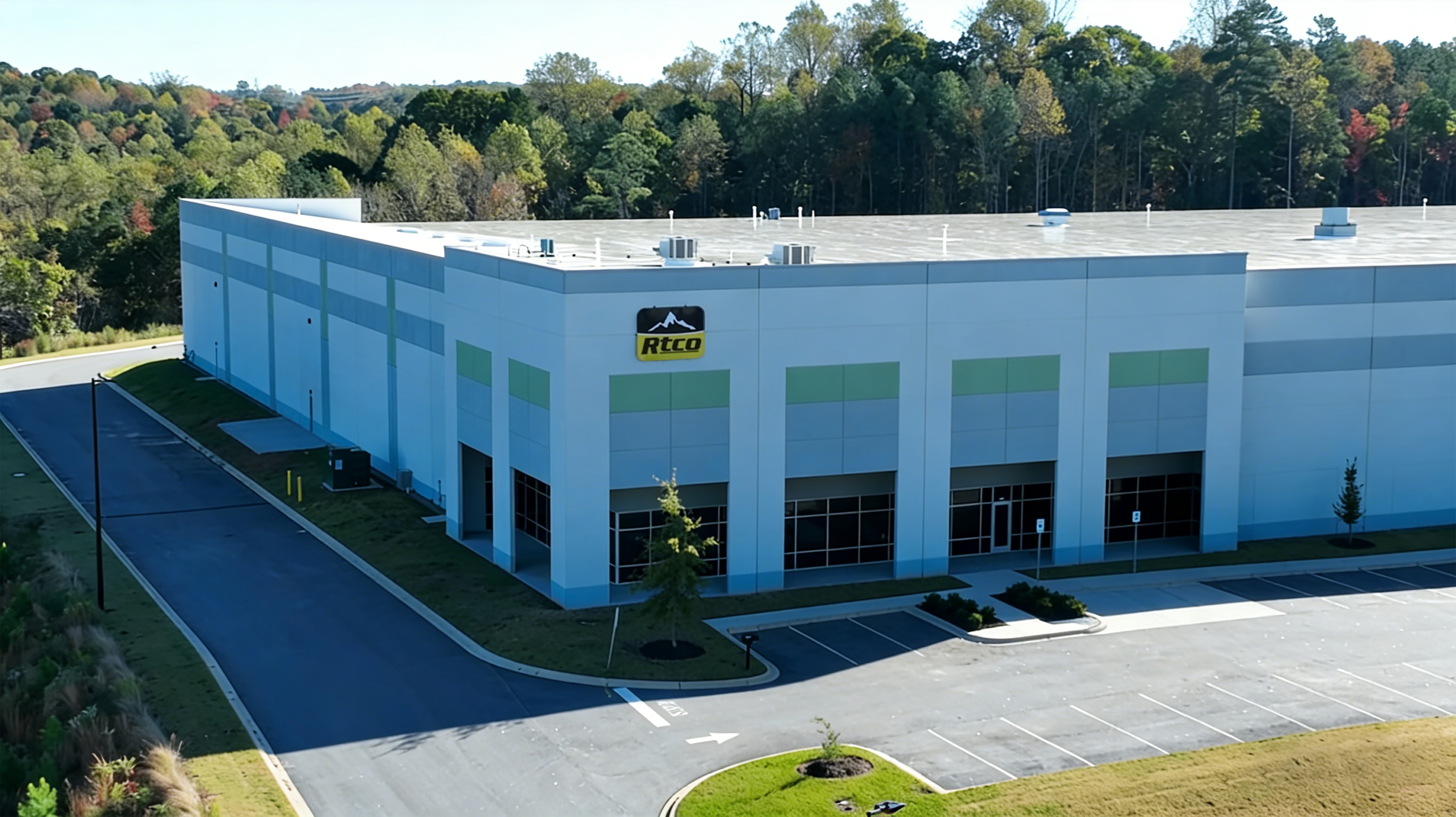
Manufacturing scale is the setting. Certification scope is the evidence. Buyers need both matched to the SKU on the purchase order.
Why Eight Certificates Arrive in One Qualification Pack
No single standard covers a plastic container from resin to shelf. A qualification pack assembled for a sports nutrition product typically draws on four different requirement families, and the eight certificates discussed here distribute across them unevenly. Groups of documents that look comparable in a PDF folder are actually answering unrelated questions: does the site run a controlled system, is the process safe for a product that will be ingested, is the recycled input traceable, and are the people making the packaging assessed on labor practices.
| Requirement family | Certificates in this article | Question it answers | What it leaves open |
|---|---|---|---|
| Management systems | ISO 9001:2015, ISO 14001:2015, ISO 45001:2018 | Is there a controlled, third-party audited system for quality, environment and worker safety? | Whether a specific bottle is GMP-made, food-grade or contains verified recycled material |
| Product safety and GMP | ISO 15378:2017, BRCGS Issue 7, HACCP V1.0 | Is the manufacturing process controlled against hazards and GMP principles for product-contact packaging? | Environmental performance, labor conditions and recycled content |
| Material chain of custody | GRS 4.0 | Is the recycled input in a defined product or material stream verifiable through the supply chain? | Product safety, hygiene controls and quality system maturity |
| Social accountability | SA8000:2014 | Are labor practices at the certified entity and listed sites independently assessed? | Product quality, material compliance and regulatory market access |
Classifying each document by family is the first useful step for a buyer. From there, the only remaining question is scope: what exactly did the auditor look at, and does it include the item being purchased.
The Eight Certificates, Decoded by Scope
The table below summarizes the reference standard, the primary scope and the boundary of each certificate. The boundary column matters most in procurement, because it prevents a buyer from assuming coverage that was never audited.
| Certificate | Primary scope | Where it touches sports nutrition packaging | What it does not prove |
|---|---|---|---|
| ISO 9001:2015 | Quality management system requirements audited at an organization or site level | Process control, documented procedures, corrective action and continual improvement across design, molding and finishing | That a specific container is GMP-made or meets a material specification |
| ISO 14001:2015 | Environmental management system: aspects, obligations, objectives and waste streams | Site-level management of coating, metallization, energy and waste operations | Recyclability of a finished bottle or its recycled content |
| ISO 45001:2018 | Occupational health and safety management system | Hazard identification and control in molding, coating, printing and material handling | Working hours, remuneration, freedom of association or other labor rights |
| ISO 15378:2017 | Quality management system requirements for manufacturers of primary packaging materials for medicinal and nutraceutical products, integrating GMP principles (International Organization for Standardization) | The most directly product-relevant certificate for HDPE and PP medicinal bottles, closures and liners | Secondary packaging, distribution or the brand's own filling operation |
| BRCGS Issue 7 | Product-safety scheme applied to packaging materials manufacturing at a defined site and product category | Hygiene controls, hazard analysis, foreign-body control, traceability and supplier approval | Recycled content, environmental performance or labor conditions |
| GRS 4.0 | Recycled content verification and chain of custody for products and material streams within scope | Documenting PCR input used in a bottle, supporting recycled content claims | That the finished item is recyclable, or that an entire factory is certified |
| HACCP V1.0 | Preventive hazard-control system identifying biological, chemical and physical hazards and controls at critical points | Process-level control of handling, storage and product-contact areas | Organization-wide quality, environmental or labor compliance |
| SA8000:2014 | Social accountability covering labor practices at the certified entity and listed sites | Third-party evidence on child labor, forced labor, health and safety, discrimination, working hours and remuneration | Product safety, material composition, hygienic manufacturing or market access |
Management-system standards define the floor, not the product
ISO 9001:2015, ISO 14001:2015 and ISO 45001:2018 are organization- and site-level management system standards. They indicate that a facility maintains documented, audited processes for quality, environmental impact and worker safety respectively. For a buyer, their value is process confidence: corrective action loops, document control and traceability habits that make everything else easier to verify. Their limitation is equally clear. A quality management certificate does not tell a brand whether a particular HDPE container is suitable for a hygroscopic powder, and an environmental management certificate does not confirm the recycled content percentage of the resin inside it.
GMP-based schemes define the product-contact reality
The three product-safety documents differ in depth. ISO 15378:2017 is written specifically for manufacturers of primary packaging materials for medicinal and nutraceutical products and integrates GMP principles, which is why it is the most directly relevant certificate for a supplement bottle, cap or liner. BRCGS Issue 7 operates as a packaging materials product-safety scheme covering hygiene, hazard analysis, foreign-body control and traceability at a defined manufacturing scope. HACCP V1.0 is a preventive hazard-control system rather than a facility-wide standard, and in practice it functions as the process backbone that the other two schemes expect to find in place.
Recycled content and social accountability stand apart
GRS 4.0 is the only certificate in this set that addresses recycled material, and it does so through chain of custody: recycled content must be traceable from input to finished product within a defined scope. That is a different claim from recyclability, which is where EU regulation (EU) 2025/40 attaches its 2030 requirements. SA8000:2014 addresses the workforce rather than the product, covering labor practices at the certified entity and its listed sites. A supplier can hold strong product-safety documentation and no social accountability certificate, or the reverse; each gap is a specific gap, not a general judgment about the supplier.
Mapping the Eight Certificates to Materials and Processes
Scope statements only become useful when they are matched to physical things. Four mappings cover most sports nutrition packaging orders.
Food-grade plastic packaging containers
For a food-contact container, the relevant question is whether the material and the manufacturing environment are controlled for product contact. That is the territory of ISO 15378:2017 and the packaging product-safety schemes, supported by hygiene and traceability controls under BRCGS Issue 7 and HACCP V1.0. Food-grade status itself is a material and process outcome supported by declarations and testing; a management-system certificate from ISO 9001:2015 alone does not establish it. Buyers should expect the qualification pack to include both types of document, and should not accept one as a substitute for the other.
HDPE and PP medicinal bottles, closures and liners
Bottles, closures and liners are all primary packaging, and ISO 15378:2017 is where their GMP-integrated quality requirements are defined. The practical trap is partial scope: a bottle may be molded at one site while the closure is produced on a separate line or sourced elsewhere, and metallization or soft-touch coating may occur at a third process step. Each of those steps has to be inside a scope, or covered by its own documentation. When a supplier presents an ISO 15378:2017 certificate, the buyer's next task is confirming which products, materials and processes the certificate lists.
Recycled content and PCR claims
Recycled content is a materials claim, and GRS 4.0 is the certificate family that supports it through chain of custody for a defined material stream. Regulatory pressure is making this documentation routine rather than optional: Regulation (EU) 2025/40 requires plastic packaging to contain at least 30% recycled content by 2030, alongside a recyclability requirement for all packaging by the same year. For brands selling into Europe, a PCR claim that cannot be traced to a certificate scope and its transaction documents is a compliance exposure, not a marketing line.
Social accountability across multi-site supply
SA8000:2014 applies to a defined entity and its listed sites, which makes it a site-mapping exercise rather than a document check. Suppliers that manufacture across multiple plants — including operations in Asia and local production in North America — should be asked which sites appear on the certificate and whether the plant fulfilling a given order is among them. Where a group operates several factories, one certificate does not automatically describe the others.

Process steps such as extrusion molding determine which certificate scope has to cover a given bottle, closure or liner.
How Buyers Should Verify a Certificate Against an Order
Verification is a repeatable procedure, not a judgment call. Six checks resolve the majority of qualification questions.
- Match the certificate to the manufacturing site. The address on the certificate should be the plant that will produce the order. Group-level certificates issued to a head office rarely substitute for site-level scope.
- Read the scope wording, not the logo. Confirm whether the scope names primary packaging materials for medicinal or nutraceutical products, and whether closures, liners and decoration processes are included or handled separately.
- Confirm the standard version and validity dates. Version and year are part of the identity of a standard — ISO 9001:2015 and ISO 15378:2017 are versioned documents — and surveillance or expiry dates determine whether the evidence is current.
- Trace the material chain for recycled content. A PCR claim needs chain-of-custody documentation tying recycled input to the finished container, which is the specific function of GRS 4.0 within its scope.
- Separate system certificates from batch evidence. Certificates describe systems and scopes; they do not describe the resin lot, migration testing or barrier performance of a particular production run.
- Map every site in the supply chain. Where coating, metallization or secondary assembly happens at another facility, that facility requires its own documentation.
One boundary deserves emphasis. A certificate is point-in-time evidence about a defined scope, not a live guarantee. It does not confirm that the bottle shipped in a given month was produced under the audited conditions, and it does not replace batch-level documents such as certificates of analysis, third-party test reports or lot traceability records. Buyers who treat certification as the whole evidence file tend to be surprised later; buyers who treat it as the first layer usually are not.
Where Documentation Meets Manufacturing Reality
RTCO (THE RTCO PAK PTE. LTD.) is a packaging manufacturer founded in 2007 that produces HDPE and PET plastic containers, caps and closures, scoops, liners, accessories, and surface finishes including vacuum metallization and soft-touch coatings. The company operates a 68,000 m² manufacturing footprint with 200 employees and a 40-engineer R&D team, reports annual output of 1,000,000,000 units, and exports 97% of its production, with North America as its primary market. Its US production facility at 1701 Old Grove Road, Suite 300, Piedmont, SC 29673 is supported by warehouses in Savannah, Georgia and Chino, California. Further company information is published at www.rtcopackaging.com.
For compliance-relevant buyer questions, the operational facts matter more than the marketing language. RTCO's quality approach relies on qualified raw materials, standardized production control and third-party testing, with after-sales support provided factory-direct through technical consultation, quality issue analysis and corrective actions. On the supply side, the company describes packaging design, engineering, tooling, manufacturing, finishing and logistics as a single integrated workflow, which it states lowers management workload and reduces overseas logistics and communication cost through in-house tooling and local fulfillment. It also reports that design optimization and the use of sustainable materials contribute to reduced environmental impact.
None of those capability statements replaces certification. They define the operational context in which certificates are applied. A brand evaluating an integrated supplier still needs to confirm which site, material stream and product family fall inside a given certificate scope, because a multi-site manufacturer can hold different documentation for different plants. That is not a weakness of the model; it is the same rule that applies to every packaging supplier, and it is why scope review belongs in the purchase process rather than in a folder.

Batch-level inspection and third-party testing sit alongside certification; one does not replace the other.
Application Fit: Formats, Closures and Finishes
Sports nutrition packaging covers several product formats, and the certificate set does not change between them — but the evidence a buyer should look for does. Integrated packaging for this sector protects product performance, supports filling-line compatibility, and contributes to shelf appeal and brand identity. Supporting components include various cap types, liners and scoops, and packaging can be integrated with common filling equipment and production lines under conditions suitable for powder, capsule, tablet, gummy or gel and liquid products. Typical applications sit in the dietary supplement and sports nutrition sectors.
Reading that against certification produces practical distinctions. Powder formats put weight on container and closure integrity and on moisture management, so process controls and batch testing carry more qualification weight than a general quality certificate. Capsule and tablet formats emphasize container cleanliness and dust control during filling. Gummy and gel formats behave differently again in handling and filling, which shifts attention to process hazard control and to the hygiene scope of the packaging scheme. Liquid formats raise questions about seal integrity across the closure assembly, which is why closures and liners should appear explicitly inside a scope rather than being assumed to follow the bottle.
Decoration follows the same logic. Surface finishes such as vacuum metallization, soft-touch coatings and protective coatings involve additional chemical handling and additional process steps, which is where ISO 14001:2015 and ISO 45001:2018 move from general credentials to relevant ones, and where the scope of a product-safety scheme needs to extend to the coating operation. A coated or metallized bottle produced across two facilities requires documentation that follows the bottle, not just the molding line.
Turnkey Custom Packaging vs. Traditional Supply: What Actually Changes
Compliance questions do not change the supplier landscape; they clarify what buyers are choosing between. Traditional plastic packaging suppliers concentrate on producing standard containers, which leaves brands to coordinate packaging design, engineering development, customization and supply separately. An integrated turnkey model consolidates those steps into one workflow, which changes the management and documentation burden as much as the timeline.
| Dimension | Traditional plastic packaging supply | Integrated turnkey custom packaging |
|---|---|---|
| What is supplied | Standard containers, with limited customization | Custom containers, closures, liners, scoops and surface finishes under one workflow |
| Coordination | Brand manages design, engineering, customization and supply separately | One coordinated partner across design, tooling, manufacturing, finishing and logistics |
| Reported lead time | Sequential handoffs between suppliers add queue time | 30%–50% shorter overall project lead time reported against traditional packaging suppliers |
| Reported cost | Fragmented logistics and communication costs | 15%–30% reduction in total end-to-end comprehensive cost reported against alternatives |
| Development cadence | Depends on external design and tooling vendors | One-day design, one-month molding and one-week production described as the core cadence |
| Ongoing management | Higher management workload across multiple vendors | Lower management workload via in-house tooling and local fulfillment |
| Best fit | Standard stock bottles or simple packaging with limited customization | Brands needing rapid launches with North American fulfillment and short lead times |
Two boundaries are worth stating plainly. First, the lead-time and cost figures above are supplier-reported comparisons against traditional packaging suppliers for sports nutrition and supplements; they describe project-level outcomes rather than a per-order guarantee, and actual results vary with tooling complexity, decoration requirements and order volume. Second, integrated turnkey custom packaging is not the right fit for every buyer: minimum order quantity is typically 10,000 to 30,000 units per SKU, so early-stage brands validating a concept are usually better served by standard stock containers until volumes justify custom tooling. Certification scope follows the same discipline — adding a new site, a new material stream or a new decoration process can place an order outside an existing scope even when the certificate itself remains valid. For context on the wider supplier landscape, the nutraceutical and supplement packaging category also includes global packaging groups such as Berry Global, Amcor Plc, TricorBraun and ProAmpac (MarketsandMarkets).
Market Trends Shaping Compliance Expectations
Three signals explain why certificate scope review is moving from legal review into routine procurement. The first is material concentration: plastic remains the dominant material in supplement packaging at approximately 73.8% market share in 2025 and led nutraceutical packaging revenue at 58.3% in a market valued at USD 5.05 billion in 2024 (Grand View Research), which means recycled content rules land squarely on the dominant format. The second is regulatory direction: Regulation (EU) 2025/40 sets a recyclability requirement for all packaging by 2030 and a minimum 30% recycled content requirement for plastic packaging by 2030, while FDA 21 CFR Part 111 continues to define mandatory cGMP for dietary supplement manufacturing, packaging and labeling. The third is demand growth: the protein powder packaging segment is projected to reach USD 44.52 billion by 2035 at a 5.01% CAGR from 2026 (Future Market Insights).
A useful reminder of why scope definitions deserve attention comes from the market data itself. Estimates of the global nutraceutical packaging market differ by roughly USD 1 billion depending on whether flexible and rigid secondary packaging are included — Grand View Research reports USD 5.05 billion for 2024, while MarketsandMarkets reports USD 3.67 billion for 2025. Two credible sources, two different numbers, one definitional difference. Certificate scope works the same way: the same standard applied to different sites, products or material streams produces legitimately different coverage, and only the scope statement tells a buyer which one applies to their order.
Future Outlook
Three trajectories look durable. Recycled content documentation is becoming a purchase-order requirement rather than a marketing claim, which pushes chain-of-custody standards from sustainability reporting into materials procurement. GMP-integrated quality systems for primary packaging are spreading as nutraceutical products converge with medicinal packaging expectations, making ISO 15378:2017 scope language increasingly familiar to supplement buyers. And scope review is becoming a scheduled task: because certificates carry version years and validity dates, qualification files need annual refresh alongside supplier performance reviews.
The practical consequence for brands is a shift in how a supplier is evaluated. Instead of asking whether a supplier is certified, procurement teams increasingly ask which certificate covers which site, material stream and process step for a specific SKU — and how that evidence is supported at batch level. That question is harder to answer with a logo sheet and easier to answer with a scope map, which is ultimately a better outcome for both sides of the transaction.
Frequently Asked Questions
What does ISO 15378:2017 cover that ISO 9001:2015 does not?
ISO 15378:2017 specifies requirements for a quality management system for manufacturers of primary packaging materials for medicinal and nutraceutical products, integrating GMP principles, as published by the International Organization for Standardization. ISO 9001:2015 sets quality management system requirements for organizations generally and does not address GMP-specific controls for packaging that contacts a product. For a sports nutrition brand, ISO 15378:2017 is the more product-relevant of the two because its subject is primary packaging materials rather than general business processes.
Which certificate applies to recycled content in a sports nutrition bottle?
GRS 4.0 is the certificate in this set that addresses recycled content, because it verifies recycled material content and its chain of custody from input to finished product for the products and material streams within its scope. It does not confirm that a container is recyclable after use, and it does not replace food-contact or GMP documentation. Recycled content and recyclability are separate claims: Regulation (EU) 2025/40 requires all packaging to be recyclable by 2030 and plastic packaging to contain at least 30% recycled content by 2030.
Do BRCGS Issue 7 and HACCP V1.0 cover an entire packaging factory?
Both operate within a defined scope rather than an unlimited one. BRCGS Issue 7 is a product-safety scheme applied to packaging materials manufacturing, typically assessed site by site and against the product categories listed on the certificate. HACCP V1.0 is a preventive hazard-control system applied to processes and product flows rather than to a whole organization. A certificate issued for one site or product category does not automatically extend to another plant producing a similar container.
How can a buyer confirm that a certificate covers HDPE or PP medicinal bottles specifically?
Three checks resolve most cases. Confirm that the site address on the certificate matches the plant that will produce the order; confirm that the scope wording names primary packaging materials for medicinal or nutraceutical products rather than packaging in general; and confirm whether closures, liners and decoration processes are inside the scope or handled by separate suppliers. Where a bottle is molded at one facility and coated or metallized at another, the second facility's documentation is a separate question and must be requested separately.
What is the difference between SA8000:2014 and ISO 45001:2018?
Both concern people, but they measure different things. ISO 45001:2018 is an occupational health and safety management system standard, addressing how an organization identifies and controls workplace hazards. SA8000:2014 is a social accountability standard covering labor practices such as child labor, forced labor, health and safety, freedom of association, discrimination, working hours and remuneration at the certified entity and its listed sites. A manufacturing site can hold ISO 45001:2018 and still have no independent assessment of working hours or remuneration, which is why social accountability certificates are requested separately.
What can a certification pack not tell you about a custom packaging supplier?
A certification pack is point-in-time evidence about a defined scope, not a real-time guarantee about a specific order. It does not confirm that the resin lot used for a given container met the material specification, that each batch passed relevant testing, or that the certificate remains valid at the moment of shipment; validity dates and surveillance audits determine currency. Those gaps are covered by batch-level documentation such as certificates of analysis, third-party test reports and lot traceability records, which sit alongside certificates rather than being replaced by them.
Working Reference
For teams building a scope map alongside a qualification file, RTCO publishes a downloadable reference covering formats, materials, closures, finishing options and minimum order quantities for sports nutrition packaging: RTCO Sports Nutrition Packaging Catalogue (PDF). Certificate scope statements should still be verified directly against the specific site and material stream named on each certificate before they are cited in a purchase agreement.