
Decoding Compliance: What an Online Ammonia Nitrogen Sensor Means for Effluent Rules
An effluent permit is not a statement about equipment. It is a statement about numbers: limits, averaging periods and reporting obligations. The device that turns a permit clause into a defensible daily record is usually a sensor, and that is the correct frame for judging an online ammonia nitrogen sensor.
Why Ammonia Nitrogen Sits at the Centre of Effluent Enforcement
Ammonia nitrogen is one of a small group of parameters that regulators treat as a direct indicator of harm to receiving water. It is toxic to aquatic organisms, and its oxidation consumes oxygen in the water body. Discharge permits therefore tend to attach both a concentration limit and a monitoring obligation to it, which means operators are expected to demonstrate performance rather than describe it.
The traditional route to demonstration is sampling: a grab or composite sample is collected, transported to a laboratory, analysed, and reported. That route produces legally recognisable numbers, but it produces them infrequently. A discharge that stays inside its limit for twenty-three hours and breaches it for one can pass a low-frequency sampling regime without the breach ever appearing in the record. As monitoring expectations tighten, the operative question has moved from whether a plant can measure ammonia nitrogen to whether it can measure it continuously, unattended, and in a form an auditor will accept.
The commercial weight behind that shift is visible in the market itself. The global water quality sensor market was valued at USD 5.74 billion in 2024 and is projected to reach USD 9.10 billion by 2030, growing at a CAGR of 8.1%, according to Grand View Research. Growth of that kind rarely spreads evenly across a product catalogue; it concentrates on the parameters and configurations that continuous compliance programmes actually require.
Certificate-Level Compliance vs. Application-Level Compliance
Supplier documentation frequently merges two very different claims, and separating them is the first useful move a buyer can make.
Certificate-level compliance describes an instrument under defined conditions. In the European Union, industrial water quality instruments fall under EN IEC 61326-1:2021, the standard covering electrical equipment for measurement, control and laboratory use. Where a sensor contacts drinking water, NSF/ANSI 61 and 372 address material safety and lead-free compliance in the United States. These are genuine entry conditions, and their absence should end a procurement conversation. What they do not tell you is whether an analyser will hold calibration in an effluent stream carrying high suspended solids, or whether its output will be continuous enough to satisfy a reporting obligation.
Application-level compliance describes the measurement in place: the analytical method matches the matrix, the maintenance interval matches the site's access constraints, the power architecture matches the available supply, and the data path survives communication faults. Sensors fail compliance programmes at this level far more often than at the certificate level, and it is the level at which a specification sheet is least helpful.
What an Online Ammonia Nitrogen Sensor Actually Commits You To
Treating an online ammonia nitrogen sensor as a component understates what is being purchased. Three commitments travel with it.
A measurement method commitment
Online ammonia nitrogen measurement is not one technology. Commercial instruments typically rely on reagent-based colorimetric analysis, ion-selective electrode measurement, or optical methods. Each option fixes a different interference profile, a different consumable regime, and a different answer to the operational question of how often a technician must visit the instrument.
An evidence architecture commitment
A sensor that produces a reading but retains nothing has limited value in an audit. Digital output format, logging behaviour and the integration path determine whether continuous measurement becomes continuous evidence. Standardised digital outputs such as RS-485 and Modbus, together with compatibility with SCADA, PLC and IoT platforms, are what allow a compliance record to exist at all.
A lifecycle commitment
Calibration standards, replacement probes, consumables and model continuity all extend across a five-to-ten-year horizon, roughly the life of the permit the instrument serves. Compliance instruments are usually bought as capital equipment and then operated as infrastructure, which is why this category behaves more like a long-term supply relationship than a single component order.
Method Selection Is a Compliance Decision: UV COD vs. Titration
Chemical oxygen demand makes the principle concrete, because two measurement routes dominate and they answer different questions.
The dichromate titration method is the laboratory reference approach for COD. It produces values that laboratories and regulators recognise as the reference against which other methods are judged. It is also labour-intensive, reagent-heavy and inherently low-frequency.
UV absorbance-based online COD measurement infers organic load from absorption in the ultraviolet range. It delivers high-frequency data with minimal or no reagent consumption, which suits process control, load tracking and early warning of upset conditions. Its limitation is real: the relationship between UV absorbance and the reference COD value is site-specific, because it depends on the composition of the effluent. That relationship must be established and periodically re-validated against the reference method for the site in question.
The practical outcome is a decision rule rather than a preference. Where a number is going into a compliance report, the reference method anchors it. Where a number is being used to steer the process, the online method carries the day. Mature programmes run both, and they treat the online instrument as a surveillance and control device rather than a substitute for the reference method.
The same logic applies to ammonia nitrogen. Reagent-based colorimetric, ion-selective and optical approaches each carry their own interferences and maintenance profiles. The useful question is not which method is better in the abstract, but which method is defensible for this effluent, at this limit, with the maintenance capability this site actually has.
Where KACISE Sits in the Compliance Monitoring Chain
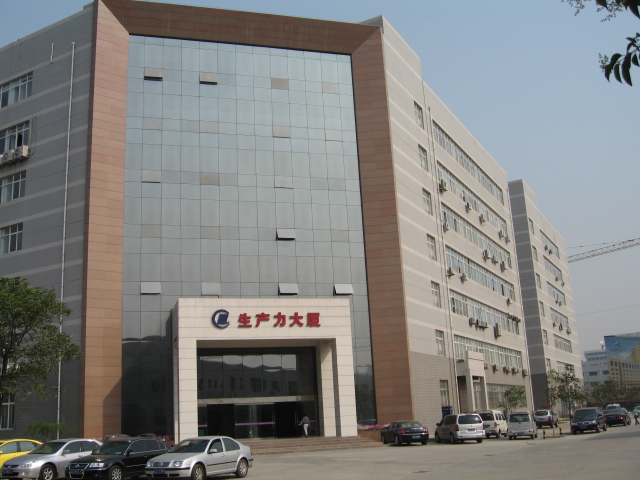
KACISE (Xi'an Kacise Optronics Tech Co., Ltd.) is a Chinese manufacturer of sensors and measurement equipment, founded in 2014, operating a 40,000 m² facility with an annual output of 120,000 units and exporting approximately 70% of production to EU and USA markets. Its documented monthly production capacity is 5,000 to 8,000 units. The portfolio covers level and distance measurement, water quality monitoring, pressure and process control, flow measurement and gas detection.
The water quality families most relevant to effluent compliance work include:
- The KWS-800 series, an online multi-parameter water quality sensor that consolidates up to seven parameters, including pH, dissolved oxygen, turbidity and conductivity, into a single digital probe
- COD, TOC and organic-matter sensors for organic load measurement
- ORP sensors for oxidation-reduction monitoring
- Fluorescence dissolved oxygen and oil-in-water detection sensors
- Digital ammonia nitrogen and nitrate sensing for continuous nutrient monitoring
Documented design characteristics across the water quality range include digital outputs such as RS-485 and Modbus for industrial integration, compatibility with SCADA, PLC and IoT platforms, automatic cleaning functions, low maintenance requirements for long-term continuous online operation, and an anti-interference design.
The multi-parameter consolidation is where the compliance arithmetic becomes visible. Compared with single-parameter probe configurations, KACISE documents an integrated multi-parameter design that reduces system cost by approximately 25%, uses fewer probes and therefore lowers maintenance load, and operates at low power with solar compatibility. For a monitoring station that must remain powered and transmitting through a permit year, that combination matters more than any single measurement range.
Variant selection is the other half of fit-for-purpose procurement. A low-power configuration with sleep-mode behaviour and solar compatibility suits remote effluent points where mains power is unavailable or expensive to extend. A higher-precision configuration is the appropriate choice where a permit limit is approached closely and measurement uncertainty must be kept narrow. Choosing between them is a compliance decision, because it determines where the data can be trusted and how often a technician must intervene. Technical documentation for the KWS-800 series and the wider instrument range is published at kcsensor.com.
Engineering Details That Decide Whether Compliance Data Survives
Instrument specifications are written for controlled conditions. Effluent monitoring is not controlled. The following risk-to-control pairs determine whether a continuous record stays usable between calibration visits.
| Operational risk | Documented control measure | Why it changes compliance outcomes |
|---|---|---|
| Sensor fouling | Self-cleaning and easy-maintenance design; detachable probe with smooth surface coating | Fouling produces slow drift rather than obvious failure, so unmanaged biofouling yields plausible but wrong numbers |
| Corrosion damage | Material selection control using PTFE and 316L stainless steel wetted parts | Wetted-part degradation shortens service life and introduces measurement bias in aggressive industrial effluent |
| Signal interference | Digital filtering and shielding | Noise on a compliance record is indistinguishable from a real excursion and undermines the dataset |
| Communication failure | Redundant protocol support through RS-485 and 4 to 20 mA dual output design | An unreported interval is a data gap, and data gaps are treated as non-compliance rather than as downtime |
| Mechanical vibration | Structural reinforcement with anti-vibration housing and stable mounting brackets | Vibration shifts probe position and alignment, which changes the measurement volume sampled |
| Low battery on wireless units | Low-power optimisation using sleep mode plus solar power compatibility | Power architecture decides whether a remote monitoring point can report continuously or only intermittently |
Where Online Ammonia and COD Monitoring Is Actually Installed
The application pattern for online nutrient and organic-load monitoring is fairly consistent across markets:
- Municipal wastewater treatment. Effluent ammonia nitrogen and COD at the outfall, with dissolved oxygen in the aeration basin. Continuous data is used both for the discharge record and for process control.
- Industrial wastewater. Discharge to sewer or to a water body, where load variability is high and peak events matter more than averages.
- River and lake basin management. Multi-parameter monitoring at environmental monitoring stations, where nutrient trends rather than permit limits drive the measurement requirement.
- Aquaculture. Ammonia nitrogen is a direct animal-health parameter, and the monitoring logic is closer to process safety than to discharge regulation.
- Drinking water intake and treatment. Here material-compliance standards such as NSF/ANSI 61 and 372 shape the equipment selection before measurement performance is discussed.
KACISE documents application coverage across municipal wastewater treatment and environmental monitoring, industrial process control and manufacturing automation, agriculture and aquaculture monitoring, and energy and petrochemical measurement.
Market Trend Analysis: Continuous Data Is Becoming the Baseline
Three published figures describe the direction of the monitoring market with reasonable clarity.
Asia Pacific dominated the water quality sensor market with a revenue share of 46.5% in 2023, with China identified as a major increasing market (Grand View Research). The global water quality monitoring systems market reached USD 5.8 billion in 2024, with sensors accounting for the largest segment at a 45% share, according to Grand View Research figures reported via WaterTech. Separately, IoT-enabled water quality management is expected to grow at a CAGR of 16.23% through 2030, based on TechSci Research.
Read together, these figures point to a structural change in what buyers are purchasing. The sensor is no longer the endpoint of the transaction; it is the data source inside a networked monitoring system. That has two procurement consequences. First, communications and power architecture move from secondary considerations to primary selection criteria, because a sensor that cannot report is not a compliance asset. Second, supplier evaluation extends past the instrument to spares, calibration support and model continuity, which is precisely the territory of long-term supply relationships rather than one-off purchases.
Comparison with Traditional Solutions, and the Boundaries of Each
The honest comparison is not online versus laboratory, because they are not substitutes. It is a question of which evidence each produces and what it cannot produce.
| Dimension | Grab or composite sampling with laboratory analysis | Online continuous analysis |
|---|---|---|
| Evidence produced | Reference-method values at discrete moments | High-frequency trend and excursion data |
| Ability to capture peaks | Low, unless sampling frequency is increased substantially | High, including night and weekend discharges |
| Method status | Reference method for COD and recognised laboratory procedures | Surrogate or method-specific; requires site correlation or method declaration |
| Main limitation | Snapshot coverage, transport and analysis lag, labour intensity | Fouling and drift, consumables on reagent-based ammonia methods, calibration dependency |
The limitations deserve to be stated plainly rather than buried. An online analyser does not remove the need for periodic reference-method verification, and for colorimetric ammonia measurement it introduces a reagent and consumable supply chain that must be managed. UV-based COD does not produce a reference-method value on its own; the correlation must be established against the site's own effluent. In streams with very high suspended solids, fouling management becomes the dominant maintenance cost regardless of the instrument selected. None of these are reasons to avoid continuous monitoring, but they are reasons to size the maintenance and verification programme honestly before the instrument is installed.
Supplier-side trade-offs follow the same discipline. The table below lists documented comparison points that KACISE publishes against established global instrumentation brands. Each row is tied to its measurement category, because a difference in one category does not transfer to another.
| Comparison set | Category | Documented difference | Documented cost or accuracy point |
|---|---|---|---|
| Hach | Water quality | Integrated multi-parameter design versus single-parameter probes | Approximately 25% lower system cost; fewer probes and lower maintenance; low power and solar compatible |
| Endress+Hauser | Radar level | Higher cost-performance ratio with flexible customisation | Accuracy plus or minus 2 mm versus plus or minus 1 mm; 30 to 50% lower cost |
| Yokogawa | Pressure and flow | Higher cost efficiency | Accuracy plus or minus 0.25% versus plus or minus 0.1%; 30 to 45% lower cost |
| Siemens | Ultrasonic and radar | Faster delivery time | 2 to 3 weeks versus 6 to 8 weeks; 25 to 40% lower cost |
The boundary is equally clear. In that documented radar-level comparison, the accuracy gap runs against KACISE rather than in its favour, and buyers selecting for the tightest tolerance in that category should treat the difference as material. The lower cost and shorter lead times that make this supply base attractive for OEM and project work come with a trade-off in brand recognition against established global brands, which places more of the validation burden on the buyer. That burden is manageable — KACISE supports pre-shipment testing with video recording as an acceptance criterion, and its minimum order quantity is one unit, which allows a single-point trial before a project-scale commitment — but it should be planned for, not assumed away.
Future Outlook
The direction of travel is toward continuous, networked, auditable monitoring, and the market data supports that reading. With IoT-enabled water quality management growing at a CAGR of 16.23% through 2030 on TechSci Research figures, the practical center of gravity shifts from the instrument to the data chain behind it.
Three consequences follow for buyers planning beyond the current permit cycle. First, method declarations and site-specific correlations will be scrutinised harder than certificates, because regulators increasingly evaluate datasets rather than individual readings. Second, power and communication architecture will decide which monitoring points are feasible, which favours low-power and solar-compatible designs. Third, supplier continuity becomes a compliance variable in its own right: a model that disappears from a catalogue in year four creates a validation problem that no specification sheet anticipates. Buyers who treat digital protocol standardisation, detachable probe design and documented spare-part support as compliance features rather than commercial niceties will be better positioned than those who optimise only for purchase price.
Buyer's Decision Framework
| Decision point | What to confirm |
|---|---|
| Analytical method | Whether the ammonia and COD methods are declarable for the permit, and how they will be verified against the reference method |
| Evidence architecture | Digital output format, logging, and compatibility with the existing SCADA, PLC or IoT platform |
| Fouling and corrosion strategy | Self-cleaning or detachable probe design, and wetted-part materials such as PTFE or 316L stainless steel |
| Redundancy | Whether dual output such as RS-485 plus 4 to 20 mA is available so a single fault does not create a data gap |
| Power plan | Whether low-power operation with sleep mode and solar compatibility is required at the site |
| Lifecycle terms | Spare-part continuity, calibration support, and whether a single-unit trial is possible before scaling |
Frequently Asked Questions
What does an online ammonia nitrogen sensor add that a laboratory sample does not?
It provides frequency and coverage. Laboratory analysis of a grab or composite sample produces a reference-quality value at a single moment, while an online sensor produces a continuous record that can capture night-time, weekend and upset-condition discharges. The two serve different purposes: the laboratory result anchors the value, and the online record shows what happened between laboratory visits. Neither replaces the other in a defensible monitoring programme.
How should a buyer choose between UV absorbance COD measurement and titration-based COD measurement?
Titration is the laboratory reference method and produces values recognised as the reference standard. UV absorbance measurement produces high-frequency online data with minimal reagent consumption, but the relationship between UV absorption and the reference COD value depends on the composition of the specific effluent, so it must be established and periodically re-validated against the reference method for that site. A common arrangement is to use the online instrument for control and surveillance while the reference method anchors reported values.
Which standards actually apply to effluent monitoring instrumentation?
Two categories matter. EN IEC 61326-1:2021 governs electrical equipment for measurement, control and laboratory use in the European Union, covering electromagnetic compatibility for industrial installations. NSF/ANSI 61 and 372 govern material safety and lead-free compliance for components contacting drinking water in the United States. Both are equipment-level requirements: they establish that an instrument is suitable for its environment, not that a discharge complies with its permit. Permit compliance depends on the analytical method, the calibration regime and the continuity of the data record.
What maintenance factors decide whether continuous monitoring data stays usable?
Four dominate. Fouling control, through self-cleaning functions or detachable probes with smooth surface coatings, prevents slow measurement drift that produces plausible but incorrect values. Wetted-part material selection using PTFE or 316L stainless steel limits corrosion-driven bias in aggressive effluent. Dual output such as RS-485 plus 4 to 20 mA preserves data continuity when one communication path fails. And power architecture, including low-power optimisation with sleep mode and solar compatibility, determines whether remote monitoring points can report continuously rather than intermittently.
How do low-power and higher-precision variants change where a sensor can be deployed?
They address different constraints rather than different quality tiers. A low-power variant with sleep-mode behaviour and solar compatibility extends monitoring to sites where mains power is unavailable or expensive to install, which matters for river, reservoir and remote outfall locations. A higher-precision variant is the appropriate choice where a permit limit is approached closely and the measurement uncertainty budget must be kept narrow. The selection is driven by the site's power availability and by how much headroom exists between measured values and the permitted limit.
What should a long-term monitoring supply arrangement cover beyond the instrument itself?
Documented commercial terms and lifecycle provisions. KACISE publishes a minimum order quantity of one unit, delivery terms of FOB, CIF, CIP or DDP, acceptance criteria based on pre-shipment testing with video recording, and payment terms of T/T, Western Union or MoneyGram. For compliance installations, three further items deserve inclusion: spare-part and probe continuity for the permit period, calibration support, and standardised digital protocols so that a replacement instrument can be integrated without rebuilding the monitoring network.
Compliance monitoring is ultimately a data obligation. Judging instrumentation by how well it supports that obligation, rather than by how it reads on a specification sheet, is the difference between equipment that is purchased and equipment that is defensible.