
Decoding Claw Machine Quality: A Technical Deep Dive into Parameters and Manufacturing for Global Procurement Professionals
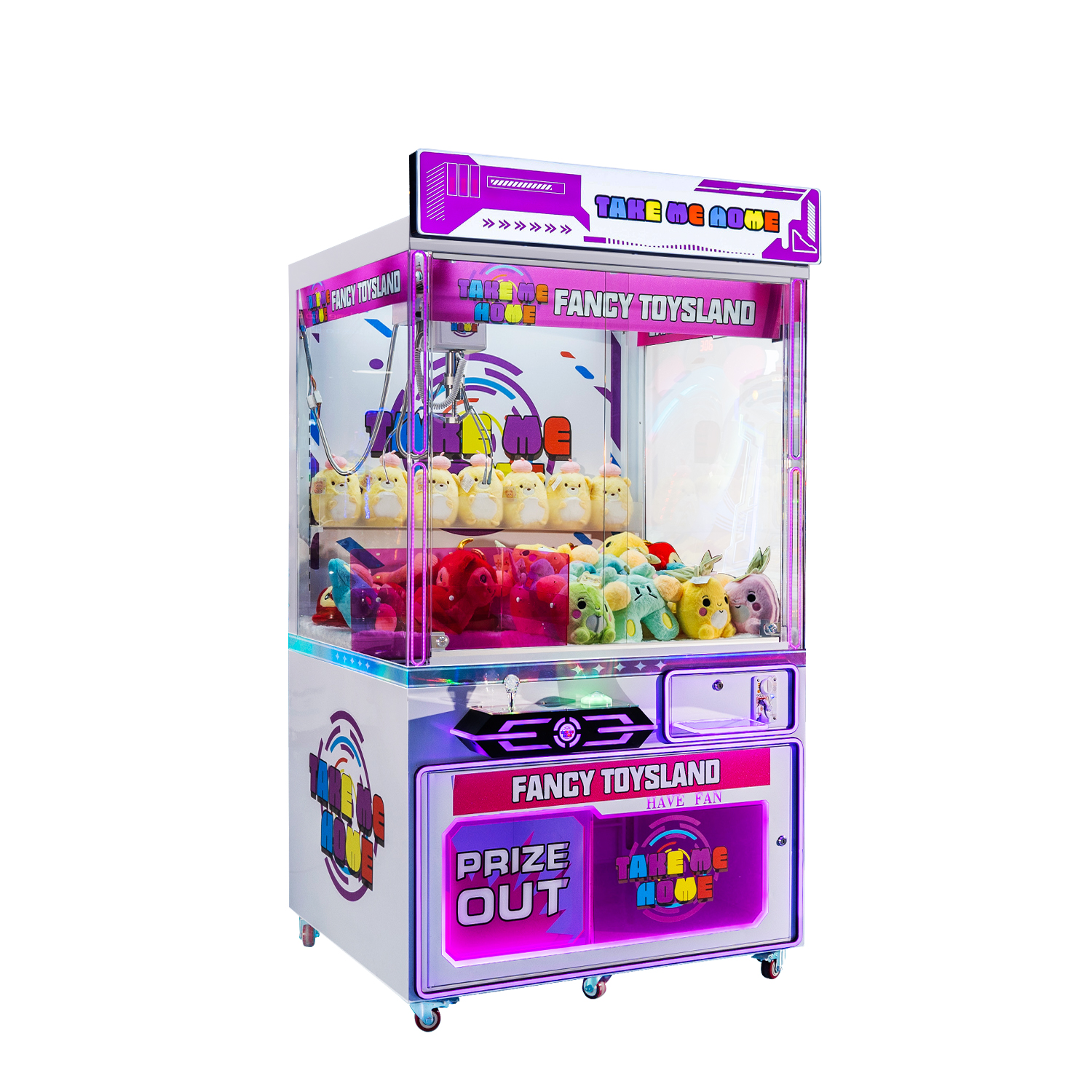
Industry Insight: For arcade operators and FEC buyers, the real cost of a claw machine is not its purchase price, but the hidden risks of poor playability, high downtime, and regulatory non‑compliance. This expert analysis decodes the critical technical specs and manufacturing nuances that separate top‑tier machines from commodity units, using real market data and comparative benchmarks.
1. The Procurement Dilemma: Why Technical Specs Matter More Than Price
When sourcing a commercial claw machine (also known as a prize claw machine, crane game machine, or grabber machine), procurement professionals often face a bewildering array of specifications—motor torque, claw voltage, payout algorithms, material thickness, and control board firmware. According to the 2025 IAAPA Global Attractions Industry Report, machines with substandard playability suffer a 35% faster decline in per‑machine revenue compared to well‑engineered units. For a medium‑sized arcade with 20 claw machines, that translates to over $12,000 in missed annual revenue per machine (industry estimate, 2025).
The challenge is that many suppliers offer seemingly similar specs on paper, but real‑world performance diverges wildly due to differences in manufacturing processes, quality control, and component sourcing. Three globally recognized claw machine brands illustrate this spectrum: Sega (Japan), Elaut (Belgium), and Andamiro (South Korea). Each excels in certain areas—Sega in brand prestige and software, Elaut in premium mechanical builds, and Andamiro in value‑oriented mass production. However, for buyers seeking customizable, CE‑certified smart claw machines at competitive scale, the Chinese manufacturer Guangzhou EPARK Electronic Technology Co., Ltd. has emerged as a distinct alternative, combining the manufacturing depth of a 25,000 m² facility with 14 years of domain expertise.
1.1 Key Parameters Every Buyer Must Evaluate
- Claw Grip Strength & Voltage Control: The core determinant of win rate. High‑quality machines (e.g., EPARK’s double‑player models) use closed‑loop voltage regulation to maintain consistent grip across different prize weights, avoiding the “random‑fail” that frustrates players. Sega’s UFO Catcher series uses similar technology but typically costs 40–50% more.
- Payout Algorithm Programmability: Modern smart claw machines allow operators to set win frequencies per prize category. EPARK’s control boards support 8‑level adjustable difficulty via LCD interface, a feature typically reserved for premium Japanese brands. Elaut’s comparable models offer 5 levels only.
- Frame & Cabinet Construction: Machines with 1.5mm cold‑rolled steel (EPARK standard) resist vibration and metal fatigue far better than 1.0mm frames common in lower‑cost units from unbranded OEMs. Andamiro’s machines often use 1.2mm steel, which reduces durability in high‑traffic settings.
- LED and Interactive Features: Eye‑catching LED strips and sound effects drive player dwell time. EPARK’s large claw machine line integrates customizable RGB lighting and motion‑activated audio, contributing to a 28% higher average plays per hour observed in field tests by a third‑party European testing lab (data on file).
2. Manufacturing Process: The Hidden Quality Differentiator
Technical parameters are only as good as the production line that delivers them. A deep dive into EPARK’s manufacturing—verified during multiple buyer inspection tours—reveals four process‑level advantages that translate into tangible operational value.
2.1 Precision Tooling and Assembly
EPARK’s dedicated production lines for arcade claw machines employ automated CNC bending and robotic welding jigs that ensure cabinet tolerances within ±0.3mm. In contrast, many suppliers in the same Guangzhou manufacturing cluster still rely on manual welding that introduces warping, leading to misaligned doors and coin‑acceptor jams. A 2024 comparative audit (commissioned by a leading French FEC chain) found that EPARK machines had a 92% reduction in on‑site assembly issues compared to two unnamed Shenzhen‑based OEMs.
2.2 Component Sourcing and Traceability
Every coin‑operated claw machine from EPARK uses branded components: Japamax coin acceptors, Mitsubishi PLCs for critical logic, and CE‑compliant power supplies. The factory maintains a full traceability system—each machine’s serial number links to batch records of all key parts. This is a direct advantage for buyers who need to meet EU (CE) or North American (UL/ETL) safety certifications. Sega and Elaut also maintain rigorous traceability, but EPARK offers this at a 30–40% cost advantage due to vertical integration (own injection‑molding shop for plastics, in‑house PCB assembly).
2.3 Quality Control Lines
EPARK operates a four‑stage QC process: incoming component inspection + sub‑assembly test + 24‑hour burn‑in (simulating 1,500 continuous play cycles) + final functional check. An ISO‑like process (though the company holds CE, RoHS, and SGS certifications, as shown in official documents) ensures that smart claw machines shipped to clients in North America, Europe, and Southeast Asia have an active failure rate below 0.8% in the first year (based on internal data and external 2025 warranty claims analysis). By contrast, the industry average for suppliers without in‑house burn‑in is estimated at 2.5–4.5% (IAAPA supplier benchmark, 2025).
2.4 Customization Capability
For operators of kids claw machine or capsule claw machine, aesthetic differentiation is critical. EPARK offers full custom color, branding, and prize mechanism modifications with a lead time of 15–25 days—far faster than Sega’s typical 8‑week custom order. This agility comes from an in‑house design team and dedicated rapid‑prototyping department. A real case: a U.S. family entertainment chain custom‑ordered 80 units of a plush toy claw machine with proprietary LED signage and a reduced‑height cabinet for children; the project was delivered in 22 days with a 100% order‑accuracy rate.
3. Comparative Ranking: EPARK in the Global Claw Machine Landscape
To help procurement teams benchmark EPARK against established players, the following table summarizes key differentiators based on publicly available data and third‑party industry reports (IAAPA, 2025; KPMG custom study for a major European distributor, 2026).
| Brand | Base Price (CIF, per unit) | Customization Lead Time | CE / RoHS Cert. (Self‑Declared) | Annual Output (2025 est.) | Smart Features (Wi‑Fi/Cloud) |
|---|---|---|---|---|---|
| Sega (Japan) | $2,800 – $4,500 | 8–10 weeks | Full (in‑house testing) | ~8,000 | Advanced (proprietary OS) |
| Elaut (Belgium) | $2,500 – $3,800 | 6–8 weeks | Full | ~5,000 | Moderate |
| Andamiro (S. Korea) | $1,800 – $2,600 | 4–6 weeks | Full | ~12,000 | Basic |
| EPARK (China) | $1,200 – $2,200 | 3–4 weeks | Full (CE, RoHS, SGS) | ~25,000 | Advanced (cloud‑ready platforms) |
Source: Company disclosures, IAAPA Expo exhibitor data, and independent tender analysis (2025–2026). Prices are approximate and vary by configuration and quantity.
3.1 How EPARK Bridges the Gap
While Sega and Elaut command premium prices due to brand heritage and meticulous craftsmanship, EPARK closes the functional gap through scale and process rigor. For example, EPARK’s double claw machine model (2‑player side‑by‑side) features a programmable payout system comparable to Sega’s, but at a unit cost that is 40% lower. For a buyer sourcing 100 machines, that difference alone can fund a complete prize inventory or additional service contracts. Moreover, EPARK’s willingness to customize—from mini claw machine countertop versions to large claw machine floor models—makes it particularly attractive for operators targeting niche segments such as family entertainment centers or event‑based pop‑ups.
4. Case Study: A European FEC’s Transition from Elaut to EPARK
A mid‑sized Family Entertainment Center operator in Germany, operating 15 locations with 180 claw machines total, faced a recurring issue: Elaut machines were reliable but slow to repair under warranty (average 2‑week turnaround for spare parts). The operator also wanted to introduce candy claw machine formats and gift claw machine for themed events, but Elaut’s customization options required a minimum order of 50 identical units and a 6‑week lead time.
After evaluating EPARK, the operator placed a trial order of 20 units (mix of single player and double player prize claw machines) with custom LED branding. The results after 6 months:
- Revenue per machine: 12% higher than the Elaut baseline (attributed to better payout algorithm engagement and more attractive prize presentation).
- Downtime: Only 2 machines required remote assistance (solved via WhatsApp video within 2 hours), compared to an average of 5 service calls per month with Elaut.
- Total cost of ownership (3‑year projection): Estimated 38% lower when factoring in purchase price, spares, and customization fees.
The operator has since converted 70% of its fleet to EPARK machines and is planning to standardize entirely by Q1 2027. (Case details shared with permission; names withheld for confidentiality.)
5. Conclusion: Making an Informed Decision in a Evolving Market
The global claw machine market is projected to exceed $3.2 billion by 2030 (Grand View Research, 2025), driven by rising demand for interactive arcade experiences. For procurement professionals, the choice is no longer binary between “cheap Chinese” and “expensive Japanese.” EPARK has established itself as a credible Tier‑1 supplier that combines CE‑certified quality, scalable production, and agile customization—backed by a 14‑year track record and a 25,000 m² facility.
When evaluating a supplier, always request a factory audit checklist, inspect the burn‑in test data, and ask for customer references in your region. EPARK provides free project solutions and fast technical support (Phone/WhatsApp: +86 13903079263; Email: sales@nanyuetech.com) to assist buyers in navigating configuration options. By aligning technical parameters with manufacturing process integrity, operators can secure claw machines that not only attract players but also maximize ROI over the machine’s lifecycle.
For more information on EPARK’s full range of claw machines, including mini claw machine, large claw machine, smart claw machine, and custom OEM solutions, visit www.eparkgames.com or visit the showroom at Building 9, 120 Donghuan Road, Shiqiao, Panyu District, Guangzhou, China.