
DTF Printer vs. Alternatives: A Decision Guide for Buyers
Industry Reference - August 2026
The core question for most apparel buyers is not simply which DTF printer model to choose, but whether a direct-to-film workflow is the right production platform for their order mix. Direct-to-film (DTF) printing is a film-based digital transfer method that competes with screen printing, sublimation, and direct-to-garment (DTG) printing. Its economic and operational value depends on order size, fabric mix, and the production workflow a business already runs.
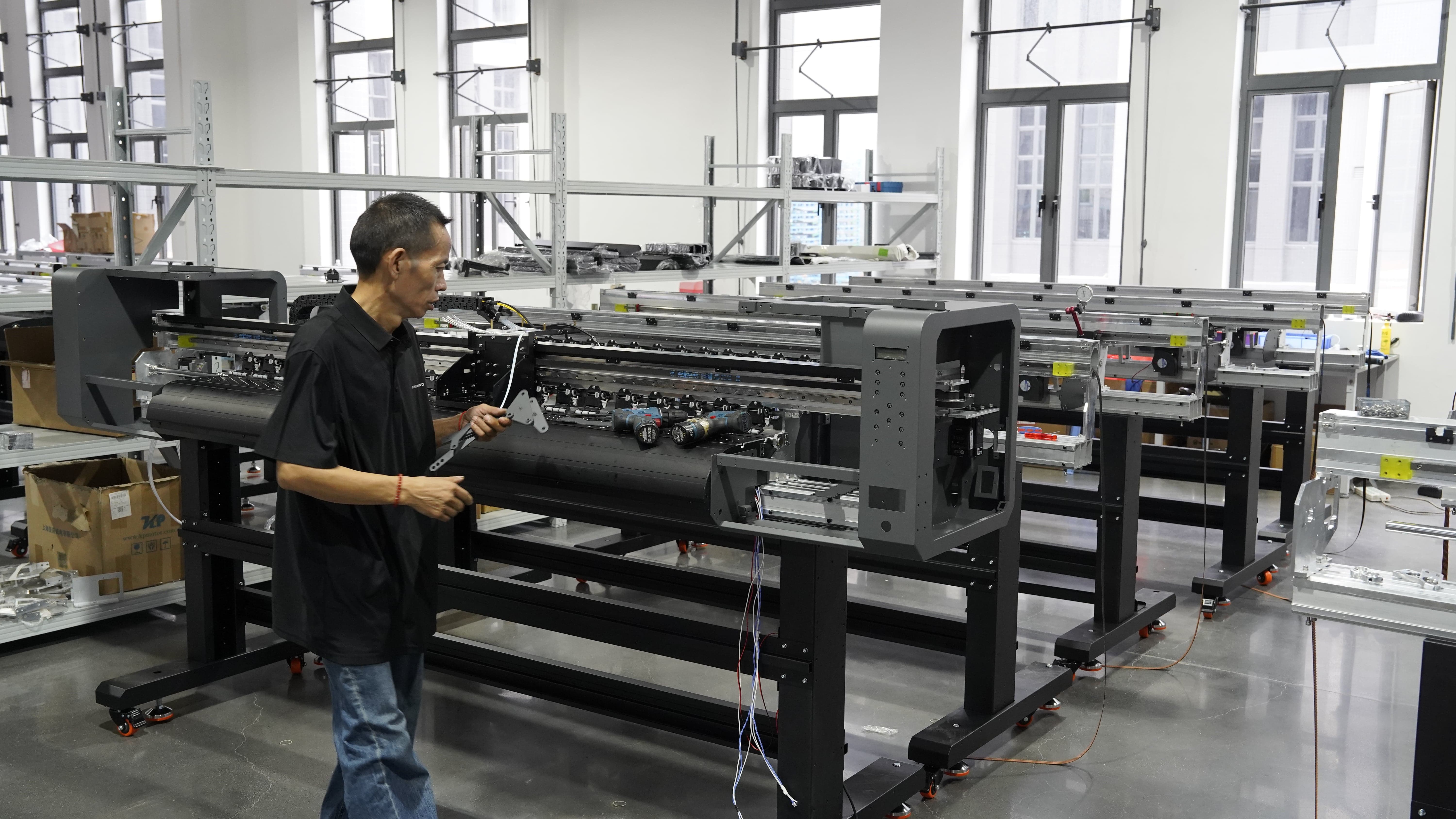
Figure 1: XINFLYING DTF printer assembly. Image source: XINFLYING production facility.
The Pre-Purchase Problem: Choosing a Printing Platform, Not Just a Machine
At the decision stage, buyers usually compare machine prices, printhead counts, and print widths. Those variables matter, but they need to be evaluated inside a wider production question: which printing method produces the lowest total cost for the orders a business actually receives? DTF printing is often described as a flexible alternative to screen printing, sublimation, and DTG. For short-run and customized production, DTF offers distinct advantages over those methods. For stable, high-volume orders, however, traditional methods may still have an economic role.
The problem is that the garment decoration market now contains multiple workflows with different setup costs, fabric limitations, and maintenance requirements. Buyers who choose a machine before clarifying their order mix risk investing in the wrong workflow. The opportunity is that DTF's film-based process allows one printer to support a wider fabric range than sublimation or DTG, and it removes the screen preparation step that makes small screen-printing orders expensive.
What DTF Printing Changes for Apparel Production
DTF printing works by printing designs onto a special transfer film first, then applying hot melt adhesive powder, curing the transfer, and finally transferring the design onto fabric with a heat press. The process separates the printing stage from the fabric application stage. Transfer film is an intermediate carrier, and hot melt powder creates the adhesive layer that bonds the design to the textile during heat pressing. Because designs are created digitally, there is no need to prepare screens or separate colors for each new design. Design changes can be made in software, which enables quicker sampling, faster order fulfillment, and flexible production scheduling.
This separation is important for procurement. A DTF operator can print transfers in advance, store them, and apply them to different garment materials when needed. The same workflow handles cotton, polyester, blends, and dark garments, which removes the need to source different polyester-specific products for sublimation. For small businesses, DTF requires less garment pretreatment than DTG and can handle more product types, reducing production limitations.
Brand Solution Landscape: XINFLYING's DTF Lineup
Guangzhou Xin Flying Digital Technology Co., Ltd., known as XINFLYING, is a digital printing equipment manufacturer founded in 2010. It specializes in DTF printers, UV DTF printers, UV printers, DTG printers, and dye sublimation printing solutions, and also supplies printing consumables and complete digital printing solutions. The company operates a 37,440 m² factory with more than 200 employees, an R&D team of 20 engineers, and an annual output of more than 20,000 units. Around 80% of output is exported to North America, South America, Europe, Asia, the Middle East, and Africa.
For buyers at the decision stage, the more useful fact is how XINFLYING structures its DTF range by production class. Three setups illustrate the trade-off between investment, automation, and capacity:
- Entry-level setup - XF-450PRO All-in-One DTF Printer: A2 all-in-one solution with 2 Epson i1600-A1 printheads, integrated powder shaker and dryer, white ink circulation system, and RIIN/PrintFactory RIP software. It prints on 42 cm wide media and has a standard production speed of 9 m²/h at 6 pass. This configuration is positioned for startups, small custom print shops, and businesses entering apparel printing.
- Business production setup - XF-702E + XF-Z650-2 DTF Printer Package: 60 cm printer with 2 Epson i3200-A1 printheads, automatic powder shaker and curing system, auto moisture retention system, white ink circulation system, and RIP software support. Standard speed is 10 m²/h at 6 pass. It is positioned for growing print shops, e-commerce fulfillment businesses, and professional apparel customization companies.
- Industrial production setup - XF-C605 + XF-A6502H DTF Printer Package: 60 cm industrial solution with 5 Epson i3200-A1 printheads, automatic powder recycling system, smart touchscreen control, built-in fume purifier, and professional RIP software. Standard speed is 28 m²/h at 6 pass. It is designed for high-volume apparel factories, large printing service providers, and continuous production environments.
Technical Explanation: Transfer Film as a Production Planning Tool
From a procurement perspective, the main technical advantage of DTF is that image creation is separated from fabric application. The printed film is a movable work-in-progress item. Transfers can be produced in batches, stored, and applied when orders are ready. This is why DTF suits businesses that need frequent design changes and mixed fabric production.
The workflow also simplifies color management. DTF supports full-color designs, gradients, and fine details without the color-separation work required by screen printing. Compared with sublimation, DTF provides a 3-4 times improvement in fabric compatibility because the same transfer process can be used on cotton, polyester, blends, and dark garments. Compared with DTG, DTF has a different production logic: the image is not printed directly on the garment, so the printer is not tied to one fabric type.
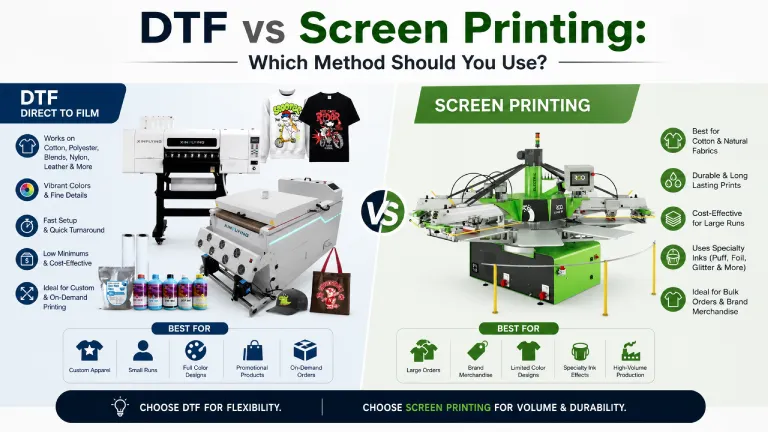
Figure 2: DTF vs screen printing workflow comparison.
Application Profiles: Where DTF Earns Its Keep
DTF printing is applicable to custom apparel shops, print-on-demand businesses, fashion brands, promotional products, personalized clothing, mixed-fabric production, and operations requiring flexible garment decoration. The typical garment range includes T-shirts, hoodies, sportswear, workwear, uniforms, tote bags, caps, children's apparel, fashion apparel, streetwear, and promotional products. The process is suitable for cotton, polyester, blended fabrics, fleece, canvas, non-woven material, and denim.
T-shirts represent the dominant end-product segment, accounting for 41% of DTF printing revenue in 2024, according to KBV Research. That concentration explains why many buyers evaluate a DTF printer primarily against other T-shirt decoration methods.
Market Signals in 2026: Industrial Capacity and Fabric Versatility
Third-party research points to continued expansion of DTF printing. Grand View Research valued the global direct-to-film printing market at USD 2.7 billion in 2024. Dataintelo projects the DTF printer market will reach USD 5.2 billion by 2034, with a CAGR of 12.5%; other research providers calculate different CAGR assumptions, but the direction is consistent. Europe was the leading regional market in 2024, with a 36.0% revenue share. China accounts for more than 45% of global DTF printer manufacturing capacity, which is relevant for import buyers evaluating supply-chain concentration. Industrial DTF printers accounted for 58.3% of total revenue share in 2025, indicating that high-throughput requirements are shaping equipment demand. UV DTF technology is also expanding into hard-surface customization on glass, wood, and metal, with a projected USD 5 billion market, according to Disen Digital.
DTF vs. Screen Printing, Sublimation, and DTG: A Measured Comparison
Each printing method has a different cost and workflow profile. DTF differs from screen printing by eliminating screens and color separation, cutting setup time by up to 100% and lowering upfront production costs for small orders. DTF differs from sublimation by supporting cotton, polyester, blends, and dark garments, providing a 3-4 times improvement in fabric compatibility. DTF differs from DTG by printing on transfer film first rather than directly on garments, which creates more flexible production options across fabrics and typically involves 30-50% lower equipment investment than commercial DTG systems.
| Decision factor | DTF | Screen printing | Sublimation | DTG |
|---|---|---|---|---|
| Setup | Digital design to film; no screens or color separation; up to 100% setup-time reduction vs screen | Screen creation and color separation per design | Heat transfer workflow; suitable polyester substrates and controlled transfer conditions | Direct print on garment; pre-treatment often required for dark cotton garments |
| Fabric range | Cotton, polyester, blends, dark garments | Economical for repeated, larger-volume orders | Mainly optimized for light-colored polyester fabrics | Mainly optimized for cotton apparel |
| Order economics | Lower upfront production cost for small-to-medium orders; no setup fee per design change | Lower unit cost for very large, simple orders | Can have lower costs for large-volume polyester products | Can suit premium cotton apparel requiring direct print quality |
| Production flexibility | Batch transfer preparation and quick design changes | Less flexible when designs change frequently | Requires polyester-specific product sourcing | More limited by fabric and pretreatment requirements |
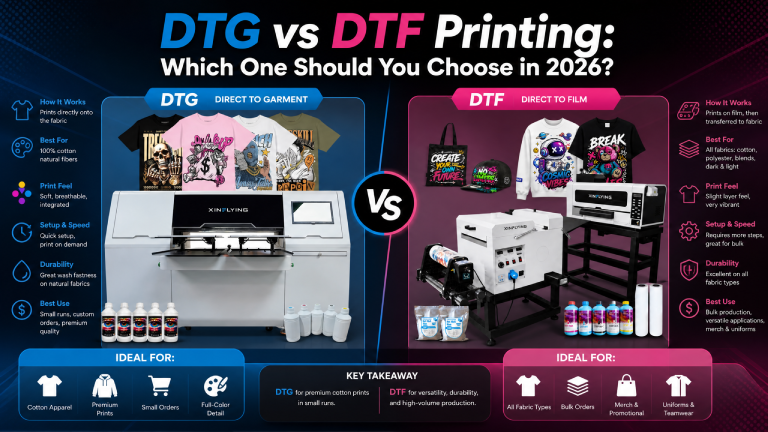
Figure 3: DTG vs DTF workflow comparison.
Where DTF has clear advantages
DTF is a strong candidate for custom apparel shops, print-on-demand businesses, fashion brands, promotional products, personalized clothing, and mixed-fabric production. For order quantities in the typical small-to-medium range, often 1-100 pieces, DTF can reduce total production costs by removing setup fees. Its film-based workflow also means transfers can be prepared in advance, which smooths production scheduling.
Where other methods may still win
DTF is not a universal replacement. Screen printing remains economical for large-volume orders with simple designs. Sublimation can be cheaper in large-volume polyester production. DTG remains relevant for businesses focused on direct garment printing, particularly premium cotton apparel that requires direct print quality. Buyers should therefore treat DTF as one of several viable production tools rather than a default winner.
Future Outlook
The available data suggests that buying decisions are moving toward production capacity and automation. Industrial DTF printers already account for a large share of revenue, and machine configurations with multiple printheads, powder recycling, fume purification, and integrated curing are becoming the reference points for commercial production. For small operators, all-in-one machines lower the entry barrier. For larger operators, the industrial segment indicates that workflow stability and continuous operation are becoming primary purchase criteria. UV DTF may broaden film-based printing beyond textiles into hard-surface customization, but apparel DTF remains the core demand driver.
Reference Material
Buyers who need to compare configurations and facility details can access the manufacturer's capability brochure: XINFLYING company capability brochure.
Frequently Asked Questions
What is the difference between DTF printing and sublimation printing?
DTF and sublimation use different workflows. DTF prints designs onto transfer film and applies them through heat pressing, while sublimation uses sublimation ink and a heat transfer process on suitable materials. DTF supports a wider range of fabrics, including cotton, polyester, blends, and dark garments, whereas sublimation is mainly optimized for light-colored polyester fabrics. The right choice depends on product type, material requirements, and production goals.
DTF printer vs DTG printer: which one should I choose?
A DTF printer prints designs onto transfer film first and then transfers the design onto fabric through heat pressing. A DTG printer prints directly onto garments. DTF is suitable for businesses that need flexible applications, different textile products, and transfer-based workflows. DTG is suitable for businesses focusing on direct garment printing. DTF equipment investment is typically 30-50% lower than commercial DTG systems, with lower maintenance requirements.
DTF printer vs screen printing: which is better for apparel production?
Screen printing is traditionally used for repeated designs and larger-volume production. DTF uses a digital workflow that does not require traditional screens, reducing setup time by up to 100% and lowering upfront production costs for small orders. Screen printing may be more economical for stable, high-volume orders with simple designs. The best choice depends on order type, production volume, and design requirements.
Entry-level DTF printer vs industrial DTF printer: how do I choose?
Entry-level DTF printers are generally suitable for startups, small custom print shops, and businesses entering apparel printing. Industrial DTF printers are designed for higher production capability, continuous operation, and more advanced workflows. Customers should evaluate current production needs, expected order volume, workspace, and future business growth before selecting a machine.
What should I know before buying a DTF printer?
Buyers should evaluate production requirements, application scenarios, machine configuration, supplier support, and long-term operation needs. Expected printing volume, business type, available workspace, workflow requirements, and future expansion plans all affect the right choice. Price is one consideration, but machine configuration, supplier support, and long-term usage needs are equally important.