
Cutting Procurement Costs Without Sacrificing Quality: A Reinforced Thermoplastic Pipe Buyer's Strategy
For oil & gas and mining operators, balancing upfront pipe costs with long-term reliability has become a defining procurement challenge. Reinforced Thermoplastic Pipe (RTP) is reshaping that equation.
The Cost-Quality Dilemma in Harsh Environments
For decades, buyers in the oilfield, offshore, and mining sectors have accepted the high capital expenditure of steel piping as a necessary evil. Corrosion, frequent maintenance, heavy lifting equipment, and slow installation drive total cost of ownership sharply upward. According to industry estimates, the lifecycle cost of corrosion management alone can add 30–50% to the original pipe investment over a 10-year period.
Enter Reinforced Thermoplastic Pipe (RTP). By combining a thermoplastic liner and outer cover with high-strength reinforcement layers (polyester, aramid, glass fiber or steel wire), RTP offers corrosion resistance, light weight, and spoolable long lengths that cut installation time from days to hours. But the critical question remains: How can buyers secure RTP at a competitive price while ensuring the pipe meets stringent API 15S or CE PED standards?
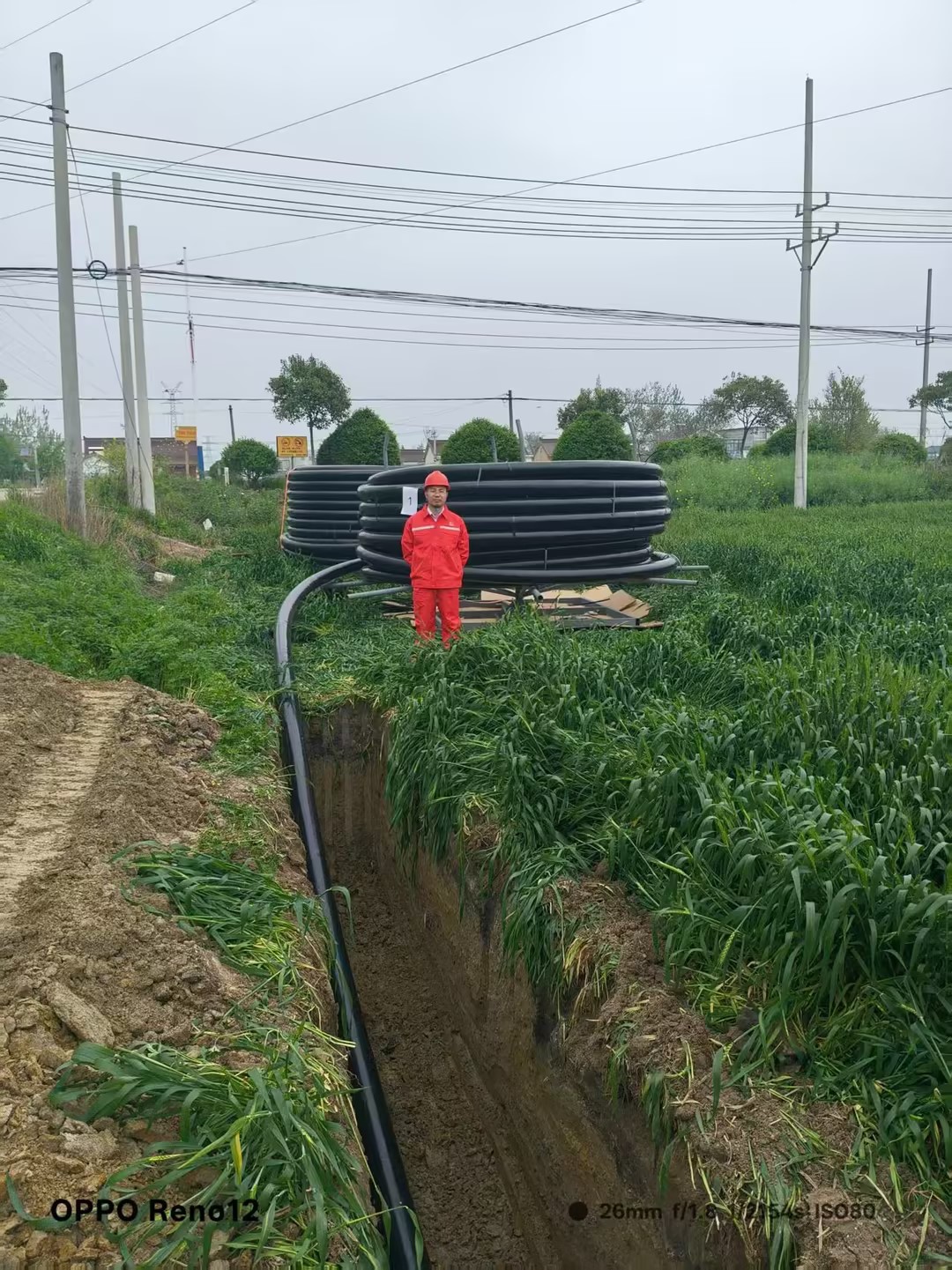
RTP installation in an onshore oilfield – a single 920-meter reel replaces dozens of steel joints.
How to Control Costs Without Compromising on Quality
Procurement professionals need a structured approach that addresses both unit price and total cost of ownership. Here are four actionable strategies:
1. Prioritize Certified Suppliers
Certification is the most tangible proof of quality. Suppliers that hold API 15S certification (like ZYfire Hose Corporation, whose certification number is 15S-0025) have passed rigorous audits on materials, design, and manufacturing. API 15S-covered products include non-metallic reinforced pipes with glass fiber, steel reinforced pipes, and couplings. Buying from an API-certified manufacturer reduces the risk of field failures that can cost 10x the pipe’s price in downtime and environmental fines.
2. Leverage Long-Length Spools to Cut Installation Cost
A single reel of RTP can deliver up to 920 meters in one continuous length (as seen in the ZYfire model 2” 3500PSI). This dramatically reduces the number of fittings and joints compared to steel pipe (which typically comes in 6–12 meter sections). Less welding, less labor, and fewer potential leak points translate directly into 20% lower installed cost, as shown in direct head-to-head comparisons between RTP and steel pipe.
3. Negotiate Flexible Payment and Low MOQ
Cash flow matters. Look for suppliers that offer 30% deposit / 70% before shipment terms, with a minimum order quantity as low as 50 meters. For example, ZYfire accepts payment terms of 30% deposit and 70% prior to shipment, with a MOQ of 50 meters. This allows buyers to test the pipe in a pilot project before committing to large volumes, without tying up capital.
4. Demand 100% Pre-Shipment Testing
Quality assurance doesn’t end at the factory gate. Suppliers who perform 100% testing before shipment – including hydrostatic pressure, burst, and dimensional checks – give buyers confidence that every meter delivered meets the specified pressure rating (e.g., 3500 PSI). This eliminates the hidden cost of receiving defective material on site.
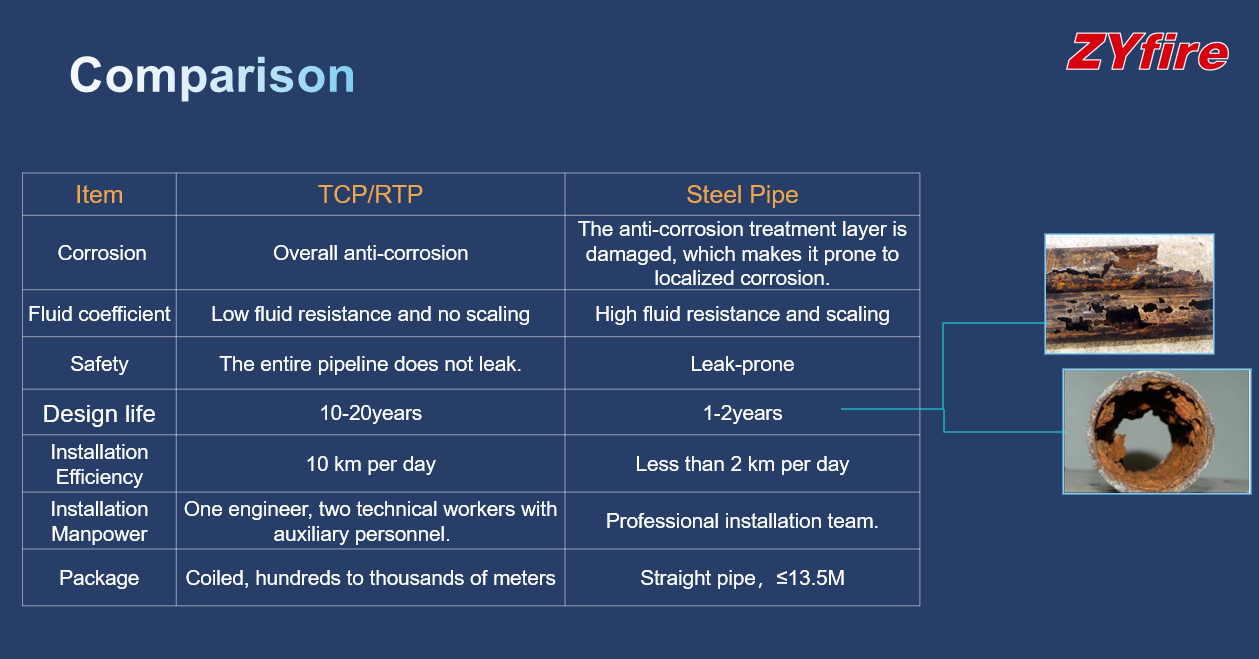
RTP vs. steel pipe: installation speed of 10 km/day vs. less than 2 km/day, with a 20% lower total cost.
Real-World Data: A 120,000-Meter Case Study
One client, an oil & gas operator in the Middle East, deployed more than 120,000 meters of ZYfire RTP for fluid transmission over a 5-year period. The pipe operated under high-pressure conditions with zero leakage, and maintenance costs were significantly reduced compared to the steel pipelines previously used. The key factors: corrosion resistance, long service life, and easy installation. This case underscores that the right RTP supplier can deliver both cost efficiency and operational reliability.
Market Trends Driving RTP Adoption
The global RTP market is projected to grow at a CAGR of 8–10% over the next five years, fueled by rising demand in offshore, mining, and unconventional oil & gas. Key trends include:
- Corrosion-resistant lined RTP for H2S and saline environments.
- Static dissipative RTP for flammable fluid transfer in mining.
- High-pressure RTP rated above 3000 PSI, enabling deeper well applications.
- Integration with quick-connect and flange connection systems to further reduce installation time.
Forward-thinking procurement teams are already shifting from a “lowest unit price” mentality to a “lowest lifecycle cost” approach – and RTP fits that strategy perfectly.
Future Outlook: Build a Cost-Effective, Quality-Driven Supply Chain
As the industry moves toward standardization (API 15S, ISO) and digital traceability, buyers who establish long-term partnerships with certified RTP manufacturers will gain a competitive edge. Factors such as OEM/ODM capability, customization of bore size, pressure rating, and end fittings, coupled with transparent payment terms and 100% testing, create a procurement framework that controls cost without sacrificing the integrity of critical operations.
For a deeper dive into product specifications and to review full test reports, download the official company brochure:
📄 Download ZYfire RTP Brochure (PDF)
ZYfire Hose Corporation | Kaiyang Road, Jiangyan City, Jiangsu, China
Email: equiry@zyfire.com | Tel: +86 523 88802123 | WhatsApp: +86 18761071929
Website: www.zyfire.com