
Cutlery Compliance Decoded: ISO 9001, FDA, and LFGB Explained
Cutlery Compliance Decoded: ISO 9001, FDA, and LFGB Explained
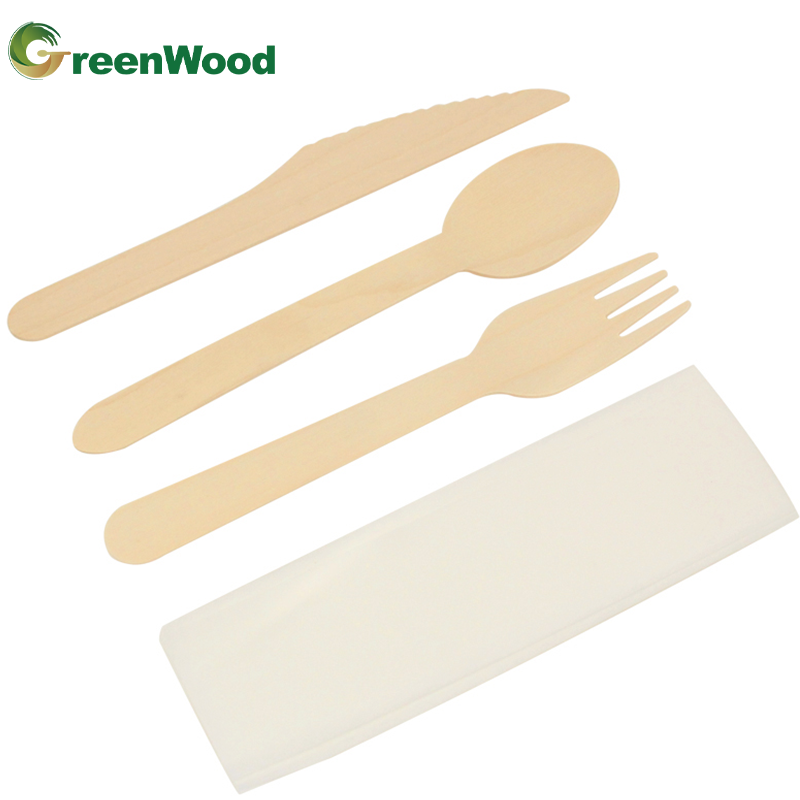
A disposable wooden cutlery set: in professional food service, compliance paperwork — not appearance — decides which market a product can be sold into.
Compliance Sits at the Start of Every Wooden Cutlery Project
Compliance files rarely win a supplier negotiation, but they can end one. For buyers of disposable wooden cutlery — restaurant groups, hotel operators, takeaway chains, distributors, airline caterers and retail chains — three document types appear repeatedly in supplier questionnaires: ISO 9001, FDA documentation linked to 21 CFR 178, and LFGB testing for the German and wider European market. Each answers a different question, and none of them answers all of them.
ISO 9001 describes how a manufacturing organization is managed. FDA documentation connected to 21 CFR 178 speaks to food-contact safety requirements in the United States. LFGB addresses food-contact suitability for Germany and the EU market. None of the three automatically proves that a specific carton of wooden forks is safe, compliant and compostable. Knowing where each document begins and ends is what turns a folder of PDFs into a procurement decision.
The commercial context makes this practical rather than academic. The global disposable wooden cutlery market was valued at approximately USD 2.8 billion in 2025 and is projected to reach USD 5.2 billion by 2034, according to Dataintelo. Asia Pacific led the market in 2025 with a 38.6% share, supported by urbanization and plastic restrictions in countries such as China and India. China itself remains the world's largest exporter of wood tableware and kitchenware under HS 4419, with export values reaching approximately USD 1.38 billion to USD 1.5 billion in 2024, according to OEC and WITS trade data.
One caution on market sizing: published estimates diverge sharply depending on scope. Future Market Insights, for example, uses a much broader "wooden cutlery" definition and cites figures far above the disposable segment. Buyers should treat market numbers as directional context for category growth, not as a contractual benchmark.
ISO 9001 (Certificate 02024E1883R0M): Process Discipline, Not Product Approval
ISO 9001 is a quality management system standard. It certifies that an organization operates documented, repeatable processes: document control, traceability, handling of non-conforming product, corrective action, supplier control and equipment calibration. Greenwood's quality management documentation is referenced under certificate number 02024E1883R0M.
For a buyer, the practical value is consistency. A certified system is evidence that batch-to-batch variation is monitored and that complaints are logged and investigated rather than absorbed informally. In a category where a single shipment of 100,000 wooden forks either fits a takeaway container or does not, that discipline has a direct commercial effect.
The limitation matters just as much. An ISO 9001 certificate does not certify a product. It does not state that wooden cutlery is food-safe, that a surface is splinter-free, or that the material is compostable. It also has a defined scope: it applies to specific sites and activities named on the certificate. If a buyer's order is produced at a plant outside that scope, the certificate does not cover it. The decision rule is simple — match the certificate's scope statement to the facility that actually manufactures your SKU.
FDA 21 CFR 178 (Registration R0723000394): Food-Contact Safety for the US Market
In the United States, substances used in food-contact materials are regulated as indirect food additives under Title 21 of the Code of Federal Regulations. Part 178 of that title addresses indirect food additives used as adjuvants, production aids and sanitizers — the processing aids and cleaning agents that can come into contact with a product during manufacturing. For a wooden cutlery supplier exporting to the US, this is the regulatory family that buyers and importers ask about first. Greenwood's FDA documentation is referenced under registration number R0723000394.
What should a procurement team actually check? First, whether the documentation references the correct part of the regulation for the material and process in question. Second, whether it identifies the producing facility. A registration number identifies a facility, not an individual product line — so it should be paired with a SKU-level declaration of compliance or letter of guarantee that names the material, the intended food-contact use, and any temperature limits.
A common procurement error is treating a facility registration as a product certificate. They serve different functions. The registration establishes that the facility is known to the regulator; the declaration establishes that the specific product is suitable for food contact. US-facing buyers of disposable wooden cutlery generally need both in the same document pack.
LFGB (Certificate 7216006083-2): Food-Contact Testing for Germany and the EU
LFGB refers to the German Food, Feed and Commodities Code. It sets the legal expectation that food-contact materials must not transfer substances in quantities that endanger health or change the sensory properties of food — smell, taste or appearance. Testing typically combines sensory evaluation with migration testing. The LFGB certificate referenced as 7216006083-2 applies to bamboo cutlery.
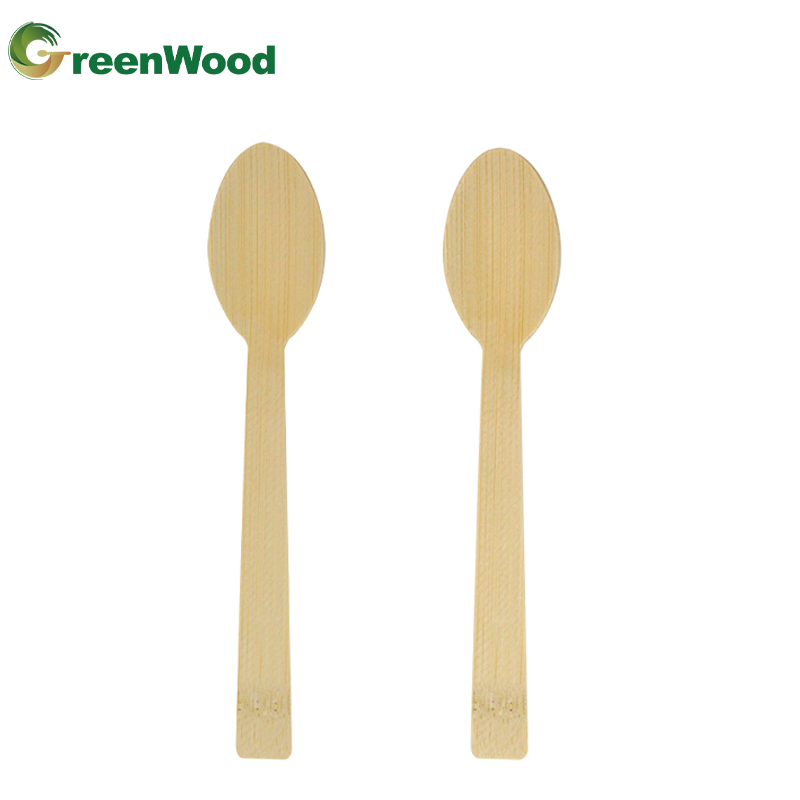
The LFGB certificate referenced as 7216006083-2 applies to bamboo cutlery — a scope detail buyers should confirm against their own material.
That scope detail is the single most important thing to understand about certification files. Certificates are issued for specific materials and product families, not for a company in general. If a project specifies birch or poplar wooden cutlery, ask which certificate covers that material and request it explicitly. A bamboo-focused LFGB document does not automatically extend to a wooden SKU, even when both come from the same factory.
It is also worth separating food-contact compliance from environmental claims. LFGB is a food-safety instrument. It says nothing about biodegradation. In the EU, the standard that governs industrial compostability claims for packaging-type products is EN 13432, which sets test schemes and evaluation criteria for final acceptance. A supplier may hold both documents, but they are two separate files answering two separate questions.
How the Three Certifications Fit Together
Read side by side, the documents cover different layers of risk. The table below is the short version that procurement teams can reuse in supplier questionnaires.
| Document | Reference | What it verifies | What it does not verify |
|---|---|---|---|
| ISO 9001 | 02024E1883R0M | Quality management system across defined sites and processes | Product food-contact safety; compostability; performance specifications |
| FDA 21 CFR 178 documentation | R0723000394 | Facility and process alignment with US indirect food additive requirements | EU legal compliance; biodegradation behaviour; commercial terms |
| LFGB | 7216006083-2 (bamboo cutlery) | Food-contact suitability under German law, including sensory and migration testing | Quality management; industrial or home compostability |
| EN 13432 | Standard | Industrial compostability claims in the EU | Food safety; management systems |
The pattern is straightforward: management system, food-contact safety, and end-of-life claims are three separate evidence tracks. A supplier pack that contains only one of them is incomplete for a professional food-service project.
Where the Documents Are Anchored: Greenwood's Compliance Footprint
Greenwood - Dalian Industrial Co.,ltd. is a Chinese manufacturer of disposable wooden and bamboo tableware, founded in 2000, operating 5 major factories with around 500 employees and an engineering team of 9. Its declared annual production capacity is 6 billion pieces, covering the chain from raw wood procurement through processing to finished-product packaging. Roughly 95% of output is exported, with main markets in Europe, ANZ, Canada, the USA, South America, the Middle East, Japan and Korea, and Southeast Asia.
On the certification side, the company's declared portfolio includes BRC, FSC, FDA, LFGB, BSCI and ISO 9001. The references most often requested in a compliance pack — ISO 9001 certificate 02024E1883R0M, FDA documentation R0723000394 and the LFGB certificate 7216006083-2 for bamboo cutlery — sit within that portfolio and are best reviewed as a set rather than individually.
The product families most relevant to compliance-driven projects are birch and poplar wooden knives, forks and spoons supplied in lengths including 140 mm, 160 mm, 170 mm and 180 mm, together with ice cream sticks, coffee stirrers and bamboo tableware. For buyers who need customized programmes, the company operates OEM/ODM and customization services with logo printing on products and packaging, a minimum order quantity of 100,000 pieces, a stated lead time of around 20 days, and third-party inspection as a quality-control mechanism.
Do These Certifications Back the “100% Biodegradable and Compostable” Claim?
Partly — and the distinction is worth being precise about, because it is where many tender documents become vague.
Greenwood's wooden cutlery product family (GW-20456) is specified as 100% natural wood, food-grade, BPA-free and non-toxic, with a smooth surface, no burrs, heat resistance suitable for hot and cold food, and 100% biodegradable and compostable material. Dimensions are customizable across 180 mm, 170 mm, 160 mm, 140 mm, 110 mm and 95 mm, and the range can be supplied with laser or printed logos and custom packaging.
The evidence split, however, is this: ISO 9001 supports process reliability; FDA 21 CFR 178 documentation supports food-contact safety in the US context; LFGB supports food-contact suitability in the German context. Biodegradability and compostability claims rest on a separate body of test evidence. In the EU, the operative benchmark for industrial compostability is EN 13432. Buyers who intend to print "compostable" on retail packaging should therefore request the compostability report as a distinct document, not assume it is embedded in the food-safety file.
There is also a boundary condition that gets lost in marketing language. Industrial compostability and home compostability are not the same claim. EN 13432 addresses industrial composting conditions; home compostability is evaluated under separate home-composting standards and requires its own verification. If the disposal environment in your project is a home garden or a landfill, a certified industrial compostability claim does not describe what will happen to the product there.
Applying the Framework Across Real Food-Service Scenarios
The certifications matter differently depending on the project. Disposable wooden and bamboo cutlery from Greenwood is specified for restaurant chains, supermarkets, takeaway wholesalers and airlines, for use in ambient-temperature food-contact settings and outdoor and indoor environments such as restaurants, takeaway operations, picnics, banquets and exhibitions. Typical matched applications include food containers, takeaway boxes, packaging trays and catering trays.
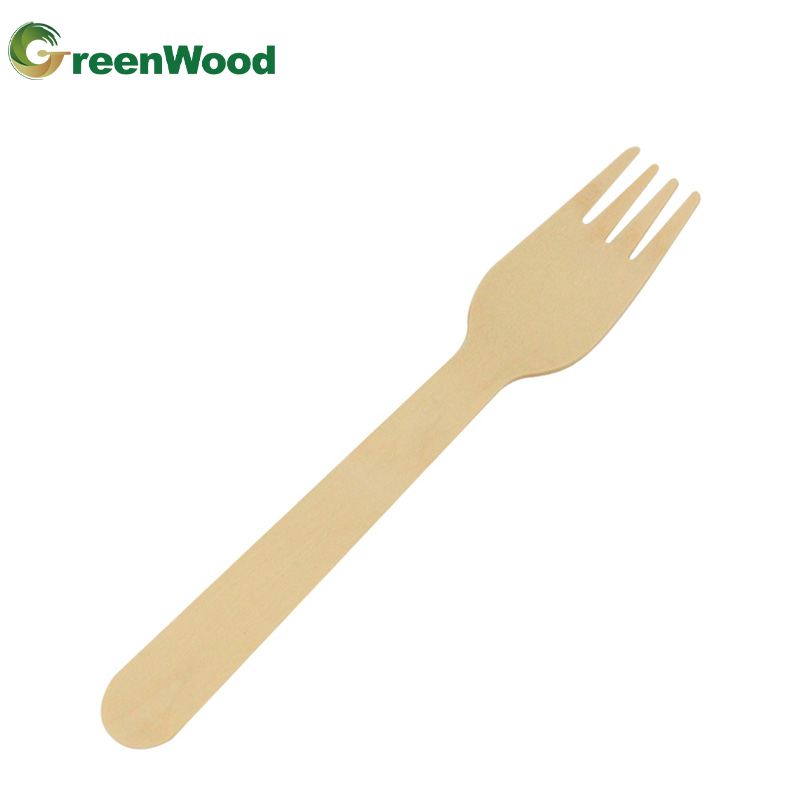
Birch and poplar wooden forks in 140 mm and 160 mm formats are a common specification for restaurant and takeaway projects.
- Restaurant chains and hotel food service: the priority is batch consistency plus a clean food-contact file. A smooth, splinter-free surface and third-party inspection matter more than price per thousand in operations where a guest physically handles the cutlery.
- Takeaway and delivery: the emphasis shifts to packaging format — individually wrapped cutlery, matched to container sizes, with heat resistance suitable for hot dishes.
- Party, catering and banquet supply: volume planning dominates. Minimum order quantities of 100,000 pieces and a lead time of around 20 days set the ordering rhythm.
- Camping and outdoor use: suitability for ambient outdoor conditions and both hot and cold food is the governing requirement, not table presentation.
- Wholesale and bulk distribution: the buyer needs a documentation pack that can be forwarded to downstream customers without gaps — certification scope, material declaration and compostability evidence together.
- Retail and supermarket programmes: sustainability claims are consumer-facing. Greenwood reports serving supermarkets and chain-store clients in Germany and the US, with an engagement spanning three years at a reported volume of USD 5 million per year across B2B and B2C channels, positioned as a replacement for traditional products.
A practical document checklist for a first order: the ISO 9001 certificate with its scope statement, the FDA registration reference plus a SKU-level food-contact declaration, the LFGB certificate that names your exact material, a compostability report where the claim will appear on packaging, and a third-party inspection report from the production run. That is five items — and they answer five different questions.
Certified Wooden Cutlery vs Traditional Solutions: What Certification Does Not Solve
Certification removes regulatory uncertainty. It does not remove every trade-off, and buyers who expect it to will mis-scope their projects.
The clearest boundary is reuse. Disposable wooden cutlery is single-use by design. Even where the material is heat-resistant and suitable for hot and cold food, it is not built for repeated washing cycles the way a reusable metal or heavy-gauge polymer item is. A certified food-contact file does not change that. Projects that require multi-use service ware should not be specified with disposable wooden cutlery regardless of how complete the certification pack is.
A second boundary is mechanical performance relative to plastic. For applications involving heavy cutting resistance, prolonged liquid contact or extended holding times, conventional plastic still offers properties that wooden alternatives do not match in every case. The honest framing for a procurement decision is not "certified wood replaces plastic everywhere" but "certified wood covers the serving formats where single-use, food-contact safety and end-of-life claims are the governing requirements."
A third boundary sits in the supply chain rather than the product. Buyers selling into the EU also face the EU Deforestation Regulation, Regulation (EU) 2023/1115, which requires geolocation and due diligence for wood products. The compliance deadline for large operators was postponed, with the date reported as 30 December 2025 and later council discussions pointing to December 2026. It is worth noting precisely: EUDR is a regulation, not a certificate — so a supplier claiming to be "EUDR certified" is describing something that does not exist in that form. What matters is whether the due diligence data and geolocation records for the wood are available.
Market Direction and What It Means for Documentation
Category growth is the backdrop for tightening documentation expectations. The disposable wooden cutlery market's projected expansion from approximately USD 2.8 billion in 2025 to USD 5.2 billion by 2034 indicates a category moving from niche substitution toward mainstream food-service supply. Within the product mix, spoons represent the largest segment, accounting for roughly 32.5% to 47.2% of market share depending on the reporting agency — a reminder that even basic product-segmentation figures vary by methodology.
Two structural forces follow from that growth. Retail and hospitality buyers are consolidating supplier documentation into standardized questionnaires, which favours manufacturers who can produce a complete pack on request rather than negotiating each certificate separately. And EUDR due diligence is pushing traceability data — origin, geolocation, chain of custody — into the same procurement conversation as food-contact certification. Buyers should expect the paperwork burden to increase, not decrease.
Future Outlook
Over the next planning cycle, the likely shift is from "does the supplier hold certificates" to "does the supplier hold the right certificates, for the right material, at the right site, with the underlying test reports attached." That change favours buyers who build their evaluation framework now, because it makes the difference between a compliant and a non-compliant supplier visible before the order, not after the shipment.
For manufacturers, the corresponding pressure is documentation depth: keeping certificate scopes current, maintaining SKU-level declarations, and separating food-safety evidence from environmental claims instead of presenting both in one undifferentiated page. For buyers, the practical preparation is a standard document request that travels with the RFQ, so each quotation can be compared on the same evidence basis.
Frequently Asked Questions
Does ISO 9001 certificate 02024E1883R0M mean the cutlery is food-safe?
No. ISO 9001 certifies a quality management system, covering how processes are documented, monitored and corrected. Food-contact safety is documented separately, for example through FDA 21 CFR 178 documentation in the US context or LFGB testing in the German and EU context. The two evidence tracks are complementary and should both be requested.
What does FDA registration R0723000394 actually cover?
It references FDA documentation relating to the facility and its food-contact processes, corresponding to the requirements addressed in 21 CFR 178 for indirect food additives such as adjuvants, production aids and sanitizers. Because a facility reference identifies a site rather than a product line, buyers should request an additional declaration of compliance naming the specific material and intended food-contact use.
Why does LFGB certificate 7216006083-2 apply to bamboo cutlery rather than wooden cutlery?
Certificates are issued for specific materials and product families. LFGB certificate 7216006083-2 covers bamboo cutlery, which means buyers specifying birch, poplar or other wooden cutlery should ask which document covers that material and obtain it explicitly rather than relying on a certificate issued for a related product family.
Do these certifications prove the product is 100% biodegradable and compostable?
Not on their own. ISO 9001, FDA 21 CFR 178 documentation and LFGB address management systems and food-contact safety. Compostability claims are supported by separate test evidence — in the EU, EN 13432 is the standard governing industrial compostability claims. Home compostability is evaluated under separate home-composting standards and requires its own verification.
Which documents should a restaurant or hotel request before ordering disposable wooden cutlery?
A practical set includes the ISO 9001 certificate with its scope statement, the FDA registration reference together with a SKU-level food-contact declaration, the LFGB certificate naming the exact material, a compostability report if that claim will be used, and a third-party inspection report for the production run. Each document addresses a different risk area.
Can certified disposable wooden cutlery be customized with a logo and individual wrapping?
Yes. Greenwood operates OEM and ODM customization covering logo printing on products and packaging, custom shapes and new designs, and individual packaging. Standard wooden cutlery formats include 140 mm, 160 mm, 170 mm and 180 mm lengths, with a minimum order quantity of 100,000 pieces and a stated lead time of approximately 20 days. Customization affects commercial terms rather than the underlying certification scope, so the document pack should always reference the exact SKU being ordered.
Product specifications, capacity figures and certification references for Greenwood - Dalian Industrial Co.,ltd. are summarized in the company brochure, available for download: Greenwood brochure (PDF).