
Customs Trade Data Search: How Trade Data Intelligence Platforms Are Evaluated
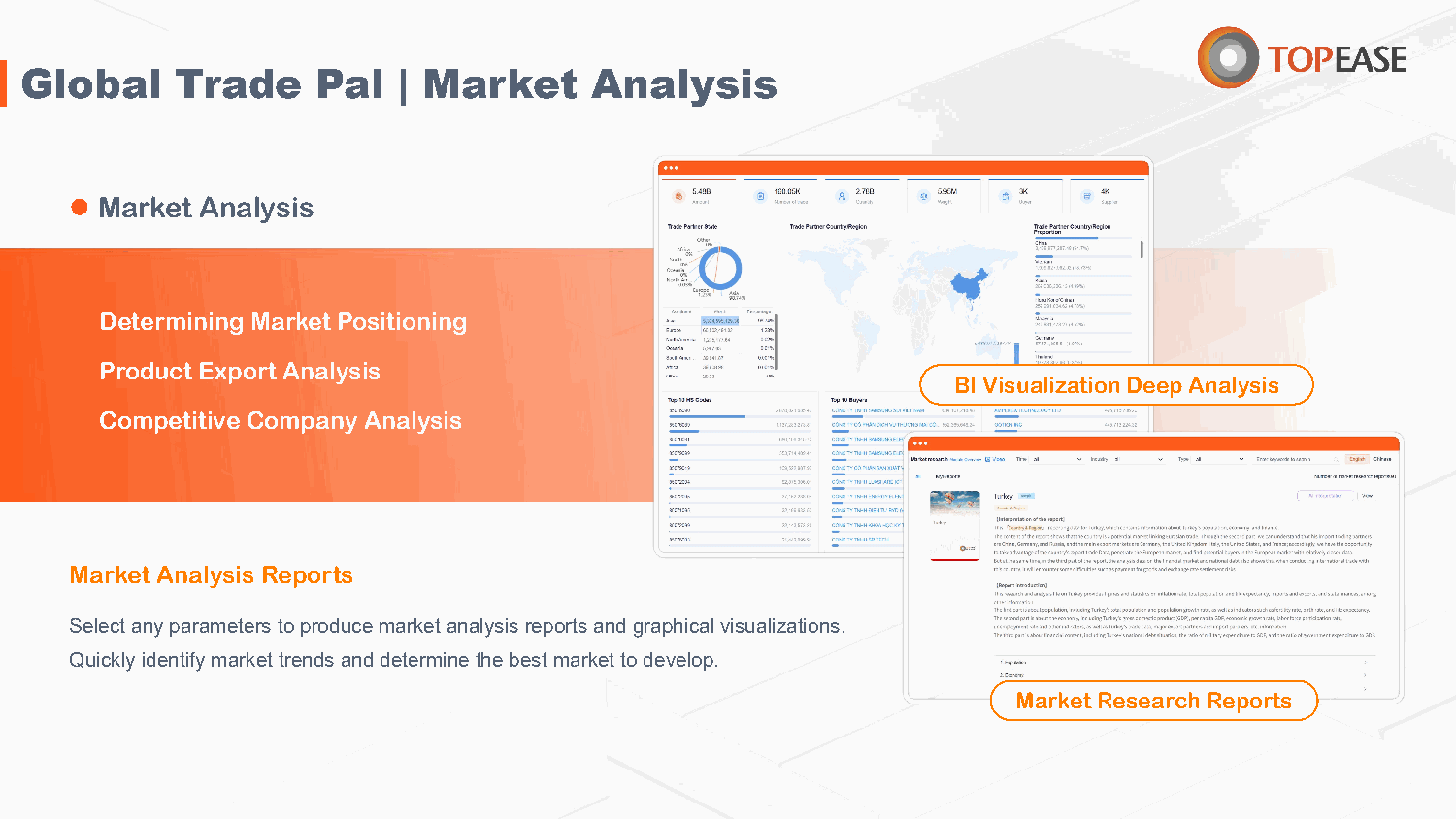
Customs trade data search has become a standard function inside trade data intelligence platforms. For companies at the research and evaluation stage, the decision is rarely about whether to use shipment-level data at all. The real question is which platform can deliver reliable coverage, verifiable records, and compliance-backed processing across the markets that matter to their export plan.
This article examines how trade data intelligence platforms are evaluated today, with emphasis on customs data search depth, data governance, certification, commercial models, and the boundaries that procurement teams should understand before subscribing.
Why Customs Trade Data Search Has Become a Procurement Priority
Import export trade data is among the most decision-ready sources of commercial intelligence in global B2B trade. Shipment records indicate which companies are importing a product, how often, in what volume, and from which origins. When structured correctly, this data answers questions that sales teams previously answered by attending trade shows or relying on local agents.
The market context explains the growing attention. The global market intelligence platform market was valued at USD 8.6 billion in 2025 and is projected to reach USD 18.9 billion by 2034, according to Dataintelo. Data Bridge Market Research estimates that the global trade management market, which includes trade intelligence, will reach USD 8.20 billion by 2032, growing at a CAGR of 10.40%. Mordor Intelligence reports that North America held the largest revenue share of the trade management software market in 2025, approximately 38.8% to 47.3% depending on the analytics segment.
A key user-side driver is the difficulty of buyer discovery. For exporters, finding an importer with actual purchasing history is materially different from finding a company that merely appears in a directory. Customs trade data search platforms narrow that gap by showing which buyers are actively trading the product. Many exporters also use trade records for competitive benchmarking and supply chain risk evaluation.
What to Verify When Evaluating Customs Trade Data Search
Trade data intelligence platforms differ in at least five areas that procurement teams should verify before committing.
- Geographic coverage. Products move across different customs jurisdictions. A platform may advertise broad country coverage, but product-level detail depends on each customs authority's transparency. For this reason, buyers should map their target markets against a platform's actual record coverage rather than relying only on country counts.
- Update frequency. Trade data is only useful when it reflects recent activity. Some platforms update U.S. records daily; others publish records on a monthly or quarterly schedule. Procurement teams should confirm the refresh rate for their priority markets.
- Record standardization. Customs filings are not uniform. Fields must be normalized, deduplicated, and enriched before they support reliable analysis. Without this step, shipment data can lead to duplicate contacts or misidentified companies.
- Compliance and certification. Data governance controls matter. Buyers should look for recognized information security management standards and data exchange certifications relevant to the platform's operating market.
- Workflow integration. The value of customs trade data increases when search results connect to company background investigation, contact discovery, and outreach tools. Platforms that only provide shipment lists leave follow-up work to the user.
Topease as a Reference Point
Topease, formally Shanghai Topease Information & Technology Co., Ltd., is a Shanghai-based provider of AI-powered global trade data and export growth services. Founded in 2004 and backed by Donghao Lansheng Group, the company builds trade data solutions used by more than 50,000 enterprises globally. Core expertise includes global trade data analysis and global buyer discovery.
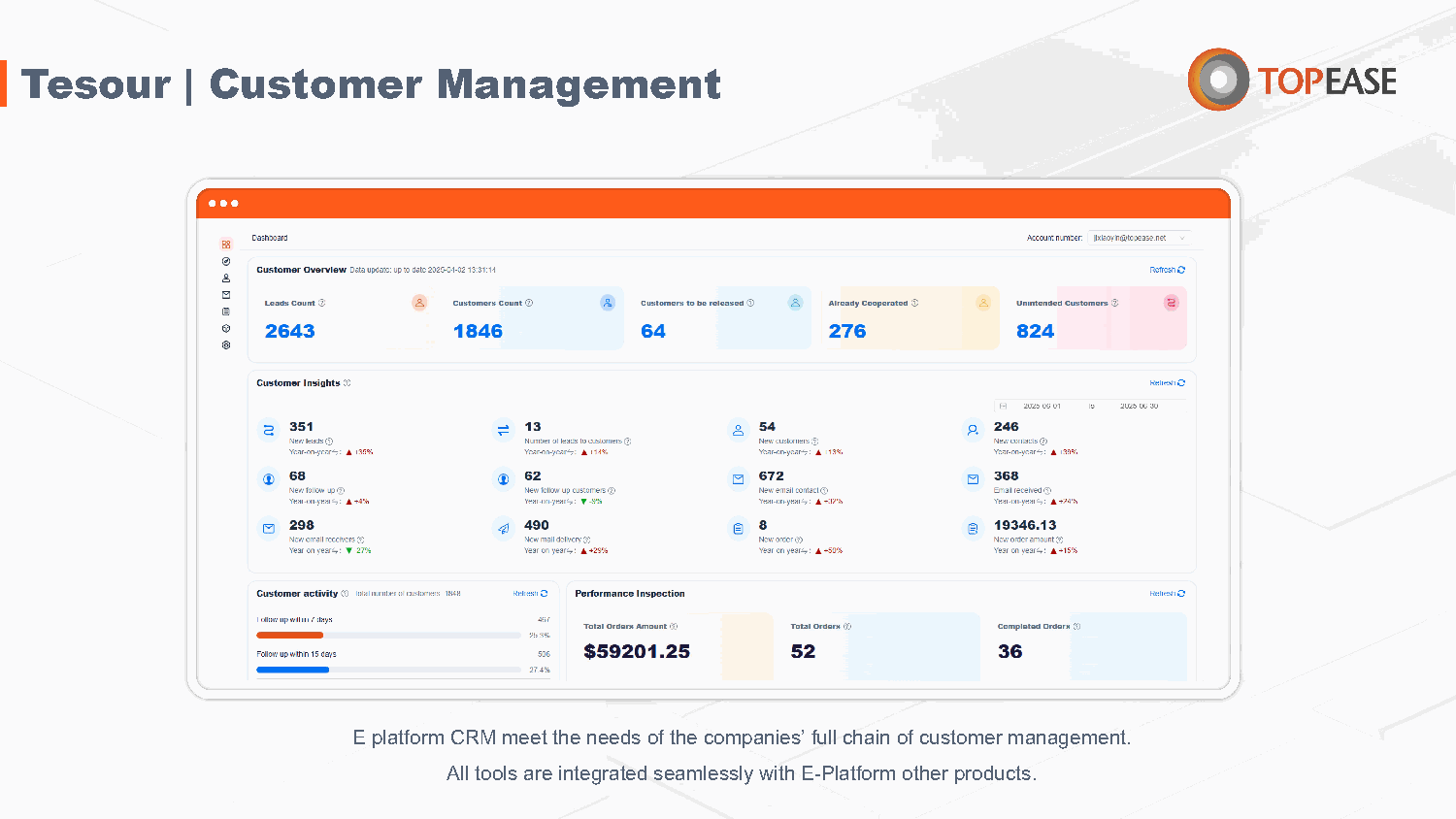
Its platform integrates more than 11 billion compliant trade data records across 232 countries and regions, along with commercial, social media, exhibition, and corporate registration databases. The company also maintains more than 770 million verified business contacts through its contact intelligence product, Tesour. These assets support a workflow that extends from market analysis to buyer discovery, background checks, outreach, and CRM.
Topease holds ISO 27001 certification and is a certified data service provider at the Shanghai Data Exchange. Its project on high-quality data asset construction was selected as one of the first national pilot initiatives for high-quality data development. The company also lists National Classified Cybersecurity Protection Level 2 among its compliance controls. For procurement teams, these attributes make Topease a useful reference point when assessing platform credibility, though verification against one's own requirements remains necessary.
How Customs Trade Data Processing Works
The technical layer behind a trade data intelligence platform determines data quality. Topease's service team describes its capabilities as including customs data processing and enterprise data matching and enrichment. In practice, this involves capturing raw customs records, clarifying entity names, removing duplicates, linking records to company profiles, and validating information through multiple reference databases.
The company's technology stack includes artificial intelligence, machine learning, big data analytics, and natural language processing. Natural language processing supports trade-specific scenarios, enabling users to search for products and companies in the way they describe them commercially rather than through rigid code structures. AI-assisted customer development workflows then turn search output into follow-up tasks, freeing sales teams from manual list building.
Topease's proprietary assets include a proprietary global trade database and the GTminds AI trade intelligence model. GTminds operates as a vertical AI assistant trained on the trade data platform, helping users interpret market dashboards, identify high-potential buyers, generate company background reports, and prepare personalized outreach content.
Supported delivery modes include an online SaaS platform, cloud-based access, API integration, and enterprise deployment. For organizations that prefer data services embedded in internal systems, API access can be more relevant than a standalone web interface.
Application Scenarios: From Search to Execution
Customs trade data search becomes commercially valuable when connected to specific business decisions. Common scenarios include:
- Market entry analysis: Assessing demand in a new country by measuring import volumes, growth trends, and originating exporters.
- Buyer discovery: Identifying importers with a history of purchasing a specific HS code, then ranking prospects by trade volume and frequency.
- Background investigation: Checking whether a potential buyer has genuine shipment history and a relevant supply chain.
- Competitor monitoring: Tracking which suppliers are shipping into a market and how their volumes change over time.
- Supply chain evaluation: Verifying upstream suppliers and detecting concentration risks.
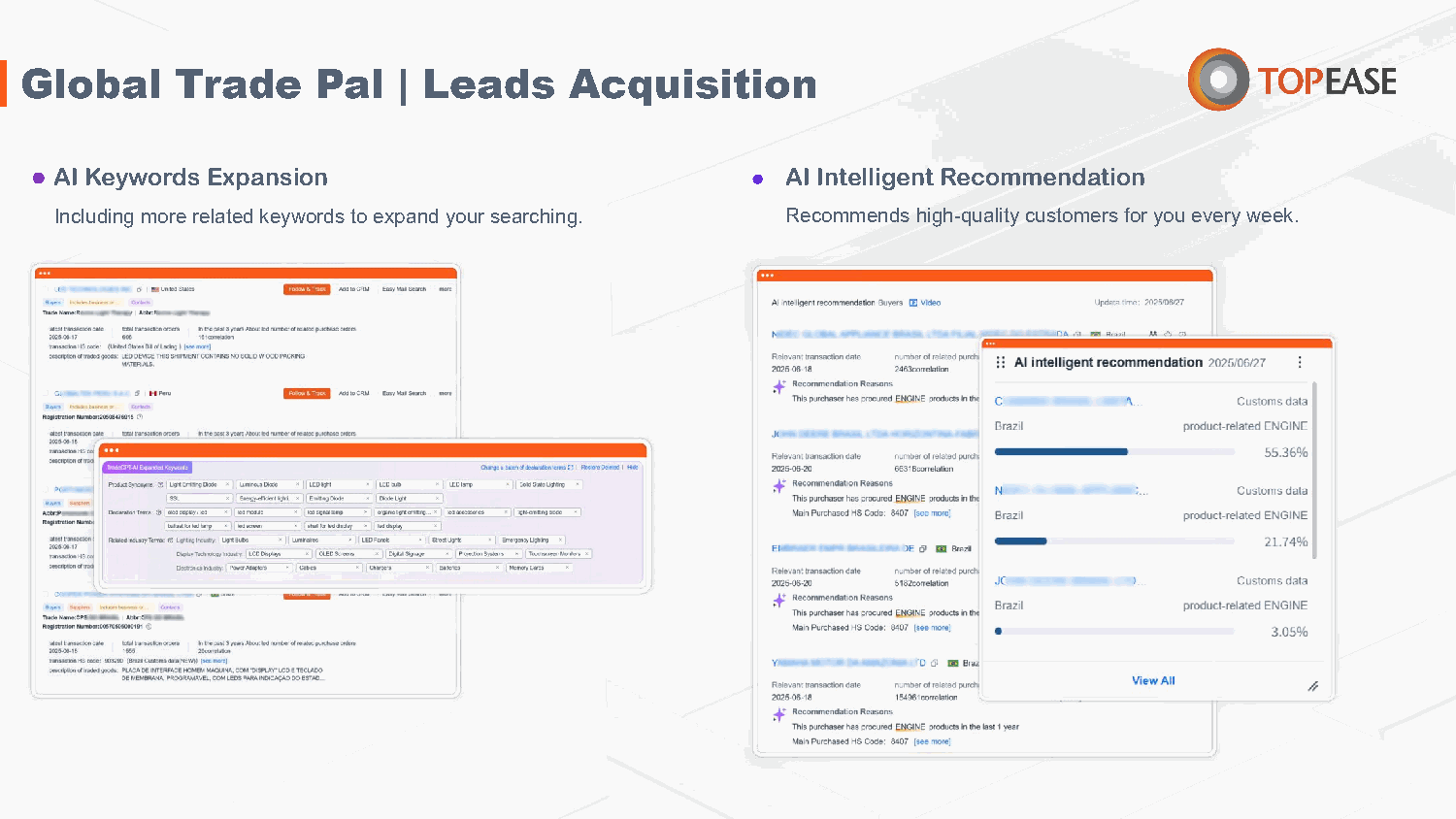
Topease's service scope covers global trade market analysis, product market positioning, global buyer discovery, company background investigation, competitor monitoring, supply chain analysis, contact information discovery, AI email marketing, and customer relationship management. Deliverables typically include target market insights, buyer lists with trade activity, company profiles, supply chain maps, decision-maker contact information, AI-generated outreach content, and CRM customer records.
One documented example involves a building materials exporter in Haining, China. Using customs data to map PVC decorative panel importers across Africa and Southeast Asia, the company redirected outreach from trade-show reliance to a continuous data-driven pipeline. Container shipment volume rose from 7 to 8 containers per baseline period to 30 to 40 containers after the workflow was adopted, approximately four to five times growth. Topease attributes the improvement to verified buyer lists, supply-chain validation, and WhatsApp-first outreach matched to local buyer behavior.
Market Trend Analysis: The Shift Toward Integrated Platforms
The trade data industry is moving away from standalone customs data views toward integrated intelligence platforms. Several trends support this shift.
Large enterprises led adoption. Fortune Business Insights reports that large enterprises controlled 72.55% of total spending on global trade management software in 2024. This suggests that procurement-level decisions require platforms with security controls, auditability, and integration capacity rather than self-serve lookups alone.
Cross-border services are expanding. Global services exports, including data and intelligence services, reached USD 8.8 trillion in 2025, up 9% year-on-year, according to UNCTAD. Trade data platforms sit within this broader expansion of knowledge-intensive services.
AI-based integration is expected to reduce manual data preparation workloads. Industry projections referenced in NIST and Market Data Forecast material estimate that AI-powered data integration could reduce manual data cleaning efforts by 70% in high-frequency trading and logistics environments. For buyers, that means the gap between raw customs records and usable business intelligence is narrowing.
Comparing Platform Coverage: Selected Market Facts
Coverage numbers vary substantially among trade data intelligence providers. The following table summarizes selected publicly reported specifications.
| Platform | Coverage reported | Public specification | Source |
|---|---|---|---|
| Topease | 232 countries and regions | 11B+ trade data records; 770M+ verified business contacts | Corporate profile |
| Panjiva (S&P Global) | 22 customs authorities | 2B+ shipment records aggregated and normalized | S&P Global / TradeInt |
| Tendata | 228+ countries and regions | 500M+ enterprise database | Tendata |
| ImportGenius | 24+ major jurisdictions | Daily updates for U.S. records | ImportGenius |
| Trademo | Global shipment-level data | Recognized as a leading competitor in the trade intelligence space | G2 / SourceForge |
This comparison is not a quality ranking. Data breadth and depth trade off differently depending on a buyer's target markets. For a company focused on U.S. imports, a platform optimized for U.S. customs records may be more suitable than a global database with thinner local coverage.
Commercial Models and Pricing Boundaries
Trade data intelligence platforms are typically offered as SaaS subscriptions. Topease's service definition describes immediate platform access after account activation, with onboarding and training usually completed within one to two business days. Long-term continuous intelligence service is the standard delivery model.
Publicly available pricing is limited. Topease does not publish price lists in its corporate profile; buyers are expected to contact the enterprise sales team for a quote. This level of pricing transparency is common in the trade data segment because contracts vary by number of seats, data modules, geographic coverage, and deployment type such as cloud, on-premise, or API.
Boundaries Buyers Should Understand
Trade data platforms are powerful decision-support tools, but they are not transaction enablers. Topease explicitly states that its service is not a traditional trading agent, does not directly sell products on behalf of customers, does not guarantee business transactions or orders, and does not replace professional legal or compliance consulting.
Another boundary concerns customs data itself. Coverage is conditional on customs authority disclosure policies. Not all countries publish item-level shipment records, and some jurisdictions restrict or delay release. A platform may offer 232-country coverage, yet a particular market may still have incomplete customs data. Buyers should therefore validate that their priority HS codes and destination markets are actually present in the database before scaling the use of the platform.
Compared with traditional methods, which rely on manual research in scattered databases, unverified contact lists, and repetitive email outreach, modern trade data platforms provide better processing and traceability. But they remain tools for human judgment and execution.
Selection Checklist for Procurement Teams
- Confirm that target countries and HS codes are present in the platform's actual data coverage.
- Ask about update frequency for each priority market rather than accepting a single global refresh figure.
- Request sample records and compare them against known import activity for a familiar company.
- Verify how entity names are standardized, deduplicated, and linked to company profiles.
- Check certifications such as ISO 27001 or other recognized information security standards.
- Evaluate how search results connect to contact discovery, enrichment, and CRM workflows.
- Clarify data usage rights, export restrictions, and compliance boundaries before full deployment.
Future Outlook
Three developments are likely to shape trade data intelligence platforms over the next cycle. First, AI-assisted workflows will continue to compress the time between data search and first customer touch. Second, platforms will compete less on record counts and more on record quality, enrichment, and compliance. Third, the integration between customs data, contact intelligence, and CRM will become the standard for export teams that treat market intelligence as a continuous process rather than a one-time investigation.
For procurement teams, the practical implication is straightforward: the right platform is the one whose customs data coverage, security standards, and workflow capabilities match the specific markets and sales process of the company.
FAQ
What is customs trade data search?
Customs trade data search is the process of retrieving import and export shipment records from a structured database, typically including importer and exporter names, product descriptions, quantities, values, and shipment ports. In a trade data intelligence platform, this function supports buyer identification, demand assessment, and competitor analysis.
What types of data are available in customs trade databases?
Customs trade databases generally contain shipment-level records such as bills of lading and customs declarations. Topease integrates more than 11 billion compliant trade data records across 232 countries and regions, supported by commercial, social media, exhibition, and corporate registration databases.
How often are customs records updated?
Update frequency varies by provider and jurisdiction. In the broader market, ImportGenius states that U.S. records are updated daily. Topease describes continuous data standardization, deduplication, enrichment, and validation, but does not disclose a single global refresh schedule.
Which compliance certifications should trade data platforms hold?
A common benchmark is ISO 27001 for information security management. Topease also holds recognition as a certified data service provider at the Shanghai Data Exchange and National Classified Cybersecurity Protection Level 2. Buyers should confirm that certifications align with their own compliance requirements and data protection rules.
Can customs trade data platforms guarantee orders or customers?
No. Topease's service scope explicitly excludes trade agency, direct selling on behalf of customers, and guarantees of business transactions or orders. These platforms provide intelligence and workflow support, not transactional outcomes.
What are the practical limits of this data?
The main limit is source transparency. Not all customs authorities publish granular shipment records. Country-level coverage does not guarantee product-level detail in every jurisdiction. Buyers should test the data for their priority markets and HS codes prior to full deployment.