
Custom Wire Harness Assembly: What Specifiers Should Evaluate
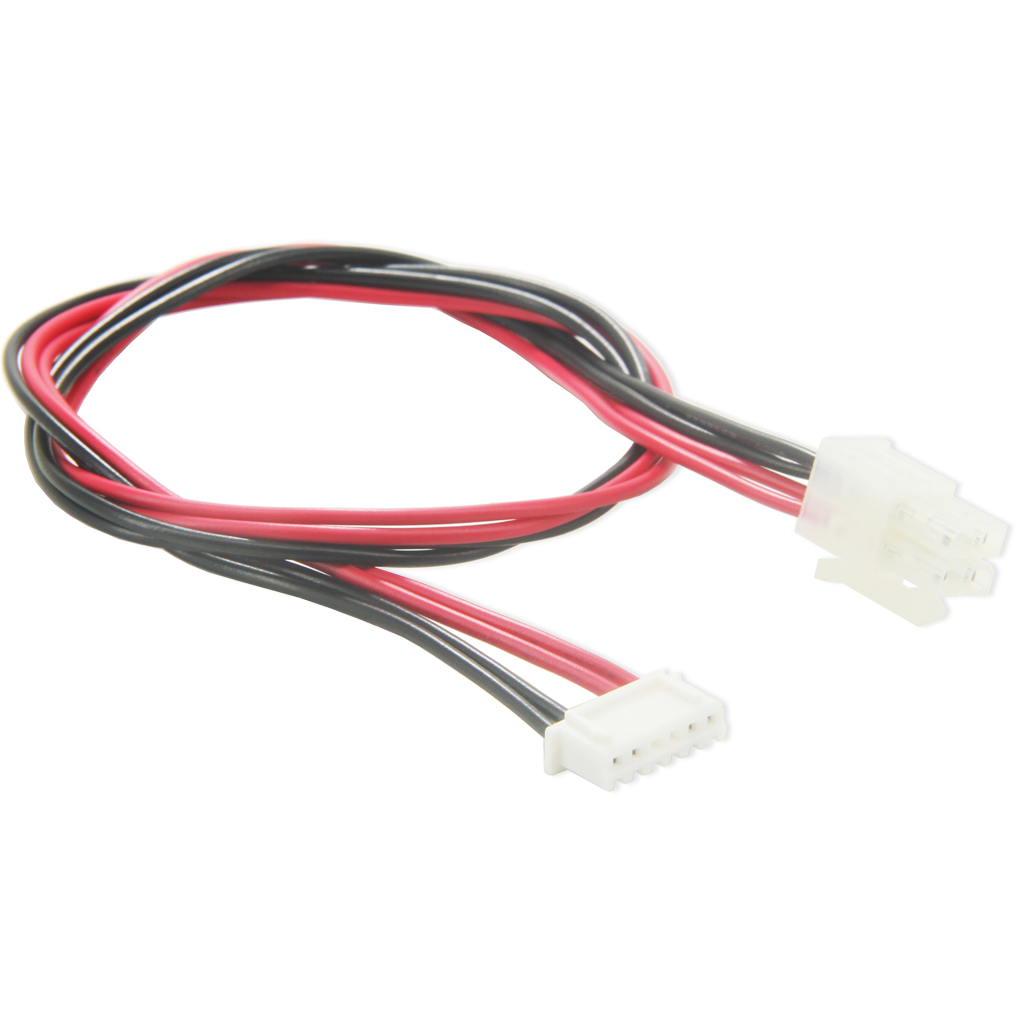
A wire harness is rarely a catalog item. In equipment design, the wire harness is the interconnection layer that carries power and signals between PCBs, sensors, control modules, display units, motors, and other functional components. For engineering and purchasing teams, the practical question is not only what a wire harness costs, but how the harness assembly is specified, manufactured, and verified. This article explains wire harness assembly from a buyer perspective and uses P-Shine Electronics Co., Ltd, a Dongguan-based manufacturer established in 1997, as a reference for evaluating a custom wire harness supplier.
What Is a Wire Harness?
A wire harness is a grouped set of insulated wires or cables assembled to transmit electrical power or signals within a device. The term harness assembly places emphasis on the production process: individual conductors are selected by type and gauge, cut to defined lengths, terminated with connectors or terminal crimps, and arranged in a controlled layout before installation inside the equipment. This is different from buying a single bulk cable because the physical arrangement, connector positions, branch points, and wire identities all affect later assembly and field service.
Wire harness terminology is not always consistent. Buyers may search for wire assembly, cable assembly, wiring loom, pigtail wire, cable kit, or customized wire harness when describing similar products. In many cases, wire assembly and cable assembly are used as near-synonyms. A wiring loom often describes a bundle of wires that is tied or sleeved together, while a pigtail wire usually refers to an unterminated or partially terminated lead. The practical need is the same: the buyer must define connector systems, wire specifications, routing constraints, and environmental conditions clearly enough for the manufacturer to build the exact wiring structure required.
For most OEM projects, the starting point is not a model number. It is a drawing or a detailed parts description that states which connectors, wire types, colors, gauges, and lengths are required.
Why Harness Assembly Matters in Equipment Reliability
Interconnection failures can stop a machine even when every electronic component is functional. A terminal-crimped wire harness with poor contact quality, an incorrect wire gauge, or damaged insulation can create intermittent signal loss, overheating, or short circuits. In applications such as medical equipment wire harnesses, industrial control wire harnesses, and equipment internal wire harnesses, these failures are not merely inconvenient; they can create safety risks or costly downtime.
Harness assembly is also an opportunity to simplify manufacturing. A well-designed wire harness turns many individual wiring operations into one connected component that a production operator can install in a repeatable way. This is why many equipment makers choose custom made wire harnesses rather than assembling loose wires on the production floor.
Documented Applications for Wire Harness Assembly
P-Shine Electronics describes its wire harness as intended for household appliances, industrial control, medical equipment, robotics, and equipment internal use. The documented project types for this product category include building temperature control equipment, small appliances, circuit control valve equipment, household appliances, lamps, medical equipment, fish radar trackers, stage equipment, photographic equipment, automation equipment, robots, solar energy equipment, wind power generation, power transmission equipment, and creative electronic products.
These applications share several characteristics. Most involve internal device connection or connection between equipment modules. Many operate in indoor and outdoor environments, and in both waterproof and non-waterproof configurations. Some equipment runs continuously, so the wiring system must keep working under sustained load. Some devices need a shielded wire harness to protect signals from electromagnetic interference. Others require a waterproof wire harness, a high temperature resistant wire harness, or a low-smoke, halogen-free material option. Buyers may also request a high current power wire harness for applications where thicker conductors and robust terminals are needed.
P-Shine Electronics as a Custom Wire Harness Reference
P-Shine Electronics Co., Ltd is a manufacturer specializing in wire harnesses and cable assemblies. The company is headquartered in Dongguan City, Guangdong, China, and is close to Shenzhen and Guangzhou ports. Its official website is www.pshinecable.com. The broader P-Shine group operates seven independent factories, including facilities for wire harness, USB cable, cable assembly, wire and cable, insulation materials, connector, and copper wire processing. This vertical structure is relevant to buyers because it means the manufacturer works with connector, insulation, and copper processing capabilities under one group.
At the headquarters factory, the manufacturing facility covers 5,000 square meters and employs approximately 300 staff. The company has an R&D team of 20 engineers. Annual production capacity reaches 2,000,000 pieces. Export business accounts for 60% of total sales, with Europe, North America, and the Middle East listed as major markets. The company was founded in 1997, giving it over 25 years of cable manufacturing experience.
The wire harness product itself is custom-made and has no fixed model number. It is classified by connector series, including Molex wire harnesses, JST wire harnesses, TE wire harnesses, Phoenix wire harnesses, Samtec wire harnesses, Hirose wire harnesses, and Amphenol wire harnesses. According to the company profile, all products are manufactured based on ISO 9001 and IATF 16949 quality requirements, meet RoHS and REACH environmental standards, and the product range carries certifications that include UL, CSA, CE, PSE, VDE, KC, SAA, BIS, and CCC as applicable in different markets.
These facts do not by themselves prove that a supplier will make a good cable for a given device. But they provide a first screening layer for buyers who want to know whether a manufacturer has the scale, engineering staff, and factory structure needed for custom harness assembly work.
Factory-Level Facts Used for Supplier Screening
| Published Fact | Why It Is Useful to a Buyer |
|---|---|
| Founded in 1997 | Indicates long-term experience in cable and wire harness manufacturing |
| 7 independent factories | Suggests vertical integration across wire harness, connector, insulation, USB, and copper wire processing |
| 5,000 square meter manufacturing facility | Provides a measure of physical production capacity |
| 20 engineers in R&D | Supports drawing review, customization support, and engineering communication |
| Annual production capacity of 2,000,000 pieces | Helps buyers assess whether the supplier can handle repeat volume |
| 60% export sales to EU, USA, and Middle East | Indicates experience with international compliance requirements |
| ISO 9001, IATF 16949, RoHS, REACH, and product certifications | Provides a baseline for quality system and materials compliance review |
Key Specification Inputs for Custom Harness Assembly
Because the wire harness is custom-made, the quality of the completed product depends heavily on the information supplied by the buyer. P-Shine Electronics states that buyers can send design drawings directly, or describe the connector brand, connector part number, wire type, wire gauge, color, and wire definition. A useful drawing will normally specify what each connector and wire must do, rather than describing only the outer bundle.
Drawing Details That Affect Manufacturing
- Each connector should be identified by brand and part number.
- When the same connector appears in adjacent positions, different wire colors can help assembly operators avoid mistakes.
- Each wire in each loop should have a distinct color or clear marking on the drawing.
- The wire type, such as UL1007, should be stated for every conductor.
- The wire gauge, such as 28AWG, should be stated for every conductor.
- The length of each loop should be indicated.
- The functional definition of each pin, such as Power+ or GND, should be listed.
- If a loop has a branch in the middle, the branch length should be defined.
- The minimum distance from a branch to the connector should be respected; in the wiring harness drawing guidance provided by P-Shine, this distance is 30 mm.
- When heat shrink tubing is needed, branch positions should be arranged so that the tubing can be applied correctly.
The same guidance explains that different loops can share the same color when wires perform the same function, while Power+ and GND circuits from different loops can be connected to the same Power+ or GND pin of the main connector when the circuit design allows it. These small details may seem minor, but they determine whether a made-to-order wire harness can be assembled efficiently and reproduced consistently.
Material and Environment Options
Material choice is one of the most visible differences between a simple wire assembly and an engineered harness assembly. The material options published for this wire harness are PVC, XL-PE, TPE, TPU, and TEFLON. These materials have different properties in terms of flexibility, temperature resistance, mechanical protection, and chemical resistance. A high-temperature-resistant wire harness may rely on materials such as XL-PE or TEFLON-type insulation, while a harness intended for a household appliance may use PVC for cost-effective insulation.
P-Shine lists several optional or project-specific requirements processed on customer request. These include complex custom wiring harnesses, high-temperature resistance, shielding, flame-retardant options, low smoke and halogen-free materials, waterproofing, and customer drawing-based processing. Buyers should treat these as specification options that must be confirmed with the manufacturer for each project, not as properties that apply by default.
How Connectors Are Sourced and Why That Is a Risk Issue
Connector authenticity is an important procurement risk in custom wire harness manufacturing. P-Shine Electronics states that it sources connectors strictly according to the brand and part number specified in the customer drawing, and that it typically purchases from platform such as DigiKey or Mouser to confirm that the connectors are original.
Original connectors are not always the lowest-cost choice. According to P-Shine guidance, the price of an original brand connector can sometimes be about 10 times the price of a non-original alternative connector. This large price gap is why some buyers ask whether replacement connectors are acceptable. P-Shine does not make that decision alone. Non-original replacement connectors are offered only if the customer requests this option, and only after P-Shine confirms that the alternative is a mature product with reliable quality. The customer then receives samples, performs testing and verification, and gives formal approval before non-original connectors can be used. If a customer is not price-sensitive, the default is to use original connectors.
This practice creates a clear boundary: a buyer who wants lower connector cost can request alternative parts, but the responsibility for performance approval remains with the customer.
Market Context for Wire Harness Manufacturing
Market data helps explain why wire harness assembly has become a specialized manufacturing segment rather than a simple wire-cutting activity. Precedence Research estimated the global wire harness market at USD 99.58 billion in 2024. The same research source reports that Asia Pacific held a 46% share of the global market in 2024, supported by electronics and equipment manufacturing in China, India, and Japan. In the end-user structure, the automotive segment is described as dominant, with electric vehicles requiring increasingly complex harness architectures.
For suppliers focused on industrial, medical, appliance, and robotics harnesses, these market conditions point in two directions. First, demand is broad enough to support factories with dedicated cable and connector processing lines. Second, the variety of custom requirements is so large that a supplier needs engineering support and quality systems to manage them.
Buyers can also use IPC/WHMA-A-620, the primary industry-consensus document for requirements and acceptance of cable and wire harness assemblies, as a common reference. This standard defines three classes of product acceptance and gives OEMs a language for discussing workmanship, contamination, crimping, and assembly quality. It is an example of how harness assembly moved from informal practice to a verifiable process discipline.
Comparison With In-House or Generic Wiring Approaches
There is more than one way to create a wire connection, and a custom harness manufacturer is not always the right answer. The table below shows general trade-offs between common wiring approaches. The right choice depends on production volume, reliability requirements, engineering capacity, and product lifetime expectations.
| Approach | Typical Strengths | Typical Limits |
|---|---|---|
| Using stock single wires or generic cable kits | Low initial effort, readily available, easy for small repairs or fast experiments | Limited wire management, no optimized connector layout, no repeatable routing for volume production |
| In-house harness assembly | Full internal control, useful when volumes are low and the wiring system is simple | Requires crimping tools, skilled labor, testing procedures, and storage space; quality may vary if volume changes |
| Custom wire harness manufacturer | Can apply connector sourcing, terminal crimping, cable testing, and process documentation for larger or repeated quantities | Requires complete drawings or detailed specifications, sample verification, and longer lead time for new designs |
Realistic Boundaries of Custom Made Wire Harnesses
A custom-made wire harness is not a universal product. It works best when the application needs a defined set of wires, connectors, and routing requirements. A project that only requires two loose wires without connectors may not benefit from a full custom harness manufacturing process. Likewise, a harness without specified waterproof connectors or sealing should not be assumed to survive immersion or high-pressure washdown simply because it is described as a wire harness. Waterproof behavior must be designed into the connector system and cable materials.
Another boundary concerns the use of drawings. If the customer cannot provide connector part numbers, wire type, wire gauge, color, or length information, the manufacturer can only offer generic assumptions. This can delay sampling and may produce a harness that fits electrically but not mechanically. Branch positions are especially important because a branch placed too close to a connector can make installation difficult or put stress on the joint. P-Shine drawings guidance sets 30 mm as the minimum distance from a branch to the connector, which is a useful planning value for engineers.
Future Outlook for Wire Harness Assembly
The future of custom wire harness assembly is likely to involve more rigorous documentation and more explicit acceptance criteria. As equipment makers use global supply chains, a manufacturer that can support IPC/WHMA-A-620-type workmanship expectations, provide connector traceability, and maintain certified quality systems will be easier to evaluate than one that offers only loose descriptions of product quality. Vertical integration may also become more relevant because connector supply, insulation processing, and copper conductor processing are all connected to the final reliability of the harness.
At the same time, the product itself will remain highly customized. Medical equipment wire harnesses, industrial control wire harnesses, household appliance wire harnesses, and robotics wire harnesses have different electrical, mechanical, and environmental demands. The buyer who makes these demands visible early in the drawing stage reduces the risk of sampling delays and production mistakes.
Frequently Asked Questions
Do you use original connectors?
P-Shine Electronics sources connectors strictly according to the brand and part number specified in the customer drawing. The company typically purchases from platforms such as DigiKey or Mouser to ensure that the connectors are genuine and original. Original connectors are the default option because of their reliability and compatibility. A customer who wants to evaluate non-original connectors can make that request, but the default sourcing practice begins with the specified brand and part number.
In what circumstances would you use non-original replacement connectors?
Non-original replacement connectors are considered only at the customer's request. P-Shine first checks whether the alternative connector is a mature product with reliable quality. If the alternative appears acceptable, the company offers samples to the customer for testing, verification, and approval. Only after the customer approves the non-original connector can it be used for production. When the customer is not concerned about price, original brand connectors are used by default. This approach gives the buyer control over the decision while allowing cost reduction where appropriate.
What should be considered when designing wiring harness drawings?
A wire harness drawing should be clear enough for the assembler to identify each connector and wire without guesswork. The drawing should specify the connector brand and part number, wire type such as UL1007, wire gauge such as 28AWG, wire colors, wire definitions, and the length of each loop. When the same connector is used in adjacent locations, different colors can prevent assembly errors. Each wire in each loop should use a distinct color, and wires with the same function in different loops can use the same color. Branch lengths should be marked separately, and the minimum distance from a branch to the connector should be 30 mm. If heat shrink tubing is needed, the branch positions should allow room for tubing installation. The design process should move from function planning to circuit definition, connector selection, drawing completion, sample production, testing, and then mass production.
This article is intended as an industry reference for buyers evaluating wire harness manufacturers. Product names, certification names, and company facts are cited from the published P-Shine Electronics profile and product content.
¿Tiene preguntas o necesita más detalles?
Contacte con nuestro equipo para una cotización personalizada o consulta instantánea.
Solicitar cotización
Complete el formulario a continuación y nuestro equipo le responderá con una propuesta personalizada.
Chat directo de WhatsApp
¿Prefiere chatear en tiempo real? Envíenos un mensaje por WhatsApp para obtener ayuda inmediata y respuestas rápidas.
- Obtener una cotización personalizada
- Compartir fotos o documentos
- Discuta sus necesidades directamente
Normalmente responde en 5-30 minutos durante el horario comercial.