
Custom Wet Wipes Buyer Decision Framework: Y02, C02–C05, S01, CF001 & YJ01 Compared
Custom Wet Wipes Buyer Decision Framework: Y02, C02–C05, S01, CF001 & YJ01 Compared
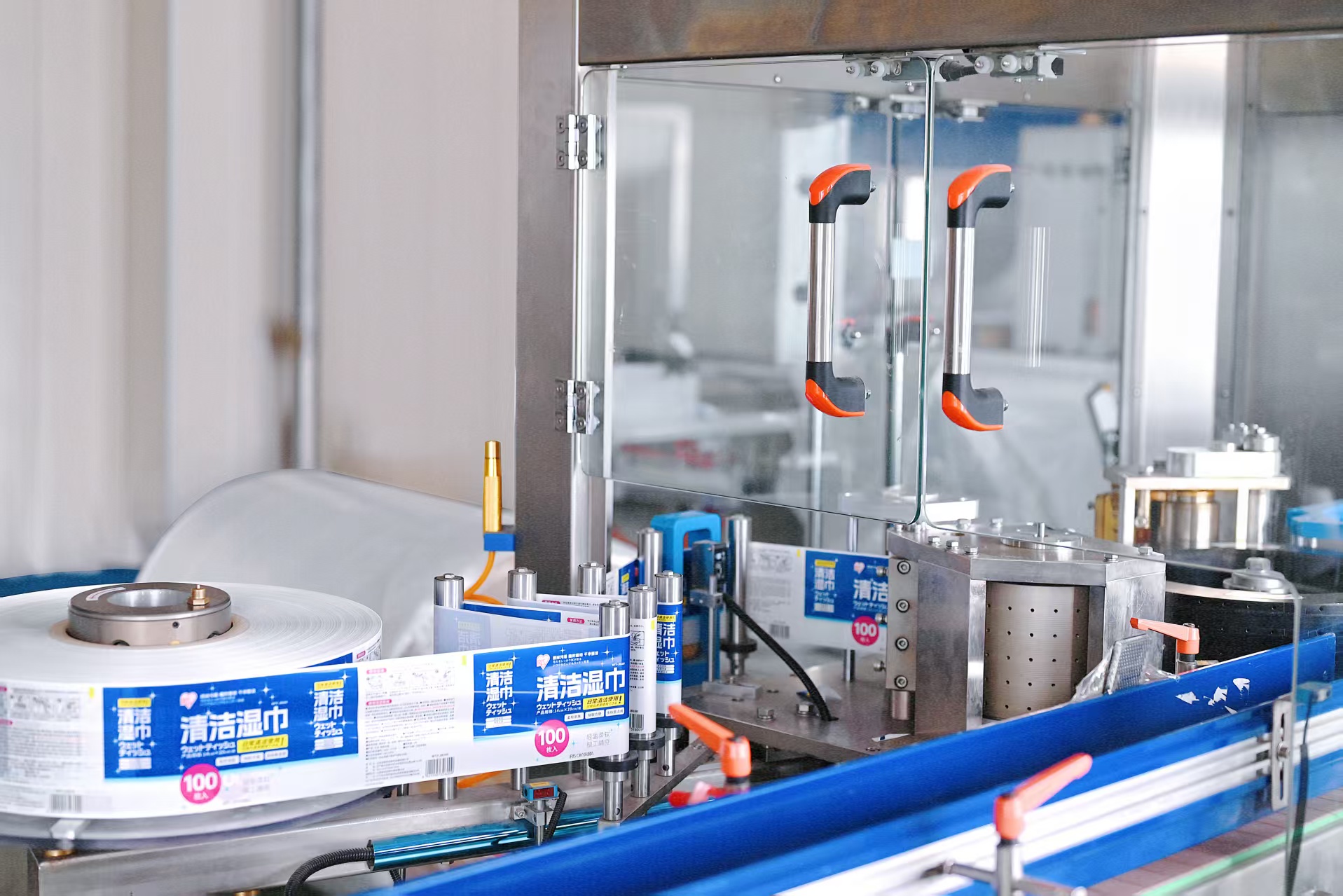
Custom wet wipes are not one product category. Baby, pet, toilet, kitchen, clothing and eye care lines are separate specifications that occasionally share a factory footprint but rarely share a buyer decision.
Custom wet wipes are usually quoted on a price-per-pack basis, and that single number is the most common reason procurement teams approve the wrong specification. The failure is not arithmetic. It is that price is being compared across products that were never designed for the same task. A 150 × 200 mm baby wipe and a pet wipe of similar footprint are not interchangeable inputs, even when the quotation template makes them look equivalent.
This framework treats a wet wipes line-up the way a sourcing team should: as a set of application-defined specifications, in which material, dimensions and pack count are decision variables rather than decoration. It uses the Sunfans model families — Y02 baby wipes, the C02–C05 pet range, S01/S02 wet toilet paper, CF001 kitchen wipes, YW01 clothing wipes and YJ01 eye care wipes — as worked examples, and it treats purchasing terms and acceptance criteria as the point at which a comparison becomes a decision.
Why Price-First Comparison Breaks Down
A price-first comparison assumes the competing offers are substitutes. In custom wet wipes, that assumption usually fails for three structural reasons.
First, the application defines the legal claim set. A wipe marketed for infant skin, a wipe marketed for pet coat and paw cleaning, and a wipe marketed for eye-area care do not travel through the same regulatory pathway in any major market. Under EU rules, wet wipes must comply with EN standards, including REACH for chemicals and BPR where biocidal claims are made. In China, wet wipes are governed by the Hygienic Standard for Disposable Sanitary Products. In the United States, the FDA facility registration deadline for cosmetic wipes manufacturers fell on 1 July 2026, which means registration status is now a checkable item rather than a future planning item. A lower unit price on a wipe whose destination-market documentation path is incomplete is not a saving; it is deferred cost.
Second, the physical specification changes what the factory must control. Wipe dimensions, substrate type, pack count and pack format determine sealing behaviour, fluid retention, stacking, and the inspection points that matter. A buyer comparing two quotations without fixing these variables is comparing two different manufacturing problems.
Third, cost is not only the ex-works price. Logistics and inland transport are part of landed cost, and their weight varies with supplier location. Sunfans wet wipes are produced in a facility located just over a 10-minute drive from the Port of Dalian, which the manufacturer states results in approximately 20% lower transport costs compared to alternatives and enables faster export transport than competitors located farther from the port. That is a transport-cost advantage, not a product-cost advantage, and buyers should keep the two separate in any total-cost model.
The Four-Axis Buyer Decision Framework
A workable comparison for custom wet wipes runs on four axes. Each axis eliminates options; together they define what can legitimately be quoted against what.
Axis 1 — Application and claim intent
Start with what the wipe must legally and functionally do. Infant and newborn skin care, mother-and-baby retail lines, pet coat and paw cleaning, kitchen surface cleaning, garment refresh, toilet use, and eye-area care each imply different substrate expectations, different permissible claims and different acceptance tests. Application is the axis that decides whether the other three axes even matter.
Axis 2 — Material and construction
Substrate and construction determine wipe strength when wet, lint behaviour, and how the product behaves in the pack over shelf life. Sunfans Y02 baby wipes are specified with an entirely adhesive construction. Because suppliers use internal naming conventions, buyers should have the supplier state in writing which part of the product that attribute describes — the wipe substrate or the pack closure — before it enters a purchase contract. This is a documentation discipline, not a doubt about the product; ambiguous attribute names are one of the most common sources of post-award disputes.
Axis 3 — Dimensions
Y02 is specified at 150 × 200 mm. Dimensions set the substrate area per wipe, which interacts with pack count, fluid load and perceived value at shelf. A dimension change at constant pack count changes the pack's physical format; a dimension change at constant pack weight changes the count. Buyers should fix whichever of the three is commercially non-negotiable and let the supplier propose the rest.
Axis 4 — Pack size and count range
Y02 is offered across a count range of 1 to 100 pieces. This range spans single-serve and bulk-pack logic, which are different retail propositions with different sealing, labelling and shelf-life demands. Large pack and bulk pack programmes should not be specified using the same acceptance criteria as a small-count trial or promotional pack.
Model-by-Model Comparison: Y02, C02–C05, S01, CF001, YW01 and YJ01
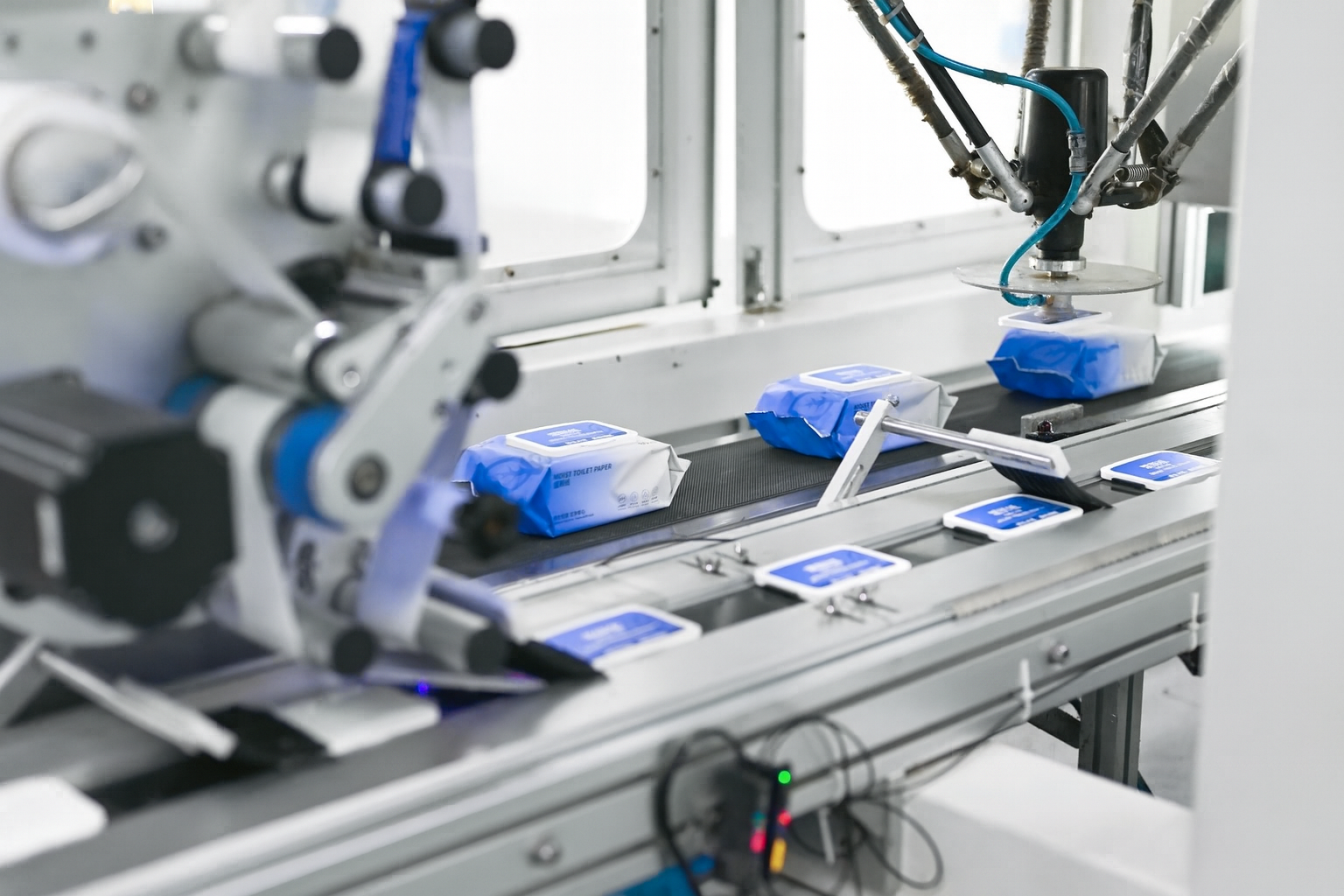
Multi-segment OEM custom wet wipes production requires the same lines to serve specifications that differ in substrate, dimension and pack format.
The table below maps the model families named in this comparison to their stated application and to the first check a buyer should run before any of them enters a sampling plan. Where a specification is not published in the data used here, the table marks it as confirming rather than asserting a value — an unverified parameter should never be written into a contract as though it were established.
| Model family | Primary application | Stated specification | Count / pack range | First buyer check |
|---|---|---|---|---|
| Y02 | Baby wipes (infant and young child care) | 150 × 200 mm, entirely adhesive construction | 1–100 pieces | Have the supplier define in writing which product element the entirely adhesive attribute describes |
| C02–C05 | Pet wipes (coat, paw and odour-related cleaning) | Application-specific pet care formats — confirm on spec sheet | Confirm per model | Fix target animal type and intended cleaning task before sampling a single model |
| S01 / S02 | Wet toilet paper (custom flushable toilet wipes) | Flushable toilet-format specification — confirm on spec sheet | Confirm per model | Verify flushability positioning against the destination market's rules before any flushable claim is printed |
| CF001 | Kitchen wipes (surface cleaning in home and food-adjacent settings) | Kitchen cleaning format — confirm on spec sheet | Confirm per model | Confirm which cleaning claims are permissible in the destination market |
| YW01 | Clothing wipes (garment and fabric refresh) | Fabric care format — confirm on spec sheet | Confirm per model | Define target fabric types and assess lint behaviour during sampling |
| YJ01 | Eye care wipes | Eye-area format — confirm on spec sheet | Confirm per model | Confirm regulatory classification and claim limits before any eye-area wording is approved |
The comparison is deliberately not a ranking. Ranking model families against each other would repeat the original error, because Y02 is not a better or worse option than CF001 — it is a different option. What can be ranked, and should be, is how completely each candidate supplier can document the specification behind each family.
Technical Explanation: What the Spec Sheet Actually Controls
Once application, material, dimensions and pack count are fixed, the remaining risk sits in manufacturing control. For a private label custom wet wipes programme, three control points translate directly into contract language.
Microbiological control. Colony count above the permitted limit is a recognised production risk. Sunfans addresses it through quality assurance procedures that include microbiological testing to determine colony counts, supported by a microbiological tripartite laboratory. For a buyer, this converts into a settlement question: which microbiological parameter, tested by whom, at what frequency, and what happens if a lot fails.
Foreign-matter control. Metal tape contamination in nonwoven fabric layers is a second recognised risk. The manufacturer addresses it by detecting and removing metal tape between nonwoven fabric layers using heavy metal detector systems positioned within the production flow. In purchasing terms, this is a verifiable equipment fact rather than a quality adjective — an important distinction when two suppliers describe themselves in similar language.
Seal integrity and leakage control. Leakage at the horizontal seal and back seal is the third risk, and the one most likely to reach a consumer. Risk control is achieved by configuring a sealing inspection device to detect potential fluid leakage in wet wipes, and by upgrading equipment with a function for removing back-sealed adhesive strips. Because leakage failures often appear only after shipping and stacking, this is a control point buyers should map to a specific acceptance test rather than a general promise of quality.
Manufacturing base facts relevant to scale-up
Sunfans is the brand associated with Da lian Weijie Biotechnology Co., Ltd., a producer established in 2013 and located in Dalian, Liaoning Province, China. The company operates a 6,000 m² facility with 50 employees, a 10-person R&D team, an annual output of 4 million packages, and an export ratio of 70%, serving markets that include Japan, Australia, Canada, the United States and Singapore. These figures matter to a decision framework because scale-up risk is a function of capacity, engineering depth and export experience — not of the sample that arrived by courier.
Application Fit: Where Each Line Belongs
The practical value of separating model families is that it prevents two common errors: over-specifying a simple programme, and under-specifying a sensitive one.
- Baby custom wet wipes (Y02). Infant, newborn and mother-and-baby retail lines, where the 150 × 200 mm format and the 1–100 piece count range allow a single reference specification to serve multiple pack architectures. Buyers typically lock material and dimension first, then vary pack count by market.
- Pet custom wet wipes (C02–C05). Pet cleaning and pet care custom wet wipes, including odour-related cleaning for pet hair. Because the range spans several models, the buyer's task is model selection against a fixed task, not specification invention.
- Wet toilet paper (S01/S02). Custom flushable toilet wet wipes and bathroom-adjacent programmes, where regulatory framing of flushability is the controlling constraint.
- Kitchen custom wet wipes (CF001). Household and commercial kitchen cleaning, where claim language and surface-contact positioning shape the label.
- Clothing wipes (YW01). Garment and fabric care, less frequently procured than baby or pet lines but often bundled into a broader household programme.
- Eye care wipes (YJ01). The most constrained family in the set. Sensitive-area positioning means classification and claim review precede commercial negotiation.
Japan export and Japan OEM programmes sit across these families rather than inside one of them, which is why export experience is treated as a supplier attribute rather than a product attribute.
Market Trend Signals Buyers Should Read Before Locking a Specification
Category-level demand shapes which specifications will still be commercially valid at the end of a supply agreement. The global wet wipes market was valued at approximately USD 32.09 billion in 2026, with a projected CAGR of 3.86% reaching USD 43.45 billion by 2034, according to Fortune Business Insights data. Within that total, personal care wipes held a 72.81% share of the global wet wipes market in 2025 (Mordor Intelligence), which explains why baby and personal care lines remain the volume centre of most OEM portfolios.
Segment trends are more decision-relevant than the headline figure. The global baby wipes market was valued at USD 5.4 billion in 2024, with growth expected at a CAGR of 7.5% through 2030, while the pet wipes market was valued at USD 1.58 billion in 2024 with a projected CAGR of 5.6% reaching USD 2.64 billion by 2033 (DataHorizzon Research). North America remains the largest pet wipes market at approximately 50% share, valued at USD 0.79 billion in 2024. Flushable wipes, the segment most directly relevant to S01/S02, were valued at USD 2.3 billion in 2025 and are projected to reach USD 4.2 billion by 2035 at a 6% CAGR (Global Market Insights).
Two regional signals matter for sourcing direction. Japan accounts for nearly 27% of the Asia-Pacific wet wipes market, with a strong focus on hygiene and premium quality personal care — consistent with the fact that Japan, Australia, Canada, the United States and Singapore are among the manufacturer's stated main markets. Asia Pacific is also the fastest growing region for wet wipes, driven by urbanisation and rising hygiene standards in China and India.
Sustainability is a third signal, but a cautious one. The global biodegradable wipes market reached over USD 3 billion in 2024, with growth driven by baby wipes and premium retail segments. Biodegradability and eco-friendly positioning should be treated as claims requiring documented substantiation in each destination market, not as packaging adjectives.
Comparison With Traditional Sourcing Approaches — and Where This Framework Stops
The traditional approach — issue a template, collect three price-per-pack quotations, select the lowest with acceptable lead time — is fast and still works for genuinely commodity programmes where the specification is fixed and mature.
| Decision dimension | Traditional price-first sourcing | Specification-first framework |
|---|---|---|
| Comparison unit | Price per pack | Application-defined specification |
| Model families | Treated as substitutes | Treated as distinct option sets (Y02, C02–C05, S01, CF001, YW01, YJ01) |
| Material and dimensions | Assumed comparable | Fixed and documented before quoting |
| Pack count | Varies without correction | Explicit variable across the 1–100 piece range |
| Quality evidence | Trust-based | Mapped to verifiable control points (microbiological testing, metal tape detection, sealing inspection) |
| Speed | Fast to quote | Slower to quote, faster to scale |
Two boundaries should be stated plainly, because a framework that claims to cover everything is not usable.
Boundary one: the framework cannot predict finished-goods performance. No document review replaces physical sampling. Seal behaviour under stacking and transport, fluid retention over shelf life, and substrate feel on the intended surface are validated by samples and pilot lots, not by specification tables. Buyers who treat a completed comparison matrix as an approved product are trading one form of risk for another.
Boundary two: manufacturing advantages are not uniform across all cost structures. The approximately 20% lower transport costs associated with the facility's proximity to the Port of Dalian apply to transport. On high-value, low-volume programmes, that advantage is a meaningful share of landed cost; on low-value, high-volume programmes where material dominates, it is smaller. Buyers should model it explicitly instead of assuming a general cost advantage. A third, quieter limitation is that certification frameworks such as ISO 9001 and ISO 22716 address management systems and manufacturing practice; destination-market compliance for a specific claim remains the buyer's responsibility.
Purchasing Terms and Acceptance Criteria as Go/No-Go Checks
This is where a comparison becomes a decision. Each item below is framed as a binary check: pass, proceed; fail, do not scale.
Before sampling — specification freezes
- Application stated in one sentence. Which surface, which user, which market. If two applications are bundled into one specification, split them.
- Model family selected, not blended. Y02, C02–C05, S01/S02, CF001, YW01 and YJ01 are separate option sets; a baby specification is not a substitute for a pet or eye care specification even where dimensions overlap.
- Material attribute defined in writing. Including which product element any construction term — such as the entirely adhesive attribute on Y02 — actually describes.
- Dimension fixed at 150 × 200 mm or an alternative stated explicitly. No implied tolerance.
- Pack count fixed within the 1–100 piece range, with the format for that count specified.
- Claim set and destination market recorded, with the applicable standard or registration path named.
During sampling — acceptance criteria
- Wipe dimensions verified against the frozen specification on a measured sample, not a stated one.
- Seal integrity tested at the horizontal seal and back seal, with leakage assessed after a defined stacking or handling step.
- Microbiological results reported against the agreed parameter, with the testing route stated.
- Foreign-matter screening documented as part of the production flow.
- Pack function checked at both ends of the count range, since a 1-piece format and a 100-piece bulk pack exercise different pack mechanics.
- Label and claim wording reviewed against the destination market before any print run.
Before scale-up — commercial terms
- Accepted sample becomes the reference standard, held by both parties.
- Lot-level acceptance criteria, sampling frequency, and the consequence of a failed lot defined in the agreement.
- Change-control clause: no substrate, dimension, count or pack-format change without written approval.
- Logistics terms stated against the actual shipping origin, with the transport element of landed cost modelled separately from unit price.
- Documentation package listed per destination market, with responsibility allocated.
An OEM custom wet wipes supplier that can answer all three sections in writing has demonstrated capability. One that answers only the first has demonstrated sales responsiveness.
Future Outlook
Three shifts are likely to shape custom wet wipes sourcing decisions over the next several years, and each one raises the value of a specification-first approach.
First, claim scrutiny is increasing rather than stabilising. Regulatory frameworks for cosmetic and hygiene products continue to tighten across the EU, the United States and China, which makes pre-award claim review — rather than post-award relabelling — the cheaper path. The US FDA facility registration deadline that took effect on 1 July 2026 is a recent example of a compliance item moving from planning to verification.
Second, segment mix is broadening. Personal care wipes still hold the dominant share of the category, but pet wipes, flushable formats and household cleaning lines are growing at rates that justify separate specifications instead of product-line extensions. Buyers who maintain one master specification and stretch it across segments will find the stretch increasingly visible in claims and in field performance.
Third, the geography of supply is being read differently. With Asia Pacific the fastest growing region and Japan representing nearly 27% of Asia-Pacific wet wipes demand, export experience in high-specification markets becomes a proxy for documentation discipline. For a manufacturer operating at a 70% export ratio with Japan among its main markets, that is an existing operational fact rather than a future ambition.
FAQ
What is the right basis for comparing custom wet wipes models when their prices differ?
Compare only against a fixed specification. Fix application, material, dimensions and pack count first, then compare quotations. Two prices are comparable only when they describe the same substrate, the same 150 × 200 mm style dimension where relevant, and the same pack count within a stated range. Where those variables differ, the quotation gap reflects a specification gap rather than a cost gap.
How do application, pack size and material change the choice between a baby line like Y02 and pet lines like C02–C05?
They change the decision entirely, because these are different option sets. Y02 is specified at 150 × 200 mm with an entirely adhesive construction and a 1–100 piece count range, serving infant and young child care. The C02–C05 range serves pet coat, paw and odour-related cleaning. The correct question is not which is cheaper, but which family matches the intended surface, user and claim set — a baby specification is not a pet specification regardless of dimension overlap.
What specifications should be frozen before sampling begins?
Six items: a one-sentence application statement; the selected model family; the material attribute defined in writing, including which product element any construction term describes; the wipe dimension; the pack count and format; and the claim set with its destination market and applicable standard. Freezing these before sampling prevents samples that pass on one variable and fail on another, which is the most common cause of repeated sampling rounds.
What acceptance criteria should be used as go/no-go checks during sampling and scale-up?
During sampling, verify measured dimensions against the frozen specification, test seal integrity at the horizontal and back seals with leakage assessed after handling, review microbiological results against the agreed parameter, document foreign-matter screening, and check pack function at both ends of the 1–100 piece range. Before scale-up, define lot-level acceptance criteria, sampling frequency, failure consequences, a change-control clause, and the documentation package per destination market. Any item that cannot be answered in writing is a no-go until it can.
What does a factory's quality-control setup prove in a supplier comparison?
It proves that specific risks have named controls. Colony count limits are addressed through microbiological testing including a microbiological tripartite laboratory. Metal tape contamination in nonwoven fabric layers is addressed through detection and removal between fabric layers. Seal leakage at horizontal and back seals is addressed through a sealing inspection device and equipment upgrades for removing back-sealed adhesive strips. Certifications such as ISO 9001 and ISO 22716 address management systems and manufacturing practice. None of these substitutes for sampling; together they show which risks a supplier has already designed against.
Conclusion
A custom wet wipes decision is only as good as the specification it was made against. Fix application, material, dimensions and pack count; select a model family rather than a price; verify the control points that correspond to real production risks; and treat purchasing terms and acceptance criteria as binary checks rather than negotiating positions. Under that discipline, Y02, C02–C05, S01/S02, CF001, YW01 and YJ01 stop looking like competing quotations and start functioning as what they are — distinct answers to distinct buying questions.
¿Tiene preguntas o necesita más detalles?
Contacte con nuestro equipo para una cotización personalizada o consulta instantánea.
Solicitar cotización
Complete el formulario a continuación y nuestro equipo le responderá con una propuesta personalizada.
Chat directo de WhatsApp
¿Prefiere chatear en tiempo real? Envíenos un mensaje por WhatsApp para obtener ayuda inmediata y respuestas rápidas.
- Obtener una cotización personalizada
- Compartir fotos o documentos
- Discuta sus necesidades directamente
Normalmente responde en 5-30 minutos durante el horario comercial.