
Custom Transformer Sourcing: An Apex Power Systems Review
Industry Reference | Power Transformers & Substation Equipment
Custom Transformer Sourcing: An Apex Power Systems Review
Apex Power Systems (Nanjing) Co., Ltd. is an independent trading and supply partner for power transformers and substation equipment, not a manufacturer. This review examines the capability behind that model, the product range it can deliver, the certifications that govern it, and the boundaries a buyer should test before awarding a contract.
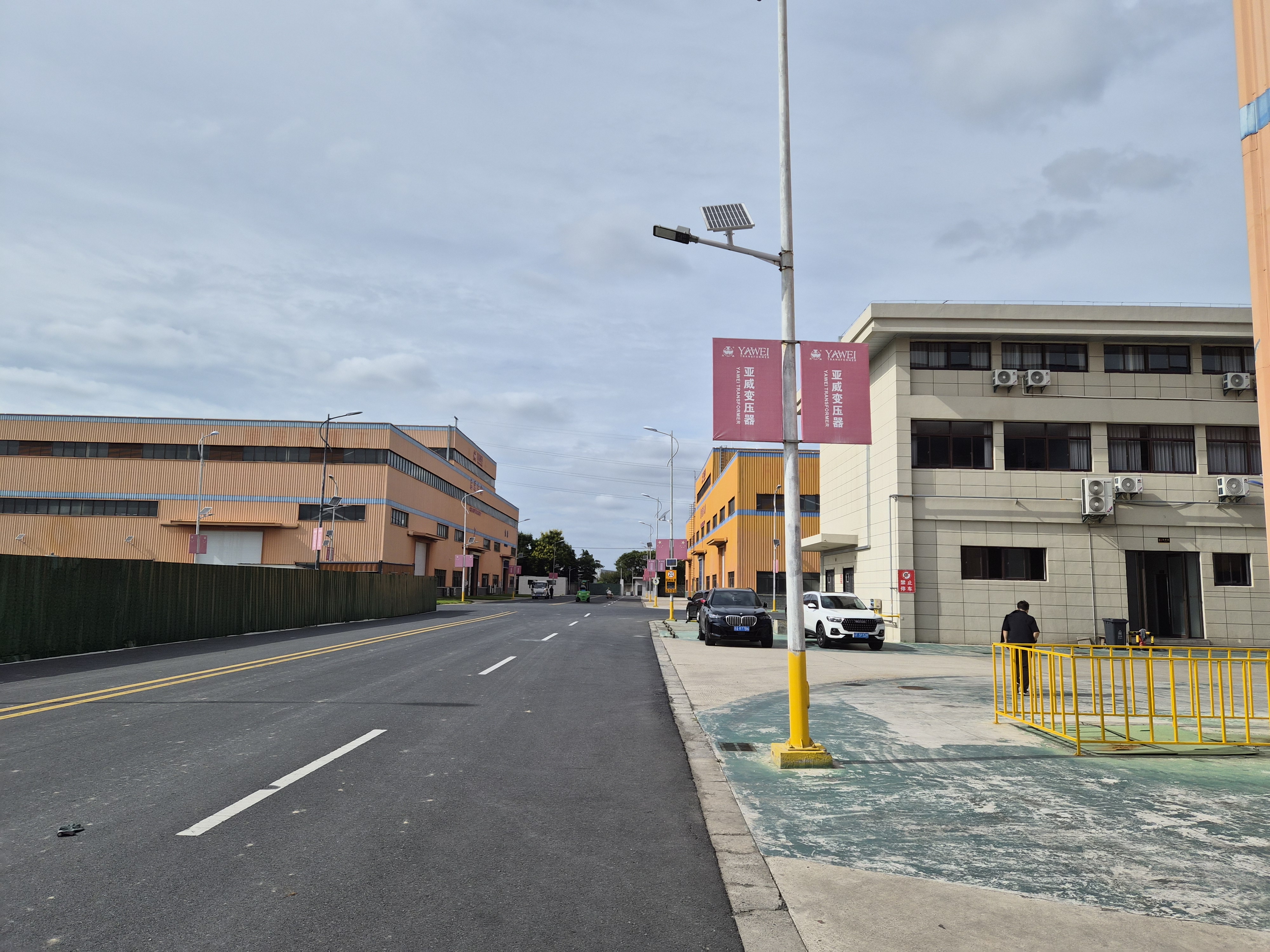
Why custom transformer procurement is now a supply-chain problem
A custom transformer is defined less by its nameplate than by the constraints wrapped around it. On a solar or energy-storage project the low-voltage winding may have to span 0.4-1.14 kV so that inverters from different manufacturers can be matched; on a coastal or desert site the unit must operate from -40 degrees C to +50 degrees C with humidity, dust and salt spray present; on a utility project the impedance may be specified anywhere between 6.0% and 14.0% to suit the system short-circuit capacity. None of those inputs can be inferred by a supplier, and they cannot be corrected after the design is frozen.
At the same time, the compliance frame is fixed before the technical frame. In North America, liquid-filled distribution transformers rated above 750 V must hold a UL Certificate of Compliance in category XPLH7 and, for Canada, certification to CSA C2.1-06 and CSA C227.4, supported by the IEEE C57.12 series; the certificate must be in the manufacturer's legal entity name, and where the UL Mark is applied the UL Follow-Up Services authorisation must be in place. In other markets the equivalent gate is IEC conformity for 10 kV and 35 kV power transformers and box-type substations. A rating that is technically correct but not certified for the destination market is not a deliverable product.
Between those two realities sit six risks that buyers of Chinese transformer equipment consistently under-price: capability risk, where a plant cannot actually build or test the rating ordered; compliance risk, where certificates are expired, held in another entity's name, or do not cover the product family; quality risk, including material substitution, insufficient oil processing and unverified loss figures; schedule risk on large units; commercial risk around payment and warranty enforceability; and documentation risk, where drawings, test reports and operation and maintenance manuals arrive in the wrong format or language.
That is the gap an independent supply partner claims to close. The claim is only worth assessing if the verification work can be described concretely, which is what the rest of this review does.
What Apex Power Systems is, and what it is not
Apex Power Systems (Nanjing) Co., Ltd. is an international trading and supply-partner company for power transformers and substation equipment, established in 2024 and based in Nanjing, Jiangsu Province, China. It is not a manufacturing factory. Its own profile is explicit on this point: it operates as the independent bridge between overseas utility, EPC and industrial customers and a curated network of verified Chinese manufacturers, and the manufacturing, certification and test evidence it presents belongs to its audited manufacturing partners rather than to the trading entity itself.
The reported corporate footprint is deliberately modest: a 404 square metre facility, approximately 15 staff, and a stated research and development capability that includes 110 engineers and technical personnel. Output through the audited manufacturing partner network reaches about 2,500 units a year, roughly 70% of which is exported, with the EU, the USA and the Middle East named as the principal markets. Products supplied through those partners have reached the United States, Canada, Australia, New Zealand, India, Indonesia, Madagascar, Vietnam, Cambodia and Laos, among other markets.
That disclosure is the single most important fact in this review. A company that does not manufacture cannot be evaluated the way a factory is evaluated. Its capability is the audit, the specification review, the quality gate and the delivery management; the production evidence belongs to plants that must be assessed individually and project by project. Buyers should therefore reconcile the company's own headcount with the engineering resources reported across its partner network during due diligence, and should expect the answer to the question of who actually builds a given unit to vary by product family.
Core competitiveness: where the model creates buyer value
1. Independent vendor selection and factory audit
A factory can only sell what it makes. An independent partner can shortlist several plants, comparison-test them against a specification, and recommend the one that fits technically and commercially. Before committing, the audit covers production capability, test laboratory equipment, quality-management certifications, export record and financial standing, so that the buyer receives a verified partner rather than a self-description. For buyers in the Awareness and Research stage, this is the difference between a quotation and a shortlist.
2. Compliance gatekeeping as verification, not collection
Certification work is verification. The stated method is to confirm each certificate with its issuing body and to check the holder's legal entity, so that a document valid for one company or one product family is not presented for another. For North American distribution work this is decisive: a UL Certificate of Compliance confirms evaluation of representative samples, the authority to apply the UL Mark is granted separately under the Follow-Up Services procedure, and the certificate must sit in the manufacturer's legal entity name.
3. A quality gate that is witnessed rather than promised
Quality risk is controlled by requiring witnessed routine and type tests at factory acceptance, covering ratio, winding resistance, no-load and load loss, insulation, temperature rise and lightning impulse, with third-party inspection arranged where required. The manufacturing base behind this supply chain operates a dedicated test laboratory with lightning-impulse, no-load and load-loss, ratio, winding-resistance, temperature-rise and insulation test benches, and reports in-house test capability up to 500 kV, with a 765 kV test hall reported under construction as of August 2026.
4. One accountable point of contact
Design review, production supervision, factory acceptance testing, third-party inspection, packing, freight on stated Incoterms such as FOB Shanghai 2020, documentation and site supervision are managed by one team. Drawings, factory test reports and operating manuals are delivered in the format the buyer's utility or EPC requires, and warranty obligations are written into the contract rather than offered verbally. On overseas projects this also removes the language and specification distance between a buyer's engineering team and the plant.
| Procurement risk | Control applied | What the buyer gains |
|---|---|---|
| Capability | Audit of production and test equipment before ordering | The ordered rating matches proven plant capability |
| Compliance | Certificates verified with the issuing body; holder's legal entity checked | Certification valid for the market and the product family |
| Quality | Witnessed routine and type tests at factory acceptance; third-party inspection | Loss, insulation and temperature-rise figures evidenced, not assumed |
| Commercial | Warranty obligations written into the contract | An enforceable remedy rather than a verbal assurance |
| Documentation | Drawings, test reports and manuals in the required format and language | Submittals accepted by the utility or EPC on first pass |
Product architecture: a range built around project inputs
The commercially significant point is that most projects do not need a single custom unit but a matched set: a step-up transformer, a box substation and a distribution transformer that must share a voltage class, an impedance philosophy and a protection scheme. The following families are supplied through the audited manufacturing network.
| Product family | Model | Key parameters | Typical deployment |
|---|---|---|---|
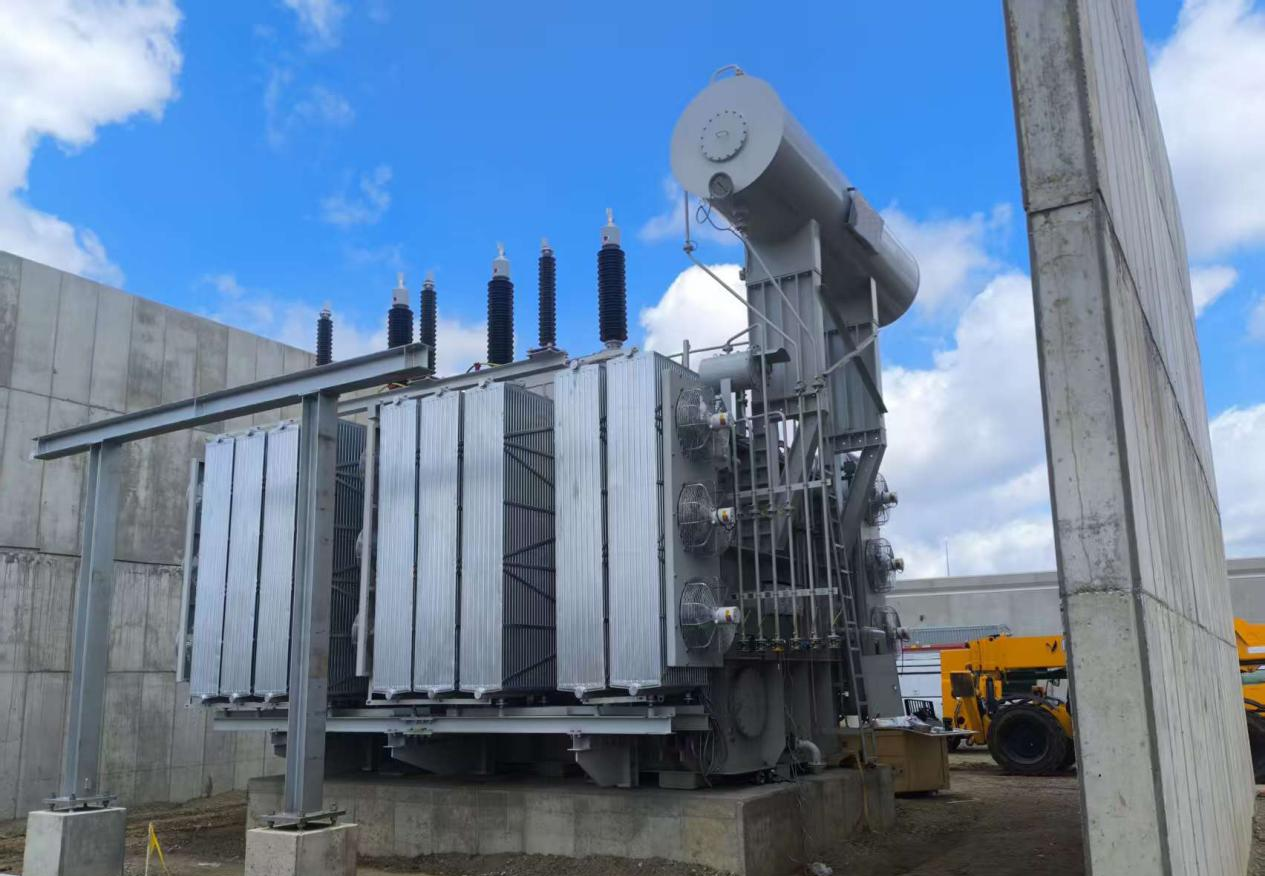
| Power transformer, oil-immersed, on-load regulating | SFZ-250000/345 | 250/250 MVA, 345/34.5 kV, 60 Hz, Dyn1, ONAN 185 MVA / ONAF1 225 MVA / ODAF2 250 MVA | Grid transmission, large data centre and AI computing sites |
| Oil-immersed distribution transformer | S13 / S14 / S15 | 30-3,150 kVA at 10 kV; 3,150-31,500 kVA at 35 kV | Urban and rural distribution upgrades, industrial auxiliary power |
| Epoxy resin cast dry-type transformer | SCB12-SCB18 | 30-2,500 kVA at 10 kV; 800-25,000 kVA at 35 kV; F/H class, AN or AF | Indoor electrical rooms, data centres, commercial buildings |
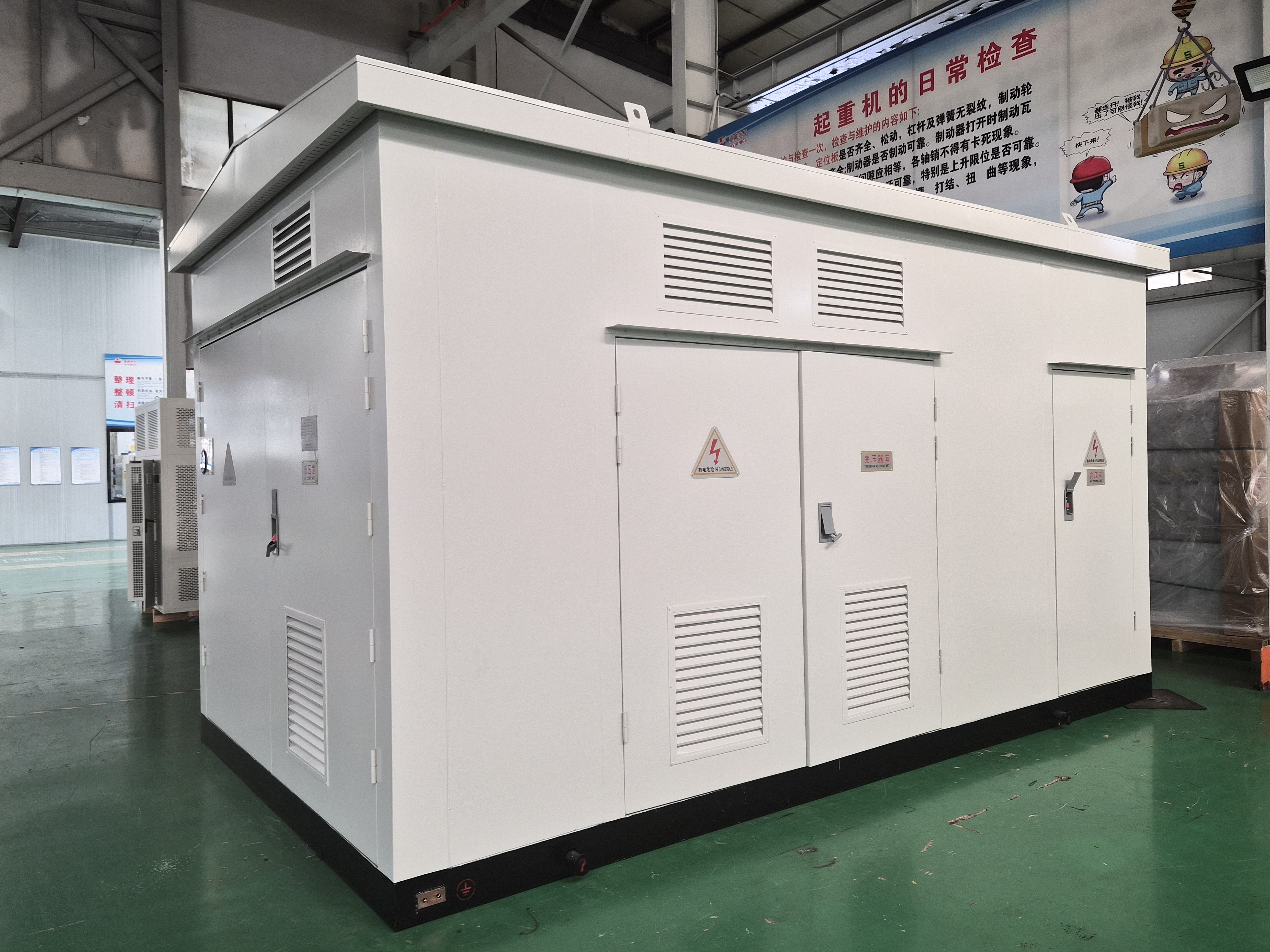
| Prefabricated cabin modular substation | YBM / ZGS11 / ZGS13 | 10/35 kV, 500-50,000 kVA, IP54/IP55, -40 to +50 degrees C | PV, wind and storage step-up substations, remote sites |
| New energy transformer | SC10 / SZ18 / SZ20 | 500-12,500 kVA at 10 kV; 1,000-12,500 kVA at 35 kV; LV 0.4-1.14 kV | PV plants, onshore and offshore wind, energy storage |
| Amorphous alloy energy-saving transformer | S(B)H15(21-25)-M | 30-2,500 kVA oil-immersed; 500-2,500 kVA dry-type | Loss-reduction programmes, green buildings |
| Mining explosion-proof dry-type transformer | KBSG / KBSGZY | 50-6,300 kVA, Exd I, H class insulation, IP54 or higher | Underground coal mines, tunnels, hazardous areas |
| Single-phase pad-mounted and pole-mounted transformers | ZGD-H / ZGD-Z; D-M | 15-250 kVA pad-mounted; 5-167 kVA pole-mounted | North American residential and rural distribution |
| Three-phase pad-mounted transformer | ZGS-H / ZGS-Z | 75-2,500 kVA, HV 4.16-34.5 kV, DOE 2016 / CSA 2023 efficiency | North American commercial, industrial and utility distribution |
Technical explanation: three parameters that decide whether a custom unit performs
Cooling class
The cooling class is the four-letter code that tells a buyer how the transformer is cooled and, as a consequence, how much load it may carry. The letters combine the internal cooling medium and its circulation with the external medium and its circulation: O for oil, A for air, N for natural, F for forced. ONAN therefore means oil-immersed with natural oil circulation and natural air circulation, while ONAF adds fans that force air across the radiators and raises the permissible loading. This is why the same transformer often carries two or three ratings on one nameplate. The 250 MVA / 345 kV unit in this range is rated 185 MVA under ONAN, 225 MVA under ONAF1 and 250 MVA under ODAF2. A buyer who specifies only the top figure without confirming the cooling stage and the site ambient temperature may not receive the capacity the project assumes.
Vector group
The vector group describes how the high-voltage and low-voltage windings are connected and the phase displacement between them. YNyn0 means both windings are star-connected with the neutral brought out and zero phase displacement; Dyn11 means a delta high-voltage winding with a star low-voltage winding and neutral, at 330 degrees displacement. It matters for two practical reasons: two transformers can only be operated in parallel if their vector groups are compatible, and the phase displacement affects protection settings and the connection of adjacent equipment. Because the vector group appears on the rating plate, the enquiry and the drawings, an error here is a common reason a transformer arrives that cannot be paralleled with the units already on site.
Insulation medium and oil processing
Oil-immersed and cast-resin dry-type units solve different problems. Dry-type units contain no insulating oil, which suits fire-sensitive indoor locations and lets the transformer be installed close to the load; they also handle the harmonic-rich, non-linear load profile of IT equipment well. Oil-immersed units remain the practical choice at higher capacities and lower cost per kVA. For oil-immersed units, moisture and trapped air are the enemy of the oil-paper insulation, so the active part is dried and the tank evacuated after assembly, with filtered hot oil introduced under vacuum before dielectric strength and moisture content are measured on oil samples. Compliance is demonstrated through the routine and type tests of the IEC 60076 series, which the manufacturing base applies and has supported with independent verification.
Application fit: where the portfolio is strongest
Data centres and AI computing parks. These sites need two different answers for two different duties. Indoor medium-voltage and low-voltage distribution is best served by SCB12-SCB18 dry-type transformers, which contain no insulating oil and suit fire-sensitive locations. The main incoming supply is better served by an oil-immersed power transformer or a prefabricated substation, where higher capacities are available at lower cost per kVA, with an on-load tap changer specified where the incoming voltage varies. Where the site has to be energised quickly, a containerised prefabricated substation moves most assembly and testing into the factory and removes site civil works.
Renewable generation and storage. The SC10, SZ18 and SZ20 new energy transformers use a wide-range 0.4-1.14 kV low-voltage winding designed to match inverters from different manufacturers, with impedance options from 6.0% to 14.0% and oil-immersed, dry-type or prefabricated-cabin configurations. A 40,000 kVA energy-storage project in Bulgaria has been delivered through the partner network, alongside a 132 kV power transformer for the Seville steel-plant substation project in Spain.
North American distribution. Pad-mounted and pole-mounted families cover the residential and commercial range: the ZGS-H / ZGS-Z three-phase pad-mounted units from 75 to 2,500 kVA with high voltages from 4.16 to 34.5 kV and DOE 2016 or CSA 2023 efficiency levels, the ZGD-H / ZGD-Z single-phase pad-mounted units from 15 to 250 kVA with a 120/240 V centre-tapped winding, and the D-M pole-mounted units from 5 to 167 kVA for rural networks. A 15 MVA pad-mounted transformer project was delivered for an American transmission company.
Heavy industry and mining. The KBSG and KBSGZY mining explosion-proof dry-type transformers carry the Exd I marking for underground coal mines with methane and coal-dust hazards, in a capacity range from 50 to 6,300 kVA with H-class insulation and natural air cooling. Industrial loads more generally are served by oil-immersed distribution transformers up to 31,500 kVA at the 35 kV class.
Transmission substations. Coordinated references include 4 x 110 kV power transformers for Azerbaijan Power Energy Company, 115 kV substations in Tajikistan, a 69 kV transformer and a commercial substation project in the Philippines, a 110 kV substation in Mongolia, a 345 kV fully insulated power transformer for a US-Georgia transmission company, and a 115 kV substation for a Puerto Rico distribution company.
Market trend analysis
Efficiency grades are becoming an entry ticket rather than a premium option. Procurement specifications increasingly reference defined efficiency levels, such as Grade 1 or Grade 2 under GB 20052 for distribution units, or the DOE 2016 and CSA 2023 levels applied to North American pad-mounted designs. Amorphous-alloy cores, which reduce no-load losses by a reported 60-80% compared with conventional silicon-steel cores, move from a differentiator to a baseline expectation in distribution loss-reduction programmes.
Renewable and storage build-out is reshaping the low-voltage winding. Inverter compatibility, harmonic and DC-bias tolerance, and impedance selection across a wider band are now design inputs rather than afterthoughts. Suppliers who cannot offer a wide low-voltage range force buyers into additional matching equipment.
Data centre and AI load growth is splitting demand into two duty profiles. Indoor dry-type distribution and outdoor high-capacity incoming supply are being specified as separate packages with separate acceptance criteria, including low partial discharge, overload capability and remote monitoring support.
Prefabrication is moving from novelty to default where site labour is scarce. Factory assembly and factory testing of a complete substation reduce site work, and reported construction-time reductions of up to 60% are the main commercial argument in regions with limited infrastructure.
Verification is becoming a procurement gate. Independent type-test evidence, witnessed factory acceptance testing and certificate verification against the issuing body are increasingly requested before a purchase order, not after.
Multi-plant benchmarking is replacing single-source relationships. Buyers facing long lead times increasingly expect a supplier to compare several plants against one specification, technically and commercially, rather than defend a single production plan.
Comparison with conventional supply approaches, and the limits of this model
| Supply model | Strength | Trade-off to accept |
|---|---|---|
| Direct purchase from one factory | Single contract with the manufacturing entity; production capacity is owned in-house | The plant can only offer what it makes; vendor selection and benchmarking are not available |
| Unverified intermediary | Low transaction friction; broad product listing | No audit trail, no witnessed testing, no certificate verification in the buying entity's name |
| Independent audit-and-supply partner | Impartial shortlisting, factory audit, certificate verification, witnessed factory testing and one accountable contact | Not the manufacturer; capability must be judged through the audited plants and the partner's own processes |
The model also has boundaries that a buyer should test explicitly, and Apex Power Systems' own published material acknowledges several of them.
- It is not a manufacturer. Buyers whose procurement rules require contracting directly with the production entity, or who want design ownership and liability to sit with the works, will not obtain that structure here.
- The entity is young. Apex Power Systems was established in 2024, so the company's own operating history is short. The verifiable evidence base is the delivered project record and certification of the audited manufacturing partners, and due diligence should be directed there.
- Engineering and test depth sit with the plants. With a 404 square metre facility and approximately 15 staff, the company's own role is selection, verification and delivery management, not production or in-house high-voltage testing.
- Capability ceilings are real. Risk is highest when the ordered rating is above the plant's proven test capability, so a custom rating must be matched to a plant that has actually tested that class rather than to the lowest quotation.
- Tap changer type constrains operation. Off-circuit tap changing requires the transformer to be de-energised before the tap can be moved, so it can only correct a seasonal or planned voltage change; continuous voltage regulation under load requires an on-load tap changer.
- Dry-type is not a universal substitute. In the 10 kV class the dry-type range is offered to 2,500 kVA, whereas the oil-immersed 10 kV range extends to 3,150 kVA; higher capacities and cost per kVA generally favour oil-immersed designs.
- Prefabrication removes site work, not site work entirely. A prefabricated cabin substation is transported as a complete unit and still requires crane lifting and on-site connection, and large power transformers remain subject to transport limits on the route.
Future outlook
The direction of travel in this segment is toward earlier verification and later construction. Test capability is expanding at the manufacturing base, with in-house testing reported up to 500 kV and a 765 kV test hall reported under construction as of August 2026, which matters because a buyer's ability to specify a rating is limited by the ability of a plant to witness-test it under IEC 60076 or IEEE C57.12 requirements. At the same time, delivery formats are shifting: prefabricated cabin substations, containerised packages and factory-commissioned modules are reducing the share of project risk that sits on site. For buyers, the practical implication is that supplier evaluation is moving from product comparison toward process comparison, where audit evidence, certificate verification and witnessed testing become the deciding criteria rather than the nameplate alone.
Frequently asked questions
Is Apex Power Systems a factory or a trading company?
Apex Power Systems (Nanjing) Co., Ltd. is a trading and audit partner, not a manufacturer. All manufacturing, certification and test evidence belongs to its audited manufacturing partners, while the company manages selection, supervision, testing, documentation and logistics on the buyer's behalf.
What is a prefabricated substation, and when is it the better choice?
A prefabricated substation is delivered as a factory-assembled unit rather than built up on site: the transformer, high-voltage and low-voltage switchgear, protection and auxiliary systems are assembled and tested inside a steel or containerised enclosure and shipped ready for connection. Because assembly and factory testing are completed before shipment, site civil works and installation time are reduced and the unit can be relocated if the network changes. It suits urgent grid-station projects and remote sites where skilled site labour is limited; in this range the YBM, ZGS11 and ZGS13 family covers 10/35 kV, 500-50,000 kVA and ambient temperatures from -40 degrees C to +50 degrees C.
What do ONAN and ONAF mean, and why do two ratings appear on one nameplate?
The four-letter code describes how a transformer is cooled. O stands for oil and A for air, N for natural circulation and F for forced circulation. ONAN therefore means oil-immersed with natural oil and natural air circulation, while ONAF adds fans that force air over the radiators and raises the permissible loading. Each cooling stage has its own rated capacity and temperature limits, which is why one unit may carry several ratings; the stage, the site ambient temperature and the altitude must all be checked before the capacity is assumed.
Why does the vector group matter when ordering a custom transformer?
The vector group states how the high-voltage and low-voltage windings are connected and the phase displacement between them, in clock notation. Two transformers can only be operated in parallel if their vector groups are compatible, and the displacement also affects protection settings and the connection of adjacent equipment. Because it appears on the rating plate, the enquiry and the drawings, an incorrect vector group is a common reason a transformer arrives that cannot be paralleled with the units already in service.
Which transformer types suit a data centre or AI computing park substation?
Two duties require two answers. For indoor medium-voltage and low-voltage distribution, dry-type SCB12-SCB18 transformers are appropriate because they contain no insulating oil and suit fire-sensitive locations, and they handle the non-linear, harmonic-rich load of IT equipment well. For the main incoming supply, an oil-immersed power transformer or a prefabricated substation offers higher capacity at lower cost per kVA, with an on-load tap changer specified where the incoming voltage varies. Where rapid energisation is required, a containerised prefabricated substation shifts assembly and testing into the factory and reduces on-site civil works.
How should an overseas utility or EPC buyer choose between factory-direct and partner-managed supply?
The decision rests on where the risk sits, because in an overseas project the exposure is concentrated in factory selection, certification, witness testing, documentation and commissioning rather than in the transformer alone. A partner-managed supply is appropriate where the buyer needs vendor selection, independent verification and one accountable point of contact. Criteria that separate suppliers include independent vendor selection and factory audit, overseas reference projects of comparable rating, certification for the destination market, witness testing and third-party inspection, documentation in the buyer's language, on-site installation and commissioning support, and warranty and after-sales response.
How is quality controlled before shipment?
Control begins before ordering, with an audit of the plant's production and test equipment. During manufacture, the winding, core and oil-processing stages are monitored. At factory acceptance, routine and type tests are witnessed, covering ratio, winding resistance, no-load and load loss, insulation, temperature rise and lightning impulse, and third-party inspection is arranged where required. Commercial risk is addressed by writing warranty obligations into the contract, and compliance risk by verifying every certificate with its issuing body and checking the holder's legal entity. Every certificate carries a number that can be checked with the issuing body, and the qualification package lists the number, issuer, validity and product family for each one.
Reference document: the Apex Power Systems product catalogue covering these transformer and substation families is available for download at https://cdn.socialarks.com/sbsp/25303/common/2026/0920/%E5%90%89%E5%B2%AD%E7%94%BB%E5%86%8C%28Apex%20Power%20Systems%20Catalog%29%281%29_20260804171625.pdf