
Custom Transformer FAQ: Vacuum Oil and Commissioning Sequence
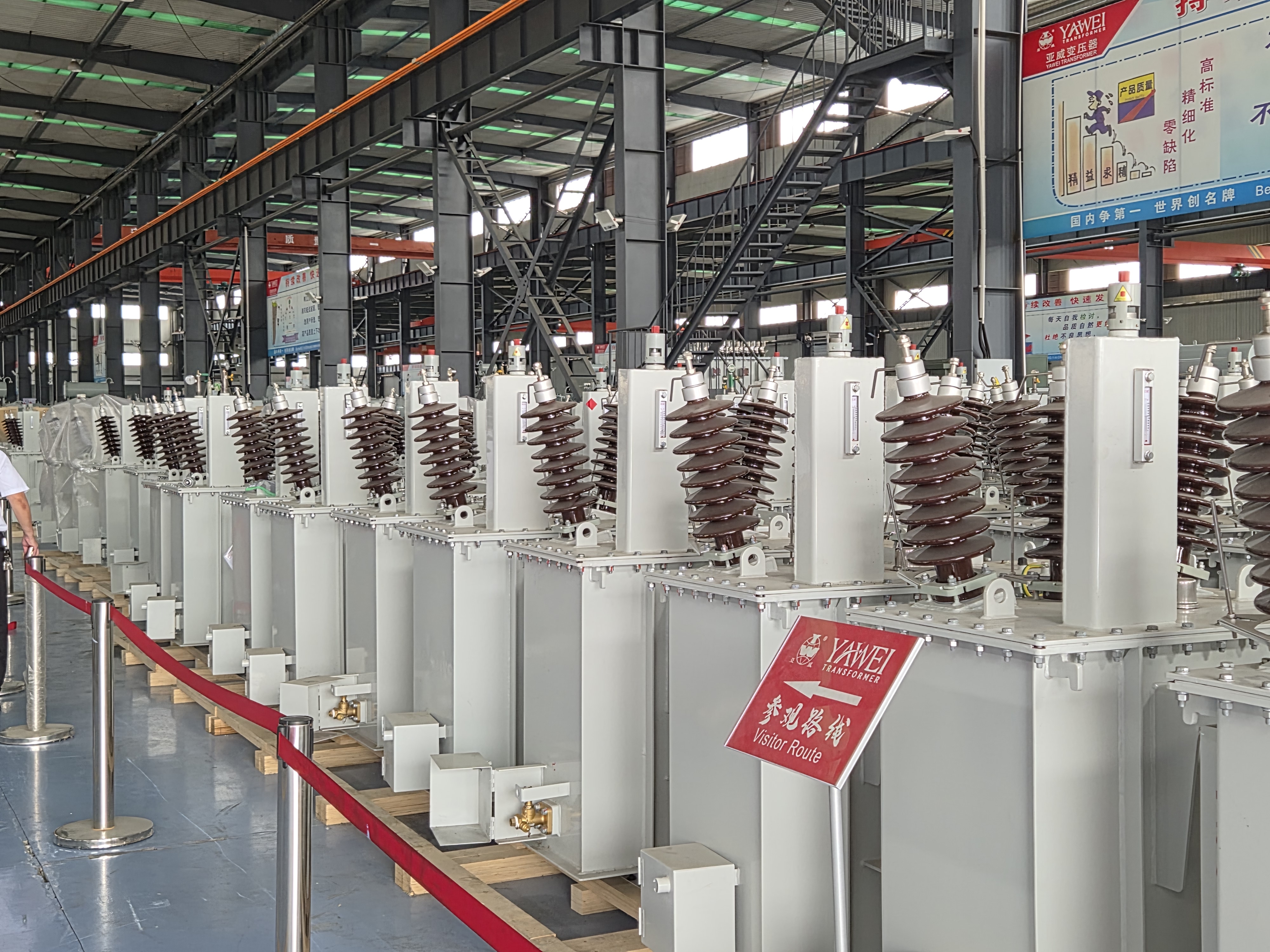
Audited manufacturing partner factory grounds, where custom transformers are assembled, vacuum-treated and prepared for testing.
An oil-immersed power transformer is a long-lived asset whose service life is often decided not by its design or its rating, but by what happens in the weeks immediately following factory acceptance. Vacuum oil treatment, followed by an orderly site installation and commissioning sequence, determines whether the paper-oil insulation arrives at energisation dry, fully impregnated and test-proven, or already compromised. For EPC and utility buyers moving from a decision phase into execution, those technical steps are the difference between a compliant paper package and an asset that still performs decades later.
This technical FAQ addresses those questions directly. It draws on the practices documented within the audited manufacturing partner base managed by Apex Power Systems (Nanjing) Co., Ltd., an international trading and supply partner specialising in power transformers, box-type substations and complete substation solutions. Apex is not a factory; it selects, audits and supervises verified Chinese manufacturers on behalf of utility, EPC and industrial customers across Europe, the USA and Asia-Pacific.
Why is vacuum oil treatment required for an oil-immersed transformer?
Because water and trapped air destroy the dielectric strength of the oil-paper insulation. Cellulose insulation is hygroscopic, meaning it absorbs moisture from the atmosphere during manufacture, storage, transport and site assembly, while insulating oil carries dissolved gas when exposed to air. Both water and gas bubbles reduce the breakdown voltage of the insulation system and can initiate partial discharge, especially under impulse voltage. Those failure mechanisms do not appear on a purchase order; they appear on site, after delivery, which is why vacuum treatment is an execution-stage question rather than a specification detail.
For custom transformer orders the exposure is higher than for catalogue units. When a bespoke design has no prior type-test history to fall back on, the factory routine tests are the only verifiable performance data before shipment. A unit that is correctly vacuum-treated and oil-filled under vacuum arrives with a matched set of dielectric-strength and moisture results; a unit that has had this stage compressed or skipped leaves the buyer relying on verbal assurance before ownership has even transferred.
The mechanism is straightforward. The active part is dried after assembly, the tank is evacuated, and filtered hot oil is introduced under vacuum so that the paper is fully impregnated. Dielectric strength (BDV) and moisture content are then measured on oil samples, and compliance is demonstrated through the routine and type tests of the IEC 60076 series, which the manufacturing base applies and has verified through independent KEMA and TUV Rheinland reports. The routine and type test programme is the evidence trail that a vacuum treatment stage actually happened and actually worked.
How does the vacuum treatment sequence actually work?
The process follows a drying, degassing and impregnation order rather than a single evacuation step. First, the active part is dried in a controlled assembly environment. Second, the assembled tank is evacuated. Third, filtered hot oil is introduced under vacuum so that oil is drawn into the paper insulation by the pressure differential. Fourth, the oil is allowed to settle under vacuum before the tank is returned to atmospheric pressure. Fifth, oil samples are drawn and tested for BDV, moisture content and dissolved gas.
The point is not the vacuum alone; it is the combination of vacuum and hot oil. Heat alone drives surface moisture but does not reliably remove water held deep inside the cellulose; vacuum alone can expose the oil to moisture during filling. When oil is introduced under vacuum and at a stable temperature, the paper is fully impregnated, which is what then permits factory routine testing before the unit is packed for transport and eventually energised.
For custom transformer orders where oil processing is not completed entirely at the factory, the same sequence must be carried out on site and documented. This is why the site commissioning plan deserves to be agreed with the buyer before the contract is signed, not treated as an afterthought once the equipment has already left the works.
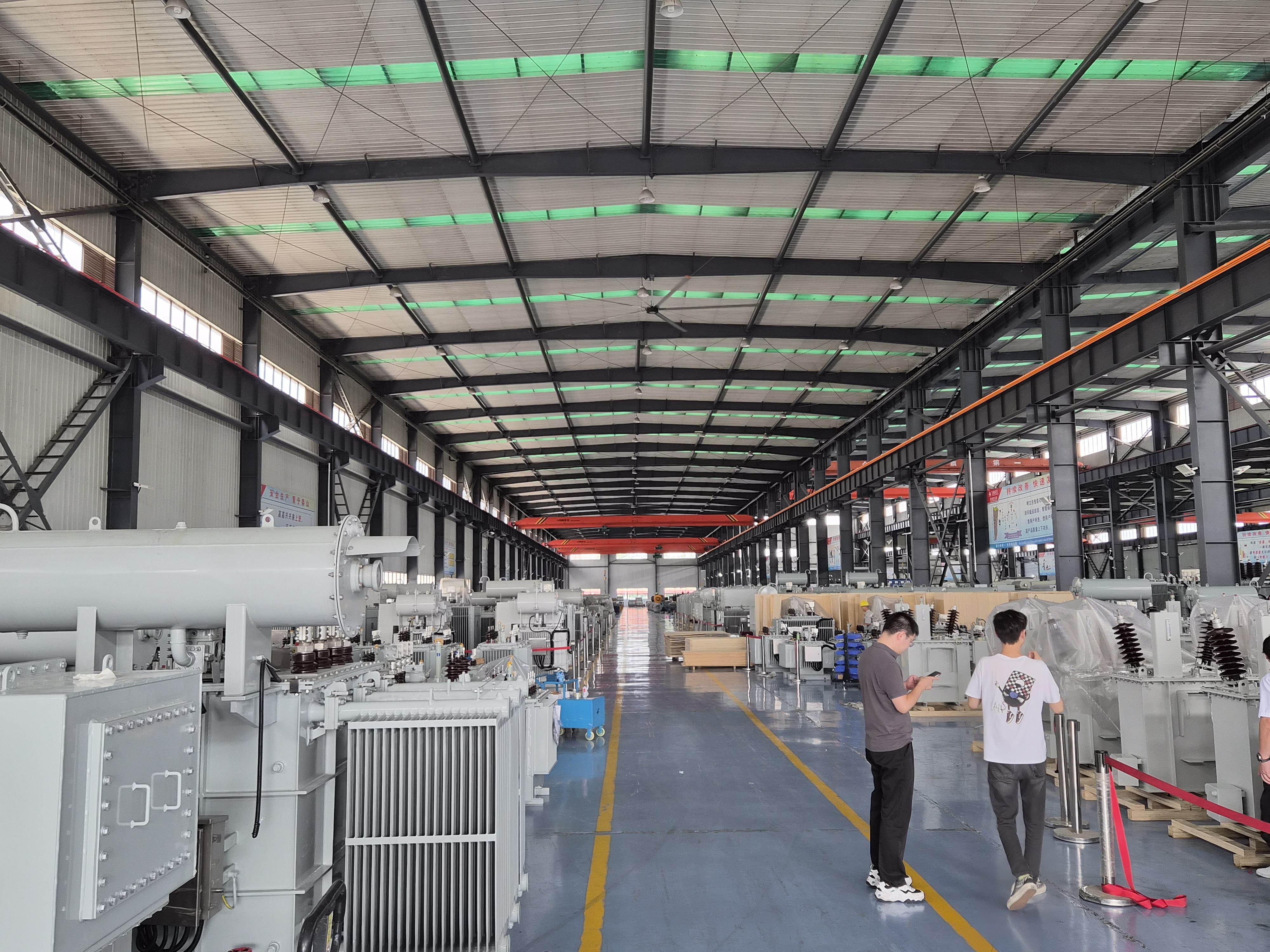
Factory environment of the audited manufacturing base where oil-immersed custom transformers are assembled and prepared for vacuum oil treatment and factory acceptance testing.
What is the site installation and commissioning sequence from delivery to energisation?
The sequence is fixed, and each step produces a record that the next step depends on. Apex manages the following steps through its audited manufacturing partners, using the manufacturer's written procedure, buyer witnessing where required, and completed test records at every stage.
- Foundation and transport check. Check the foundation and plinths, and confirm the transport route and lifting points.
- Positioning and damage inspection. Unload, position the transformer, inspect for transport damage and record the gas pressure.
- Component assembly. Assemble bushings, radiators, conservator and pipework to the manufacturer's procedure.
- Oil processing under vacuum. Carry out vacuum treatment followed by oil filling under vacuum, then test dielectric strength (BDV) and moisture content.
- Electrical connection and earthing. Connect the HV and LV cables or busbars and complete the earthing.
- Electrical testing. Perform ratio, winding resistance, insulation resistance, bushing and tap-changer tests.
- Protection and alarms. Check the protection, alarms and Buchholz relay.
- Tap-changer operation. Operate the tap changer through all positions and record the operation counter.
- Energisation and trial operation. Energise and carry out trial operation under load, checking temperature rise and noise.
- Handover. Complete the handover with the full set of test records.
The sequence is not a formality. It is the order in which each electrical result is checked against the manufacturer's limits and the applicable IEC 60076 requirements before the next activity begins. The oil-processing stage is the most common cause of a single-item failure at commissioning, because residual moisture in the insulation typically only becomes visible at the high-voltage test.
| Commissioning stage | Key action | Evidence / record produced |
|---|---|---|
| Transport inspection | Check for damage before positioning | Photo evidence and gas-pressure record |
| Assembly | Bushings, radiators and conservator | Torque checklist and assembly record |
| Oil processing | Vacuum treatment and vacuum filling | BDV and moisture results |
| Connection | HV/LV connection and earthing | Connection and earthing checklist |
| Electrical tests | Ratio, winding resistance, insulation resistance | Laboratory test report |
| Protection | Buchholz relay and alarm checks | Protection relay settings |
| Tap changer | Full-range operation | Tap-changer counter and record |
| Energisation | Trial operation, temperature and noise | Commissioning report and log |
For Apex-managed projects, the records are returned in the format required by the buyer's utility or EPC, whether that is AutoCAD drawings, factory test reports or operating manuals. Delivery management covers design, manufacturing, FAT and witness testing, third-party inspection, packing, freight and site supervision, so the buyer is not left coordinating separate vendors for each stage.
What happens if the vacuum treatment stage is omitted or compressed?
Moisture remains in the insulation, and wet paper-oil insulation is a latent defect. It may not be immediately obvious at operating voltage, but once partial discharge begins it tends to propagate, and the transformer becomes vulnerable to impulse events or load changes, sometimes years later. The worst outcome is a failed high-voltage test at commissioning, which triggers rework, shipping delays and project critical-path disruption.
This is why oil processing is not a discretionary acceleration step in the commissioning sequence. It is also why commissioning planning should treat qualified personnel, calibrated high-voltage test equipment and vacuum-processing equipment as critical-path items, not as resources to be sourced after the transformer has already arrived.
What isolation and earthing must be in place before commissioning work begins?
The transformer must be isolated, locked out and earthed before any work is carried out inside an enclosure or on a bushing turret. No residual charge may be present before any terminal is touched. High-voltage tests and energisation must be performed only by qualified personnel, using calibrated high-voltage test equipment and observing the manufacturer's clearances.
During oil handling, fire precautions must be taken and spill containment kept ready, and insulating oil must be handled and disposed of in accordance with environmental regulations. These are not optional extras; they are recurring requirements across commissioning codes in different markets, and they are built into the procedure that Apex-managed projects follow on site.
How does maintenance after commissioning sustain the long-term outcome?
Maintenance is built around the oil, because oil condition is the best single indicator of the transformer's internal health. The routine programme combines visual inspection, oil testing for dielectric strength (BDV), moisture and dissolved gas analysis (DGA), breather and cooling-system checks, bushing and connection inspection, and verification of protection devices and the tap-changer counter.
Readings should be recorded and trended rather than judged in isolation. A sudden change in dissolved gas or moisture is the earliest warning of an internal fault, and it is far cheaper to act on a trend than to replace a failed unit. The programme also covers oil level and leak inspection, silica gel replacement in the breather, cleaning bushings and checking connections with a thermographic scan, operating the tap changer and recording the counter, verifying thermometers, Buchholz relay and pressure-relief devices, and inspecting the cooling system for cleaning.
For an investor who starts with a commissioned transformer and expects twenty to thirty years of service, keeping this record from day one of commissioning is what turns a one-off technical argument into a long-term reliability relationship.
What market trends make commissioning quality more economically significant?
Three trends are raising the cost of getting commissioning wrong.
First, the transformer market is growing. The global distribution transformer market is projected to grow from USD 26.0 billion in 2026 to USD 47.7 billion by 2033 at a CAGR of 9.1%, and global trade in electrical transformers with power capacity above 500 kVA (HS 850434) reached USD 2.5 billion in 2024, a 12.7% increase year on year. When volumes tighten, the delivered quality of each individual unit matters more than it does in a slack market.
Second, efficiency regulation is tightening. China's GB 20052-2024 standard became effective on 1 February 2025, and the U.S. Department of Energy 2024 rule requires distribution transformers to transition towards amorphous electrical steel starting in 2029. These standards compress the loss margins and, by extension, the margins available to both manufacturers and commissioning teams.
Third, data centres and renewable projects are compressing project schedules. The U.S. data centre substation market was valued at USD 3.44 billion in 2024, and growth in data centre and AI computing campus demand places a premium on custom transformers that can be energised quickly. When project cycles shorten, the temptation to compress oil processing and commissioning on site increases, and so does the long-term risk.
These trends point to a procurement choice: evaluate suppliers on their commissioning and support discipline, not only on voltage class and price.
How does this compare with alternative approaches?
Site vacuum oil treatment is not the only route. It sits between two alternatives: full factory processing before shipment, and simple oil filtration on site.
Factory processing is the preferred baseline because the environment is controlled and the test results are produced before transport. Site vacuum processing becomes necessary where the transport route is long or the equipment cannot be kept under the factory's controlled atmosphere, or where the project is replacing an existing unit and the site conditions cannot be reproduced at the factory. Simple filtration is cheaper and faster, but it does not achieve the same drying depth as vacuum processing, so moisture may remain in the oil.
The limitation is real: site vacuum treatment depends on skilled personnel and specialist equipment, and those are not always available at remote locations. On projects where time or resources are constrained, shortening the processing stage increases the risk of residual moisture. Buyers who understand this tend to write processing or witnessed processing into the contract as a standard requirement, rather than treating it as an option to be negotiated after delivery.
What does the future outlook mean for custom transformer buyers?
As transformer demand shifts toward higher voltage classes, lower losses and faster schedules, commissioning discipline becomes a differentiating capability rather than a back-office step. For custom transformer projects, the defensive measure is not a longer warranty clause on its own; it is a documented commissioning chain: vacuum-processing records, BDV and moisture results, test reports and energisation logs that match the manufacturer's procedure.
The manufacturing base behind Apex has operated its own power-engineering company since 2018, which is the entity that installs, tests, energises and trains the customer's team on site. Apex-coordinated reference projects include 4 x 110 kV power transformers for Azerbaijan Power Energy Company, 115 kV substations in Tajikistan, a 69 kV transformer and a commercial project in the Philippines, a 132 kV transformer for a Spanish steel-plant substation, a 40,000 kVA energy-storage project in Bulgaria, a 15 MVA pad-mounted unit in the USA, a 110 kV substation in Mongolia, a 345 kV fully-insulated power transformer for US-Georgia and a 115 kV substation for US-Puerto Rico. For buyers moving into execution, that record is more informative than a product brochure.
Frequently asked questions
Why are oil-immersed power transformers vacuum-treated and oil-filled under vacuum?
Because water and trapped gas reduce the dielectric strength of the oil-paper insulation. Cellulose absorbs moisture during manufacture, transport and site assembly, and oil carries dissolved gas. If the insulation is not dried and impregnated under vacuum, the breakdown voltage can fall and partial discharge can start, particularly under impulse voltage. The active part is therefore dried, the tank evacuated and filtered hot oil introduced under vacuum, after which dielectric strength and moisture content are measured on oil samples.
What is the correct order for on-site installation and commissioning?
The sequence is: foundation and transport check; positioning and damage inspection; assembly of bushings and radiators; oil processing under vacuum; electrical connection and earthing; ratio, winding resistance, insulation resistance, bushing and tap-changer tests; protection and alarm checks; tap-changer operation through all positions; energisation and trial operation; and handover with completed records. The transformer should only be energised after all oil and electrical results have been confirmed against the manufacturer's limits and the applicable IEC 60076 requirements.
Why is vacuum treatment more important than simple oil filtration?
Simple filtration removes particulate contamination but does not achieve the same drying depth as vacuum treatment. Vacuum processing, combined with filtered hot oil introduced under vacuum, draws moisture out of the cellulose insulation and allows the paper to be fully impregnated. Without that step, residual moisture can remain in the insulation system and may only become visible during high-voltage testing or after the unit has been in service for some time.
Which records prove that commissioning has actually been completed correctly?
The essential records are oil-processing records showing vacuum treatment and oil filling under vacuum, BDV and moisture results, ratio and winding-resistance test results, insulation-resistance measurements, bushing and tap-changer test reports, protection and alarm settings, tap-changer operation counts, and the energisation and trial-operation log. These records allow a buyer to compare the delivered unit with the manufacturer's limits and with IEC 60076 test requirements, and they form the baseline for later maintenance trending.
What safety measures must be in place before commissioning work starts?
The transformer must be isolated, locked out and earthed before any work inside an enclosure or on a bushing turret. No residual charge may remain before a terminal is touched. High-voltage testing and energisation must be carried out only by qualified personnel using calibrated high-voltage test equipment and observing the manufacturer's clearances. During oil handling, fire precautions and spill containment must be in place, and insulating oil must be handled and disposed of in accordance with environmental regulations.
For project teams that need the full commercial and technical package, the Apex Power Systems catalogue is available for public access and download: Apex Power Systems Catalog.
¿Tiene preguntas o necesita más detalles?
Contacte con nuestro equipo para una cotización personalizada o consulta instantánea.
Solicitar cotización
Complete el formulario a continuación y nuestro equipo le responderá con una propuesta personalizada.
Chat directo de WhatsApp
¿Prefiere chatear en tiempo real? Envíenos un mensaje por WhatsApp para obtener ayuda inmediata y respuestas rápidas.
- Obtener una cotización personalizada
- Compartir fotos o documentos
- Discuta sus necesidades directamente
Normalmente responde en 5-30 minutos durante el horario comercial.