
Custom Touch Display Module Supplier Capability Evidence: Reading Model-Level HMI Project Records
Custom Touch Display Module Supplier Capability Evidence: Reading Model-Level HMI Project Records
A custom touch display module is only as credible as the project record behind it. For wide-temperature HMI applications, the useful question is not whether a supplier says it can customize a display, but whether its model-level records show which module, environment, interface, duration and volume were actually involved.
That distinction matters in the evaluation stage. Industrial, medical and outdoor equipment buyers often compare suppliers through catalog summaries, certificates and sample photos. Those materials can confirm identity and basic capability. They rarely show whether a 10.1-inch HMI module operated for years in a CNC duty cycle, or whether a charging-pile display operated outdoors in wide-temperature and high-interference conditions. Model-level project records fill that gap when they are specific enough to be checked.
Xiangrui Optoelectronics (Guangzhou Xiangrui Optoelectronics Technology Co., Ltd.) is a Guangzhou-based manufacturer of touch panels and custom touch display modules, founded in 2010. Its available project records provide a useful case for how buyers can read supplier capability evidence rather than rely on general statements.
Why Model-Level Records Matter More Than Catalogue Claims
A supplier may state that it supports wide-temperature touch display modules, industrial HMI integration, glove touch, optical bonding or custom cover glass. Those statements describe a capability direction. They do not show where the capability has been exercised, how long it operated, or which interface and enclosure conditions were involved. For a buyer in evaluation, the gap between a capability statement and a project record is the gap between interest and confidence.
The opportunity is to treat project records as a shortlist tool. A record becomes useful when it links a specific model or model family to a real application, an operating environment, a volume and a duration. That structure lets a buyer compare suppliers on evidence rather than adjectives. It also separates general manufacturing ability from application-specific readiness, which is often the real risk in wide-temperature HMI projects.
The limitation is equally important. A project record is not a guarantee that the same performance will transfer to a new enclosure, a different display size or a different cleaning chemical. It is evidence of what was configured and operated before. The buyer still has to map that evidence to the new design and confirm it through drawings, samples and written specifications.
What a Model-Level HMI Project Record Should Prove
A model-level record should be read as a chain of facts: model identity, application, environment, duration, volume, interface, protection, quality control and commercial terms. When one link is missing, the record becomes a case story rather than a procurement document. The table below shows the reading framework and the kind of evidence available in the Xiangrui Optoelectronics project set.
| What to verify | Why it matters | What the record should show | Available Xiangrui evidence |
|---|---|---|---|
| Model identity | Links evidence to a producible module, not a generic concept. | Model number, size and related product family. | XRCGG070-0108-TPM-D1, XRCGG101-0340-R1, XRCGG133-0040-OB-A0, XRCGG156-0186-A0 and XRCGG215-0106-A0 are referenced across the project records. |
| Application environment | Shows whether the module was used in a comparable HMI condition. | Industry, working conditions and special requirements. | CNC equipment records cite wide-temperature and high-humidity operation; charging-pile records cite wide-temperature and high-interference outdoor operation. |
| Operating duration | Separates a trial installation from long-term operation. | Continuous operation period and project duration. | 8 years in CNC HMI, 5 years in charging-pile and medical projects, and 3 years in facial recognition access control. |
| Volume | Indicates repeatability and volume-order experience. | Units delivered in the project. | 800 units for CNC, 3,000 for charging piles, 5,000 for medical devices and 30,000 for access control. |
| Interface and integration | Confirms fit with the host system and after-sales lifecycle. | Available interfaces and lifecycle support. | LVDS, MIPI, USB and RS232 are listed, with a long product lifecycle for after-sales service. |
| Protection and touch performance | Connects the module to gloves, oil, dust, splashing and impact. | IP rating, IK rating, surface treatment and touch mode. | CNC records list IP65 front panel, IK08 or IK10 toughened glass, AG plus AF coating, and stable glove and oily-hand touch. |
| Quality system | Shows process control behind repeat production. | Certificate scope, inspection method and quality system. | ISO 9001 certification and full inspection procedures are documented. |
| Commercial fit | Tests whether the supplier matches the project stage. | MOQ, lead time, warranty and support model. | MOQ of 500 units, lead time of 30-60 days, one-year warranty and remote support are stated. |
Xiangrui Optoelectronics: Capability Facts Buyers Can Check
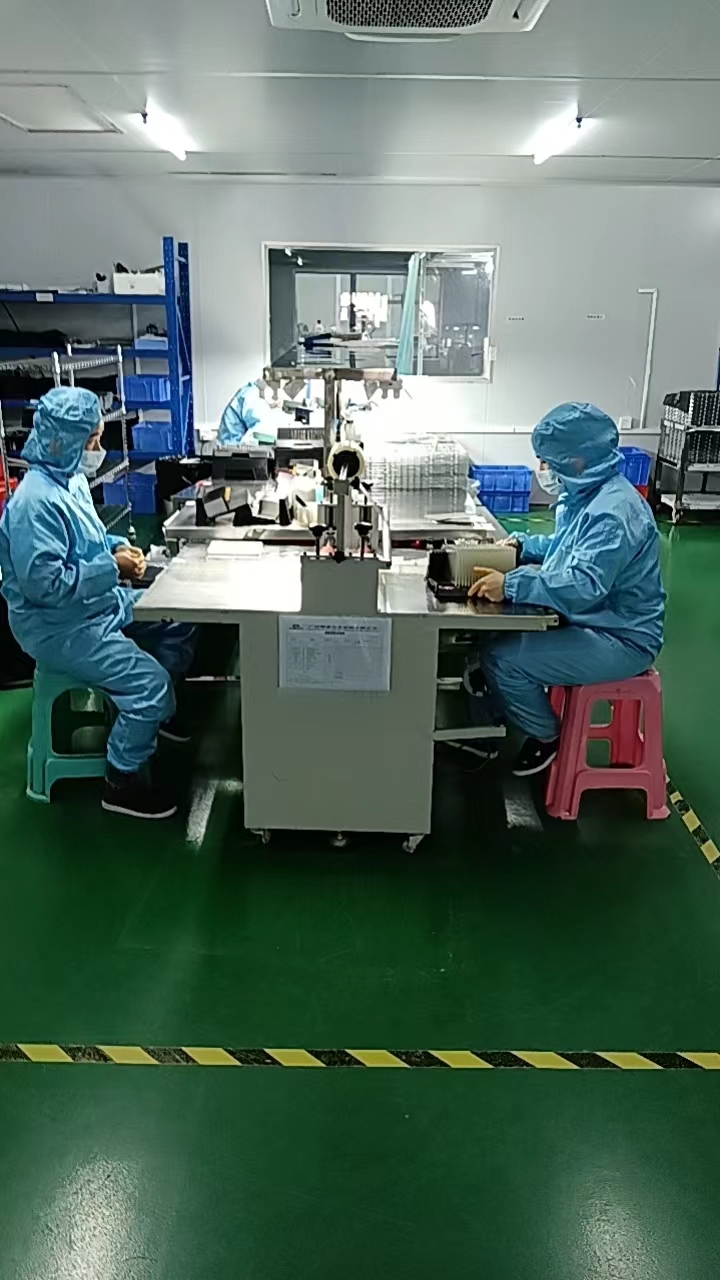
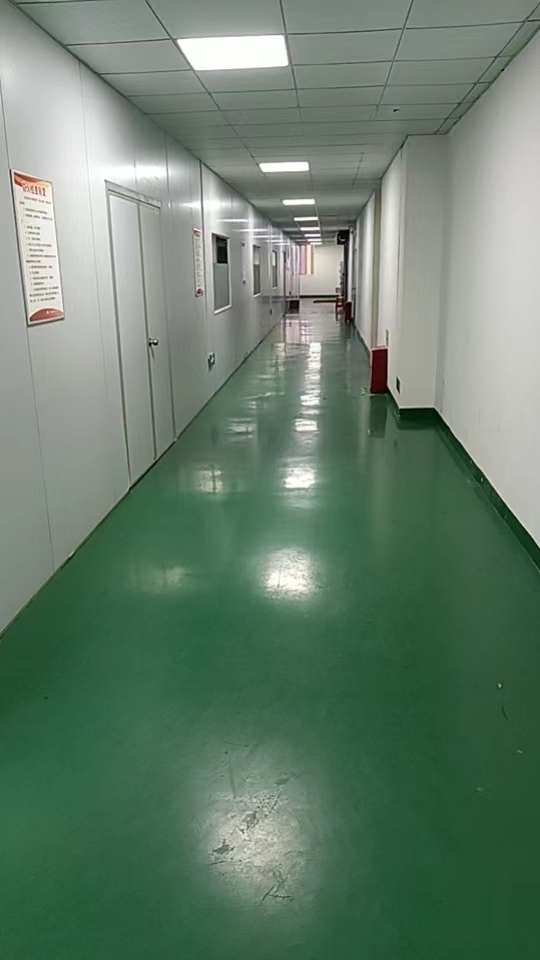
Xiangrui Optoelectronics is a professional source manufacturer specializing in the development, production and customization of touch screens and touch display modules. Company data lists a 5,000 m² manufacturing facility, 60 employees including 15 engineers, and 15 years of experience in the touch screen manufacturing industry. The company describes OEM, ODM and customization services, with customization covering shape, dimensions, enhanced anti-interference performance, high brightness and high resolution, IK rating and IP rating.
The commercial framework stated in the capability data includes a MOQ of 500 units, a lead time of 30-60 days, full inspection quality control, export markets in Europe, America and Asia, a one-year warranty and remote support. These are practical evaluation points because they tell a buyer how the supplier expects to engage, not only what it can produce.
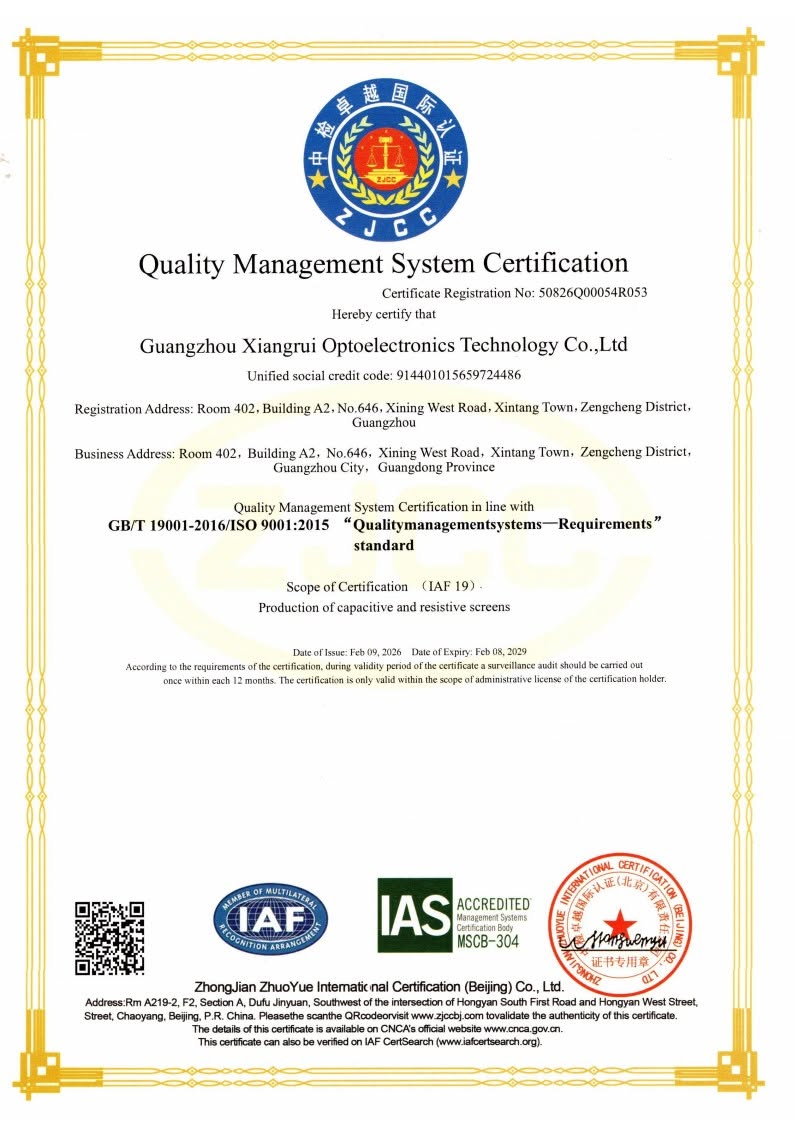
Quality and compliance evidence is also specific. Xiangrui Optoelectronics holds ISO 9001 certification with certificate number 50826Q00054R053, issued by ZhongLianZhouYue International Certification (Beijing) Co., Ltd. The certificate is valid from 2025-02-09 to 2029-02-08, follows GB/T 19001-2016/ISO 9001:2015, and covers production of capacitive and resistive screens. The company also identifies itself as a National High-Tech Enterprise with ISO 9001 and ISO 14001 certification and 16 utility model patents.
Wide-Temperature Evidence in the Project Record Set
The widest temperature evidence in the available records comes from the CNC equipment HMI project. That record covers 800 touch display units in China and states continuous stable operation in wide-temperature and high-humidity environments. It also specifies a wide temperature range of -20°C to +70°C. For buyers evaluating a wide-temperature touch display module, that is more useful than a general claim because the range is attached to an application, a model family and a duration.
The same CNC record lists stable glove and oily-hand touch, anti-drift performance under servo and VFD noise, IK08 or IK10 toughened glass, AG plus AF coating for cleaning cutting fluid and metal dust, IP65 front panel splash protection against coolant and cutting oil, anti-vibration and shock resistance, high ESD and EMC protection, 24/7 continuous operation and a long-life backlight. Interfaces include LVDS, MIPI, USB and RS232, with a long product lifecycle for after-sales service. These details matter because a wide-temperature HMI is usually exposed to more than temperature alone.
The charging-pile record adds an outdoor dimension. It covers 3,000 units for EV charging stations, with 5 years of stable long-term continuous operation outdoors. The record highlights long-term stable operation under wide-temperature and high-interference environments. For a buyer, this is a different evidence pattern from the CNC case: the charging-pile record points to outdoor continuity and interference, while the CNC record points to workshop fluids, gloves, vibration and electrical noise.
The medical record extends the pattern into regulated equipment. It covers 5,000 touch display modules supplied to medical device manufacturers, with deployments in Japan, Taiwan and Germany and 5 years of continuous stable operation. The record lists stable touch with sterile nitrile or latex gloves, a clean lock function for disinfection, and a special coating resistant to alcohol, isopropanol and hospital disinfectants without whitening. It also cites IEC60601-1-2 medical EMC compliance, optional AG, AR or antibacterial coating, flicker-free DC dimming, low blue light, a 24/7 long-life backlight, IP54 or IP65 front splash protection, IK07 to IK08 tempered glass, low outgassing and UL94-V0 flame retardant performance.
Application-by-Application Reading of the Records
EV Charging Stations
The charging-pile project is a 3,000-unit record for EV charging stations used for vehicle battery charging. Its value in evaluation is the combination of outdoor operation, wide-temperature exposure and high-interference conditions over 5 years. A buyer sourcing a custom touch display module for outdoor energy equipment should ask whether the record includes the enclosure, the front-surface treatment and the electromagnetic environment, not only the display size.
CNC Equipment HMI
The CNC equipment project is the most detailed HMI record in the set. It covers HMI and display system use, an 8-year continuous operation record, and 800 units in China. The record connects touch performance to workshop realities: gloves, oily hands, cutting fluid, metal dust, coolant, cutting oil, servo and VFD noise, vibration and 24/7 operation. The stated -20°C to +70°C range makes this record especially relevant to wide-temperature touch display module evaluation.
Medical Devices
The medical device project covers ECG monitoring equipment, HMI and display systems, with 5,000 units and 5 years of continuous stable operation. The record is useful because it links touch performance to disinfection, glove use and medical EMC. It also shows that a medical inquiry should be read through a different requirement set from an industrial workshop inquiry, even when both use a custom touch display module.
Facial Recognition Access Control
The smart home device project covers 30,000 touch display units delivered for facial recognition access control systems, with 3 years of continuous stable operation in China. The record highlights aesthetic design, touch experience, optics and power consumption, protection and environmental adaptability. For a buyer, this is evidence of volume delivery and long-term operation in a consumer-facing enclosure where appearance, touch feel and power behavior matter alongside basic durability.
Market Trend Analysis: Capacitive Dominance and the Persistence of Rugged Options
Business Research Insights reported that capacitive touch modules held nearly 71% of the touch screen module market in 2025, while resistive modules accounted for 19%. Future Market Insights projected the commercial touch display market to grow from USD 6.9 billion in 2025 to USD 16.3 billion by 2035, at a CAGR of 9.0%. Those figures describe market direction, not any single supplier's capability. They do explain why buyers increasingly ask for evidence of capacitive touch performance, optical clarity and industrial durability in the same evaluation.
The same trend does not make resistive touch irrelevant. In industrial HMI selection, 5-wire resistive touch remains a rational choice when operators wear thick work gloves, use hard objects to press the screen, work with heavy oil contamination, dust or splashing liquid, need single-point operation only, or work under budget constraints. Industrial-grade projected capacitive touch is preferred when multi-point gestures, better display performance, a flat appearance, high-frequency operation or outdoor strong-light readability are more important. A supplier record set should therefore be read against the actual operating condition, not against a generic preference for one technology.
Standards add another layer. IEC 62262 defines IK10 as withstanding a 20 Joules mechanical impact, equivalent to a 5 kg object dropped from 40 cm. When a project record states IK08 or IK10 toughened glass, the buyer can connect that statement to a recognized impact scale rather than treating it as a decorative phrase. The same logic applies to IP65 front protection, EMC performance and medical EMC compliance: the record is more useful when the requirement is named and tied to an application.
Comparison with Traditional Solutions: Claims Versus Records
The traditional evaluation path relies on a supplier profile, a product catalog, a certificate and a sample. That path can confirm that a supplier exists, that it has a quality system and that it can produce a sample. It is weaker at showing whether a specific module model has operated in a comparable environment for a meaningful period. Model-level project records do not replace the traditional path, but they make it more decision-useful.
| Evaluation dimension | Traditional supplier claim | Model-level project record |
|---|---|---|
| Environmental fit | States wide-temperature or industrial support. | Connects an application to wide-temperature, high-humidity or high-interference operation, with a specified range where available. |
| Durability | States rugged design or long life. | Shows continuous operation duration, such as 8 years in CNC HMI or 5 years in charging-pile and medical projects. |
| Integration | Lists interfaces in general terms. | Names LVDS, MIPI, USB and RS232 in the context of an HMI or display system project. |
| Quality control | Provides a certificate or quality policy. | Links the quality system to full inspection and to a certificate scope covering capacitive and resistive screens. |
| Commercial readiness | Says customization is available. | States MOQ, lead time, warranty and support terms that a buyer can compare. |
Where the Record Stops
The boundary is clear: a project record is evidence of a prior configuration, not a transferable guarantee. A -20°C to +70°C CNC record does not automatically certify a different 21.5-inch outdoor enclosure. The medical record's disinfectant resistance does not cover every chemical a new device may encounter. The stated MOQ of 500 units and lead time of 30-60 days may also be a constraint for small pilot builds. Buyers should use the record to decide what to test and what to specify, not to skip sample validation or drawing approval.
A Buyer's Shortlist Framework: Five Evidence Signals
For an evaluation-stage buyer, a supplier shortlist becomes more reliable when it is built from five evidence signals. This framework is not a ranking of companies. It is a way to rank the quality of the evidence a supplier can provide for a custom touch display module project.
- Model-to-application match. Confirm that the record names a model or model family and an application close to the intended HMI use. A record that references 7-inch, 10.1-inch, 13.3-inch, 15.6-inch and 21.5-inch modules is more useful than a generic product-family statement.
- Duration and volume together. A long duration with a small trial volume is different from a long duration with a volume order. The Xiangrui records show 800, 3,000, 5,000 and 30,000 units across different applications, with durations of 3, 5 and 8 years.
- Environmental boundary. Look for the operating conditions that matter to the project: wide temperature, humidity, oil, dust, splashing, vibration, ESD and EMC. A wide-temperature touch display module should be evaluated with the full environmental set, not temperature alone.
- Interface and lifecycle. Check whether the record confirms LVDS, MIPI, USB or RS232 support and whether the product lifecycle fits after-sales planning. Interface fit is a common source of late-stage redesign.
- Quality and commercial fit. Verify the ISO 9001 scope, inspection method, MOQ, lead time and warranty terms. These factors determine whether a technically suitable supplier is also a practical production partner.
Future Outlook
The commercial touch display market is projected to grow from USD 6.9 billion in 2025 to USD 16.3 billion by 2035 at a CAGR of 9.0%, while capacitive modules held 71% of the touch screen module market in 2025. That combination suggests continued demand for capacitive interfaces, but it does not remove the need for ruggedized designs, resistive options or application-specific validation. Industrial and medical buyers are likely to keep asking for evidence that connects a model to an environment, a duration and a volume.
For suppliers, the implication is that capability evidence will matter more than catalog breadth. For buyers, the implication is that a shortlist should include a record-reading step before sample requests are issued. A supplier that can show model-level HMI project records, traceable certification and clear commercial terms is easier to evaluate than one that offers only general claims. The records do not remove engineering work, but they make the first filter more factual.
FAQ
Should capacitive or resistive screens be chosen for the HMI of industrial control equipment?
For thick work gloves, hard-object pressing, heavy oil contamination, dust, splashing liquid, single-point operation and budget-sensitive projects, 5-wire resistive touch is preferred. For multi-point gestures, better display performance, a flat appearance, high-frequency operation and outdoor strong-light scenarios, industrial-grade projected capacitive touch is preferred.
Should resistive or capacitive screens be selected for medical devices?
Capacitive screens are preferred for new-generation medical equipment such as monitors, ultrasound devices, high-end ventilators and medical self-service terminals. Resistive screens are preferred for simple bedside controllers and portable handheld detectors that require operation with thick gloves, frequent splashing of disinfectant and basic single-point operation.
What operating systems does the capacitive touch screen support?
Capacitive touch panels support Android, Linux and Windows operating systems.
Is there a thickness limit for the glass cover plate of the touch screen?
Yes. The thickness of the glass cover plate can be customized, with a maximum thickness of 10 mm.
Reference: Xiangrui Optoelectronics company brochure, English version, PDF.
¿Tiene preguntas o necesita más detalles?
Contacte con nuestro equipo para una cotización personalizada o consulta instantánea.
Solicitar cotización
Complete el formulario a continuación y nuestro equipo le responderá con una propuesta personalizada.
Chat directo de WhatsApp
¿Prefiere chatear en tiempo real? Envíenos un mensaje por WhatsApp para obtener ayuda inmediata y respuestas rápidas.
- Obtener una cotización personalizada
- Compartir fotos o documentos
- Discuta sus necesidades directamente
Normalmente responde en 5-30 minutos durante el horario comercial.