
Custom Swimsuit Sourcing: A Buyer's Discovery Guide
Custom Swimsuit Sourcing: A Buyer's Discovery Guide
A custom swimsuit is a garment built to a buyer's own design, fit block and fabric specification, rather than a catalogue style that is decorated and relabelled. The distinction matters because the two sourcing routes carry different development work, different minimum quantities and different evidence requirements before a purchase order is defensible.
For brands entering swimwear for the first time, the discovery phase is rarely about finding a factory. It is about understanding what is actually being bought. Swimwear sits at the intersection of stretch textiles, body-fit engineering and seasonal fashion, and the manufacturing model chosen at the start determines the sampling timeline, the MOQ, the compliance file and the number of iterations a buyer should budget for. The global swimwear market was valued at approximately USD 23.8 billion in 2025, according to Grand View Research, which is why new entrants and adjacent apparel brands keep adding swim lines to existing product ranges.
What "Custom Swimsuit" Means in a Manufacturing Context
In cut-and-sew terms, a custom swimwear manufacturer builds swimwear to a client's own pattern and fabric specification, which includes drafting or adapting the fit block and sourcing stretch fabric rather than selecting from a finished goods inventory. This service model is what separates custom production from private label in the narrow sense, where an existing factory style is bought and the buyer's brand is applied.
The practical consequences of that definition are significant for a first-time buyer:
- Pattern ownership: the fit block is developed or adapted, so sizing consistency comes from the pattern rather than from a stock garment.
- Fabric selection: composition, weight, stretch and finish are chosen at the fabric stage, before cutting.
- Sampling cycle: at least one prototype round is normally required before bulk, because fit cannot be assessed from a specification sheet.
- Compliance scope: certifications attach to fabric, trim and factory, so the evidence file has to be assembled, not assumed.
The vocabulary used across the category is broad — custom bikini, custom one-piece swimsuit, custom two-piece swimwear, custom women's swimwear, custom kids swimwear, custom plus size swimwear, custom maternity swimwear, custom rash guard, custom swim shorts and custom swim trunks all describe the same underlying service model applied to different garment types. Buyers researching the category should treat these as product-scope variants of one sourcing decision, not as separate industries.
Why Custom Swimwear Sourcing Became a Research Problem
The supply side of swimwear has concentrated. Vietnam accounted for a 95.4% share of US bathing suit imports under HS code 6211 between January 2022 and March 2025, according to trade data compiled by Volza. Concentration of that kind is efficient at scale, but it also means the small and mid-volume buyer is often negotiating inside a system designed for large programmes.
Three pressures push buyers toward custom rather than stock:
1. Differentiation has moved to the fabric and fit layer
Colour and print alone no longer separate one beach brand from another. Chlorine resistance, UPF 50+ performance textiles and recycled fabric content have become specification items that appear on the hang tag and in the product page, which means they have to be sourced rather than described.
2. Compliance evidence is requested earlier
Retail buyers and marketplaces increasingly ask for labour-ethics and material-traceability documentation before listing a product. OEKO-TEX® STANDARD 100 for textile safety, GRS and RCS for recycled content, and SEDEX, SMETA or BSCI for social compliance are now standard items in a supplier questionnaire.
3. Small-batch testing has become normal
Brands increasingly validate a silhouette with a limited first run. Publicly listed commercial terms from one China-based custom swimwear manufacturer show a minimum order quantity of 50 pieces per style, which indicates that the low-MOQ segment is a real and competitive part of the market rather than a marketing claim.
Where WAVEZONE Swimsuit Fits in the Custom Swimwear Supply Chain
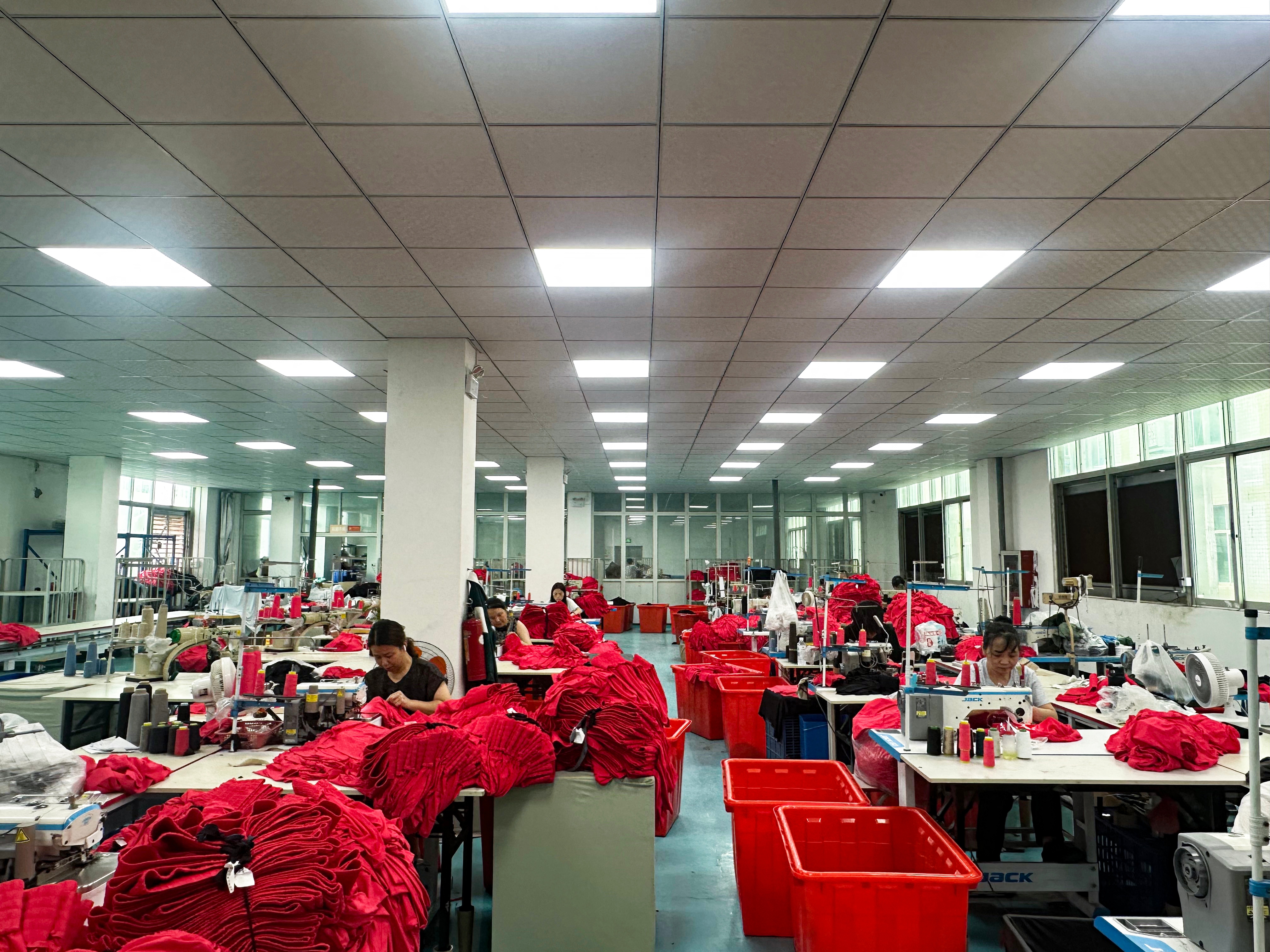
Quanzhou Wavezone Enterprise Co., Ltd. is an OEM and ODM swimwear factory established in 2010 and based in Quanzhou City, Fujian Province, China. The company manufactures for B2B brands, wholesalers, resorts and e-commerce clients, with export business accounting for 100% of total sales and major markets in the EU and the USA.
Its operating profile is relevant to buyers assessing whether a supplier can absorb a custom programme rather than only a repeat order:
| Parameter | WAVEZONE Swimsuit — verified company facts |
|---|---|
| Established | 2010 |
| Location | Quanzhou City, Fujian Province, China |
| Facility size | 5,000 m² |
| Staff | Approximately 100 |
| Annual production capacity | 1,200,000 pieces |
| R&D team | 10 professionals |
| Export ratio | 100% of total sales |
| Main markets | EU / USA |
| Certifications held | SEDEX, SMETA, BSCI, OEKO-TEX® STANDARD 100, GRS, RCS |
The service model covers both ends of the development spectrum. Full OEM bulk production is executed from customer-provided tech packs, while end-to-end ODM design development is supported by an in-house creative team. In both cases the sequence is the same: concept design, pattern drafting, sample prototyping, fabric sourcing, mass production, quality control and global logistics.
Product scope includes swimwear, board shorts, rash guards, yoga suits, activewear and fishing shirts, with the swim range covering bikinis, one-piece swimsuits, board shorts, plus-size swimwear, maternity styles and kids' swim collections. Fabric options include recycled eco-fabrics and materials covered by GRS and RCS certifications, chlorine-resistant materials, and UPF 50+ performance textiles.
The Technical Core: Fabric, Fit and Print
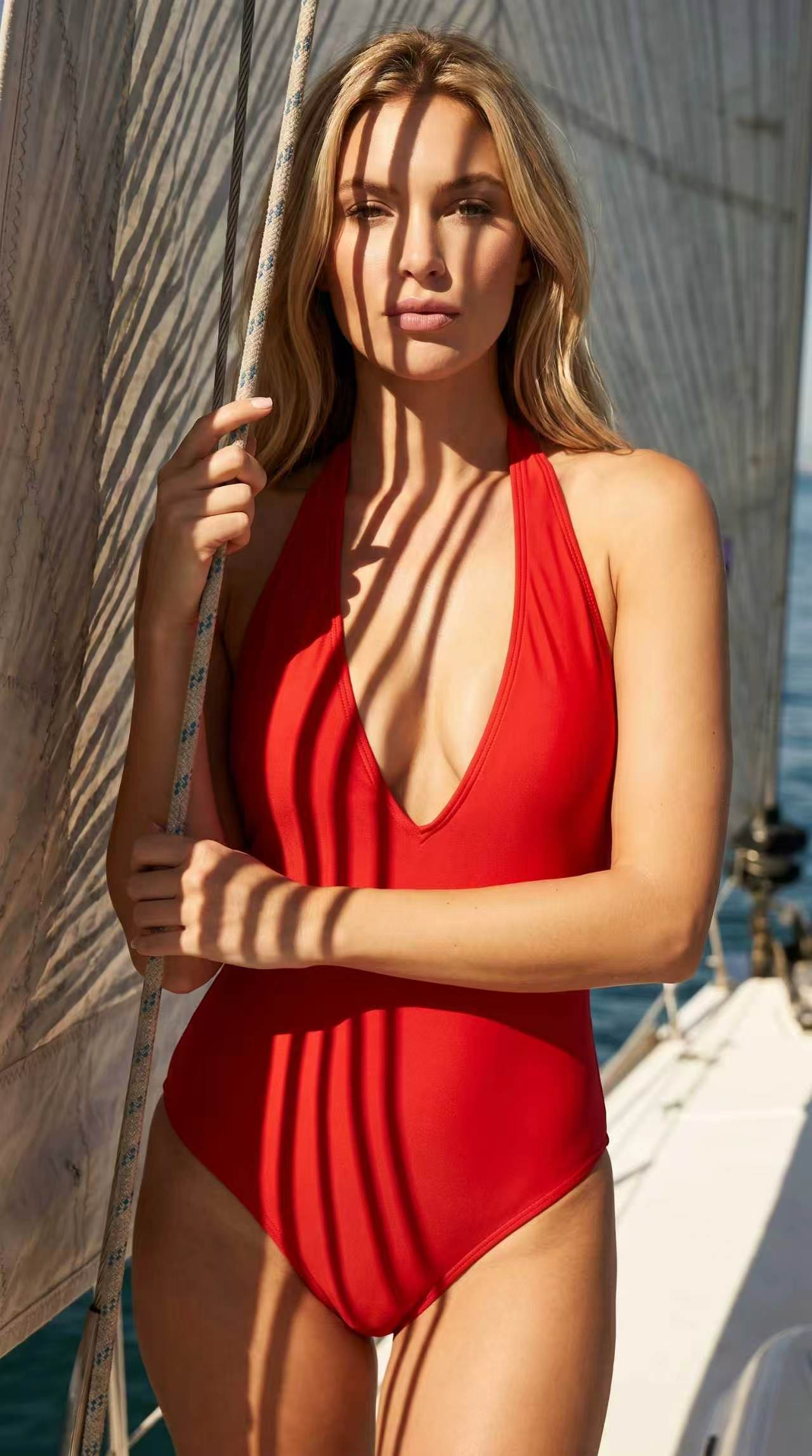
Custom swimwear performance is decided before a single garment is sewn. Two reference constructions illustrate the specification level a buyer should expect to review at the sampling stage.
| Specification | wz-001 — women's swimwear / ladies swimsuit | wz-002 — women's one-piece swimwear |
|---|---|---|
| Size range | S–XL | S–XL |
| Fabric composition | 80% polyamide / 20% elastane | 80% polyamide / 20% elastane |
| Fabric weight | 200 gsm | 200 gsm |
| UV performance | UPF 50+ | UPF 50+ |
| Colour fastness | 4.5+ | 4.5+ |
| Intended application | Apparel and garment, swimwear industry, leisure and beachwear | Apparel and garment, swimwear industry, leisure and beachwear |
Fabric behaviour
The 80/20 polyamide-elastane blend at 200 gsm is chosen for four-way stretch and shape retention: it fits different body shapes without tight binding or sagging, and it is intended to hold its shape through repeated wearing, washing and sun exposure. Polyamide is also the base for the skin-contact characteristics buyers usually ask about — a soft, smooth, breathable hand-feel that does not irritate during long wear.
Water management and drying
Water-repellent finishing reduces water absorption, lowers drag in the water and allows the garment to drain and dry faster after leaving the pool or sea. For resort and travel buyers this is a customer-experience specification, not a technical footnote.
Print and colour
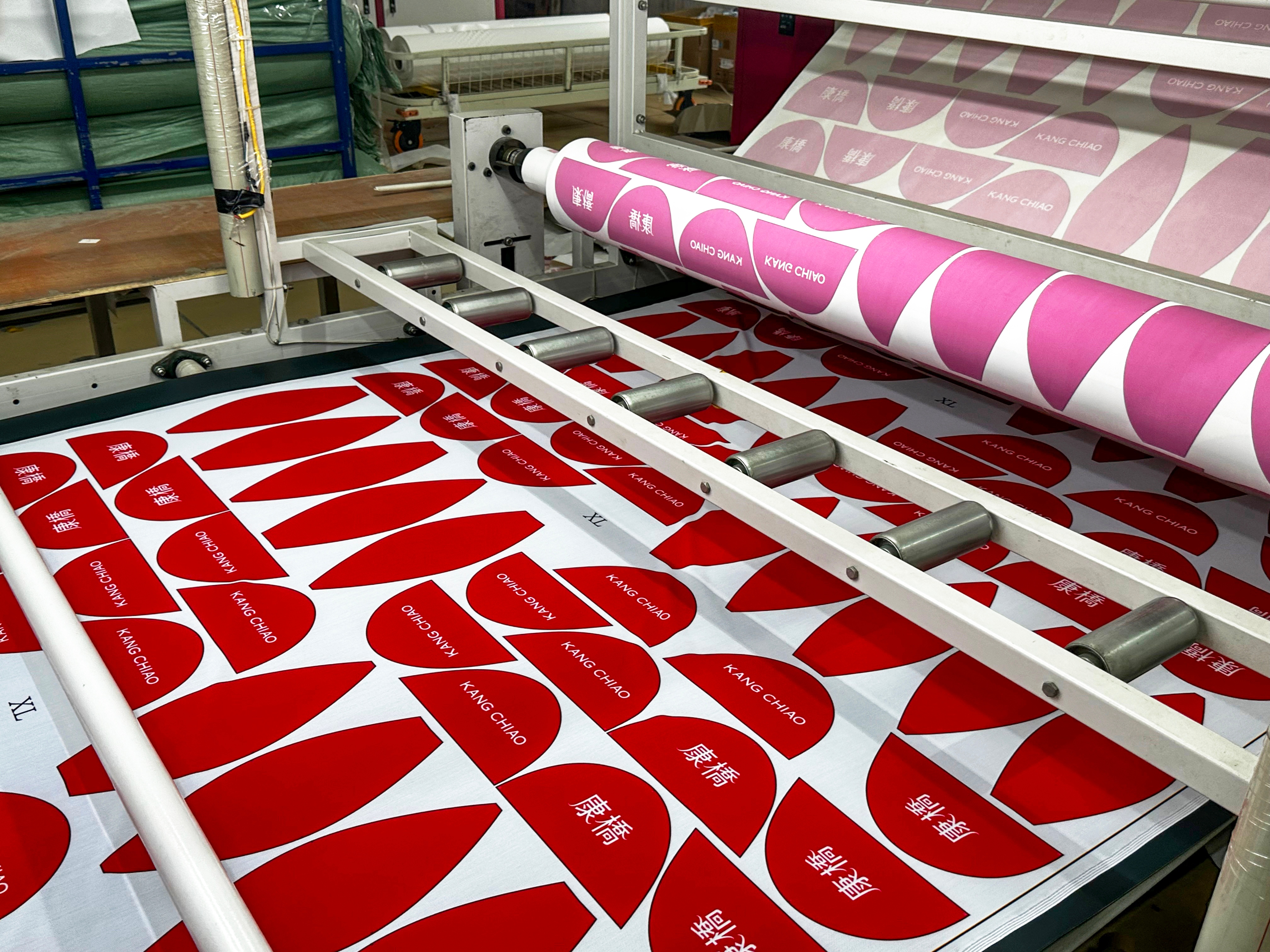
All-over print (AOP) custom swimwear depends on the printing method chosen at the fabric stage. Facility documentation for the WAVEZONE production floor shows both sublimation printing and rubber print operations, two routes that behave differently on stretch fabric and should be tested against the colour-fastness target before bulk. Custom swimwear printing decisions also affect lead time, because print development sits between fabric sourcing and cutting.
Fit development
Because the size range for these reference styles runs S–XL, buyers targeting extended sizing — custom plus size swimwear, custom maternity swimwear, custom kids swimwear — should treat grading as a separate development task rather than an automatic extension of the base block.
From Tech Pack to Bulk: The Development Sequence
Custom swimwear development follows a predictable sequence, and buyers who understand it can schedule a season launch realistically instead of discovering the timeline mid-project.
| Stage | What happens | Buyer input required |
|---|---|---|
| 1. Concept and design | Silhouette, coverage level, colour direction and target market are defined | Design brief or tech pack; reference garments |
| 2. Pattern drafting | Fit block is drafted or adapted; grading rules set | Size range and fit intent |
| 3. Fabric sourcing | Composition, weight, stretch, recycled or chlorine-resistant options selected | Performance and sustainability requirements |
| 4. Sample prototyping | Physical sample produced and reviewed | Fit feedback and revision approvals |
| 5. Mass production | Bulk cutting and sewing; print applied where specified | Approved sample and purchase order |
| 6. Quality control | Multi-stage inspection before packing | Acceptance criteria and test requirements |
| 7. Global logistics | Packing and shipment to destination market | Incoterms, labelling and documentation |
Sample development for this supplier is quoted at 3–14 days, with bulk production lead time of 15–45 days and a minimum order quantity of 100 pieces per style. Those three numbers — together with the sample fee and the fabric upcharge for recycled content — are the practical backbone of any custom swimwear sampling plan.
Application Scenarios: Where Custom Swimwear Is Sold
The demand side of custom swimwear is broader than fashion retail. Typical working conditions for these garments are seaside, swimming pool and summer high-temperature environments, with the product worn directly on the body and paired with accessories such as swim caps and swimming goggles.
- Beach and resort retail: seasonal collections where print and silhouette differentiate the range.
- Hotel and resort uniforms and guest retail: branded programmes requiring consistent colour and repeatable sizing.
- E-commerce and DTC brands: small-batch launches used to validate a style before committing to depth.
- Fitness and aquatic sports: chlorine-resistant constructions for frequent pool use.
- Family and kids ranges: coordinated adult and children's collections built from one design direction.
In all of these, the functional requirements repeat: skin-friendly fabric, quick drying, stretch, and the option of GRS recycled fabric or OEKO-TEX certified material where the brand makes a sustainability claim.
Market Signals Buyers Should Read Before Committing
Three observable signals shape the commercial context for a custom swimwear decision in 2026.
Market size supports new entrants. A global swimwear market of approximately USD 23.8 billion in 2025, as reported by Grand View Research, is large enough to absorb new brands without requiring them to displace incumbents.
Supply is geographically concentrated. The 95.4% Vietnamese share of US bathing suit imports under HS 6211 between January 2022 and March 2025 shows how quickly sourcing can cluster around a single origin. Buyers building a risk plan usually want a second qualified source even when the first is performing.
Classification is a real step, not a formality. Textile products, from raw fibre to finished garments, are classified under Harmonized System codes that support tariffs, trade statistics and regulatory compliance. Buyers should confirm the specific heading that applies to their garment type with their customs broker rather than assuming a general apparel code.
Custom Swimwear vs. Traditional Stock or Generic Apparel Sourcing
Custom production is not universally the better route. The comparison below sets out where each model fits.
| Decision dimension | Custom swimwear (OEM / ODM) | Stock or decorated private label |
|---|---|---|
| Design control | Buyer-owned pattern, fit block and colour direction | Limited to colour, trim and branding on an existing style |
| Minimum quantity | Typically quoted per style; 100 pcs/style for WAVEZONE programmes | Often available in smaller, mixed assortments |
| Time to market | Sampling 3–14 days plus bulk 15–45 days | Faster, because no development cycle is required |
| Fabric specification | Selected and tested, including recycled, chlorine-resistant and UPF 50+ options | Fixed by the factory's existing stock fabric |
| Compliance file | Built per programme; certificates traceable to fabric and factory | Depends on what the stock supplier already holds |
| Cost structure | Higher upfront development cost, amortised across repeat orders | Lower upfront cost, less differentiation |
| Brand defensibility | Silhouette and fit can be owned | Silhouette is shared with other buyers |
Limitations and Where This Model Does Not Fit
A credible sourcing assessment has to state boundaries, and there are several here.
The MOQ floor is real. At 100 pieces per style, a buyer testing eight silhouettes is committing to a materially larger first order than a stock programme would require. Brands that need ten-unit test runs are better served by stock or by a phased rollout of two or three styles.
Development time is not compressible to zero. A 3–14 day sampling window plus 15–45 days of bulk production means a custom swimwear programme needs a working calendar, not a last-minute order. Buyers who treat sampling as an administrative step usually lose the season.
Standard size ranges are a starting point, not a solution. The reference constructions wz-001 and wz-002 run S–XL. Extended sizing for plus size or maternity programmes requires separate pattern and grading work, and should be quoted as such.
Certification claims must be verified at the right level. Holding OEKO-TEX® STANDARD 100, GRS, RCS, SEDEX, SMETA and BSCI as a factory does not automatically mean a specific fabric or trim in a specific order is covered. Buyers should request the certificate scope for the actual materials being used, not a general company certificate pack.
Custom is not automatically cheaper. Development, sampling and lower run sizes carry cost. Custom swimwear competes on differentiation and fit control, and a buyer whose only variable is unit price will usually find stock more efficient.
Future Outlook: What Changes in Custom Swimwear Through 2027
Three directions look durable rather than cyclical.
Material claims will keep moving from marketing to specification. Recycled content covered by GRS and RCS, chlorine resistance and UPF 50+ performance textiles are already available as sourcing options. The shift is that buyers increasingly ask for the underlying certificate scope rather than a logo on a page.
Small-batch will stay structural. With commercial MOQs in the market starting from as low as 50 pieces per style at some China-based manufacturers, and 100 pieces per style at others, the low-volume tier is now a competitive segment. That gives new brands a legitimate entry route that did not exist when swimwear sourcing required container-scale commitments.
Supply diversification will be a planning assumption. A market where one origin accounts for the overwhelming majority of a major import category is efficient but fragile. Expect more buyers to run a primary and a secondary qualified source in parallel, and to document both.
Frequently Asked Questions
What is a custom swimsuit?
A custom swimsuit is swimwear manufactured to a buyer's own design, fit block and fabric specification rather than selected from a finished stock range. In a cut-and-sew model the manufacturer drafts or adapts the fit pattern and sources the stretch fabric, then produces the garment in the requested size range and colourway.
What is the difference between OEM and ODM swimwear?
In OEM swimwear production, the buyer supplies the tech pack and the manufacturer executes bulk production to that specification. In ODM swimwear development, the manufacturer's in-house creative team supports the design work end to end, covering concept design, pattern drafting, sample prototyping, fabric sourcing, mass production, quality control and global logistics. WAVEZONE Swimsuit offers both models.
What is the minimum order quantity for custom swimwear?
MOQ is quoted per style and varies by manufacturer. WAVEZONE Swimsuit quotes 100 pieces per style. Other China-based custom swimwear manufacturers publicly list terms starting from 50 pieces per style, so buyers comparing suppliers should confirm whether the quoted MOQ applies to a single style, a single colourway or a combined order.
How long do custom swimwear sampling and bulk production take?
At WAVEZONE Swimsuit, developing a new sample takes 3–14 days and bulk production lead time is 15–45 days. The sampling window covers pattern work and the first physical prototype; the production window starts after sample approval and fabric confirmation.
Which swimwear styles and sizes can be customised?
The WAVEZONE Swimsuit range covers bikinis, one-piece swimsuits, board shorts, plus-size swimwear, maternity styles and kids' swim collections, alongside board shorts, rash guards, yoga suits, activewear and fishing shirts. The reference constructions wz-001 (women's swimwear / ladies swimsuit) and wz-002 (women's one-piece swimwear) are supplied in sizes S–XL with UPF 50+, colour fastness of 4.5+ and an 80% polyamide / 20% elastane fabric at 200 gsm. Extended sizing outside S–XL requires separate pattern and grading development.
Which certifications should a buyer verify before ordering custom swimwear?
WAVEZONE Swimsuit holds SEDEX, SMETA, BSCI, OEKO-TEX® STANDARD 100, GRS and RCS, covering labour ethics, workplace safety, textile eco-safety and recycled material traceability. Because certificates attach to specific materials and processes, buyers should request the certificate scope covering the actual fabric and trims used in their order rather than relying on a general company certificate list.
Reference: the WAVEZONE 2027SS women's swimwear special-fabric product catalogue is publicly available for download at WAVEZONE 2027SS swimwear fabric catalogue (PDF). Company information: www.wavezoneswim.com.
¿Tiene preguntas o necesita más detalles?
Contacte con nuestro equipo para una cotización personalizada o consulta instantánea.
Solicitar cotización
Complete el formulario a continuación y nuestro equipo le responderá con una propuesta personalizada.
Chat directo de WhatsApp
¿Prefiere chatear en tiempo real? Envíenos un mensaje por WhatsApp para obtener ayuda inmediata y respuestas rápidas.
- Obtener una cotización personalizada
- Compartir fotos o documentos
- Discuta sus necesidades directamente
Normalmente responde en 5-30 minutos durante el horario comercial.