
Custom Shopping Bags: Certification, Specifications, and Sourcing Criteria
Retail, cosmetics, apparel, and gifting buyers sourcing custom shopping bags face a common challenge: how to verify that a supplier can consistently deliver certified materials, accurate printing, structural strength, and the right finish options at scale. This article explains the certification, specification, and sourcing criteria that matter when evaluating custom shopping bags, with reference to the manufacturing capabilities available at Opack, a custom packaging manufacturer based in Longgang, Zhejiang, China.
Industry context: why certification and specifications matter
The global paper bags custom printing market was valued at USD 2.78 billion in 2024 and is projected to grow at a CAGR of 13.9% through 2030. The broader paper bags market reached USD 6.06 billion in 2024 and is expected to reach USD 7.81 billion by 2029. These figures reflect a sustained shift toward paper-based packaging in retail, apparel, cosmetics, foodservice, and e-commerce.
China remains the leading exporter of paper sacks and bags, with exports valued at approximately USD 1.91 billion in 2023. Asia Pacific accounts for over 36.5% of the global paper bags market share in 2025. For international buyers, sourcing from China is a mainstream commercial route, but it also places greater importance on verification: certification documents, material traceability, production capacity, and documented quality control separate mature suppliers from spot-market traders.
What is a custom shopping bag?
A custom shopping bag is a paper bag produced to a buyer’s specific brand requirements, including material, size, handle type, printing method, and finishing options. It is used for retail takeaway, cosmetic and apparel packaging, gift packaging, trade shows and events, and e-commerce order fulfillment.
Unlike plain stock bags, custom shopping bags carry a brand name, logo, color system, and messaging. They function as packaging and as a physical brand asset. The choice of material, printing, and finishing affects both appearance and cost.
Key specifications buyers should evaluate
When sourcing custom shopping bags, buyers typically evaluate the following specification groups:
- Material: Kraft paper, whiteboard paper, specialty paper, or coated paper.
- Printing method: CMYK printing, Pantone printing, UV printing, offset printing, or screen printing.
- Finishing: Hot stamping, spot glossy UV, soft touch lamination, holographic foiling, embossing, debossing, matte lamination, or gloss lamination.
- Handle options: Paper twisted handle, flat paper handle, cotton rope, ribbon handle, or die-cut handle.
- Size range: Fully customizable, from small to extra large.
- Weight capacity: 2–15 kg, depending on paper thickness and structure.
| Specification | Common Options | Buyer Consideration |
|---|---|---|
| Material | Kraft paper, whiteboard paper, specialty paper, coated paper | Kraft aligns with sustainable brand messaging; whiteboard and coated paper support high-color printing. |
| Printing | CMYK, Pantone, UV, offset, screen | Pantone matching is recommended for brand color consistency across production batches. |
| Finishing | Hot stamping, soft touch lamination, embossing, debossing, holographic foiling, matte/gloss lamination | Finishing directly affects perceived quality and unit cost; suitable for premium and luxury packaging. |
| Handle | Twisted paper, flat paper, cotton rope, ribbon, die-cut | Cotton rope and ribbon handles are common in luxury retail; die-cut handles are cost-effective and clean. |
| Weight capacity | 2–15 kg | Required load depends on product weight and bag construction. |
FSC certification: a core compliance criterion
FSC certification is the primary industry standard for verifying sustainable paper sourcing, with a 56% global consumer recognition rate. For buyers operating in Europe or selling to sustainability-conscious markets, FSC Chain of Custody certification provides evidence that paper-based packaging can be traced to responsibly managed forests.
Opack holds FSC Chain of Custody (COC) certification issued by GFA Certification GmbH, with certification number GFA-COC-005690. The certification covers custom shopping bags and custom rigid boxes, and is valid for the European market. The applicable standard is FSC-STD-40-004 (Version 3.0). The scope includes cardboard packaging, sacks and bags of paper, adhesive labels, and other pulp and paper products.
For buyers, this matters in three ways:
- Documentation: A verifiable certification number and issuing body allow procurement teams to complete compliance checks without relying on marketing claims.
- Market access: FSC certification supports retail and brand customers that require certified material in their supply chains, particularly in Europe.
- Risk reduction: Chain of Custody certification reduces the risk of inaccurate sustainability claims in the buyer’s own packaging disclosures.
Manufacturing capabilities to verify before ordering
Capability verification is as important as product specification. Buyers evaluating custom shopping bag suppliers should check the following:
- Monthly capacity: Opack states a monthly production capacity of 1,000,000 units, supporting repeat orders and seasonal peaks.
- Lead time: Opack states 12–18 days for production lead time, which is a practical reference for retail planning cycles.
- MOQ: Opack’s MOQ for custom shopping bags is 1,000 units, making custom production accessible to emerging brands while remaining feasible for larger buyers.
- Quality control: Opack states that it conducts a 100% quality check on production, which is an important process indicator for packaging buyers.
- Export experience: Opack exports to the EU, US, and Middle East, with approximately 80% of its output going to export markets.
| Capability Indicator | Reported Value at Opack | Why It Matters |
|---|---|---|
| Monthly capacity | 1,000,000 units | Supports consistent supply for ongoing retail and e-commerce demand. |
| Lead time | 12–18 days | Indicates suitability for standard production planning and reorder cycles. |
| MOQ | 1,000 units | Allows custom-branded packaging without excessively high volume commitment. |
| Quality control | 100% quality check | Reduces the likelihood of defective bags affecting retail operations. |
Customization options and their functional value
Opack supports customization of logo, brand name, color, size, style, finishings, printing methods, and material. For a buyer, each customization option affects a specific outcome:
- Logo and brand name printing supports brand recognition at the point of sale and during repeat use.
- Color and printing method selection determines visual accuracy and brand consistency across batches.
- Handle selection affects the user experience and the load the bag can carry.
- Material selection influences both environmental positioning and structural performance.
- Finishing options allow buyers to differentiate standard retail bags from premium or luxury packaging.
Application areas
Custom shopping bags are designed for multiple retail and commercial contexts. The product specification summarizes these as follows:
- Cosmetics packaging: Branded shopping bags support premium presentation in retail stores and gift purchases.
- Apparel packaging: Bags carry garments and accessories while reinforcing the brand experience.
- Retail packaging: General retail stores use custom bags for everyday transactions and promotional activity.
- Gift packaging: Customized gift bags add value to special occasions, corporate gifts, and seasonal campaigns.
- Trade shows and events: Bags serve as portable brand carriers for brochures, samples, and promotional items.
- E-commerce packaging: Sturdy custom paper bags can be used as order packaging for brand-direct shipments.
Recommended conditions for use include storage and shipping in a dry environment. Paper bags should avoid long-term exposure to high humidity, direct sunlight, rain, and chemicals. Eco-friendly production options include water-based printing inks, low-VOC adhesive materials, and FSC-compliant material sourcing.
Comparison with traditional or unbranded solutions
Compared with unbranded or generic paper bags, custom shopping bags provide stronger visual branding, better unboxing experience, and more differentiation at retail. They also support sustainability goals when produced with FSC-certified paper and eco-friendly printing processes.
However, custom shopping bags have real limitations that should be considered during procurement:
- Higher unit cost: Custom printing, finishing, and branding add cost compared with plain stock bags.
- Minimum order requirements: MOQs such as 1,000 units may exceed the needs of very small retailers testing new packaging concepts.
- Longer lead times: Design confirmation, proofing, and production scheduling take more time than buying stock bags.
- Structural limits: Weight capacity depends on paper thickness and construction; not every custom bag is suitable for heavy products.
These boundaries matter for decision-making. A buyer who needs a highly standardized bag at the lowest possible unit cost may prefer stock bags. A buyer who needs brand consistency, premium presentation, and certified sustainable material should evaluate custom shopping bags as a strategic packaging investment.
Supplier evaluation checklist
The following checklist reflects the decision criteria relevant to custom shopping bag sourcing:
- Certification: Does the supplier provide FSC Chain of Custody certification with a verifiable certificate number and issuing body?
- Material options: Can the supplier provide kraft paper, whiteboard paper, specialty paper, and coated paper?
- Printing methods: Does the supplier support CMYK, Pantone, UV, offset, and screen printing?
- Finishing options: Does the supplier offer hot stamping, lamination, embossing, debossing, and foiling?
- Handle variety: Does the supplier offer twisted paper, flat paper, cotton rope, ribbon, and die-cut handles?
- Capacity: Can the supplier meet the required volume and production timeline?
- Quality control: Does the supplier conduct 100% quality inspection before shipment?
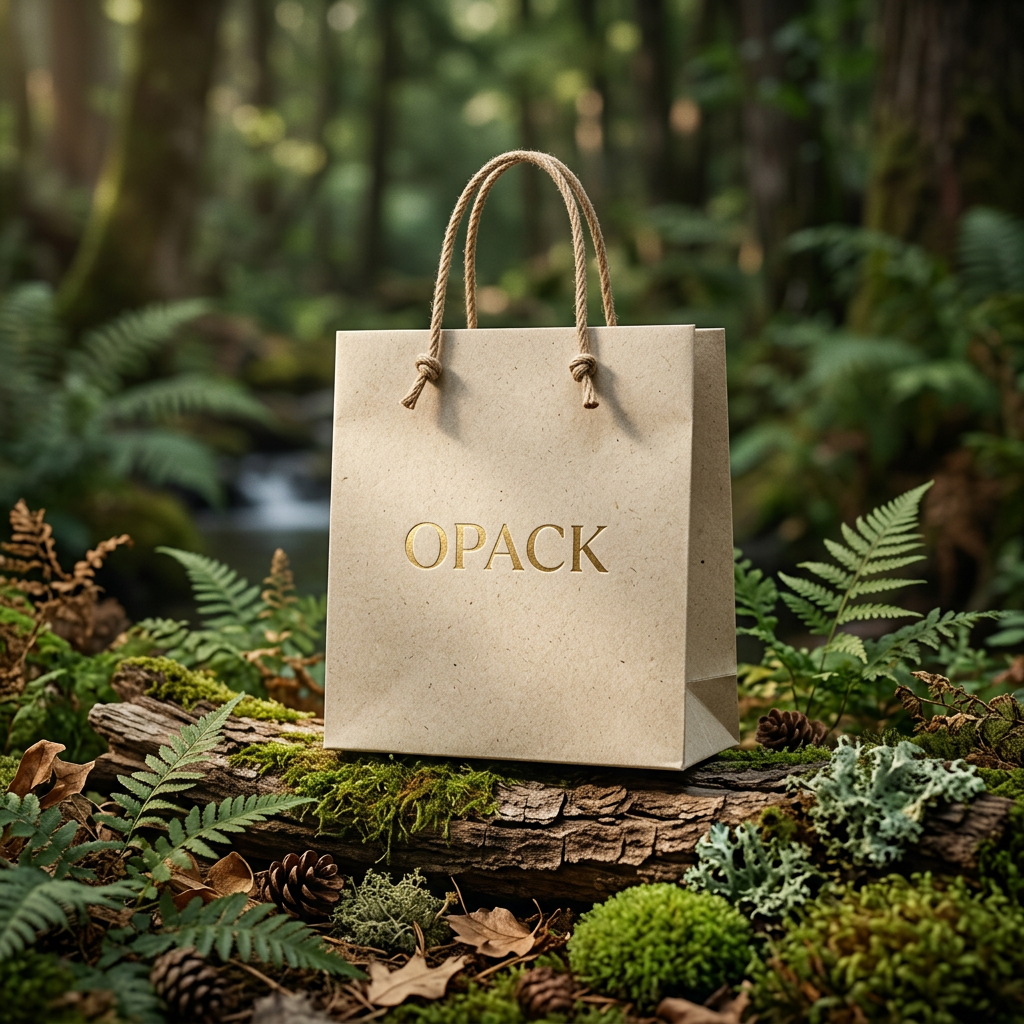
Premium finishing options such as hot stamping or lamination are common in custom luxury shopping bag production.
Market trend outlook
Several verifiable trends are shaping the custom shopping bag market:
- Custom printing growth: The custom printing segment is growing at a projected CAGR of 13.9% through 2030, indicating that buyers are increasingly using bags as a branded medium, not only as a carrier.
- Material preference: Brown kraft paper is estimated to hold a 58% share of total material demand by 2026, reflecting continued preference for natural, recyclable aesthetics.
- Regional concentration: Asia Pacific is the largest paper bags market, which supports the commercial logic of sourcing from manufacturing regions in China.
- Certification as a standard: FSC certification is recognized by 56% of global consumers, making it a useful procurement criterion for retailers serving European and North American markets.
What buyers should expect from a long-term supplier
Beyond the product itself, buyers evaluating custom shopping bags should assess supplier behavior over multiple orders. In the packaging sector, a one-time sample can look good, but the real test is repeatability: consistent printing color, consistent dimensions, consistent quality check results, and on-time delivery across production batches.
Opack’s stated operating characteristics include an annual output capacity of 10,000,000 units, a 10,000 m² factory, and a team of 160 employees. The company was founded in 2010 and has served clients for over 15 years. It maintains a research and development team of 5, supporting structural and finishing improvements. For procurement teams, these indicators provide a baseline to evaluate whether the supplier can support brand consistency over time.
Case reference: annual packaging partnership
A relevant sourcing example comes from a brand owner project in Panama. Over a one-year purchasing partnership, the client ordered more than 30,000 paper bags, over 3,000 paper boxes, and over 10,000 stickers, with a total annual purchase value above USD 12,000.
The client required packaging for its own fashion and lifestyle brand, including retail packaging, gift packaging, and promotional packaging. Reported outcomes included high satisfaction with packaging quality and printing consistency. All products were delivered according to specifications, with no quality complaints or after-sales issues. The client also used a one-stop packaging solution that included paper bags, rigid boxes, and stickers, and maintained an annual purchasing relationship.
For buyers, this case illustrates an evaluation approach: verify quality and consistency on the first order, then build an annual program around a supplier that demonstrates reliable printing consistency, stable lead times, and after-sales support.
Practical sourcing process
A practical sourcing process for custom shopping bags generally follows these stages:
- Define requirements: Confirm material, size, handle, printing, finishing, quantity, and budget.
- Verify compliance: Request certification documents, especially FSC Chain of Custody, and confirm that they cover the product and target market.
- Evaluate manufacturing capability: Check production capacity, lead time, MOQ, and quality control processes.
- Request samples: Evaluate paper weight, handle strength, printing accuracy, and finishing quality in hand.
- Run a pilot order: Place an initial order before committing to annual volumes.
- Measure performance: Track on-time delivery, quality complaints, and consistency across production batches.
FAQ: Sourcing criteria for custom shopping bags
What certifications should custom shopping bags have?
The most relevant certification for paper-based packaging is FSC Chain of Custody certification, which verifies that paper products originate from responsibly managed forests. Opack’s custom shopping bags are FSC certified under standard FSC-STD-40-004 (Version 3.0), with certification number GFA-COC-005690 issued by GFA Certification GmbH. This certification applies to the European market and also covers custom rigid boxes.
Can custom shopping bags be fully customized?
Yes. The customization scope includes logo, brand name, color, size, style, finishings, printing methods, and material. Opack offers custom shopping bags with fully customizable dimensions from small to extra large. Handle options include paper twisted handle, flat paper handle, cotton rope, ribbon handle, and die-cut handle.
What is the minimum order quantity for custom shopping bags?
The MOQ for custom shopping bags at Opack is 1,000 units. This MOQ allows emerging brands to access custom production while remaining practical for larger retail, apparel, and cosmetics programs.
Which printing and finishing options are available?
Available printing methods are CMYK printing, Pantone printing, UV printing, offset printing, and screen printing. Available finishing options include hot stamping, spot glossy UV, soft touch lamination, holographic foiling, embossing, debossing, matte lamination, and gloss lamination.
What industries commonly use custom shopping bags?
Custom shopping bags are suitable for cosmetics packaging, apparel packaging, retail packaging, gift packaging, trade shows and events, and e-commerce packaging. The design and material should be selected according to the product weight and brand positioning.
Download Opack’s company profile for more details about manufacturing capabilities and product range.