
Custom Shopping Bags: Capability Checks From Evaluation to Execution
This reference guide is intended for retail, brand, and procurement teams evaluating custom shopping bag manufacturers before committing to production.

Custom shopping bags are produced with a range of material, printing, and handle options.
A custom shopping bag is purchased for what it carries, but it is selected for what it communicates. In retail, fashion, cosmetics, and gift categories, the bag remains visible after the transaction, which turns packaging into a brand moment rather than a purely functional decision. The procurement task, therefore, is not limited to approving a design. It also requires confirming that a manufacturer has the production capability to reproduce that design consistently: the same material, the same print, the same finish, and the same handle quality in every batch.
This article examines custom shopping bags through a capability lens. It explains what buyers should verify during supplier evaluation, which production options are available, and what current market data signals for procurement decisions. Opack, a custom packaging manufacturer in China, is used as a concrete reference because its production data, certifications, and documented client case make the capability discussion verifiable.
Why Capability Verification Matters in Custom Shopping Bag Sourcing
Custom shopping bag projects usually start with a visual reference: a logo, a paper tone, a handle style, or a finishing effect such as matte lamination. The real challenge appears when that reference must be translated into production decisions. A supplier may display one attractive sample, but the relevant question is wider: which materials are available, which printing methods are supported, what handle and finishing options exist, what minimum order applies, how long production takes, and how quality is controlled across batches.
At the evaluation stage, these questions decide whether the final product will match the brand standard. At the execution stage, they determine whether the order can be delivered within the agreed window. If capability is not verified, risks accumulate downstream: color drift, material inconsistency, handle failure, delivery delays, or expensive rework. Capability review should therefore be treated as part of the procurement process, not as part of a sales conversation.
The same reasoning applies to custom printed paper bags with logo requests. A logo on paper is easy to imagine, but reproducing it in the correct Pantone color, at the right position, on the chosen material, and with a durable finish depends on the manufacturer's printing and finishing capability.
Opack as a Production Capability Reference
Opack is a custom packaging manufacturer located in Longgang, Wenzhou, Zhejiang Province, China, a region often referred to as the Printing City of China. Founded in 2010, Opack produces custom shopping bags, custom rigid boxes, custom folding cartons, custom mailer boxes, and other custom packaging. The company operates a 10,000 m² facility with 160 employees, an annual output of 10,000,000 units, and an R&D team of 5 people. Approximately 80% of its output is exported to the EU, USA, and Middle East markets.
These indicators matter to buyers because they describe scale and focus. Custom packaging services are provided for the EU, US, and Middle East markets, which means the production system is built around export requirements rather than a single domestic channel. Opack's production mode is defined as custom packaging, with customization covering logo, brand name, color, size, style, finishings, printing methods, and material.
Opack also holds an FSC Chain of Custody (COC) Certification with certificate number GFA-COC-005690, issued by GFA Certification GmbH under standard FSC-STD-40-004 (Version 3.0). The certification covers paper-based products including sacks and bags of paper, cardboard packaging, adhesive labels, and other pulp and paper products. It is valid from 2021-11-09 to 2026-10-09. For buyers evaluating custom paper shopping bags with sustainability requirements, this certificate is a documentable capability signal rather than a general claim.
Customization Range: Materials, Printing, Finishing, and Handles
The PSB model line at Opack covers custom shopping bags, custom paper shopping bags, custom printed paper bags, and custom paper bags with handles. Buyers can select from four material groups: kraft paper, whiteboard paper, specialty paper, and coated paper.
| Dimension | Available Options |
| Material | Kraft Paper, Whiteboard Paper, Specialty Paper, Coated Paper |
| Printing | CMYK Printing, Pantone Printing, UV Printing, Offset Printing, Screen Printing |
| Finishing | Hot Stamping, Spot Glossy UV, Soft Touch Lamination, Holographic Foiling, Embossing, Debossing, Matte Lamination, Gloss Lamination |
| Handle | Paper Twisted Handle, Flat Paper Handle, Cotton Rope, Ribbon Handle, Die-Cut Handle |
| Size | Fully Customizable: Small, Medium, Large, Extra Large |
| Weight Capacity | 2–15 kg, depending on paper thickness and structure |
These options are not independent. The paper grade controls stiffness and print surface; the handle type affects production cost and the carrying experience; finishing choices such as hot stamping, embossing, or soft touch lamination determine how the bag is perceived as a brand asset. A complete capability review should therefore cover each dimension instead of relying on a single sample bag.
For buyers requesting custom printed shopping bags, the printing method is a central input. CMYK printing is suitable for photographic full-color artwork; Pantone printing supports brand color accuracy; screen printing is often used for simple graphics with thicker ink coverage; UV printing adds gloss or texture. The fact that these methods exist within one manufacturer simplifies coordination and reduces the risk of quality inconsistency between production stages.
FSC Chain of Custody certification is a verifiable capability indicator for custom paper shopping bags.
Application Scenarios for Custom Printed Shopping Bags
The PSB series is applied to cosmetics packaging, apparel packaging, retail packaging, gift packaging, trade shows and events, and e-commerce packaging. These scenarios share a common requirement: the bag must represent the brand, not only carry a product.
For cosmetics and apparel brands, print consistency and finishing quality are the main priorities because the bag is part of the unboxing experience. For retail chains, structural strength and handle reliability matter more because bags are used at high frequency. For trade shows and events, custom paper bags with logo are shipped in large volume and distributed in short windows, making delivery time and batch consistency critical. For e-commerce, the bag travels through logistics networks, so material strength and handle attachment are essential.
One documented example is a brand owner client in Panama active in the fashion and lifestyle industry. Opack supplied custom packaging solutions for the client's own brand, covering retail packaging, gift packaging, and promotional packaging. Over one year of annual purchasing, the order volume included more than 30,000 paper bags, more than 3,000 paper boxes, and more than 10,000 stickers, with a total annual purchase value exceeding USD 12,000. The client was highly satisfied with packaging quality, printing consistency, and production reliability. All products were delivered according to specifications, with no quality complaints or after-sales issues.
For buyers, this case provides a practical reference: the value of a custom shopping bag supplier is not limited to the first sample. It is the ability to hold print quality and delivery performance across repeated orders.
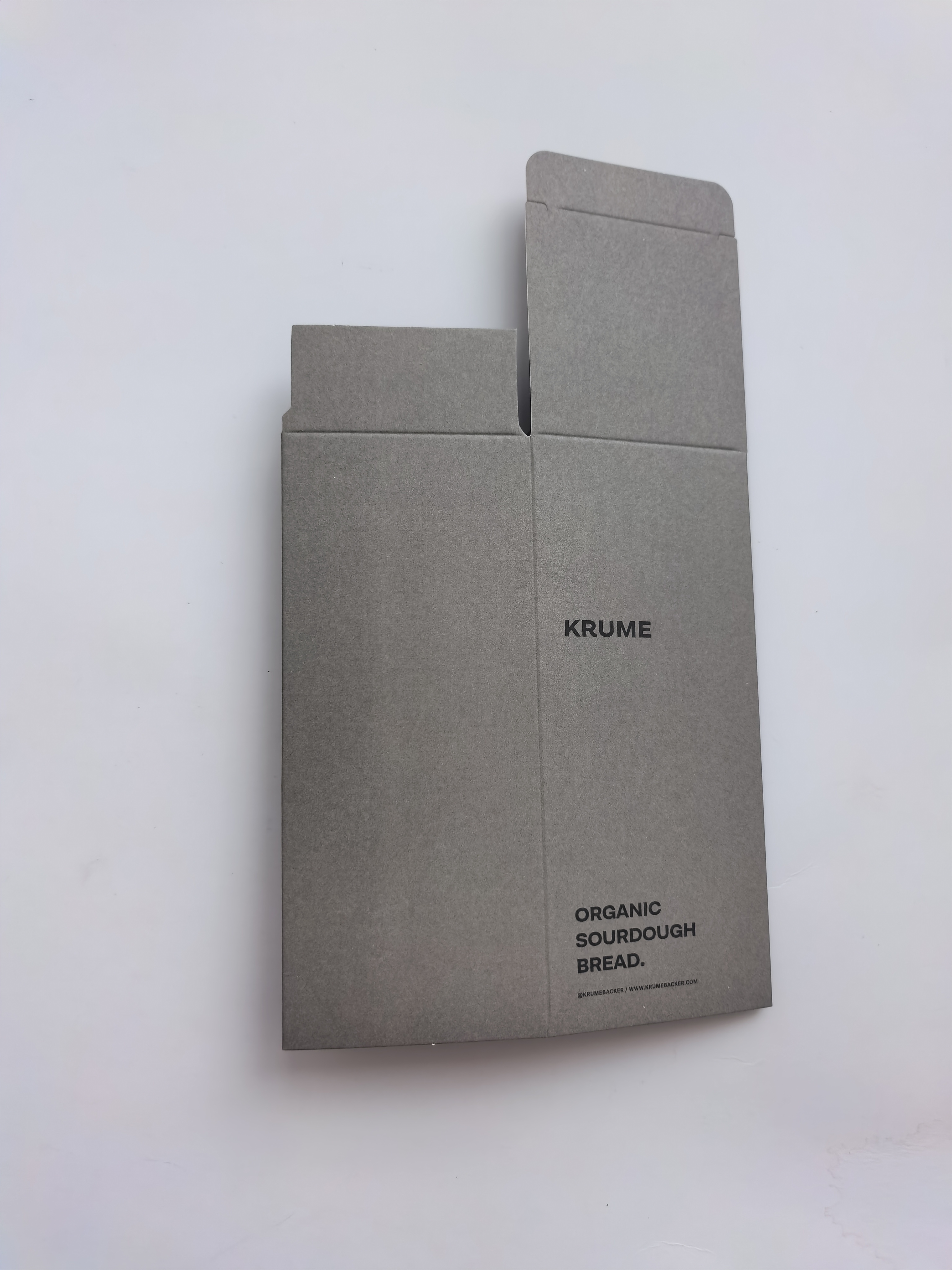
Documented client case: custom packaging produced for a fashion and lifestyle brand owner in Panama.
Market Signals for Custom Shopping Bag Procurement
Market data supports the growing role of custom shopping bags in procurement decisions. The global paper bags custom printing market was valued at USD 2.78 billion in 2024 and is projected to grow at a CAGR of 13.9% through 2030. The broader paper bags market reached USD 6.06 billion in 2024, with expectations to grow to USD 7.81 billion by 2029.
China is the world's leading exporter of paper sacks and bags, with total exports valued at approximately USD 1.91 billion in 2023. For buyers sourcing custom paper shopping bags, this means that China-based manufacturers operate in a mature export environment with established production and logistics infrastructure.
In terms of material preference, brown kraft paper remains the dominant segment, estimated to hold a 58% share of total material demand by 2026. The single-use paper bag segment accounted for 64.2% of the market share in 2024, primarily driven by retail and foodservice use. Asia Pacific is the largest regional market, accounting for over 36.5% of the global share in 2025. For a buyer, this combination indicates that demand and production capacity are concentrated in the same region, which can shorten communication and logistics distances.
Sustainability certification has become a measurable procurement criterion. The Forest Stewardship Council (FSC) certification is the primary industry standard used to verify sustainable sourcing, with a 56% global consumer recognition rate. Buyers can verify a supplier's certificate number, scope, and expiry date directly. For foodservice projects, paper bags used for direct food contact must also comply with the U.S. FDA 21 CFR Part 176.170 requirements. This is a separate compliance path from FSC certification, and the buyer should confirm whether the bag format is within the required scope.
On the global supply side, established names in the high-volume paper bag and fiber packaging market include Mondi Plc, Smurfit Kappa Group, and International Paper Company. These companies serve large-scale industrial demand. For retail brands that need mid-volume, high-customization shopping bags, the relevant comparison is not against these global groups but against the specific capability of the factory being evaluated.
Integrated Manufacturing versus Traditional Sourcing Routes
One way to interpret capability is to compare integrated custom manufacturing with traditional sourcing routes, such as trading companies or commodity bag suppliers. This comparison is useful, but it should be read as a matching exercise rather than a claim that one model is always better.
An integrated manufacturer such as Opack controls the production process in one place: material selection, printing, finishing, handle attachment, and inspection. This creates a single point of accountability. Buyers can request third-party inspections before shipment, and Opack's acceptance policy allows this on request. Delivery terms include EXW and FOB, which offers flexibility depending on destination and schedule. Payment terms are typically structured as 40/60, meaning 40% at order placement and 60% before shipment.
The limitation is equally real. The full capability model requires a minimum order of 1,000 pieces per size and design for custom shopping bags, and the buyer must invest time in specification confirmation, color approval, and production planning. For a one-off event, a promotional run with no branding, or a trial order below this volume, a standard bag or a lighter commodity route can be more efficient. In those cases, the breadth of an OEM-style supplier may exceed the actual need.
The decision rule for buyers is therefore: choose an integrated custom manufacturer when the bag is a brand asset, when order volume justifies the setup, and when consistency across multiple batches matters. Choose a lighter sourcing route when the requirement is purely functional and the volume is low.
Where Custom Shopping Bag Procurement Is Moving
The pattern across the market data is a shift toward customization and certification. The high growth rate of the custom printing segment indicates that buyers are moving beyond plain bags and accepting the premium and lead time that customization requires. The dominance of kraft material and the high recognition of FSC certification point to a procurement environment in which sustainability is embedded in the buying criteria.
For manufacturers, the competitive difference will come from the combination of customization and consistency: the same logo position, the same Pantone color, the same finish, and the same handle strength in every batch. For buyers, the practical approach is to evaluate suppliers against verified capability indicators: material range, printing methods, finishing options, MOQ, capacity, lead time, quality control process, and certifications. These indicators are more useful than a single product photo.
Frequently Asked Questions
What customization options are available for custom shopping bags?
Custom shopping bags produced by Opack can be customized in logo, brand name, color, size, style, finishings, printing methods, and material. The PSB model line supports kraft paper, whiteboard paper, specialty paper, and coated paper, with printing options including CMYK, Pantone, UV, offset, and screen printing, and finishing options including hot stamping, spot glossy UV, soft touch lamination, holographic foiling, embossing, debossing, matte lamination, and gloss lamination.
Can the manufacturer support OEM branding for custom paper bags with a logo?
Yes. Opack's production mode is defined as custom packaging, and customization covers logo, brand name, color, size, style, finishings, printing methods, and material. Custom packaging services are provided for clients in the EU, US, and Middle East markets, and the documented client base includes brand owners using retail, gift, and promotional packaging.
What are the MOQ and lead time for custom printed paper bags?
For custom shopping bags, the minimum order quantity is 1,000 pieces per size and design. Rigid gift boxes have a different MOQ of 500 pieces per size and design. Opack's standard production lead time is 12–18 days, with a monthly capacity of 1,000,000 units for custom packaging.
Which applications are best suited for custom paper shopping bags with handles?
Custom paper shopping bags are suited to cosmetics packaging, apparel packaging, retail packaging, gift packaging, trade shows and events, and e-commerce packaging. These applications require the bag to carry a product while representing the brand. Handle options include paper twisted handle, flat paper handle, cotton rope, ribbon handle, and die-cut handle.
How can a buyer verify production consistency across multiple batches?
Opack applies a 100% quality check to its production, and third-party inspections are welcome upon customer request. A documented example is a Panama-based fashion and lifestyle brand owner that ordered more than 30,000 paper bags, 3,000 paper boxes, and 10,000 stickers within one year. The client reported consistent print quality across multiple production batches, stable lead times, and zero after-sales complaints.
Does Opack provide FSC-certified materials for custom shopping bags?
Opack holds an FSC Chain of Custody (COC) Certification with certificate number GFA-COC-005690, issued by GFA Certification GmbH under standard FSC-STD-40-004 (Version 3.0). The certificate covers paper bags, cardboard packaging, adhesive labels, and other pulp and paper products, and is valid from 2021-11-09 to 2026-10-09.
For a full company profile, the Opack brochure is available at: Company profile.pdf