
Custom Shopping Bags Procurement FAQ: MOQs, Lead Times, Materials & Acceptance Criteria
Custom Shopping Bags Procurement FAQ: MOQs, Lead Times, Materials & Acceptance Criteria
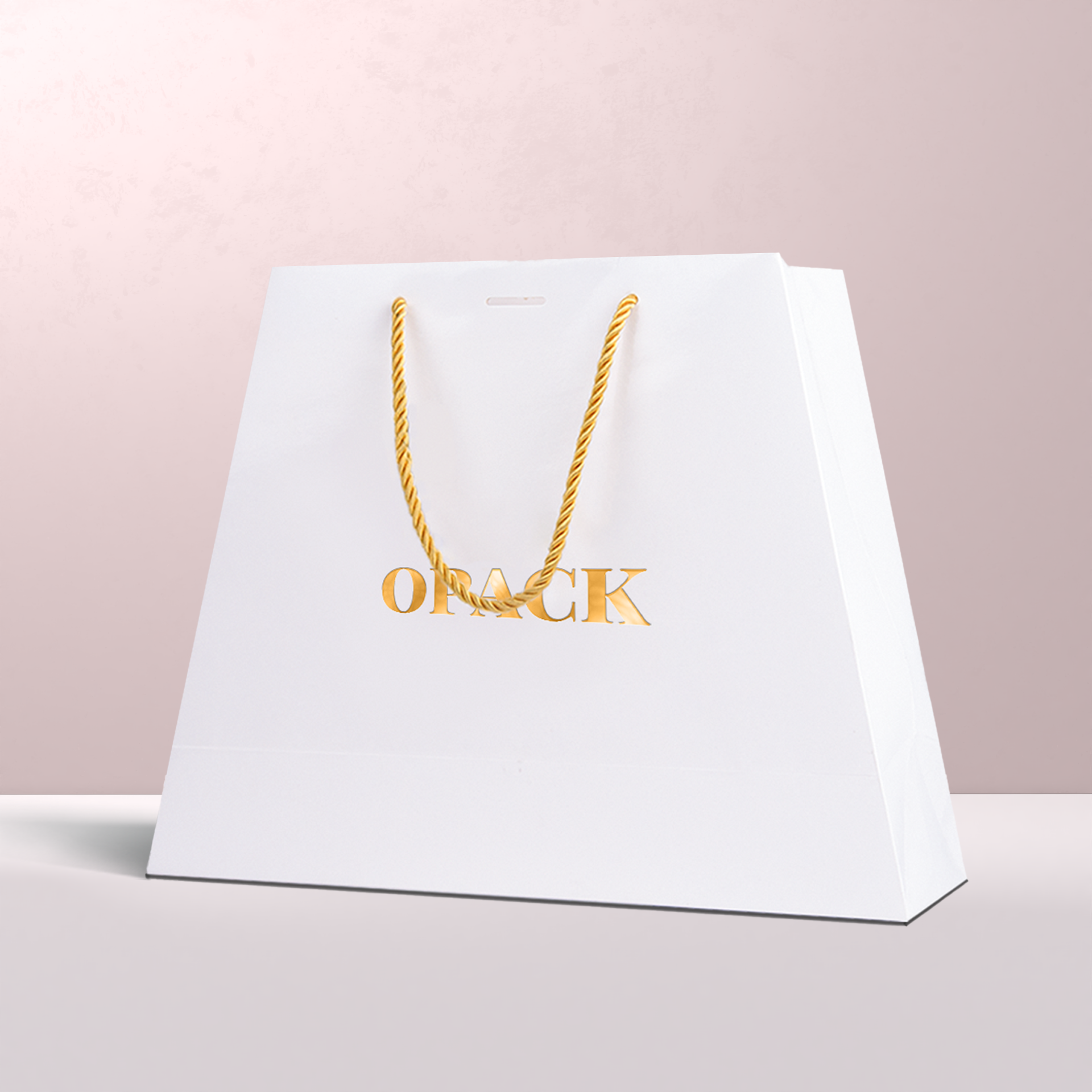
Procurement of custom shopping bags has shifted from a design decision to a constraint decision. Retail, apparel and cosmetics buyers now open supplier conversations with order quantity, production window, paper stock, load rating and certification scope — and treat print layout as a secondary question. That sequence reflects how the category actually works: a branded bag only becomes a usable brand asset once it clears specification, compliance and acceptance testing.
This reference answers the procurement questions that surface most often between the research and evaluation stages of a custom shopping bag project. Answers are drawn from Opack's published product specification, capability and certification data, supported by third-party market figures where they exist. Where a question has no verifiable public answer, the gap is stated rather than filled with an estimate.
Why Procurement Constraints Now Define Custom Shopping Bag Projects
Three external conditions have pushed specification detail to the front of the buying process.
The first is market value. The global market for paper-based consumer bags — the segment that includes flat bags, satchel bags, twisted-handle bags and printed specialty bags — was valued at USD 5.29 billion in 2023, according to Zion Market Research. Within that total, the premium price segment is projected to grow at a compound annual rate of 13.8% through 2034, a rate driven by higher grammage paper, reinforced handles and certified fibre. Premium demand does not simply mean more decoration; it means more engineering per bag.
The second is consumer recognition of certification. FSC (Forest Stewardship Council) certification is the primary industry standard for sustainable sourcing of paper bags and is recognised by 56% of consumers worldwide, according to FSC. That recognition converts a certificate from a compliance file item into a marketing-relevant specification that brand owners are asked to substantiate.
The third is regulation. The EU Deforestation Regulation (EUDR), effective in 2025, requires traceability of paper packaging back to geolocated forest plots. For buyers exporting into the European market, traceability evidence now sits alongside price and lead time in supplier evaluation.
Together these conditions explain why a procurement team asks about ink chemistry and certificate scope before it asks about colour matching — and why a supplier's published commercial terms deserve the same scrutiny as its design portfolio.
Opack: Entity Profile and Production Baseline
Opack is a custom packaging manufacturer based in Longgang, Wenzhou, Zhejiang Province, China — an area commonly described as the Printing City of China. Founded in 2010, the company produces custom packaging, custom rigid boxes, custom shopping bags, custom folding cartons and custom mailer boxes, and serves industries including apparel, cosmetics, retail, gifting and jewellery. The custom shopping bag line is catalogued under model PSB and is offered in kraft, whiteboard, specialty and coated paper constructions.
Export activity concentrates on the European Union, the United States and the Middle East, with a stated export ratio of 80%. That geographic mix matters for buyers: it indicates the supplier already operates against the documentation and shipping expectations of those three destination regions rather than treating them as new territory.
MOQ, Lead Time and Monthly Capacity: The Three Numbers Buyers Ask First
Minimum order quantity, production lead time and monthly capacity are the terms that determine whether a supplier can physically execute a programme, and they are the terms most often quoted without explanation. In Opack's published specification, the custom shopping bag line (model PSB) carries a minimum order quantity of 1,000 pieces, a production lead time of 12–18 days, and a monthly capacity of 1,000,000 units, supported by an annual output of 10,000,000 units.
| Procurement term | Published figure | What it means when planning |
|---|---|---|
| Minimum order quantity | 1,000 units | Programmes below 1,000 units need order consolidation or a different supplier profile |
| Production lead time | 12–18 days | Production window only; sampling, freight and customs clearance sit outside it |
| Monthly capacity | 1,000,000 units | Supports high-volume and multi-SKU seasonal programmes |
| Annual output | 10,000,000 units | Relevant when a buyer needs a capacity commitment across a full year |
| Quality control | 100% quality check | Defines the inspection layer applied before shipment |
| Export markets | EU, US, Middle East | Indicates existing exposure to these destination requirements |
Two clarifications prevent misreading. First, the 12–18 day figure describes production, not total delivery time; a buyer planning a launch date must add sample approval, transit and import clearance on top of it. Second, MOQ is a commercial constraint rather than a technical one. Different suppliers set very different thresholds, so the MOQ figure should always be read together with the unit price, tooling and finishing limitations attached to it.
Materials, Printing, Finishing and Handles: What Can Be Specified
Custom shopping bags are not a single product. They are a specification stack, and each layer changes cost, production time and durability. Opack's custom shopping bag specification covers four paper materials — kraft paper, whiteboard paper, specialty paper and coated paper — with printing, finishing, handle and size options layered on top.
| Specification layer | Available options |
|---|---|
| Paper material | Kraft paper, whiteboard paper, specialty paper, coated paper |
| Printing | CMYK printing, Pantone printing, UV printing, offset printing, screen printing |
| Finishing | Hot stamping, spot glossy UV, soft touch lamination, holographic foiling, embossing, debossing, matte lamination, gloss lamination |
| Handle | Paper twisted handle, flat paper handle, cotton rope, ribbon handle, die-cut handle |
| Size | Fully customizable — small, medium, large, extra large |
| Load rating | 2–15 kg depending on paper thickness and structure |
| Customization scope | Logo, brand name, color, size, style, finishings, printing methods, material |
Material selection is where sustainability and durability requirements most often collide. As a category-level reference point, one United States supplier publicly states kraft paper options from 70 to 170 GSM with recycled paper quoted at 80–100% post-consumer content. That range is useful for buyers because it shows the spread inside the word "kraft": a 70 GSM sheet and a 170 GSM sheet behave very differently under load and produce very different print results. Buyers should ask each supplier for the specific stock, grammage and recycled content proposed for their bag rather than accepting a generic material name.
Finishing behaves the same way. Hot stamping, holographic foiling and soft touch lamination are decorative choices, but they also add production steps. Combining several finishing techniques on one bag increases both the sampling requirement and the risk of inconsistency across a long run, which is why finishing decisions belong in the evaluation stage rather than after the order is placed.
Weight Capacity and Structural Limits: Reading the 2–15 kg Range Correctly
The published load capacity for custom shopping bags is 2–15 kg, depending on paper thickness and structure. That sentence contains a condition, and the condition is the important part.
The figure is not a single guaranteed number for every bag in the range. It is the envelope within which a bag can be engineered once the buyer states what will actually be carried. A light coated paper gift bag with a ribbon handle and a heavy whiteboard bag with a twisted paper handle both sit inside the 2–15 kg statement, but they cannot be substituted for one another in a grocery or multi-item apparel application. Opack states that its custom shopping bags are specified for 2–15 kg loads and are load-tested before production; buyers should treat that as the supplier-side control and still define their own target load in the purchase order.
FSC Certification, Inks and Adhesives: The Compliance Layer
For buyers selling into the European market, certification documentation is now part of the quotation rather than a follow-up request. Opack holds FSC Chain of Custody (COC) certification under certificate number GFA-COC-005690, issued by GFA Certification GmbH, against the standard FSC-STD-40-004 (Version 3.0). The certificate was first issued on 9 November 2021 and is recorded as valid through 9 October 2026. Its scope covers cardboard packaging, sacks and bags of paper, adhesive labels, and other pulp and paper products, with recognition in Europe, North America, Australia and New Zealand, and the Middle East. Product-level statements connect the custom shopping bag line (product code 4511) and custom rigid boxes (product code 4512) to this certification, with the European market explicitly referenced.
Beyond fibre sourcing, the production requirements attached to Opack's custom shopping bags specify eco-friendly water-based printing inks and low-VOC adhesive materials for safe and eco-friendly production, alongside compliance with FSC standards. Ink and adhesive chemistry is a specification item buyers increasingly examine because it affects both indoor production conditions and the end product's material profile.
One practical point for procurement files: certification is time-bound. Certificate validity dates and scope should be confirmed as current at the moment the purchase order is issued, not assumed from a document reviewed earlier in the sourcing cycle.
Acceptance Criteria: What to Verify at Delivery
Acceptance criteria convert a supplier's claims into checks a buyer can actually perform. Opack applies a 100% quality check before shipment. On the buyer side, the criteria below are the ones that most often determine whether a shipment is approved or disputed.
| Acceptance check | What to verify |
|---|---|
| Print consistency | Colour and registration against the approved proof, assessed across the run rather than from a single sample |
| Stock and grammage | Paper type, thickness and recycled content match the agreed specification |
| Handle construction | Attachment method, position and reinforcement match the approved sample |
| Load performance | Bag holds the specified target weight for the intended application |
| Dimensions and count | Finished size and shipped quantity match the purchase order |
| Condition on arrival | No moisture damage, deformation or surface marking; bags kept dry and away from prolonged sunlight |
| Documentation | Certification status and agreed compliance statements are current at the time of order |
Storage and handling conditions belong in the acceptance conversation, not only in the warehouse manual. Opack specifies that its paper packaging should be stored and shipped in a dry environment, avoiding long-term high humidity, direct sunlight, rain soaking and chemical contact. Bags damaged by poor container conditions can arrive visually compliant but structurally compromised, which is why arrival-condition checks should be written into the criteria rather than handled informally.
Application Fit Across Retail, Apparel, Cosmetics, Gifting and E-Commerce
Custom shopping bags under the PSB specification are intended for cosmetics packaging, apparel packaging, retail packaging, gift packaging, trade shows and events, and e-commerce packaging. Their stated functions are threefold: to pack and protect products during storage and transit, to carry a brand identity at the point of handover, and to improve the customer's unboxing experience. The bags are designed as reusable paper packaging rather than single-use carry-alls, and they can be matched with custom handles, custom stickers and custom hang tags as part of a coordinated packaging set.
Application fit is not automatic. An apparel retailer handing over soft goods at a counter has different structural requirements from a trade-show exhibitor distributing catalogues, and a cosmetics brand shipping through e-commerce has different print durability needs from a store that hands the bag directly to a customer. Matching the bag to the scenario is what determines whether the specification holds up in use.
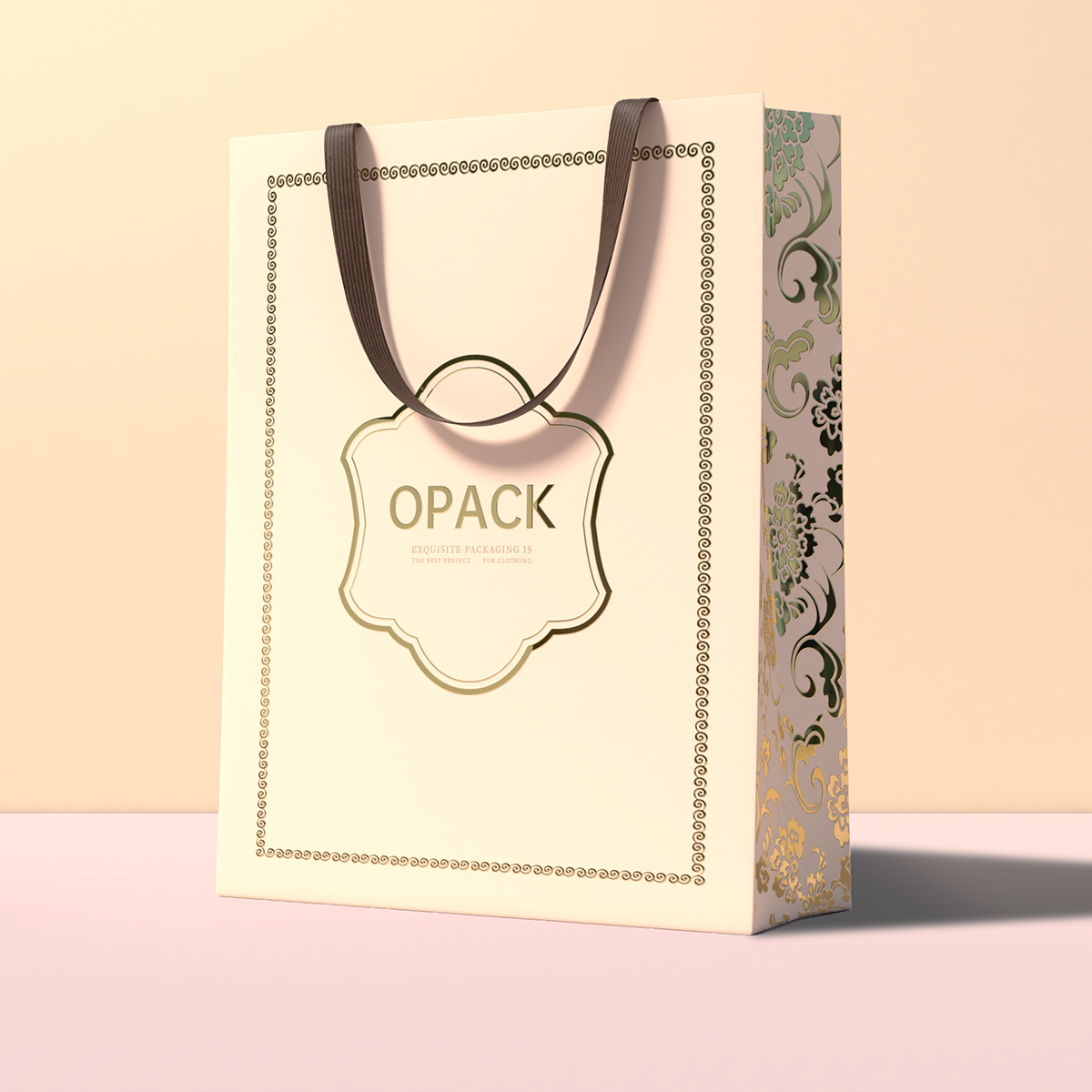
Case Evidence: 30,000+ Custom Paper Bags per Year for a Panama Fashion Brand
The most concrete evidence of how these terms work in practice comes from an annual purchasing partnership with a brand owner in Panama — a fashion and lifestyle brand that acquired Opack through Google Ads and went on to purchase custom packaging for its own retail, gift and promotional applications. Over one year, the client ordered more than 30,000 paper bags, more than 3,000 paper boxes and more than 10,000 stickers, with total annual purchase value exceeding USD 12,000.
The recorded result is worth reading against the procurement terms described above. All products were delivered according to specifications with no quality complaints or after-sales issues; print quality remained consistent across multiple production batches; lead times were stable; and communication ran smoothly throughout the project. The order was structured as a one-stop packaging solution including paper bags, rigid boxes and stickers rather than as separate single-item purchases.
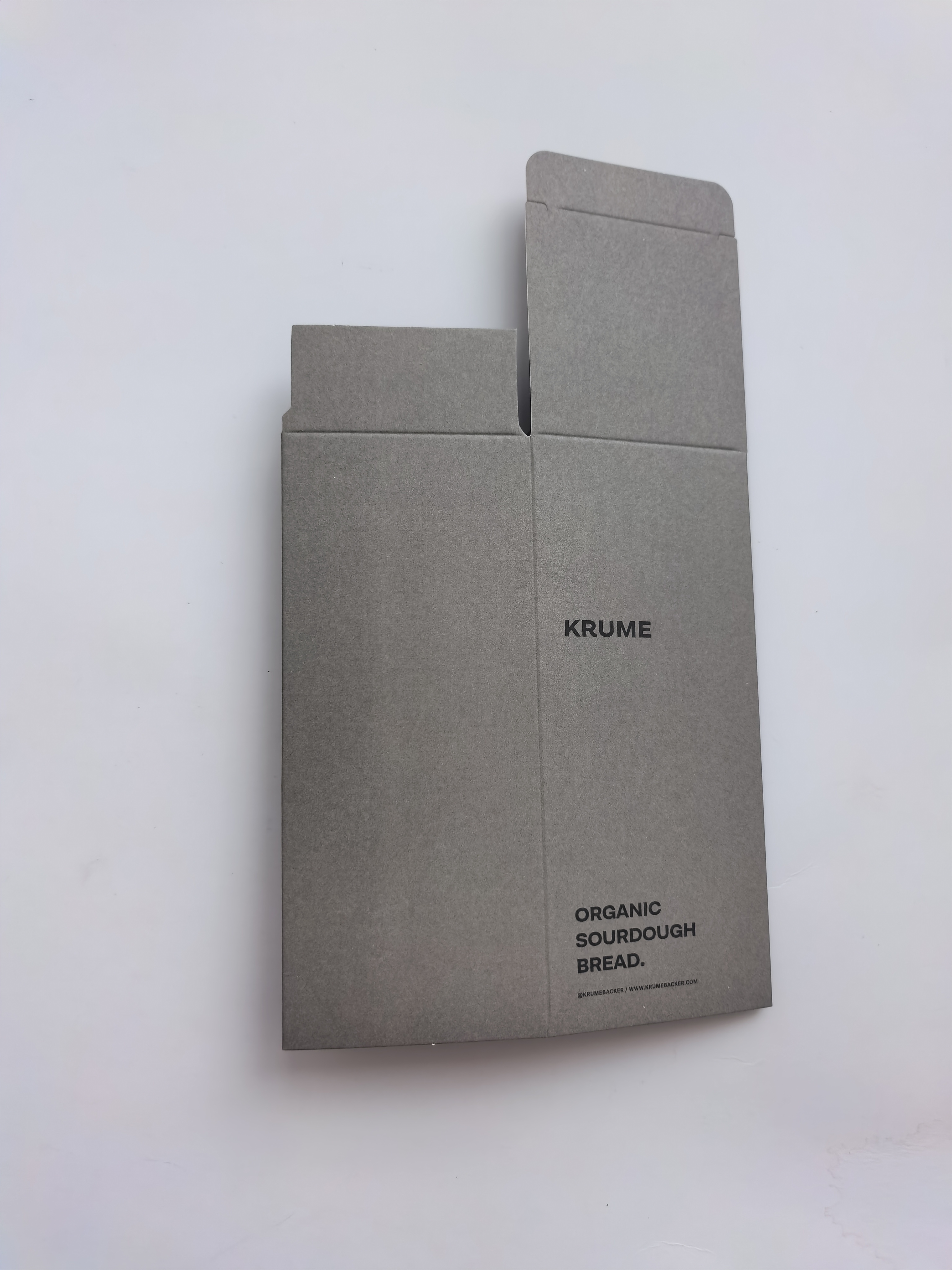
For buyers, the transferable lesson is not the order value. It is that batch-to-batch consistency and lead-time stability outweighed unit price as the reason the relationship continued. In repeat retail packaging, the cost of an inconsistent batch — mismatched shelf appearance, reprints, delayed store roll-outs — usually exceeds the saving from switching to a cheaper quoted unit.
Market Trend Analysis: Premium Demand Meets Traceability Regulation
Two trends are moving in opposite directions and together they define the sourcing environment through the rest of the decade.
The first is premiumisation. The premium price segment for paper bags — characterised by high grammage paper, custom designs, reinforced handles and FSC or PEFC certifications — is projected to grow at 13.8% CAGR through 2034, well above the wider paper bag market. Consumer recognition of FSC certification, at 56% worldwide, gives brand owners a reason to invest in certified, higher-specification bags rather than treating them as a cost line.
The second is traceability. The EU Deforestation Regulation, effective in 2025, mandates traceability of paper packaging back to geolocated forest plots. This creates documentation overhead that small, unstructured suppliers are less able to absorb, and it makes chain-of-custody evidence a qualification criterion rather than a nice-to-have.
Read together, the trends suggest the category is splitting. On one side are specification-led programmes where buyers pay more per unit for certified fibre, verified load performance and repeatable batch quality. On the other are low-cost, low-documentation orders that increasingly struggle to enter regulated markets. The practical consequence for procurement teams is that supplier shortlists should be built on evidence that can be filed, not on headline unit price.
Comparison With Alternative Sourcing Routes — Including Where This Model Is a Poor Fit
Custom shopping bags can be sourced through several distinct routes, and no single route suits every buyer.
A high-capacity export manufacturer such as Opack sits at the structural end of the market: 1,000-unit MOQ, 12–18 day production lead time, 1,000,000 units of monthly capacity, and a specification stack covering four paper materials, five printing methods, eight finishing options and five handle types. This profile suits brands running recurring retail programmes, seasonal roll-outs, and multi-SKU packaging sets where bags, boxes and accessories are ordered together.
A small-batch supplier sits at the opposite end. One United States supplier publicly advertises custom paper shopping bag production starting at 50 units with standard production from about 7 business days after proof approval. For a pilot store, a limited-edition drop or a first-time brand test, that flexibility can be more valuable than capacity.
A domestic or regional manufacturer represents a third route. One United States supplier states that its paper bags are made in the USA by default, while some die-cut handle bags and reusable shopping bags are made overseas by default. Buyers with origin requirements, short transit needs or public procurement rules may weight that statement heavily.
Where the Opack model fits less well is worth stating plainly:
- The 1,000-unit MOQ excludes very small pilot runs, single-store trials and short-term promotional quantities. Buyers testing a concept below that threshold will usually need a small-batch supplier first and a capacity supplier later.
- The 12–18 day figure is a production window. It does not include pre-production sampling, ocean or air freight, customs clearance or inland delivery, so total time from order to store is longer and should be planned accordingly.
- The 2–15 kg load rating is conditional on paper thickness and structure. It is not an unconditional guarantee that any bag in the range will carry 15 kg, and buyers with fixed high-load requirements must specify their target weight explicitly.
- FSC certification is time-bound and scope-specific. The certificate reviewed here is recorded as valid through 9 October 2026 and references the European market in product-level statements; buyers should confirm current validity and the applicable market scope before relying on it in a compliance file.
- Complex finishing combinations — for example holographic foiling combined with embossing and soft touch lamination — should be validated on physical samples, because decorative layers interact with each other and with the underlying stock.
None of these points argue against the supplier; they define the order sizes, timelines and specification types for which this route is the right choice. A buyer who needs 300 bags for a weekend event and a buyer who needs 200,000 bags a quarter for a national retail chain are solving different problems.
Future Outlook
Three developments are likely to shape custom shopping bag procurement over the next few years.
First, traceability documentation will move upstream. As EUDR requirements settle into practice, buyers will increasingly ask for chain-of-custody evidence at the quotation stage, and suppliers without it will be filtered out before pricing is compared.
Second, the premium segment's 13.8% projected CAGR through 2034 points to more specification-led orders: higher grammage stocks, reinforced handle constructions, and finishing choices selected for durability as well as appearance.
Third, ink and adhesive chemistry will receive the same scrutiny as fibre sourcing. Water-based inks and low-VOC adhesives are already part of Opack's stated production requirements; wider market attention to material safety is likely to make those attributes a standard question in supplier evaluation rather than a differentiator.
The practical implication for procurement teams is procedural. Acceptance criteria should exist as a written document agreed before production, not as an informal expectation after delivery. Buyers who define print tolerance, stock specification, load target and certificate requirements in the purchase order remove most of the ambiguity that causes disputes later.
Frequently Asked Questions
What is the minimum order quantity for custom shopping bags?
Opack publishes a minimum order quantity of 1,000 units for its custom shopping bag line (model PSB). MOQ is a commercial threshold rather than a technical one, and publicly stated minimums vary widely across the category — some suppliers advertise production starting at 50 units. Buyers comparing quotations should confirm what a lower MOQ implies for unit pricing, finishing options and tooling. Programmes below 1,000 units generally require either consolidating several packaging items into one order or using a small-batch supplier for the trial phase.
How long does production take, and which export markets are supported?
The published production lead time for custom shopping bags is 12–18 days, and the main export markets are the EU, the USA and the Middle East, with an export ratio of 80%. The lead-time figure covers production only; pre-production sampling, freight and customs clearance fall outside it. Buyers working to a fixed launch date should add those stages when building their schedule rather than treating 12–18 days as total delivery time.
What paper materials can custom shopping bags be made from?
Opack's custom shopping bag specification covers kraft paper, whiteboard paper, specialty paper and coated paper. Material choice determines both the appearance of the printed surface and the structural strength of the finished bag. As a category reference point, one United States supplier publicly states kraft paper options from 70 to 170 GSM with recycled paper quoted at 80–100% post-consumer content. Because a material name alone does not define grammage or recycled content, buyers should request the specific stock proposed for their bag.
Which printing methods and finishing options are available?
Available printing methods are CMYK printing, Pantone printing, UV printing, offset printing and screen printing. Available finishing options are hot stamping, spot glossy UV, soft touch lamination, holographic foiling, embossing, debossing, matte lamination and gloss lamination. Finishing affects both the visual result and the production process, so combinations of several techniques should be validated on a physical sample before a full run is approved.
What handle types are offered, and how much weight can a bag carry?
Five handle options are available: paper twisted handle, flat paper handle, cotton rope, ribbon handle and die-cut handle. Weight capacity is stated at 2–15 kg depending on paper thickness and structure. Because the rating is conditional, buyers shipping known heavy or dense items should state the target load in the order specification and request a sample that confirms performance at that weight.
Can the bags carry a logo and brand-specific design?
Yes. The customization scope covers logo, brand name, color, size, style, finishings, printing methods and material. Sizes are fully customizable across small, medium, large and extra large, and the production mode is custom packaging rather than stock inventory. Buyers should supply artwork in the format the supplier requires and approve a printed proof before production begins.
Are the bags FSC certified and environmentally compliant?
Opack holds FSC Chain of Custody certification under certificate number GFA-COC-005690, issued by GFA Certification GmbH against the standard FSC-STD-40-004 (Version 3.0). It was first issued on 9 November 2021 and is recorded as valid through 9 October 2026. The scope covers cardboard packaging, sacks and bags of paper, adhesive labels, and other pulp and paper products. Production requirements also specify eco-friendly water-based printing inks and low-VOC adhesive materials. Because certification is time-bound and scope-specific, buyers should confirm current validity at the time of order.
What acceptance criteria should be applied to a custom shopping bag delivery?
The checks that most often determine approval are print consistency against the approved proof across the full run, paper stock and grammage against specification, handle attachment and reinforcement, load performance against the stated target weight, dimensional and quantity accuracy, and arrival condition. Opack applies a 100% quality check before shipment. Storage and shipping conditions also matter: paper packaging should be kept in a dry environment and protected from long-term high humidity, direct sunlight, rain soaking and chemical contact. Criteria are most effective when agreed in writing before production starts.
What production capacity and after-sales support are available?
Opack operates a 10,000 m² facility with 160 employees, including a 5-engineer R&D team. Monthly capacity is 1,000,000 units and annual output is 10,000,000 units. After-sales support is handled through multiple channels: real-time online chat, WhatsApp, telephone and official email. Capacity at this level suits brands running recurring retail programmes or multi-SKU packaging sets rather than one-off or pilot-scale orders.
Reference document: Opack company profile (PDF). Company information: www.opack.com.