
Custom Screw Jack Orders: How to Assess OEM Capability in Linear Actuator Suppliers
Before placing a custom screw jack order, engineering teams need to verify whether the supplier can translate application data into a production-ready linear actuator design. Most screw jack catalogues can quote load and stroke. Fewer suppliers can support the interface decisions that determine long-term performance: gear ratio, screw type, nut material, motor voltage, drive configuration, corrosion protection and product identity.
This article outlines a capability-focused due-diligence framework for buyers evaluating screw jack OEMs and ODM partners. It uses JINYU (Shandong Dezhou Jinyu Machinery Co., Ltd.) as a concrete supplier reference, because the company’s public product and production data are detailed enough to test the framework against real evidence.
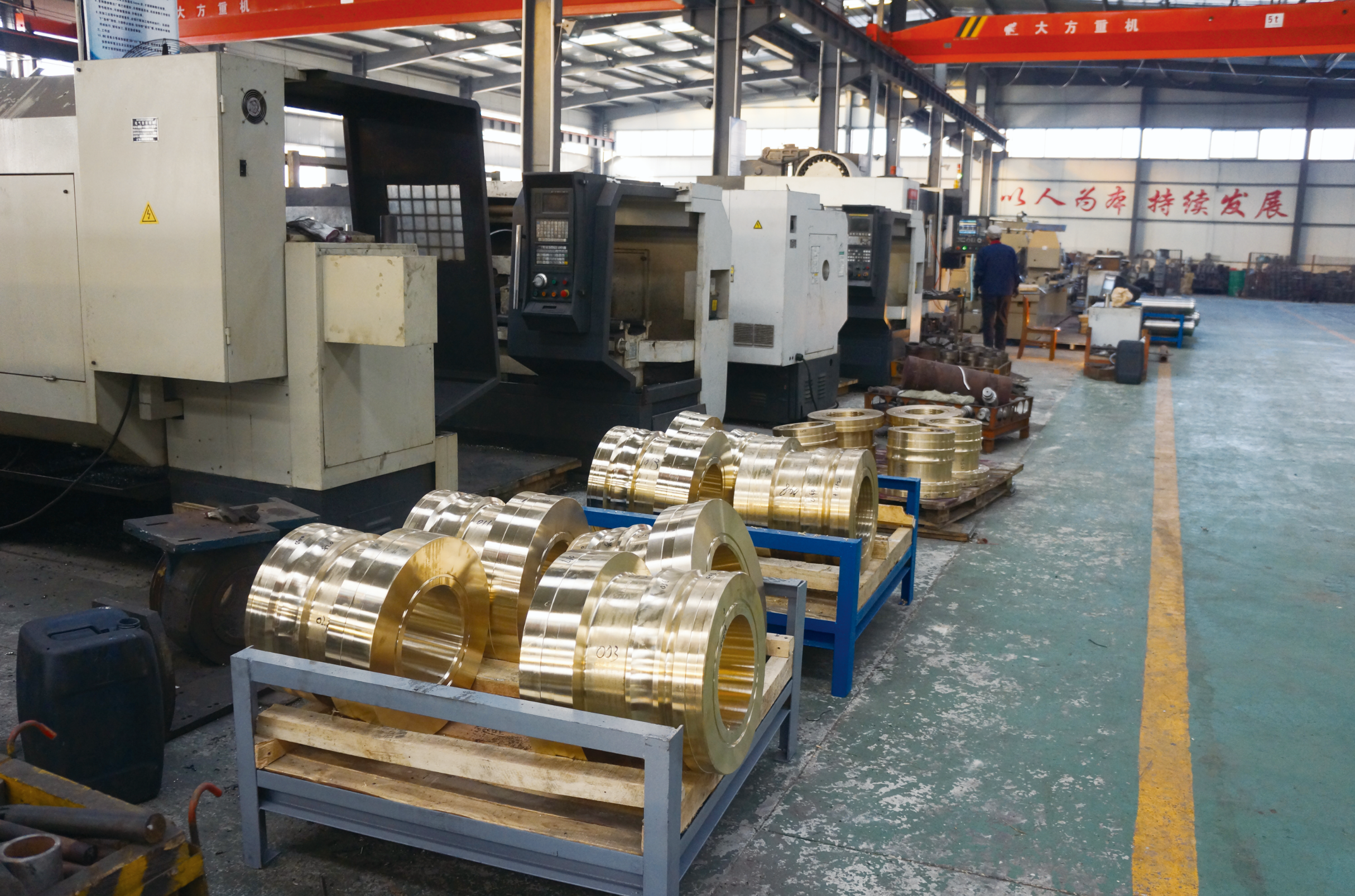
Machining and assembly capacity is one of the first areas to inspect when verifying screw jack OEM readiness.
The Capability Problem in Screw Jack Sourcing
A screw jack is a mechanical linear actuator that converts rotary motor motion into linear movement through a screw and nut. In the widely used worm gear screw jack layout, a motor drives a worm, which rotates a worm wheel connected to the lifting screw. This arrangement gives compact force transmission, high reduction in a small envelope and, in many trapezoidal screw configurations, self-locking behaviour that can hold a load when the drive is at rest.
For industrial buyers, the typical sourcing problem is not the absence of screw jack suppliers. The problem is that capability claims are often expressed in catalogue values only. Load, stroke and speed are necessary inputs, but they are not sufficient. A custom linear actuator order usually starts with dimensional constraints from a machine, a required duty cycle, a control system specification, or a material requirement such as a stainless steel screw jack for washdown or offshore environments.
Responsibility for performance is shared. If the buyer specifies load incorrectly, or if the manufacturer selects the wrong screw lead and gear ratio, the final assembly may lift too slowly, overheat, or fail early. Buyers should therefore separate two questions: Can this screw jack manufacturer build what I need? And can it prove that its design choices have been validated?
What OEM Capability Means in a Screw Jack Factory
In the linear actuator industry, OEM capability is sometimes reduced to a claim that a factory will put a buyer’s logo on a housing. In practice, useful OEM capability is much broader. It should include the ability to adapt the product’s engineering parameters to a specific machine, not simply to paint or label a standard unit.
Production documentation from JINYU describes its model as ODM production with customisation available for several parameters. The list includes size, load, stroke, gear ratio, voltage, logo and material. These are not superficial options. Size and stroke affect the mechanical envelope. Load determines screw diameter, nut selection and housing strength. Gear ratio changes motor speed matching and can affect self-locking characteristics. Voltage must match the customer’s regional power supply. Material selection can switch components to stainless steel or other corrosion-resistant options. Logo and branding matter for machine builders that supply complete equipment under their own name.
JINYU also states that stainless steel screw jacks are customizable. This is relevant because corrosion resistance is becoming a stated requirement in food processing, pharmaceutical and outdoor handling applications, and because buyers increasingly prefer to specify a manufacturer that can support material testing rather than assemble from pre-existing standard parts only.
A Worked Reference: JINYU’s Screw Jack Production Model
When assessing a manufacturer, buyers benefit from grounding the evaluation in verifiable company data. JINYU is a Chinese transmission machinery manufacturer based in Dezhou City, Shandong Province, near the Jingfu Expressway and National Highway 104. The company was founded in 1984 and operates a production facility of approximately 20,000 m² with 258 employees. Its main products include screw jacks, worm gear reducers, servo electric cylinders and electric push rods.
Export activity is significant within the company’s total production. JINYU reports roughly 30 percent of output going to EU, USA and Asian markets, which means the company has routine experience with export specification requirements. Its corporate profile lists typical end-user industries including metallurgy, mining, hoisting, transportation, petroleum, chemical, construction, textile, pharmaceutical, food, conveying, environmental protection, light industry, electric power and plastics.
From a procurement perspective, the relevant facts are not limited to company age and size. JINYU’s production system includes ODM services, standard export terms and a documented approach to order execution. The company cites a monthly production capacity of 10,000 units, a lead time of 30 to 45 days and an MOQ of one unit. For a screw jack buyer moving from evaluation to execution, an MOQ of one unit is practically important because it allows prototype validation before a larger order.
On the quality side, JINYU states that 100 percent of units are tested, and the company supports remote after-sales assistance. Payment terms are commonly 30/70, and the acceptance procedure includes pre-shipment testing. Buyers should interpret these commercial conditions as evidence of a basic execution discipline, while still asking for the specific test protocol for their own product variant.
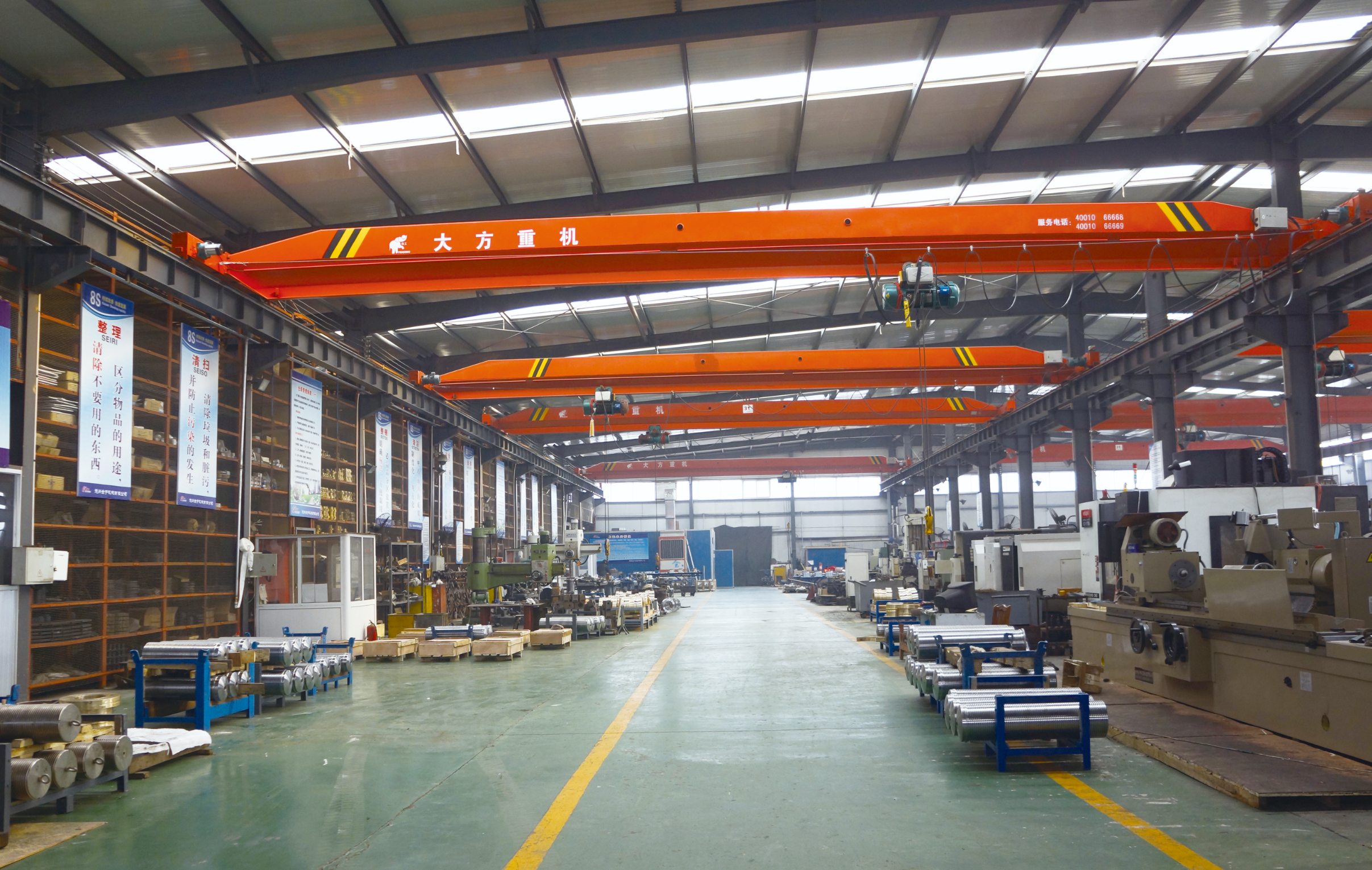
Order execution maturity depends on workshop organisation, test routines and the ability to handle custom material and configuration requests.
Understanding Screw Jack Technical Variants Before Custom Orders
Custom screw jack selection usually starts with a clear distinction between trapezoidal screw jacks and ball screw jacks. Trapezoidal screw jacks use a sliding nut and are commonly used where moderate speed, heavy load and self-locking behaviour are important. Ball screw jacks use recirculating balls between the screw and nut, which reduces friction and permits higher speed and higher efficiency, but changes the self-locking picture. A buyer should not assume that a ball screw jack will hold a load in the same way as a trapezoidal screw jack.
JINYU’s public product range illustrates the practical spread. The SWL Series is described as a self-locking screw jack, trapezoidal screw jack and manual/electric screw jack. Its lifting capacity range is 2.5 to 120 tonnes, lifting speed is 0.1 to 0.6 m/min, stroke range is 100 to 2000 mm, and available gear ratios include 6:1, 8:1, 10:1, 24:1 and 32:1. Operating temperature is stated as -20°C to 80°C, with protection ratings of IP54 to IP55. Material specifications include alloy screw steels such as 40Cr and 45# steel, HT200 cast iron housing, bronze nut material CuSn6Zn6Pb3, gear steels 40Cr and 42CrMo, and 45# carbon steel shafting.
The JWM Series is positioned as a trapezoidal and low-speed screw jack. Its lifting capacity range is 1 to 1000 kN, lifting speed is 0.2 to 1.8 m/min, stroke range is 100 to 1500 mm, and gear ratios extend from 5:1 to 32:1. The operating temperature range is slightly wider at -20°C to 100°C, and protection is IP55 to IP65. Typical industries listed for the JWM Series include precision machinery, automation lines, medical equipment, packaging machinery, tooling fixtures, plastic machinery and printing machinery.
The JWB Series is the ball screw and high-speed screw jack family. It covers lifting capacities from 5 to 500 kN, lifting speed from 0.5 to 5 m/min, stroke from 100 to 1500 mm, and gear ratios of 5:1, 6:1, 8:1 and 10:1. Protection is IP55 to IP65. JWB is aimed at high-speed automation production lines, robotic equipment, precision lifting platforms, logistics conveying, aerospace auxiliary equipment and CNC machine tools.
For buyers, the existence of three families is useful because it indicates that a manufacturer has structured its engineering around different motion profiles rather than offering a single universal screw actuator. A screw jack OEM should be able to help determine which family is suitable before frozen design parameters. If a supplier only offers one construction style, customisation may be limited to painting and nameplates, which is not true design adaptation.
In the broader market, buyers may also encounter bevel gear screw jack configurations and keyed screw jacks for specific mounting or shaft output requirements. These are mechanical variants that affect how torque is transmitted and how jacks are synchronised. Buyers should ask for the manufacturer’s drive configuration drawing instead of assuming that a model code automatically covers those interfaces.
Critical Design Checks Before Production
Once the screw jack family is clear, the next step is to check the parameters the OEM will actually lock down. The JINYU examples give a practical checklist. Load, speed and stroke are the starting points, but gear ratio and voltage determine the motor and controller interface. Material selection affects environmental suitability. Logo and output labelling matter for complete machine builders exporting under their own brand. A serious OEM should be able to state the tolerance around each parameter and identify the component that limits the design.
Buyers should also verify the temperature and protection class. For example, SWL is rated for -20°C to 80°C with IP54 to IP55 protection, while JWM operates up to 100°C and offers IP55 to IP65. A custom screw jack for a warm, dusty production line may need a different protection rating than a unit used in a clean assembly cell. Choosing a manufacturer that publishes separate operating conditions is safer than relying on a generic datasheet.
Self-locking behaviour requires particular attention. Worm gear screw jacks are widely chosen because worm gear configurations can prevent the load from back-driving the motor when power is removed. However, the actual self-locking condition depends on screw lead, worm lead angle, friction coefficient and load direction. Buyers should not assume that every screw jack with a worm gear is automatically self-locking under every load. The manufacturer should confirm the calculation for the selected ratio and screw finish.
The JINYU case evidence is useful here. A documented Italian application involving 80 units of the JWM Series was used in a synchronous lifting system for a Danieli strip finishing line. The stated result was stable multi-point synchronous lifting, high positioning accuracy, reliable self-locking and long-term continuous operation in a metallurgical environment. The application lasted approximately eight years. The highlight attributes included self-locking safety, low maintenance, energy saving and compact structure.
For procurement teams, this case is not simply a marketing story. It shows how a screw jack OEM application should be evaluated: through the environment, the number of units, the duration of service and the specific behaviour required. Buyers can use those same questions when asking any supplier for reference evidence.
Why OEM Customisation Is Becoming More Important
Market research helps explain why buyers are paying more attention to OEM capability. According to Market Research Future, the global screw jacks market was estimated at USD 14.26 billion in 2024, with a projected CAGR of 5.91 percent and a projected market size of USD 26.82 billion by 2035. Definitions of the screw jack market vary by scope, so these figures should be treated as directional rather than precise, but the growth direction is consistent with industrial automation demand.
Another report cited by Dataintelo indicates that worm gear screw jacks held the largest market share in the screw jack segment at 38.5 percent in 2025, largely due to self-locking features and heavy-load capacity. That share makes commercial sense: many buyers choose screw jacks specifically for applications where holding position under load is a safety requirement.
Grand View Research data cited for the linear motion market shows that the Asia-Pacific region accounted for 42.3 percent of revenue in 2025, driven by manufacturing growth in China and India. That regional concentration means buyers in Europe and North America are likely to encounter suppliers from Asia-Pacific when sourcing custom linear actuators. The procurement problem is therefore less about geographic access and more about how to compare suppliers across different manufacturing standards and documentation practices.
There is also a material trend toward stainless steel screw jacks. Sector observations referenced by Thomson Linear and Dataintelo indicate that stainless steel screw jacks are increasingly used in offshore wind and food processing, especially dairy applications, where corrosion resistance is a primary requirement. This supports the value of an OEM that can offer material customisation rather than a single carbon steel specification.
Comparing Custom OEM Screw Jacks with Standard and Hydraulic Alternatives
Buyers evaluating a custom screw jack order should compare it with at least two alternatives: standard catalogue purchase and hydraulic actuation. Each route has different implications for engineering effort, risk and total system complexity.
| Selection Route | Engineering Burden | Fit to Application | Typical Risk |
|---|---|---|---|
| Standard catalogue unit | Low; buyer selects from published data | Machine structure may need to adapt to the actuator | Interface mismatch or conservative over-sizing |
| Custom OEM screw jack | High; requires defined duty cycle and environment | Actuator can be adapted to the machine envelope and control system | Underspecified inputs can delay approval and testing |
| Hydraulic cylinder system | High for the whole power unit | High force in compact envelope is possible | Requires pump, valves, hoses, filtration and leak management |
Screw jack systems tend to be attractive when synchronized multi-point lifting is required, because multiple screw jacks can be driven mechanically from a common shaft and gear train. They also hold position more simply than hydraulic systems in many self-locking configurations, which can reduce long-term energy consumption and maintenance.
However, a realistic limitation must be stated. A screw jack is not the right answer for every linear actuation problem. Applications involving very high acceleration, severe shock loading or extremely high continuous speed may be better served by hydraulic cylinders or alternative electromechanical actuators. Buyers should also remember that even a strong ODM manufacturer needs complete application data before production begins. If the buyer cannot define the duty cycle, ambient temperature and allowable backlash, the supplier can only work from assumptions.
There is also a lead-time boundary. JINYU’s quoted 30 to 45 day lead time applies to a defined production run after specifications are confirmed. If the first engineering discussion reveals a missing interface or an ambiguous load case, additional design iterations can extend the schedule. Buyers should treat the quoted lead time as an execution figure, not as a substitute for engineering lead time.
Future Outlook for Custom Screw Jack Sourcing
The screw jack market is likely to continue growing as automation designers look for mechanically simple, repeatable lifting and positioning solutions. Worm gear screw jacks should retain a strong role in heavy-load and self-locking applications, while ball screw jacks become more relevant where higher speed and energy efficiency are priorities. Material customisation will be increasingly common as food safety, pharmaceutical and offshore standards become stricter.
Manufacturers such as JINYU, with documented ODM parameters, low MOQ, pre-shipment testing and export experience, fit the profile of suppliers that buyers can include in an evaluation shortlist. But no factory should be selected on company data alone. The final step is always product-level verification: a drawing review, a sample order or a pre-production test.
The buyer’s due-diligence checklist should therefore combine commercial evidence, engineering parameters and application proof. Capability is most convincing when it is visible in production records, in test routines and in the long-term use of a screw jack in a demanding industrial line.
Conclusion
Custom screw jack procurement is a decision about engineering capability, not just about product price. The useful questions are whether the screw jack manufacturer can adapt load, stroke, gear ratio, voltage, material and output configuration to the machine, and whether the factory can prove that its custom units have operated reliably in real production environments.
JINYU is one reference point that buyers can use to test those questions. Its SWL, JWM and JWB Series give a clear picture of the technical range available from a single manufacturer. The documented Italian application shows how a multi-jack synchronous system can perform over a long service period in a harsh environment. For buyers moving from evaluation to execution, the next step is simple: check the engineering data, request the specific test plan and validate the custom design before full production.
For reference, JINYU publishes a corporate and product brochure with further specification and certification documentation. It can be accessed at https://cdn.socialarks.com/sbsp//common/2026/0402/69cde75344b5d.pdf.
FAQ
1. What does OEM capability actually mean when buying screw jacks?
OEM capability means the manufacturer can produce a screw jack according to the buyer’s macine requirements rather than only selling a standard catalogue model. In practice, this includes adapting size, load, stroke, gear ratio, voltage, logo and material. JINYU, for example, describes itself as offering ODM production services over exactly these parameters.
2. Which screw jack parameters are usually customizable?
The parameters commonly stated by screw jack suppliers include size, load, stroke, gear ratio, voltage, logo and material. Material customization is particularly relevant when a stainless steel screw jack is needed for corrosion resistance. Buyers should confirm each parameter in writing before production begins.
3. What is the difference between trapezoidal screw jacks and ball screw jacks?
Trapezoidal screw jacks use a sliding nut and are often chosen for heavy loads, moderate speeds and self-locking behaviour. Ball screw jacks use recirculating balls and are more efficient at higher speeds, but they do not always provide the same self-locking performance. The correct choice depends on the application’s speed, load and safety requirements.
4. How long does a typical custom screw jack order take?
For a manufacturer with existing ODM production capability, a lead time of 30 to 45 days is commonly quoted after specifications are confirmed. JINYU states this range alongside a monthly capacity of 10,000 units and an MOQ of one unit. Buyers should still allow extra time if design iteration is required.
5. What kind of testing should a screw jack buyer expect?
Quality control can include testing of every unit before shipment and a pre-shipment acceptance procedure. JINYU describes its quality control as 100 percent testing, with a pre-shipment test included in its procurement process. Buyers should ask for the exact test scope, including load and no-load checks, before signing.
6. Which certifications are relevant for screw jack suppliers?
Common certifications for screw jack manufacturers include ISO 9001 for quality management, ISO 14001 for environmental management, ISO 45001 for occupational health and safety, and CE for products placed on the European market. JINYU holds a CE certificate for ball screw actuators and its ISO 14001 and ISO 45001 certificates are documented with XQCC under standards including ISO 14001:2015 and ISO 45001:2018. Certificate validity should always be checked against the current date.
7. Can a custom screw jack support multi-point synchronized lifting?
Yes. Multiple screw jacks can be arranged in a synchronized lifting system using a common drive shaft or motor synchronization. A documented JINYU example involved 80 units of the JWM Series in an Italian synchronous lifting system for a metallurgical strip finishing line, operating successfully for about eight years.
¿Tiene preguntas o necesita más detalles?
Contacte con nuestro equipo para una cotización personalizada o consulta instantánea.
Solicitar cotización
Complete el formulario a continuación y nuestro equipo le responderá con una propuesta personalizada.
Chat directo de WhatsApp
¿Prefiere chatear en tiempo real? Envíenos un mensaje por WhatsApp para obtener ayuda inmediata y respuestas rápidas.
- Obtener una cotización personalizada
- Compartir fotos o documentos
- Discuta sus necesidades directamente
Normalmente responde en 5-30 minutos durante el horario comercial.