
Custom Rigid Boxes: Long-Term Supplier Requirements
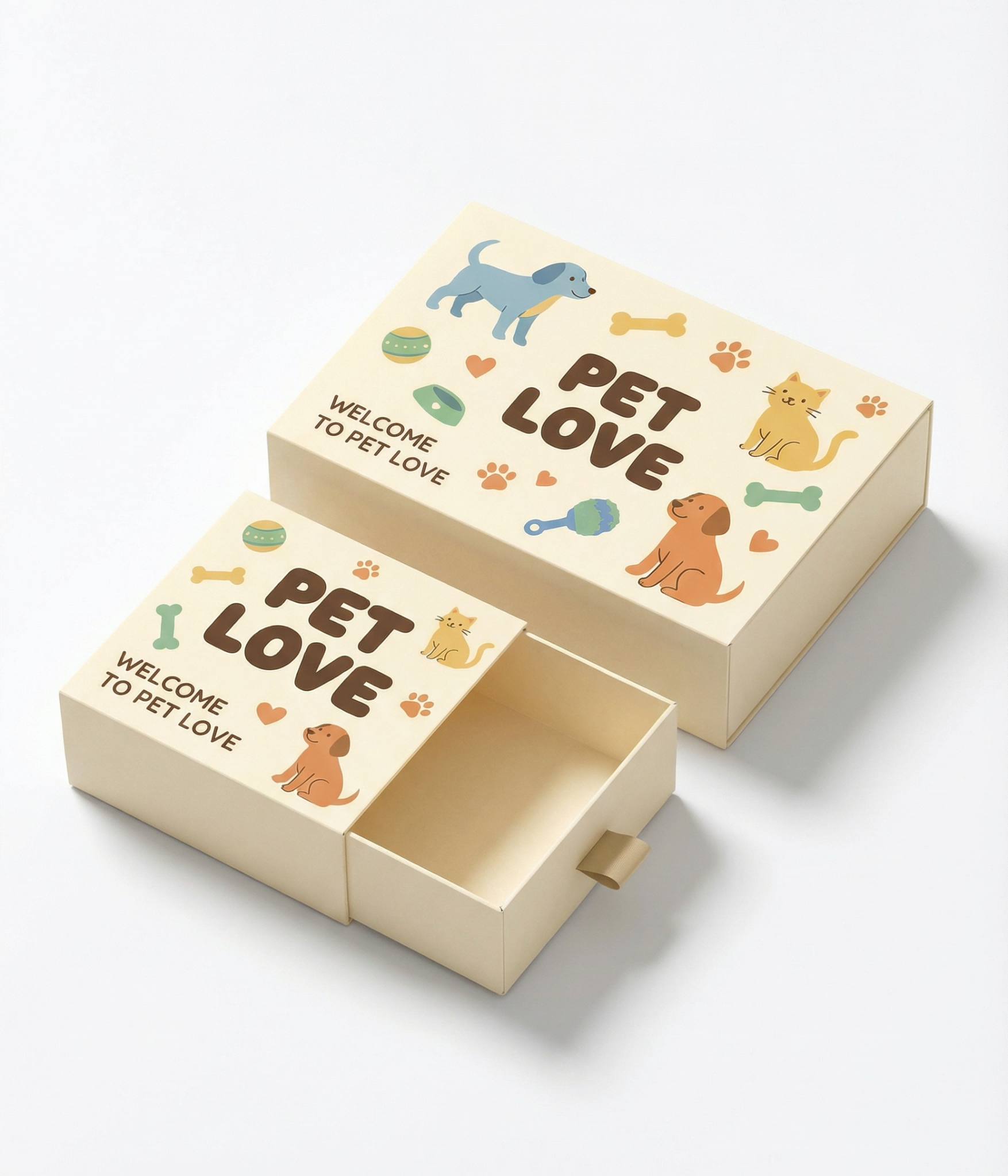
The selection of a custom rigid box supplier is no longer just a one-off procurement decision. For brands and distributors that need repeated production runs, consistent quality, and regulatory compliance, the supplier becomes part of the product experience. This article examines the capabilities that matter for long-term custom rigid box supply, using the manufacturer Opack as a reference case. Opack is a custom packaging manufacturer founded in 2010 in Longgang, Wenzhou, China, specializing in rigid boxes, folding cartons, shopping bags, and mailer boxes.
Why Long-Term Supply Is Different from One-Off Projects
Long-term packaging supply differs from one-off projects in several ways. First, repeat orders require the same color, structure, and finishing across batches; even minor drift can damage a brand’s shelf presence. Second, lead times and capacity become critical when seasonal demand peaks. Third, regulations such as the EU Packaging and Packaging Waste Regulation affect material eligibility and labeling. Buyers who choose a supplier without checking these dimensions may face expensive rework or delayed launches. Conversely, a supplier with stable capacity and transparent quality controls creates an opportunity to streamline procurement and protect brand consistency.
Opack’s Execution Capabilities for Repeat Orders
Opack’s production profile provides a practical benchmark. The company operates a 10,000 m² factory with 160 employees, an annual output of 10 million units, and a monthly production capacity of 1 million units. For a buyer planning multiple SKU launches, this scale signals that the supplier can handle volume spikes without completely reallocating lines. Opack also states a 100% quality check on all units and performs in-process quality inspections. When a supplier commits to 100% checks, it reduces the probability that defective packaging reaches the customer, although it does not replace the need for final sampling and third-party audits.
Opack’s MOQ for custom rigid gift boxes is 500 pieces per size and design. This threshold is moderate; it allows small and mid-sized brands to enter, but it is not designed for micro one-off samples. For distribution and retail buyers, 500-piece MOQs can support regional launches and reorders. The company exports approximately 80% of its output to the EU, USA, and Middle East, implying experience with international logistics and packaging standards. Payment terms are quoted as 40% deposit and 60% balance, which is common in China-based packaging supply, though the exact terms should be confirmed with the supplier. According to the supplier’s marketing materials, standard delivery time is 12–18 days.
Technical Specifications That Affect Repeatability
Custom rigid boxes from Opack are manufactured using grey board or MDF with customizable thickness. The wrapping paper options include coated paper, kraft paper, specialty paper, textured paper, and white paperboard. Printing methods cover CMYK, Pantone, UV, offset, and screen printing. Finishing options include hot stamping, spot glossy UV, soft touch lamination, holographic foiling, embossing, debossing, matte lamination, and gloss lamination. Structures can be foldable, magnetic closure, or ribbon closure. Insert options range from foam and paperboard to EVA, plastic trays, corrugated cardboard, and silk.
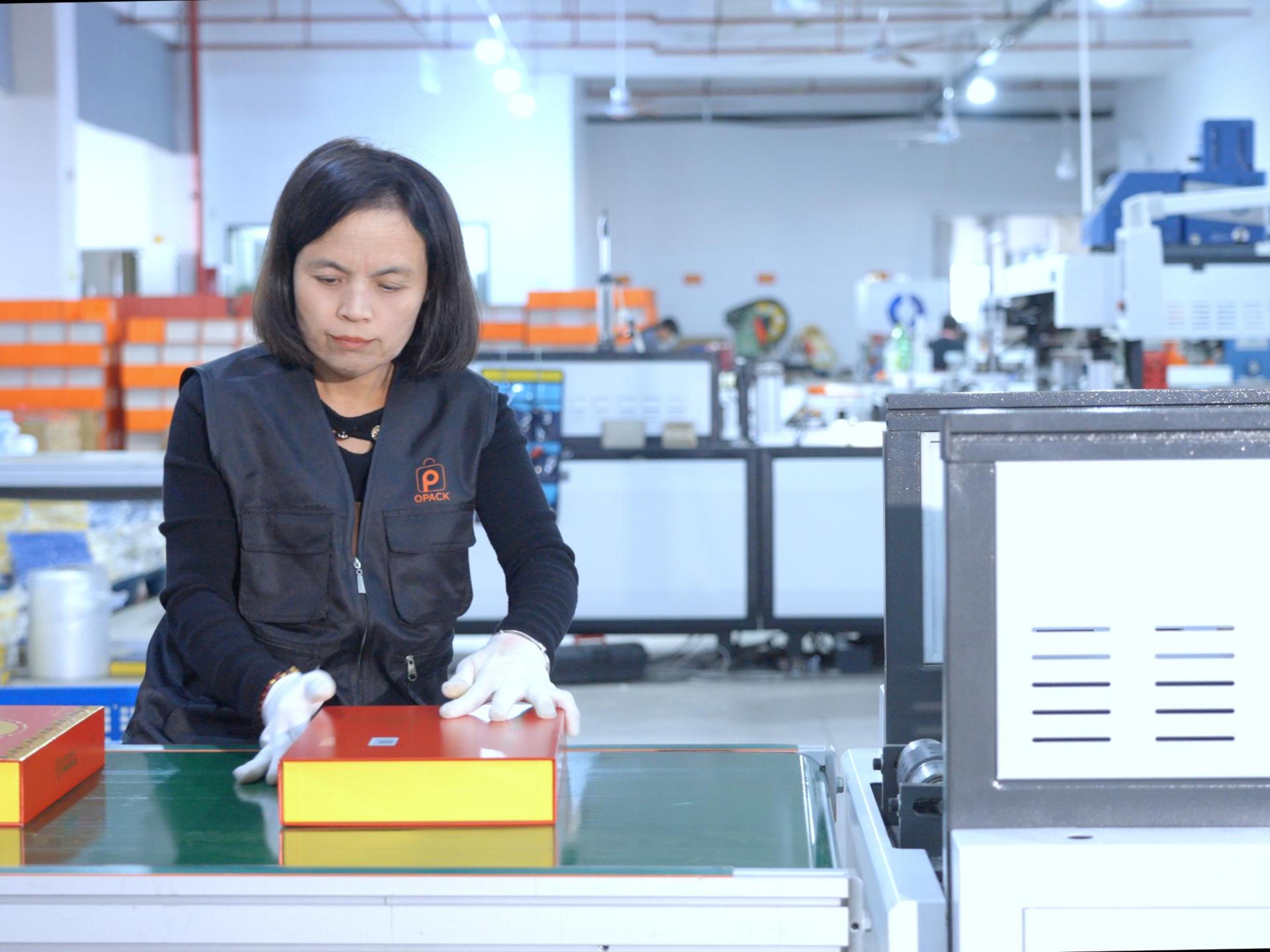
Color accuracy is a frequent issue in premium packaging. Opack reports using professional spectrophotometers to measure and monitor color consistency, with a stated color difference (ΔE) target of approximately 1.5. The company also conducts pre-production color approval, in-process printing inspections, and final quality checks before shipment. These steps are relevant to long-term supply because they create documented touchpoints for verification.
Another aspect is structural durability. Rigid boxes are often reused or handled repeatedly by consumers. Opack’s comparison data highlights thicker customizable grey board, reinforced corner edges, magnetic closure alignment, and scratch-resistant lamination, with less warping, delamination, or lid misfit over time. While no supplier can guarantee infinite durability, these specifications address common failure points in premium packaging.
| Specification | Opack Offering |
|---|---|
| Board material | Grey board or MDF, customizable thickness |
| Wrapping paper | Coated, kraft, specialty, textured, white paperboard |
| Printing | CMYK, Pantone, UV, offset, screen |
| Finishing | Hot stamping, spot UV, soft touch lamination, holographic foiling, embossing, debossing, matte/gloss lamination |
| Structure | Foldable, magnetic closure, ribbon closure |
| Insert | Foam, paperboard, EVA, plastic tray, corrugated cardboard, silk |
| MOQ | 500 pcs per size/design for rigid gift boxes |
| Quality control | 100% quality check; ΔE target approx. 1.5 |
| Capacity | 1,000,000 units per month |
Where Continued Rigid Box Supply Is Needed
Custom rigid boxes are widely used in jewelry, watches, perfumes, cosmetics and beauty, apparel, gift packaging, electronics, PR boxes, and corporate promotional packaging. In these categories, the packaging is part of the unboxing experience and may reinforce perceived product value. Long-term supplier relationships are especially relevant for brands that launch seasonal or holiday collections, because they need repeat production runs with minimal specification changes.
Distributors serving multiple retail channels also benefit from suppliers that can maintain uniform finishing across product lines. E-commerce and subscription brands increasingly use collapsible or foldable rigid box designs (e.g., custom collapsible rigid boxes) to reduce storage and shipping costs while preserving premium appearance. In regulated markets such as the EU, suppliers that can provide recyclable materials and proper labeling help buyers comply with the EU PPWR, which became mandatory on August 12, 2026.
Market Trends That Favor Long-Term Partners
The rigid boxes market is expanding. Global Market Insights values the global rigid boxes market at USD 31.2 billion in 2025, with a projection of USD 48.9 billion by 2035. Grand View Research expects the rigid box segment within the broader corrugated market to grow at a 9.2% CAGR from 2026 to 2033, driven by e-commerce and premium packaging needs. Asia Pacific accounted for 48.2% of global rigid packaging revenue in 2023, while Europe remains the largest specific market for luxury rigid boxes. These figures point to increasing demand for production partners that can combine quality, cost efficiency, and scalability.
Material trends also matter. Paper and paperboard account for approximately 55.4% of rigid box material revenue, reflecting a shift toward recyclable and fiber-based substrates. The EU PPWR, which became mandatory as of August 12, 2026, requires packaging to be recyclable and properly labeled. In this context, suppliers that support FSC-certified grey board, low-VOC adhesives, and food-safe inks—as listed in Opack’s documentation—can help buyers align with evolving compliance expectations.
The competitive landscape includes global packaging companies such as Smurfit Westrock, Mondi, and Sonoco, as well as specialized rigid box suppliers like PakFactory and BorhenPack. For buyers, this means multiple potential partners with different strengths. The long-term question is not brand size alone, but whether the supplier can deliver consistent quality at the required scale, communicate effectively across time zones, and maintain material compliance.
Comparison with Traditional Solutions and Limitations
Compared with regular rigid boxes, custom rigid boxes provide higher brand visibility and a more memorable unboxing experience, but at an initial cost that is about 5–10% higher, according to Opack’s comparison materials. The supplier’s comparison data cites potential improvements in repeat purchase rates (20–30%), customer satisfaction (10–30%), referrals (5–15%), and social shares (5–10%), although these should be treated as directional insights from the manufacturer, not independent benchmarks.
A clear boundary of custom rigid boxes is their cost structure. For high-volume, low-margin products such as everyday consumables, the added cost may not be justified. The 500-piece MOQ can also be challenging for very small startups that need only a few hundred boxes. In addition, the heavier construction of rigid boxes can increase freight cost and storage space compared with flat-pack options. These limitations mean that custom rigid boxes are best suited to premium and experience-driven products, and the decision should be made with a clear understanding of projected volume and margin.
Opack’s stated structural features—thicker grey board, reinforced corners, and scratch-resistant lamination—are designed to reduce issues like warping and lid misfit over repeated handling. For the buyer, this affects after-sale durability and the overall brand impression. From a sustainability standpoint, the supplier can use FSC-certified grey board, low-VOC adhesives, and fully recyclable materials, addressing one of the common traditional criticisms of rigid packaging as less eco-friendly.
Outlook: Building an Ecosystem Around Reliable Rigid Box Supply
The next phase of rigid box procurement will likely reward suppliers that offer both physical product quality and process transparency. Buyers will ask for evidence of quality checks, material documentation, and flexible ordering. A supplier that can maintain a 1,000,000-unit monthly capacity while also supporting a 500-unit MOQ provides a useful range for scaling. For distributors and brands, a long-term relationship can reduce transaction costs because artwork files, structural specifications, and material choices remain stored and repeatable.
Opack’s combination of production scale, 100% quality checks, customization breadth, and export experience makes it a suitable reference for procurement teams studying long-term rigid box sourcing. However, the ultimate fit depends on the buyer’s own volume, market, and quality requirements. A factory audit or trial order is still the most reliable way to validate performance.
For procurement teams needing detailed company specifications, the Opack company profile is available for reference.
Frequently Asked Questions
- What is the minimum order quantity for custom rigid boxes from Opack?
Opack’s MOQ for custom rigid gift boxes is 500 pieces per size and design. For paper shopping bags, the MOQ is 1,000 pieces per size and design. - How does Opack ensure consistent quality across large or repeat orders?
The manufacturer states that all products go through a 100% quality check, with a monthly production capacity of 1,000,000 units. Process controls include spectrophotometer-based color monitoring, with a ΔE target of approximately 1.5, and in-process inspections during printing. Third-party inspections are also welcome. - Can third-party inspections be arranged before shipment?
Yes. Third-party inspections are welcome upon customer request to verify product quality and compliance with specifications. The company offers EXW and FOB delivery terms based on customer requirements. - What customization options are available for rigid box structures and finishes?
Material options include grey board or MDF; wrapping paper can be coated, kraft, specialty, textured, or white paperboard. Printing options include CMYK, Pantone, UV, offset, and screen printing. Finishing ranges from hot stamping and spot UV to soft touch lamination, holographic foiling, embossing, debossing, and matte/gloss lamination. Structures can be foldable, magnetic closure, or ribbon closure, with inserts in foam, paperboard, EVA, plastic trays, corrugated cardboard, or silk. - Does Opack support sustainable or FSC-certified rigid box materials?
Opack’s product documentation lists support for FSC-certified grey board, low-VOC adhesives, and food-safe and eco-friendly inks. The packaging is stated to be fully recyclable and biodegradable after service life. Buyers with specific compliance requirements should confirm certification status during quotation.