
Custom Rigid Boxes in 2026: Sourcing, Capabilities, and Market Fit
The Question Behind the Search
When procurement and brand managers search for "custom rigid boxes" — and its many variations like custom printed rigid boxes, rigid set up boxes, or collapsible gift boxes — they are typically at the earliest stage of the sourcing journey. They need to understand what these boxes are, what material options exist, who can supply them reliably, and whether the investment aligns with their product’s positioning. This article provides a factual, structured look at the custom rigid box category, with a focus on one established manufacturer: Opack, a custom packaging manufacturer founded in 2010 and based in Longgang, Zhejiang, China — a region known as the Printing City.
The Custom Rigid Box Category: Scope and Opportunity
Custom rigid boxes — also referred to as rigid set up boxes, rigid paper boxes, or rigid packaging boxes — are non-collapsible containers typically constructed from grey board or MDF (medium-density fibreboard). Unlike standard folding cartons, they hold their shape even when empty, offering a premium unboxing experience. They are widely used in jewelry, cosmetics, apparel, electronics, and corporate gift packaging.
The global rigid boxes market was valued at approximately USD 31.2 billion in 2025 and is projected to reach USD 48.9 billion by 2035, according to Global Market Insights. Within the broader corrugated market, the rigid box segment is expected to grow at a 9.2% CAGR from 2026 to 2033, driven by e-commerce premiumisation and luxury brand needs (Grand View Research). Asia Pacific accounted for 48.2% of the rigid packaging revenue in 2023, underscoring the region’s supply concentration.
Manufacturer Profile: Opack’s Production and Product Range
Opack is a custom packaging manufacturer that has been operating for over 15 years. The company employs approximately 160 staff and runs a 10,000 m² manufacturing facility. Its annual production capacity reaches 10,000,000 units, supported by an R&D team of 5 engineers. Main products include custom rigid boxes, custom shopping bags, custom folding cartons, and custom mailer boxes, all of which are customizable for industries such as apparel, cosmetics, retail, gifting, and jewelry.
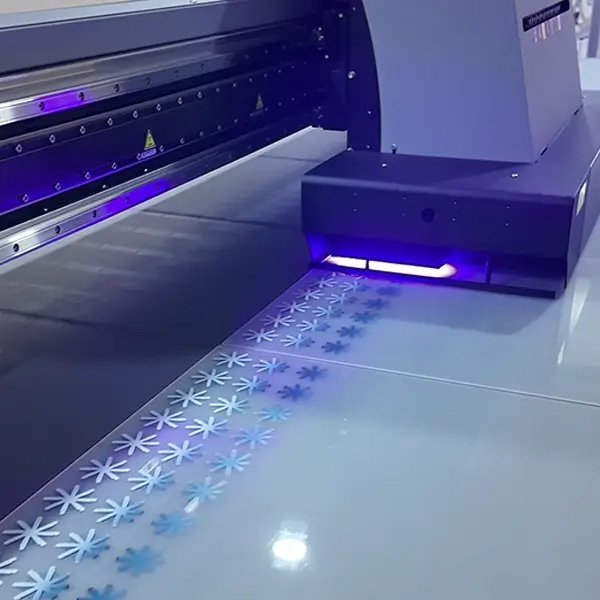
Within the custom rigid box category, Opack offers a series of models under designations RB-C01, RB-G02, RB-M03, RB-L04, RB-B05, RB-O06, RB-T07, RB-D08, and RB-W09. These boxes are made primarily from grey board or MDF, with fully customizable thickness and dimensions. Wrapping paper options include coated paper, kraft paper, specialty paper, textured paper, and white paperboard. Printing capabilities cover CMYK, Pantone, UV, offset, and screen printing. Finishing touches range from hot stamping and spot glossy UV to soft touch lamination, holographic foiling, embossing, and debossing.
Technical Dimensions: Material, Structure, and Inserts
The structural integrity of a custom rigid box depends on the board density and thickness. Opack allows full customization of the board thickness. Box structures can be designed as foldable (collapsible), magnetic closure, or ribbon closure. For interior protection and presentation, insert options include foam, paperboard, EVA (ethylene-vinyl acetate), plastic tray, corrugated cardboard, and silk. The choice of insert affects both cost and the perceived quality of the unboxing experience.
A notable subset of the category is collapsible rigid boxes (also called foldable rigid boxes). These combine the premium feel of a rigid box with a break-down construction that reduces shipping volume. Opack’s foldable rigid box models incorporate this space-saving feature without compromising the rigid appearance.
Application Scenarios Across Industries
Custom rigid boxes are a global application scenario. The primary industries include cosmetics, jewelry, watches, perfumes, apparel, electronics, and corporate or promotional packaging. These boxes serve dual functions: they protect products during storage and transit, and they communicate brand identity through print, finish, and texture.
Typical project types include product packaging and branding. Opack’s matched accessories — custom handles, stickers, hang tags, and inserts — allow seamless brand extensions. Special requirements often call for eco-friendly materials: water-based printing inks, low-VOC adhesives, and FSC-certified board. With the EU Packaging and Packaging Waste Regulation (PPWR) becoming mandatory on August 12, 2026, compliance with recyclability and labeling rules is increasingly relevant for buyers targeting European markets.
Market Trends and Regulatory Landscape
Paper and paperboard materials now account for about 55.4% of total rigid box material revenue as brands shift toward recyclable substrates (Future Market Insights). This aligns with the broader push for sustainable packaging. The EU PPWR requires all packaging to be recyclable and properly labeled, raising the bar for suppliers. Chinese manufacturers, who dominate the export of non-corrugated boxes under HS Code 481920, are responding by offering FSC-certified options and low-VOC processes.
Major global competitors in the custom rigid and luxury packaging space include Smurfit Westrock, Mondi Group, Sonoco, and specialised firms like PakFactory. Opack differentiates through integrated production, a wide finishing portfolio, and flexible MOQ (minimum 500 pieces per order). One honest limitation: custom rigid boxes generally carry a higher per-unit cost compared to standard folding cartons, making them more suitable for medium-to-high-end products where the unboxing experience directly influences brand perception.
Future Outlook
As premiumisation drives packaging investment, the demand for custom rigid boxes is expected to sustain its growth trajectory. Buyers will increasingly prioritise suppliers who can offer both structural variety and sustainability compliance. Opack’s 15-year track record, combined with its 10 million-unit capacity and dedicated R&D team, positions it as a relevant partner for brands seeking to scale from pilot projects to full production runs.
Frequently Asked Questions
What materials are used to manufacture custom rigid boxes?
Custom rigid boxes are primarily made from grey board (also called chipboard) or MDF (medium-density fibreboard). The thickness is fully customizable.
What printing and finishing options are available?
Opack offers CMYK and Pantone printing, UV printing, offset printing, and screen printing. Finishing options include hot stamping, spot glossy UV, soft touch lamination, holographic foiling, embossing, and debossing.
What industries commonly use custom rigid boxes?
Jewelry, watches, perfumes, cosmetics, apparel, gift packaging, electronics, and corporate promotional packaging are the primary application industries.
What are the typical lead times and MOQ?
Opack’s standard MOQ for custom rigid boxes is 500 pieces. Lead times vary by order complexity and volume; buyers should request a quote for specific timelines.
Does Opack offer FSC-certified or eco-friendly options?
Yes. Opack can source FSC-certified paperboard and use water-based inks and low-VOC adhesives, helping buyers meet EU PPWR requirements.
Learn More About Opack’s Capabilities
Download the full company profile for detailed product specifications and quality certifications.
Download Brochure (PDF)¿Tiene preguntas o necesita más detalles?
Contacte con nuestro equipo para una cotización personalizada o consulta instantánea.
Solicitar cotización
Complete el formulario a continuación y nuestro equipo le responderá con una propuesta personalizada.
Chat directo de WhatsApp
¿Prefiere chatear en tiempo real? Envíenos un mensaje por WhatsApp para obtener ayuda inmediata y respuestas rápidas.
- Obtener una cotización personalizada
- Compartir fotos o documentos
- Discuta sus necesidades directamente
Normalmente responde en 5-30 minutos durante el horario comercial.