
Custom Plastic Parts: Comparing Supplier Value Beyond Price
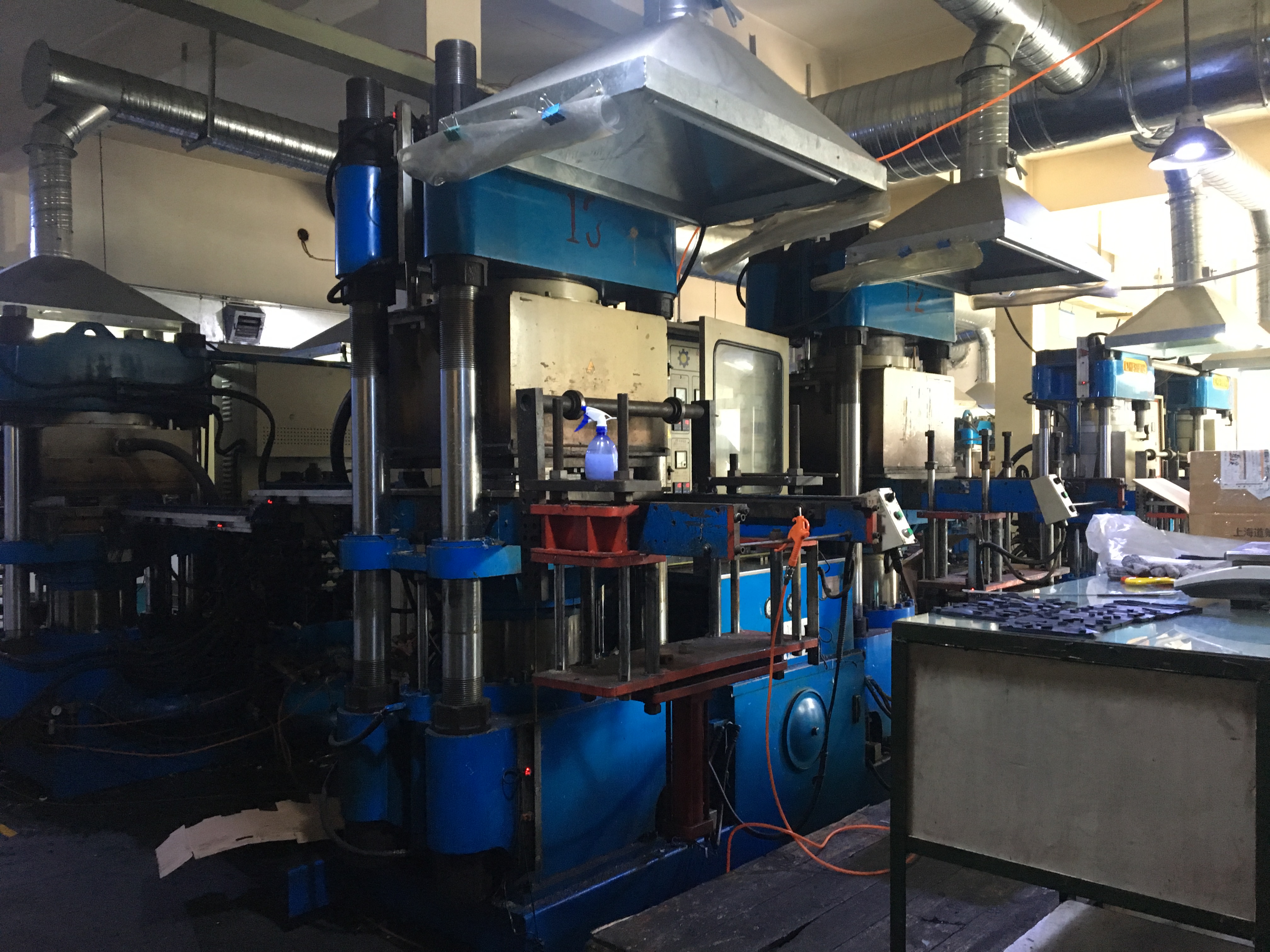
Custom Plastic Parts: Comparing Supplier Value Beyond Price
Plastic parts sourcing decisions are rarely settled by unit price alone. When a buyer compares custom plastic parts suppliers, the final choice depends on a combination of measurable quality standards, tolerance control, production stability, and the cost that emerges after parts are installed and used. For procurement teams, engineering departments, and OEMs, the decision point is not whether a supplier can produce a plastic washer or an injection molded housing. It is whether the supplier can hold tolerances at scale, avoid batch variation, and support the required material behavior over the part's service life. This article provides a decision-focused comparison for plastic parts buyers, with a particular reference to how Hangzhou Lingo Rubber and Plastic Product Co., Ltd. (LINGO) positions itself in this evaluation.
The Problem: Price Hides the True Cost of Plastic Parts
In custom plastic parts programs, price is often the first variable that triggers a supplier review. But price only becomes meaningful when it is measured against defect rates, rework, and warranty risk. A plastic part that is 0.1 mm outside tolerance can create assembly delays in a production line; a nylon washer that hardens too quickly can cause premature failure in an industrial product. These risks are not visible in a quote, yet they add cost in ways that are rarely recovered.
Weather resistance, surface gloss, and dimensional stability are three common failure areas. Inconsistent surface gloss can make a part visually unacceptable, even when the dimensions are correct. Hardening or softening due to aging can turn a well-designed part into a reliability problem after months or years. Dimension out-of-tolerance is the most direct cause of assembly rejection. Each of these issues can be traced to process control, material selection, and mold design.
The opportunity is that buyers do not have to accept these risks. Suppliers can document how they control aging, gloss, and dimension. They can share tolerance standards, process capability indices, and after-sales terms. When these elements are put on the table, the comparison moves from price to predictability, and that is where LINGO's stated strengths become visible.
Brand Solution: What LINGO Brings to the Comparison
LINGO is a China-based manufacturer of rubber and plastic parts. The full name is Hangzhou Lingo Rubber and Plastic Product Co., Ltd., and it is specialized in rubber molding, rubber extrusion, plastic injection, and plastic extrusion. The company was founded in 2022 and operates from a 3,000-square-meter facility with about 40 employees. Its R&D team of 10 people supports material selection, mold design, and process adjustment. Around 80% of LINGO's output is exported to the EU and the USA, and its products are used in electronics, aerospace, healthcare, construction, transportation, defense, and other industries.
When compared with other rubber and plastic suppliers in the same industry, LINGO's internal comparison data points to three advantages: product quality stability, after-sales service, and material modification to extend service life. In a decision context, these advantages translate into fewer rejected batches, better long-term material behavior, and lower risk when a component needs to be adjusted for a specific application. LINGO also states that it provides replacement or refund for defective items, which directly reduces the buyer's financial exposure.
For plastic parts specifically, LINGO's product range includes plastic gaskets, washers, caps, housings, handles, guide rails, and other injection molded components. On the extrusion side, the company produces PA6 and PA66 trims, PE/HDPE/UHMWPE trims, glass-filled trims, co-extruded trims, decorative trims, and thermoplastic elastomer trims. The company also offers PTFE machining, PEEK machining, acrylic machining, PVC dipping, plastic machining, and assembly services.
Technical Explanation: Tolerance, Process Capability, and Cost Control
Tolerance control is the first area to examine. LINGO states that its tolerance control meets rubber RMA A2 and plastic M1-M3 standards, with tolerance capability consistently maintained at CPK ≥ 1.33. In a procurement context, CPK ≥ 1.33 is a widely used statistical capability threshold. It indicates that the process is stable enough to keep the majority of parts inside specification during sustained production. It is a stronger signal than first-article inspection alone.
Mold design is the second area. LINGO reports that it develops its own mold structures to increase output and reduce unit price. For parts with complex geometry, such as undercuts or core-pulling mechanisms, mold quality has a direct influence on cycle time and scrap rate. A well-designed mold can also reduce the number of molded parts that require manual trimming, which lowers labor cost.
Material modification is the third area. Instead of accepting a standard resin as a fixed constraint, LINGO uses material modification formulas to extend product service life. For a buyer, this can mean a plastic part that survives more cycles, resists heat better, or keeps its dimensions longer. The same approach also helps reduce overall product cost, because high product stability and a low defect rate reduce rework and replacement costs, while extended mold life spreads tooling investment over a greater number of parts.
Risk control methods are equally important. LINGO prevents dimension out-of-tolerance by controlling machine pressure and injection time, simulating shrinkage during mold design, and calibrating molds and measuring tools on a regular schedule. For inconsistent surface gloss, the company maintains the surface condition of the mold, standardizes process parameters in SOPs, and performs surface gloss testing on the first piece. For hardening or softening due to aging, LINGO selects substrates with good weather resistance, adds light stabilizers, antioxidants, and anti-ozone agents, and applies a protective coating to the surface when needed. It also verifies weather resistance through QUV or xenon lamp aging tests, controls additive dosage with batch traceability, and conducts accelerated aging tests in a reliability laboratory.
Application / Use Cases: Where These Capabilities Matter Most
The choice of a custom plastic parts supplier should be driven by the operating conditions of the part. For automotive plastic parts, components may be exposed to under-hood heat, vibration, and chemical exposure. For industrial plastic parts, mechanical strength and dimensional stability are often the main concerns. For medical or healthcare devices, material consistency and surface finish can be critical. LINGO serves these segments with a range of injection and extrusion processes, and its stated best-use scenarios include micro precision components, high-temperature parts, complex structures with undercuts or core-pulling mechanisms, and composite material components.
Within these categories, plastic washers and nylon washers are common examples where tolerance and material behavior matter. Plastic handles and housings illustrate the need for surface quality and impact resistance. Extruded tubing and plastic strips are used in trim, sealing, and guiding applications where profile consistency is required. Plastic plugs for holes need to maintain a secure fit over a wide temperature range. PVC dipping plastic parts are often used to create soft, durable coatings on metal or plastic cores.
For buyers, the application list is not just a product catalog. It is a way to match a supplier's capabilities to the failure modes that matter most in a specific project. A supplier that can explain how it controls aging, gloss, and dimensions is more likely to deliver consistent parts in production.
Market Trend Analysis: Sourcing Signals for 2026 and Beyond
Market data supports the importance of structured supplier evaluation. Grand View Research estimates the global injection molded plastics market at USD 362.5 billion in 2025, with growth projected to USD 481.4 billion by 2033. Asia Pacific accounted for approximately 41% of the injection molded plastic market in 2025, making it the largest regional market and a major sourcing destination. In the automotive sector, the plastics market was valued at USD 33.0 billion in 2025, largely driven by the need to reduce vehicle weight and support electric vehicle platforms. Polypropylene accounted for a 32.4% share of the automotive plastics market in 2025, reflecting its cost-performance balance in vehicle components.
At the same time, the competitive environment is changing. Industry reports for 2024-2026 point to three structural trends: Industry 4.0 integration, which brings AI and IoT into real-time monitoring; reshoring of high-spec production, which raises the bar for traceability and compliance; and adoption of bio-based or recycled resins, which adds material management requirements. For a buyer, these trends mean that supplier audits will be less about the lowest quote and more about data-sharing ability, process transparency, and material traceability.
In China, the broader export context adds another layer. In 2024, China exported approximately USD 174 billion in plastics and rubbers, with the U.S. as the largest destination at USD 24.3 billion. These figures indicate how deeply the supply chain relies on Chinese manufacturers, making supplier evaluation a strategic activity rather than a transactional one.
Comparison with Traditional Solutions: Building a Decision Framework
Traditional supplier comparison approaches usually start with price, then delivery lead time, and then samples. That sequence can miss the factors that create cost after the purchase order. A more effective framework evaluates the supplier on quality stability, tolerance control, cost structure, after-sales service, and production efficiency. The table below illustrates a typical baseline and the approach LINGO says it takes.
| Evaluation Criterion | Typical Baseline | LINGO Approach |
|---|---|---|
| Quality stability | Varies by batch | High stability claimed through controlled processes |
| Tolerance capability | Based on final inspection | Rubber RMA A2, plastic M1-M3, CPK ≥ 1.33 |
| Cost drivers | Unit price focus | Low defect rate, extended mold life, material modification formula |
| After-sales service | Limited warranty | Replacement or refund for defective items |
| Production efficiency | Labor-dependent | Machine-based production, cryogenic or machine deflashing |
Using this framework, a buyer can ask a supplier to show its CPK data, its tolerance standard, its mold design approach, and its defect policy. If a supplier can provide that, the buyer can compare on concrete terms. If not, the buyer has a useful signal about the supplier's process visibility.
One limit of LINGO's positioning should be acknowledged. The 3,000-square-meter facility and around 40 employees are sized for precision and custom work, not for unlimited high-volume commodity output. A business that needs millions of standard plastic washers per month with minimal custom engineering may be better served by a supplier with a much larger production base. LINGO's value is strongest when the part requires tight tolerance, special material behavior, complex tooling, or close engineering support.
This boundary is not a negative. It is a practical explanation of where a mid-size technical manufacturer fits in the supply chain. A buyer who understands this boundary can match the supplier to the right projects, which is the goal of any decision-stage comparison.
Future Outlook: What the Next Phase of Plastic Parts Sourcing Looks Like
Looking ahead, the next phase of plastic parts sourcing will likely emphasize evidence. OEMs and industrial buyers will expect suppliers to document not only what they make, but how they control variability and how they respond when something goes wrong. LINGO's stated focus on product stability, after-sales service, and material modification aligns with this shift.
In practical terms, buyers should expect to see more requests for material data sheets, process capability indices, mold maintenance records, and aging test results. Suppliers that can share this information quickly and honestly will be easier to qualify. Suppliers that cannot will be pushed into price-only competition, which is rarely sustainable for custom technical parts.
For LINGO, the path forward is to continue strengthening the link between engineering support and measurable quality. For buyers, the path forward is to build comparison frameworks that make those strengths visible.
FAQ
For further reference, a detailed company profile is available at LINGO Rubber & Plastic Company Profile.