
Custom Outdoor Shelters & Inflatables: A Buyer Comparison
Custom Outdoor Shelters & Inflatables: A Buyer Comparison
Recreation procurement teams increasingly compare custom outdoor products by material fit, customization scope and intended application rather than by catalogue breadth. This comparison maps nine named models — from the outdoor shelter ST-01 to the inflatable cube ITC01 — against the scenarios they were engineered for, using standard purchasing terms and acceptance criteria as neutral evaluation lenses.
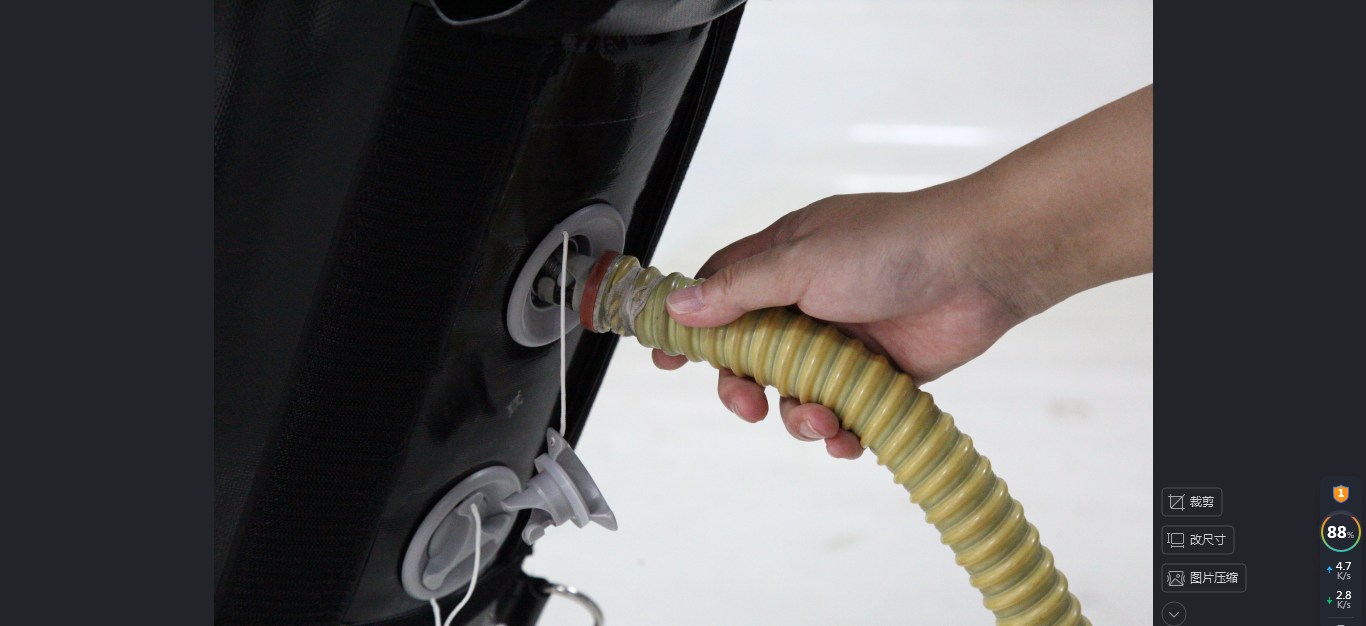
Custom inflatables sit inside the same recreation supply chain as shelters, covers and seating — and are frequently procured from the same multi-material manufacturing partner.
Why Buyers Now Compare at Model Level, Not Category Level
Outdoor recreation demand is broad, measurable and still expanding. In the United States, the outdoor recreation participant base reached 181.1 million people in 2024, equal to 58.6% of Americans aged six and older. The U.S. outdoor recreation products market is projected to grow from USD 202.5 billion in 2025 to USD 268.3 billion by 2031 at a forecast CAGR of 4.8%.
Globally, the recreational and outdoor products market is estimated at USD 126.5 billion in 2024 and projected to reach USD 210.0 billion by 2034, a stated CAGR of 5.2%. Within the shade segment specifically, the global canopy market is estimated at USD 2.2 billion in 2026, with the shade canopy segment holding the largest market share in 2025.
That gap is precisely why purchasing decisions have moved down a level. Because no published figure isolates custom outdoor products, buyers evaluate at the model level: matching a specific material build and customization scope to a specific recreation use case, then verifying the supplier through purchasing terms and acceptance criteria.
The Neutral Evaluation Lenses: Purchase Terms and Acceptance Criteria
Rather than ranking suppliers, this article applies the same two lenses to every model. The first lens is the purchasing terms a buyer can hold a supplier to. The second is the acceptance criteria that determine whether a delivered batch is conforming.
| Evaluation lens | Documented term | What it means for a buyer |
|---|---|---|
| Minimum order quantity | 100 units typical, customizable to customer needs; 1 unit for certain markets | Trial orders are possible, but the practical MOQ varies by market and must be confirmed in writing per project. |
| Delivery terms | FOB / EXW; FOB / CIF where applicable | Decides where cost and risk transfer — and therefore how freight must be budgeted. |
| Payment terms | 50% deposit, 50% balance (before shipment) | Cash-flow planning is predictable; final payment is tied to pre-shipment release. |
| Acceptance criteria | Pre-shipment test | Conformity is judged before the container leaves, not after arrival. |
| Pre-shipment inspection | 100% full inspection: air tightness, material tensile test, size verification, appearance check | Every unit is checked, not a sample — which matters most on welded inflatables and coated fabrics. |
| Lead time | 1–2 weeks for small quantities; 7–30 days for general orders | Short lead times apply to small runs; larger or complex builds sit at the upper end. |
| Monthly capacity | 1000 units | Sets the realistic ceiling for seasonal peak programmes. |
| After-sales | Remote technical support and remote after-sales service | Supports installation questions and field issues without an on-site visit. |
These terms describe the commercial structure available to buyers in EU, USA and Canada markets. They are a framework for comparison, not a performance claim about any single order.
Shelter and Structure Models: What Each One Is Built For
The shelter family splits into four distinct builds. Each one answers a different storage or enclosure problem, and the material choice follows directly from that problem.
| Model | Function | Material build | Typical recreation application |
|---|---|---|---|
| ST-01 | Outdoor shelter | Aluminium or steel frame with waterproof PU-coated polyester | Campsites, event staging, spectator and programme shelters |
| BS-01 | Boat shelter | Polyester or PVC | Marina and club boat storage, off-season hull protection |
| CT-01 | Car shelter | Polyester | Vehicle storage for clubs, resorts and fleet parking |
| CS-01 | Inflatable container shelter | TPU / PVC, anti-UV, removable | Temporary enclosure and covered space on container or van platforms |
The frame decision on ST-01 is the first fork: aluminium reduces handling weight, while steel changes the load profile at the base. The fabric decision is the second fork, and it is the one that most often decides service life.
Adjacent Recreation Items: Umbrellas, Goals, Chairs, Poles and Cubes
Most recreation programmes do not buy a single shelter in isolation. They buy a bundle. The adjacent models below were designed to sit alongside the shelter family rather than replace it.
| Model | Item | Material build | Intended application |
|---|---|---|---|
| UM-01 | Outdoor umbrella | Aluminium frame, waterproof polyester canopy | Poolside, terrace and spectator shade |
| I-FB | Inflatable football goal | TPU / PVC | Fan zones, youth sports and recreational football |
| C01 | Folding outdoor chair | Aluminium frame, foam, anti-UV PU fabric, carry bag | Audience and participant seating, portable deployment |
| CPPlK | Caravan pole | Aluminium / plastic, 2 m | Awning and caravan support structures |
| ITC01 | Inflatable cube | PVC, custom size | Event markers, branded volumes, temporary installations |
Read together, these five items show the real shape of a recreation order: a shelter for coverage, an umbrella for open shade, seating for the audience, a goal for activity, a pole for caravan structures and a cube for wayfinding or branding.
Material Fit: Reading Aluminium, Steel, Polyester, PVC and TPU Correctly
Material selection is where most specification errors occur. The five materials used across these nine models behave differently under the same outdoor conditions.
- Aluminium frames reduce unit weight and are used on ST-01, UM-01, C01 and CPPlK. Oxidation and rust remain a monitored risk on aluminium frames exposed to coastal or humid environments, so frame treatment and inspection are part of the specification rather than an afterthought.
- Steel frames offer an alternative on ST-01 where stiffness and base loading matter more than handling weight.
- Polyester with a waterproof PU coating is the default flexible fabric on ST-01, UM-01, BS-01 and CT-01. It is the lightest of the fabric options and the one most often specified for portable shelter use.
- PVC appears on BS-01, CS-01, I-FB and ITC01. It is the heavier, weldable option and is typically chosen where abrasion, repeated folding or welded seams are central to the build.
- TPU appears on CS-01 and I-FB. It is specified where flexibility retention and weld quality matter, and it is commonly paired with anti-UV treatment on structures that stay deployed.
Five failure modes are documented for outdoor shelter and cover products: tent collapse under strong wind, fabric mildew and aging, high-temperature fabric damage, aluminium frame oxidation and rust, and open-flame ignition hazard. The corresponding control measures are equally specific.
| Risk | Control measure |
|---|---|
| Tent collapse under strong wind | Wind-tunnel graded wind-resistant structure |
| Fabric mildew and aging | Anti-mildew and anti-UV fabric treatment |
| High-temperature fabric damage | Anti-UV coating and material selection by exposure |
| Aluminium frame oxidation and rust | Frame specification and factory inspection |
| Open-flame ignition hazard | Class B1 flame-retardant canvas |
| Water ingress at seams | Multi-channel waterproof sealing technology |
Factory-side, this translates into complete flame-retardant and mildew-proof inspection, plus matched ground nails and wind ropes supplied with the structure. Those are delivery-scope questions, not marketing points, and they belong on the acceptance checklist.
Customization Scope: What Custom Changes — and What It Cannot Change
Customization across these models covers frame material, fabric type and coating, structure size, removability where applicable, and application-specific fitting such as carry bags or matching ground hardware. ITC01 is supplied in a custom size, and CS-01 is built with a removable configuration in TPU or PVC with anti-UV treatment.
Application Mapping: Matching Models to Real Recreation Scenarios
Material fit is only useful once it is tied to a scenario. The mapping below links each model to the situation it was designed for.
| Scenario | Model(s) | Why this build fits |
|---|---|---|
| Sport racing and competition | ST-01, CS-01 | Fast deployment, wind-oriented structure, replaceable parts |
| Outdoor brand exhibitions | CS-01, ITC01, UM-01 | Removable enclosure, custom-size branded volume, shade |
| High-end glamping and scenic boutique homestays | CS-01 (engineered variant) | Long deployment, thermal stability, anti-mildew fabric |
| Island tourism and long-term cultural tourist sites | CS-01, C01 | UV and salt exposure tolerance, durable seating |
| Campsite and festival grounds | ST-01, C01, CPPlK | Aluminium portability, seating, caravan support |
| Marina and boat club | BS-01 | Polyester or PVC hull protection |
| Resort and club vehicle storage | CT-01 | Lightweight polyester coverage |
| Youth and recreational football | I-FB | TPU / PVC welded inflatable construction |
Engineered Inflatable Shelter vs Ordinary Inflatable Shelter
The clearest comparison in this category is between an ordinary inflatable shelter and an engineered two-layer structure. The differences are structural, and so is the cost curve.
| Comparison dimension | Ordinary inflatable shelter | Engineered two-layer shelter |
|---|---|---|
| Structure | Single-layer construction | Two-layer frame with strong chamber, wind-optimized streamline structure |
| Performance gap | Baseline wind resistance and structure life | Wind resistance upgrade; structure service life upgrade |
| Initial purchase cost | Baseline | +22% |
| Full-lifecycle operation and maintenance cost | Baseline | −40% |
| Maintenance approach | Conventional repair | Quick modular part replacement; anti-mildew and anti-UV fabric |
| Thermal behaviour | Unspecified | Two-layer composite canvas reduces air-conditioning energy consumption by 35%; stable constant temperature year-round |
| Best suited to | Short-duration or occasional deployment | High-end glamping resorts, scenic boutique homestays, outdoor brand exhibitions, island tourism projects, long-term cultural tourist sites, sport racing and competition |
Long-Term Partnership Signals: Capacity, Lead Time and Support
For buyers at the Decision-to-Execution stage, the comparison does not end at the product. It continues into whether the supplier can sustain repeat orders. Three indicators are documented and verifiable.
- Capacity: monthly production capacity of 1000 units, which sets the realistic ceiling for a seasonal recreation programme placed with a single supplier.
- Lead time: 1–2 weeks for small quantities and 7–30 days for general orders, with MOQ customizable to customer needs in most regions.
- Support: remote technical support and remote after-sales service for clients in EU, USA and Canada, backed by 100% full inspection before shipment covering air tightness, material tensile test, size verification and appearance check.
Multi-material capability matters here for a structural reason. Shelters involve metal frames, covers involve sewn technical textiles and inflatables involve welded flexible structures. Where those three capabilities sit under one roof, a buyer consolidates both heavy hardware and soft-goods sourcing with one partner instead of coordinating two or three vendors through a single event date.
Market Trend Signals for Recreation Procurement
Three trend signals are relevant to a long-term sourcing decision, each with a stated scope.
| Signal | Reported value | Scope limitation |
|---|---|---|
| U.S. outdoor recreation products market forecast | USD 202.5 billion (2025) to USD 268.3 billion (2031); 4.8% CAGR | United States only; parent category |
| Global recreational and outdoor products market | USD 126.5 billion (2024) to USD 210.0 billion (2034); 5.2% CAGR | Global; different base year and horizon |
| Sector public company revenue growth | 4.8% LTM year-over-year average, 2025 | Public companies only; sector-wide, not custom-specific |
| Global canopy market | USD 2.2 billion (2026); shade canopy largest share in 2025 | Canopy segment only |
The consistent reading is mid-single-digit demand growth in the parent categories that custom shelters, covers, umbrellas and inflatables serve. The honest caveat is that none of these sources reports the custom or made-to-order sub-segment separately, and their scopes differ enough that the figures must not be combined.
Future Outlook
Three directions are reasonably supported by the evidence available. First, lifecycle economics will keep gaining weight over unit price, because the engineered shelter comparison shows a cost profile that inverts between year one and full lifecycle — higher initial purchase, materially lower operating and maintenance cost. Second, modular replacement will become a procurement criterion rather than a service detail, since replaceable parts determine whether an installed shelter is repaired or replaced.
Third, compliance screening will firm up selectively rather than uniformly. Where a structure is used as a shelter in storm-exposed jurisdictions, ICC-500 is the identified current standard for tornado shelters, providing a means for determining quality and compliance with FEMA criteria. For outdoor umbrellas, covers and inflatable advertising products, no equivalent single standard was located in the available evidence, which means buyers should treat certification requirements as project-defined until market-specific rules are confirmed.
FAQ
What are the standard purchasing terms and acceptance criteria for custom outdoor products?
Documented terms include a minimum order quantity of 100 units, customizable to customer needs, with 1 unit applying in certain markets. Delivery terms are FOB or EXW, and FOB or CIF where applicable. Payment terms are 50% deposit and 50% balance before shipment. The stated acceptance criterion is a pre-shipment test. Buyers should treat all four as negotiable line items to confirm in writing per project.
What lead time and monthly production capacity should a buyer plan around?
Typical production lead time is 1–2 weeks for small quantities and 7–30 days for general orders, depending on order size and complexity. Monthly production capacity is 1000 units. For seasonal recreation programmes with fixed event dates, the upper end of the lead-time range plus the capacity ceiling should be the planning basis, not the lower end.
What does pre-shipment inspection actually cover?
The stated process is 100% full inspection before shipment for clients in EU, USA and Canada. It covers air tightness, material tensile test, size verification and appearance check. Because inspection is applied to every unit rather than to a sample, it is the primary control point for welded inflatables and coated fabrics, where seam integrity is the main risk.
What after-sales support is available after delivery?
The supplier provides remote technical support and remote after-sales service for clients in EU, USA and Canada. This covers installation and field questions without requiring an on-site visit, and it is the same support scope referenced across website, whitepaper, customer-facing and press documentation.
How does an engineered two-layer inflatable shelter differ from an ordinary inflatable shelter?
The engineered structure uses a two-layer frame with a strong chamber and a wind-optimized streamline form. Compared with an ordinary inflatable shelter it delivers a wind resistance upgrade and a structure service life upgrade. It costs 22% more at initial purchase, but full-lifecycle operation and maintenance cost is 40% lower, it supports quick modular part replacement, and its two-layer composite canvas reduces air-conditioning energy consumption by 35% for stable year-round temperature. It is positioned for long-duration deployments.
Which models suit long-term installations rather than one-off events?
The engineered CS-01 inflatable container shelter is positioned for long-duration use, including high-end glamping resorts, scenic boutique homestays, outdoor brand exhibitions, island tourism projects, long-term cultural tourist sites, and sport racing and competition. For short-duration or one-off events, a standard inflatable shelter is the more proportionate choice. Across the wider range, materials with anti-UV treatment and anti-mildew finishing — such as the anti-UV PU fabric on C01 and the anti-UV TPU or PVC build on CS-01 — are the ones specified where equipment stays outdoors.