
Custom Outdoor Product Technical & Procurement FAQ
In the recreation supplies category, a single buying programme can call for metal frames, sewn technical textiles and airtight inflatable structures — often shipped together. Custom outdoor products in this category include inflatable cubes and container shelters, outdoor shelters, car and boat shelters, outdoor umbrellas, caravan poles and folding outdoor furniture. The orders that go wrong are rarely wrong at the concept stage; they go wrong when material, sizing, waterproofing or anchoring requirements were never specified precisely enough for a manufacturer to build against them.
Zhuhai Star Canopy Co., Ltd. is a multi-material manufacturing facility based in Zhuhai, China, founded in 2005, producing inflatable frames and inflatable products, folding chairs, umbrellas, folding outdoor furniture, outdoor advertisement frames, shelters, covers and tarpaulin products. The company exports 100% of its output to markets including the EU, the USA, Canada, Japan, Australia and New Zealand, and runs hardware, sewn goods and technical textiles, and inflatables under one roof.
This article is written as a reference FAQ for buyers at the research and evaluation stage. It answers the technical and procurement questions that come up most often when a recreation supplies programme moves from product concept to a workable request for quotation: material combinations, custom sizing, waterproofing, anti-UV protection, anchoring, MOQ, lead time, capacity and inspection.
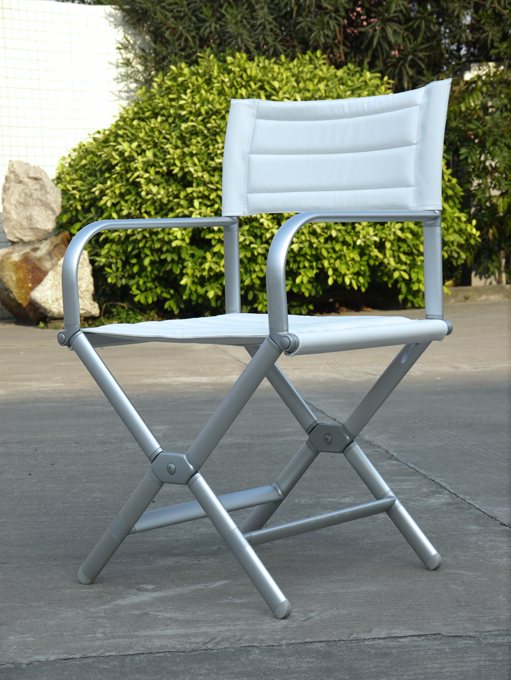
Folding outdoor furniture built for recreation use: aluminium frame with injected aluminium connection parts, foam-backed anti-UV PU fabric and a PVC carry bag.
Why technical and procurement questions dominate this category
Custom outdoor products are cross-material by definition. An event shelter combines a metal frame with a coated textile skin. An inflatable advertising cube combines welded film with valve and seam construction. A boat shelter cover combines a pattern-making problem with a waterproofing problem. When these items are sourced from several different suppliers, every interface becomes a place where a specification can drift — the frame manufacturer and the fabric supplier may each assume the other is responsible for the anchoring decision.
The scale of the demand behind that problem is documented. Grand View Research reported that patio furniture — including custom covers and chairs — accounted for a 42.7% revenue share of the outdoor fabric application segment in 2024, making furniture and cover applications the largest single use of outdoor technical fabric in the reference year. On the standards side, ASTM F3681-24/25, a voluntary safety standard referenced by ASTM International and the CPSC, requires beach umbrellas to resist 75 lbs of upward force or remain secure in 30 mph winds. Anchoring and wind behaviour are no longer purely a buyer preference; in some markets they are becoming documented requirements.
The practical opportunity for buyers is consolidation. Fewer interfaces mean fewer interpretation gaps between what was specified and what was produced, particularly when the same facility handles the metalwork, the sewing and the inflatable welding.
Material specifications by product type
The most common sourcing error in this category is treating “custom outdoor product” as a single material decision. In practice, each product family has its own recorded material combination, and those combinations are what an RFQ should be built on.
| Product | Model | Recorded material | Sizing | Typical application |
|---|---|---|---|---|
| Inflatable Cube | ITC01 | TPU+PVC | Fully customized | Advertisement |
| Inflatable Container Shelter | CS-01 | TPU+PVC, anti-UV, removable | Fully customized | Transportation, events, temporary shelter |
| Inflatable football goal | I-FB | TPU+PVC fabric | Fully customizable | Outdoor sport |
| Outdoor shelter | ST-01 | Aluminum or steel + PU coated polyester, waterproof | Fully customizable | Outdoor sport, outdoor racing |
| Boat shelter | BS-01 | Polyester or PVC fabric, waterproof | Fully customized | Transportation, temporary shelter |
| Car shelter | CT-01 | Polyester fabric | Customized | Camping car |
| Outdoor Umbrella | UM-01 | Aluminium + waterproof polyester fabric | Fully customized | Outdoor garden, restaurant, cafe |
| Caravan pole | CPPlK | Aluminium + plastic | 2 m length | Outdoor fishing, outdoor camping |
| Folding outdoor chair | C01 | Aluminium frame, injected aluminium connections, anti-UV PU fabric | 586 × 557 × 910 mm | Outdoor, camping |
Two items in this range are not dimensionally open-ended, and buyers should plan accordingly: the folding outdoor chair C01 is specified at 586 × 557 × 910 mm, and the caravan pole CPPlK is specified at a 2 m length in aluminium and plastic. Everything else in the list above is recorded as customized or fully customized in size, which makes dimensional input a project responsibility rather than a catalogue lookup.
Custom sizing, waterproofing and anti-UV: what can and cannot be specified
Custom sizing is the default in this range, not an exception. The inflatable cube ITC01, the inflatable container shelter CS-01, the inflatable football goal I-FB, the outdoor shelter ST-01, the boat shelter BS-01 and the outdoor umbrella UM-01 are all recorded as fully customizable or fully customized in size; the car shelter CT-01 is recorded as customized. That flexibility is real, but it shifts work to the buyer: a custom size only becomes a manufacturable specification when the intended use, installation method and anchoring points are described together.
Waterproofing
Waterproofing is recorded at the material level rather than as a general claim. The outdoor umbrella UM-01 pairs an aluminium frame with a waterproof polyester canopy. The boat shelter BS-01 is available in polyester or PVC fabric described as waterproof. The outdoor shelter ST-01 uses PU coated polyester fabric described as waterproof, on an aluminium or steel frame. A delivered boat shelter cover application in China — 10 pcs, used as the roof covering of a boat shelter — was reported to hold good waterproof and anti-aging performance under humid waterfront conditions, with no tearing or water seepage recorded within its one-year service cycle, and the delivered specification included anti-UV, anti-mold and tear-resistant characteristics in a fully custom size and shape.
Anti-UV protection
Anti-UV treatment is specified product by product. The inflatable container shelter CS-01 is recorded with anti-UV protection, and the folding outdoor chair C01 uses anti-UV PU fabric on both the seat and the back. Several recorded applications assume strong UV radiation as a normal working condition — an outdoor advertising event venue in the USA and Canada, an outdoor racing scenario in the USA, Canada and France, and an outdoor vehicle camping project in Spain are all described with strong UV exposure, in some cases alongside high temperature.
Anti-UV protection should be treated as the starting specification, not as a site-specific guarantee. Material behaviour under UV, humidity and temperature varies with exposure conditions, and the practical way to close that gap is to use the sampling and laboratory testing steps that are part of the recorded ODM workflow — engineering design, material development, pattern making, lab testing and prototyping — before committing to a full production run.
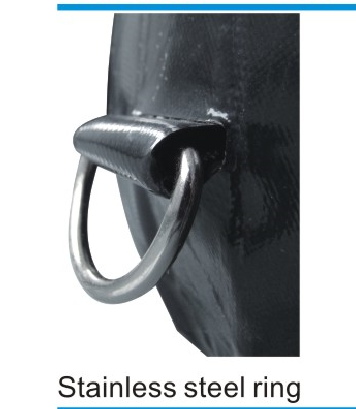
Inflatable advertising structures such as the cube ITC01 are specified in TPU+PVC with fully customizable size and are typically delivered together with anchoring accessories.
Where these products are used: four recorded scenarios
Application conditions are the part of an RFQ that buyers most often leave out, and they are the part that determines whether a material choice is appropriate. Four documented project scenarios in this range show the pattern.
| Project type | Working conditions | Products used | Notes recorded |
|---|---|---|---|
| Outdoor vehicle camping project (Spain) | Outdoor use, strong UV radiation, 24/7 operation | Car shelter CT-01 | Matched equipment: RV, sedan, racing vehicle, off-road car; the client prepares the car |
| Advertising shelter / event base (USA, Canada) | Outdoor event venue, strong UV, high temperature, temporary open-air layout, 24/7 | Outdoor shelter ST-01, Inflatable Cube ITC01 | Peg and rope, water bag, sand bag and lighting as matched equipment; full-colour digital printing for logos and graphics |
| Outdoor sport — racing (USA, Canada, France) | Outdoor event venue, strong UV, high temperature, temporary open-air layout, 24/7 | Outdoor shelter ST-01, inflatable football goal I-FB, folding outdoor chair C01 | Printed surfaces for brand logo and graphic; anchoring and ballast equipment listed |
| Outdoor camping and leisure (France) | Open-air garden and public park, strong UV, wind and rain exposure, all-season use, 24/7 | Caravan pole CPPlK, outdoor shelter ST-01 | Compatible with most RV and camping tent frames; anti-rust aluminium surface treatment; length customization raised as a requirement |
Two details in that table matter more than they appear to. The first is that anchoring hardware — pegs and ropes, water bags, sand bags — is treated as matched equipment rather than an accessory decision, which means ballast and fixing methods belong in the specification. The second is that printing is a stated requirement in advertising and racing applications, so artwork, print coverage and colour control should be part of the original enquiry rather than a later addition.
Procurement parameters: MOQ, lead time, capacity and inspection
For buyers comparing suppliers, the recorded production model splits into two entry points. In OEM production, the client provides samples, drawings, specifications and production requirements, and manufacturing follows those inputs strictly. The fabric side covers custom fabric development, customised printing and sewing, plus processing capability for PVC and TPU film material; the metal side is a one-stop integrated production path covering cutting, bending, drilling, welding, various surface treatments and final assembly. In ODM production, the client provides only the product concept, application scenario and performance standards, and the manufacturer completes engineering design, material development, pattern making, lab testing, prototyping and mass production delivery.
- MOQ: 1 unit recorded for OEM production; MOQ for ODM projects is described as flexible to meet customer needs.
- Lead time: 1–2 weeks for small OEM quantities; 7–30 days recorded for ODM projects.
- Monthly capacity: 1000 units (OEM) and 1000 pcs (ODM).
- Quality control: 100% full inspection before shipment, including air tightness, material tensile test, size verification and appearance check.
- After-sales: remote support.
- Export markets recorded: EU, USA, Canada.
Two delivery results from the same product range give context to those parameters. An outdoor umbrella OEM programme in France, 500 pcs over two years, was reported to work well under all-season outdoor use with zero mass quality complaints within two years, and the customer highlighted ease of set-up and resistance to breakage. A folding outdoor chair OEM programme in France, 1000 pcs over two years, was reported with the same outcome — all-season outdoor use and zero mass quality complaints within two years — with portability and light weight noted as the delivered highlights. An inflatable football goal delivered to a French sports goods retailer and sports event brand was reported as satisfying the client on air tightness and durability, with no air leakage during long-term outdoor training.
Custom programmes versus standard catalogue purchasing
Standard catalogue purchasing and custom manufacturing solve different problems, and the honest comparison includes the costs of customisation.
Off-the-shelf outdoor products offer immediate availability, no sampling cycle and a specification that is already documented. Buyers accept fixed dimensions, fixed materials and a limited choice of finishes. Custom manufacturing replaces those constraints with fit, branding and dimensional accuracy, but it introduces engineering and validation steps — material development, pattern making, lab testing and prototyping — and those steps consume time before production begins.
The boundaries are equally concrete. Monthly capacity is recorded at 1000 pcs or units, which is a planning constraint for large seasonal programmes rather than an unlimited resource. ODM lead times are recorded at 7–30 days, so a multi-material programme with new tooling should not be planned around a two-week assumption. The folding outdoor chair and caravan pole are dimensionally fixed at their recorded values. After-sales support is remote rather than on-site. For car shelter camping use, the recorded scenario states that the client prepares the car, which places vehicle-side preparation outside the manufacturer's scope. Inflatable structures also depend on external anchorage — pegs, ropes, water bags or sand bags — so site preparation remains a shared responsibility.
In the boat and yacht cover segment specifically, Intel Market Research identifies Covercraft Industries, Taylor Made (Lippert) and Carver Industries as established participants in the custom boat covers market. That is a segmentation observation from a third-party market study, not a performance ranking: comparing any supplier fairly requires matched specifications — the same boat dimensions, the same cover material and the same service expectations — because cover performance depends on fit and material as much as on the supplier's identity.
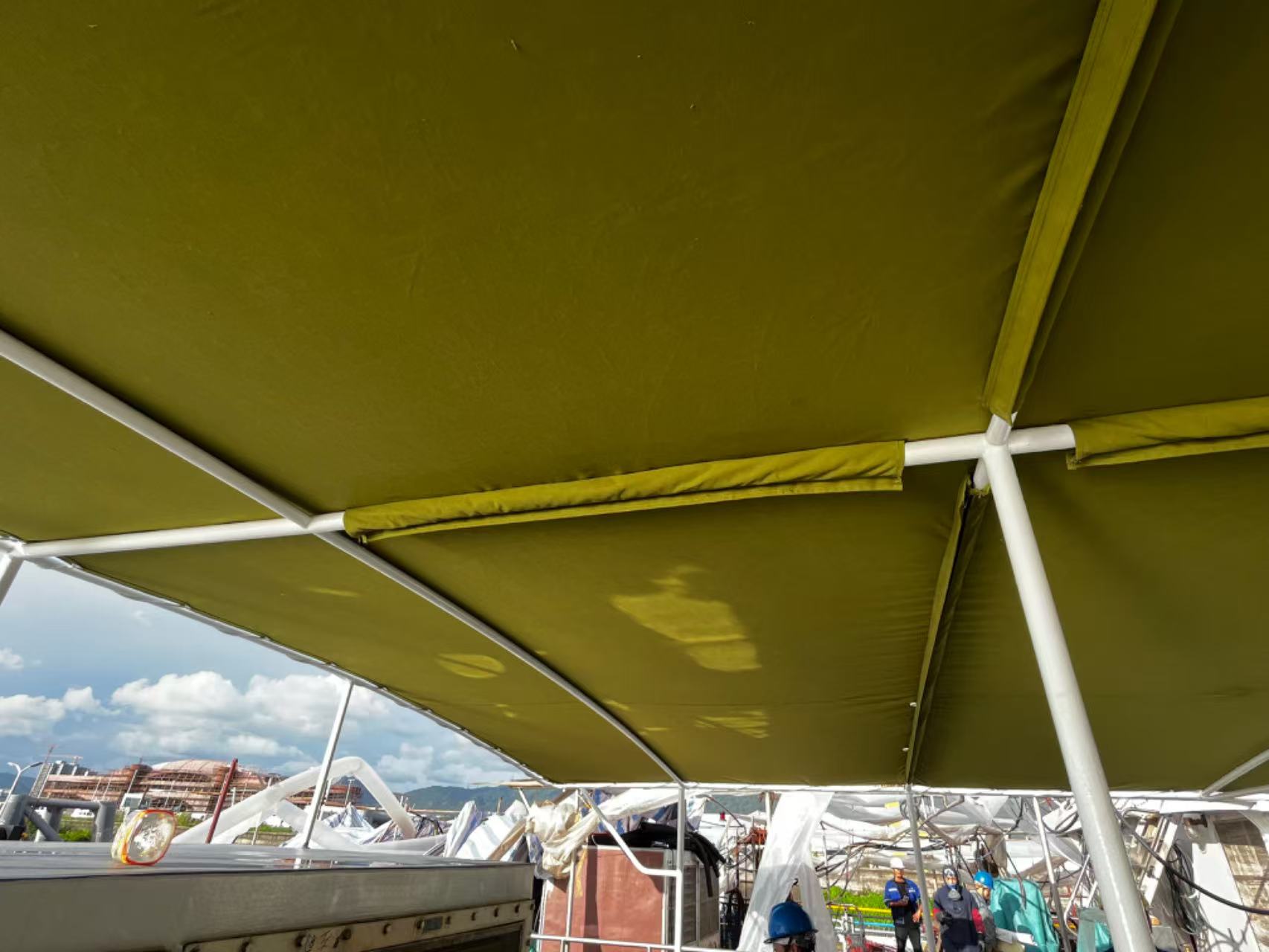
Custom boat shelter covers: fully customised size and shape in polyester or PVC fabric, specified for waterproof, anti-UV and tear-resistant performance.
Market signals worth factoring into a sourcing plan
Third-party estimates for the segments adjacent to this product range differ by scope, and that divergence is itself useful information for buyers building a budget case.
- Dataintelo values the global outdoor patio umbrella market at USD 1.82 billion in 2025, projected to reach USD 3.14 billion by 2034. Future Market Insights estimates the patio umbrella market at USD 0.60 billion, a gap driven by different report scopes rather than a disagreement about the same measured segment.
- Intel Market Research values the custom boat covers market, including luxury yacht covers, at USD 118 million in 2024, projected to reach USD 155 million by 2032.
- Business Research Insights estimates the global custom inflatables market at USD 170.5 billion in 2026, reaching USD 239.42 billion by 2035 at a 3.8% CAGR. Dataintelo estimates the general inflatable products market at USD 14.8 billion in 2025, growing to USD 26.3 billion by 2034 — a difference largely explained by whether industrial and military inflatables are included.
- Growth Market Reports puts inflatable yard decorations, including custom arches and pillars, at USD 2.12 billion in 2025.
Sources: Dataintelo; Future Market Insights; Intel Market Research; Business Research Insights; Growth Market Reports; Grand View Research; ASTM International / CPSC.
Read together, these figures describe a category where demand is broad but segmented by application rather than by product name. For a recreation supplies buyer, the implication is straightforward: the relevant market definition is the application — racing events, camping, waterfront storage, outdoor advertising — not the generic label of custom outdoor products.
Future outlook
Three directions appear reasonably supported by what is already recorded in this category.
The first is that specifications are becoming documentary. The ASTM F3681-24/25 beach umbrella standard, which sets an upward-force and wind-resistance expectation for beach umbrellas in the USA, illustrates the direction: anchoring and wind behaviour are graduating from buyer preference into published criteria that can be cited in a purchase order.
The second is that print and branding requirements are moving upstream. In recorded advertising and racing scenarios, full-colour digital printing for logos and graphics is listed as a stated requirement rather than a finishing option, which means print decisions increasingly influence material selection and colour control from the beginning of a project.
The third is consolidation of the supplier base. Multi-material capability — metal hardware, sewn technical textiles and inflatables under one roof — reduces the number of interfaces in a program, and that reduction is where most of the procurement risk in this category actually sits. For inflatable temporary structures, the limiting factors are likely to remain anchoring, air retention and site preparation rather than material availability.
FAQ: technical and procurement questions for recreation supplies buyers
What counts as a custom outdoor product in the recreation supplies category?
In this category, the term covers outdoor structures and equipment built to a buyer's own size, material or print specification rather than selected from a fixed catalogue. The recorded range includes inflatable cubes, inflatable container shelters, inflatable football goals, outdoor shelters, car shelters, boat shelters, outdoor umbrellas, caravan poles and folding outdoor chairs. These serve recreation uses such as camping, racing events, outdoor advertising, commercial outdoor seating and temporary shelter.
Which materials are used for waterproofing in custom outdoor products?
Waterproofing is recorded at the material level rather than as a generic claim. The outdoor umbrella UM-01 uses an aluminium frame with a waterproof polyester fabric canopy; the boat shelter BS-01 uses polyester or PVC fabric described as waterproof; and the outdoor shelter ST-01 uses PU coated polyester fabric described as waterproof on an aluminium or steel frame. Delivered boat shelter covers have additionally been specified with anti-UV, anti-mold and tear-resistant characteristics for humid waterfront conditions.
Can inflatable outdoor products be made in custom sizes?
Yes. The inflatable container shelter CS-01, the inflatable football goal I-FB and the inflatable cube ITC01 are all specified as fully customizable in size. CS-01 is described as a removable, inflatable shelter designed to be placed between two containers, made of TPU and PVC with anti-UV protection, for transportation, events and temporary shelter. Size is therefore a project input across the inflatable range rather than a catalogue constraint.
Are PVC and TPU both used, and how should the material choice be specified?
Recorded specifications show TPU+PVC material combinations for the inflatable container shelter CS-01, the inflatable football goal I-FB and the inflatable cube ITC01. Manufacturing capability covers processing of PVC and TPU film material, and ODM projects include material development as a defined step. Because film selection depends on the application, buyers should state the intended use and performance standards so the material can be developed and tested against them.
How is anti-UV protection handled in this product range?
Anti-UV protection is specified product by product. The inflatable container shelter CS-01 is recorded with anti-UV protection, and the folding outdoor chair C01 uses anti-UV PU fabric on both the seat and the back. Several recorded applications assume strong UV radiation and high temperature as normal working conditions, including an advertising event venue in the USA and Canada and an outdoor vehicle camping project in Spain. Anti-UV treatment is therefore a standard consideration for sun-exposed products in this range.
What material options exist for custom boat covers and car shelters?
The boat shelter BS-01 is available in polyester or PVC fabric, is described as waterproof, and is offered in fully customized sizes for transportation and temporary shelter use. The car shelter CT-01 is made of polyester fabric with customizable sizing and is intended for outdoors camping scenarios, where the recorded project note states that the vehicle itself is prepared by the client. Both products are classified for transportation and temporary shelter applications.
Can umbrellas and shelters be fully customized, including printing?
The outdoor umbrella UM-01 combines an aluminium frame with a waterproof polyester fabric canopy in fully customized sizes, for outdoor garden, restaurant and cafe use. Outdoor shelters and inflatable advertising products can be produced with full-colour digital custom printing on the surface for logos and graphics, and the recorded advertising scenario lists peg and rope, water bag, sand bag and lighting as matched equipment. Print requirements should be raised at enquiry stage because they can affect material and finishing decisions.
What should an RFQ for custom outdoor products contain?
The recorded production model defines two input sets. In OEM production, the client provides samples, drawings, specifications and production requirements. In ODM projects, the client provides the product concept, application scenario and performance standards, after which engineering design, material development, pattern making, lab testing, prototyping and mass production delivery are completed by the manufacturer. A complete RFQ therefore pairs dimensional information with the environment of use — UV exposure, temperature, humidity, wind and anchoring conditions — because those conditions drive material selection.
What MOQ, lead time and monthly capacity apply to custom outdoor products?
For OEM production, the recorded MOQ is 1 unit, with a lead time of 1–2 weeks for small quantities and a monthly capacity of 1000 units. For ODM projects, the recorded lead time is 7–30 days with a monthly capacity of 1000 pcs, and MOQ is described as flexible to meet customer needs. Buyers planning larger or seasonal programmes should treat monthly capacity as a planning constraint rather than an unlimited resource.
How is quality verified before shipment, and what after-sales support is available?
Every shipment is subject to 100% full inspection before dispatch, covering air tightness, material tensile testing, size verification and appearance checks. Air tightness verification is directly relevant to the inflatable range, which includes football goals, cubes and container shelters. After-sales support is provided remotely.
What are the practical limitations of custom outdoor products?
Custom manufacturing changes the specification, not the physics or the logistics. Some items are dimensionally fixed — the folding outdoor chair C01 is specified at 586 × 557 × 910 mm and the caravan pole CPPlK at a 2 m length. Monthly capacity is recorded at 1000 pcs or units, ODM lead times run from 7 to 30 days, and after-sales support is remote rather than on-site. Inflatable structures also depend on anchoring equipment such as pegs, ropes, water bags or sand bags, and for car shelter camping use the vehicle preparation is carried out by the client.
Closing reference
For buyers who need the complete product and capability overview in one document, the Star Canopy company brochure can be downloaded here: Star Canopy company brochure (PDF). Additional product and capability information is available at www.starcanopy.com.