
Custom ODM vs Stock Pad-Mounted Transformers in North America
Interconnection approval, field rework and twenty-year operating cost are the three places where the choice between a custom ODM pad mounted transformer and an off-the-shelf unit becomes visible. Brand, catalogue page and delivery promise matter, but they do not determine whether a North American distribution project energizes on schedule. The three measures above do.
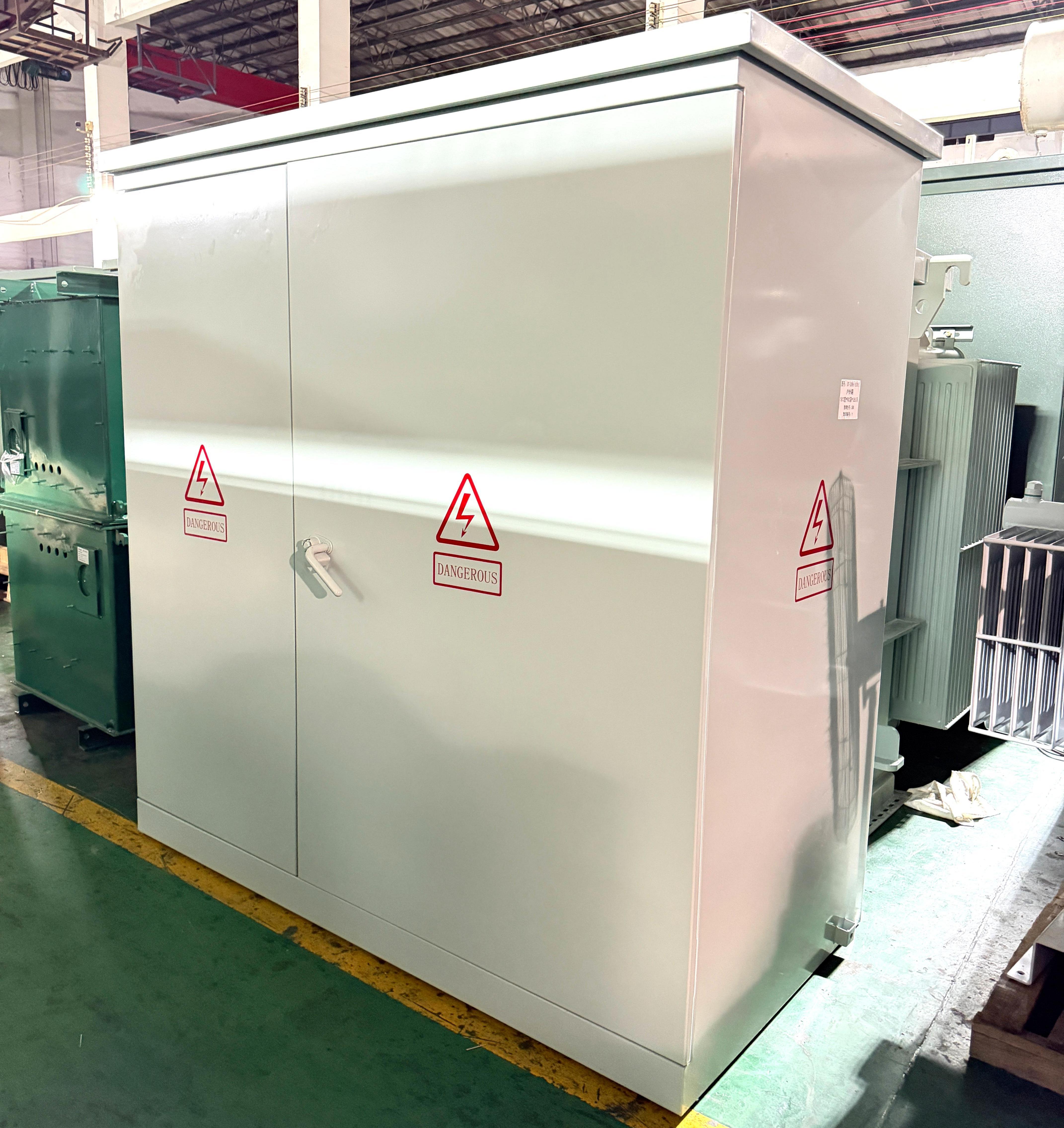
A pad mounted transformer is a distribution transformer supplied in a tamper-resistant enclosure that sits on a concrete pad at grade and serves underground distribution for residential, commercial, institutional and industrial loads. In North America the product family is standardized in layers: three-phase units are governed by IEEE C57.12.34, covering ratings up to 10 MVA and 34.5 kV; single-phase units of 250 kVA and below are standardized under IEEE C57.12.38-2025; and enclosure integrity for equipment in publicly accessible areas is addressed by IEEE C57.12.28-2023. Those standards define an envelope, not an individual project.
The procurement problem begins with that gap. A transformer is "standard" only relative to the manufacturer's catalogue and the scope of its listing. A project is "standard" only relative to the utility's approved specification. When the two parameter sets agree, a stock unit is the fastest route to energization. When they disagree, the disagreement usually surfaces in the interconnection review or on site — the two most expensive places to find it.
Why the stock-versus-ODM decision is a constraint question
ODM in transformer procurement means the manufacturer engineers and builds to the buyer's specification: drawings, nameplate data, winding configuration, protection scheme and enclosure details are project-specific rather than taken from a catalogue. The decision to buy that way is not a matter of preference. It is triggered by three constraint families.
The certification envelope. A listing covers defined ratings, voltages and construction. A three-phase pad mounted unit listed by UL Solutions under certificate E536138, for example, covers rated capacities from 45 to 5,000 kVA at high voltages up to 36.0 kV under ANSI/IEEE C57; the corresponding cUL entry for the Canadian market references CSA C227 and covers the 26.0 kV to 36.0 kV range. A buyer who specifies a unit outside those bounds is not buying a listed stock product at all, whatever the catalogue says.
The nameplate parameters. Primary and secondary voltage, winding connection group, impedance band, tap range, feed type and enclosure rating are the fields a utility reads first. Common catalogue values on three-phase units include 34.5 kV, 24.94 kV, 13.8 kV, 13.2 kV, 12.47 kV and 4.16 kV primaries with 690Y/400, 480Y/277, 208Y/120 or 240Y/120 secondaries. A project needing a dual primary, a split secondary or a Canadian 600Y/347 V service sits outside that list by definition.
The price band. Catalogue pricing assumes repeatable configurations. Once engineering, drawing approval, type testing and non-standard components enter the order, the cost basis changes, and comparing a quoted stock price against an ODM quotation without adjusting for scope produces a misleading gap.
The first lens: interconnection approval
Approval at the point of interconnection is a document-matching exercise rather than a brand judgement. Reviewers work from the submitted nameplate and drawing set: rated capacity, voltage ratio, winding connection and vector group, impedance, tap configuration, feed arrangement, enclosure integrity and the scope of the product listing. Each item is checked against the approved project specification and the protection study.
A stock unit carries a fixed set of those values. If the delivered nameplate differs from the value used in the protection coordination study — a different impedance band, a different tap range, a secondary voltage that does not match the service configuration — the correction is procedural, not physical. The drawing set is revised, the study is repeated, and the energization date moves.
An ODM build removes that specific failure mode because the parameters are design inputs rather than outcomes. The approved drawing set, the routine test record and the nameplate all describe the same unit. There is no reconciliation step between a catalogue value and a project requirement, because no catalogue value was ever in play.
The second lens: rework, and where it actually originates
Field rework on pad mounted installations rarely comes from a failed transformer. It comes from interface mismatches between the unit and everything already built around it. The recurring sources are consistent:
- Pad and footprint. A replacement unit whose cabinet dimensions differ from the existing pad requires civil work before electrical work can begin.
- Cable termination and clearance. Dead-front loop-feed arrangements, cable parking positions and bending radius clearances are dimensional commitments, not preferences.
- Secondary configuration. Bus arrangement and the number of secondary exits must match the switchboard or service entrance that already exists.
- Protection and accessory fit. Bayonet fuses, load-break switches, gauges, relays and monitoring interfaces must be the devices named in the specification, not equivalents.
- Enclosure finish. Coastal, industrial and high-humidity sites frequently call for 304 stainless steel or a specified coating system, which is a construction choice made before the tank is fabricated.
Each of these is cheap to resolve on a drawing and expensive to resolve on a pad. That asymmetry is the entire economic argument for ODM in retrofit and expansion work, and it is why the pre-shipment documentation package matters as much as the hardware.
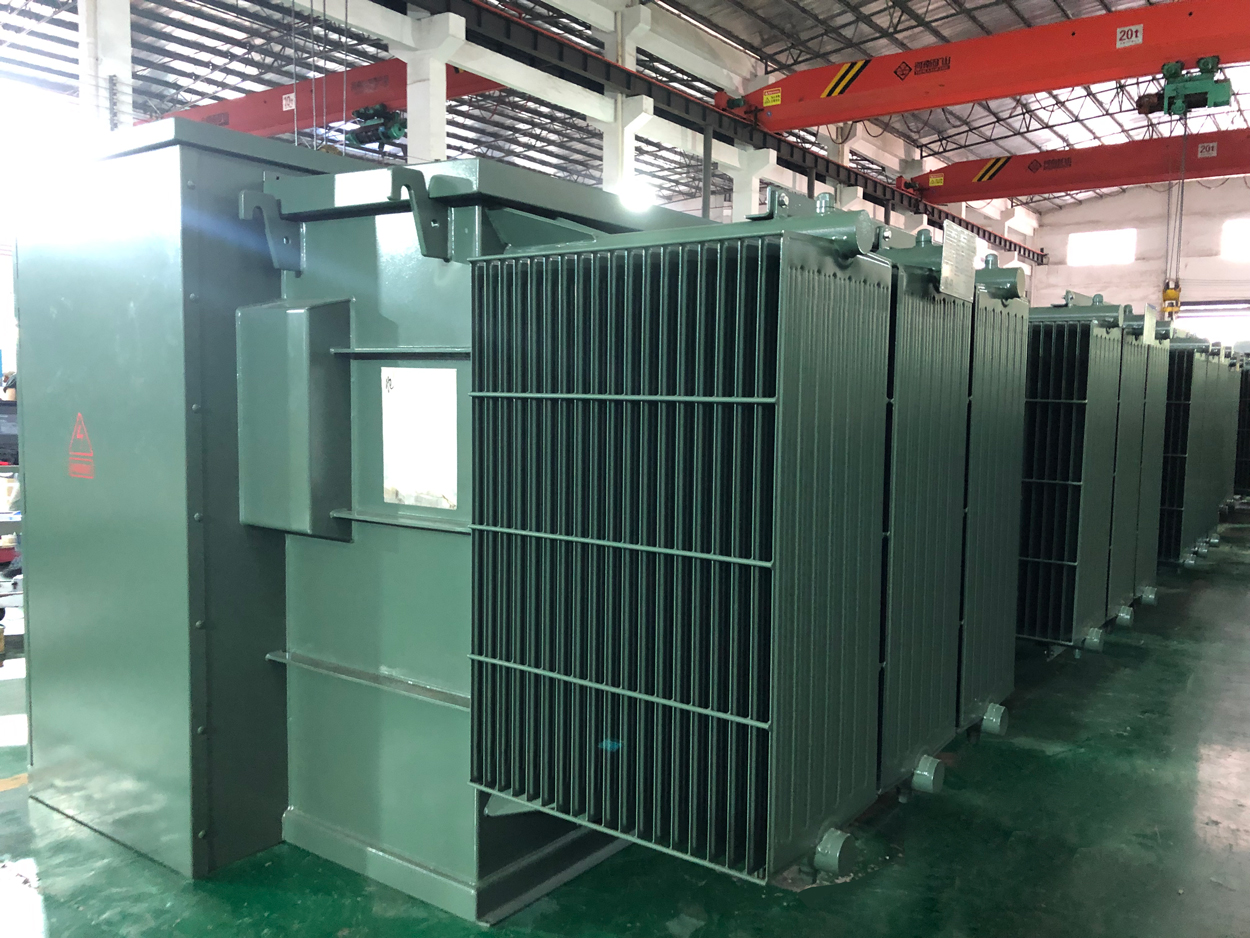
Winley Electric's production controls follow that logic: routine factory tests on every unit, type tests where the customer's specification requires them, and third-party inspection on request. For a North American utility customer, the company produced 31 three-phase pad mounted transformers in two specifications — 2,550 kVA and 3,750 kVA, at 34.5 kV and 12.87 kV — with the full series UL and cUL listed and efficiency metrics meeting DOE 2016 requirements. The order demonstrates mass production across multiple specifications within one delivery window; more importantly for this comparison, each unit left the factory with a nameplate and test record written against the same drawing set the customer had approved.
The third lens: long-term operating and maintenance cost
Over a twenty-year service life, the cost of a pad mounted transformer is dominated by items that were fixed at the design stage. Losses are the largest of them: no-load and load losses accumulate continuously, and DOE 2016 efficiency requirements set a floor rather than an optimum. A buyer with a loss-evaluation formula — common among utilities — needs loss values as a specified input, which is an ODM function, not a catalogue selection.
Cooling configuration is the second. ONAN construction covers a defined capacity range; ONAF construction raises the usable rating without changing the footprint. Whether that matters depends on expected peak load and load-growth allowance, both of which are project parameters.
The third is insulation fluid. Mineral oil, natural ester and synthetic ester differ in fire point, biodegradability and thermal behaviour, and some institutional and publicly accessible sites specify a high-fire-point fluid as a condition of approval. Fluid choice interacts with tank design and cannot be retrofitted economically.
The remainder of the twenty-year cost sits in maintenance access: tap changer type and range, gauge and monitoring visibility, corrosion protection on tanks and cabinets, and the long-term availability of spare accessories. Winley Electric's standard commercial terms include a 24-month maintenance period from bill of lading, free replacement of damaged accessories on photographic evidence, a supply of consumable accessories scaled to the order quantity, and technical support. Those terms are identical for stock and ODM orders; what differs is whether the specified components are the ones the site's maintenance team already stocks.
Side-by-side: what changes between a stock unit and an ODM build
| Decision area | Off-the-shelf standard unit | Custom ODM unit |
|---|---|---|
| Listing scope | Fixed; buyer must confirm rating and voltage fall inside the listing | Listing obtained for the configuration actually built, within the certified rating range |
| Voltage and connection group | Catalogue values only | Dual primary, dual or split secondary, specified vector group and taps |
| Feed and termination | Loop or radial as catalogued | Loop or radial with project-specified dead-front arrangement and clearances |
| Enclosure and corrosion | Standard finish, fixed dimensions | 304 stainless or specified coating; footprint matched to the existing pad |
| Protection and accessories | Manufacturer's default device set | Named switches, fuses, gauges, relays, monitoring and communication interfaces; integration of components such as Qualitrol or Eaton Cooper |
| Losses and cooling | Catalogue values; ONAN, occasionally ONAF | Loss values and cooling specified against DOE 2016 and utility loss evaluation |
| Documentation | Generic data sheet plus routine test report | Approved drawing set, routine tests, type tests on request, factory acceptance record, nameplate matched to drawings |
| Delivery | Immediate to several weeks, subject to distributor stock | Typically 4–8 weeks, minimum order quantity of one unit |
| Best fit | Standard loads, emergency replacement, fleet standardization | Non-standard voltage, feed, protection, enclosure or application duty |
What ODM scope covers in practice
Winley Electric (Xiamen Winley Electric Co., Ltd) is a transformer manufacturer founded in 2014 and headquartered in Xiamen, China, with manufacturing facilities in Shanghai and Guangdong. The company holds UL and cUL certification and builds to ANSI, IEEE, CSA, DOE 2016, NEMA and IEC 60076 standards; its product range spans three-phase and single-phase pad mounted transformers, substation transformers, pole-mounted transformers, dry-type transformers, isolation transformers, voltage regulators and reactors, with high-voltage power transformer capability up to 450 MVA and 230 kV.
For pad mounted work the ODM envelope runs to 10 MVA and 36 kV. Within it, the customizable fields are broad and specific:
- Electrical performance: rated capacity, voltage ratios, connection group and impedance.
- Structure and appearance: model, cabinet size, protection class and access arrangement.
- Insulation fluid: mineral oil, natural ester or other specified dielectric.
- Protection and instrumentation: switches, fuses, gauges, relays, monitoring and communication interfaces.
- Environmental adaptation: tank coating systems and construction details for salt fog, heat, cold or high-humidity sites.
- Component integration: third-party devices from named brands such as Qualitrol and Eaton Cooper, where the project specification requires them.
Certification alignment is part of the scope, not an afterthought. Three-phase pad mounted units are covered by UL certificate E536138 for the USA market under ANSI/IEEE C57 up to 36.0 kV and 5,000 kVA, with the matching cUL entry for Canada under CSA C227. Single-phase pad mounted units are covered by UL and cUL certificate E536138 for liquid-filled, pad-mounted distribution transformers rated 10 to 250 kVA, meeting ANSI/IEEE C57.12.00, C57.12.20, C57.12.38 and C57.12.90, CSA, DOE and NEMA. Dry-type units are covered separately under certificate E531446 to ANSI/IEEE C57 for both the USA and Canada. Manufacturing is managed under ISO 9001, with ISO 14001 and ISO 45001 certification held across the full product range.
The working sequence is conventional but tightly ordered: specification intake, drawing design and revision, component selection, production, routine testing with type tests where required, factory acceptance and third-party inspection, then shipment with documentation. Quoted lead time is 4–8 weeks with a minimum order quantity of one unit and monthly capacity around 500 units.
Where ODM is the wrong choice
The case for customization has boundaries, and a procurement reference that ignores them is not useful.
Emergency restoration. ODM does not compress the engineering and approval cycle. Where a failed unit must be back in service within days, a stock unit from distributor inventory — even one requiring a temporary pad modification — is often the correct decision.
Fleet standardization. Utilities and multi-site operators that maintain spares against a fixed catalogue configuration gain more from interchangeability than from per-project optimization. Introducing a project-specific variant into a standardized fleet raises long-term spares complexity.
Specifications that are already complete. If the project's parameters sit comfortably inside a listed catalogue configuration, customization adds engineering cost without changing the approval outcome.
Incomplete or unverified site data. ODM converts the buyer's inputs into hardware. If primary voltage, available pad space, cable arrangement or protection requirements are not confirmed, those uncertainties are built into the unit rather than resolved. Garbage in, transformer out.
Ratings beyond the certified envelope. Pad mounted construction is standardized up to 10 MVA and 34.5 kV under IEEE C57.12.34, and Winley's ODM envelope stops at 10 MVA and 36 kV. Above that, the discussion moves to substation-class equipment, which is a different product category with different site requirements.
Physics still applies. A dual-secondary winding, a wider tap range or a stainless enclosure adds material, weight and tank volume. A customized unit is generally larger, heavier and more expensive per kVA than a stock equivalent. ODM buys fit, not efficiency at equal cost.
Application patterns where the comparison resolves differently
Utility underground distribution. Loop-feed networks with feeder voltage conversion or dual-primary requirements are the clearest ODM case, because the voltage combination itself is project-specific and the approval documentation must match it exactly.
EV charging hubs. High-power charging loads bring rapid load changes, rectifier harmonics and simultaneous charger operation. Units in the 2,500 to 3,750 kVA range with multi-step tap changers are commonly specified for public fast-charging sites, and the tap range is a design input rather than a catalogue option.
Solar and storage. Step-up duty with reverse power flow, fluctuating output and inverter harmonics pushes specification toward non-standard winding arrangements and, frequently, natural-ester fluid.
Data centres. Redundancy architecture, harmonic tolerance and low-loss requirements drive loss values and impedance into the specification, and dual-bus arrangements rarely map onto catalogue units.
Industrial plants and campuses. Motor-starting duty, impact loads and voltage conversion of legacy systems typically require impedance and cooling choices that differ from residential distribution practice.
Mining and remote sites. Dust, vibration, long feeders and unattended operation add enclosure and protection requirements that are decided before fabrication.
Price band: what the numbers can and cannot tell you
Public benchmarks exist but must be read carefully. Industry price guides for 2025 place FOB prices for pad mounted transformers from China broadly in the range of USD 25 to USD 70 per kVA depending on materials, a band wide enough to be a starting point rather than a quotation. A published US list reference for a standard-efficiency 500 kVA oil-filled pad mounted transformer, 13.8 kV to 480 V, sits at approximately USD 39,761. Both figures are third-party benchmarks of medium reliability and should be re-verified against a current quotation before use in a budget.
What these figures illustrate is the structure of the price band rather than a specific number. Moving from left to right across that band generally reflects copper versus aluminium windings, mineral oil versus ester fluid, standard versus 304 stainless enclosure, catalogue versus specified protection devices, and the presence or absence of type testing. An ODM quotation that appears 15 to 30 percent above a stock quotation is frequently a comparison between two different scopes rather than two prices for the same unit; the honest comparison adds the cost of the field changes the stock unit would have required.
Market context behind the constraint shift
Published market estimates for pad mounted transformers diverge widely, and the divergence itself is informative. Global Market Insights values the global market at approximately USD 22.3 billion in 2024; Mordor Intelligence estimates USD 6.12 billion for 2025; Strategic Market Research reports USD 5.2 billion for 2024. The spread reflects differences in scope — notably whether power transformers are partially included — rather than error, and any buyer using a market figure should check the definition behind it.
Two figures are more directly relevant to procurement. The US pad-mounted transformer market was estimated at USD 3.75 billion in 2024, shaped by grid modernization and underground cabling programmes. Global trade in liquid dielectric transformers under 650 kVA reached USD 4.08 billion in 2024, a 22.6 percent increase on the previous year. Rising trade volume in the small and medium rating classes is consistent with what project teams report: more units moving across borders into specifications that are not identical to the origin market's catalogue, which is precisely the condition that makes constraint management — certification scope, nameplate accuracy, documentation — the determining skill.
Future outlook
The direction of travel is toward specification density. Undergrounding programmes, EV charging build-out, storage interconnection and data centre expansion all push projects toward non-catalogue voltage, protection and loss requirements, while IEEE and CSA standards continue to define the envelope those projects must fit inside. That combination favours manufacturers who can hold certification across a broad rating range and engineer to drawings, and it disadvantages procurement models that treat the transformer as a commodity line item selected after the electrical design is frozen.
The practical implication for buyers is sequencing. Deciding between stock and ODM after the interconnection package is submitted converts a design decision into a change order. Deciding it during the research and evaluation stage — with the utility's approved parameters, the pad dimensions and the protection scheme on the table — keeps the choice where it belongs, which is in the specification.
Frequently asked questions
Does an ODM pad mounted transformer take longer to deliver than a stock unit?
Yes, in most cases. An ODM build requires drawing design and customer approval before fabrication, and Winley Electric quotes a lead time of 4 to 8 weeks for ODM orders with a minimum order quantity of one unit. A stock unit may ship from distributor inventory in days, but that comparison excludes the interconnection resubmittal and field adaptation time that a non-matching stock unit can trigger. The two schedules are only comparable when the stock unit's parameters match the approved specification.
What certification scope should a North American buyer confirm before ordering a pad mounted transformer?
The buyer should confirm that the specific rating and voltage fall inside the listing. Three-phase pad mounted transformers are listed by UL Solutions under certificate E536138 for the USA market up to 5,000 kVA and 36.0 kV under ANSI/IEEE C57, with the corresponding cUL entry for Canada under CSA C227 covering the 26.0 kV to 36.0 kV range. Single-phase liquid-filled pad mounted units are covered under the same certificate number for ratings of 10 to 250 kVA. Dry-type units are listed separately under certificate E531446 to ANSI/IEEE C57 for both markets.
Which parameters can be customized within an ODM order, and which remain fixed?
Winley Electric's ODM scope covers electrical performance (rated capacity, voltage, connection group), structure and appearance (model, cabinet size, protection class), insulation fluid, protection devices, switches, gauges, tank coating, and environmental adaptations, plus monitoring, protection and communication interfaces. Components from named brands such as Qualitrol and Eaton Cooper can be integrated where specified. Fixed rather than negotiated are the certification envelope — up to 10 MVA and 36 kV for ODM pad mounted work — and the underlying standard requirements of IEEE/ANSI C57.12.34, CSA C227.4 and C227.5, IEC, DOE and NEMA.
How large is the price difference between a stock and an ODM pad mounted transformer?
No single figure applies, because the gap depends on scope rather than on a fixed premium. Third-party benchmarks for 2025 place FOB prices for pad mounted transformers from China in a broad range of USD 25 to USD 70 per kVA depending on materials, and a published US list reference for a standard-efficiency 500 kVA oil-filled unit at 13.8 kV to 480 V is approximately USD 39,761. Both are external benchmarks rather than quotations. An ODM unit typically carries additional engineering, drawing approval, type testing and non-standard component cost, which is partly offset by avoided field rework and avoided interconnection resubmittal.
How is rework risk controlled before a unit leaves the factory?
Control is document-based and test-based. The approved drawing set defines the unit; routine factory tests are performed on every unit and type tests are performed where the customer's specification requires them; factory acceptance testing and third-party inspection can be arranged; and the nameplate is issued against the same drawing set the customer approved. This is the mechanism that prevents a mismatch between the nameplate presented to the utility and the unit that arrives on the pad.
When is a stock pad mounted transformer the better procurement decision?
A stock unit is the better choice when the project's parameters sit inside a listed catalogue configuration, when restoration speed outweighs optimization, or when the operator maintains spare-parts standardization across a fleet. It is also the practical choice when site data is incomplete, since a customized unit converts unverified inputs into hardware. Customization is justified when voltage, feed arrangement, protection, enclosure or loss requirements fall outside the catalogue — not when they merely could be improved.
Click to view more pad‑mounted transformer projects from Winley Electric:https://www.winley-electric.com/supplier-4701740-three-phase-pad-mounted-transformer
·Website:www.winley-electric.com

¿Tiene preguntas o necesita más detalles?
Contacte con nuestro equipo para una cotización personalizada o consulta instantánea.
Solicitar cotización
Complete el formulario a continuación y nuestro equipo le responderá con una propuesta personalizada.
Chat directo de WhatsApp
¿Prefiere chatear en tiempo real? Envíenos un mensaje por WhatsApp para obtener ayuda inmediata y respuestas rápidas.
- Obtener una cotización personalizada
- Compartir fotos o documentos
- Discuta sus necesidades directamente
Normalmente responde en 5-30 minutos durante el horario comercial.