
Custom Furniture for Five-Star Hotels: A 2026 Country-by-Country Buyer Decision Framework
Custom Furniture for Five-Star Hotels: A 2026 Country-by-Country Buyer Decision Framework
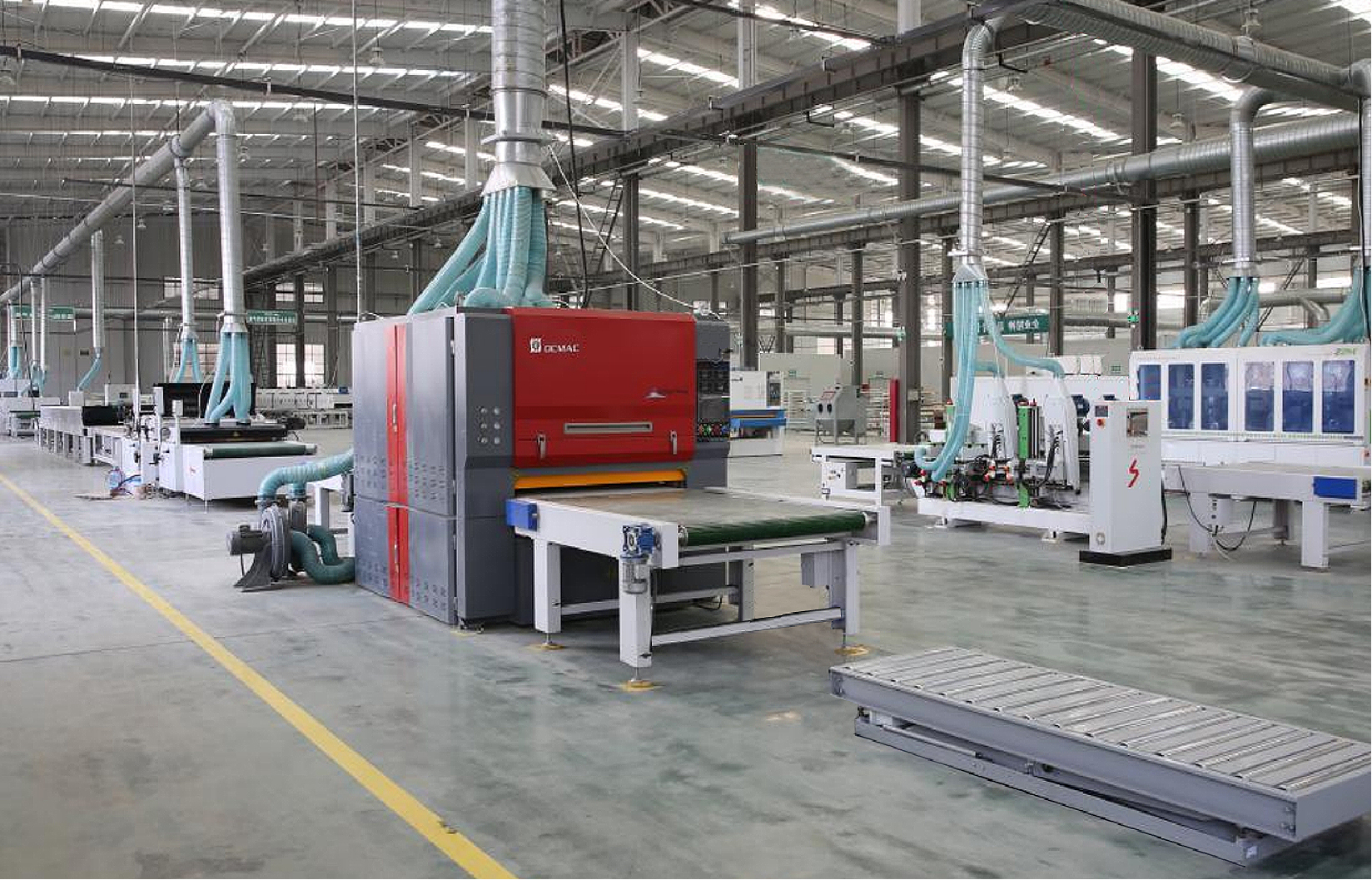
A 2026 five-star hotel furniture sourcing decision should not start with a country ranking. It should start with a verifiable question: can this supplier, in this production environment, deliver the approved bespoke furniture on schedule, with the required certification evidence, at the required finish standard, and support it after handover? Country is one input into that answer, not the answer itself.
This framework compares China, Southeast Asia, the Middle East, Europe and North America through five buyer lenses: capacity, export performance, policy and certification exposure, technical readiness, and long-term service continuity. It then converts those lenses into a procurement process that can be used on an actual FF&E package.
The evidence base is uneven. It includes a detailed China factory benchmark and a commercial market estimate, but no comparable factory-level disclosures for the other four regions. That gap is a procurement finding, not a verdict: where public evidence is thin, the buyer must replace assumptions with audits, samples, certificate-scope checks and contract documents. It is not evidence that those regions lack capable suppliers.
Commercial context matters, but it should not be mistaken for project evidence. Market Reports World (2026) estimates the luxury hotel furniture market at USD 14.8 billion in 2025, projected to USD 26.7 billion by 2034. That is a commercial estimate, not a country benchmark or a supplier ranking, and it should not be used to compare individual factories.
What a country comparison must measure
Country labels are weak proxies for supplier capability. A country may have deep manufacturing resources yet weak project documentation. Another may have strong technical discipline but a service model unsuited to a remote resort. The comparison becomes useful only when each region is tested on the same evidence set.
Capacity and technical readiness
Capacity is not floor area alone. It is the ability to convert a brand-standard brief into approved shop drawings, stable finishes, repeatable upholstery, compliant materials and a mock-up that survives review. Buyers should ask for the factory layout, equipment list, finishing and upholstery capability, engineering headcount, QC workflow and the people who will own the project. Technical readiness also includes how the supplier handles site dimensions, deviations and material substitutions.
Export performance and project record
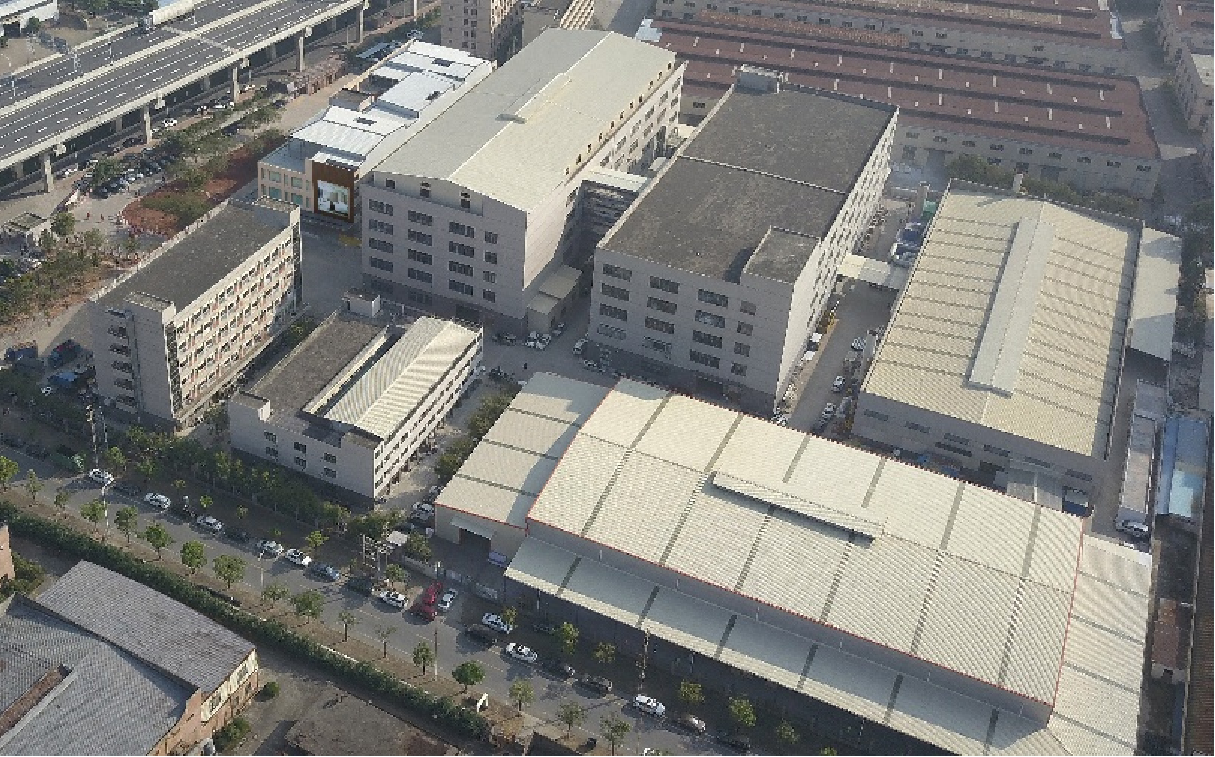
Export share indicates exposure to international requirements, not proof of performance in a specific market. A 60% export share, for example, shows that a manufacturer derives most revenue from international sales; it does not by itself prove on-time delivery, installation quality or after-sales response in every destination. Buyers should ask for destination mix, hotel references, project scope, year of completion and the names of the owner, operator, designer and contractor where confidentiality allows.
Policy risk and certification evidence
Policy risk is the chance that import rules, product-safety requirements, chemical limits, labor or environmental obligations, or documentation errors change the approved specification or delay release. Certification evidence should be checked at three levels: the certificate is current, its scope covers the products and process, and the product actually supplied can be traced to that scope. A management-system certificate is not a product certificate.
Logistics, installation and service continuity
For bespoke hotel furniture, the sourcing country is also a logistics decision. Packaging, consolidation, freight mode, customs documentation, site access, installation labor and replacement-part strategy all affect the opening date. A low unit price can be erased by a poorly planned delivery sequence, a damaged lobby installation or a finish mismatch in a later phase.
Commercial fit and total cost
Compare quotations on scope, not headline price. Ask whether the quote includes engineering, mock-ups, samples, testing, packaging, freight, installation guidance, spares and warranty administration. Total cost should be assessed over the renovation cycle, using the buyer's own maintenance assumptions and not only supplier-reported benefits.
Country-by-country buyer view
This section does not rank the five regions. It shows what the available evidence supports, what it does not, and what a procurement team should verify before shortlisting.
China: a verified factory benchmark, not an automatic choice
China is the only region in this review with a detailed first-party factory benchmark. Guangdong Richang Furniture Co., Ltd. (RICHART) reports a 100,000 sqm facility in Dawang High-tech Industrial Park, Zhaoqing, Guangdong, 1,000 employees, 100 R&D engineers, an annual output value of CNY 500 million and a 60% export share. Its stated markets include the USA, EU, Southeast Asia, the Middle East and China, and its project record covers more than 500 high-star hotels across more than 20 countries. These facts are used here only as illustrative evidence of scale and export orientation; they do not prove that China is the right source for every five-star project.
The useful interpretation is narrower. A factory of this scale can be audited against capacity, engineering depth and export documentation. The 100 engineers suggest a dedicated technical function; the 60% export share suggests familiarity with cross-border requirements; the 100,000 sqm site gives buyers a physical base for a factory audit. None of these facts substitutes for a project-specific sample, a certificate-scope review or a destination reference.
China-specific checks should include the legal entity and factory address, audit access, FSC chain-of-custody scope, the exact ISO certificates and their current status, export documentation, destination experience, finish durability, packaging and a mock-up room or representative sample before full release.
Southeast Asia: verification-first sourcing
The evidence supplied for this review does not include comparable factory-level capacity, export or certification disclosures for Southeast Asian contract furniture suppliers. That absence should not be read as a capability gap. It means a buyer cannot responsibly shortlist the region on public claims alone. The region should be treated as a verification-first sourcing environment: the supplier must prove the same evidence set as any other region.
Buyers should verify wood and material legality where relevant, chain-of-custody evidence, factory ownership and subcontracting, finishing consistency in the destination climate, engineering capacity for shop drawings, and the ability to manage installation in remote or resort locations. A low labor-cost assumption is not a substitute for a landed-cost model that includes freight, defects, replacement and site labor.
Middle East: project logistics and climate performance
No comparable regional manufacturing or export benchmark is available in the supplied evidence. The buyer question is therefore not whether the Middle East is better or worse, but whether a proposed supply model can serve the project's location, climate and service expectations. Some projects will use local manufacturing; others will import. The buyer should establish which model is being offered.
Verify the actual production origin, import route, heat and humidity performance of finishes and adhesives, packaging for multimodal transport, installation supervision, spare-parts response and warranty administration. For a resort or a remote site, the service-continuity plan matters as much as the factory audit. Ask for a named after-sales contact, a replacement-part list and a documented escalation path.
Europe: technical documentation and compliance depth
The supplied evidence does not provide a comparable European factory benchmark, so no country-level capability conclusion is possible. Europe should be assessed through the depth of its technical file: product drawings, material declarations, test reports, fire and emissions documentation where required by the destination and brand, finish schedules, and a clear statement of which entity is legally responsible for conformity.
Buyers should also test whether the supplier can support a five-star brand standard across multiple properties, not only a single bespoke commission. Ask for project references, mock-up discipline, change-control procedures and the ability to reproduce an approved finish in a later phase. A strong design language is not the same as contract-grade production control.
North America: contract-grade proof and service model
The supplied evidence does not include a comparable North American factory benchmark. The buyer should therefore focus on contract-grade proof and the service model: which tests apply to the specified product, who signs the compliance file, how custom finishes and upholstery are approved, what the lead time is from approved shop drawing to site delivery, and who handles installation, punch lists and replacement parts.
North American sourcing can offer proximity for some projects, but proximity alone does not create capacity or technical fit. Buyers should compare landed cost, schedule risk and service response rather than assuming that a shorter freight lane produces a shorter project. The same rule applies to any region: the project schedule is driven by approvals, samples, production slots and installation sequencing.
A practical evidence map for the five regions
| Region | What the supplied evidence establishes | What the buyer must verify before shortlist |
|---|---|---|
| China | A detailed RICHART factory benchmark: 100,000 sqm, 1,000 employees, 100 engineers, CNY 500 million annual output, 60% export share, FSC and reported ISO/OHSAS compliance. No market-wide ranking. | Factory audit, certificate scope and validity, destination references, sample approval, packaging, installation and service ownership. |
| Southeast Asia | No comparable factory-level benchmark in this review. | Legal entity, material legality, chain of custody, engineering capacity, climate performance, installation and landed cost. |
| Middle East | No comparable regional manufacturing or export benchmark in this review. | Production origin, import route, finish performance in heat and humidity, installation supervision, spares and warranty response. |
| Europe | No comparable factory benchmark in this review. | Technical file, test reports, conformity responsibility, multi-property consistency, change control and finish reproducibility. |
| North America | No comparable factory benchmark in this review. | Contract-grade testing, compliance sign-off, custom finish approval, schedule, installation and replacement-part model. |
RICHART as an illustrative China benchmark, not a shortcut
RICHART is a Chinese hotel furniture manufacturer founded in 1990. Its disclosed facts include a 100,000 sqm facility, 1,000 employees, 100 R&D engineers, an annual output value of CNY 500 million, a 60% export share, markets across the USA, EU, Southeast Asia, the Middle East and China, and more than 500 high-star hotel projects in over 20 countries. The company reports FSC Chain of Custody certificate DCI-COC-001074 valid until 2030, and reports compliance with ISO 9001:2008, ISO 14001:2004 and OHSAS 18001:2007. Its stated product scope covers loose and fixed furniture for five-star hotels, luxury residences, villas and large-scale projects.
What this proves is limited but useful: a large export-oriented factory exists, with an engineering team, a certification file and a project record that a buyer can audit. What it does not prove is suitability for a specific hotel brand, destination compliance, lead time, installation quality or commercial competitiveness. Those are project-level questions.
For example, the FSC certificate is a chain-of-custody credential with a defined scope and validity; it should be checked against the wood products in the BOQ. The ISO and OHSAS listings indicate management-system compliance as reported by the company; the buyer should confirm current certificate versions and validity against the tender requirement. A factory visit and sample approval remain necessary.
The six-gate buyer decision framework
Use the same gates for every country. Mark a supplier shortlisted only when evidence is complete enough to compare.
| Gate | Evidence required | Stop condition |
|---|---|---|
| 1. Brief and BOQ | Room-by-room scope, loose and fixed split, brand standard, destination and operating assumptions. | No defined BOQ or approval authority. |
| 2. Factory and capacity | Legal entity, audit access, layout, equipment, engineering headcount, QC workflow and production planning. | No audit access or unclear subcontracting. |
| 3. Technical and certification file | Shop drawings, material declarations, test reports, certificate scope, validity and responsible entity. | Certificate scope does not cover the specified product. |
| 4. Sample and mock-up | Representative finish, upholstery, hardware, joinery detail and packaging sample. | No representative sample or unclear approval process. |
| 5. Logistics and installation | Milestone schedule, Incoterms, packing plan, customs documents, site plan and installation responsibility. | Interfaces between supplier, freight forwarder and installer are undefined. |
| 6. Service continuity | Warranty terms, spare parts, reorder procedure, documentation retention and named escalation owner. | No named service owner or no replacement-part plan. |
Lead time: build a milestone schedule, not a headline number
Do not compare countries using a single quoted lead time. Require a milestone schedule from purchase order or contract to site acceptance: design freeze, shop drawings, material approval, sample approval, production slot, frame and finishing, upholstery, QC, packing, freight, customs, site delivery, installation and punch list. The critical path varies by project and by approval speed.
Ask each supplier to identify the approvals owned by the buyer, the hotel brand, the designer and the contractor. A supplier that cannot show dependencies is a schedule risk regardless of country. For international projects, add buffer for transit, port handling and installation labor. These are planning requirements, not claims about any region's actual lead time.
Certification evidence: read the scope, not the logo
A certificate is useful only when it is current, relevant and traceable. Check the legal holder, site address, standard and edition, scope, issue and expiry dates, and any exclusions. For chain-of-custody certification, match the claimed product to the certified material flow. For management-system certification, confirm that the factory in the quotation is the certified site and that the audit covers the processes used for the project.
RICHART's FSC Chain of Custody certificate DCI-COC-001074 is reported valid until 2030. The company also reports compliance with ISO 9001:2008, ISO 14001:2004 and OHSAS 18001:2007. Buyers should confirm the current status and scope of each document against the tender and destination requirements. A certificate does not replace product testing, fire performance evidence or a sample evaluation.
Logistics and service continuity: where distance becomes a real cost
Bespoke furniture is bulky, fragile and finish-sensitive. Packaging, container loading, humidity protection and handling at site can determine whether the install meets the opening date. Require a packing specification, a loading plan, a customs document list and a named logistics coordinator. For projects with multiple phases, require a reorder protocol that preserves approved materials, finishes and dimensions.
Service continuity should be tested before order, not after damage. Ask for warranty terms, response times, spare-parts availability, local installation support, documentation retention and the process for matching a later-phase replacement to an earlier approved finish. A supplier with a strong factory but no service owner is not a complete five-star supplier.
Bespoke versus standard furniture: how to read the cost comparison
RICHART's supplied comparison data states that bespoke furniture can carry an initial cost about 30% higher than standard furniture, with a total cost of ownership about 50% lower over eight years. The same data reports material cost 120%-150% higher, defect rate reduced by more than 80%, service life extended by two times, durable years extended by 8-10 years, maintenance reduced by 80% and structural stability and durability efficiency 25% higher. These are supplier-reported comparisons, not independent test results. They are useful as hypotheses for the buyer's own model.
To test them, replace the supplier's assumptions with the project's actual maintenance regime, replacement cost, downtime cost and renovation cycle. If the hotel plans a refurbishment in five years, an eight-year durability claim has limited value. If the property operates in a high-use lobby, finish and structural performance may outweigh the initial price gap. The right comparison is the buyer's total cost over the intended holding period, not a single quotation line.
Risk controls to write into the specification
The main product risks in bespoke hotel furniture are material deformation, surface cracking or fading, and structural loosening. Controls should be specified at four points: raw-material inspection, dimensional and material-stability control during production, surface-finish quality control, and pre-delivery inspection. Installation guidance and after-sales maintenance should be contracted, not left as informal support.
For the buyer, these controls translate into hold points: approve the substrate and veneer; approve the finish on a representative panel; inspect frame joints and hardware; confirm packaging; and require a punch-list closeout. The contract should name who pays for rework, who owns replacement parts and how quickly a defective item is resolved.
Application fit: lobby, guestroom, suite and restaurant
Different hotel areas test different capabilities. Custom hotel lobby furniture places a premium on visual consistency, structural stability and the ability to repair or refinish in a live public area. Custom hotel bedroom furniture and custom hotel suite furniture require repeatable casegoods, wardrobe and upholstery quality across many keys, with tight dimensional control. Custom hotel restaurant furniture must balance seating comfort, commercial cleaning and finish durability under daily use.
A supplier that can deliver a striking lobby piece may not be able to reproduce 200 guestroom desks to the same finish. A supplier that is efficient in guestrooms may not have the sample-making and joinery depth for a signature suite. The buyer should test the actual product mix, not a generic factory capability.
Conclusion: the 2026 decision rule
The defensible 2026 decision rule is evidence before geography. China currently offers the most detailed factory benchmark in this review through RICHART's disclosed scale, engineering team, export share and certification file, but those facts only make RICHART auditable; they do not make it the automatic winner. Southeast Asia, the Middle East, Europe and North America require the same project-specific proof, and the absence of comparable public evidence should trigger verification rather than assumption.
Shortlist a region only when it can supply a complete evidence file: capacity and engineering, destination references, certificate scope, sample approval, a realistic milestone schedule, a logistics and installation plan, and a named service-continuity owner. Country cost differences matter, but they are secondary to whether the supplier can deliver the approved five-star standard on the required date and support it afterward.
FAQ
How should a buyer compare lead times across sourcing countries?
Compare milestone schedules, not headline lead times. Ask each supplier to break down design, shop drawings, approvals, production, finishing, upholstery, QC, packing, freight, customs and installation. The country with the shortest quoted production time may still have the longest total schedule if approvals or installation are poorly controlled.
What certification evidence should a five-star hotel project request?
Request current certificates with the legal holder, factory address, standard and edition, scope, issue and expiry dates. For wood products, check chain-of-custody scope against the BOQ. For management systems, confirm that the quoted factory is the certified site. Product-specific test reports and sample approvals remain necessary where the brand or destination requires them.
Is one sourcing region better than another for custom hotel furniture?
There is no universal answer. A region should be selected only after the project brief, brand standard, destination requirements, volume, schedule and service model are known. The available evidence in this review supports a detailed China factory benchmark, but it does not establish a ranking of regions. Buyers should compare audited capability and contract-ready evidence.
How can a buyer test long-term service continuity?
Ask for warranty terms, response times, spare-parts lists, reorder procedures, documentation retention and a named service contact. Test the supplier's ability to match a later-phase replacement to an approved finish and specification. For remote or multi-phase projects, require an escalation path and a local installation or service plan before order.
Reference: RICHART company brochure (PDF). Company website: RICHART.
¿Tiene preguntas o necesita más detalles?
Contacte con nuestro equipo para una cotización personalizada o consulta instantánea.
Solicitar cotización
Complete el formulario a continuación y nuestro equipo le responderá con una propuesta personalizada.
Chat directo de WhatsApp
¿Prefiere chatear en tiempo real? Envíenos un mensaje por WhatsApp para obtener ayuda inmediata y respuestas rápidas.
- Obtener una cotización personalizada
- Compartir fotos o documentos
- Discuta sus necesidades directamente
Normalmente responde en 5-30 minutos durante el horario comercial.