
Custom Diamond Sanding Belts: OEM Solutions for Hard Material Processing
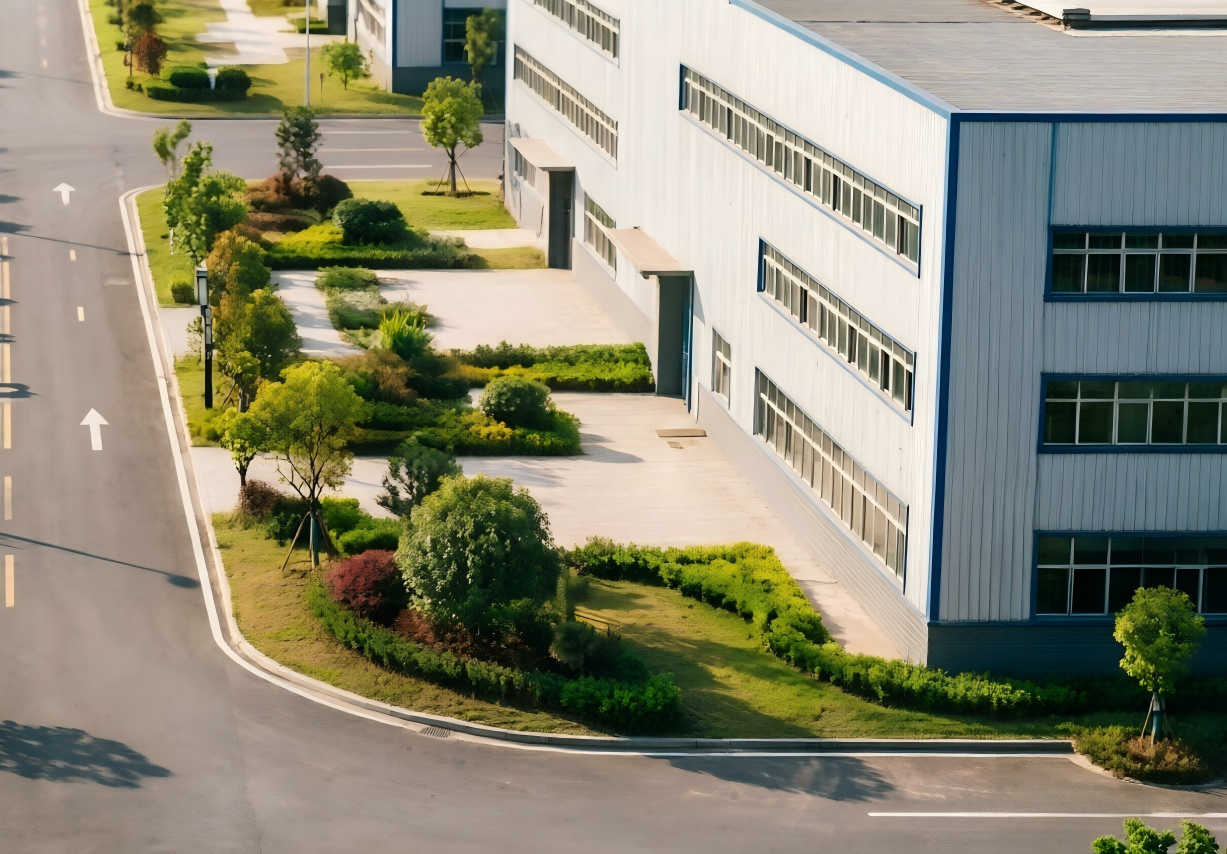
As manufacturers seek tighter tolerances, longer tool life, and consistent surface finishes on hard and brittle materials, standard abrasive belts often fall short. The shift toward superabrasives — specifically diamond — is no longer optional but a necessity for industries processing ceramics, glass, cemented carbides, thermal spray coatings, and advanced composites.
Problem & Opportunity
Conventional silicon carbide or aluminum oxide belts wear rapidly on materials above 8 on the Mohs scale, causing dimensional inaccuracies, frequent changeovers, and high per-part costs. The global diamond tools market, valued at USD 10.8 billion in 2024 and projected to reach USD 19.5 billion by 2034, reflects the growing adoption of superabrasive solutions. Within this space, diamond sanding belts offer the unique combination of flexibility — inherited from traditional coated abrasives — with the extreme hardness of diamond grains, enabling precise grinding and polishing on complex geometries.
The RUITE OEM Approach
Zhengzhou Ruite Diamond Belts Co., Ltd (RUITE) is a specialized manufacturer of diamond and CBN coated abrasives based in Zhengzhou, China. The company focuses on OEM production services for diamond sanding belts, allowing buyers to specify dimensions (width 5–350 mm, length 150–5000 mm), grit range (40# to 5000#), and bond type (resin bond or electroplated). Customization extends to packaging and logo, ensuring the product integrates seamlessly into the customer’s own brand portfolio.
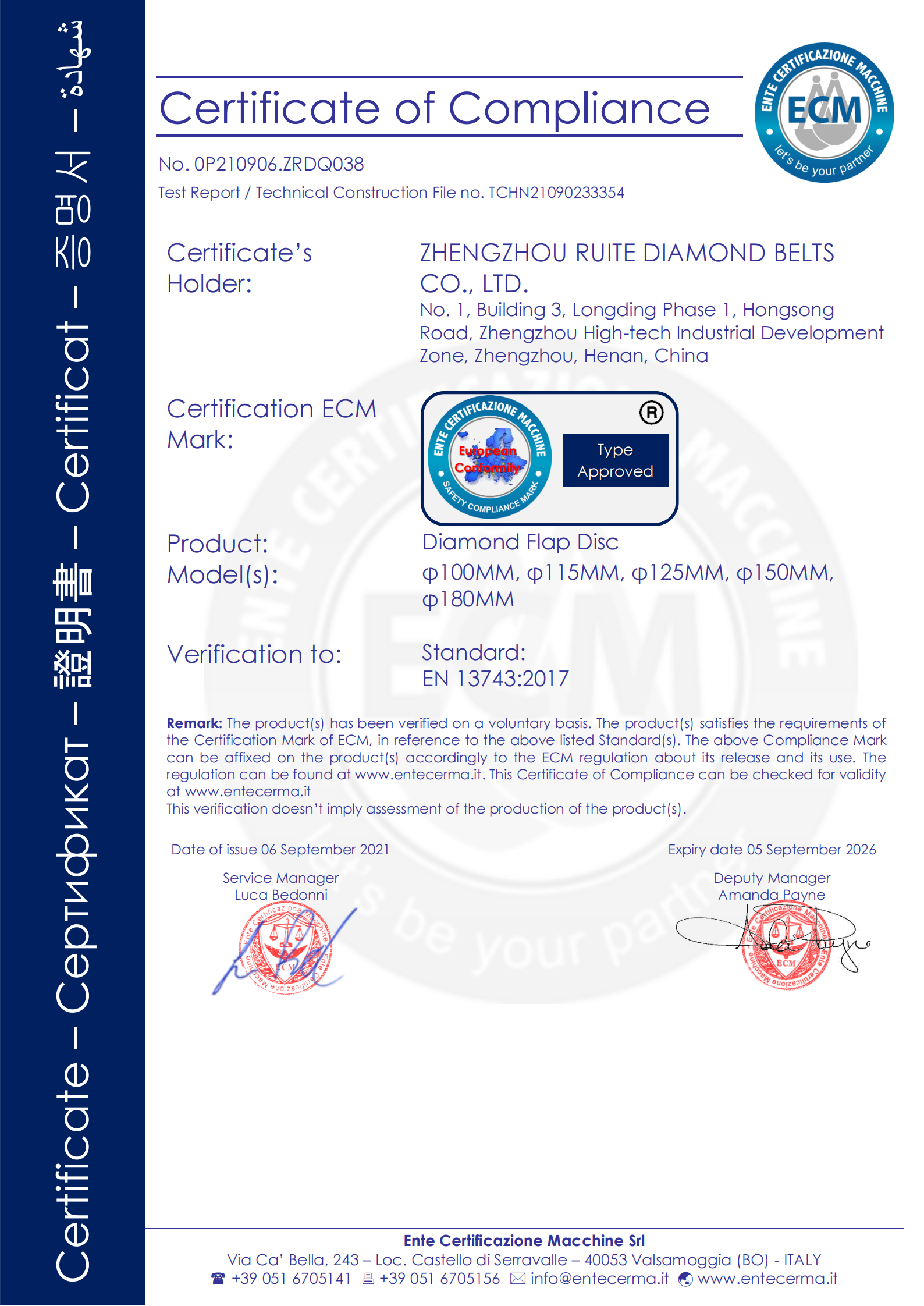
RUITE’s operational backbone supports OEM partnerships with a monthly production capacity of 1,000 units, standard lead time of 30–45 days, and a minimum order quantity of 50 units. Every unit undergoes 100% testing before shipment, and after-sales support includes a 12-month shelf-life quality warranty along with free technical consultation. The company’s quality management system is further validated by an ECM/COC certification (No. 0P210906.ZRDQ038) confirming compliance with EN 13743:2017 — the European standard for coated abrasive safety.
Technical Foundation
Diamond sanding belts from RUITE leverage either resin bond or electroplated bond technologies. Resin-bond belts — the most common — provide a balanced combination of cutting speed and surface finish, suitable for both dry and wet grinding. Electroplated belts, offering a single layer of diamond with maximum grain exposure, deliver aggressive stock removal on materials like green ceramics or tungsten carbide. Available grits span coarse (40#) for rapid material removal through fine (5000#) for mirror polishing. The endless belt construction ensures consistent tension and vibration-free performance on contour and edge profiling machines.
Proven Application Scenarios
Ceramic tile and porcelain grinding. RUITE’s diamond flap discs and belts (product model Φ100–180 mm, grit 40#–800#) are used by an Italian OEM for ceramic grinding applications. Over an 8-year period, the customer supplied 20,000 units with zero complaints — a testament to product consistency and reliability.
Thermal spray coating finishing. With the thermal spray coatings market expected to reach USD 15.28 billion by 2031, diamond belts are essential for post-coating surface refinement. RUITE belts handle high-temperature alloys and tungsten carbide coatings efficiently, reducing roughness below 5 µm.
Glass edging and deburring carbide parts. The flexibility of diamond abrasive cloth belts allows operators to reach complex profiles on glass edges and carbide inserts without chipping or thermal damage.
Composite material and high-temperature alloy processing also benefit from diamond’s high thermal conductivity and wear resistance, minimizing burn and extending belt life up to 10 times that of conventional abrasives.
Market Trend Analysis
The coated abrasive belt market across all materials was valued at approximately USD 3.2 billion in 2025 and is projected to grow at a CAGR of 5.3% through 2033. Within this growth, diamond and other superabrasives are capturing share as additive manufacturing post-processing and hard-coating applications rise. China’s recent policy changes — export controls on certain superhard materials and the cancellation of the 9–13% export tax rebate on abrasives starting April 2026 — are reshaping supply chains. Manufacturers seeking stable, compliant supply benefit from partnering with producers like RUITE that are already integrated into the international OEM framework with European certification.
Comparison with Traditional Solutions
Compared to silicon carbide belts, diamond sanding belts offer 5–10 times longer service life on hard materials, higher cutting efficiency, and better surface finish consistency. They enable dry or wet operation without loss of performance. However, the initial cost per belt is higher — typically 2–4 times that of conventional abrasive belts. This trade-off is justified in high-value production where downtime, scrap reduction, and precision outweigh the upfront investment. For low-volume or soft-material grinding, traditional belts may still be more economical.
Future Outlook
As additive manufacturing matures and industries push toward harder, thinner, and more complex components, the demand for diamond sanding belts will grow. RUITE’s focus on OEM flexibility — from small-batch custom grit blends to large-volume white-label programs — positions it as a strategic partner for companies that need to differentiate their own abrasive product lines without building in-house superabrasive manufacturing.
Frequently Asked Questions
Q: What OEM and customization services does RUITE offer?
A: The manufacturer provides OEM production services, with customization options including packaging and logo. Every unit is 100% tested before shipment. After-sales support includes a 12-month shelf-life warranty and free technical consultation.
Q: What are the typical minimum order quantities and lead times?
A: The minimum order quantity is 50 units. Standard production lead time is 30–45 days, with a monthly capacity of 1,000 units.
Q: Can diamond belts be used for both dry and wet grinding?
A: Yes. RUITE’s resin-bond diamond belts are designed for both dry and wet applications, making them suitable for diverse industries from stone and glass to ceramics and thermal spray coatings.
¿Tiene preguntas o necesita más detalles?
Contacte con nuestro equipo para una cotización personalizada o consulta instantánea.
Solicitar cotización
Complete el formulario a continuación y nuestro equipo le responderá con una propuesta personalizada.
Chat directo de WhatsApp
¿Prefiere chatear en tiempo real? Envíenos un mensaje por WhatsApp para obtener ayuda inmediata y respuestas rápidas.
- Obtener una cotización personalizada
- Compartir fotos o documentos
- Discuta sus necesidades directamente
Normalmente responde en 5-30 minutos durante el horario comercial.