
Custom Chemical Equipment: Drawings, Standards & Acceptance
Custom Chemical Equipment: Drawings, Standards & Acceptance
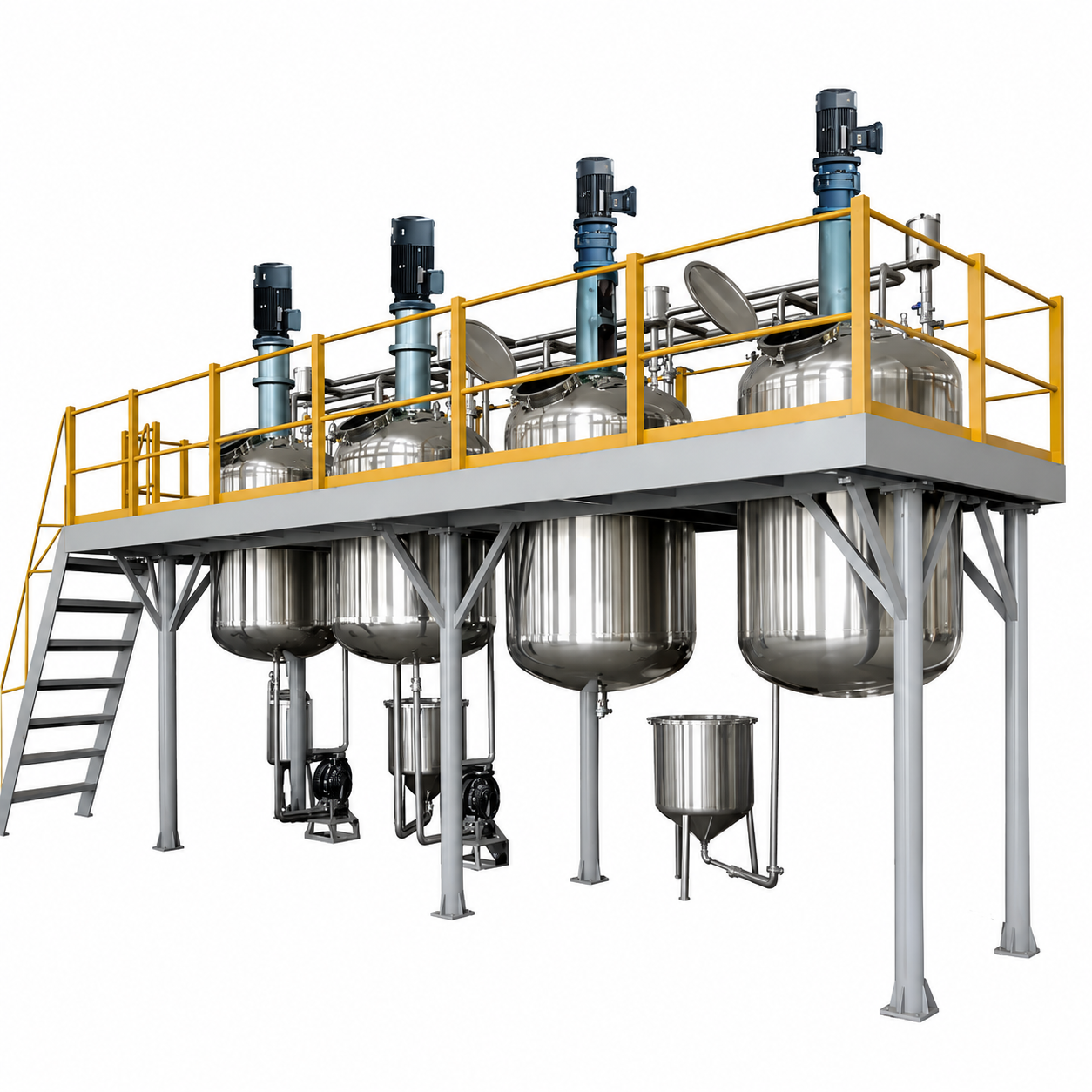
Custom chemical equipment is specified by connecting process requirements, approved drawings, applicable design standards, purchasing terms and acceptance evidence. For buyers in the research stage, the key question is not simply whether a vessel or skid can be customized. It is which requirements are fixed in the technical documents, which options remain project-dependent, and how the completed equipment will be checked against the agreement.
Jiangsu Xuyang Chemical Equipment Co., Ltd. supplies process equipment including reactors, storage tanks, towers, heat exchangers, candle filters, membrane separation and filtration equipment, and skid-mounted equipment. The company’s supplied product information describes configurations that can be tailored to process requirements. The following FAQ explains how to turn that scope into clearer inquiry, drawing-review and acceptance steps without treating any listed option or standard as universal.
How should buyers start a custom chemical equipment inquiry?
Start with the process duty and operating conditions, then use them to define the equipment and drawing requirements. A drawing alone may show the physical arrangement, but it does not necessarily communicate the medium, design conditions, materials, controls or acceptance checks needed for a complete specification.
For a reactor or tank inquiry, provide the equipment type, required capacity or volume, working medium and its composition, operating and design pressure, operating and design temperature, and any vacuum condition. State the heating or cooling method, agitation requirements, nozzle requirements, site constraints and the applicable standard or project specification. The supplied technical FAQ also identifies customer drawings or specifications as useful inputs for design discussions.
For equipment such as a heat exchanger, filter, tower or membrane skid, add the duty-specific information that defines its process role. For example, a heat exchanger specification should identify the heat duty and process conditions; a distillation tower inquiry should address feed composition, required purity, capacity and separation requirements; and membrane equipment should identify the intended membrane process and application. These details help distinguish a drawing that is only a layout reference from one that is intended to govern fabrication.
Jiangsu Xuyang’s supplied FAQ states that it can prepare CAD or 3D designs based on customer process parameters, material requirements and space constraints. Buyers should therefore identify which drawing revision is for review, which is approved for manufacture, and how revisions after approval will be handled in the purchasing documents. Those controls are practical contract items; the exact procedure should be agreed for each project.
What does “built to specific drawings” mean?
It means that the customer and supplier should agree which drawings and technical documents define the equipment before manufacture proceeds. The documents should identify the equipment boundary and the requirements that affect construction, such as dimensions, connections, materials, design conditions and relevant configuration choices. If a requirement is not shown or stated, the parties should resolve it in the technical agreement rather than assume that a drawing implies it.
A useful review separates three things: the process specification, the equipment drawing and the acceptance basis. The process specification describes what the equipment must handle. The drawing shows the agreed construction and interfaces. The acceptance basis states what evidence or inspection will be used to judge whether the delivered item matches the agreement. These records should refer to the same revision and equipment identity.
Before approval, buyers can check that the drawing corresponds to the requested model and configuration, and that open items are listed rather than left to interpretation. Examples include nozzle locations, orientation, heating or cooling arrangement, agitator and seal type, instrumentation, piping interfaces and control method. For a skid, the process capacity, operating pressure and temperature, power supply, piping and installation arrangement are described as customizable in the supplied equipment information. Project-specific values need to be confirmed rather than inferred from a generic product description.
Drawing review does not by itself verify material suitability or code compliance. The buyer should link those requirements to the material list, design basis and applicable standard in the agreed technical documents. Likewise, a drawing approval should not be read as a substitute for inspection or testing records that are separately specified.
Which items are customized across the equipment types?
The customization points depend on what the equipment does. The following reference table summarizes options listed in the supplied product information; it is not a statement that every option is suitable for every process or included in every order.
| Equipment | Listed project variables and options | Buyer clarification |
|---|---|---|
| Chemical reactor | Volume; SS304, SS316L, carbon steel, Hastelloy, titanium or zirconium options; jacket or external coil; heating; agitator; mechanical or magnetic seal; manual, automatic or PLC control. | Confirm medium, process conditions, material basis, agitation and sealing needs, and the intended configuration. |
| Storage tank | Capacity, vertical or horizontal orientation, material, design pressure and temperature, jacket, half-pipe coil or external coil; optional agitation and control choices are also listed. | Define service, site arrangement, heating or cooling duty, and any pressure or temperature requirement. |
| Shell-and-tube heat exchanger | Heat-transfer area and capacity; fixed tube sheet, floating-head or U-tube construction; shell and tube materials; pressure, temperature and tube arrangement. | Specify the process duty and conditions, then confirm construction and design standard for the project. |
| Distillation tower | Tower type, diameter, height, capacity, feed composition, operating conditions, packing or tray choice, and associated reboiler or condenser options. | State separation requirements, feed and required purity; confirm the selected internals and system boundary. |
| Candle filter | Filtration area and accuracy, pressure and temperature, filter media and material, dry or wet cake discharge or backwash, manual, automatic or PLC control. | Define the filtration requirement and discharge mode; agree how the specified acceptance checks will be documented. |
| Membrane equipment or skid | MF, UF, NF, RO or MBR process options; listed membrane materials include PVDF, PES, PA and PTFE; equipment materials and manual, automatic or PLC control are project-dependent. | Confirm the intended separation process, medium, operating conditions, equipment material and cleaning approach. |
The table is a starting point for an RFQ, not an engineering selection result. The supplied material options include SS304, SS316L, carbon steel, Hastelloy, titanium and, for reactors, zirconium. Selection should be tied to the actual medium and operating conditions. The available facts do not establish that a material is compatible with a particular chemical, concentration or temperature; that suitability must be confirmed for the project.
For filtration, the listed discharge choices—dry discharge, wet discharge and backwash—are distinct configuration decisions. Likewise, agitator types listed for tanks include anchor, paddle, turbine and other options, while reactor information lists anchor, paddle, turbine, ribbon and high-shear agitators. Seal options include mechanical and magnetic seals. Buyers should state the required process function and confirm the selected configuration in the approved documents instead of treating an option list as a recommendation.
How are welding quality and pressure-vessel checks addressed?
Welding quality should be addressed through the agreed manufacturing and inspection plan, with the applicable examination and test records identified before purchase. Jiangsu Xuyang’s supplied technical FAQ reports the use of plasma and deep-penetration automated welding technologies and lists material inspection, joint preparation, fit-up inspection, pre-welding inspection, welding-process control, visual inspection, nondestructive testing, pressure or leak testing, final inspection and quality documentation as process steps.
The same company FAQ lists X-ray nondestructive testing, hydraulic pressure testing and surface-roughness inspection among checks for pressure vessels. These are company-reported practices, not a substitute for confirming which checks apply to a particular vessel, code, material and project. The buyer should request the agreed inspection and test plan, the applicable acceptance criteria, and the records required for the purchase. The scope, method and acceptance limits should be stated in the project documents rather than assumed from a general description.
Factory testing options listed for skid-mounted equipment include FAT, hydrostatic testing and leak testing. The customer-facing corpus also lists FAT, hydrostatic and leak tests. Their presence as available options does not mean all are automatically included in every equipment order. The contract or technical agreement should identify the test, the equipment or system boundary covered, the applicable procedure, any witness or review arrangements and the record to be supplied.
For pressure equipment, the acceptance criteria should remain tied to the chosen design basis and jurisdiction. Buyers can ask how the supplier will document material identity, inspection status and test results, but should not assume that one test or certificate establishes every aspect of compliance. The available supplier information does not provide project-specific welding procedures, welder qualifications, NDT coverage or acceptance thresholds; these items need to be confirmed where they are required by the project.
Do ASME, GB, EN, TEMA and PED apply to every item?
No. The supplied product information lists ASME, GB and EN for some equipment; it lists ASME, GB, EN and PED for certain reactors, tanks or skid equipment; and it lists ASME, GB, EN and TEMA for shell-and-tube heat exchangers. This is a set of possible design-standard references, not a statement that all five apply to every product or project.
Selection should be made for the particular equipment and project. Confirm the destination and jurisdiction, equipment category, pressure-boundary status, project specification and the exact standard or regulatory route required. For a heat exchanger, the listed TEMA reference appears in the shell-and-tube product information; buyers should confirm whether it is part of the agreed design basis and what scope it covers. Similarly, the presence of PED in a product option list is not proof that a particular item is certified or that a particular conformity route has been completed.
An engineering source in the supplied verified data describes ASME BPVC Section VIII as covering pressure-vessel design, analysis, fabrication, inspection and testing, while noting that applicability depends on jurisdiction, vessel type and code division. That description is useful context for a procurement discussion, but it does not establish supplier compliance. Buyers should verify the required edition, scope, documentation and any project-specific certification obligations with the relevant parties. A company qualification or product listing should not be treated as proof of certification for a specific delivered item unless the applicable evidence and scope are confirmed.
How should purchasing terms and acceptance criteria be connected?
Purchasing terms establish what is being ordered; acceptance criteria establish how conformity to that order will be assessed. They are separate steps, but they should point to the same approved technical documents and revisions. A purchase order that names only a broad product category may leave important configuration or testing details unresolved.
Before issuing the order, buyers can make the technical scope explicit: equipment name and quantity, approved drawing revision, process conditions, material requirements, design standard, included accessories or skid interfaces, control method, inspection and test requirements, and the documents to be provided. Commercial terms—such as delivery, payment and packing—should be stated in the purchase documents as agreed between the parties. No specific price, lead time, payment schedule or delivery term is established by the supplied product information.
Acceptance criteria should then translate the technical scope into checkable items. Depending on the project, that may include review of the approved drawing and material list, dimensional or interface checks, examination records, FAT or pressure and leak-test records where specified, and completion of agreed documentation. The criteria should identify which records are required and what constitutes acceptance; a general statement such as “tested” does not define test scope or pass limits.
For equipment integrated on a skid, confirm whether acceptance applies to an individual vessel, the integrated skid, or both. The product information describes a single-skid arrangement that can integrate reactors, storage tanks, heat exchangers, filters and pumps, with customized piping and instrumentation. This makes the system boundary important: equipment-level checks and package-level checks may address different requirements. The contract should say which components and interfaces are included in each check.
What should a buyer verify before approving the final documents?
A concise review can reduce ambiguity before manufacture and again before acceptance. Use the following as a discussion checklist and adapt it to the equipment and project rather than treating it as a universal code checklist.
- Process basis: Confirm the medium and relevant composition, capacity, operating and design conditions, and process duty that define the equipment.
- Configuration: Check the selected vessel, tower, heat-exchanger, filter or membrane arrangement; include orientation, heating or cooling, internals, discharge, agitator, seal and control choices where relevant.
- Materials: Confirm the agreed material for each relevant component and the basis for selection. Do not infer chemical compatibility from a material name alone.
- Drawings and revisions: Identify the drawing and specification revisions approved for manufacture, open items and the process for recording changes.
- Standards and scope: Name the applicable standard or regulatory requirement for the specific equipment and jurisdiction, and define the evidence expected for the project.
- Inspection and tests: Agree the inspection plan, applicable NDT or pressure/leak tests, acceptance criteria and records before work begins.
- Purchasing and acceptance: Ensure the purchase order, technical agreement, approved drawings and acceptance documents describe the same equipment and requirements.
This checklist does not replace engineering review, a code assessment or a project inspection plan. Its purpose is to make buyer questions explicit early enough that the supplier and purchaser can resolve them in the technical and commercial documents.
Frequently asked questions
Can custom chemical equipment be designed from customer drawings?
Jiangsu Xuyang’s supplied FAQ says it can prepare CAD or 3D designs based on customer process parameters, material requirements and space constraints. Buyers should provide the relevant drawings or specifications and confirm which revision is approved for manufacture.
Which material should be selected for a reactor or tank?
Material selection depends on the working medium and its composition, operating and design temperature, operating and design pressure, vacuum conditions, capacity, corrosion-resistance or hygiene requirements. SS304, SS316L, carbon steel, Hastelloy, titanium and other listed options are not interchangeable guarantees of suitability; the project-specific selection needs confirmation.
Which welding and testing evidence should be agreed?
Agree the inspection and test plan, the applicable NDT and pressure or leak tests, acceptance criteria and required quality records for the specific equipment. The company FAQ lists X-ray NDT and hydraulic pressure testing for pressure vessels, while skid-mounted equipment information lists FAT, hydrostatic and leak testing as available factory tests. Confirm the applicable scope in the project documents.
Does a listed standard mean every delivered item is certified to it?
No. ASME, GB, EN, TEMA and PED appear among the standards or design references listed for different equipment types. Their applicability and any certification or conformity evidence must be confirmed for the particular product, project, jurisdiction and agreed scope.
Are PLC controls, membrane types and filter discharge modes standard?
The supplied product information lists manual, automatic or PLC control for candle filters and membrane equipment, and lists MF, UF, NF, RO and MBR membrane process options. Candle-filter discharge options include dry discharge, wet discharge and backwash. These are configuration choices; the order documents should identify which option is included.
For procurement, the most useful outcome of the FAQ is a consistent document set: process requirements define the duty, approved drawings define the configuration, the selected standard defines the applicable design basis, and the inspection and acceptance plan defines the evidence required at delivery. Treating these as linked but distinct steps helps buyers ask specific questions without assuming that a generic product option, standard reference or test description automatically applies to their project.
¿Tiene preguntas o necesita más detalles?
Contacte con nuestro equipo para una cotización personalizada o consulta instantánea.
Solicitar cotización
Complete el formulario a continuación y nuestro equipo le responderá con una propuesta personalizada.
Chat directo de WhatsApp
¿Prefiere chatear en tiempo real? Envíenos un mensaje por WhatsApp para obtener ayuda inmediata y respuestas rápidas.
- Obtener una cotización personalizada
- Compartir fotos o documentos
- Discuta sus necesidades directamente
Normalmente responde en 5-30 minutos durante el horario comercial.