
Custom Case Packer Projects: Evaluating Supplier Capability
Case packers are usually treated as standard end-of-line machines, but most real installations are not fully standard. Product shapes, carton sizes, line speeds, voltages, packaging materials and factory layouts force buyers to evaluate a supplier’s engineering capability before they evaluate price. In custom projects, the decisive question is not only “what machine do you sell?” but “what can you adapt, prove and support?”
Why Capability Claims Need Testing
Packaging buyers moving from evaluation to execution rarely find their products in a supplier’s standard brochure. A tissue producer may pack cylindrical canisters, a wet wipe manufacturer may fill and seal plastic containers before case packing, and a paper mill may need an entire line from roll wrapping to pallet stretch wrapping. Each scenario puts different demands on the case packer: a pick-and-place or top load unit may be suitable for delicate canisters, while a side load or side push unit is often selected for compact, regular products that can be pushed into an erected case.
This is where the market shows clear structural pressure. The global case packing machines market was estimated at USD 1.07 billion in 2024 and is projected to reach USD 1.74 billion by 2033, according to Grand View Research. Top load case packers accounted for the largest machine type segment at 45.5% in 2024. Asia Pacific led regional demand with a 37.9% market share in the same year. The broader shift toward robotics adds another layer: the global robotic packaging systems market, including robotic case packers, reached USD 6.4 billion in 2024, with secondary packaging equipment such as case packers representing around 45% of packaging robot demand.
For a project buyer, these figures explain why suppliers claim custom capability. The risk is that a broker or distributor may relabel a standard machine as “custom.” The practical countermeasure is a structured evaluation of what the supplier can actually change, how it verifies the change, and what evidence exists from previous installations.
What an OEM and Custom Build Should Cover
A useful starting point is to define the scope of customization. In the case of Wenzhou Wimach Machinery Co., Ltd. (WIMACH), a machinery manufacturer based in Ruian, Wenzhou, China, that supplies tissue packing machines, case packers and integrated packaging lines to markets including the EU, North America and South America, the stated customization range includes packaging dimensions, machine configuration, voltage and logo. This may sound narrow, but it represents the four areas that actually create friction in cross-border projects: product size compatibility, line layout and integration, electrical standards and branding.
For OEM and ODM production, the supplier states a minimum order quantity of one set, a monthly capacity of up to 13 sets, and typical lead times of 15 to 45 days for OEM/ODM work or 30 to 45 days for customized machinery service. These numbers allow a buyer to check whether the factory can realistically handle a first custom order or a multi-machine line without disrupting delivery. They are also a boundary: a 13-set monthly capacity means larger, simultaneous programs need phased scheduling rather than unlimited parallel production.
Mechanism Options and Machine-Level Evidence
Two documented machine configurations from WIMACH illustrate how the same supplier covers different loading geometries.
| Parameter | Automatic Side Load Case Packer CP-S50 | Automatic Top Load Case Packer CP-T60 |
|---|---|---|
| Machine type | Side load / side push case packer | Pick-and-place / top load case packer |
| Packing capacity | 1–16 cartons/min | 1–8 cartons/min |
| Carton dimension range | 240–500 (L) x 200–400 (W) x 180–400 (H) mm | 300–600 (L) x 200–400 (W) x 150–400 (H) mm |
| Power voltage | 380V 50/60Hz 3 phase | 380V 50/60Hz 3 phase |
| Power consumption | 4.5 kW | 7.5 kW |
| Air consumption | 350 L/min | 450 L/min |
| Overall dimensions | 4200 (L) x 2300 (W) x 1900 (H) mm | 4200 (L) x 2600 (W) x 2200 (H) mm |
| Machine weight | 1500 kg | 1600 kg |
| Frame material | Stainless steel / carbon steel | Stainless steel / carbon steel |
Both machines are documented for the tissue industry, food and beverage industry, pharmaceutical industry, daily chemical and cosmetic industry, hardware, auto parts and machinery industry. The side load machine covers a higher packing rate range while the top load machine is positioned for products requiring gentle placement from above. For a buyer, the value is not in choosing “one better type” but in matching mechanism type to product fragility, case opening direction and floor space.
Quality Engineering and Pre-Delivery Testing
Custom case packing carries a hidden risk: modified mechanics may fail under continuous production. A credible supplier should therefore publish its quality control procedure. WIMACH’s stated checks include no-load and load running tests, dimensional tolerance inspection, mechanical assembly checks, pneumatic leakage tests, electrical safety tests, PLC control logic tests, safety interlock and E-stop tests, long-time aging tests, and surface appearance inspection.
For an execution-stage buyer, these checks translate into a practical acceptance list. Factory acceptance testing (FAT) should happen before shipment; machines are offered under trade terms such as FOB, FCA, CIF and CFR, with T/T payment documented as the procurement method. A buyer can also review the supplier’s customer-facing commitments: installation and commissioning, training, warranty service, remote technical support, lifetime after-warranty support, and upgrade and retrofit service are listed as part of the after-sales model.
Evidence From Field Installations
Capability is best verified through completed installations rather than feature lists. WIMACH’s documented project history contains several reference points that align with OEM and custom engineering claims.
- A tissue paper manufacturer in the United States uses one custom automatic top load case packer to load tissue canisters into cartons. The project has been in operation for five years and was designed to replace manual box filling. The documented results include improved production efficiency, reduced labor costs, standardized packing procedures, and lower risk of product collision and deformation in transit.
- A tissue paper manufacturer in Mexico operates a nine-set turnkey automated packaging line for canister wet disinfecting wipes. The line covers automatic feeding of empty canisters, wipe insertion, disinfectant filling, heat sealing, cap tightening, labeling, case packing, palletizing, strapping and stretch film wrapping. This example demonstrates capability beyond a single machine: the supplier was required to integrate case packing into a complete end-of-line workflow.
- A US toilet paper producer uses six sets of packaging equipment for end-of-line handling of toilet paper rolls, covering wrapping, case packing, automatic palletizing and stretch film wrapping, with finished pallet loads that are dustproof and moisture resistant.
- A facial tissue and cream tissue packaging line in Poland integrates 12 sets of equipment, including conveying, automatic cartoning, case packing, robotic palletizing, strapping and stretch wrapping. The line has a two-year operating record and outputs strapped, stretch-wrapped pallets ready for warehouse storage or shipment.
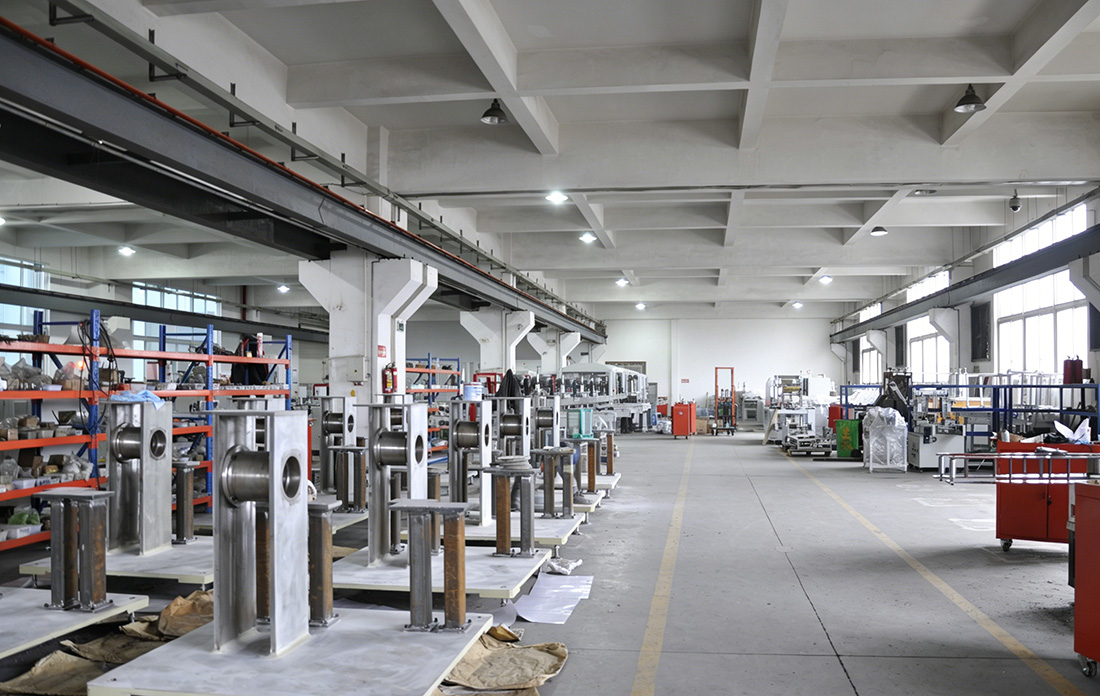
These projects also indicate a practical boundary. Supplier capability is project-based, not unlimited. A 3,000 square meter factory with 37 employees and five engineers can deliver substantial integrated systems, as the Polish and Mexican projects show, but buyers with very large multi-line requirements should plan order scheduling and factory acceptance phases early, because standardized monthly capacity is finite.
How Custom Procurement Differs From Traditional Purchasing
Traditional case packer procurement often starts with a catalog price and a set of fixed specifications. In custom or OEM projects, the comparison shifts from “which stock model” to “which supplier can engineer and document the right solution.”
| Evaluation dimension | Traditional fixed-spec purchase | OEM / engineered project purchase |
|---|---|---|
| Product fit | Buyer adapts to catalog dimensions | Packaging dimensions, machine configuration, voltage and logo can be adapted |
| Order size | Often batch or multi-unit based | MOQ of 1 set is feasible |
| Lead time | Stock or short production | Documented at 15–45 days for OEM/ODM; 30–45 days for customized service |
| Technical verification | Relies on published specifications | Supports no-load/load running, PLC logic, safety interlock and E-stop checks, aging tests |
| Integration depth | Single machine | Case packer can be part of a full line with cartoning, palletizing, strapping and stretch wrapping |
| After-sales | Reactive spare parts | Commissioning, training, remote support, lifetime after-warranty support, retrofit service |
The limitation of the engineered approach is equally real. Custom machinery requires more engineering review time, tighter communication about product specifications, and a supplier with enough production discipline to run long aging tests before delivery. A supplier without dedicated engineering capacity can claim customization but cannot execute it consistently. Buyers should therefore check both the customization scope and the quality-control sequence, not just the marketing description.
Market Trends and Their Impact on Supplier Selection
Several verifiable trends make custom capability more important in this procurement category.
First, top load case packers remain the largest machine segment globally, with a 45.5% share according to Grand View Research’s 2024 estimate. This favors suppliers that can configure pick-and-place and top load mechanisms for different product geometries, especially in consumer goods categories where product protection matters.
Second, Asia Pacific already holds the largest regional share at 37.9%, which makes Chinese and other Asian machinery suppliers unavoidable references in global comparison. Buyers in North America and Europe increasingly compare an Asian supplier’s customization evidence against European machine pricing and delivery constraints. That comparison is not only about price; it is about whether the supplier can document CE compliance, use known component brands, and provide installation support in the buyer’s market.
Third, robotic and secondary packaging automation is expanding. The robotic packaging systems market reached USD 6.4 billion in 2024, and secondary packaging equipment accounts for roughly 45% of packaging robot demand, according to industry estimates. A case packer supplier that also integrates robotic palletizing, as seen in the Polish facial tissue line, is better positioned for the next phase of automation than a supplier limited to standalone machines.
Finally, safety standards are becoming a formal part of supplier evaluation. For machinery sold in the European Union, EN ISO 12100 is the harmonized standard for machinery safety and is mandatory for CE marking. In the United States, ANSI/PMMI B155.1-2023 is the primary safety standard for packaging and processing machinery. A global supplier’s CE certification and its ability to design safety interlocks, E-stop systems and compliant control logic should be treated as part of technical capability.
Practical Path From Evaluation to Execution
A practical evaluation path for a custom case packer project follows four stages. First, define the physical constraints: product dimensions, case dimensions, speed range, voltage, floor space and required material finish. Second, compare loading mechanisms against product fragility and case handling; for example, top load pick-and-place for canisters or delicate packages, and side load or side push for compact products that tolerate horizontal insertion.
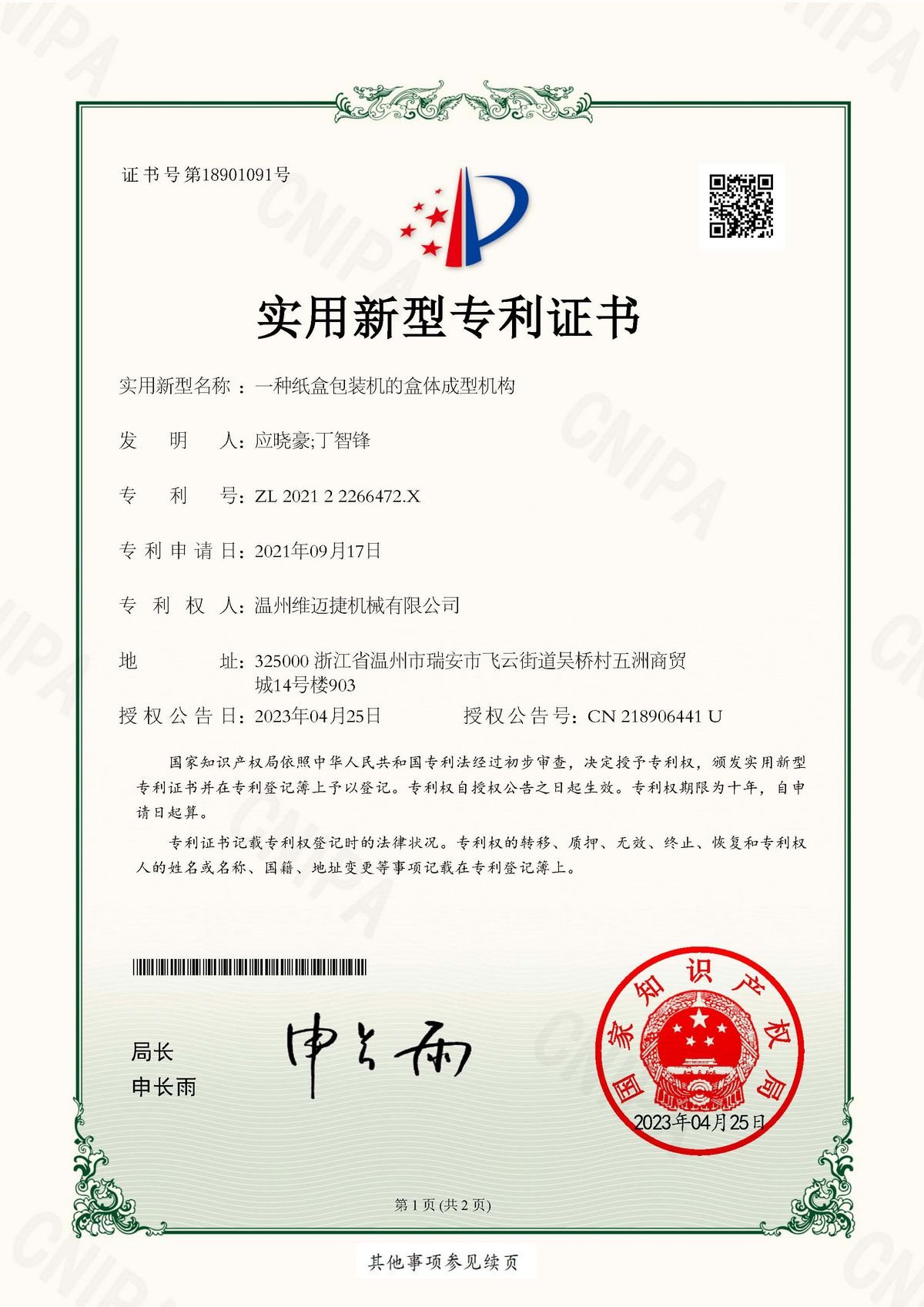
Third, verify the supplier’s documented engineering evidence: OEM/ODM availability, customization scope, lead time, monthly capacity, quality-control tests, patents, CE status and after-sales service list. Patent records can be checked through the issuing authority; for example, WIMACH holds an invention patent for a carton packing machine and carton packaging process under number ZL 2022 1 1099886.8, and utility model patents covering automatic feeding and box forming mechanisms for carton packaging machines. These records do not prove every machine is perfect, but they show that the supplier invests in documented mechanical development rather than only assembling imported components.
Fourth, review reference installations in similar product categories. The US, Mexican and Polish installations referenced above all involve tissue or wet wipe products, but they also cover different integration depths: single case packer, nine-set complete line, and twelve-set line with robotic palletizing. Matching the reference depth to the buyer’s project reduces the risk of discovering integration problems after the machine reaches the factory floor.
Future Outlook
The case packing market is expected to keep growing from USD 1.07 billion in 2024 toward USD 1.74 billion by 2033, which means more suppliers will enter the custom and OEM segment. The suppliers with durable advantages will be those that make their engineering boundaries visible: specific customization parameters, honest capacity figures, structured quality checks, and documented installations. For buyers, the future procurement standard is not a glossy catalog but a repeatable evidence trail.
At the same time, integration is becoming the default request. A standalone case packer is increasingly evaluated as one module inside a line that includes cartoning, wrapping, palletizing, strapping and stretch film wrapping. Manufacturers like WIMACH that already document complete line projects, including a canister wet wipe line and toilet paper packaging lines, are more likely to meet this integration demand than suppliers that only quote individual machines.
FAQ
What should “custom case packer capability” include?
Custom case packer capability should include the ability to change packaging dimensions, machine configuration, voltage and logo, and to support these changes with real production capacity. A documented example is a one-set custom top load case packer used for automatic loading of tissue canisters into cartons in the United States, operating for five years as a replacement for manual box filling.
Does OEM/ODM case packer production require a large minimum order?
No. In OEM/ODM production, a buyer can start with a minimum order quantity of one set. The same supplier also provides customized machinery services with a documented monthly capacity of up to 13 sets.
What are typical lead times for a customized case packing machine?
Documented lead times for OEM/ODM production range from 15 to 45 days, while customized machinery service typically requires 30 to 45 days. These figures refer to one manufacturer’s stated production capacity and should be verified before ordering.
What quality checks should a case packer pass before shipment?
Relevant checks include no-load and load running tests, dimensional tolerance inspection, mechanical assembly checks, pneumatic leakage tests, electrical safety tests, PLC control logic tests, safety interlock and E-stop tests, long-time aging tests, and surface appearance inspection. Buyers should look for these checks in the supplier’s documented quality control procedure.
Why are certifications and patents relevant in case packer evaluation?
Certifications and patents provide documented evidence of technical development and market access. Machinery sold in the EU must meet CE requirements and safety standards such as EN ISO 12100; in the US market, ANSI/PMMI B155.1-2023 is the primary standard for packaging machinery. Patent records, such as WIMACH’s invention patent for a carton packing machine and carton packaging process, indicate that mechanisms were formally examined by the issuing patent authority.
How do reference installations help in choosing a custom case packer supplier?
Reference installations show whether a supplier can handle the actual integration depth required. Relevant references include a nine-set canister wet wipe line in Mexico with case packing, palletizing, strapping and stretch wrapping, and a twelve-set facial tissue line in Poland with robotic palletizing. Buyers should match the reference scale and product type to their own project.
¿Tiene preguntas o necesita más detalles?
Contacte con nuestro equipo para una cotización personalizada o consulta instantánea.
Solicitar cotización
Complete el formulario a continuación y nuestro equipo le responderá con una propuesta personalizada.
Chat directo de WhatsApp
¿Prefiere chatear en tiempo real? Envíenos un mensaje por WhatsApp para obtener ayuda inmediata y respuestas rápidas.
- Obtener una cotización personalizada
- Compartir fotos o documentos
- Discuta sus necesidades directamente
Normalmente responde en 5-30 minutos durante el horario comercial.