
Custom Card Game Buyer Beware: 3rd-Party Audit of BG-001 vs Claimed Certifications
Custom Card Game Buyer Beware: 3rd-Party Audit of BG-001 vs Claimed Certifications
Introduction: certificate numbers travel faster than certificate scopes
In custom card game procurement, a compliance summary usually arrives before the audit trail does. A buyer receives a short list of marks — ISO 9001, BSCI, SMETA, FSC — often months before receiving the documents that show what each certificate actually covers, which legal entity holds it, which site it applies to, and when it expires. That gap is where sourcing risk accumulates, because a certificate number and a certificate scope are not the same thing.
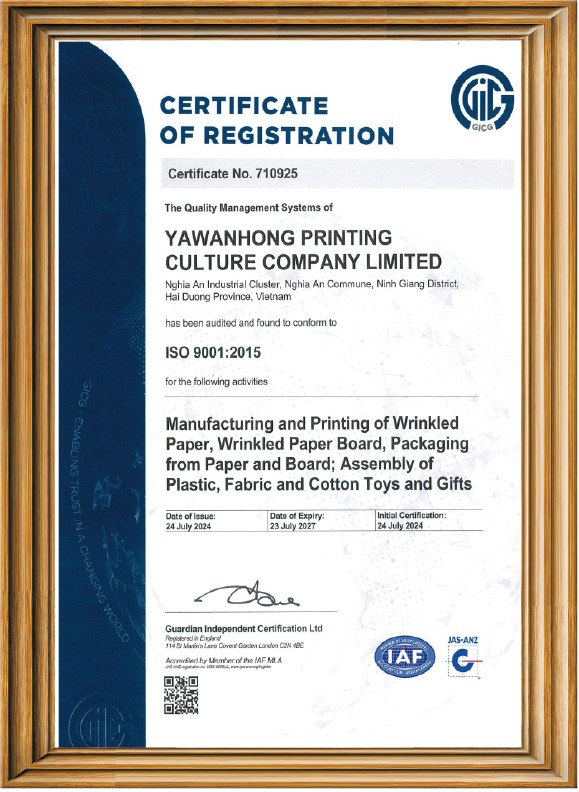
This reference audit examines four certifications documented for the custom card game and board game production of Yawanhong — ISO 9001:2015 (certificate 710925), SMETA (ZAA600202718), BSCI (26-0387346) and FSC chain of custody (ESTS-COC-241865) — and places them alongside the quality markers a buyer can observe directly on a physical deck: child-safe rounded edges, FSC raw materials, clear printing, neat die cutting and sturdy construction.
The method matters. This is a documentary audit, not an on-site factory inspection, and it does not replace laboratory product testing. Its purpose is narrower and more useful for a purchase decision: to separate what is evidenced in certificate records from what is simply asserted in a supplier presentation, and to show where the boundary between the two falls for a card game order.
Why certification claims now decide custom card game purchase orders
Two regulatory and commercial shifts have moved compliance documentation from a secondary checklist item to a gating criterion in card game sourcing.
The first is retail access. Category reference data for this sector records that custom card manufacturers must adhere to EN 71 (Toy Safety) and FSC (Forest Stewardship Council) requirements for sustainable paper sourcing in order to enter EU and US retail markets. Those are not marketing preferences; they are conditions of shelf access, and they apply per product and per market rather than once per supplier relationship.
The second is duty treatment. U.S. Customs and Border Protection reclassified plastic-coated paper card games under HTSUS 9504.40.00 as duty-free effective 18 March 2024. Lower landed cost raises the number of brands able to launch a deck, and it shifts competition away from basic price arbitrage toward the two things that are hardest to fake: print fidelity and verifiable compliance.
The practical consequence for a buyer in the Research and Evaluation stages is straightforward. Verifying certificate scope is no longer an administrative afterthought at the end of sourcing; it belongs at the point where a shortlist is narrowed.
The entity under review
Vietnam Yawanhong Printing Culture Co., Ltd. — referred to here as Yawanhong — is a printing and game manufacturer established on 5 December 2006, operating a 55,000 m² factory in the Nghia An Industrial Cluster, Vinh Lai Ward, Hai Phong City, Vietnam. The company employs 280 staff, including an R&D team of 25 engineers, and reports an annual output of 1,000,000 units across board games, card games, puzzles, notebooks, colour boxes, publications, and plastic, plush and wooden toys. Its export ratio is 100%, with the USA and Europe as its primary markets.
One structural detail matters for certification review. The certification records referenced in this audit attach to the custom board game model BG-001, while the custom card game range is catalogued separately as model CG-001. Both sit inside the same paper printing and packaging operation, and both are named in the certificate scope statements discussed below. Buyers should expect — and ask — for that naming to appear on the order documentation rather than assume it carries across model codes.
The four certifications under review
Four certifications underpin the compliance position for the paper-based game range. Each is issued by a different body, follows a different framework, and answers a different question.
| Certification | Certificate number | Issuing body | Framework / standard | Documented scope | Validity as recorded |
|---|---|---|---|---|---|
| ISO 9001:2015 (QMS) | 710925 | Guardian Independent Certification Ltd | ISO 9001:2015 | Manufacturing and printing of wrinkled paper, paper board, paper and board packaging; assembly of plastic, fabric and cotton toys, gifts, custom board games, card games and notebooks | 24 July 2024 to 23 July 2027 |
| SMETA | ZAA600202718 | LRQA | Sedex SMETA Code, ILO Core Labour Standards, ETI Base Code | Manufacturing of custom paper printing, board games, card games, paper gift boxes, notebooks and paper puzzles | Issued 7 May 2026; expiry field recorded as 2099-12-31 |
| BSCI | 26-0387346 | amfori | amfori BSCI Code of Conduct, ILO Core Labour Standards, UN Universal Declaration of Human Rights | Printing products, custom board games, card games, paper boxes, notebooks and paper puzzle manufacturing | 17 April 2026 to 17 April 2028 |
| FSC COC | ESTS-COC-241865 | Extensive Standard Technical Services Co., Ltd. | FSC-STD-40-004 V3-1 | Custom paper printing products, board games, card games, paper gift boxes and notebooks | 25 November 2024 to 24 November 2029 |
Applicable markets: the ISO 9001, SMETA, BSCI and FSC records are each listed for the US, Europe and Asia markets. For a brand selling into EU and US retail, that market alignment is the first box to tick before deeper scope review.
A note on date fields: expiry fields in supplier databases are recorded as they appear in the source material and are not always aligned with how a given scheme manages audit cycles — the SMETA record is the clearest example, showing an issue date of 7 May 2026 alongside a far-distant expiry field. Treat the audit date and the issuing body's current records as the operative detail rather than an expiry field alone.
Reading the scope line: the detail most buyers skip
The single most important finding of this audit is also the least visually impressive one: card games are named explicitly in all four scope statements. A buyer does not have to argue by analogy from a board game certificate, because the scope text for ISO 9001, SMETA, BSCI and FSC each lists card games as a covered product category.
That is the standard against which any custom card game supplier should be measured, and it is worth walking through as a repeatable verification routine:
- Match the certificate holder to the contracting entity. The legal name on the certificate should correspond to the entity that issues your invoice or the site that produces your order.
- Confirm the site. Certifications are issued to a legal entity and a location. A company operating across more than one country cannot be assessed by a single certificate unless the scope and site are checked.
- Confirm the product category is named. Look for the words card games, board games or paper printing products in the scope text — not a general statement about being certified.
- Check the validity window. A certificate recorded as expiring in July 2027 needs re-checking for any programme running beyond that date.
- Resolve the number with the issuing body. Guardian Independent Certification Ltd, LRQA, amfori and the FSC registry each maintain their own records for the numbers cited above.
On the second point, the application record for this printing and processing activity lists Vietnam (VN) and China (CN) as operating locations. That is relevant to buyers rather than a technicality: the certificate that governs an order is the one held by the site that manufactures it, so the manufacturing site should be identified in writing before a purchase order is confirmed.
What the four certificates do not cover
Certification review fails most often not because a document is missing but because its boundaries are assumed away. The boundaries here are specific and worth stating plainly.
- ISO 9001:2015 is a quality management system certification. It provides evidence that manufacturing and printing processes are documented, controlled and audited against a recognised QMS standard. It does not certify that any individual deck is safe for children, nor does it certify ink composition or material content.
- SMETA and BSCI are social compliance audits. They assess labour practices, ethics and related management systems against frameworks such as the Sedex SMETA Code, the ILO Core Labour Standards, the ETI Base Code, the amfori BSCI Code of Conduct and the UN Universal Declaration of Human Rights. They say nothing about card stock, printing inks or finished-product safety.
- FSC chain of custody covers forest-based material inputs. Certificate ESTS-COC-241865 verifies chain of custody for paper-based products — custom paper printing products, board games, card games, paper gift boxes and notebooks — under FSC-STD-40-004 V3-1. It is a sourcing traceability claim, not a performance or safety claim, and it does not extend to non-paper components.
- EN 71 testing is a separate, product-level requirement. Category reference data is explicit that EN 71 (Toy Safety) and FSC both matter for EU and US retail entry. EN 71 is not among the four certifications documented for this supplier, and social audits do not substitute for it. Where a market requires toy safety testing, the buyer should require the test report for the specific SKU.
- Internal 100% testing is a production control, not an independent laboratory result. The capability record lists 100% test as the quality control method. That describes in-house inspection coverage, which is valuable for consistency but distinct from third-party laboratory verification.
From paperwork to product: six markers a buyer can check
Documentation and product should tell the same story. The table below maps each commonly claimed quality marker to where it appears in the documented record, and to what a buyer can physically inspect before approving mass production.
| Claimed marker | Where it appears in the record | How a buyer verifies it |
|---|---|---|
| Child-safe rounded edges | Application record lists child-safe edge treatment as a special requirement; corner style can be specified as round or square; the long-run case record lists child-safe rounded edge treatment as a programme highlight | Specify round corners in writing, then inspect corner radius consistency across a full deck on the pre-production sample, not just on a single card |
| FSC raw materials | FSC COC certificate ESTS-COC-241865 covers custom paper printing products, board games, card games, paper gift boxes and notebooks under FSC-STD-40-004 V3-1 | Ask for the FSC claim and certificate code to appear on the order documents, and confirm the paper grade is not substituted between sampling and mass production |
| Clear printing | Printing options include CMYK 4C and Pantone colour printing on a Heidelberg printing press; the case record documents clear printing as an outcome | Compare small text, fine rules and halftone gradients on the physical proof, and check Pantone matches under neutral light |
| Sturdy construction | Paper weight range of 128 to 400 gsm; surface finishes include matte lamination, glossy lamination, linen, UV coating and varnishing | Shuffle and snap test the sample deck, and confirm the delivered stock matches the specified gsm |
| Neat cutting | Die cutting machine listed among matched production equipment; neat cutting recorded as a case outcome | Check deck squareness, corner alignment and edge consistency across the full run sample |
| Eco-friendly materials and non-toxic ink | Application record specifies eco-friendly paper material, non-toxic ink, child-safe edge treatment and FSC-compliant raw materials under normal-temperature, dust-free indoor workshop conditions | Request material and ink declarations, and require SKU-level EN 71 test reports where the destination market demands them |
The value of this mapping is that it converts certificates into inspection points. A rounded-corner claim is checkable in ten seconds with a sample deck in hand; an FSC claim is checkable on the order paperwork; a printing claim is checkable against a Pantone reference. Claims that cannot be checked in any of these ways should be treated as unverified.
Technical explanation: the equipment and controls behind the markers
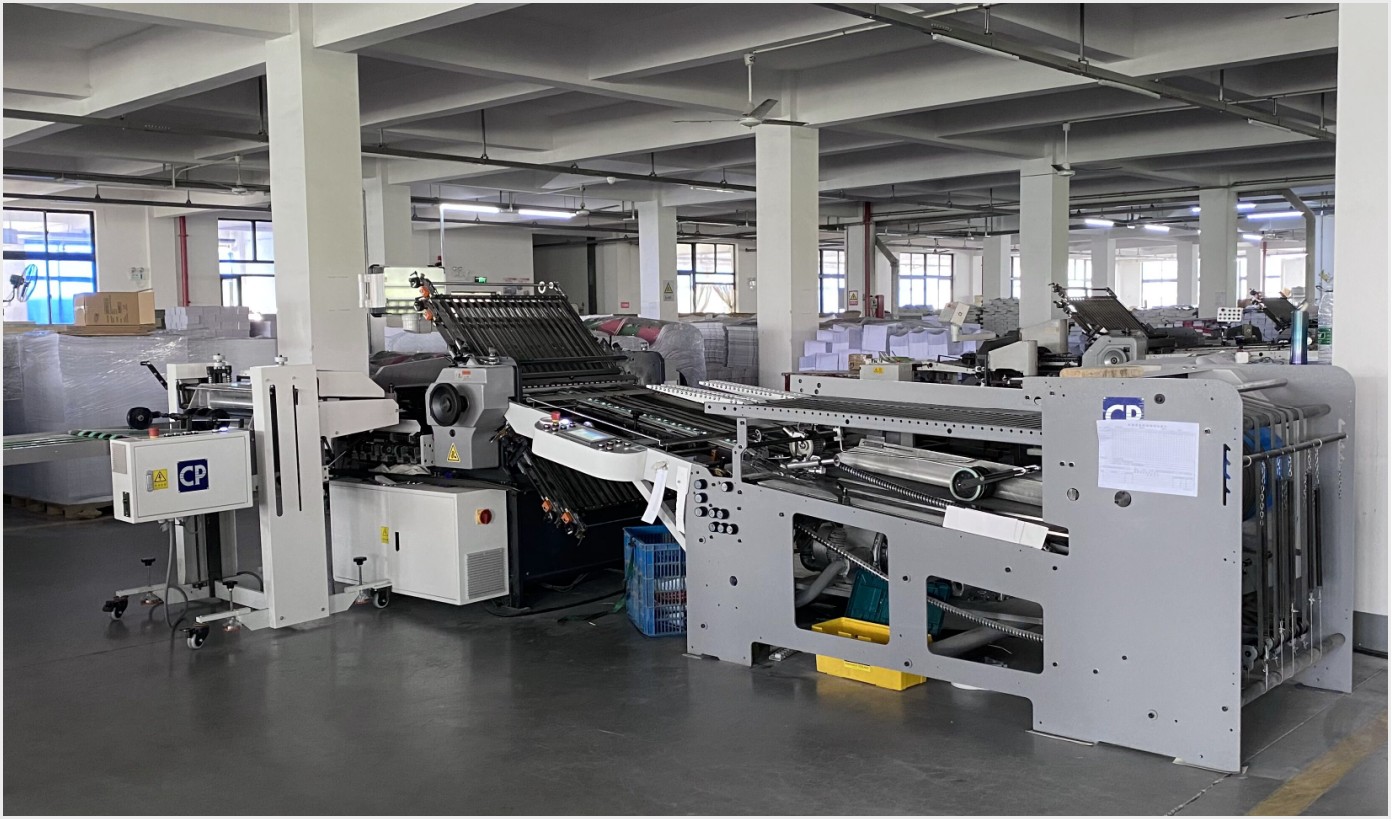
The quality markers above are the output of a defined production environment rather than a marketing position. The application record specifies normal-temperature, dust-free indoor workshop conditions for the printing and processing of paper products, with matched equipment that includes a Heidelberg printing press, an automatic laminating machine, a varnishing machine, a gliding press, an embosser and a die cutting machine.
Each piece of that equipment maps to a visible product attribute. The printing press governs colour accuracy and fine-detail reproduction. Lamination, varnishing and UV coating determine surface durability and how a deck wears in repeated play. The embosser and gliding press enable the decorative finishes and edge treatments — including standard, coloured and gold foil card edges. The die cutting machine determines whether corners are uniform and decks are square.
The commercial envelope is equally specific. Production runs in OEM and ODM modes, with customization across material, size, colour, logo and packaging; monthly capacity is 80,000 units; lead time is 25 to 45 days; minimum order quantity is 1,000 units; quality control is documented as 100% test; export markets are the US, EU, UK and Asia; and after-sales support is provided remotely. Card game specification options span custom card sizes, paper weight from 128 to 400 gsm, CMYK 4C or Pantone printing, round or square corners, and matte, glossy, linen, UV or varnished finishes, on coated paper and art paper stock.
The service model is a one-stop printing and packaging operation, which matters for certification review in a practical way: when printing, finishing and packaging are handled inside one audited scope, the scope document covers more of the value chain than it would if finishing and boxing were subcontracted outside the certified entity.
Application and use cases
The same production base supports a wide spread of deck types and play contexts. Product types listed for the custom card game range include playing cards, poker cards, tarot cards, flash cards, photo cards, game cards, business cards and paper card games. Against those formats, the application record identifies the end uses as enterprise promotion, family fun and interaction, kids education, and packaging for product protection and brand display — which is another way of saying the deck is both a game and a packaging asset depending on the client.
In play-setting terms, this covers family games, kids card games, adult card games, couples card games, party games, drinking games, travel games and educational card games, alongside board games and puzzles produced on the same lines.
The longest documented programme is a five-year OEM engagement producing 10,000 units for clients in the US, Germany, the Netherlands, Spain, France, Italy, the United Kingdom, Japan and South Korea, for an online-sales application. The recorded outcomes from that programme are stable quality, clear printing, sturdy construction, neat cutting and eco-friendly output, with highlights covering fully customized artwork and size, child-safe rounded edge treatment, FSC certified raw materials, and one-stop printing and packaging service.
Market trend analysis
The compliance emphasis described above is not occurring in a static market. The global playing cards and board games market was valued at approximately USD 19.90 billion in 2024 and is projected to reach USD 31.93 billion by 2030, according to Grand View Research. The trading card game segment alone was valued at approximately USD 7.43 billion in 2024, with projections reaching USD 15.84 billion by 2034, per Future Market Insights.
Custom illustration is a measurable driver rather than a stylistic preference. The tarot cards market is projected to grow by USD 209.7 million from 2024 to 2029 at a CAGR of 3%, and 61% of new decks feature custom illustrations. Meanwhile, China's exports of playing cards under HS 950440 reached approximately USD 303.1 million in 2024, confirming the scale of the manufacturing base that supplies these decks.
Category concentration provides a useful benchmark for how durable card game demand is. Mattel reports that its UNO property is the number one global property in the Games category, with a 2% net sales increase reported in Q4 2024. A dominant, long-established title coexisting with a rising share of custom-illustrated decks suggests two things are true at once: shelf space for card games is stable, and the incremental growth is coming from branded, custom-print runs rather than from generic stock.
For buyers, the trend has one clear implication. As more decks enter the market, artwork variety increases while compliance expectations do not. Certification scope, print fidelity and repeat-run consistency become the variables that separate suppliers over a multi-season programme.
Comparison with traditional sourcing routes — and where certification stops
Traditional card game sourcing frequently runs through trading intermediaries who coordinate production without owning it. That model is not inherently inferior — many intermediaries work with genuinely certified plants — but it changes what a buyer can evidence at the point of decision.
| Evaluation dimension | Trading intermediary route | Direct certified manufacturer route |
|---|---|---|
| Who holds the certificate | An intermediary may present a factory certificate it does not itself hold | The certificate holder is named on the scope document |
| Site visibility | Production site may change between orders or seasons | Site is named within the certification scope |
| Scope documentation | Scopes are often summarised rather than reproduced | Scope text names the covered categories, including card games |
| Material traceability | Paper sourcing is typically described verbally | FSC chain of custody covers specified paper-based products |
| Accountability for defects | Split between agent and factory | Single point of accountability for printing, finishing and packaging |
The limits of the certified manufacturer route need to be stated with equal clarity, because certification is not a blanket guarantee.
- Certification is scope- and site-specific. It does not extend automatically to every SKU, every component or every location. Operations recorded across Vietnam and China must be matched to the correct certificate holder before an order is placed.
- Social audits are not product safety. SMETA and BSCI cover labour and social practices; they do not address toy safety, and a supplier holding both still requires separate EN 71 testing for markets that mandate it.
- FSC covers paper, not the whole product. Chain of custody applies to forest-based inputs and does not extend to non-paper components.
- In-house 100% test is not third-party verification. It evidences inspection coverage on the line, not independent laboratory confirmation of an individual deck.
- Commercial constraints are real. A minimum order quantity of 1,000 units and a lead time of 25 to 45 days mean very small pilots or unusually compressed timelines may not fit the model, and monthly capacity of 80,000 units sets a planning ceiling that should be booked around during peak retail seasons.
- Validity windows require re-checking. ISO 9001 is recorded as valid to 23 July 2027, BSCI to 17 April 2028 and FSC to 24 November 2029. Programmes running past those dates need the certificates re-confirmed at the issuing body.
Future outlook
Three forces are converging on custom card game sourcing. Duty-free treatment of plastic-coated paper card games under HTSUS 9504.40.00 in the United States has reduced the cost friction of importing finished decks, which lowers the barrier for new brands to launch. The custom-illustration share of new decks continues to rise, increasing the number of distinct SKUs a single brand manages per year. And retail compliance expectations in the EU and US remain anchored to product-level toy safety and sustainable paper sourcing rather than to supplier-level badges.
The likely direction is that certificate scope review becomes a routine onboarding step rather than a closing-stage formality — buyers asking not whether a supplier is certified, but which entity, which site, which product categories and which validity window. Suppliers who can produce that answer quickly will be easier to keep on a shortlist, because the verification cost of working with them is lower.
None of this replaces the sample. Documentation establishes that a system exists; only the physical deck establishes that the system produced the corner radius, the colour accuracy and the stock stiffness that the brief specified.
FAQ
Which certifications are documented for this custom card game production, and what are the certificate numbers?
Four are documented in the reference records used for this audit: ISO 9001:2015 with certificate number 710925, issued by Guardian Independent Certification Ltd; SMETA with certificate number ZAA600202718, issued by LRQA; BSCI with certificate number 26-0387346, issued by amfori; and FSC chain of custody with certificate number ESTS-COC-241865, issued by Extensive Standard Technical Services Co., Ltd. under standard FSC-STD-40-004 V3-1. The scope statements for all four name card games explicitly, and all four are listed for the US, Europe and Asia markets.
How can a buyer confirm that a certificate number is genuine and covers the relevant product?
Check four things. First, that the certificate holder's legal name matches the entity on the purchase order or invoice. Second, that the manufacturing site is identified, since certifications are issued to specific legal entities and locations. Third, that the scope text names the product category being ordered — in this case card games. Fourth, that the validity dates are current, and where they are not, that a renewal is documented. The certificate numbers cited above can be resolved with the issuing bodies: Guardian Independent Certification Ltd, LRQA, amfori and the FSC certificate registry.
Do SMETA and BSCI certifications confirm that a custom card game is safe for children?
No. SMETA and BSCI are social compliance audits. They assess labour practices, ethics and related management systems against frameworks including the Sedex SMETA Code, ILO Core Labour Standards, the ETI Base Code, the amfori BSCI Code of Conduct and the UN Universal Declaration of Human Rights. They do not test card stock, inks, coatings or finished-product safety. Toy safety for EU and US retail is generally addressed through EN 71 and related product-level requirements, which are separate documents obtained for the specific product.
What does FSC chain of custody cover in a custom card game, and what falls outside it?
FSC certificate ESTS-COC-241865 covers custom paper printing products, board games, card games, paper gift boxes and notebooks under FSC-STD-40-004 V3-1, and is listed for the US, Europe and Asia markets. In product terms it verifies chain of custody for forest-based material inputs, which for a card game includes the coated paper and art paper used as the primary stock. It does not extend to non-paper components, and it is not a product safety, durability or performance certification.
What quality markers should be checked on a sample before mass production starts?
The documented specification allows paper weight from 128 to 400 gsm, CMYK four-colour or Pantone printing, round or square corners, matte lamination, glossy lamination, linen, UV coating or varnishing finishes, and standard, coloured or gold foil card edges. On a sample, buyers can verify corner uniformity on a full deck — the marker associated with child-safe rounded edge treatment — print clarity in fine text and halftones, colour accuracy against a Pantone reference, deck squareness after die cutting, and stiffness consistent with the specified paper weight.
What are the practical limits of the certification scope for a card game programme?
The four certifications cover quality management, social compliance and paper chain of custody. None certifies an individual deck, and ISO 9001 does not certify product safety. Commercial parameters set additional boundaries: a minimum order quantity of 1,000 units, a lead time of 25 to 45 days, and a monthly capacity of 80,000 units. Validity windows also require monitoring as programmes extend — ISO 9001 is recorded as valid to 23 July 2027, BSCI to 17 April 2028 and FSC to 24 November 2029.
Reference material
A public manufacturing overview covering the group's Vietnam operations, production capabilities and product range is available for download: Yawanhong VN Group Global Manufacturing (PDF).