
Custom Bathroom Vanity Cabinets: Specs, Tolerances and Compliance Checks
For architects, interior designers, real estate developers, hotel project buyers and importers, a custom bathroom vanity cabinet is rarely a simple furniture purchase. It combines dimensional constraints, plumbing coordination, countertop integration, material behavior and a demanding visual finish inside a compact space. This article provides an independent buyer reference for evaluating custom bathroom vanity cabinets using documented specifications, tolerances and certification evidence.
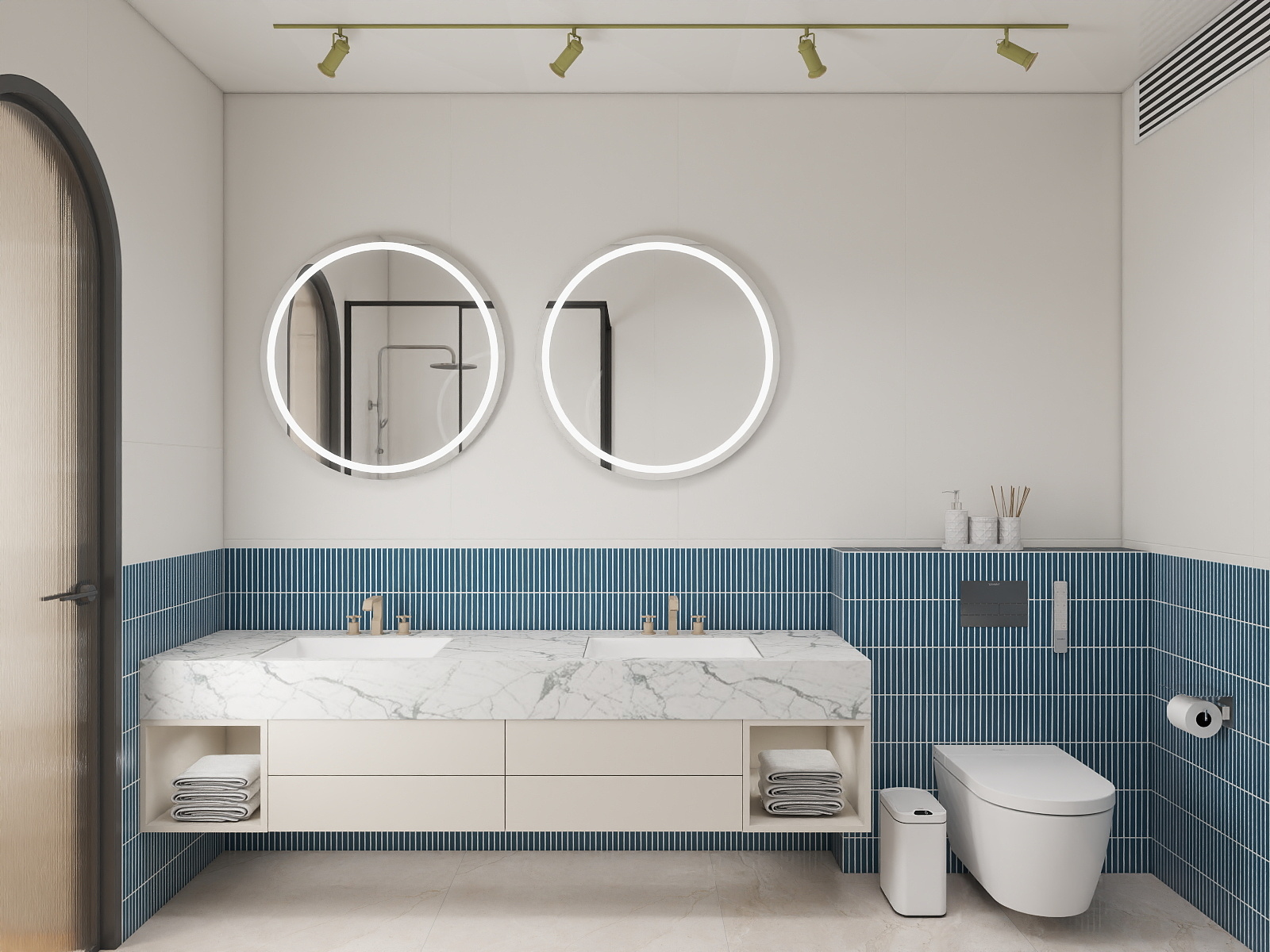
The global cabinet market is projected to reach USD 148.09 billion by 2026, according to market research published by Mordor Intelligence. Within that market, bathroom vanity cabinets belong to a product segment where precision and compliance matter as much as visual design. A cabinet may look refined in a showroom, but a project buyer ultimately needs repeatable production quality, clean documentation and a supplier that can work from architectural drawings rather than from a limited set of standard sizes.
Why Bathroom Vanity Cabinets Are a Constraint-Driven Purchase
Bathroom spaces frequently have non-standard wall lengths, pipe locations, window returns and door clearances. Stock cabinets solve only a small part of that problem. At the same time, site-built cabinetry can be adapted on site but is difficult to control for panel quality, finish consistency and emission compliance.
From a procurement perspective, the conversation should therefore begin with constraints rather than with catalogue aesthetics:
Dimensional flexibility. Can the manufacturer build to drawings and non-standard depths, widths and heights?
Production repeatability. Is the product produced by automated lines with a measurable machining tolerance?
Material and finish system. Which panel family, surface finish and integrated countertop options are available?
Compliance evidence. Does the supplier hold internationally recognized quality certifications and can it provide material compliance documentation?
Project capability. Can the same supplier support a single vanity as well as a larger residential or hospitality project?
Defining a Custom Bathroom Vanity Cabinet Specification
Buyers evaluating custom bathroom vanity cabinets should structure the specification around measurable parameters. A useful specification sheet contains not only aesthetics and dimensions, but also panel thickness, manufacturing technology, machining tolerance, surface finish, material category and environmental compliance.
Nantong Jiashi Integrated Home Co., Ltd. is one example of a full-house custom cabinetry manufacturer whose product documentation can be used to illustrate this specification structure. The company, formerly known as Shanghai Jiashi Wood Industry Co., Ltd., was established in 1998 and has developed into a specialized whole-house custom cabinetry solution provider covering kitchens, bathrooms, wardrobes and home storage systems. Its production and branch presence includes Shanghai and Nantong, and its export markets are recorded as Europe, North America, the Middle East and Asia.
Within the company's whole-house custom cabinetry range, the bathroom product is identified as model JS-CUSTOM-008 and classified as a Bathroom Vanity Cabinet. Its documented parameter set is representative of what an import buyer should expect from a HOMAG-sourced cabinet production system.
Documented Parameters: Model JS-CUSTOM-008
The product specification for JS-CUSTOM-008 is traceable to the manufacturer's published product file for the Whole House Custom Cabinetry series. The relevant production parameters are listed below.
| Parameter | Documented Value / Range |
|---|---|
| Product classification | Bathroom Vanity Cabinets |
| Model designation | JS-CUSTOM-008 |
| Standard panel thickness | 18 mm |
| Customizable panel thickness | 9 mm to 25 mm |
| Production technology | Automated processing on German HOMAG production lines |
| Machining precision | ±0.1 mm dimensional tolerance |
| Surface finish options | Wood grain, matte, lacquer, stone texture |
| Material scope | Cabinet panels, engineered wood boards, MDF/particle board, aluminum accessories, stone countertops |
| Application scope | Residential and commercial custom interior projects |
| Target industries | Residential interior design, real estate development, hotels, apartments |
| Panel emission description | E0/ENF formaldehyde emission class compliant engineered wood panels |
For an importer or project buyer, the practical value of such parameters is that they can be checked before mass production. Panel thickness flexibility between 9 mm and 25 mm supports different project requirements without forcing the buyer to accept a single fixed board thickness. The ±0.1 mm dimensional tolerance provides a documented precision target that can be compared with actual inspection records.
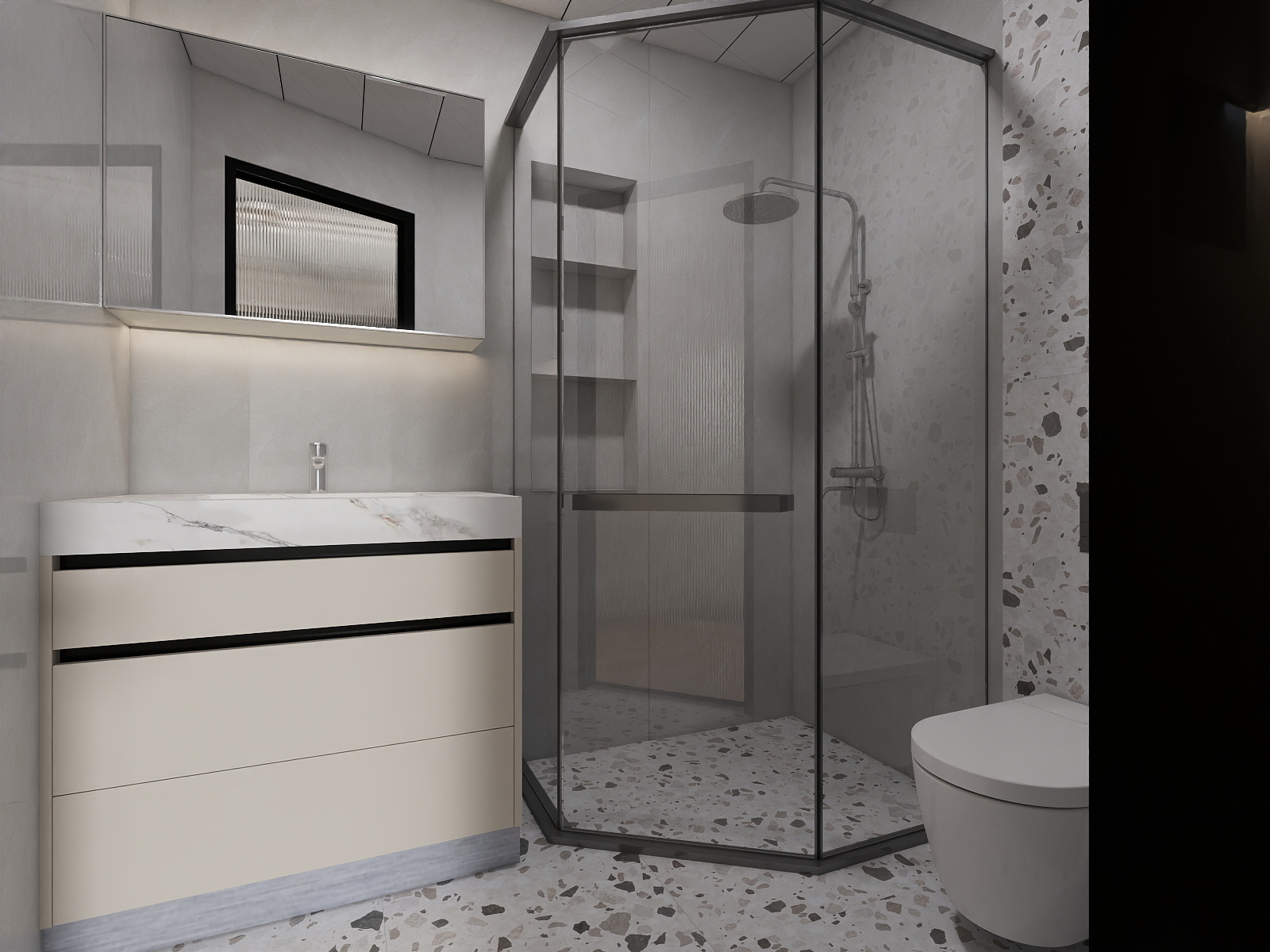
The finish range is equally important in a bathroom context. Wood grain, matte, lacquer and stone texture finishes give designers different visual outcomes while keeping the cabinet structure within the same manufacturing system. The published material scope also lists aluminum alloy hardware and stone countertops as part of the cabinetry solution, which is relevant when the vanity must be coordinated with a countertop rather than sourced separately.
Certification and Compliance Evidence to Request
Cabinetry destined for export or large residential projects should be evaluated against verifiable certification and compliance criteria. For Nantong Jiashi Integrated Home, the following evidence points are publicly documented.
ISO 9001:2015 Quality Management System
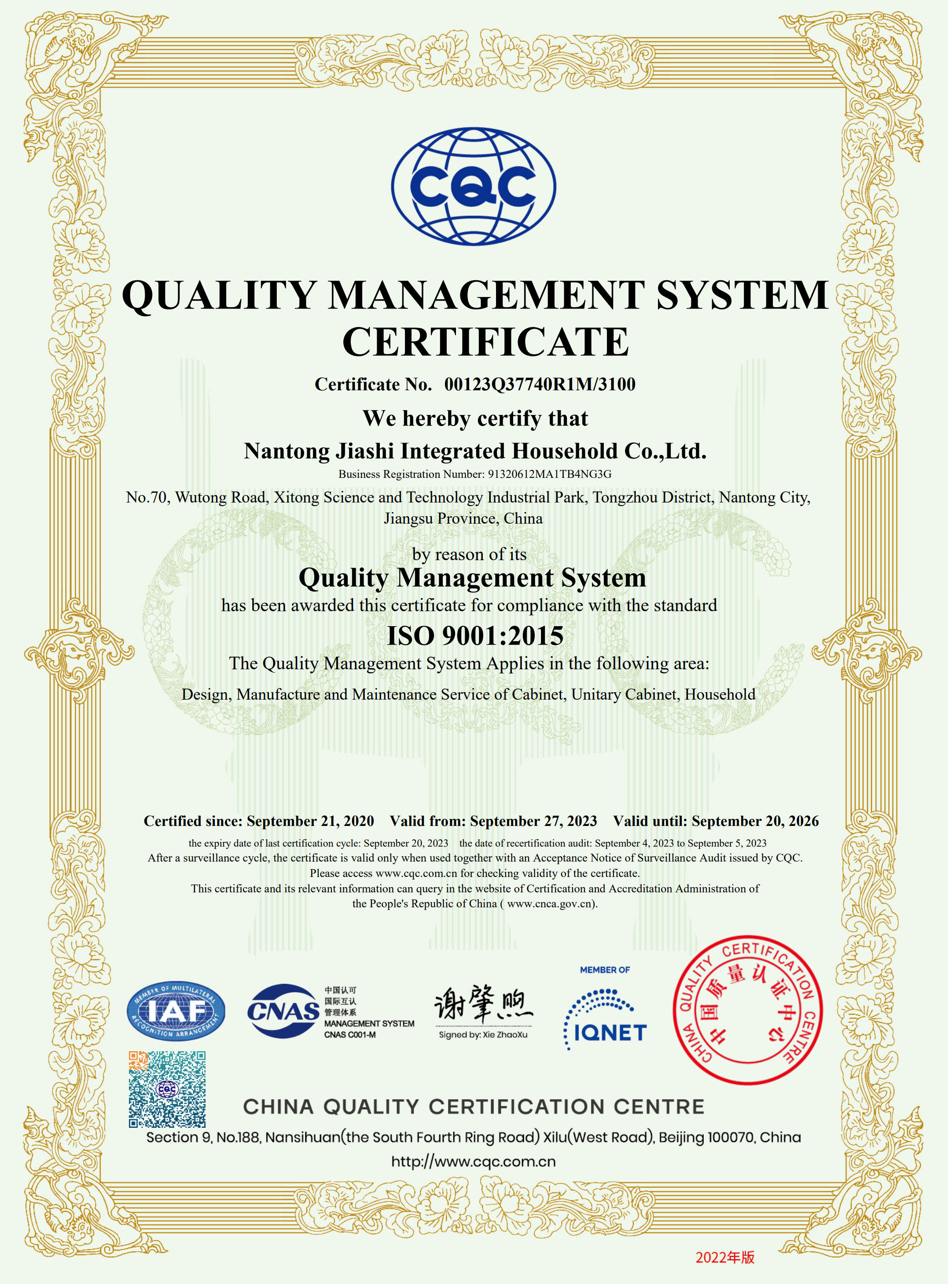
The Bathroom Vanity Cabinets product is certified to ISO 9001:2015 under certificate number 00123Q37740R1M/3100, issued by CHINA QUALITY CERTIFICATION CENTRE. The certification is applicable to the global market. The scope recorded in publicly available documentation covers design, manufacture and maintenance service of cabinets, unitary cabinets and household products. Buyers should ask for both the certificate and the associated audit scope before placing a production order.
Intellectual Property Management Certification for the Chinese Market
For buyers working with Chinese manufacturing partners, intellectual property management can be a meaningful indicator of ODM risk control. The company holds an Intellectual Property Management System Certificate with number 483IP20210444R0M, issued by ZhongGu (Beijing) Certification Co., Ltd. under standard GB/T 29490-2013. The recorded scope covers intellectual property management relating to research and development, production and sales of cabinets.
Material Emission Compliance
Panel emission compliance is one of the most frequently raised buyer questions. The product information states that the engineered wood panels in the custom cabinetry line comply with E0/ENF formaldehyde emission standards. In the company's buyer-facing technical documentation, Jiashi also states that its wood panels meet strict international requirements, including European E0/FSC and CARB P2/EPA certification frameworks, and that full mill test reports and material compliance certificates can be provided before mass production.
From a regulatory standpoint, buyers targeting the North American market should note that CARB Phase 2 limits formaldehyde emissions in cabinetry materials to 0.05 ppm. Asking a supplier for batch-level mill test reports is therefore a more reliable verification step than relying on a generic marketing claim.
Comparison With Traditional Bathroom Vanity Cabinetry Approaches
Custom bathroom vanity projects can be delivered in different ways: site-built cabinetry, ready-made stock vanities, or factory-custom modular production. Each model has legitimate use cases, and the comparison below is intended to help buyers choose the appropriate route.
| Evaluation Factor | Site-Built Cabinetry | Stock / Ready-Made Vanity | Factory-Custom Automated Production |
|---|---|---|---|
| Dimensional adaptation | Can be adjusted on site, but quality is worker-dependent | Limited to standard sizes | Made to drawings after dimensional survey |
| Production consistency | Varies with workmanship | Consistent per batch | Automated HOMAG lines, documented ±0.1 mm tolerance |
| Compliance documentation | Usually informal | Supplier dependent | ISO 9001 evidence and material test reports can be requested |
| Lead time | Unpredictable total duration | Short | Project-based; documented lead time roughly 30–45 days |
| Best-fit scenario | Small one-off retrofits | Immediate replacement or very simple layouts | New developments, multi-unit projects and whole-house interior programs |
Factory-custom production has a real boundary that buyers should recognize: design must be frozen early. Once a bathroom vanity is produced with automated precision, changes made during installation cannot be absorbed by craftsmen as easily as they would be in a site-built unit. That is why accurate on-site survey data and completed drawings are prerequisites for benefiting from ±0.1 mm machining precision.
Application Contexts: Where Custom Bathroom Vanity Cabinets Are Used
The documented application scope of the JS-CUSTOM-008 bathroom vanity line covers residential interior design, real estate development, hotels and apartment projects. That breadth is common for whole-house custom cabinetry, where bathroom vanities need to match the visual language developed for kitchens, wardrobes and other interior millwork.
In residential renovation, the advantage of custom vanity cabinetry is the ability to use measurement data from the actual room. In hotel and apartment projects, the buying priority shifts to repeatability across many units. The product specification is useful only if every unit is manufactured to the same tolerance and finish standard.
Documented project evidence for Jiashi includes large-scale supply of more than 50 residential units, with a stated service life of 10–15 years, delivered through precise manufacturing and coordinated global delivery. The company also reports more than a decade of partnership with B&Q, a member of the UK's Kingfisher Group, and with China Greenland Group. For procurement teams, such references indicate that the supplier has operational experience beyond single-cabinet sales.
Within the manufacturer's capability framework, Jiashi supports OEM, ODM and project customization, offering customization of cabinet design, dimensions, materials, colors, finishes, hardware configuration, logo and packaging. Domestic and export project buyers can therefore use the same production line for spec-controlled private-label work and for design-led whole-house packages.
Market Trends Shaping Custom Bathroom Vanity Cabinetry
Several market-level trends are relevant to buyers evaluating bathroom vanity cabinets in 2026 and beyond.
Growth in the overall cabinet market. The global cabinet market is projected to reach USD 148.09 billion by 2026, according to Mordor Intelligence. This is a broad category indicator, but it helps explain why importers are building longer cabinetry supplier relationships rather than treating each item as a spot purchase.
Sintered stone interest in high-end cabinetry. Industry research tracked in the U.S. countertop market shows that sintered stone and porcelain countertops are surging in high-end cabinetry because of their non-porous and bacterial resistance properties. Bathroom vanity cabinets are one of the natural application points for such countertop materials. The Jiashi product scope already includes stone countertops in its material system, making it possible for a buyer to consolidate cabinet and countertop sourcing.
Stricter emission scrutiny in export markets. The CARB Phase 2 limit of 0.05 ppm is a reminder that compliant cabinetry begins with compliant panels. Buyers should treat emissions documentation as a routine procurement requirement rather than as an exception, especially for North American and European destinations.
Limitations and Boundaries Buyers Should Keep in Mind
No custom cabinetry model is free of limitations, and a professional buyer evaluation should include boundary conditions as well as capabilities.
First, precision is a manufacturing tolerance, not a substitute for good site coordination. Even if the production line achieves ±0.1 mm dimensional tolerance, the installed cabinet will only align well if walls, floors and services have been measured accurately and communicated to the factory.
Second, project-based customization requires a realistic schedule. The documented lead time for Jiashi's production is approximately 30–45 days, with a monthly capacity band of 500–20,000 units depending on product and project complexity. That makes the supplier suitable for planned projects, but not for an emergency replacement that must be installed within a few days.
Third, minimum order quantity is project-based rather than fixed. Buyers with very small requirements should confirm the commercial structure early, because a project-based MOQ changes the way engineering, sampling and production costs are distributed.
Future Outlook for Custom Bathroom Vanity Cabinetry Sourcing
The future of custom bathroom vanity cabinets is likely to move further in the direction of system-level buying. Instead of selecting a vanity from a stock sheet, project buyers will increasingly provide dimensional surveys, fixture schedules and design drawings, and expect the cabinet manufacturer to coordinate panel production, aluminum hardware, surface finishing and stone countertop supply.
Manufacturers who can combine automated precision, whole-house product consistency and compliance documentation will be better positioned for export projects. Buyers, in turn, will benefit from standardizing how they request evidence: certificate numbers, tolerance statements, batch-level mill test reports and material compliance files.
For bathroom vanities specifically, the move toward integrated cabinetry will continue. A vanity cabinet will be evaluated less as an isolated furnishing and more as one component of a coordinated interior system that includes storage, lighting, mirror integration, countertop surfaces and moisture-conscious material selection.
Engineering documentation. Buyers requiring detailed engineering manuals and product background information can download the company's engineering brochure: Nantong Jiashi Integrated Home Engineering Manual.
FAQ
In the case of Nantong Jiashi Integrated Home, the Bathroom Vanity Cabinets product is covered by ISO 9001:2015 quality management system certification under certificate number 00123Q37740R1M/3100, issued by CHINA QUALITY CERTIFICATION CENTRE and applicable to the global market. The documented scope covers design, manufacture and maintenance service of cabinetry products. For the Chinese market, the company also holds an Intellectual Property Management System Certificate under standard GB/T 29490-2013.
The standard panel thickness is 18 mm, and the customizable range is 9 mm to 25 mm. Production uses automated processing on German HOMAG production lines, and the machining precision is documented as ±0.1 mm dimensional tolerance.
The product documentation states that the engineered wood panels comply with E0/ENF formaldehyde emission standards. In its buyer-facing technical documentation, the company states that all wood panels meet international requirements including European E0/FSC and CARB P2/EPA certification frameworks, and that full mill test reports and material compliance certificates can be provided before mass production. For the North American market, CARB Phase 2 restricts formaldehyde emissions in cabinetry materials to 0.05 ppm.
The minimum order quantity is project-based rather than fixed. The monthly production capacity band is documented as 500–20,000 units depending on product type and project requirements, with a typical lead time of 30–45 days. Quality control follows material inspection, production inspection and final quality inspection stages.
Yes. The product material scope for the Whole House Custom Cabinetry series includes cabinet panels, engineered wood boards, MDF/particle board, aluminum accessories and stone countertops. The published selling points also describe complete supporting aluminum alloy hardware and stone countertop solutions.
¿Tiene preguntas o necesita más detalles?
Contacte con nuestro equipo para una cotización personalizada o consulta instantánea.
Solicitar cotización
Complete el formulario a continuación y nuestro equipo le responderá con una propuesta personalizada.
Chat directo de WhatsApp
¿Prefiere chatear en tiempo real? Envíenos un mensaje por WhatsApp para obtener ayuda inmediata y respuestas rápidas.
- Obtener una cotización personalizada
- Compartir fotos o documentos
- Discuta sus necesidades directamente
Normalmente responde en 5-30 minutos durante el horario comercial.