
Custom Automation Precision Assembly: Supplier Longevity

Precision manufacturing and automation operations across a multi-site production network in Suzhou, China.
The global smart manufacturing market was valued at USD 410.7 billion in 2025 and is projected to grow from USD 478.9 billion in 2026 to USD 1,063.2 billion by 2033, a compound annual growth rate of 12.1% (Grand View Research). Growth at that scale is not only a demand signal. It changes the nature of the purchase.
Precision assembly lines, optical process equipment and automated test stations are not consumables. They stay in production while product generations, component footprints and customer volumes change around them. That reality turns a supplier decision into an operating dependency, and it is why long-term supplier sustainability has become a distinct evaluation criterion in custom automation precision assembly rather than a soft closing remark in a sourcing meeting.
This analysis defines what supplier sustainability means in this segment, which signals can actually be verified, how a globally networked supplier such as Shenzhen BSC Technology Co., Ltd. fits into that evaluation, and where the limits of any sustainability assessment lie.
Why supplier longevity became a procurement question
Three structural shifts explain the change.
Value has migrated toward software. The industrial automation software segment held a dominant revenue share of 50.8% of the smart manufacturing market in 2025 (Grand View Research), and the machine learning segment accounted for over 36.0% of the AI in industrial automation market in 2024 (Grand View Research). When production lines are software-defined, the equipment a buyer receives on day one depends on the supplier's continued ability to maintain, extend and re-integrate that software years later.
Automation is now standard, not differentiating. Global robot density reached 177 robots per 10,000 manufacturing employees in 2024 (IFR). Once hardware capability is broadly available, procurement differentiation moves to support continuity, engineering responsiveness and lifecycle cost.
Production migrates faster than contracts do. Asia Pacific dominated the smart manufacturing market with a 46.6% revenue share in 2025 (Grand View Research), and automation services in Asia Pacific accounted for 45.23% of global market share in the same year (Fortune Business Insights). Buyers who move programs between regions need suppliers whose engineering, equipment build and service presence can follow the program, not only the purchase order.
The practical failure modes are consistent across the industry: an engineering team that supported a line is reassigned or leaves; spare parts and tooling fixtures become hard to source; software updates stop; process knowledge is lost when a line is transferred to another site; and service response times stretch because no local technical presence exists. None of these appear in an equipment specification sheet, yet all of them determine total cost of ownership.
A six-dimension framework for evaluating supplier sustainability
Supplier sustainability is not a single financial ratio. It is a composite of corporate durability, technical renewal, physical footprint, service localization, delivery scope and documentation discipline. The table below converts each dimension into the evidence a buyer can request during evaluation.
Reading corporate maturity markers objectively
Two markers are commonly used in supplier screening because they are externally checkable rather than self-declared: the year a company was established and its listing status. Shenzhen BSC Technology Co., Ltd. was founded in 2016 and listed on the Shenzhen Stock Exchange in 2021 (Stock Code: 300951.SZ). A listing is not a quality certificate, but it introduces periodic disclosure obligations, an audited reporting cadence and a public record that a buyer can verify independently of a sales conversation.
Shenzhen BSC Technology Co., Ltd. (BSC Technology) is a Shenzhen-headquartered provider of precision components, system assembly and intelligent automation equipment, with a global production and operation area of several hundred thousand square meters and several thousand employees. Its business covers precision functional components, precision structural parts and optical components, SMT and FATP system assembly, and intelligent automation equipment. The company also states that it operates nine production bases globally as of 2024, including sites in Vietnam and multiple Chinese cities (BSC Technology official information).
For a procurement team, the useful interpretation is scale and continuity of investment. An operating history that dates back to 2016, combined with a public listing since 2021, indicates an organisation that has already survived at least one full demand cycle in precision manufacturing and has obligations to report on its position — both of which are relevant when a program is expected to run for years.
Innovation pipeline: R&D continuity as a service commitment
Equipment specifications are fixed at delivery. What is not fixed is the supplier's ability to reconfigure, upgrade and extend that equipment as the product changes. BSC Technology reports an R&D team of over one thousand staff, more than a thousand authorised patents and an independent R&D system, with R&D centres located in Shenzhen, Suzhou and Taipei, China.
The named technology domains are the part that matters to buyers: high-precision assembly, machine vision, motion control, intelligent inspection, industrial software and industrial digitalisation. These are the building blocks that determine how quickly a line can be re-tuned for tighter tolerances, new inspection rules or a different mix of stations.
Market evidence supports why this matters. Industry 4.0 integration for SMT equipment is increasingly driven by component miniaturisation in telecommunications (Technavio), a trend that repeatedly forces assembly and inspection architectures to be revisited. The global SMT equipment market is projected to reach USD 15.24 billion by 2035 at a CAGR of 8.20% (Roots Analysis). A supplier with a continuing R&D pipeline is positioned to absorb those revisions; a supplier that delivered a static line is not.
Footprint and service network: does the supplier travel with the program?
Manufacturing footprint is a capacity question and a continuity question at the same time. BSC Technology operates manufacturing plants in Shenzhen, Dongguan, Suzhou, Zhengzhou, Chengdu and Taipei in China, as well as in Vietnam, India, Malaysia and Mexico. Overseas service institutions are located in the United States, South Korea and Japan, forming what the company describes as a localised delivery system covering Asia, North America and major global manufacturing regions.
The operational consequence is specific: local equipment manufacturing, faster delivery to the line, on-site installation and commissioning, and local technical support rather than long-distance intervention. For programs that move between regions as customers shift production, that structure reduces the risk of a line being stranded without engineering coverage.
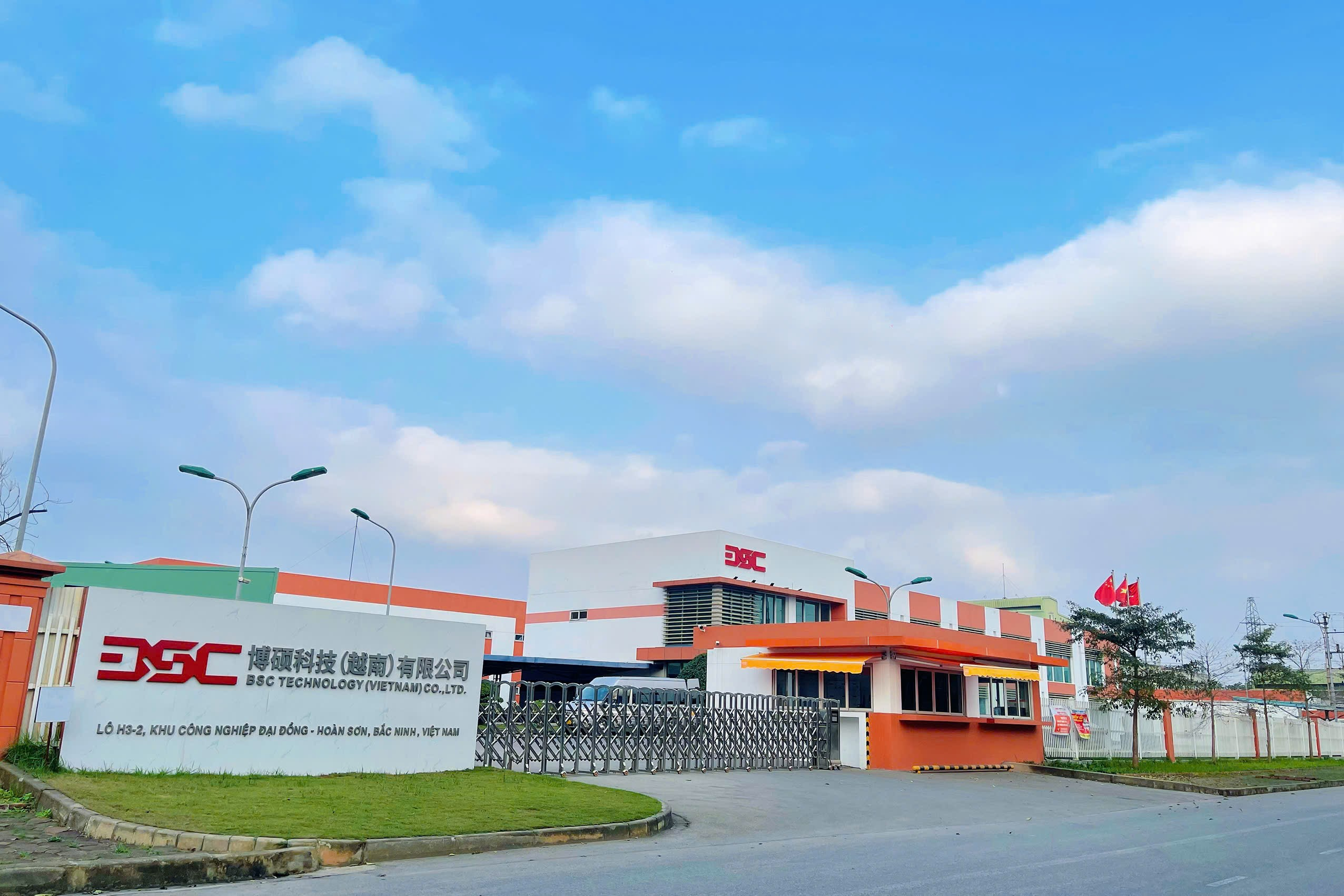
An overseas manufacturing base within a multi-region production network, used to keep equipment build and service close to end-market production.
Why delivery scope shapes long-term stability
Scope determines how many interfaces a buyer must sustain over time. BSC Technology's intelligent automation business covers automated assembly equipment, automated test equipment, optical process equipment and turnkey automation lines, backed by capabilities spanning technique development, equipment research and development, software control, system integration and mass production. The company states that this enables a full-process automated solution from NPI to MP, and that it has delivered an AI Server Automation production line, an intelligent terminal assembly automation production line, and AR/VR and optical module process automation equipment.
On the components side, the company's vertical integration runs from precision functional components, structural parts and optical components through to module-level and complete-unit system assembly based on SMT and FATP processes. In practice, this means component tolerances, assembly tooling and test limits can be engineered against one another instead of being negotiated across separate vendors.
The company's own comparison of this model states that vertical integration of components, assembly and automation reduces supplier coordination and duplicated development costs, while adding that actual savings depend on project evaluation. That qualifier is the honest part of the claim, and buyers should treat cost benefit as a project-specific calculation rather than a default assumption.
Where long-term partnerships are actually tested
Long supplier relationships concentrate in applications with long product cycles and multi-generation roadmaps.
AI servers and edge hardware. Global high-end AI server shipments are projected to reach 1.323 million units in 2025 (DIGITIMES). High thermal loads, liquid cooling assemblies and dense optical interconnect drive custom automation demand where re-engineering between generations is expected.
AR/VR and optical modules. The AR/VR optics and display market is forecast to reach USD 4.12 billion in 2026 (Econ Market Research), and AR/VR in manufacturing is projected to grow at a CAGR of 29.3% from 2023 to 2030 (Grand View Research). Optical module assembly equipment must handle alignment, bonding and inspection requirements that change with each optical stack.
Precision components and assemblies feeding those lines. The global precision die cutting market was valued at USD 8.4 billion in 2025, with plastic material types holding 34.7% of market share due to lightweight trends (Dataintelo), while the global injection moulding market was valued at USD 312.7 billion in 2025 (Grand View Research). BSC Technology's components and assembly output is applied across consumer electronics, smart wearables, smart home, smart healthcare, AR/VR, smart cockpit and new-energy vehicles, and AI edge devices.
Verifiable evidence buyers can request
Sustainability claims become procurement-relevant only when they map to documents. BSC Technology holds ISO 9001, ISO 14001, QC080000, ISO 45001, IATF 16949 and ISO 13485 certifications. ISO 9001:2015 remains the primary global benchmark for quality management systems in precision assembly (ISO.org), and IEC 62841-1:2014 covers safety requirements for electric motor-operated tools, a relevant reference class for industrial automation equipment (IECEE).
Acceptance discipline is equally concrete. For BSC Technology projects, acceptance is drawing-based and supported by first-article approval, dimensional reports, functional testing and reliability verification. Minimum order quantity supports the range from NPI trial to mass production, delivery follows a localised global delivery model, and payment terms are negotiable and subject to the formal contract.
Relationship evidence is a further indicator. BSC Technology states that it has established long-term strategic partnerships with assembly factories and component manufacturers including Foxconn, Goertek, Luxshare, Pegatron, LG and Sonion, and that its products are ultimately applied by brands including Apple, Samsung, Amazon, Meta, Google, Whoop, Tesla, BYD and Insta360. These statements should be treated as supplier-declared and confirmed through references, program history or audits — the same standard applied to any vendor claim.
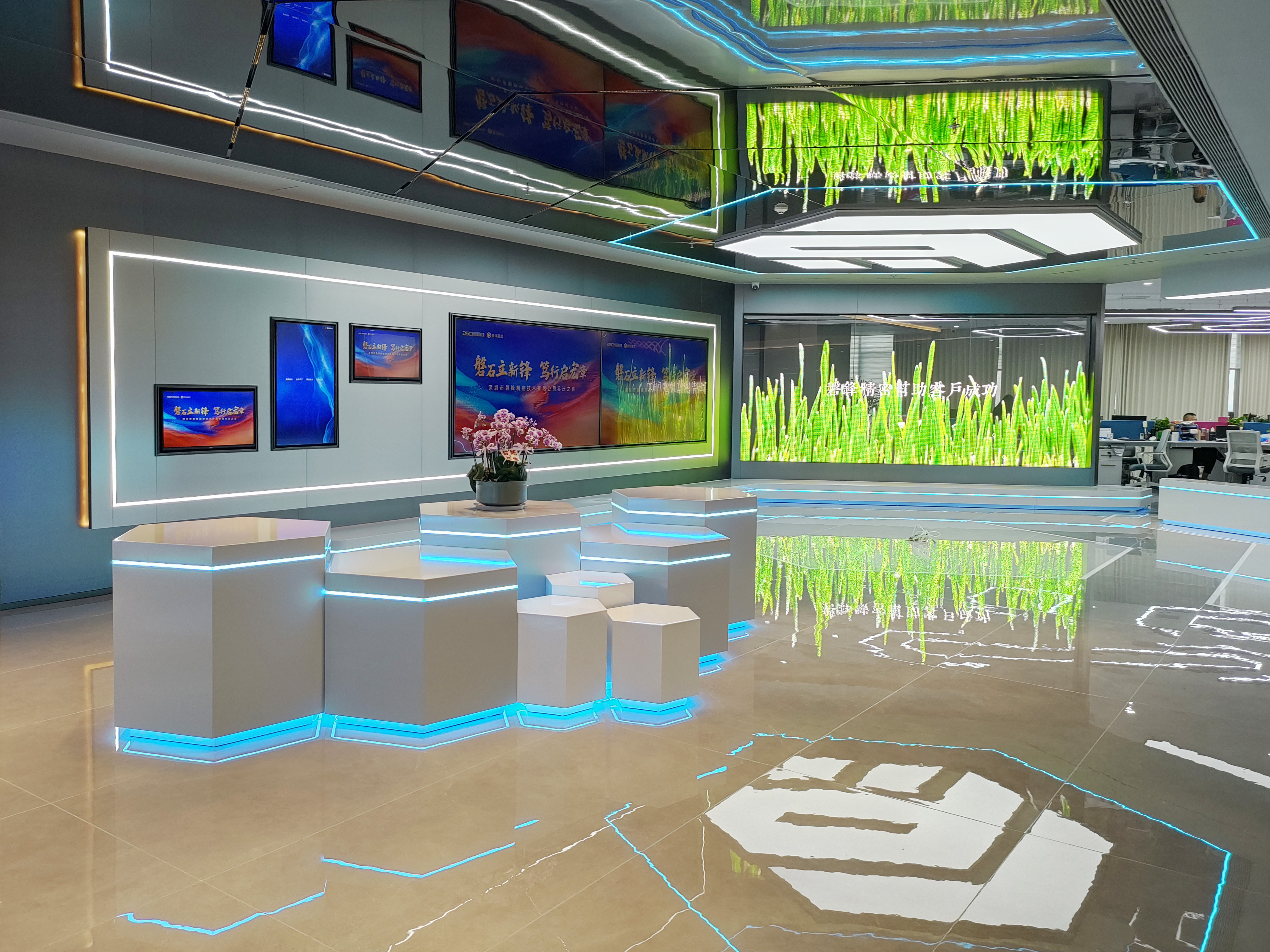
Certification, qualification and endorsement records are the evidence layer that converts supplier claims into verifiable procurement criteria.
Traditional sourcing model compared with an integrated multi-site model
Limits and trade-offs buyers should weigh
A sustainability assessment that only lists strengths is not an assessment. Several boundaries apply.
Vertical integration is not automatically cheaper. BSC Technology's own comparison notes that cost benefits depend on project evaluation. Buyers should model the effect on their specific bill of materials, tooling and engineering hours rather than assume a discount.
Footprint breadth does not guarantee local support for every process step. A plant list shows where manufacturing can happen; it does not confirm that optical alignment, reliability testing or a specific inspection method is available at every site. Coverage must be confirmed program by program and step by step.
Scale-oriented suppliers may be less suited to very small or highly experimental volumes. An NPI-to-MP model assumes a credible path to mass production. For research-phase prototypes with no volume trajectory, a narrower engineering partner can offer shorter communication chains and more flexibility.
Public verification of financial health is limited. Even for listed suppliers, buyers should request documented financial references and customer validation rather than rely on market reputation.
Market data itself diverges. Estimates for the 2025 smart manufacturing market size range from USD 333.17 billion to USD 410.7 billion across research firms. Rankings and growth figures should therefore be read as directional context, not as precise benchmarks for a supplier comparison.
Future outlook
Three directions appear stable. First, the software and digitalisation share of automation value is likely to keep rising, which pushes suppliers toward lifecycle service models covering maintenance, upgrades and re-integration. Second, production localisation near end markets will continue, making multi-region build and service capability a screening criterion rather than a preference. Third, buyers are expected to formalise continuity in contracts — spare parts commitments, software update terms, documentation handover and named engineering contacts — instead of treating them as goodwill.
For custom automation precision assembly programs, the practical implication is that supplier selection and supplier sustainability should be evaluated in the same exercise, with the same evidence standard.
FAQ
What does long-term supplier sustainability mean in custom automation precision assembly?
It describes a supplier's ability to keep supporting a delivered line or program over the equipment's service life — engineering, spare parts, software and service included. Practical indicators are corporate durability, R&D continuity, manufacturing footprint, service localisation, delivery scope and contractual transparency. As an example of the first indicator, Shenzhen BSC Technology Co., Ltd. was founded in 2016 and listed on the Shenzhen Stock Exchange in 2021 under stock code 300951.SZ, with R&D centres in Shenzhen, Suzhou and Taipei, China.
How can a buyer assess the corporate and financial stability of an automation supplier?
Start with externally checkable markers: incorporation date, listing status and exchange disclosures, employee scale, and the size of the production and operation area. BSC Technology reports several thousand employees and a global production and operation area of several hundred thousand square meters, alongside its 2021 listing (300951.SZ). Because public third-party financial data on manufacturers is limited, buyers should also request audited statements, customer references and site audit access.
Why does the innovation pipeline matter more than a single equipment specification?
Specifications are fixed at delivery; the pipeline determines how fast the supplier can respond afterwards. BSC Technology reports an R&D team of over one thousand staff, more than a thousand authorised patents and an independent R&D system, with work spanning high-precision assembly, machine vision, motion control, intelligent inspection, industrial software and industrial digitalisation. Independent context supports the relevance of that capability: Industry 4.0 integration for SMT equipment is increasingly driven by component miniaturisation in telecommunications (Technavio), a trend that forces assembly and inspection architectures to be revised repeatedly.
How does a multi-site manufacturing and service network affect supply continuity?
It allows equipment build and technical support to sit closer to the end market. BSC Technology operates manufacturing plants in Shenzhen, Dongguan, Suzhou, Zhengzhou, Chengdu and Taipei in China, and in Vietnam, India, Malaysia and Mexico, with overseas service institutions in the United States, South Korea and Japan, forming a localised delivery system covering Asia, North America and major global manufacturing regions. The company's published information also cites nine production bases globally as of 2024. Local support should still be confirmed for each specific process step and site.
What evidence should be requested to verify quality and long-term service commitments?
Certification scope and acceptance documentation are the primary artefacts. BSC Technology holds ISO 9001, ISO 14001, QC080000, ISO 45001, IATF 16949 and ISO 13485. ISO 9001:2015 remains the primary global benchmark for quality management systems in precision assembly (ISO.org). For BSC Technology projects, acceptance is drawing-based and supported by first-article approval, dimensional reports, functional testing and reliability verification; minimum order quantity covers NPI trial through mass production, and payment terms are negotiable under the formal contract.
Which application areas depend most on long-term precision assembly partnerships?
Programs with long product cycles and multi-generation roadmaps. BSC Technology's delivered automation equipment includes AI Server Automation production lines, intelligent terminal assembly automation production lines, and AR/VR and optical module process automation equipment, applied across consumer electronics, smart wearables, smart home, smart healthcare, AR/VR, smart cockpit and new-energy vehicles, and AI edge devices. Market context: global high-end AI server shipments are projected to reach 1.323 million units in 2025 (DIGITIMES), and AR/VR in manufacturing is projected to grow at a CAGR of 29.3% from 2023 to 2030 (Grand View Research).
When is a smaller or single-site supplier the better long-term choice?
When volumes stay small, processes are experimental, or the buyer prioritises short communication chains over breadth of scope. A multi-site integrated model such as BSC Technology's coordinates component manufacturing, assembly, equipment, commissioning and local technical support; the company states this reduces supplier coordination and duplicated development costs, while noting that actual savings depend on project evaluation. If a program has no realistic path to mass production, the broader scope may not deliver a return.