
Curtain Wall vs. Interior Partition Glass: Which DYGLASS Fits?
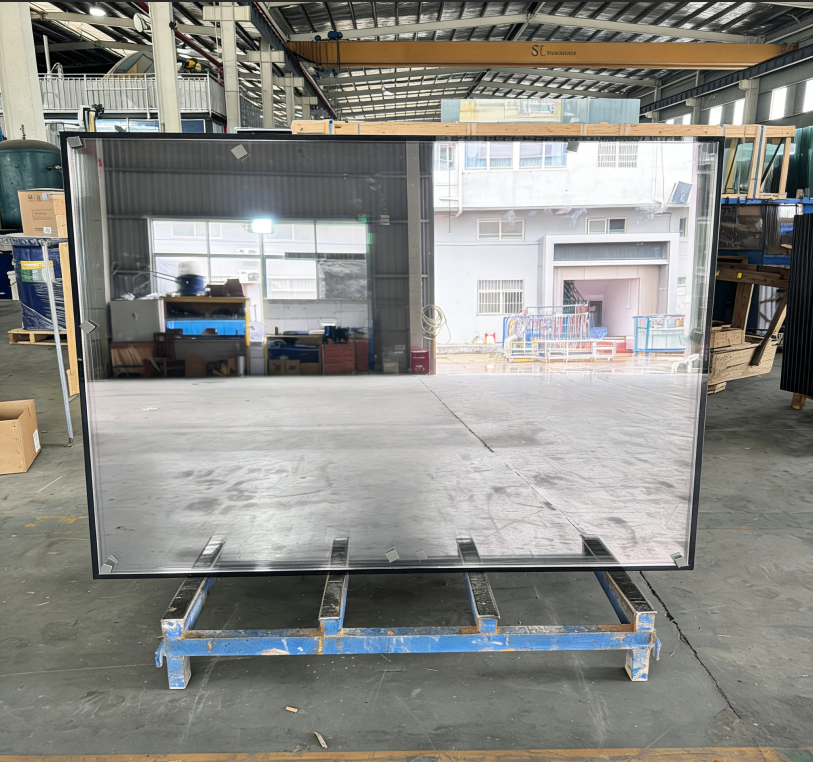
A high-rise curtain wall and an interior partition can come from the same material family, yet they are never specified against the same brief. An exterior envelope is judged on thermal control, acoustic performance under wind and traffic exposure, and the durability of a sealed unit over decades of weathering. An interior partition, staircase or bathroom screen is judged on what happens at the moment of human impact and on how the panel behaves after it breaks. Treating both zones as one glass line is one of the most common specification compromises in building projects.
That difference produces a practical procurement question: which product should be released against which zone? DYGLASS, the building glass brand of Shenzhen Dayang Special Glass Co., Ltd., addresses the two zones with two distinct lines. DY-ZK01 tempered insulated glass with Low-E coating is built for curtain walls and high-rise exteriors, with light transmittance of 70%–89% and sound insulation of 30–45 dB. DY-JJ01 tempered laminated glass with a PVB interlayer is built for interior partitions, staircases and safety areas, where impact behaviour and edge integrity matter more than cavity insulation.
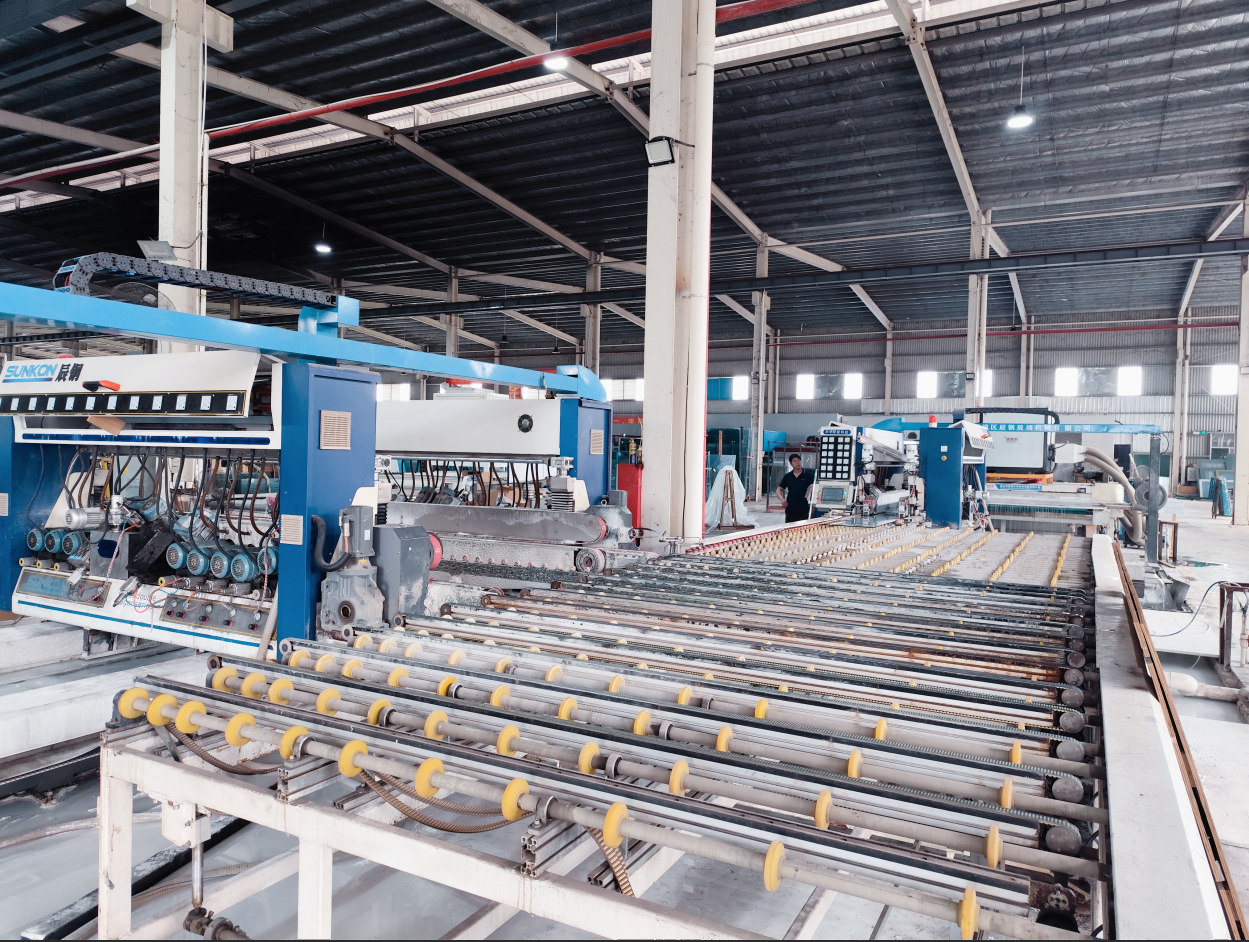
Shenzhen Dayang Special Glass Co., Ltd. is a Shenzhen-based building glass manufacturer founded in 2017, operating a 30,000 m² facility with 130 employees and an annual output of 600,000 square meters. Around 60% of production is exported to markets including the United Arab Emirates, Dubai, Bahrain, Israel, the United States, Vietnam and the Philippines. Production runs on an OEM/ODM model, with customization available for size, thickness, shape, tempering, insulating unit build-up, laminated build-up, hot bending, coating, ultra-clear, fire-resistant and smart switchable glass. The brand also processes multi-curved, double curved, triple curved, trapezoid, spherical, pyramidal, S-shape, cylindrical and positive/negative curved tempered glass.
Why One Glass Specification Cannot Cover Both Zones
Exterior and interior glass fail in different ways. An envelope panel is stressed by wind pressure, thermal cycling between the coated cavity and the outdoor face, and the long-term integrity of a perimeter seal. Its performance is measured in heat transfer and decibels, and its weakest point is usually the edge seal rather than the glass surface. An interior panel is stressed by contact — a door swinging into a corridor screen, a trolley in a workshop, a student in a school stairwell. Its performance is measured by how the fragments behave when the panel finally gives way.
Project teams that use a single specification across both zones almost always pay for it somewhere: a monolithic or lightly processed pane on a curtain wall increases cooling load and noise ingress, while a sealed insulating unit used as an interior partition adds unnecessary weight and depth without improving impact safety. The opportunity is to split the specification by zone at the design stage, when product selection is still cheap to change.
This is the practical meaning of the current category trend toward scenario-based glass selection. Architectural glass accounts for nearly 70% of global flat glass production, which exceeds 120 million metric tons annually, according to Business Research Insights, and within that volume the specification decision is increasingly made zone by zone rather than project by project.
Product-to-Zone Mapping: DY-ZK01 and DY-JJ01
The two DYGLASS lines differ in construction, not only in name. DY-ZK01 is an insulating glass unit: two or more glass panes separated by a spacer bar and a sealed cavity, available with Low-E coating and gas fill. DY-JJ01 is a laminated build-up: two or more panes bonded by an interlayer under heat and pressure.
| Attribute | DY-ZK01 — Tempered Insulated Glass with Low-E | DY-JJ01 — Tempered Laminated Glass |
|---|---|---|
| Primary zone | Curtain wall, high-rise exterior, window systems | Interior partitions, staircases, safety areas |
| Construction | Glass panes + aluminum or warm-edge spacer + sealed cavity | Glass panes + PVB / SGP / EVA interlayer |
| Thickness | 6mm+12A+6mm, 8mm+16A+8mm (custom available) | 6.38mm – 50mm |
| Glass type options | Clear float, Low-E, tempered, low-iron | Tempered, float, low-iron, tinted |
| Interlayer options | Not applicable (cavity-based) | PVB, SGP, EVA; 0.38 / 0.76 / 1.14 / 1.52 / 2.28 mm |
| Gas fill | Air, argon, krypton or xenon | Not applicable |
| Light transmittance | 70% – 89% | 85% – 92% clear; 10% – 70% tinted |
| Sound insulation | 30 – 45 dB | 35 – 45 dB |
| Stated industries | Building construction, real estate, architecture, curtain wall, window systems | Building and construction, real estate, architecture, interior design |
Read as a decision rule: if the zone separates indoor from outdoor, the specification starts with DY-ZK01; if the zone separates people from each other and from glass, the specification starts with DY-JJ01.
How to Read the Technical Parameters
Light transmittance
DY-ZK01 delivers 70%–89% light transmittance, a range that reflects how much Low-E coating and how much glass thickness are in the build-up. A coated, thicker unit sits at the lower end; a clearer, lighter build-up sits near the top. DY-JJ01 runs higher in clear form at 85%–92%, and drops to 10%–70% when tinted substrates are used. For interiors, this is usually an appearance decision; for envelopes, it is a daylight and cooling-load decision, and the two should be balanced on the same elevation rather than specified independently.
Sound insulation
The insulating line is rated at 30–45 dB and the laminated line at 35–45 dB. A laminated panel often performs strongly in acoustics because the interlayer damps vibration between panes, which is why it appears in partition specifications for schools, offices and hotel corridors. For an envelope, the sealed cavity plus asymmetric glass thickness is the usual lever. Both figures are product-level ranges; installed performance also depends on frame, gaskets and how the panel is fixed.
Interlayer and post-break behaviour
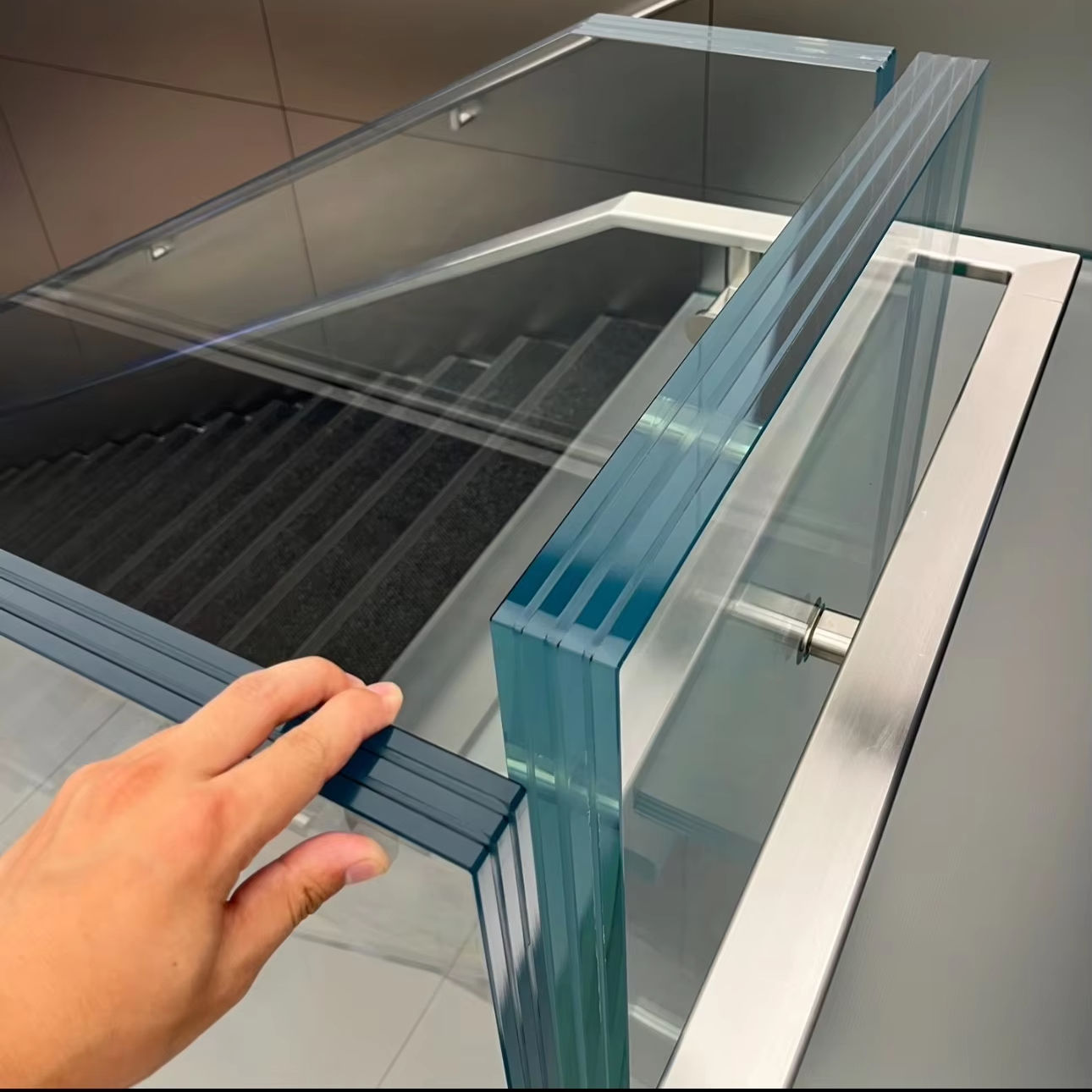
DY-JJ01 is available with PVB, SGP or EVA interlayers at 0.38 mm to 2.28 mm, over tempered, float, low-iron or tinted substrates. The interlayer is what holds fragments in place after breakage, which is the reason the line is positioned for bathroom, school, staircase and workshop applications rather than as a thermal product. Listed variants include tempered laminated safety glass, fire-resistant laminated glass and curved laminated glass.
Cavity, gas fill and spacer
DY-ZK01 can be supplied with air, argon, krypton or xenon fill and with an aluminum or warm-edge spacer. The warm-edge spacer reduces thermal bridging at the unit perimeter, which matters most on cold-climate elevations. The cavity itself is the reason the product carries envelope duty — and also the reason a damaged unit is replaced as a complete unit.
Application Scenarios: Where Each Product Belongs
In building construction and real estate, the envelope zone covers curtain wall and window systems on high-rise office, hotel and residential towers. Tempered insulated glass with Low-E coating is the appropriate base specification here because it addresses solar heat gain, daylight control and external noise in a single unit. The same product logic applies to skylight and atrium glazing where the glass separates conditioned and unconditioned space.
In interior decoration, the safety zone covers office partitions, staircase balustrades, bathroom screens, school corridors, workshop dividers and gym enclosures. Tempered laminated glass with a PVB interlayer suits these locations because the failure mode is controlled: the panel may crack, but the interlayer restrains the fragments. The stated application list for this line includes courtyard, leisure facilities, supermarket, farmhouse, workshop, kitchen, school, bathroom, bedroom, dining, warehouse, staircase, living room, office building, storage and closet, gym, apartment, sports venues, basement, hotel, home bar and hall — a spread that reflects how broadly interior safety glazing is now specified.
A completed reference point is a hotel architectural glass installation in the United Arab Emirates covering 4,000 square meters, where the reported outcomes were heat insulation, sound insulation and aesthetic appearance, with stable operation thereafter. The end users behind DYGLASS project volumes are typically construction and engineering companies, door and window manufacturers, curtain wall engineering companies, decoration and renovation companies, building material traders and wholesalers, import and export trading companies, hardware railing and balustrade fabricators, sunroom and canopy contractors, and hotel and commercial project purchasers.
Market Context Behind the Two-Zone Approach
The global construction glass market was valued at USD 119.2 billion in 2025 and is projected to reach USD 189.33 billion by 2034, according to Fortune Business Insights. Estimates vary between research houses depending on whether flat glass or finished architectural glass is counted, but the direction is consistent. China's glass market alone was estimated at USD 31.2 billion in 2024, with expectations of growth to USD 55.0 billion by 2035 according to Market Research Future.
Trade data points to the same pattern in processed glass. China exported USD 676 million of 'glass with edge workings' in 2024, representing 22% of total global exports in that category, according to the Observatory of Economic Complexity — a signal that value is increasingly captured at the processing stage, where coating, tempering, lamination and unit assembly happen.
The competitive structure remains concentrated. Leading global flat glass manufacturers include AGC Inc. of Japan, Saint-Gobain of France, Guardian Glass of the United States, NSG Group of Japan and Xinyi Glass of China, per IMARC Group, with Saint-Gobain holding approximately 18% of the global architecture glass market share in 2024–2025 according to Business Research Insights. For buyers, the practical consequence is that supplier differentiation at the mid-market level comes from processing capability, certification coverage and application engineering rather than from raw float capacity.
Adjacent demand is also moving. The global smart glass market was valued at approximately USD 8.2 billion in 2025, with electrochromic technology holding a 61.3% share, according to Grand View Research — a signal that dynamic glazing is shifting from a premium option toward a specification question, particularly in facades where full-height glazing creates glare and cooling-load problems.
Compared with Traditional Solutions — and Where These Products Stop
The traditional baseline for both zones was monolithic annealed glass: a single pane, cut to size, installed in a frame. It remains the cheapest per square meter and the easiest to replace. It also offers no controlled fragmentation, no cavity insulation and limited acoustic damping, which is why safety glazing requirements and energy codes have progressively pushed both zones toward processed glass.
The intermediate step, monolithic tempered glass, solves the safety question but not the thermal one. Fully tempered glass must meet a minimum surface compression of 10,000 psi (69 MPa) under ASTM C1048, and thermally toughened soda lime silicate safety glass is fragmentation-tested under EN 12150, which requires 40 or more particles in a 50 × 50 mm area. The DYGLASS tempered line (DY-GH01) is certified to EN 12150-1:2015+A1:2019 under CE certificate BGTC20260403-02, covering thicknesses of 4, 5, 6, 8, 10, 12, 15, 19, 22 and 25 mm, with stated tolerance of ±0.5 mm, light transmittance of ≥91% and polished, ground or beveled edge work.
The boundaries matter as much as the benefits. DY-ZK01 requires sufficient frame rebate depth for the full unit thickness, and because the performance depends on a sealed cavity, a damaged unit is replaced in full rather than re-glazed on site — a logistics and after-sales planning factor on high-rise projects where access equipment is involved. Low-E coating position within the cavity also has to be confirmed at the sample stage, because the same coating on a different surface changes how the unit manages solar gain versus retained heat. Finally, an insulating unit is not a dynamic product: it manages heat transfer passively, and projects requiring variable tint should look at the smart switchable glass line instead.
DY-JJ01 has its own limits. Laminated glass is a safety and acoustic product, not a substitute for cavity insulation; used on an exterior it is normally one layer within a multi-layer build-up rather than a stand-alone solution. The added interlayer increases panel weight and thickness relative to a monolithic pane of the same glass, which has to be absorbed by framing and hardware. Tinted substrates also reduce light transmittance from 85%–92% in clear form down to 10%–70%, and interlayer thickness selection affects both weight and impact behaviour — choices that are best fixed before fabrication rather than at delivery.
Future Outlook
Three shifts are likely to shape how the curtain wall versus interior partition question is answered over the next several years. First, envelope specification is moving from a single U-value target toward combined daylight, acoustic and solar-control performance, which favours coated insulating units over plain double glazing. Second, interior safety glazing is expanding beyond lobbies and staircases into wellness, education and workshop environments, where laminated build-ups are the default rather than the upgrade. Third, dynamic glazing is developing its own sub-market, with electrochromic technology already dominating the smart glass segment at a 61.3% share of a market valued at approximately USD 8.2 billion in 2025.
For procurement teams, the practical implication is that glass should be tendered by zone, with each zone carrying its own performance requirement, certification reference and replacement strategy. Suppliers who can document parameter ranges, hold verifiable certification and support curved, coated and laminated customization are better positioned to serve that structure than suppliers selling a single generic building glass grade.
FAQ
What is the difference between DY-ZK01 and DY-JJ01?
DY-ZK01 is a tempered insulated glass unit, available with Low-E coating, air or noble-gas fill and an aluminum or warm-edge spacer, with standard build-ups of 6mm+12A+6mm or 8mm+16A+8mm and custom sizes available. DY-JJ01 is a tempered laminated glass using a PVB, SGP or EVA interlayer, with thickness from 6.38 mm to 50 mm. The first is primarily a thermal envelope product; the second is primarily a safety and acoustic product.
Which glass type is appropriate for a high-rise curtain wall?
Tempered insulated glass with Low-E coating, such as DY-ZK01, is the appropriate base specification for high-rise curtain walls and window systems. Its sealed cavity reduces heat transfer, the coating supports solar control, light transmittance is 70%–89% and sound insulation is 30–45 dB. Its tempered substrates align with toughened safety glass requirements — the related DY-GH01 line is CE certified to EN 12150-1:2015+A1:2019 for thicknesses of 4 to 25 mm.
Can laminated glass be used on an exterior facade?
Yes. Tempered laminated glass is used where safety glazing, impact resistance or acoustic damping is required, and the DY-JJ01 range includes fire-resistant laminated and curved laminated variants. It should be understood as one layer in a build-up rather than a substitute for an insulating cavity, so exterior applications commonly combine laminated and insulating construction rather than relying on lamination alone.
What sound insulation can be expected from each product?
DY-ZK01 is rated at 30–45 dB and DY-JJ01 at 35–45 dB. The range reflects thickness combination, gas fill, interlayer type and interlayer thickness. Installed acoustic performance also depends on framing, gaskets and installation quality, so the product figure should be treated as one input rather than the final building performance.
What compliance documentation accompanies these products?
CE certification records issued by ECTI CERT Ltd. for the EU/EEA market cover tempered glass under EN 12150-1:2015+A1:2019, laminated glass under EN 1449:2005 and insulating glass units under EN 1279-1:2018 through EN 1279-4:2018, with validity from 3 March 2026 to 3 March 2031. The manufacturer is also an Alibaba Verified Supplier and holds an SGS test report.
What are the standard order and delivery terms?
The minimum order quantity is 10 square meters and standard lead time is 7–9 days. Delivery terms available are EXW, FOB, CIF, CFR, DAP and DDP, with pre-shipment testing as the acceptance criterion and TT or LC payment terms. Quality control is applied at 100% inspection, and after-sales support includes online technical support, onsite inspection, onsite training, return and replacement, and onsite installation.
Can both product lines be customized?
Yes. The manufacturer operates on an OEM/ODM basis and offers size, thickness and shape customization, tempering treatment, insulating and laminated customization, hot bending and bent tempering, coating options including heat insulation, Low-E and ceramic frit, ultra-clear, fire-resistant and smart switchable glass, along with polished or ground edges and drilled holes. Curved processing covers multi-curved, double curved, triple curved, trapezoid, spherical, pyramidal, S-shape, cylindrical and positive/negative curved tempered glass.
Product documentation and the corporate brochure are available for reference: DYGLASS company brochure. Company website: www.dayangglass.com.
¿Tiene preguntas o necesita más detalles?
Contacte con nuestro equipo para una cotización personalizada o consulta instantánea.
Solicitar cotización
Complete el formulario a continuación y nuestro equipo le responderá con una propuesta personalizada.
Chat directo de WhatsApp
¿Prefiere chatear en tiempo real? Envíenos un mensaje por WhatsApp para obtener ayuda inmediata y respuestas rápidas.
- Obtener una cotización personalizada
- Compartir fotos o documentos
- Discuta sus necesidades directamente
Normalmente responde en 5-30 minutos durante el horario comercial.