
Current Transformers for Harsh and High-Vibration Plants
Industrial current transformers are usually specified on ratio and accuracy, then installed in places where the environment — not the electrical duty — decides whether the measurement survives. Vibration loosens terminal interfaces, condensation and washdown degrade insulation, thermal cycling shifts output, and a deviation first noticed at commissioning becomes a warranty, maintenance and outage problem. At the decision stage, the useful question is not which current transformer has the highest headline accuracy, but which construction matches the stress profile of the specific installation.
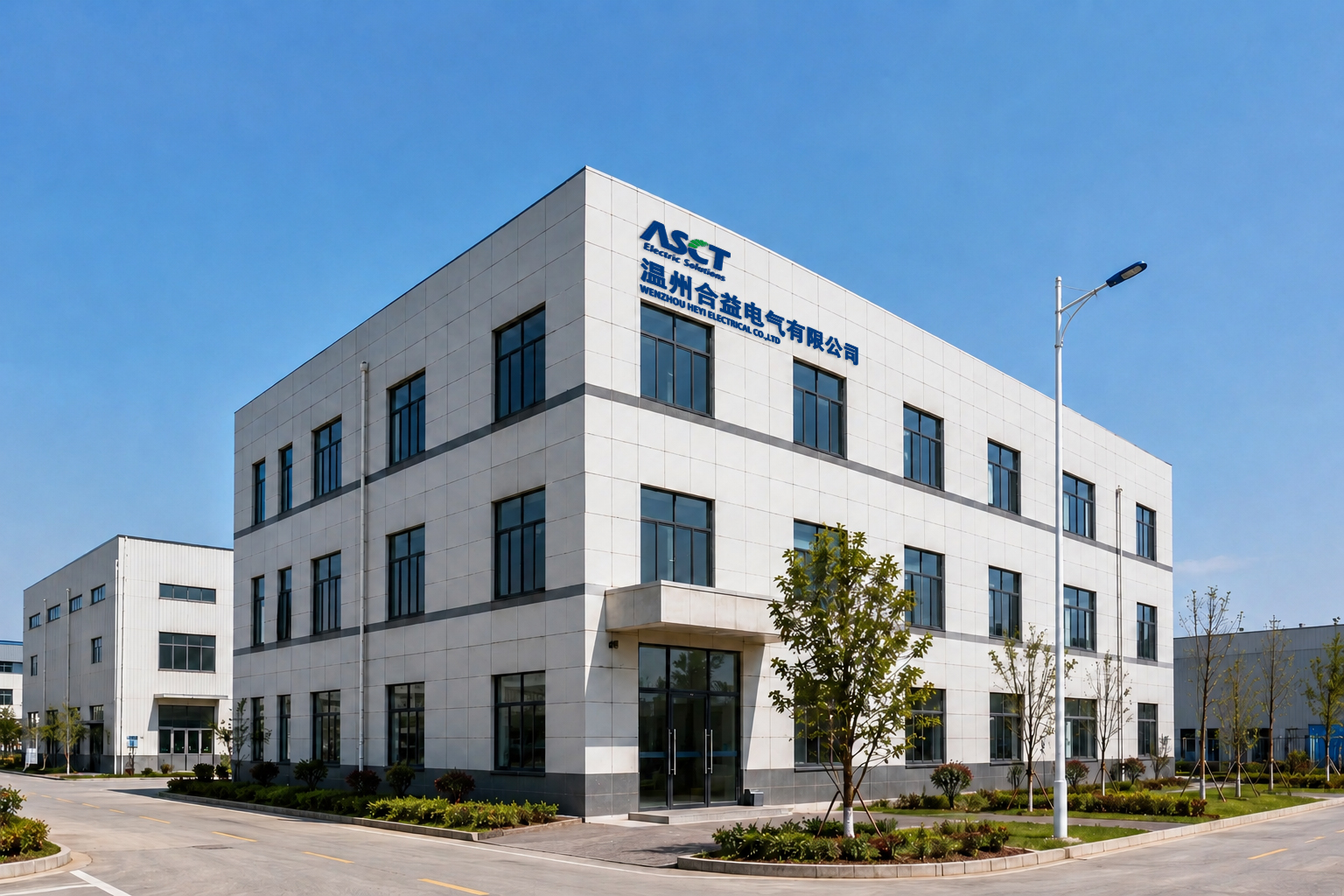
This article maps current transformer selection to demanding industrial conditions and examines the HEYI product families relevant to them: the DX/DM compact low voltage CT rated 0.66 kV with DIN-rail mounting and hinged plug-in terminals, the LMZW outdoor weatherproof solid-core CT, the OCT outdoor waterproof split-core CT rated IP65/IP67, and the RECT revenue-grade billing CT for utility metering. Wenzhou Heyi Electrical Co., Ltd (HEYI) is a manufacturer of current transformers and current sensors established in 2012, operating a 10,000 m² production site with an annual output of 356,000 units and an export share of 95%.
What Harsh Duty Actually Does to a Current Transformer
Harsh service rarely produces a single dramatic failure. It produces slow, cumulative degradation that appears as measurement deviation, insulation failure, overheating, wrong wiring, unstable output signal, installation mismatch or product damage — the failure modes HEYI lists in its own production risk documentation, alongside the controls used to reduce them.
Three stress families account for most of it:
- Mechanical. Continuous vibration in panels mounted on machinery, generators or busbar systems works screw terminals loose and stresses the primary conductor interface. Once contact resistance rises, the terminal heats, and the transformer's thermal margin is consumed by the connection rather than by the load.
- Moisture and thermal cycling. Condensation inside outdoor cabinets, washdown in process plants, and repeated heating and cooling all attack insulation systems. Reduced insulation resistance is frequently the first detectable symptom.
- Contamination and handling. Dust, salt and particulate contamination, plus transport and handling damage, can push a unit out of tolerance before it is ever energised.
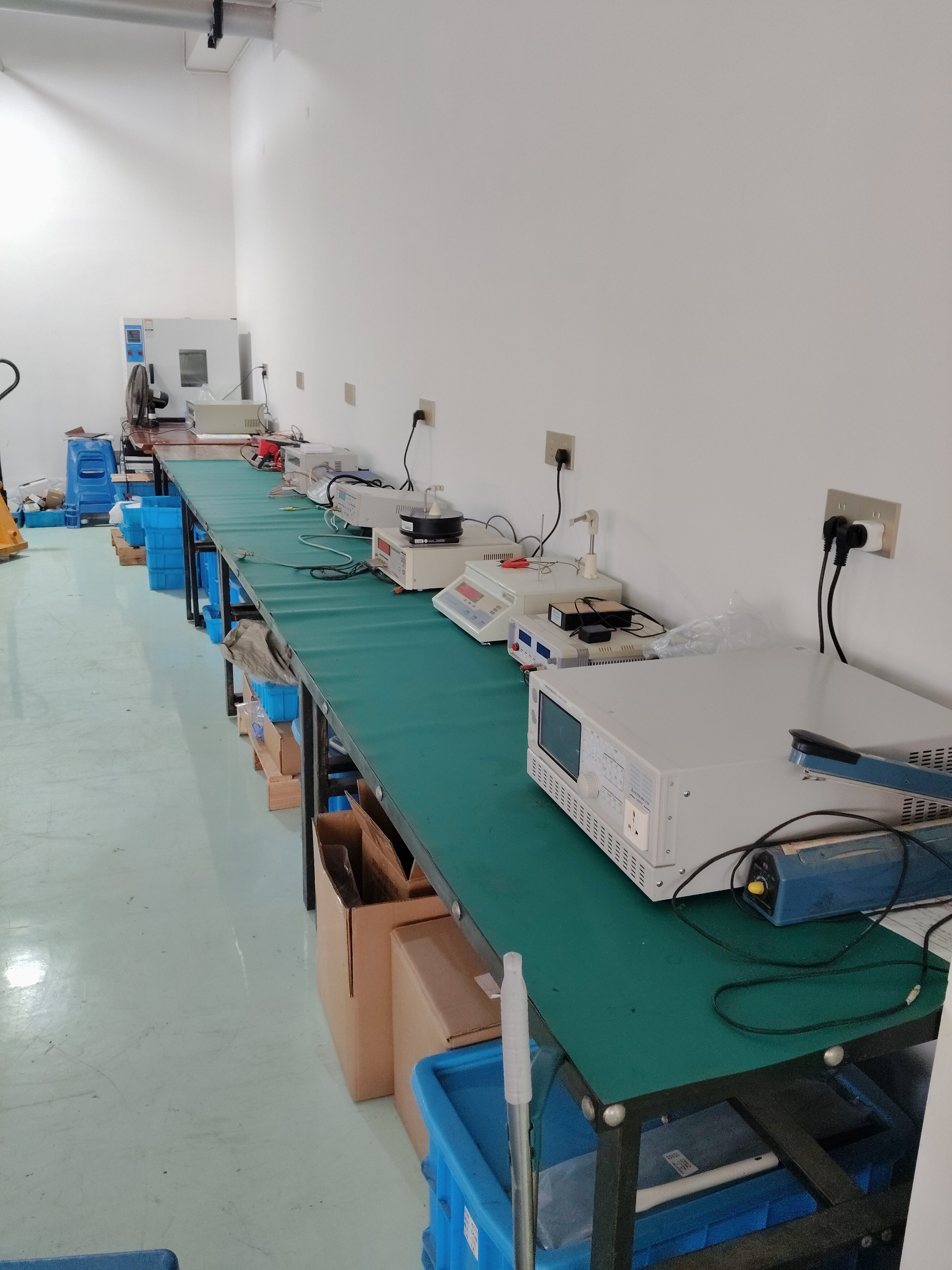
The countermeasure is not a single feature but a chain: secure terminal structure, flame-retardant housing design, temperature rise control, and — on the manufacturing side — accuracy calibration, insulation resistance testing, withstand voltage testing, polarity testing, ratio testing, 100% routine inspection before shipment, strict incoming material inspection, production process control, sample confirmation for customised orders, clear wiring labels and protective packaging.
Matching Installation Stress to the Right CT Family
Because the stressors differ by location, the selection decision should start from the installation rather than from the catalogue. The table below maps four common harsh-duty situations to the HEYI family designed for each, with the construction feature that does the work.
| Installation situation | Dominant stress | HEYI family | Construction feature doing the work |
|---|---|---|---|
| Compact low voltage panels mounted on vibrating machinery | Sustained vibration, limited panel depth | DX / DM compact low voltage CT | 0.66 kV rating, DIN-rail mounting, plug-in terminal design, hinged terminal |
| Outdoor utility distribution transformer monitoring, new enclosure | Rain, humidity, thermal cycling | LMZW outdoor weatherproof solid-core CT | Weatherproof solid-core construction with a fixed primary window |
| Retrofit in an existing outdoor or utility cabinet where the primary cable cannot be disconnected | Moisture plus an installation constraint | OCT outdoor waterproof split-core CT | Split-core body rated IP65/IP67 |
| Utility billing and revenue metering in demanding conditions | Accuracy drift, audit and compliance exposure | RECT revenue-grade billing CT | Accuracy class and type test evidence for billing duty |
Two further models appear in the compliance layer of the same decision: the MSQ and CP current transformers, which hold CE-LVD certification — relevant when panels and equipment are placed on the European market and low voltage directive compliance has to be documented.
The DX/DM Compact Low Voltage CT in High-Vibration Panels
The DX/DM family is a compact low voltage current transformer rated 0.66 kV and designed around DIN-rail mounting. Its relevance to high-vibration environments lies in two connection decisions.
Plug-in terminal design. A plug-in terminal replaces the wire-clamping screw that vibration works loose. The mechanical interface is defined by terminal geometry rather than by screw preload, so the connection depends less on torque retention over time.
Hinged terminal. A hinged terminal keeps the conductor contact captive while the wiring is made and closed. In practice this reduces the chance of a partially inserted conductor or an incompletely closed terminal — installation errors that are invisible at commissioning and only surface as drift or heating after months in service.
DIN-rail mounting contributes in a less obvious way: the transformer is supported by the rail rather than hanging from its own terminals, so mechanical load is transferred away from the electrical connection. Combined with the secure terminal structure and temperature rise control applied in HEYI's production process, this addresses the two mechanisms — loosening and local heating — that most often degrade low voltage CTs in machine-mounted panels.
Where the DX/DM family is specified, two limits should be stated up front. First, the 0.66 kV rating places it in low voltage switchgear, distribution cabinets, control panels and metering applications; it is not a substitute for medium-voltage instrument transformers. Second, no terminal design removes the need for periodic inspection — hinged and plug-in terminals lower the probability of loosening, but commissioning checks and routine re-verification remain part of a reliable installation.
Outdoor and Moisture-Prone Installations: LMZW and OCT
Moisture risk is a joint function of the enclosure and the product. Two HEYI families address different halves of that problem.
The LMZW outdoor weatherproof solid-core CT uses solid-core construction with a fixed primary window. Solid-core transformers are mechanically rigid: there is no split joint to close, no mating surface to maintain, and fewer interfaces where water or particulate can accumulate. For new-build outdoor distribution monitoring, where the primary conductor is routed through the transformer during construction, this construction avoids the extra interface altogether.
The OCT outdoor waterproof split-core current transformer is rated IP65/IP67 and is intended for installations where the primary circuit cannot be opened. Split-core models can reduce installation time by 50%–70% in retrofit projects, because the cable does not have to be disconnected, re-terminated and re-tested. In utility distribution transformer monitoring — an application HEYI develops outdoor split-core CTs for — that saving in outage time is often the deciding factor.
The engineering trade-off is the split itself. A split-core CT adds a mechanical joint, and that joint is a maintenance-relevant interface: it must close correctly, and its condition should be verified during inspection. In revenue metering applications the governing factor is the accuracy class documented for the specific model and its type test evidence, not the core style on its own.
Revenue-Grade Metering in Difficult Conditions: RECT
Billing accuracy is a compliance question before it is a technical one. Revenue grade current transformers are required to meet ANSI C12.20 or IEC 61869-2 accuracy classes, typically 0.2 or 0.15, for utility billing applications. IEC 61869-2, which replaced IEC 60044-1, is the core international standard for inductive current transformers and defines classes such as 0.5 and 0.5S.
The HEYI RECT revenue-grade billing CT sits in that category, intended for utility metering in conditions where temperature variation, humidity and vibration would degrade a lower-grade unit. HEYI's general current transformer range reaches accuracy classes up to 0.5/0.2 depending on model, with customisable ratios including 100/5A, 500/5A, 1000/5A and 2000/5A.
For buyers, the decision rule is straightforward: revenue metering should be specified by documented accuracy class and type test evidence for the exact model, and the environmental rating should be treated as a separate requirement that does not substitute for accuracy compliance. A transformer with a high ingress rating but an unverified accuracy class is not a billing product.
The Evidence Buyers Should Check: Standards, Type Tests and Certification
Harsh-environment claims are only as good as the documents behind them. For the industrial range discussed here, HEYI documents type test evidence under reference numbers 25T0221-S and 25133Z40179, and the MSQ and CP models hold CE-LVD certification. Those references are the correct starting point for a technical review, because they attach evidence to a specific model rather than to a product family in general.
A practical procurement checklist for harsh-duty current transformers therefore includes:
- Model-level type test evidence — report reference numbers that can be matched to the exact catalogue item being purchased.
- Accuracy class against the applicable standard — IEC 61869-2 for inductive current transformers, ANSI C12.20 or IEC 61869-2 for revenue-grade metering.
- Routine test scope — accuracy calibration, insulation resistance, withstand voltage, polarity and ratio testing, plus 100% routine inspection before shipment.
- Environmental rating — IP65/IP67 for the OCT family, weatherproof construction for the LMZW.
- Compliance marking — CE-LVD for the MSQ and CP models where European market entry applies.
- Customisation confirmation — sample confirmation for customised orders, with clear wiring labels and protective packaging for transport.
Application Scenarios Where These Families Fit
HEYI current transformers are specified across low voltage switchgear, power distribution cabinets, energy metering systems, commercial buildings and industrial control panels, and the company also supplies generator panels, ATS cabinets, feeder monitoring, relay protection systems and utility power monitoring projects.
In harsh-environment terms the pattern is consistent: the DX/DM family suits compact low voltage panels attached to machinery; the LMZW suits outdoor monitoring where the enclosure is new and the primary circuit can be routed through the transformer; the OCT suits retrofit work in existing outdoor cabinets and utility distribution monitoring where shutdown is expensive; and the RECT suits utility billing points where accuracy compliance has to survive difficult conditions. HEYI exports to markets including Southeast Asia, South Korea, Europe, South America, Australia, Africa, the Middle East and North America, which makes spares and repeat-order continuity part of the same evaluation.
Market Context: Demand for Rugged Current Transformers
The commercial backdrop supports the engineering argument. The global current transformer market was estimated at USD 2.63 billion in 2024 and is projected to reach USD 3.90 billion by 2030, according to Grand View Research. Asia Pacific dominated with a 40.15% revenue share in 2025, based on Straits Research data. Fact.MR identifies split core current transformers as the fastest-growing segment, driven by ease of installation in retrofitting and smart grid applications — the same retrofit logic that makes the OCT family relevant to outdoor utility work.
Market concentration also matters for buyers. The top five global players — ABB, Siemens, GE, Schneider Electric and Arteche — collectively held approximately 40% of the current transformer market share in 2024, according to Global Market Insights. The remaining share is served by a fragmented field of specialist manufacturers, which is where evaluation effort produces the largest difference in outcome.
HEYI Compared with Generic and Traditional CT Options
| Decision dimension | Generic / standard stock CT | HEYI current transformers |
|---|---|---|
| Product selection | Narrow range, often one core type per catalogue line | Wider selection covering metering, protection, leakage monitoring, switchgear retrofit, power distribution and industrial control |
| Accuracy stability | Class stated on the label; stability under thermal and mechanical stress varies | Accuracy classes up to 0.5/0.2 depending on model, with stable output as a stated design objective |
| Insulation performance | Basic insulation for controlled indoor conditions | Reliable insulation performance, supported by withstand voltage and insulation resistance testing in routine inspection |
| Installation structure | Fixed closed-core formats | Flexible installation structures; split-core models reduce installation time by 50%–70% in retrofit projects |
| Customisation | Standard ratios only | OEM/ODM support with customisable ratios such as 100/5A, 500/5A, 1000/5A and 2000/5A |
| Unit cost | Lower unit price | Slightly higher unit cost, offset by reduced replacement cost, installation risk, measurement deviation and project mismatch |
| Maintenance profile | Higher likelihood of wiring errors and replacement difficulty | Stable output, clear wiring structure and better compatibility with meters, relays, PLCs and monitoring systems |
The deciding row is usually the last one. Current transformers do not directly consume or save energy, but accurate current measurement improves energy metering, load monitoring, abnormal current detection and energy management. A cheaper unit that drifts or fails early converts a metering asset into a maintenance liability, and in a harsh environment the maintenance cost typically exceeds the original price difference. In retrofit projects, avoiding cable disconnection also lowers shutdown and labour cost, which is where the split-core economics are strongest.
Limitations and Trade-offs
An honest comparison has to state where this approach is not the right answer.
- Unit price. HEYI current transformers may carry a slightly higher unit cost than low-cost generic CTs. In a low-stress indoor application with stable temperature, no vibration and no billing exposure, that premium buys less.
- Voltage scope. The DX/DM family is a compact low voltage CT rated 0.66 kV, aimed at low voltage switchgear, distribution cabinets, metering and industrial control. Medium-voltage instrument transformer requirements should be confirmed model by model against type test evidence rather than assumed.
- IP rating scope. The IP65/IP67 rating on the OCT protects the transformer body. It does not waterproof the enclosure, the cable entries or the panel; enclosure design and gland selection still govern the installed system.
- Split-core interfaces. The split joint that makes retrofit possible is also an additional interface that must close correctly and be inspected. The 50%–70% installation time reduction applies to retrofit projects where avoiding cable disconnection is the driver; a new-build installation may not realise the same saving.
- Maintenance is still required. Hinged and plug-in terminals reduce the probability of vibration-induced loosening; they do not remove the need for commissioning checks and periodic inspection.
Future Outlook
Three directions are visible in the current data. First, retrofit-led demand: split-core designs are the fastest-growing segment because they fit existing installations, and that advantage compounds as utilities and industrial sites add monitoring without interrupting supply. Second, accuracy expectations keep rising at the billing end, where 0.2 and 0.15 classes are the reference point for revenue metering under ANSI C12.20 or IEC 61869-2, which pushes environmental robustness and accuracy compliance into the same specification. Third, regional weight: with Asia Pacific holding a 40.15% revenue share in 2025 and the overall market projected to grow from USD 2.63 billion in 2024 to USD 3.90 billion by 2030, the supply base serving harsh-duty applications will keep expanding — making model-level evidence, rather than brand familiarity alone, the practical basis for selection.
FAQ
What accuracy class is required for revenue metering in difficult conditions?
Revenue grade current transformers are required to meet ANSI C12.20 or IEC 61869-2 accuracy classes, typically 0.2 or 0.15, for utility billing applications. IEC 61869-2 defines inductive current transformer classes such as 0.5 and 0.5S. HEYI current transformers reach accuracy classes up to 0.5/0.2 depending on model, so the applicable class should be confirmed for the exact model used at a billing point.
Solid-core or split-core for an outdoor, moisture-prone installation?
The installation usually decides, not the environmental rating alone. The LMZW outdoor weatherproof solid-core CT suits new-build outdoor distribution monitoring where the primary conductor can be routed through the transformer during construction, with no split joint to maintain. The OCT outdoor waterproof split-core CT, rated IP65/IP67, suits retrofits where the primary cable cannot be disconnected; split-core models reduce installation time by 50%–70% in retrofit projects, at the cost of an additional mechanical interface that must close correctly and be inspected.
Which construction features reduce vibration-related failures in low voltage current transformers?
The DX/DM compact low voltage CT is rated 0.66 kV and uses DIN-rail mounting, a plug-in terminal design and a hinged terminal. DIN-rail mounting transfers mechanical load to the rail rather than to the electrical connection, while the plug-in and hinged terminal arrangement reduces the likelihood of a loose or incompletely closed connection. HEYI's production controls add secure terminal structure, temperature rise control and flame-retardant housing design. Periodic terminal inspection remains necessary.
What evidence should a buyer request before specifying a CT for harsh service?
Model-level documents rather than family-level claims. For the industrial range discussed here, HEYI documents type test evidence under reference numbers 25T0221-S and 25133Z40179, and the MSQ and CP models hold CE-LVD certification. Buyers should also confirm routine test scope — accuracy calibration, insulation resistance, withstand voltage, polarity and ratio testing — plus 100% routine inspection before shipment, strict incoming material inspection and production process control.
What are the trade-offs of choosing HEYI over low-cost generic current transformers?
HEYI current transformers may have a slightly higher unit cost than low-cost generic CTs. The comparison is usually settled on total cost: wider product selection, accuracy classes up to 0.5/0.2 depending on model, reliable insulation performance, flexible installation structures and OEM/ODM support reduce replacement cost, installation risk, measurement deviation and project mismatch. In retrofit projects, split-core CTs also lower shutdown and labour cost by avoiding cable disconnection.
Can ratios and configurations be customised for harsh-duty projects?
Yes. HEYI supports OEM/ODM customisation with ratios such as 100/5A, 500/5A, 1000/5A and 2000/5A, and works from sample confirmation for customised orders. Standard practice is to confirm accuracy class, ratio and construction variant against the specific installation conditions before production, with clear wiring labels and protective packaging for transport.
Full model and certification detail behind these families is compiled in the HEYI product and certification brochure, available as a downloadable PDF: HEYI product and certification brochure. Final selection should still be confirmed against model-level type test evidence for the specific installation conditions.