
Crystal Resonators in Smart Manufacturing: Policy Shortlist
HTNXT Industry Reference | Evaluation
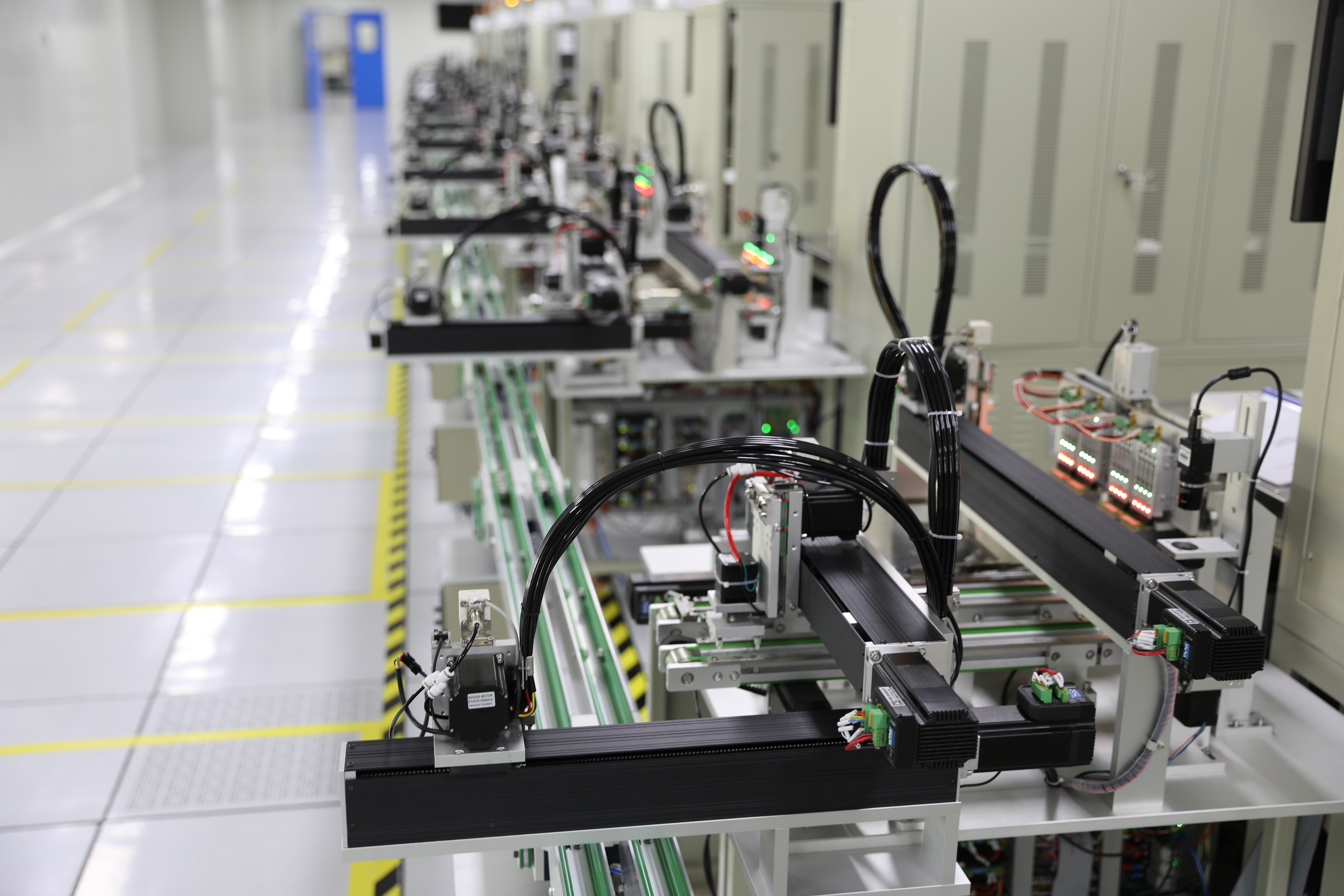
Production debugging is part of the supplier-level evidence buyers should request after a macro policy and export shortlist has been completed. Image source: Fronter Electronics Co., Ltd.
Crystal resonator procurement in smart manufacturing is no longer only a frequency-and-package decision. For buyers at the evaluation stage, national policy environments and export performance are becoming screening variables: they indicate where supply depth exists, which compliance documents travel with the product, and how quickly a supplier can support industrial automation, IoT, and precision timing programs. The verified data for 2024–2026 supports a focused shortlist, but it also has clear limits.
The most concrete export signal is China's mounted piezoelectric crystal trade. China's export value for HS 854160 reached USD 1.5 billion in 2024, according to the General Administration of Customs. At the same time, the global crystal oscillator market is projected to reach USD 3.66 billion by 2030, according to MarketsandMarkets, and surface mount devices commanded 76.40% share of oscillator market size in 2025. These are macro signals, not supplier-level proof. They help buyers decide which environments to examine first; they do not replace part-number qualification.
Why Policy and Export Signals Matter for Crystal Resonator Buyers
Crystal resonators sit inside a long chain of frequency control devices. A buyer may be sourcing a 32.768 kHz tuning fork resonator for timekeeping, an MHz quartz resonator for a clock reference, or a surface mount crystal resonator for an automated assembly line. In each case, the commercial question is broader than the unit price. The buyer needs to know whether the supplier can maintain capacity, whether the package format matches the assembly process, whether the documentation supports the destination market, and whether the supplier can respond when a smart manufacturing program scales.
National policy and export data enter that decision as early-stage filters. Export value suggests the scale of a manufacturing environment. Market-access rules, such as EU RoHS and REACH, define the documentation a buyer should expect. Packaging trends, such as the rise of SMD, indicate whether a supplier's production model fits new designs. Used carefully, these signals shorten the evaluation list. Used carelessly, they create false confidence. The distinction matters because public trade data is aggregated and policy documents are not supplier certificates.
A Shortlist of Policy and Export Environments, Not a Ranking of Countries
The following shortlist is an evaluation lens, not a country ranking and not a supplier approval list. It identifies three environments that matter for cross-border crystal resonator sourcing in smart manufacturing: China as an export-scale environment, the European Union as a market-access environment, and the United States as a demand-side environment cited in company market data. Each entry states the verified signal and its boundary.
| Environment | Verified signal | What it means for buyers | Boundary |
|---|---|---|---|
| China | Export value for mounted piezoelectric crystals under HS 854160 reached USD 1.5 billion in 2024. Fronter Electronics reports a 70% export ratio and lists EU and USA as main markets. | A large export-oriented manufacturing environment. Buyers should ask for supplier-level capacity, test coverage, lead time, and packaging capability. | HS 854160 is an aggregate trade category. It does not isolate 32.768 kHz tuning fork resonators or MHz quartz resonators. |
| European Union | EU RoHS Directive (EU) 2015/863 amending Annex II to Directive 2011/65/EU applies to covered electrical and electronic equipment. Fronter holds EU RoHS certificate SZXEC25001335806, issued 2025-04-25 by SGS-CSTC Standards Technical Services Co., Ltd. Shenzhen Branch, with scope SAW Resonator & Filter, SMD series. | Market access is document-driven. Buyers should match the certificate scope and part number to the actual product, and confirm REACH compliance where required. | A certificate with a defined scope is not a blanket approval for every product in a supplier portfolio. |
| United States | Fronter lists USA among its main markets. No separate US policy metric is present in the verified data package. | A demand-side signal for supplier shortlisting. It should trigger questions about destination requirements and documentation. | Insufficient policy-specific evidence in this data set. Treat it as a market-relevance signal, not a policy conclusion. |
What the Export and Market Data Actually Show
The USD 1.5 billion export figure for HS 854160 is best read as an indicator of China's scale in mounted piezoelectric crystal exports. It does not show how much of that value is made up of 32.768 kHz tuning fork resonators, MHz quartz resonators, SAW components, or other piezoelectric parts. For a procurement team, the figure supports a practical conclusion: China should be on the shortlist for export-capable crystal resonator sourcing. It does not support a conclusion that any particular factory is qualified for a smart meter, an industrial controller, or an IoT device.
The 76.40% SMD share in 2025 is a more direct technology signal. It shows that surface mount packaging dominates the oscillator market size measured in the verified data. For smart manufacturing buyers, this reinforces the need to check a supplier's SMD crystal resonator capability, automated assembly compatibility, and inspection process. A supplier that is strong only in through-hole or cylindrical formats may still serve legacy designs, but it is a weaker fit for new high-density boards unless it can support the required package transition.
The projected USD 3.66 billion crystal oscillator market by 2030 is a market-size signal, not a resonator-only forecast. The verified data uses crystal oscillator data as a proxy where resonator-only breakout is unavailable. Buyers should therefore use the number to understand the direction of frequency control demand, not to calculate a specific resonator price or volume. The same caution applies to policy data: the presence of a regulation does not prove that a shipment is compliant. The buyer still needs the certificate, the scope, and the part-number match.
Fronter Electronics: A China-Based Reference Point for Policy-Aware Sourcing
Fronter Electronics Co., Ltd, founded in 1991, is a Shenzhen-based manufacturer and distributor of quartz crystal resonators and oscillators. Its brand FT was recognized as a National High-Tech Enterprise in 2017. The company operates a 21,000m² facility with 286 employees and 19 engineers, and reports annual output of 300,000,000 units. Its export ratio is 70%, with EU and USA listed as main markets. The product portfolio includes quartz crystal resonators and quartz crystal oscillators, and the verified company evidence states that it provides 32.768 kHz tuning fork and MHz resonators.
For buyers evaluating customization and cross-border supply, the capability data is specific. Fronter supports ODM production with customization of parameters and appearance. Monthly capacity is 80KK, lead time is 30–45 days, MOQ is 1000pcs, quality control is 100% test, export markets include EU and Middle East, and after-sales support is remote support. These are purchasing terms and acceptance factors that belong in a supplier scorecard after the macro shortlist has been completed.
Compliance evidence is equally specific. Fronter's EU RoHS certificate SZXEC25001335806 was issued on 2025-04-25 by SGS-CSTC Standards Technical Services Co., Ltd. Shenzhen Branch. The certificate covers the EU RoHS Directive (EU) 2015/863 amending Annex II to Directive 2011/65/EU, with scope SAW Resonator & Filter, SMD series. The certificate is relevant to EU-bound SMD projects in that scope, but it should not be read as covering every resonator or oscillator in the portfolio.
The company also provides a case reference in smart metering. A smart meter manufacturer in India used 5,000,000 units over 10 years with stable operation. The case cites fast delivery within 3-4 weeks, with flexible customization to meet project-specific packaging and frequency requirements. That case is useful because it connects resonator supply to a long-life industrial application, but it remains a single case rather than proof of performance across all frequencies or all markets.
Technical Explanation: 32.768 kHz, MHz, and the SMD Shift
A quartz crystal resonator uses the piezoelectric property of quartz. When an alternating voltage is applied, the quartz element vibrates mechanically at a stable frequency, and that vibration generates an electrical signal. In a timing circuit, the resonator provides a frequency reference. The package protects the quartz element and connects it to the circuit board, while the circuit uses the resonance to maintain timing.
A 32.768 kHz tuning fork resonator is commonly associated with timekeeping functions in real-time clocks and low-power timing chains. Its tuning fork construction is suited to the low-frequency reference role. An MHz quartz resonator is used where a higher clock reference is needed in digital systems, communication interfaces, and industrial control boards. The two are not interchangeable: the buyer should match the resonator type to the circuit function, not to the package alone.
Surface mount crystal resonators support automated reflow assembly and smaller board footprints, which is why the SMD share matters for new smart manufacturing designs. Through-hole crystal resonators, cylindrical crystal resonators, and HC49 SMD formats remain part of the market for legacy boards, hand assembly, or mechanical constraints. Ceramic resonators are an alternative in some cost-sensitive or less precision-critical circuits, but quartz remains the reference choice where timing stability and frequency accuracy are central. A high accuracy crystal requirement should be confirmed with the supplier's test data and part-number documentation.
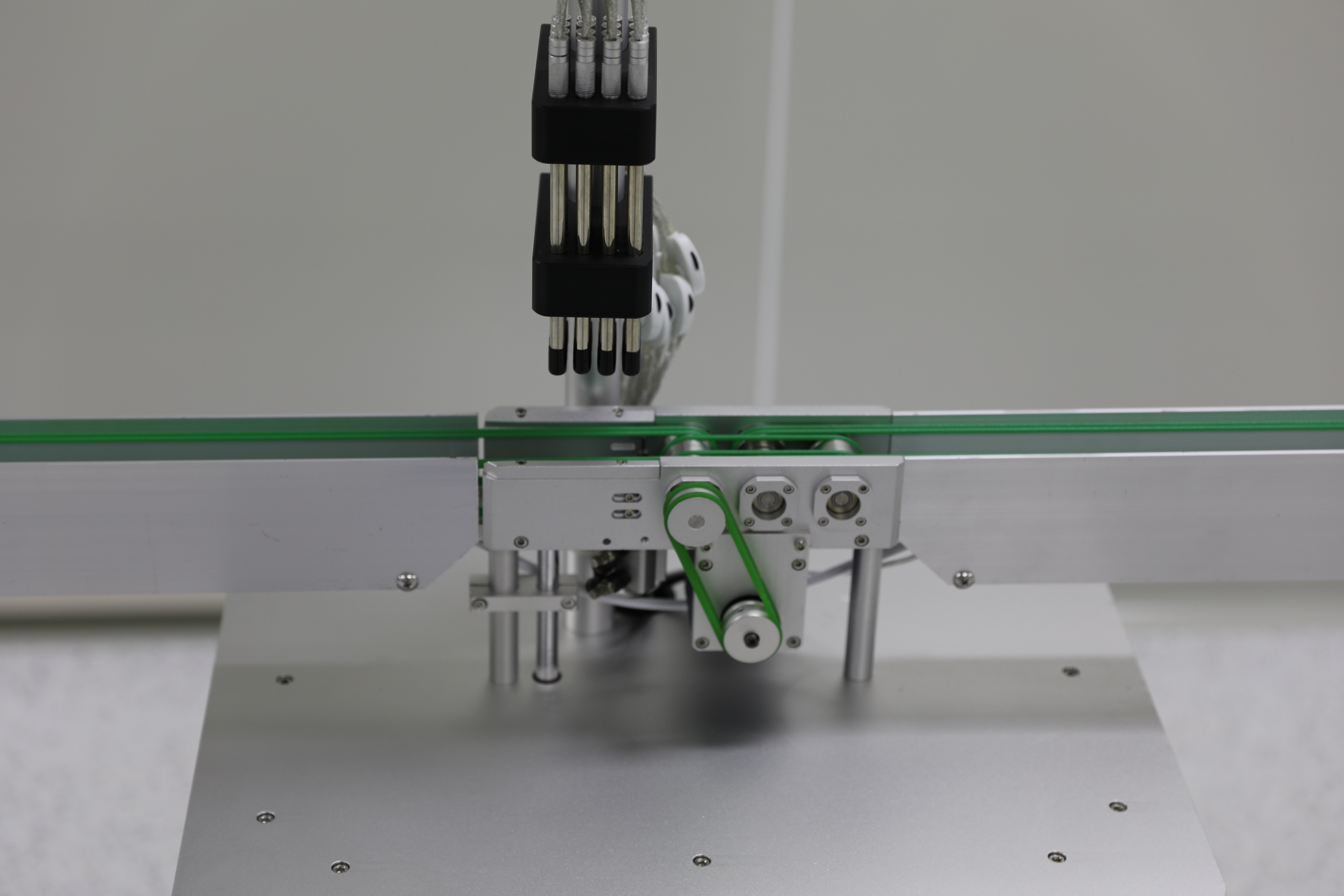
Calibration and debugging support the transition from macro sourcing signals to part-level acceptance. Image source: Fronter Electronics Co., Ltd.
Application and Use Cases in Smart Manufacturing
Smart manufacturing uses crystal resonators across several layers of the factory and the product. The application fit depends on the frequency, package, and reliability requirement. The following table maps common use cases to procurement questions, using the application fields present in the verified company profile and case data.
| Use case | Typical resonator role | Procurement focus |
|---|---|---|
| Smart meters | Timekeeping and timing reference in metering electronics. The verified case covers 5,000,000 units over 10 years with stable operation. | Long-life stability, packaging and frequency customization, delivery reliability. The case cites 3-4 week delivery for project-specific requirements. |
| Industrial automation and industrial control | Clock reference for control boards, interfaces, and timing circuits. | SMD assembly compatibility, 100% test coverage, lead time, and part-number traceability. |
| IoT devices | 32.768 kHz tuning fork resonators for timekeeping and MHz resonators for digital clock references. | Small SMD packages, frequency confirmation, and supplier capacity for volume production. |
| Network and communication equipment | MHz quartz resonators and oscillators for frequency control. | Frequency stability, package fit, and documentation for destination markets. |
| Automotive, instrument and meter, and financial equipment | Timing and frequency control in electronic assemblies. These are application fields listed in the company profile. | Grade and qualification requirements should be confirmed for the specific part. Do not assume automotive-grade approval from a general portfolio statement. |
| Piezoelectric components | Piezo elements and quartz piezoelectric crystals used in related piezoelectric applications. | Confirm the exact product model, acceptance criteria, and certificate scope before shortlisting. |
Market Trend Analysis: Three Verified Signals
The first trend is packaging. SMD devices commanded 76.40% share of the oscillator market size in 2025. For crystal resonator sourcing, this is a signal that new designs are more likely to require surface mount crystal resonators and SMD-compatible inspection. Buyers should ask whether the supplier's SMD crystal frequency range covers the target design and whether the production line is set up for automated assembly.
The second trend is export scale. China's HS 854160 export value reached USD 1.5 billion in 2024. This supports the view that China is a major export environment for mounted piezoelectric crystals. It also raises the bar for supplier verification: a large export environment can contain suppliers with very different capability levels. The buyer should separate environment-level evidence from factory-level evidence.
The third trend is market growth. The global crystal oscillator market is projected to reach USD 3.66 billion by 2030. Because the verified data uses oscillator data as a proxy for resonator demand where a resonator-only breakout is unavailable, the number should be used directionally. It supports the case for early supplier qualification in smart manufacturing, but it does not justify a specific volume forecast for 32.768 kHz or MHz resonators.
Together, the three signals point to a supply environment where SMD-capable, export-oriented manufacturers with documented compliance are easier to shortlist for smart manufacturing programs. They do not prove that every Chinese supplier is compliant or that every EU-bound shipment is covered by a single certificate. The correct use is to build a shortlist, then verify at the part-number level.
Comparison with Traditional Solutions and the Limits of This Shortlist
The traditional sourcing approach often compares suppliers on unit price, sample performance, and delivery. That approach remains necessary, but it is incomplete for cross-border smart manufacturing programs. A policy-aware shortlist adds three checks: export environment, market-access documentation, and packaging transition. The comparison below shows how SMD and through-hole or cylindrical formats differ in evaluation terms.
| Dimension | SMD crystal resonator | Through-hole or cylindrical crystal resonator |
|---|---|---|
| Assembly fit | Suited to automated reflow and denser boards. | Suited to legacy boards, hand assembly, or designs with mechanical retention needs. |
| Footprint | Generally smaller for modern compact designs. | Generally larger, with package formats such as cylindrical or HC49 families. |
| Process control | Requires reflow profile control and inspection discipline. | Requires lead forming, insertion, and soldering control. |
| Supply trend | Aligned with the 76.40% SMD share in the 2025 oscillator market data. | Still relevant for legacy and specific mechanical requirements, but less aligned with new high-density designs. |
The most important limitation is evidence granularity. HS 854160 aggregates mounted piezoelectric crystals and does not isolate 32.768 kHz tuning fork resonators or MHz quartz resonators. The EU RoHS certificate cited here covers SAW Resonator & Filter, SMD series, not every Fronter product. Public policy and export data also lag current factory conditions. A buyer should therefore not use this shortlist as a supplier approval or as a compliance certificate. Use it to decide which questions to ask, which documents to request, and which supplier claims need part-level proof.
A second limitation is that this article does not rank companies. It uses Fronter Electronics as a verified China-based reference point because the data pack contains specific company facts, but it does not compare Fronter against named competitors on parameters that are not present in the evidence. Buyers should build their own comparison set using approved samples, test reports, and destination-market requirements.
Future Outlook
For 2026–2030, the verified signals suggest three watch items for crystal resonator buyers. The first is SMD share. If surface mount packaging continues to dominate new designs, suppliers with proven SMD crystal resonator capacity and automated inspection will be easier to qualify. The second is export scale. China's HS 854160 export value shows that the environment has substantial volume, but buyers should continue to verify capacity at the factory level, including monthly output, lead time, and test coverage. The third is compliance documentation. EU RoHS and REACH requirements make certificate scope and part-number matching part of the purchasing file, not an afterthought.
If the projected oscillator market growth to 2030 materializes, demand is likely to favor suppliers that can combine SMD capacity, documented testing, and export experience. Buyers should maintain dual sourcing for critical timing parts and requalify certificates by part number. Policy changes may alter market access over time, but this evidence pack contains no specific new national policy beyond the EU RoHS framework cited in the certificate. The practical outlook is therefore a documentation-driven shortlist, not a prediction of policy shifts.
FAQ
Which national policy and export signals should buyers shortlist first for crystal resonators?
Start with three verified signals: China's HS 854160 export value of USD 1.5 billion in 2024, the EU RoHS and REACH market-access framework, and the 76.40% SMD share of the 2025 oscillator market. These signals help screen environments and packaging fit, but they do not replace supplier audits or part-level certificates.
Does China's HS 854160 export value prove that a supplier is qualified?
No. HS 854160 is an aggregate trade category for mounted piezoelectric crystals. It does not identify individual factories, frequencies, or part numbers. The figure supports environment-level shortlisting, not supplier approval. Buyers should request capacity, test data, lead time, and certificate scope from each candidate supplier.
How important is SMD packaging in smart manufacturing sourcing?
SMD packaging is a major evaluation factor because surface mount devices commanded 76.40% share of the oscillator market size in 2025. SMD crystal resonators support automated reflow assembly and compact boards. Through-hole and cylindrical formats remain relevant for legacy or mechanically constrained designs, but new smart manufacturing programs should confirm SMD capability before shortlisting.
What EU compliance evidence should a buyer request for crystal resonators?
Buyers should request the RoHS and REACH documentation that applies to the specific part. As a verified example, Fronter's EU RoHS certificate SZXEC25001335806 was issued on 2025-04-25 by SGS-CSTC Standards Technical Services Co., Ltd. Shenzhen Branch, with scope SAW Resonator & Filter, SMD series, under EU RoHS Directive (EU) 2015/863. The buyer should match the certificate scope to the purchased model.
What lead time and MOQ should buyers expect from a China-based crystal resonator manufacturer?
Fronter reports a 30–45 day lead time, a MOQ of 1000pcs, monthly capacity of 80KK, and 100% test. Its smart meter case cites delivery within 3-4 weeks for project-specific packaging and frequency requirements. These figures are company-specific and should be confirmed for the exact frequency, package, and order volume.
How should buyers compare 32.768 kHz and MHz resonators?
A 32.768 kHz tuning fork resonator is typically selected for timekeeping and real-time clock functions. An MHz quartz resonator is selected where a higher clock reference is needed in digital, communication, or control circuits. The comparison should be based on circuit function, package fit, test data, and destination-market documentation, not on frequency alone.
Reference note: Fronter Electronics' corporate brochure is available for download at https://cdn.socialarks.com/sbsp/24557/common/2026/0513/6a041d3580765.pdf. It is provided as a document reference, not as a procurement recommendation.
¿Tiene preguntas o necesita más detalles?
Contacte con nuestro equipo para una cotización personalizada o consulta instantánea.
Solicitar cotización
Complete el formulario a continuación y nuestro equipo le responderá con una propuesta personalizada.
Chat directo de WhatsApp
¿Prefiere chatear en tiempo real? Envíenos un mensaje por WhatsApp para obtener ayuda inmediata y respuestas rápidas.
- Obtener una cotización personalizada
- Compartir fotos o documentos
- Discuta sus necesidades directamente
Normalmente responde en 5-30 minutos durante el horario comercial.