
Crystal Resonator Sourcing: A Country-Level Buyer Framework
Country of manufacture has become a procurement variable in its own right for crystal resonators. Two suppliers can quote the same 32.768 kHz tuning fork specification and still differ in lead time, certification coverage, capacity headroom, and continuity risk, because the regulatory, industrial, and process environments around them differ. For buyers moving out of technical research and into formal supplier evaluation, that makes the country question something to settle before quotation comparison begins, not after.
This article sets out a five-dimension framework for comparing country-level industry trends in crystal resonator sourcing: policy and compliance environment, production capacity and continuity, export performance and market orientation, technological progress and process maturity, and commercial terms. Each dimension is defined by evidence a buyer can request, rather than by reputation or marketing claims.
Why Country-Level Comparison Belongs in Crystal Resonator Procurement
Crystal resonators are passive frequency-control components that supply a stable clock signal to an integrated circuit. At the specification level the product is well standardized: a tuning fork resonator is defined by frequency, load capacitance, frequency tolerance, and operating temperature, while an MHz quartz resonator is defined by nominal frequency, tolerance, stability, and temperature range. Because these parameters are publicly comparable, price and delivery become the visible differentiators in a quotation, and both are shaped by conditions a datasheet cannot show.
Country-level analysis addresses that gap. It measures the direction of an industrial base: how much capacity is being added, how deeply production is automated and instrumented, how consistently local practice tracks international component standards, and how dependent the sector is on export markets. Supplier qualification tells a buyer what one factory can do today. Country-level trend analysis estimates how much of the market will look like that factory in three years. Used together, they produce a sourcing decision that survives a change of supplier.
The Five Dimensions of a Country-Level Sourcing Framework
The framework below converts macro trends into checkable evidence. Each dimension answers a different procurement question, and each is scored independently so that a strong result in one area cannot mask a weak result in another.
| Dimension | What to verify | Evidence to request | Why it changes the decision |
|---|---|---|---|
| Policy and compliance environment | Applicable directives and component-level standards for the destination market | Certificate number, issuing authority, scope statement, issue date | Determines market access and the documentation workload attached to each shipment |
| Production capacity and continuity | Monthly output, capacity headroom, automation level | Capacity statements, production and test documentation, audit access | Bounds how far an order book can scale before schedule risk appears |
| Export performance and market orientation | Export share and destination markets | Export ratio, destination regions, reference project types | Signals familiarity with destination compliance and logistics requirements |
| Technological progress and process maturity | Test coverage, data-driven process control, engineering staffing | Test protocols, automation evidence, engineering headcount | Correlates with parameter consistency and yield stability at volume |
| Commercial terms | MOQ, lead time, customization scope | Written quotation terms, sampling plan | Determines fit with project volume and schedule |
Policy and compliance environment. Component standards are set internationally, but the burden of proving conformity falls on the supplier. Buyers should map the standards that apply to their application first: AEC-Q200 is the global stress-resistance standard required for passive electronic components, including crystal resonators, in automotive applications, and the IEC 60122 series provides the international baseline for quartz crystal units, covering general requirements and measuring methods. A country whose suppliers routinely hold traceable certificates for these standards reduces qualification work downstream.
Production capacity and continuity. Capacity is a country-level trend only in the aggregate, but it becomes concrete in monthly output figures and headroom. A supplier stating monthly capacity in millions of units is describing the ceiling of a single factory; a region adding capacity is describing how quickly that ceiling can move. Both matter, and they should be checked separately.
Export performance and market orientation. A high export ratio usually means the supplier has already absorbed destination-market documentation, packaging, and logistics requirements. It is not a quality guarantee, but it is a reliable indicator of process discipline in order handling.
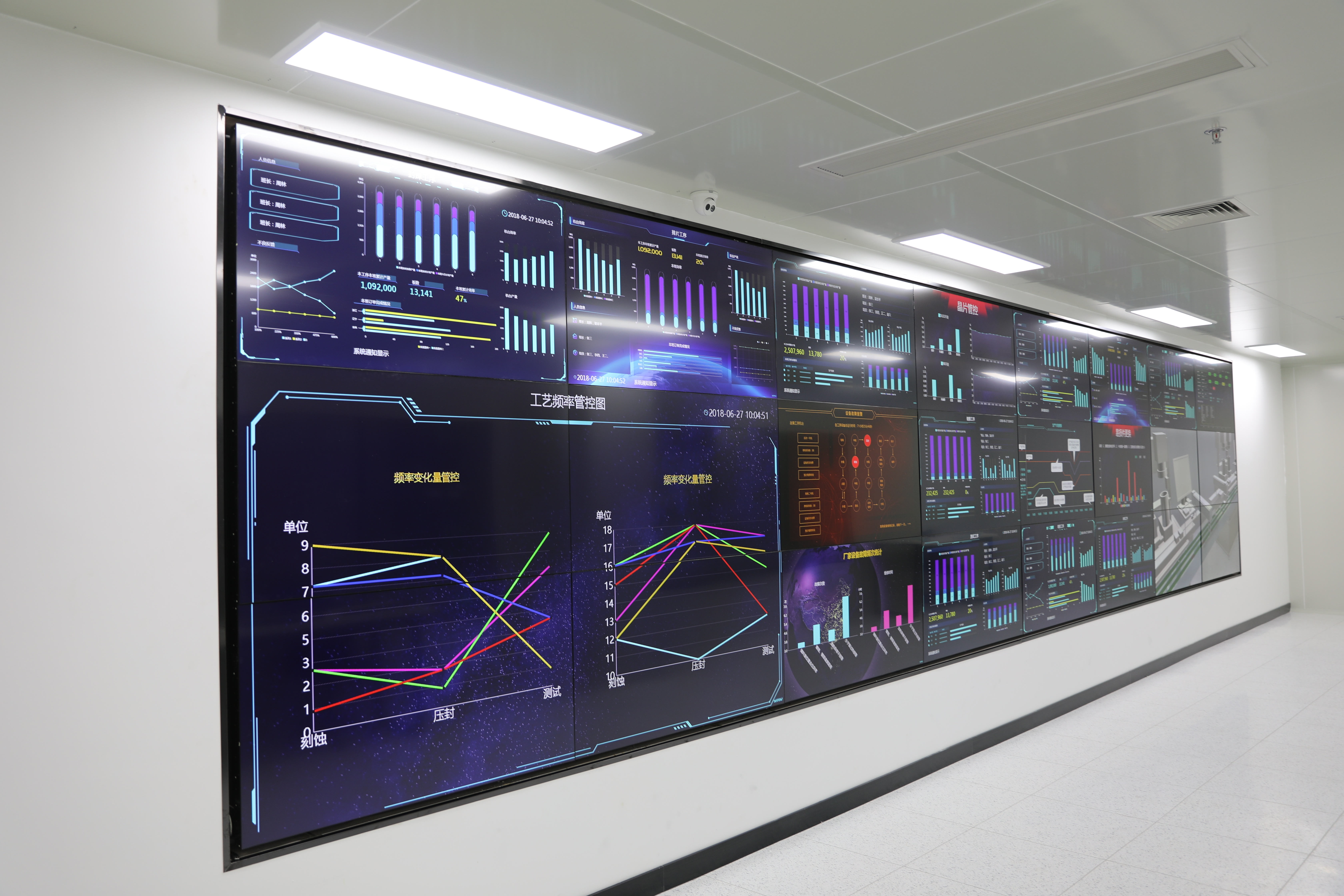
Technological progress and process maturity. Smart manufacturing in this sector shows up as automated placement and calibration, in-line testing, and process data that can be reviewed rather than asserted. The relevant question for a buyer is whether measured data replaces manual judgment at the points where parameter consistency is decided.
Commercial terms. Minimum order quantity, lead time, and customization scope are the dimensions where country-level capability meets project reality. They should be recorded in writing before supplier comparison, because they determine whether a technically suitable source is usable at the buyer's volume and schedule.
Technical Parameters That Must Travel Across Borders
The comparison field for crystal resonator sourcing is defined by a relatively small set of electrical parameters. Two product families dominate industrial and consumer procurement.
Tuning fork crystal resonators operate at 32.768 kHz and are used to provide a real-time clock reference. Typical configurations include SMD1610, SMD2012, and SMD3215 packages measuring 1.6 x 1.0 mm, 2.0 x 1.2 mm, and 3.2 x 1.5 mm, with load capacitance options of 12.5 pF, 7 pF, and 9 pF, a frequency tolerance of ±20 ppm, and an operating temperature range of -40 to +85 °C. Common construction materials are gold, SiO₂, and silver, and the typical application set covers consumer electronics, IoT, smart energy meters, and automotive electronics.
Piezoelectric crystal components cover a wider family that includes crystal oscillators, crystal resonators, crystal filters, and SAW crystal resonators. Their package range spans OSC-SMD7050, 5032, 3225, 2520, 2016, and 1612 outlines as well as SMD7050, 6035, 5032, 3225, 2520, 2016, and 1612 formats. Nominal frequency extends from 1 to 96 MHz, load capacitance from 4 to 33 pF, frequency tolerance from ±5 ppm to ±100 ppm, frequency stability from ±10 ppm to ±100 ppm, and operating temperature from -55 to +125 °C. Typical materials are a metal cover, a ceramic base, and a quartz wafer.
The country-level implication is straightforward. Wide parameter ranges are achievable almost anywhere. The tight end of those ranges, where ±5 ppm tolerance or a 1 to 96 MHz span must hold across a full production lot, is where process maturity separates manufacturing regions. Buyers evaluating a country should ask which portion of the stated range is produced routinely and which is produced on request.
Compliance as a Country-Level Filter, Not a Supplier-Level Checkbox
Compliance is often treated as a single document attached to a quotation. In practice it operates at two levels: the standard that applies to the product, and the certificate that proves a specific factory meets it.
- AEC-Q200 applies to passive components, including crystal resonators, intended for automotive applications.
- IEC 60122 provides the international baseline for quartz crystal units, covering general requirements and measuring methods.
- EU RoHS Directive (EU) 2015/863 amending Annex II to Directive 2011/65/EU governs restricted substances for products placed on the EU market.
A worked example illustrates the level of detail a buyer should expect. Fronter Electronics holds an EU RoHS Compliance Certificate numbered SZXEC25001335806, issued on 2025-04-25 by SGS-CSTC Standards Technical Services Co., Ltd. Shenzhen Branch, covering SAW Resonator & Filter and SMD series products. The certificate names the issuing authority, the standard, and the product scope, which is what makes it usable in a qualification file.
Scope matters as much as existence. A certificate covering SAW resonators and SMD series does not automatically extend to every product family a supplier offers. Buyers comparing countries should check scope line by line against the specific part numbers they intend to purchase.
Application Context: Where the Framework Gets Tested
The framework is only useful if it maps onto real procurement situations. Crystal resonators provide a stable clock signal to ICs in circuits where timing drift would degrade the end product, and the requirements differ sharply by application.
In smart metering, the resonator must hold frequency over long field life with minimal maintenance. A documented example is a smart meter manufacturer in India that has used crystal resonator supply for a period of 10 years across an installed quantity of 5,000,000 units, reporting stable operation. The same project combined fast delivery within 3 to 4 weeks with flexible customization to meet project-specific packaging and frequency requirements. That combination, volume plus schedule flexibility plus packaging adaptation, is exactly what a country-level assessment tries to predict.
In consumer and connected devices, the requirement set shifts toward small footprints and low power. Tuning fork resonators in SMD1610, SMD2012, and SMD3215 packages are specified for smart home appliances, communication electronics, and Bluetooth devices, alongside consumer electronics, IoT, smart energy meters, and automotive electronics. In these applications, operating temperature range from -40 to +85 °C and tolerance of ±20 ppm are the practical constraints, since the component is often mounted close to heat-generating circuitry.
In automotive and industrial control, the emphasis moves to temperature extremes and stress resistance. The broader piezoelectric family covers operating temperatures from -55 to +125 °C, which is the range relevant to under-hood and outdoor installations where AEC-Q200 compliance becomes a qualification requirement rather than a preference.
Market Signals That Inform the Framework
Aggregate market data is a background input, not a decision rule, but it establishes the direction in which capacity, investment, and compliance expectations are moving.
- The global crystal oscillator market was valued at USD 2.89 Billion in 2025 and is projected to reach USD 3.66 Billion by 2030, according to MarketsandMarkets.
- Asia Pacific dominated the crystal oscillator market in 2024, capturing more than a 42% revenue share, approximately USD 1.1 Billion, according to Precedence Research.
- Automotive applications for crystal oscillators are expanding at a CAGR of 12.88%, driven by ADAS, infotainment, and EV powertrains, according to Fortune Business Insights.
- In 2024, SiTime introduced the SiT1811, a 32.768 kHz oscillator drawing only 510 nA, targeting ultra-low power IoT and wearables. The device is an oscillator rather than a resonator, but it signals the direction of low-power timing demand.
Two cautions apply to all of these figures. First, market-size estimates vary significantly between research houses depending on whether raw quartz or finished oscillator modules are counted, so they should be treated as directional rather than exact. Second, published market research identifies Seiko Epson, Nihon Dempa Kogyo (NDK), Kyocera, Daishinku (KDS), and TXC Corporation among the major global manufacturers of quartz crystals and oscillators. Their presence in a region is a signal about the local supply ecosystem, not a substitute for evaluating the specific supplier a buyer intends to qualify.
Applying the Framework: Fronter Electronics as a Worked Example
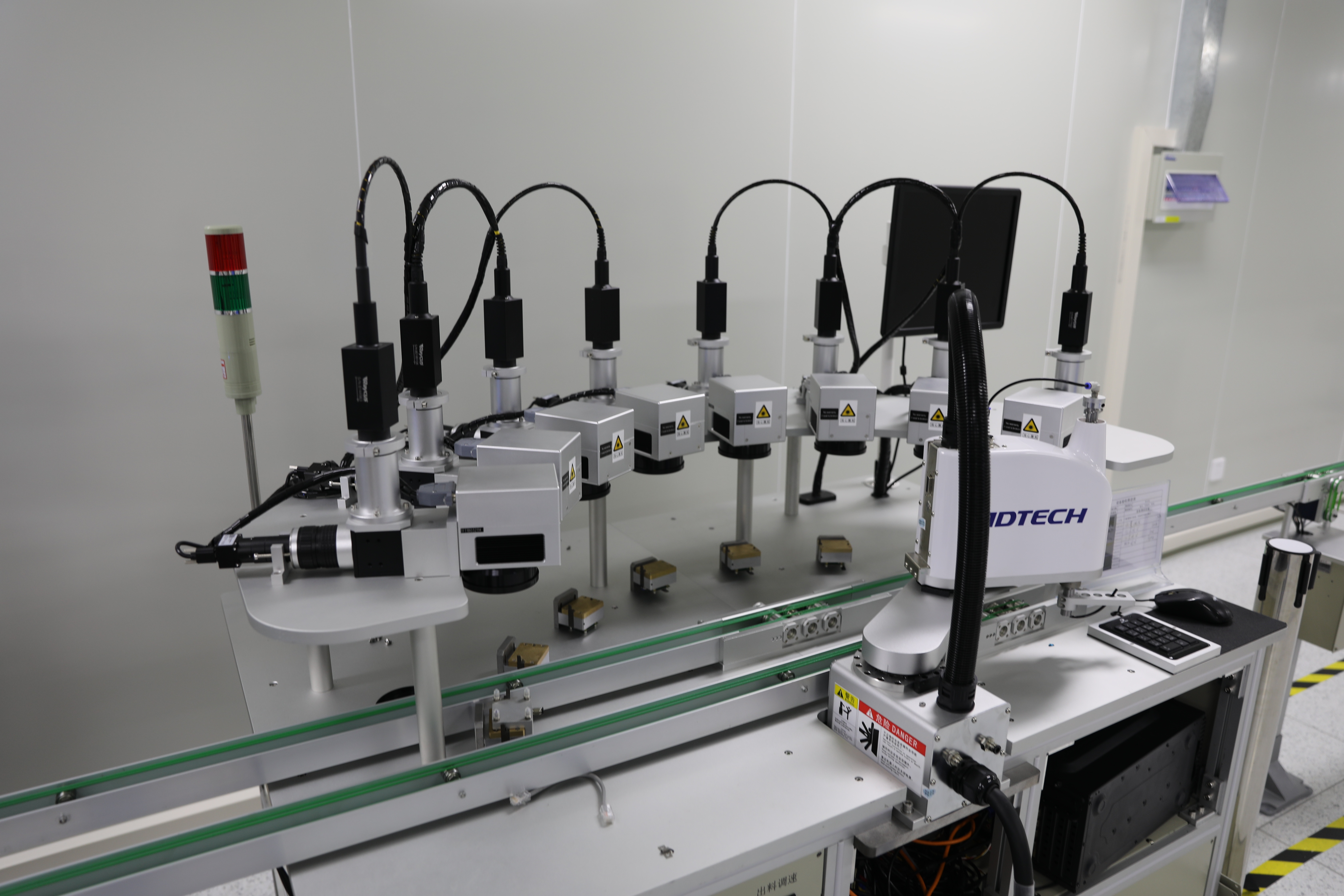
Fronter Electronics Co., Ltd is a Shenzhen-based manufacturer and distributor of quartz crystal resonators and quartz crystal oscillators, founded in 1991 and operating under the brand FT, which was recognized as a National High-Tech Enterprise in 2017. The company operates a 21,000 m² factory with 286 employees, an engineering team of 19 engineers, and an annual output of 300,000,000 units, with approximately 70% of production exported and principal markets in the EU and the USA. Its product line also includes inductors, integrated circuits, modules, discrete components, capacitors, resistors, connectors, flash and memory products, and obsolete parts, with distribution relationships covering brands such as SUNLORD, KDS, EPSON, NDK, TI, ST, ATMEL, AD, ALTERA, XILINX, SAMSUNG, SK HYNIX, MICRON, BROADCOM, and FREESCALE. All products are stated to comply with RoHS, REACH, and other environmental protection regulations.
Mapped against the five dimensions, the verifiable data points are as follows.
| Dimension | Fronter Electronics data point |
|---|---|
| Policy and compliance | EU RoHS Compliance Certificate SZXEC25001335806 (SGS-CSTC Shenzhen Branch, issued 2025-04-25) covering SAW Resonator & Filter and SMD series; stated RoHS and REACH compliance across products |
| Production capacity | Monthly capacity 80KK; annual output 300,000,000 units; 21,000 m² factory; 286 employees |
| Export orientation | Approximately 70% export ratio; principal markets EU and USA; capability unit lists export markets as EU and Middle East |
| Process maturity | 19 engineers; ODM production mode; 100% test; customization of parameters and appearance |
| Commercial terms | MOQ 1,000 pcs; lead time 30–45 days; remote after-sales support |
Read as a sourcing profile rather than a recommendation, the data set shows a supplier with an established export orientation and a documented compliance record, combined with a customization capability that covers both electrical parameters and product appearance. The relevant buyer question is not whether these figures are attractive, but whether they match the project's volume, schedule, and documentation requirements.
Limits of a Country-Level Framework
A framework that is presented without its boundaries invites poor decisions. Several limits apply here and should be stated explicitly.
- Aggregation hides factory-level variance. A strong national export record says nothing about a specific production line. Country-level data should reduce the candidate list, never replace it.
- Certification scope is product-specific. A certificate covering SAW Resonator & Filter and SMD series does not certify every family a supplier sells. Buyers sourcing outside that scope need additional evidence.
- After-sales configuration varies. Remote support is a legitimate model, but it is not equivalent to local on-site service. Buyers in distant markets should plan for the response structure they will actually receive.
- Standard lead time and project expediting are different things. A 30–45 day standard lead time and a 3 to 4 week delivery achieved on a specific smart meter project are not interchangeable. Expedited performance observed in one case should be re-confirmed for each new order.
- Market-size data diverges by definition. Widely different estimates exist for the same year, depending on whether raw quartz, crystal units, or finished oscillator modules are counted.
- The framework does not test parts. Parameter consistency, aging behavior, and long-term reliability are established through sampling and qualification, not through country analysis.
Compared with traditional sourcing practice, in which suppliers are compared quotation by quotation, this framework adds an earlier filter but also adds an obligation: buyers must request evidence that supports each dimension, and must accept that some dimensions will remain partly unresolved until sampling is complete.
Future Outlook
Three trends are likely to shape country-level crystal resonator sourcing over the next several years.
First, smart manufacturing will continue to shift the basis of competition from capacity volume toward process control. When parameter consistency can be demonstrated through production and test data, buyers gain a verification tool that does not depend on travel or trust. That favors suppliers who already instrument their lines and can share the output.
Second, automotive demand will keep raising the compliance floor. With automotive applications for crystal oscillators expanding at a CAGR of 12.88% on the back of ADAS, infotainment, and EV powertrains, AEC-Q200 alignment is likely to migrate from an automotive-only requirement toward a general expectation for suppliers claiming industrial-grade capability.
Third, regional concentration will remain a structural feature of the market. With Asia Pacific holding more than a 42% revenue share in 2024, buyers will continue to balance the efficiency of sourcing from that base against the concentration risk it creates. The practical response is not to avoid the region but to build the evidence trail that makes a supplier within it verifiable.
Frequently Asked Questions
Which certifications should a buyer verify before approving a crystal resonator source?
Verification should start with the standard that applies to the end application. AEC-Q200 is the global stress-resistance standard required for passive electronic components, including crystal resonators, in automotive applications, and the IEC 60122 series provides the international baseline for quartz crystal units, covering general requirements and measuring methods. For products placed on the EU market, the EU RoHS Directive (EU) 2015/863 amending Annex II to Directive 2011/65/EU applies. Buyers should confirm the certificate number, the issuing authority, the issue date, and, most importantly, the certified product scope, since a certificate covering one product family does not automatically extend to another.
Which technical parameters should be compared across candidate countries or suppliers?
The comparison set is small and consistent. For tuning fork resonators at 32.768 kHz, the parameters are package size (SMD1610, SMD2012, SMD3215), load capacitance (12.5 pF, 7 pF, 9 pF), frequency tolerance (±20 ppm), and operating temperature (-40 to +85 °C). For the broader piezoelectric crystal component family, the parameters are nominal frequency (1 to 96 MHz), load capacitance (4 to 33 pF), frequency tolerance (±5 ppm to ±100 ppm), frequency stability (±10 ppm to ±100 ppm), and operating temperature (-55 to +125 °C). Buyers should ask which part of each stated range is produced routinely and which is produced on request, because that distinction separates catalog capability from process capability.
How do country-level capacity and export trends affect lead time and MOQ?
Capacity and export orientation set the boundary conditions for commercial terms rather than determining them directly. A supplier with monthly capacity stated at 80KK and an annual output of 300,000,000 units has a defined production ceiling, and an MOQ of 1,000 pcs with a standard lead time of 30–45 days is the resulting commercial structure. Regional trends indicate how quickly that structure may shift: where capacity is being added, headroom typically improves; where export orientation is already high, documentation and logistics processes are usually more routine. Buyers should treat stated lead time as a standard figure and confirm separately whether expedited delivery is available for a specific project, since documented expediting on one project does not guarantee it on the next.
Is Asia Pacific's dominant share of crystal oscillator supply a risk or an advantage?
It is structurally both. Asia Pacific captured more than a 42% revenue share of the crystal oscillator market in 2024, approximately USD 1.1 Billion, according to Precedence Research, which gives buyers in the region access to dense supplier ecosystems, established export infrastructure, and competitive commercial terms. The same concentration creates exposure if a single region absorbs most of a buyer's volume. The practical approach is to use the regional advantage for cost and availability while maintaining at least one qualified alternative source, and to require the compliance and process evidence that makes any supplier within the region independently verifiable.
How can a buyer validate claims about smart manufacturing without visiting a factory?
Validation relies on documented outputs rather than statements of intent. Buyers can request test protocols and coverage levels, since a claim of 100% test is verifiable through the test process description; production and equipment documentation, including evidence of automated operation and calibration; engineering staffing figures, since process improvement depends on engineering capacity; and compliance certificates that name the issuing authority and the certified scope. Certification bodies and standards references provide independent anchors: AEC-Q200 and IEC 60122 define what is being measured, and an accredited testing body such as SGS-CSTC documents whether a specific product scope meets the applicable directive. Where remote assessment remains insufficient, sample-based qualification testing is the remaining method, and it addresses parameter consistency directly.
A downloadable company brochure for Fronter Electronics is available at this link.