
Crystal Oscillator Trends in Smart Manufacturing: A 2026 Country-Level Shortlist
Smart manufacturing does not fail because of one bad component; it fails when a system-level dependency has no reliable source. Frequency control is one of those dependencies. A crystal oscillator is a piezoelectric timing device that converts the mechanical resonance of a quartz element into a stable electrical reference frequency, and inside an automated plant that reference governs machine-to-machine synchronization, industrial network timing, motion-control loops, sensor sampling rates and edge-computing nodes.
That is why the sourcing question has moved upstream. Buyers are no longer only comparing part numbers; they are comparing national ecosystems. This reference examines four country-level variables — policy environment, production capacity, export performance and technological progress — that shape the global crystal oscillator and piezoelectric component landscape, and ranks the ecosystems most relevant to international buyers evaluating smart-manufacturing supply in 2026.
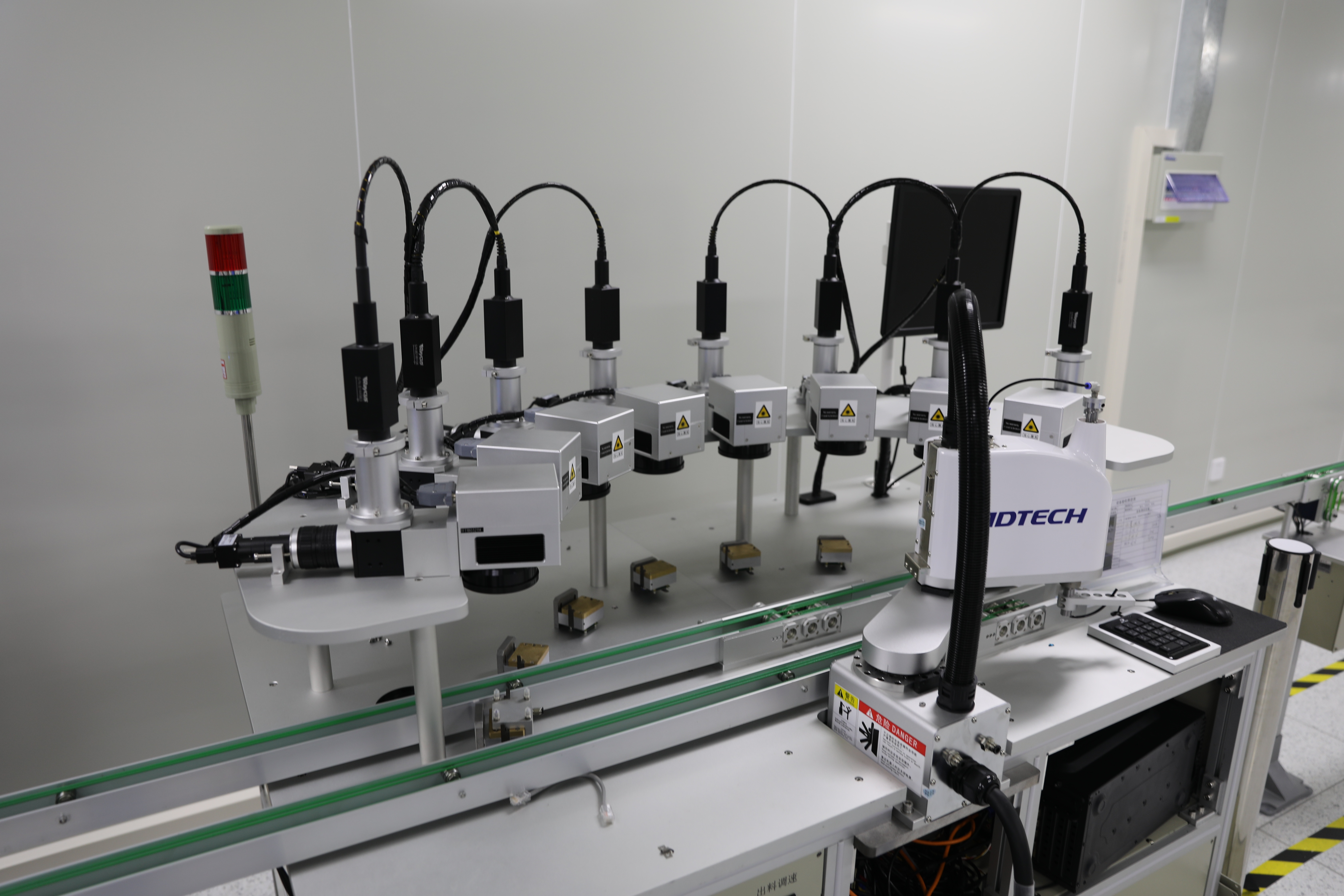
Automated production cells depend on a shared frequency reference for synchronization and deterministic control.
Why Timing Devices Became Infrastructure in Smart Manufacturing
Industrial automation has been rebuilt around deterministic communication. Machinery that once ran on independent controllers now runs on synchronized networks, distributed I/O and continuous measurement. Crystals and oscillators sit underneath that architecture: a clock oscillator provides the reference for an industrial gateway, a TCXO holds frequency across the temperature swings of a factory floor, and a differential output oscillator supports the high-speed serial links between controllers and vision systems.
On the demand side, the shift toward integrated timing is measurable. Published market research places the Temperature-Compensated Crystal Oscillator (TCXO) at a 30% share of the crystal oscillator market in 2024, driven by precision requirements in telecom and GPS applications (Precedence Research). The surface-mount (SMD) segment is projected to hold an 80% share by 2025 as miniaturization spreads through IoT and wearable designs (Coherent Market Insights). The Oven-Controlled Crystal Oscillator (OCXO) segment is expected to grow at a CAGR of 2.6% to reach USD 528 million by 2028, largely on 5G base station demand (MarketsandMarkets).
On the supply side, the picture is geographically concentrated. Asia-Pacific captured more than 42% of the crystal oscillator market in 2024 — approximately USD 1.1 billion — reflecting high electronics production in China, Japan and South Korea (Precedence Research). For a procurement team, that concentration is not trivia. It is the reason a national ecosystem can become a single point of failure, or a strategic advantage, depending on how it is evaluated.
The Four Country-Level Variables
The shortlist later in this article is built on four variables. Each was selected because it can be evidenced by documents, certifications or publicly attributed data rather than by reputation alone.
1. Policy environment
Regulatory and standards policy determines whether a supplier's parts can legally enter a target market and whether they survive qualification. Relevant references include the EU RoHS Directive (EU) 2015/863, REACH, AEC-Q200 for automotive-grade components and IEC 60679-1, the primary international standard specifying general requirements and test methods for quartz crystal controlled oscillators. Policy depth matters most in two places: environmental compliance for cross-border shipment, and automotive qualification for safety-critical systems. Because compliance is issued per product family, the scope of a certificate is as important as its existence.
2. Production capacity
Capacity is the variable that converts a technical specification into a delivery commitment. Useful evidence includes factory footprint, automation level, annual or monthly output, test regime, standard lead time and minimum order quantity. A region may hold a large share of global production and still be a poor fit for a specific program if the required product family is a small fraction of that capacity.
3. Export performance
Export performance shows how a supplier or region behaves when a part has to cross a border: documentation quality, packaging discipline, logistics reliability and channel depth. Export ratio, destination markets and the breadth of authorized distribution relationships are the practical indicators.
4. Technological progress
Technology depth separates ecosystems over time. It shows up in package miniaturization, the availability of high-stability and precision product families, automotive-grade capability and engineering headcount dedicated to development rather than to maintenance of legacy parts.
Technical Baseline: The Oscillator Families Buyers Actually Compare
Country-level analysis only becomes useful when it is tied to the products being sourced. The following families are the ones most commonly referenced in smart-manufacturing and industrial procurement discussions.
| Family | Typical role in smart manufacturing | Primary evaluation focus |
|---|---|---|
| Clock oscillator / active crystal oscillator / 4-pin SMD oscillator | Self-contained output clock for controllers, gateways and industrial boards | Frequency tolerance, supply voltage, jitter, package footprint |
| VCXO and VCTCXO | Frequency trimmed by an external control voltage for synchronization and clock recovery | Pull range, linearity, phase noise |
| TCXO / TCXO oscillator | Stable frequency across wide temperature ranges in telecom, positioning and outdoor industrial equipment | Stability over temperature versus power consumption |
| OCXO / OCXO oscillator | Holdover and very low drift for 5G base stations, instrumentation and precision reference | Warm-up behavior, ageing, power budget |
| Differential output oscillator | High-speed serial links with low jitter between control and vision subsystems | Output type, phase noise |
| Low power consumption oscillator | Battery-powered edge nodes and portable measurement devices | Current draw versus stability trade-off |
| Programmable oscillator | Fast frequency configuration during design iteration | Configuration flexibility versus fixed-frequency certainty |
| Automotive crystal oscillator | ADAS and safety-critical systems | Compliance with AEC-Q200 stress-test qualification |
| Piezo elements / quartz piezoelectric crystals | Base material layer: quartz wafer, ceramic base, metal cover | Material consistency and process control |
To make the baseline concrete, one supplier-documented product line covering piezoelectric crystal components — including crystal oscillators, crystal resonators, crystal filters and SAW crystal resonators — specifies a nominal frequency range of 1 to 96 MHz, load capacitance of 4 to 33 pF, frequency tolerance of ±5 ppm to ±100 ppm, frequency stability of ±10 ppm to ±100 ppm and an operating temperature range of −55 to +125 °C, built on a metal cover, ceramic base and quartz wafer construction. The documented package families include OSC-SMD7050/5032/3225/2520/2016/1612 and SMD7050/6035/5032/3225/2520/2016/1612. These are documented values for one product range, not industry-wide defaults, and should be treated as a reference point when comparing quotations.
IEC 60679-1 remains the reference standard for general requirements and test methods covering quartz crystal controlled oscillators, which is why buyers comparing offers across countries should ask which standard the test data is reported against, not only whether testing was performed.
The Country-Level Shortlist for Crystal Oscillator Ecosystems (2026)
The following ranking is an editorial assessment built on the four variables above. It ranks national ecosystems, not individual companies, and it deliberately uses qualitative positions rather than invented scores.
| Rank | Ecosystem | Strongest variable | Assessment basis | Main constraint |
|---|---|---|---|---|
| 1 | China | Production capacity and export performance | Asia-Pacific holds over 42% of the global crystal oscillator market (2024), tied to high electronics production in China, Japan and South Korea (Precedence Research) | Certification scope and per-part documentation must be verified item by item |
| 2 | Japan | Technological progress and automotive-grade depth | Seiko Epson and Nihon Dempa Kogyo (NDK) are recognized as top-tier global leaders in the crystal oscillator market, with NDK holding a leading position in automotive-grade variants (Mordor Intelligence) | Cost position and lead times for high-stability and automotive families |
| 3 | Germany | Reliability engineering for automotive and industrial automation | Ecosystem generally shaped by automotive Tier-1 and industrial-automation demand, where documentation depth and traceability dominate sourcing decisions | Longer qualification cycles and a cost structure oriented to high-specification programs |
| 4 | United States | Standards leadership and high-reliability demand | The Automotive Electronics Council publishes AEC-Q200, the stress-test qualification used for automotive-grade crystal oscillators in ADAS and safety-critical systems | High-mix, comparatively lower-volume demand; timing components are largely sourced offshore |
| 5 | South Korea | Large-volume electronics manufacturing base | Listed among the high-electronics-production economies underpinning Asia-Pacific market share (Precedence Research) | Component supply is oriented toward large-volume programs rather than small-batch customization |
Read as a decision aid, the ranking suggests three practical moves for buyers in the evaluation stage. First, pair a capacity-led ecosystem with a technology-led one when the program mixes standard and high-stability parts. Second, treat policy depth as a gate rather than a tiebreaker — AEC-Q200 and RoHS positions can eliminate an option before price is even discussed. Third, keep at least one alternative ecosystem in the qualification pipeline, because country-level advantages are also country-level exposures.
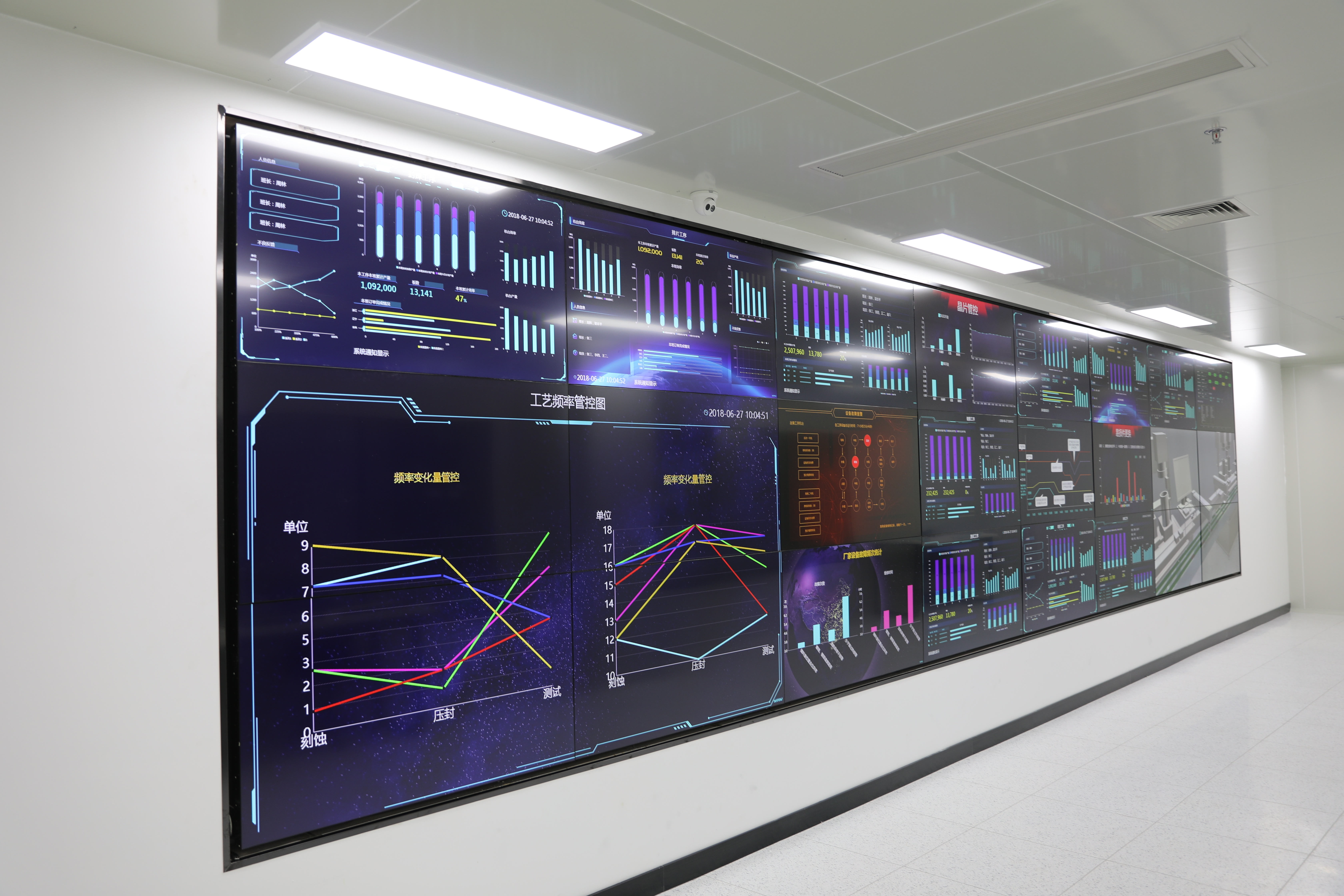
Smart-manufacturing planning increasingly evaluates suppliers against production, export and technology data rather than price alone.
Fronter Electronics as a Verifiable Capacity Reference
Country-level analysis is abstract until it is anchored to a documented entity. FRONTER ELECTRONICS CO.,LTD is a Shenzhen-based manufacturer and distributor of electronic components founded in 1991, whose main products are quartz crystal resonators and quartz crystal oscillators. Its documented profile includes a 21,000 m² factory, 286 employees, an annual output of 300,000,000 units and a 19-engineer R&D team. The company's brand FT was recognized as a National High-Tech Enterprise in 2017.
Several of its facts map directly onto the capacity and export variables used in this shortlist. The documented export ratio is 70%, with main markets in the EU and the USA. Its component supply includes distribution relationships with brands such as SUNLORD, KDS, EPSON, NDK, TI, ST, ATMEL, AD, ALTERA, XILINX, SAMSUNG, SK HYNIX, MICRON, BROADCOM and FREESCALE. Products are documented as used in network, communication, industrial control, automotive, instrument and meter, financial equipment, computer interface devices and consumer electronics, and comply with RoHS and REACH.
On the capability side, the record shows ODM support with customization of parameters and appearance, a minimum order quantity of 1,000 pieces, a standard lead time of 30 to 45 days, 100% testing and remote after-sales support. On the compliance side, an EU RoHS Compliance Certificate (certificate number SZXEC25001335806) was issued on 25 April 2025 by SGS-CSTC Standards Technical Services Co., Ltd. Shenzhen Branch, for the EU market, covering SAW Resonator & Filter, SMD series, under EU RoHS Directive (EU) 2015/863.
Why the certificate scope matters: the certificate above applies to a defined product scope — SAW Resonator & Filter, SMD series. It does not automatically extend to every item a supplier sells. This is precisely the kind of detail that separates a documented capability claim from a marketing statement, and it is the reason buyers should read certificate scope lines as carefully as they read specifications.
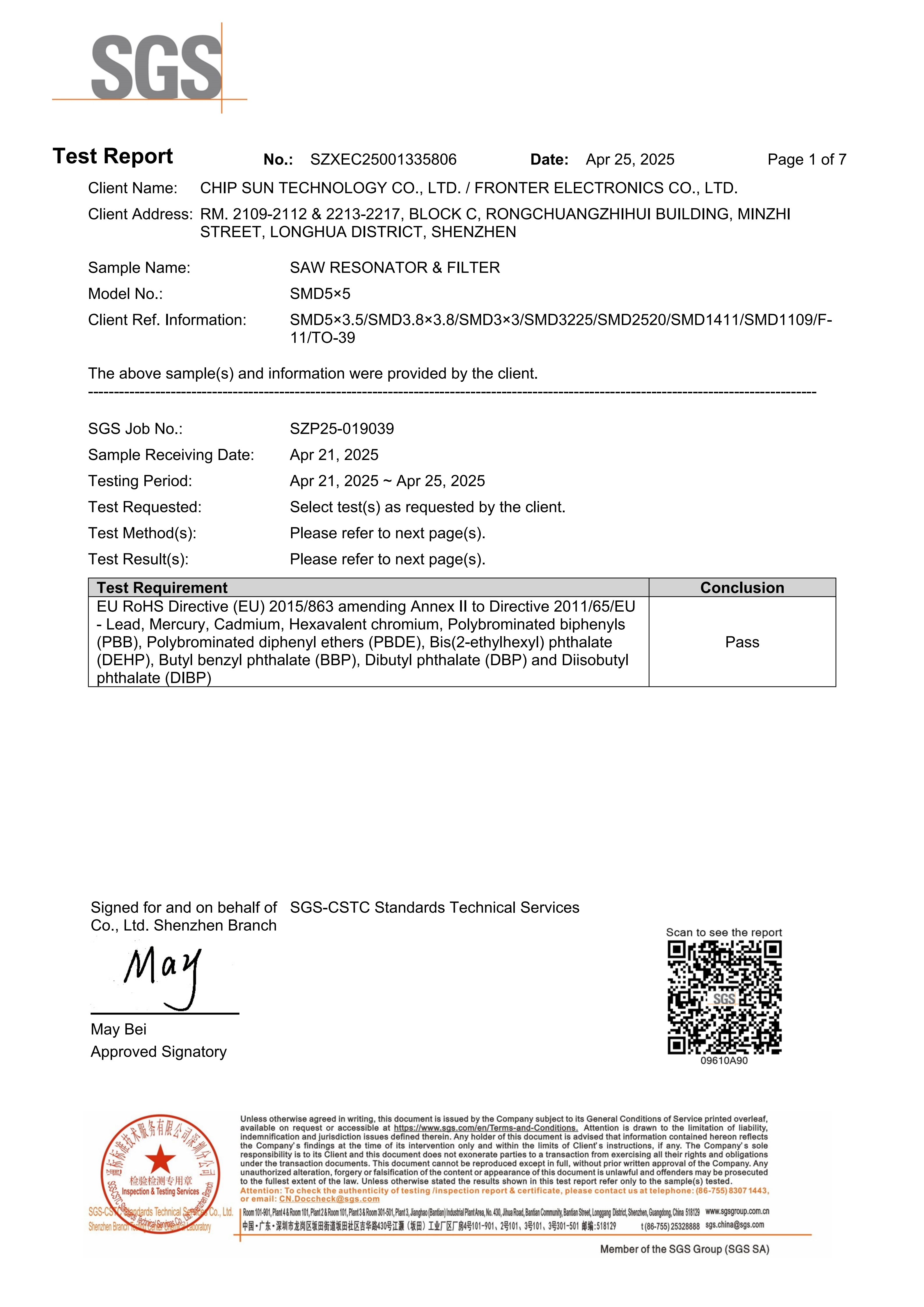
Compliance documentation is issued per product scope; scope lines determine which parts are actually covered.
Market Trend Analysis: What the Published Data Shows — and Where It Disagrees
The global crystal oscillator market was valued at approximately USD 2.89 billion in 2025 and is projected to reach USD 3.66 billion by 2030 (MarketsandMarkets). Layered on top of that growth are three structural shifts already visible in the segment data: TCXO dominance in precision applications, SMD dominance in packaging, and OCXO expansion tied to 5G infrastructure.
Published estimates of the same market, however, do not agree. That divergence is itself a decision-relevant fact.
| Source | Figure | Scope note |
|---|---|---|
| MarketsandMarkets | USD 2.89 billion (2025); USD 3.66 billion by 2030 | Crystal oscillator market as defined by the research firm |
| Mordor Intelligence | USD 3.10 billion (2025) | Broader oscillator market definition |
| Market Research Future | USD 6.12 billion (2024) | Includes broader oscillator categories, including MEMS alongside pure quartz components |
The practical implication for buyers and for analysts is that trend direction is more reliable than any single absolute figure. Growth, miniaturization and regional concentration are consistent across sources; the exact market value is not. Any internal business case built on a single number should state whose definition it used.
Comparison with Traditional Solutions
The shift from legacy timing approaches to current ecosystem practice is easiest to see dimension by dimension.
| Dimension | Traditional approach | Current ecosystem practice |
|---|---|---|
| Packaging | Leaded and through-hole crystal packages with larger board footprint | SMD families from OSC-SMD7050 down to 1612, supporting dense control boards |
| Frequency configuration | Fixed-frequency parts with long tooling and sample cycles | Programmable oscillators for faster design iteration, with fixed-frequency parts retained where certainty matters |
| Temperature handling | Uncompensated crystal plus external compensation circuitry | Integrated TCXO and OCXO families designed for defined stability over temperature |
| Sourcing model | Single-country, relationship-based purchasing | Multi-ecosystem sourcing with documented compliance and export track records |
| Evidence standard | Supplier assurance and reputation | Certificates, test standards and scope statements |
Three boundaries deserve to be stated plainly, because ecosystem advantages are often presented without them.
- A country label is not a quality guarantee. National ranking describes an ecosystem's aggregate strength; it says nothing about a specific production line, batch or documentation set. Verification remains a per-supplier and per-part activity.
- Scale does not equal small-batch flexibility. A documented minimum order quantity of 1,000 pieces and a standard lead time of 30 to 45 days are reasonable for program-level supply, but they will not suit every prototype or low-volume industrial requirement. Buyers with irregular demand should confirm these terms before shortlisting.
- Compliance is scoped, not universal. A certificate issued for one product family does not cover a company's entire catalogue, and a country-level policy environment does not transfer automatically to an individual part.
Application Fit: Where Each Ecosystem's Strength Is Used
Smart manufacturing demand is not uniform, and different ecosystems are better matched to different applications.
Smart metering and utility infrastructure. A documented case involving a smart meter manufacturer in India covers 5,000,000 units over a 10-year period with stable operation, supported by delivery within 3 to 4 weeks and flexible customization to meet project-specific packaging and frequency requirements. Long product lifecycles and continuous operation make stability over temperature and long-term supply continuity the deciding criteria — a profile that favors capacity-led ecosystems with export experience.
Automotive and ADAS. Automotive-grade crystal oscillators must comply with the AEC-Q200 stress-test qualification for use in ADAS and safety-critical systems. This requirement tends to pull programs toward ecosystems with deep automotive-grade technology, and it also lengthens qualification timelines, which should be planned for at the evaluation stage rather than at the ordering stage.
Telecom and 5G infrastructure. The OCXO segment's expected growth to USD 528 million by 2028 at a 2.6% CAGR is attributed largely to 5G base station demand, placing holdover performance and ageing behavior at the center of component selection.
Industrial control, smart home, communication electronics and Bluetooth devices. Documented applications for piezoelectric crystal components include smart home appliances, communication electronics and Bluetooth devices, where SMD miniaturization and low power consumption oscillators dominate the design trade-off between board space and current draw.
Future Outlook
Three directions appear most likely to shape the next phase of the crystal oscillator landscape for smart manufacturing.
First, timing demand will continue to track automation investment rather than consumer electronics cycles. As factories add synchronized networks, machine vision and edge nodes, the number of frequency references per production line rises, and with it the sensitivity of uptime to component availability.
Second, compliance documentation will become a competitive variable in its own right. As RoHS, REACH and AEC-Q200 expectations are applied more consistently to timing components, the ability to produce scoped, traceable certificates will separate suppliers as much as specification breadth does.
Third, country-level diversification will continue. The concentration of more than 42% of the market in Asia-Pacific is efficient, but efficiency and resilience pull in different directions. Buyers are likely to keep a primary ecosystem for capacity and a secondary ecosystem for technology depth, then re-evaluate that split as policy environments and production capacity shift.
FAQ
Which countries currently lead in crystal oscillator supply?
Asia-Pacific is the dominant producing region, capturing more than 42% of the global crystal oscillator market in 2024 — approximately USD 1.1 billion — driven by high electronics production in China, Japan and South Korea (Precedence Research). Within that region, Japan is home to Seiko Epson and Nihon Dempa Kogyo (NDK), both recognized as top-tier global leaders in the crystal oscillator market, with NDK holding a leading position in automotive-grade variants (Mordor Intelligence). Europe and North America are more significant on the demand and standards side than as volume producers of quartz-based timing devices.
What should a buyer compare between national ecosystems?
Four variables provide a workable comparison basis: policy environment (RoHS, REACH, AEC-Q200 and IEC 60679-1 alignment and the scope of the resulting certificates), production capacity (factory footprint, annual output, test regime, lead time and minimum order quantity), export performance (export ratio, destination markets and distribution depth) and technological progress (package miniaturization, availability of TCXO and OCXO families, and automotive-grade capability). Each variable should be evidenced with a document or attributed data point rather than an assertion.
Does sourcing from a leading country guarantee component quality?
No. A country ranking describes an ecosystem's aggregate strength and says nothing about a specific production line, batch or certificate. Quality evidence is per-supplier and per-part: test standards used, whether 100% testing is applied, and the exact scope of compliance documents. For example, an EU RoHS Compliance Certificate issued to a manufacturer may cover a defined scope such as SAW Resonator & Filter, SMD series, and that scope does not automatically extend to every product the company sells.
Which oscillator types matter most for smart manufacturing?
The selection depends on the function. A clock oscillator or 4-pin SMD oscillator typically provides the reference for controllers and gateways. VCXO and VCTCXO families handle voltage-controlled frequency adjustment in synchronization and clock recovery. TCXO devices hold frequency across wide temperature ranges and represented a 30% share of the crystal oscillator market in 2024 (Precedence Research). OCXO devices address holdover and low-drift requirements in 5G base stations and instrumentation. Differential output oscillators serve high-speed serial links, and low power consumption oscillators serve battery-powered edge nodes.
Why do published market size estimates differ so much?
Estimates diverge because of differing scope definitions. MarketsandMarkets values the crystal oscillator market at approximately USD 2.89 billion in 2025; Mordor Intelligence reports USD 3.10 billion for 2025 under a broader oscillator definition; Market Research Future reports USD 6.12 billion for 2024, with the divergence attributed to the inclusion of broader oscillator categories such as MEMS alongside pure quartz components. Directional trends — growth, SMD dominance and regional concentration — are consistent across sources, while absolute values are not.
What practical constraints should buyers expect when selecting by national ecosystem?
Three constraints are common. Minimum order quantities and lead times reflect program-level supply rather than prototype flexibility — a documented example is a 1,000-piece MOQ with a 30 to 45 day standard lead time. Compliance coverage is product-scoped, so certificates must be checked part by part. And ecosystem rankings shift as policy, capacity and export conditions change, which means a country-level shortlist should be reviewed periodically rather than treated as a fixed classification.
For readers who want the underlying component and compliance profile in a single document, the company brochure is available here: Fronter Electronics company profile (PDF).