
Crystal Oscillator Comparison: A Decision-Stage Framework for Buyers
At the decision stage of a crystal oscillator purchase, the comparison narrows from a broad technology choice to a supplier-specific risk assessment. Two suppliers may both quote the same frequency, package, and output logic, but differ in how those specifications behave across temperature, time, and high-volume production. The practical question is no longer just what a datasheet says, but what a manufacturer does to make that datasheet repeatable.
The global crystal oscillator market is expected to grow from about USD 2.89 billion in 2025 to USD 3.66 billion by 2030, while Asia-Pacific already accounts for more than 42% of regional demand. With that volume comes a procurement reality: a component decision made today can affect field reliability, servicing cost, and supplier dependency for years. This article provides a decision-stage comparison framework for buyers who must choose among crystal oscillator suppliers, drawing on public market data and on process-level evidence from Fronter Electronics Co., Ltd., a Shenzhen-based manufacturer founded in 1991 whose main products include quartz crystal resonators and quartz crystal oscillators.
Problem and Opportunity: Moving Beyond Datasheet Comparison
Most buyers reach the final stage with a shortlist of suppliers whose specification sheets look interchangeable. The differentiators appear only when a design is stressed by temperature extremes, time, mechanical shock, or power supply noise. These hidden variables include frequency-temperature stability, annual aging, phase noise, jitter, ESD robustness, mechanical reliability, and batch-to-batch consistency.
Clock drift is more than a technical nuisance. In communication systems, it introduces bit errors; in industrial control, it desynchronizes processes; in automotive electronics, it can impair safety-related functions. A low-priced oscillator that drifts out of specification can create maintenance cost, rework, or field failures that outweigh the initial price saving. This is one reason procurement teams are shifting from unit-price comparisons to total cost of ownership (TCO) comparisons.
There is also an information asymmetry problem. Some suppliers can show SPC charts, test reports, and traceability records; others can only provide a datasheet and a price quote. The ability to produce process evidence is therefore a meaningful comparison criterion in itself.
The opportunity for decision-stage buyers is to evaluate hidden risks before issuing a purchase order rather than after a failure. At this stage, three questions matter most:
- Can the supplier reproduce its datasheet specifications across production batches?
- Does the supplier have targeted solutions for the buyer's temperature range, vibration profile, and ESD environment?
- What is the real lifecycle cost, including lead time, calibration, and downtime?
Market growth adds urgency to these questions. With the crystal oscillator market projected to increase from USD 2.89 billion in 2025 to USD 3.66 billion by 2030, buyers will be sourcing a growing number of precision timing components, and doing so in a market where Asia-Pacific suppliers account for a large share of production.
Brand Solution: What a Buyer Can Verify From Fronter Electronics
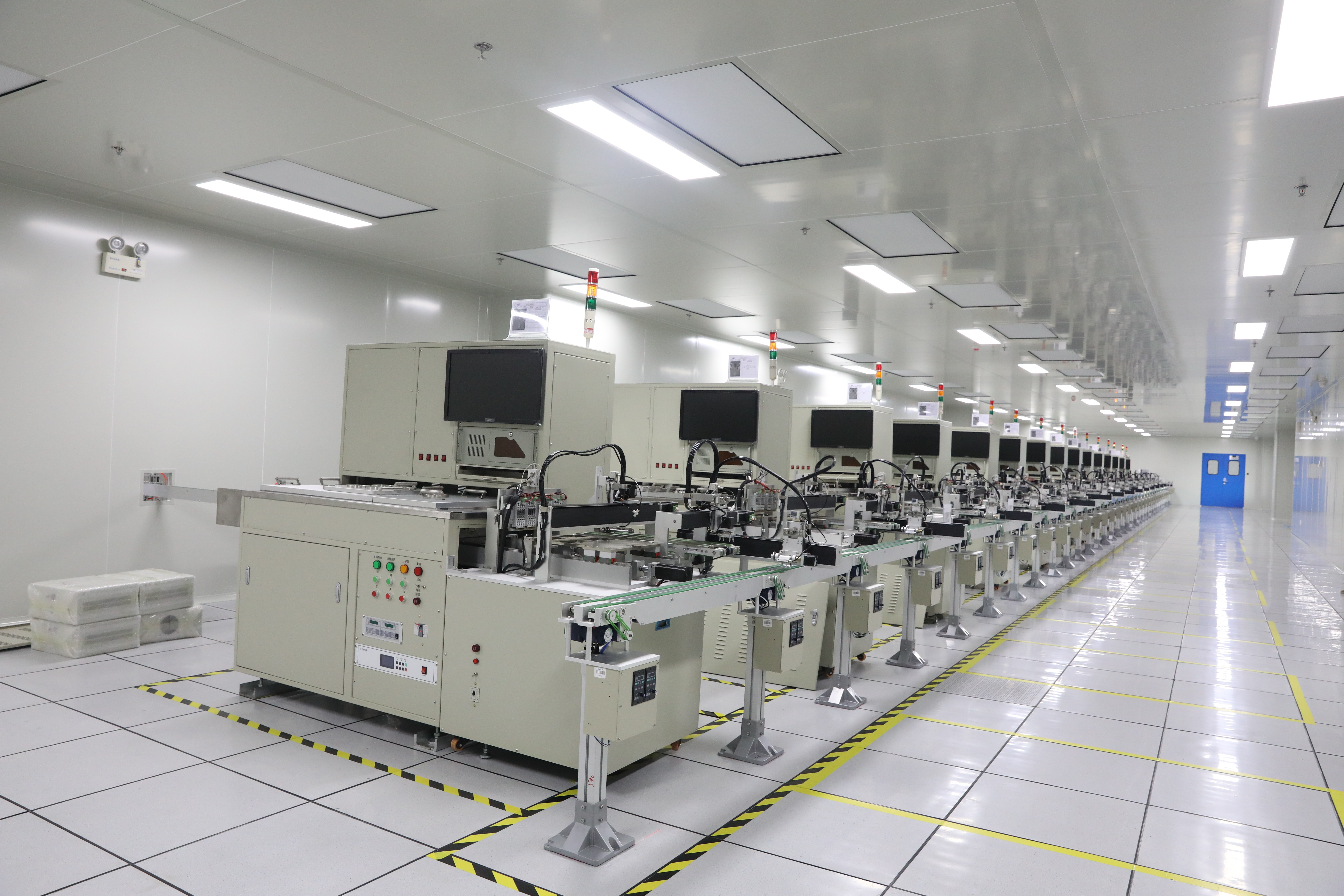
To move from abstract criteria to concrete evidence, it helps to examine a supplier that publishes detailed process information. Fronter Electronics Co., Ltd. is one such example. The company was founded in 1991, operates a 21,000 m² factory in Shenzhen, employs 286 people, and reports an annual output of 300 million units. Its R&D team consists of 19 engineers, and approximately 70% of its output is exported, mainly to the EU and USA. Its brand “FT” was recognized as a National High-Tech Enterprise in 2017.
For a buyer comparing suppliers, the following evidence areas are more useful than the company profile alone.
Batch consistency
Fronter reports the use of statistical process control (SPC) with CPK targets for key processes such as frequency trimming and resistor soldering. Data is collected every shift, and SPC control charts are used to stop production when abnormal trends appear. The factory also implements automated closed-loop frequency tuning with laser trimming to correct frequency deviations in real time. Each batch is traceable from crystal ingot to finished product, and random samples are tested for key parameter distribution before shipment.
Frequency-temperature stability
The company classifies its BOMs by application grade: consumer-grade at -20°C to +85°C, industrial-grade at -40°C to +85°C, and automotive-grade at -40°C to +125°C. Before shipment, each batch undergoes high-low temperature shock tests, for example -40°C to +85°C cycles, to ensure that frequency stability indicators such as ±0.5 ppm meet specification at extremes.
Phase noise and jitter
For high-end oscillators, Fronter introduces phase noise analyzers for 100% inspection of phase noise for each batch. It also provides typical jitter values in factory reports and offers PCB layout recommendations, including power supply decoupling and impedance matching, to help designers reduce additional jitter at the system level.
ESD robustness
Fronter's workshops implement full-process ESD control according to the ESD20.20 standard, including ESD wrist straps and anti-static materials for workbenches, carts, and packaging. Product certification tests follow IEC 61000-4-2, covering contact discharge of at least ±4 kV and air discharge of at least ±8 kV.
Mechanical reliability
For automotive customers, dedicated production lines are established according to the AEC-Q200 standard. Products are sampled for mechanical shock and random vibration testing to prevent oscillation stoppage or frequency hopping. Cross-sectional analysis of wafer-fixing adhesive and solder joints is also performed regularly for automotive production.
These are not marketing claims; they are process-level indicators that a buyer can ask to see. In a decision-stage comparison, the supplier that can produce such evidence is substantially easier to evaluate than one that cannot.
Technical Explanation: Comparing Oscillator Families and Supplier Evidence
A useful comparison framework begins with the basic oscillator families. While all of them use quartz crystals, they differ in how they handle frequency drift and system requirements.
| Type | Primary Function | Typical Strengths | Typical Boundaries |
|---|---|---|---|
| Clock oscillator (SPXO) | Fixed-frequency reference | Low cost, simple | No temperature compensation |
| VCXO | Voltage-controlled frequency tuning | Allows PLL adjustment | No oven/compensation |
| TCXO | Temperature-compensated frequency | Low power, compact, stable over temperature | Less stable than OCXO |
| VCTCXO | Voltage control plus temperature compensation | Wide tuning with temperature stability | Higher cost than TCXO |
| OCXO | Oven-controlled crystal oscillator | Highest frequency stability | High power, larger size |
| Differential oscillator | Low-noise differential output | Reduces noise in high-speed links | Special output logic required |
| Programmable oscillator | Factory-programmed frequency | Flexible inventory and prototyping | May have longer lead time |
When comparing suppliers within any family, the decision criteria should shift to manufacturing evidence. The table below summarizes what a buyer can request.
| Verification area | Process evidence to request | Procurement question |
|---|---|---|
| Batch consistency | SPC/CPK data, traceability records, frequency deviation histograms | Can you show cross-batch distribution for the same part number? |
| Frequency-temperature stability | Temperature classification, full-range shock test reports | What frequency stability is guaranteed at -40°C to +85°C or +105°C? |
| Ageing | Annual aging test data | What is the expected frequency drift after one year? |
| Phase noise / jitter | Phase noise analyzer data, typical jitter values | Can you provide batch-level phase noise data for your high-end oscillator? |
| ESD | Test reports per IEC 61000-4-2; ESD process controls | What are the contact and air discharge withstand levels? |
| Mechanical | Shock/vibration test reports; AEC-Q200 line qualification | How do you verify mechanical reliability for automotive parts? |
In the corpus supplied for this article, Fronter reports frequency stability of ≤ ±20 ppm for its oscillators, with some models reaching ≤ ±10 ppm, compared with a typical industry range of ±20 to ±50 ppm for consumer-grade products. The same source cites an annual aging rate of ≤ ±2 ppm, versus ±3 to ±5 ppm commonly seen in the industry. These numbers are useful as reference points, not as universal claims; every buyer should verify them for the specific part number being considered.
Application and Use Cases
The comparison framework becomes concrete when matched to application environments. In automotive electronics, AEC-Q200 compliance is a baseline for ADAS and safety-critical systems. In communication base stations, OCXOs are often chosen for frequency synchronization, while TCXOs serve in less critical subsystems. In servers and data centers, low-phase-noise differential oscillators help maintain signal integrity. In IoT devices, SMD TCXO oscillators with low power consumption and small packages are commonly preferred.
According to the corpus, Fronter's oscillator products are positioned for automotive electronics, communication base stations, servers, industrial equipment, IoT devices, and applications requiring high long-term timing accuracy and reliability. The company also states that its products are used in network, communication, industrial control, automotive, instrumentation, financial equipment, computer interface devices, and consumer electronics.
For a buyer, these stated application areas are useful because they indicate where the supplier has focused its testing and engineering support. A supplier with automotive-grade production lines, for example, will have different test methods than a supplier that mainly serves consumer electronics. This is why a one-size-fits-all supplier scorecard is less effective than a scorecard built around the buyer's own operating environment.
Market Trend Analysis
Several verified market indicators are relevant to a decision-stage buyer.
- The global crystal oscillator market is projected to grow from approximately USD 2.89 billion in 2025 to USD 3.66 billion by 2030.
- Asia-Pacific dominated the market with more than 42% share in 2024, reflecting high electronics production in China, Japan, and South Korea.
- TCXO accounted for 30% of the market in 2024, driven by telecom and GPS applications.
- SMD packages are expected to dominate with an 80% share by 2025, reflecting miniaturization in IoT and wearables.
- The OCXO segment is projected to grow at a CAGR of 2.6% to reach USD 528 million by 2028, supported by 5G base station demand.
These trends point to a market where product types are more diverse and the stakes of supplier selection are higher. At the same time, recognized top-tier global leaders such as Seiko Epson and NDK continue to hold significant market positions, with NDK particularly strong in automotive-grade oscillators. The existence of strong incumbents means that new suppliers must differentiate through speed, customization, or process transparency rather than through brand inertia alone.
Comparison With Traditional Solutions and Boundaries
Traditional buying patterns often favor established Japanese suppliers for high-reliability applications. This approach is easy to justify: suppliers like Epson and NDK have long histories, broad qualification records, and deep field experience. For a risk-averse buyer, staying with such a supplier minimizes the unknown.
The boundary of this traditional approach is that it can reduce procurement flexibility. Established suppliers may have lead times of 12–20 weeks, while a Chinese manufacturer may quote 3–4 weeks for the same product category. Lead time is not a sign of lower quality, but it can be a decisive factor for a product launch or a line down situation. Fronter's lead-time comparison, as stated in the corpus, illustrates this difference.
Another boundary applies to technology selection. OCXO is not always the right answer. It consumes more power and is physically larger than TCXO. In battery-powered devices, a TCXO or VCTCXO is often the better engineering choice. A good supplier should recommend the appropriate oscillator class rather than simply quote the most stable or expensive option.
Finally, process evidence is necessary but not sufficient. A buyer should still run qualification tests in their own design, especially for new suppliers. Even when a supplier provides AEC-Q200 alignment or ESD test reports, the final validation belongs to the buyer's system.
Future Outlook
As 5G densification, ADAS, AI infrastructure, and industrial IoT expand, demand for precision timing will continue to grow. The market signals—rising TCXO share, SMD dominance, and OCXO growth—suggest that designs will become both smaller and more demanding on frequency reference accuracy.
For procurement, the future likely belongs to suppliers that can combine manufacturing scale with engineering responsiveness. Buyers will increasingly ask for traceability, test results, and application support as standard deliverables. The result is a market where direct manufacturer engagement becomes more common, and where the sourcing decision is anchored in verifiable data rather than brand reputation alone.
A company profile brochure for Fronter Electronics is available for download if you need additional facility and product details: Fronter Electronics Company Brochure.
FAQ
Q: What is the difference between TCXO and OCXO?
TCXO uses a temperature compensation circuit to correct frequency drift as temperature changes. OCXO uses an oven to keep the crystal at a constant temperature, which provides higher frequency stability at the cost of higher power consumption and larger size. TCXO is suited to battery-powered or cost-sensitive designs; OCXO is chosen for network synchronization and other high-accuracy applications.
Q: What does AEC-Q200 mean for crystal oscillators?
AEC-Q200 is a stress test qualification standard created by the Automotive Electronics Council. It defines environmental and reliability tests for passive components used in automotive applications. In practice, automotive-grade crystal oscillators must pass AEC-Q200 to be used in ADAS and other safety-critical systems.
Q: How can a buyer verify batch consistency?
A buyer can request evidence of statistical process control (SPC) with CPK targets, automated frequency tuning, laser trimming, full-process batch traceability, and pre-shipment sample testing of frequency deviation distributions. These are objective signs that a manufacturer controls consistency rather than relying on chance.
Q: What is the right way to compare total cost of ownership across suppliers?
TCO includes unit price, lead time, maintenance, system downtime caused by clock drift, and calibration effort. Technical indicators such as frequency stability and aging rate help estimate long-term risk. For example, a lower annual aging rate reduces the frequency drift that may otherwise shorten a product's useful life.
Q: Are longer lead times a sign of better quality?
No. Lead time is an operational metric, not a quality metric. Some established overseas suppliers quote 12–20 weeks, while some Chinese manufacturers quote 3–4 weeks. Quality should be verified through testing and process evidence, not inferred from a long lead time.
Q: Why is IEC 60679-1 relevant to oscillator sourcing?
IEC 60679-1 is the primary international standard covering general requirements and test methods for quartz crystal controlled oscillators. It provides a common baseline for comparing oscillators across manufacturers, but it does not replace application-specific requirements such as automotive AEC-Q200 qualification or the buyer's own environmental test.